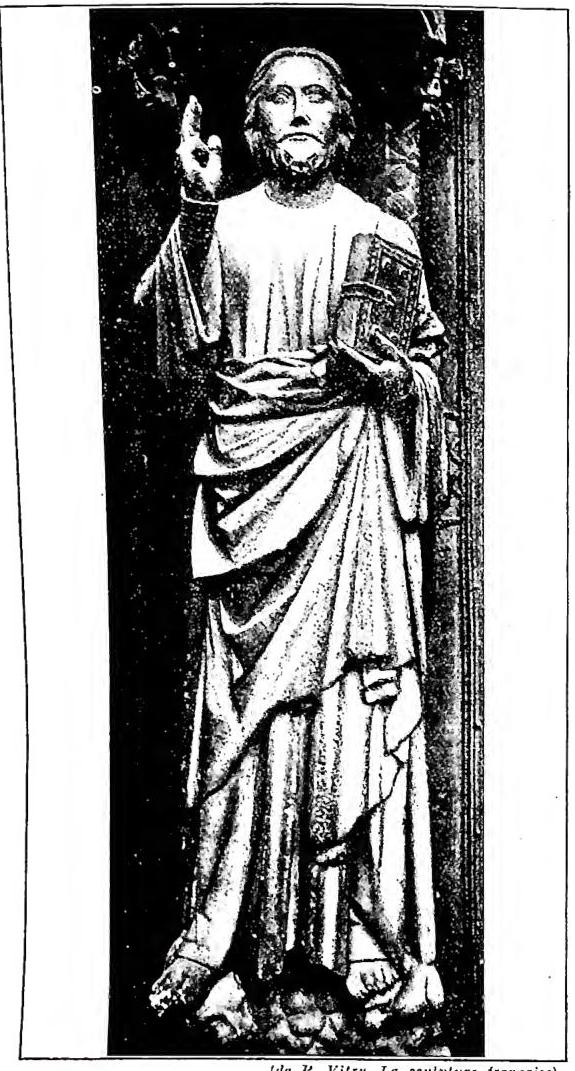
AMIENS, DIOCESE of. — In northern France, suffragan of Reims. It comprises the entire territory of the département of the Somme (6,277 sq km and 473,916 inhabitants). There are 400,000 Catholics, with 771 parishes, 340 diocesan priests, and 35 religious priests.
The city of A. is ancient Samarobriva (Bridge over the Somme), so designated because it was built on the two opposite banks of the Somme, which was the principal centre of one of the most important tribes of Belgic Gaul, the Ambiani. The Gallo-Roman name Ambianum must have prevailed before the end of the 4th century. It is probable that a Christian community existed within this tribe as early as the end of the 3rd or the beginning of the 4th century. The diocese dates from this period and recognizes as its patron the first bishop, St Firminus, who was probably martyred during the time of the emperors Maximian and Diocletian (284–305), on the basis of the very late Passio s. Firmini. The incomplete episcopal list contains 95 names, 7 of whom are venerated as saints. The boundaries of the diocese were those of the civitas Ambianensium. Since it formed part of II Belgica, whose capital was Reims, it was always united with this metropolitan see.
Several celebrated abbeys distinguished this diocese: among others, that of Saint-Martin-aux-Jumeaux of the Augustinians, that of St John of the Premonstratensians, and that of Our Lady of Paradise of the Cistercian nuns. The principal monument of A. is the cathedral of Notre-Dame, the largest church in France and, at the same time, a perfect model of thirteenth-century Gothic architecture. Begun in 1220