Rome
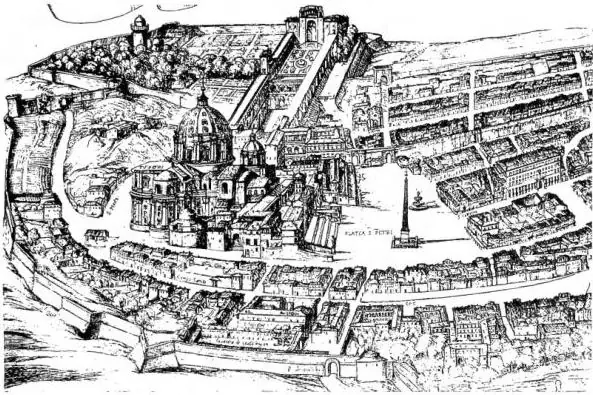
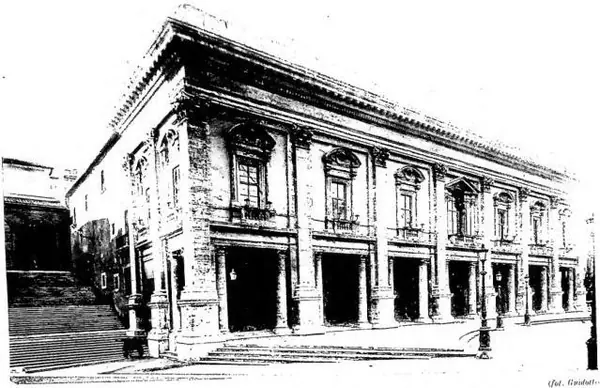
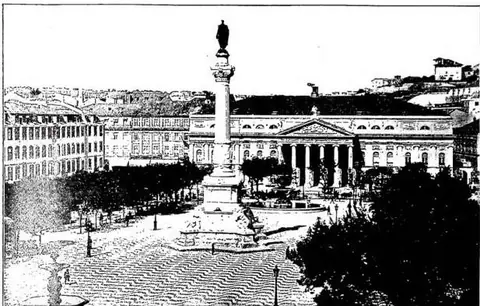
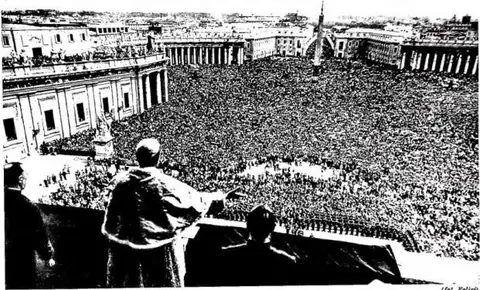
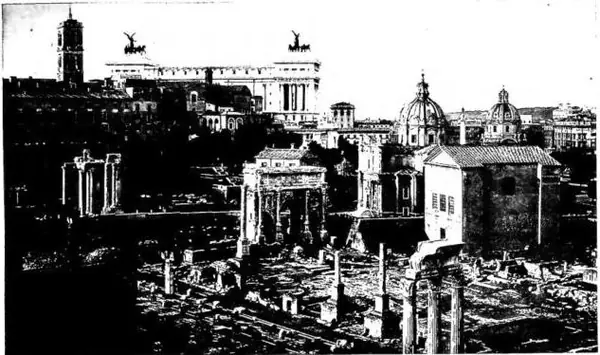
Metropolis of the Roman world, later capital of the Papal State and, from 3 February 1871, of the Italian State (law no. 33, art. 1), it is the center of Catholicism as the episcopal see of the Roman Pontiff…
Read the article Azione Romana

Welcome to Azione Romana, the Enciclopedia Cattolica of 1948–54 in a new digital edition: 19,795 entries by 1,665 authors, in Italian and English: to read, to study, to get lost in. Free.
Study by subject · Get lost in a random entry · The plates · The printed pages · About this edition
Metropolis of the Roman world, later capital of the Papal State and, from 3 February 1871, of the Italian State (law no. 33, art. 1), it is the center of Catholicism as the episcopal see of the Roman Pontiff…
Read the articleCollection of books held sacred, in a number differing between the Hebrews and the Christians.
Read the articleMother of Jesus Christ, Son of God made man. M. in Masoretic Hebrew is Mirjām; Aramaic form: Marjām (Syriac and Targumim); Μαξιάν, in the Septuagint and in the Gospels for the Most Holy Virgin; the apocopated form Μαξιάν occurs in the Gospels and in Flavius Josephus (Bell. Iud., VI, 3,4), who however ordinarily uses Μαξιάν, and Μαξιάν. The etymology is uncertain; many explanations have been given. O. Bardenhewer reviewed about 60 of them.
Read the articleThe movement for the expansion of the Faith and of the new Romano-Germanic civilization culminates, while the feudal regime is disintegrating and the communal autonomies are already arising, toward the end of the 11th century, in the great enterprise, variously prolonged until the 14th century, of the C. It was a movement of return to the origins that which channeled the fresh energies of the West toward the places from which the word of the Gospel had spread, ten centuries earlier.
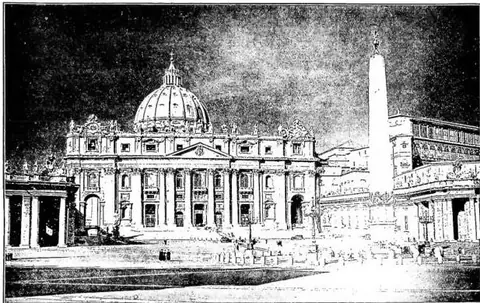
Read the articleThe State of Vatican City (S.C.V.) was created and defined on 11 February 1929 by the Lateran Treaty. Its name sums up its character and location.
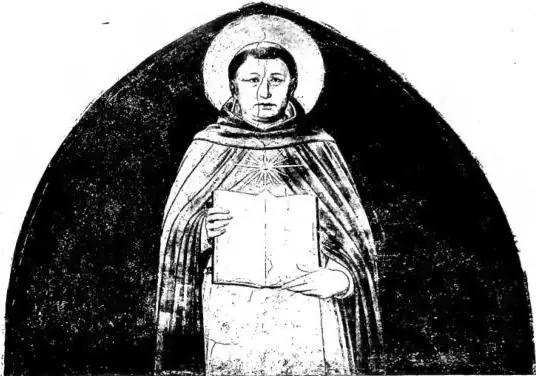
Read the articleHe is the greatest representative of Scholasticism and the official doctor of the Catholic Church.
Read the articleApostle who spread Christianity among the Gentiles, b. at Tarsus in Cilicia in the first decade of the Christian era and martyred at Rome under Nero, in all probability in 67 A.D.
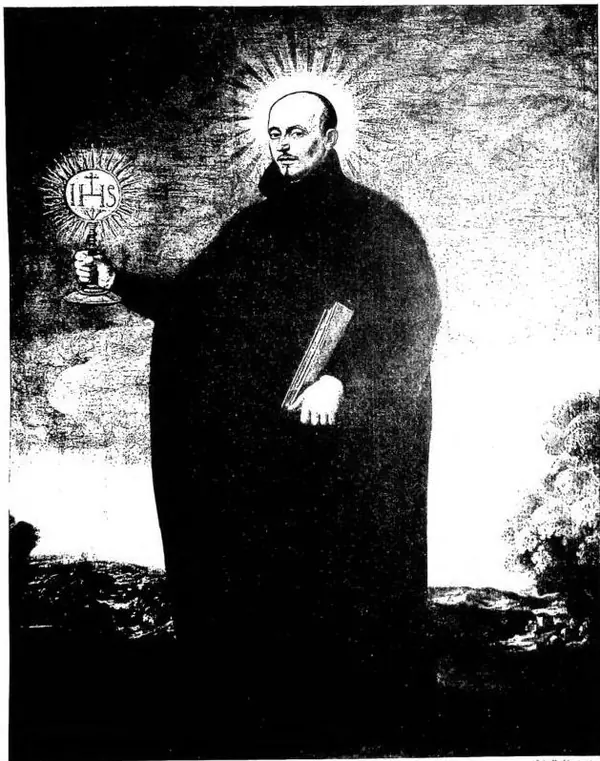
Read the articleLast son of Beltrán Yáñez de Oñaz y Loyola and of Marina Sáenz de Licona y Balda, born in 1491 before 23 October in the palace-fortress of Loyola near Azpeitia (Guipúzcoa, Spain), died in Rome on 31 July 1556. He was called Iñigo López de Loyola (not Recalde), although he almost never used the López, and changed the Iñigo to I. between 1537-42.
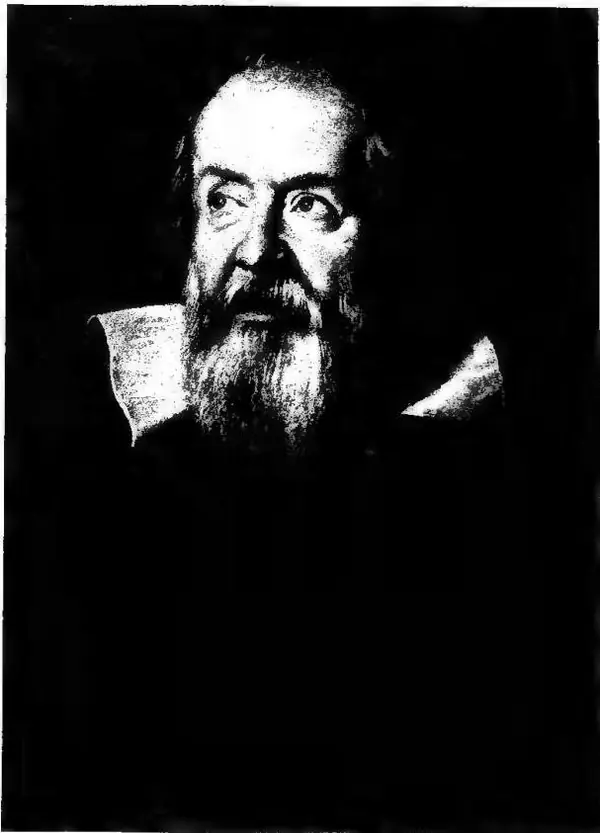
Read the articleBorn on 15 Feb. 1564 in Pisa to Vincenzo, a Florentine, and Giulia degli Ammannati of Pescia; in his boyhood he was with the Vallombrosan monks; he then enrolled at Pisa in the Faculty of Arts, and around the age of twenty he applied himself with particular study to mathematics. The environment at Pisa was peripatetic par excellence, but this did not deter the young scholar from proceeding on his own account, grounded in the study of Archimedes and in experience.
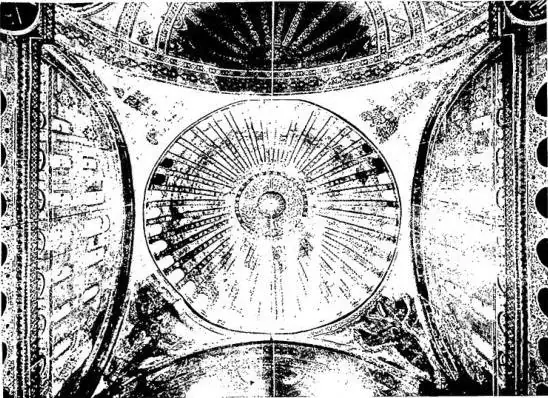
Read the articleAncient Byzantium (Byzantion), built in 658 B.C. by a colony from Megara, whose leader was Byzas; almost entirely destroyed by Septimius Severus in 196 A.D., but soon rebuilt. It took the name of C. toward the end of 324, when Constantine chose it as the capital of the Empire and gave it his name together with the title of "New Rome," adorning it with splendid buildings and rich artistic treasures.
Read the articleSculptor, painter, architect and poet, b. at Caprese (today Caprese-Michelangelo) in Tuscany, in the Tiber valley, on 6 March 1475, to Ludovico di Leonardo di Buonarroto Simoni, podestà of that town and of Chiusi, and to Francesca di ser Miniato del Sera and of Bonda Rucellai, both from Florence. The claimed and by him believed descent of the Buonarroti Simoni (an ancient Florentine family) from the counts of Canossa has no foundation.
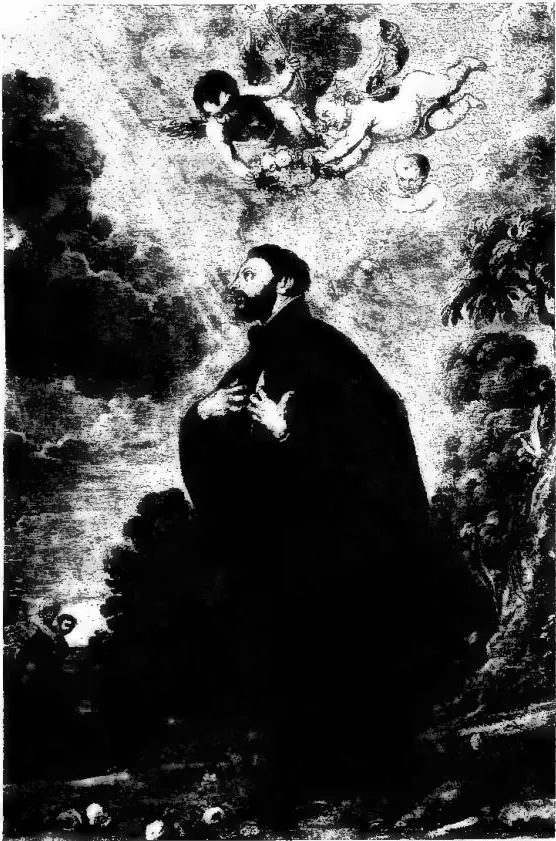
Read the articleJesuit missionary and patron of the missions, b. in the castle of Xavier (Navarre) on 7 April 1506 to don Juan de Jasu, doctor of the University of Bologna, alcalde of the court and president of the royal Council, and to doña Maria de Azpilicueta, of the ancient nobility of the place; d. on the island of Sancian, on the coast of China, on 3 December 1552.
Read the articleReligious order that takes its name from Mount Carmel, in Palestine, where in the 12th century the existence of a group of ascetics is historically attested, to whom Albert of Vercelli, Latin patriarch of Jerusalem, in 1208-1209 gave the rule that the Order still professes.
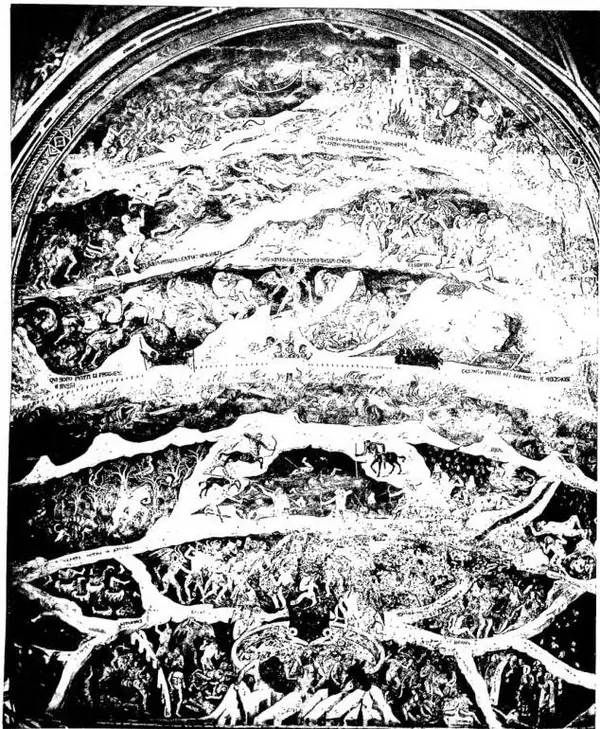
Read the articleAccording to Catholic doctrine, it is the place in which the rebellious angels and men who have died in mortal sin are eternally punished. Etymologically it derives from the Latin infernus "lower, subterranean place" and corresponds to the Greek ἀδός "dark place" (from the privative α and the root a) ["to see"]) and to the Germanic Hole (German Hölle, English hell), which means cavern. The Hebrew ἐδ'ῶ seems to derive from ἐδ'ῶ, fodit, excavit and indicates: pit, dark cavity, void.
Read the articleIn ecclesiastical language, it designates an angel who has fallen through rebellion against God and is punished in hell. While the "devil" or "satan" is the head of the invisible powers of evil, the d. (τὸ δαιμόνιον) is one of the evil spirits (οἱ δαίμονες, usually τὰ δαιμόνια in the New Testament) that infest the world, carrying out a harmful function opposed to that of the angels. Thus Jesus said of hell "that it was prepared for the devil and his angels" (Mt. 25:41).
Read the articleIt is the prolongation of the Incarnation (Leo XIII, encyclical Mirae caritatis, 18 May 1902).
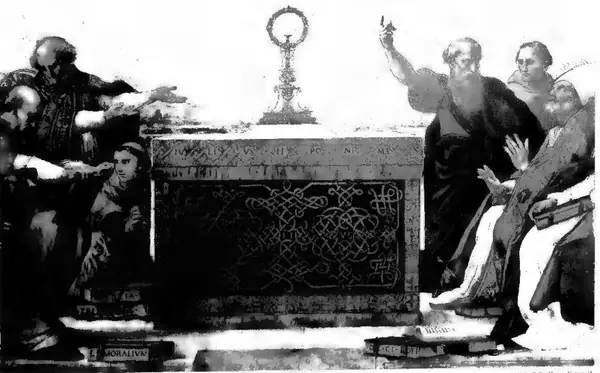
Read the articleIt is the sacrifice of the New Law, in which, under the sacramental species, the same victim of Calvary, Jesus Christ, is offered, to acknowledge God's supreme dominion and to apply to the faithful the merits acquired on the Cross. The word missa is equivalent to missio (= "dismissal"); analogous cases occur in offensa-offensio, collecta-collectio, oblata-oblatio (cf. Ch. Du Cange, s. v. in Glossarium, ed. L. Favre, V. Paris 1938, p. 412).
Read the articleOne of the seven Sacraments instituted by Jesus Christ, the first that can be received and that allows one to receive all the others: Sacramentorum ianua et fundamentum (CIC, can. 737).
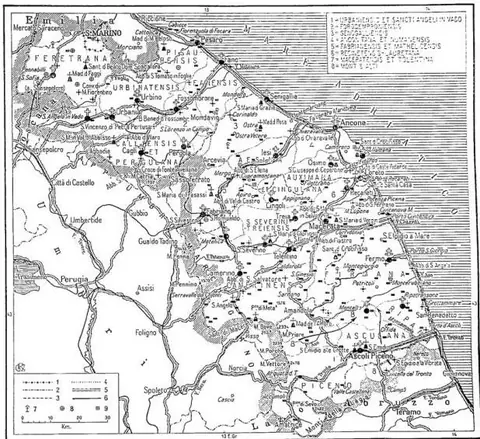
Read the articleDiocese in the province of Macerata (Marche). It has an area of 17 sq km with 8,000 inhabitants, all Catholics. It has 4 parishes, with 2 diocesan priests and 56 regulars, a seminary, 6 male religious communities and 14 female (Ann. pont., 1951, pp. 390 and 641).
Read the articleAbbey in southern Lazio, founded around 529 by St. Benedict of Nursia, on the ancient acropolis that stood on the mountain, of which imposing circuit walls still remain today. After demolishing the buildings of pagan worship, St. Benedict, on the altar of Apollo, erected a chapel in honor of St. John the Baptist and transformed the temple of that same god into an oratory dedicated to St. Martin.
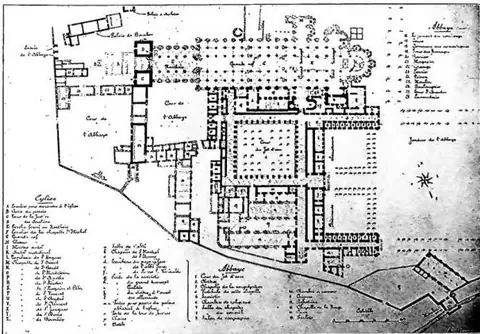
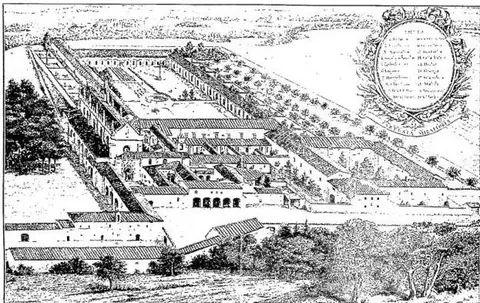
Read the articleCity in the Rhône region, department of Saône-et-Loire, diocese of Mâcon, with the remains of the Benedictine abbey of the same name, called the "second Rome," and the ideal center of the reformist tendencies of the late Middle Ages.
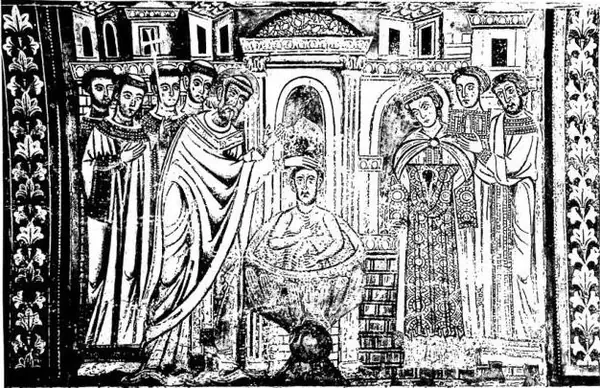
Read the articleSUMMARY. - I. Life. - II. Personality. - III. Ecclesiastical policy. - IV. Personal religiosity. - V. Political motives for the conversion of C. - VI. The caesaropapism of C. - VII. C. in legend and in cult. - VIII. Constantinian buildings in Rome and in Palestine. - IX.
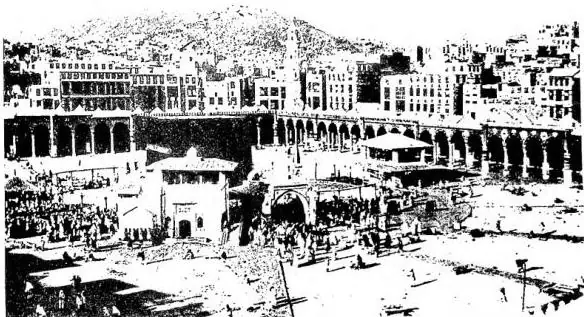
Read the articleReligion founded by Muhammad in Arabia in the 7th century A.D. The name i. means in Arabic "dedication" to God.
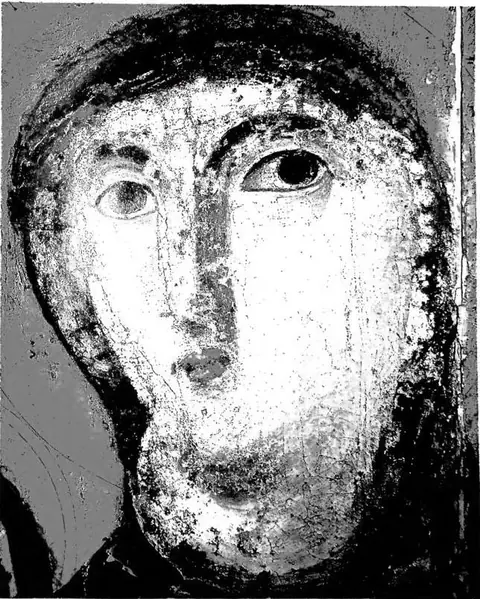
Read the articleA Greek word meaning image, which has come into use to indicate portable paintings with sacred images from the early centuries, and generally those of the Eastern type. The iconoclastic fanaticism that between the 8th and 9th centuries persecuted religious painting in Byzantine territory wrought havoc especially upon portable paintings; this explains the extreme rarity of the icons of the early centuries and, consequently, given the scarcity of comparisons, the uncertainty in their dating.
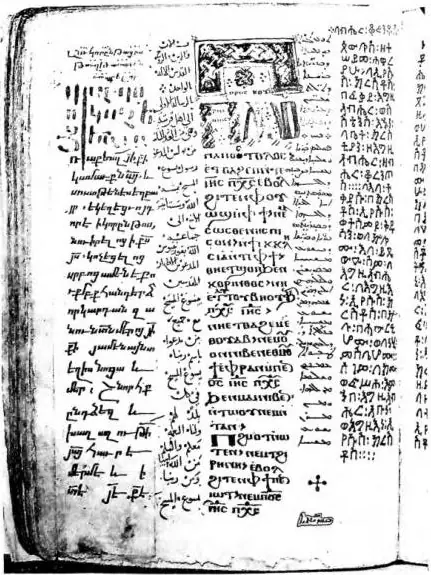
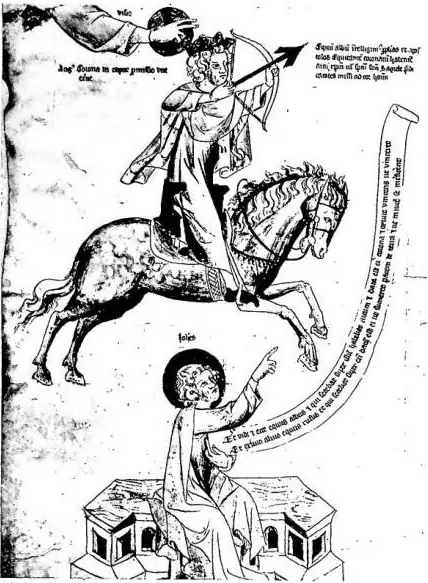
Read the articleA prophetic book that closes the New Testament. The title consists of the first Greek word of the text (Ἀποκάλυψις Ἱησοῦ Χριστοῦ), which does not occur again afterward. The customary form in the codices is Ἀποκάλυψις Ἰωάννου, with various additions in the minuscules and in the versions (Clementine Vulgate: Apocalypsis sancti Ioannis apostoli).
Read the articleName of the book with which the series of the Old Testament opens. It is derived from the Greek γένεσις and passed through the Septuagint version into Christian usage. The Hebrews call it by the word with which the book begins in Hebrew: Bērā'ith = ry of the human race from its origins down to Abraham (chaps. 1-12); the history of the origins of the chosen people in the events of Abraham, Isaac, Jacob and the latter's sons (especially Joseph) down to the descent into Egypt of Jacob and his sons (chaps. 12-50).
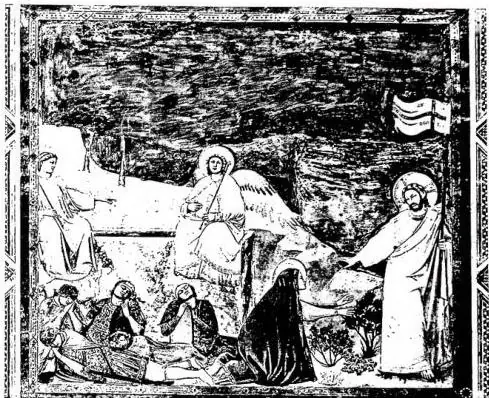
Read the articleA woman called thus because... MARY MAGDALENE (Magdalene), saint. - Woman called thus because because, it seems, she was a native of Magdala; she is named explicitly for the first time in the Gospel (by Lk. 8:2) among the pious women who followed Jesus. From her the Savior had cast out seven demons (ibid.; Mk. 16:9).
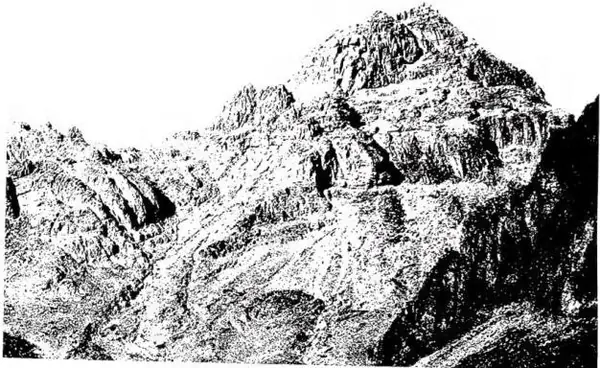
Read the articleMountainous region, also called Horeb, where the Israelites, three months after their departure from Egypt (Ex. 19:1), encamped for about a year (Num. 1:10), receiving there from Moses, their leader, their religious and civil organization.
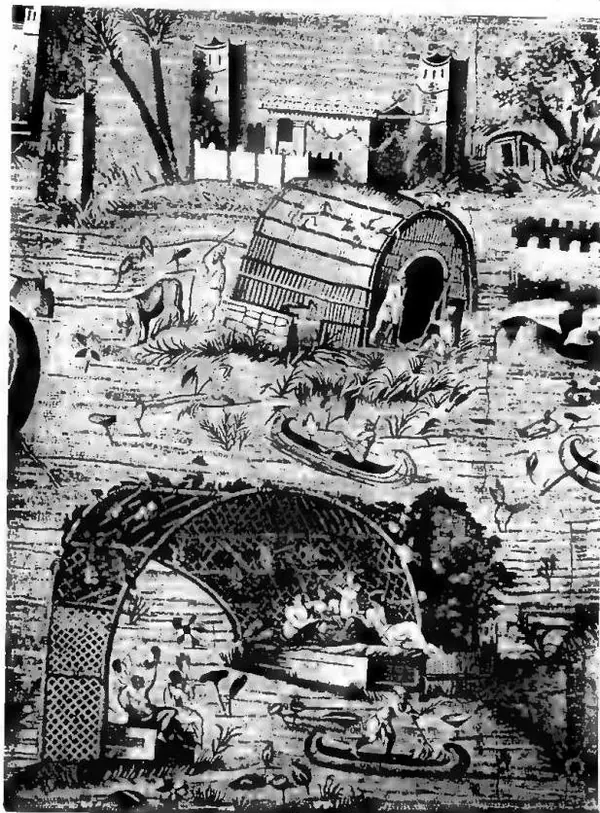
Read the articleE. (Misr according to the local Arabic name) comprises the Nile valley north of the second cataract (Wadi Halfa) with the adjacent territories of the Libyan and Arabian deserts.
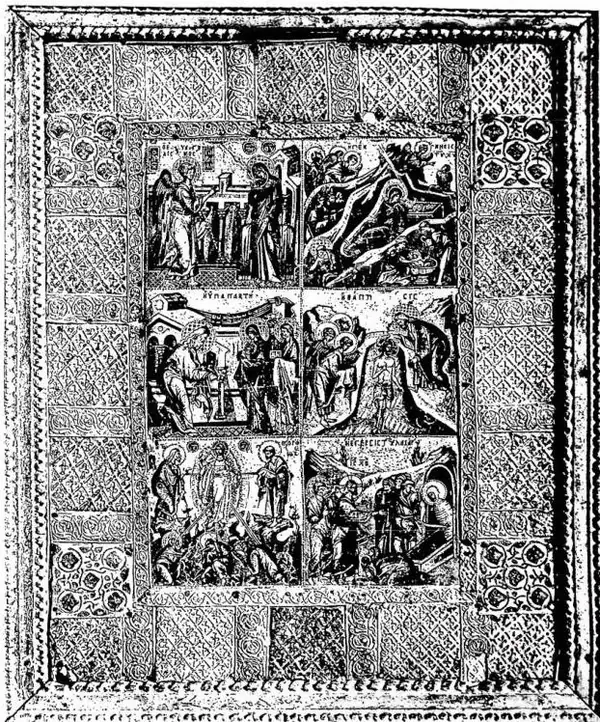
Read the articleThe Greeks called "epiphany" the manifestation of a god in person or in a dream or by miracle, or his return after an absence. An epiphany of the divinity in the form of a bird or of a human figure has been supposed for the Minoan religion, on the basis of figurative monuments, but the claim is purely hypothetical.
Read the articleSentences from the articles, word for word.
This site in: English · Italiano
Catholic culture has intensified its progress in recent decades, as can be seen from the manifold activity of institutions and individuals in the most varied disciplines. Such progress is all the more significant in times like ours, in which various and contrasting trends of ideas have produced a widespread skepticism that profoundly affects contemporary life, exposing it, more than ever, to fearful disarray.
The present Catholic Encyclopedia intends to be a conscious and eloquent expression of this apostolate, at the end of a tragic conflict of arms and blood that has so anguished the peoples, and which is none other than the natural and sinisterly demonstrative fruit of a more tremendous conflict, originating from ideologies in contrast with the Christian Idea.
— G. Card. Pizzardo, Vatican City, 2 March 1949