
FRANCESCO
d'ASSISI, saint. — Founder of three religious Orders (Friars Minor, Poor Clares, Franciscan Third Order), patron of Catholic Action; together with s. Caterina da Siena, principal patron of Italy, also called by the appellations “seraphic patriarch,” “father of the poor,” etc. Born at Assisi toward the end of 1181 or the beginning of 1182, he died there on the evening of 3 October 1226.
SUMMARY:
I. His youth
II. His conversion
III. His vocation and the foundation of the Order of the Friars Minor
IV. His early apostolate and the first missions abroad
V. The organization of the Order. The Rules. — VI. His final years. The stigmata. —VII. His death
VIII. His canonization and cult
IX. S. F. through the centuries. — X. The figure of n. F. — XI. Iconography.I. YOUTH
Son of Pietro di Bernardone, a wealthy cloth merchant, and of donna Pica, perhaps of noble family. Nothing certain is known about his paternal family, which some mistakenly claimed to have originated in Lucca, nor about the mother’s alleged Provençal origins. At Baptism he received the name Giovanni, later changed by his father, returning from Provence, to that of Francesco. He attended school near the church of S. Giorgio, where he learned Latin, to which he later added a certain knowledge of the French language and literature, especially that of the troubadours.
(Alinari photograph)
FRANCESCHINI, MARCANTONIO. — Miracles and Martyrdom of s. Bartolomeo, Bologna, church of S. Bartolomeo.
(photo by d'iesari)
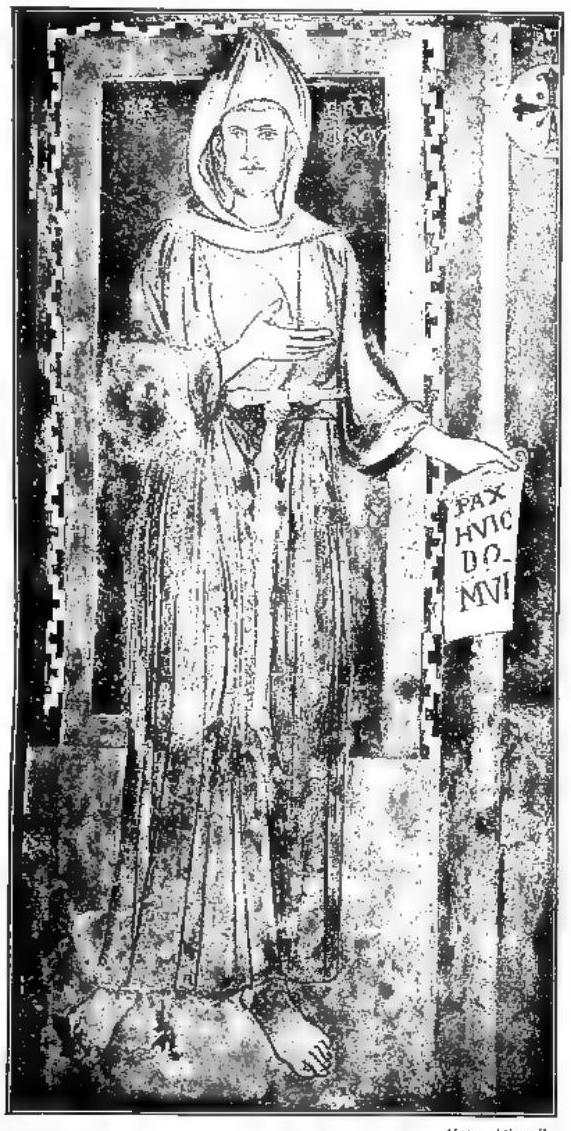
FRANCESCO D'ASSISI, saint — First portrait of s. F. (c. 1228),
with the inscription Prater Franciscus. Fresco in the chapel
of S. Gregorio — Subiaco, Sacro Speco.
In 1202 he took part in the war between Assisi and Perugia; he remained a prisoner for nearly a year, enlivening his companions in misfortune with his buoyant cheerfulness. An illness contracted after his imprisonment was the first touch of Grace, which began to draw his heart away from his customary affections. After a further attempt at military glory (perhaps he dreamed of becoming a knight), cut short by a mysterious vision at Spoleto when he had already set out for Paglia as a volunteer in the forces of Gualtiero di Brienne, he returned to Assisi, uncertain about the direction to give his life.
II. THE CONVERSION
He devoted himself to a life of prayer and penance, at first frequenting a cave near his native city; he drew closer to the poor (on a journey to Rome, he exchanged clothes with a poor man and began begging at the door of St. Peter’s); he began caring for lepers, until, in the small church of S. Damiano outside the walls of Assisi, he heard the Crucified One speak to him: «Go, F., restore my house, which, as you see, is threatening ruin». He then interpreted the command literally and set about restoring the church of S. Damiano, as well as the other two little churches of S. Pietro and S. Maria degli Angeli (the Porziuncola). Thus he decided to «leave the world»; his father Pietro di Bernardone opposed these many apparent oddities, at first locking his son in a storeroom beneath the stairs, from which he was freed by his mother; then by bringing the matter before the consuls’ court. But F., as a religious, appealed to the ecclesiastical court and, before the bishop of Assisi, renounced everything, returning even his clothing to his father, with the celebrated expression: «From now on I shall no longer call Pietro di Bernardone my father, but rather Our Father who art in heaven». From that moment began the «sacrum commercium» of s. F. with madonna Povertà.III. THE VOCATION AND THE FOUNDATION OF THE ORDER OF THE FRIARS MINOR
On hearing, on 24 February 1209, the feast of s. Mattia, the Gospel of the mission of the Apostles, he felt in it almost a personal call and decided upon the apostolic life. He began to preach. The first disciples joined him: Bernardo di Quintavalle, a noble and wealthy native of Assisi, Pietro Cattani, a learned jurist and canon, the ascetic frate Egidio (v.), Marico, Giovanni della Cappella, Sabatino, Filippo Longo, Giovanni di S. Costanzo, Barbaro, Bernardo di Vigilante, Angelo Tancredi. Once this small group had been assembled, he dictated “in a few simple words” (Testamento di s. F.) a Rule that comprised the essential elements of religious life. In 1210 he went to Rome to obtain from Innocenzo III the approval of his institution. The difficulties that arose over this undertaking—given the times, in which movements of an apostolic character in the heterodox sense were multiplying—were overcome through the protection of the bishop of Assisi and of card. Giovanni di S. Paolo (v.); Innocenzo III granted his approval orally, giving the tonsure to s. Francesco and to all his first companions, and promising more extensive favors later. On returning to Assisi, they established their residence for a time at Rivotorto, and then definitively at the Porziuncola, which would become the cradle of the Seraphic Order, the center of the entire Order, and the place where F. would wish to die. There, on 18 March 1212, Palm Sunday, s. Chiara (v.) donned the religious habit, thus giving origin to the Second Franciscan Order, Clarisse (v.).IV. PRIMITIVE APOSTOLATE AND THE FIRST MISSIONS ABROAD
After the official approval and papal mission, a more systematic apostolate began, starting from Umbria and then extending into Tuscany, the Marches, Latium, and the other regions of Italy, partly by going there personally and partly through his disciples, whose numbers were by now increasing. The people responded to the new method of simple apostolate practiced by those “new men” with extraordinary enthusiasm and renewal. People from every social class, including those bound by marriage, asked to belong to his Order. This gave rise to the initiative of the Third Order, to which he probably gave a Rule in 1221.As early as 1212 he made his first attempts to leave Italy. In that year s. F. embarked at Ancona for Syria, but a storm drove him onto the Dalmatian coast, whence, being unable to continue, he returned to Italy. Between 1213 and 1215 he went to Spain, where an illness forced him to return. A few years later he sent other friars of his to Morocco; in 1220 they consecrated their evangelization with their blood, becoming the protomartyrs of the Order (v. BERNARDO, ecc). Around these
years the Friars Minor were already widespread in many regions of Europe and the Near East.
Before long, however, he had to return to Italy, also because of certain disturbances that had arisen in the Order, of which he had received news in the East.
V. L'ORGANIZZAZIONE DELL'ORDINE. LE REGOLE. - The rapid multiplication of his family and its ever-widening diffusion soon created organizational problems that the primitive Rule, composed of a few Gospel phrases, was insufficient to resolve. He therefore began periodically to summon his friars to assemblies which, from at least 1217 onward, became the Order’s General Chapters, at which the problems of the Institute were discussed and new provisions promulgated. They were always convened at the little church of S. Maria degli Angeli, the Porziuncola, which in 1216 had been endowed by Pope Honorius III with its celebrated indulgence. At the Chapter of 1217, s. F. divided the Order into provinces. At that of 1221, which was probably the famous Chapter of Mats attended by 5,000 friars, the primitive Rule was reexamined, expanded, and modified through the promulgation of the so-called «First Rule», in reality the second. But, being found somewhat imprecise and prolix, it was redrafted once more, with the assistance of a learned jurist, Cardinal Ugolino (later Gregory IX), resulting in the definitive Rule, which the Saint, again with the cardinal’s support, had Honorius III approve on 29 November 1223.
(courtesy of Mons. A. P. Frates)
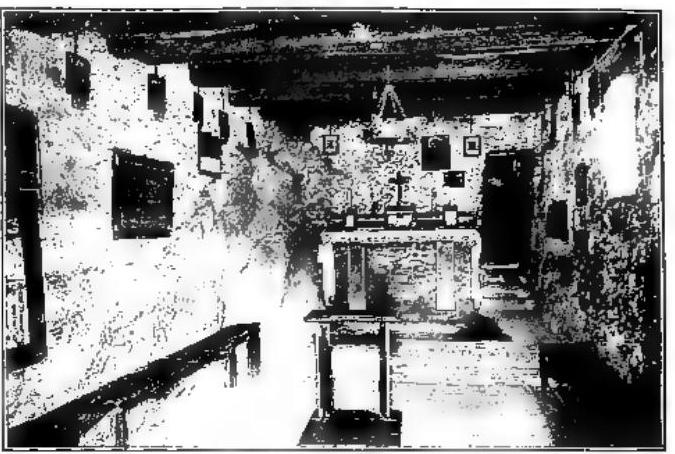
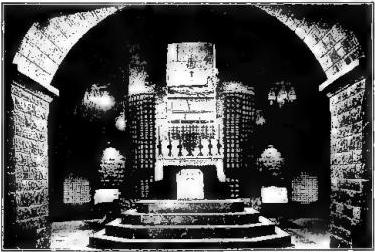
FRANCESCO D'ASSISI saint - The oratory of the stigmata, with s. F.’s cell at the rear - Cortona, Celle.
VI. THE FINAL YEARS. THE STIGMATA. — S. F., too idealistic and mystical a figure, soon felt himself incapable of personally directing the vast movement to which he had given life; and already after the disturbances of 1220 (v. FRATI MINORI), he had renounced the office of superior, or minister general, of the Order, appointing at the Chapter of 1220 a vicar, Fra' Pietro Cattani. Upon his death (1221), he elected Frate Elia to succeed him. From that moment, while always retaining within the Order his great personal authority, which derived from his status as founder, he withdrew increasingly from direct administration, devoting himself more fully to his mystical life, consisting above all in mortification, renunciation, and sacrifice in imitation of Christ. Thus, in 1224, he attained the ineffable miracle of La Verna, the holy mountain that had been given to him in 1213 by Count Orlando of Chiusi, where “from Christ he received the final seal, which his limbs bore for two years”: the stigmata.
VII. THE DEATH
Filled with spiritual joy at the announcement of his approaching death and desirous of meeting it at S. Maria degli Angeli, he commanded his companions to carry him there, and prepared himself for the serene passage with all the affection of his great soul. The incomparable book of the Fioretti of s. F., the most precious jewel of the popular literature of the 14th century, has handed down the text of the Saint’s blessing to his beloved native city, which he was seeing for the last time.Before dying he wished to see his great Roman benefactress Giacomina dei Settesoli, whom he customarily called «frate Jacopa», and for this purpose had them write to her to come as soon as possible. But while a means of sending the letter was being sought, that noblewoman, with her sons and other companions, arrived unexpectedly at the Porziuncola, and was thus able to witness the Saint’s passing. For his living and future friars he composed his testament, in which he summarized all his previous exhortations concerning the Catholic faith and observance of the Rule, especially with regard to poverty, his mystical bride: «he commended his dearest lady and commanded that they love her faithfully» (Dante, Por., XI, 113). Finally, on 3 October, wishing to die naked like Christ, he had himself stripped of his wretched garments and laid upon the bare ground; then he took leave of his sons, blessing all those Present, beginning with the vicar of the Order, and those absent, scattered throughout all the nations. He then wished them to read to him the Passion of Jesus Christ according to s. John and finally, together with those present, began to recite the psalm «Voce mea ad Dominum clamavi», reaching the final verses: «Bring my soul out of prison... the just await me». Then his earthly tongue fell silent forever; that most holy soul, released from the flesh, was absorbed into the abyss of eternal light, and his body fell asleep in the Lord (I Celano, 110). At the moment of his passing, according to the testimony of s. Bonaventura (Leg. maior, 14), a flock of larks came to settle on the little roof at the Porziuncola, then taking flight in the crimson twilight and filling the horizon with their trills. After the devotion of the friars and of the people who had flocked to venerate the body marked by the Saint’s stigmata had been satisfied, the following morning (4 October) the precious remains were carried triumphantly into the city, the funeral procession stopping before the little convent of S. Damiano, so that Chiara and her daughters might gaze for the last time upon the face and the sacred wounds of the Father. Then the company moved slowly onward, and the sacred body was temporarily buried in the church of S. Giorgio.
VIII. THE CANONIZATION AND CULT
Less than two years had passed since his death when, on 15 July 1228, Gregory IX, F.’s great friend and protector, coming from Perugia (where the papal court was temporarily residing) to Assisi, canonized the Poor Man of Umbria in the church of S. Giorgio, personally delivering the Saint’s eulogy and fixing his feast for 4 Oct. The following day the Pontiff himself laid the first stone of the great basilica (S. F.), intended to house the Saint’s remains, entrusting its care to friar Elia. The lower church was already complete in 1230, and on the occasion of the General Chapter, specially convened at Assisi, the solemn translation of the Saint’s body took place on 25 May. Since, over time, the memory of the precise location of the seraphic one’s tomb had been lost, after fruitless attempts in 1570, 1607, and 1806, the site was finally rediscovered in 1818, and an examination of the remains was carried out. Without removing the urn, the crypt was enlarged and the tomb adorned with bronze and marble.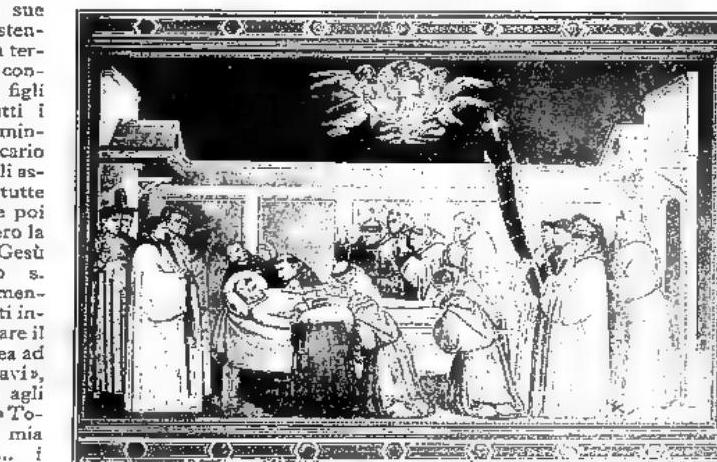
1939, proclaimed him principal patron of Italy (AAS, 31 [1939], p. 256).
The liturgy celebrates two feasts in honor of s. F.: 4 Oct., the feast of the Saint, and 17 Sept., the feast of the Stigmata. In the Franciscan Order, the translation of s. F. (25 May), the canonization (16 July), and the first approval of the Rule (16 spt.) are also solemnly commemorated.
IX. S. F. THROUGH THE CENTURIES. — The appearance of s. F. and the revelation brought by his spirit were regarded from the outset as a world-historical event. For
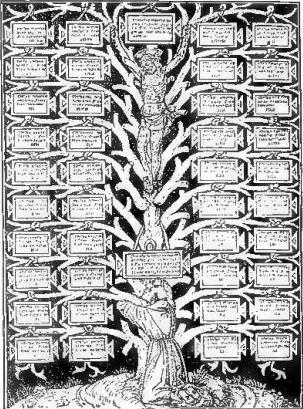
no other saint of the period is there such a copious number of contemporary biographies. Art expresses the same idea through the abundance and excellence of its representations. Even today, especially since the beginning of this century, s. F. has been the subject of a vast literary production, including in the ascetical field. There were, however, periods in which F. was not understood: this was especially the case among the Protestants of the sixteenth century, prompted by the famous book of Bartolomeo Rimonico da Pisa, De conformitibus vitae b. Francisci ad vitam Domini Iesu, which by Erasmo Albero
FRANCESCO D'ASSISI, saint — Death of s. F. Fresco by Giotto (1317). Florence, Bardi Chapel in S. Croce.
was defined as «Alcoranum Franciscanorum seu blasphemiarum et nugarum Lerna de stigmatizato Idelo quod Franciscum nominant» (Frankfurt 1342), a book that enjoyed wide circulation in various editions and translations. He was likewise despised by the encyclopedists and rationalists of the eighteenth century; Goethe, during his journey in Italy, relates that he did not wish to see the basilica of s. F. In the Romantic reaction of the nineteenth century, s. F., especially through the work of G. Görres, was reassessed from a new perspective as well, above all as a poet and troubadour.
From then on, Franciscan literature continued to multiply, and found a particularly passionate and able student in Paul Sabatier, who may be said to have given a new scholarly direction to studies of the life and soul of the Poverello d'Assisi.
X. THE FIGURE OF S. F. — F. is one of those gigantic figures of history, which appear only rarely, destined by God to bring about a marvelous spiritual upheaval in society. After seven centuries he is still alive in the soul of peoples; indeed, each day his profile grows greater, thanks to his fruitful apostolate of gentleness, simplicity, and evangelical poverty, founded upon love and universal brotherhood. He passed over the earth as an «alter Christus», reproducing in himself the divine figure of the Savior as no other saint had been granted to do, while also rising to become the prototype of the Italian stock through his gentle, intelligent, simple, poetic character, to the point of leading some modern author to write, with perhaps questionable accuracy: «F. is the holiest of Italians and the most Italian of saints».
BIBLI. 1. Ponti: a) Writings of s. Francesco. Those certainly authentic are reduced to the following: two Rules of the Friars Minor (a long one from 1221 and the definitive one from 1222); the testament; some fragments inserted in the Rule of the Cimena, 28 admonitions, the Salutatio virtutum, the booklet De religios habitatione in eremo, 6 letters, and the prayers: Lueder Dei, Lueder domini, Salutatio B. Virginis, the Office of the Passion, and the Canticle of Brother Sun. The first edition, reprinted many times but overflowing with spurious texts, was prepared by L. Wadding and published at Antwerp in 1623. Two critical editions appeared in 1904: [L. Lemmena], Opuscula s. p. Francisci Assisiensis, Quaracchi 1904, and H. Böhmer, Anadolua zur Geschichte d. hl. Franz von Assisi. A good Italian version: V. Facchinetti, Gli scritti di s. F. d'A., Milan 1921 (3rd ed., there 1944). b) Historical testimonies. The principal and most authoritative among the very numerous legends contemporary with or shortly subsequent to s. F. are Vita I (written in 1228) and II (written in 1246) by Tommaso da Celano, together with the Tractatus de miraculis (1259 ff.) by the same author, and the Legenda maior a minor of s. Bonaventura. This, together with many other texts dependent upon them and liturgical texts, is published in vol. X of Annicizia Franciscana, Quaracchi 1926–47. A good recent Italian version of the Celanian legends is that of F. Casolini, Quaracchi 1926; while for that of s. Bonaventura cf. the version by G. Battelli, S. Casciano val di Pisa 1926. Other legends, important above all for gaining knowledge of the spirit of s. F., are the Speculum perfectionis and the Legenda trium sociorum, concerning which some reserve must be maintained regarding their historical value; lively controversies have arisen around them, forming Questione francescana (v.). c) Bibliography. In addition to the works cited, W. Goetz, Die Quellen zur Geschichte des hl. Franz von Assisi, Gotha 1904; M. de Barcellone, Estudio crítico de los fuentes históricas de s. Francisco y Santa Clara, Barcelona 1921; A. Masseron, Les sources de la vie de st François d'Assise, in St François d'Assise, Paris 1927, pp. 6–67; M. Bibl. Disquisitiones Celanenses, in Archivum Franc. histor., 20 (1947), pp. 433–66; 21 (1928), pp. 3–54, 161–205; L. Cellucci, Le leggende francescano del sec. XIII nel loro aspetto artistico, Rome 1929; Vredegando d'Anversa, De familias litterarias ad vitam s. Francisci Assisiensis pertinentibus, in Collectanea Franciscana, 1 (1931), pp. 433–50.
8. Studies. a) General bibliography. The literature on s. F. is enormous and has undergone exceptional development, especially since the beginning of this century; some bibliographical works on the subject are therefore indicated: C. Pitolea, Bibliographie franciscaine de 1920 à 1926, in Revue d'histoire franciscaine, 3 (1926), pp. 579–91; I. Pou y Marti, Studia recentiora circa vitam s. Francisci, in Antoniorum, 2 (1927), pp. 3–20; V. Facchinetti, S. F. d'A. (Guida bibliografica), Rome 1928; E. Palandri, Rassegna bibliografica stufranciscana dell'ultimo trentennio, in Studi francescani, 3rd series, 12 (1940), pp. 161–231. Current Franciscan bibliographical production is systematically reviewed, in a special section, by the journal Collectanea Franciscana, Rome 1931 ff. b) Biographical studies. Among the most recent: P. Sabatier, Vie de st François d'Assise, Paris 1894; definitive ed., there 1931 (posthumous), edited by S. Goffin (on the Index); id., Etudes inédites, there 1932; G. Schnitzer, F. d'A. (Italian trans. by A. Mercati), Florence 1907; Fr. Cuthbert, Life of st. Francis, London 1921; M. Beaufreton, St François d'Assise, Paris 1925; A. Fortini, Nova vita di s. F. d'A., Milan 1926; V. Facchinetti, S. F. d'A., Milan 1926; F. Calamita, S. F. d'A., note di antropologia, Assisi 1927; L. de Sarasola, S. Francisco de Asis, Madrid 1920; H. Thode, Franz w. Assisi, Vienna 1934; G. Jørgensen, S. F. d'A., Rome 1946; S. Attal, S. F. d'A., Padua 1947; M. Sticco, S. F. d'A., Milan 1949; G. K. Chesterton, S. F., Italian trans., Milan 1950. c) On the spirit of s. F. cf. G. Salvadori, Ricordi di s. F. d'A., Florence 1926; J. Felder, L'Ideola di s. F. d'A., Italian trans., 3rd ed., there 1944; A. Gemelli, Il francescanesimo, 6th ed., Milan
Riccardo Pratesi–Alberto Ghinato
XI. ICONOGRAPHY
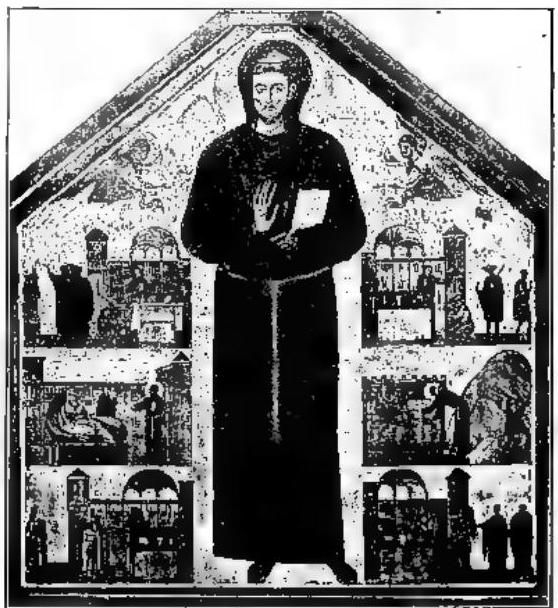
The description of the Saint’s person handed down by Tommaso da Celano is too generic for its precise influence on the formation of Franciscan iconography to be discerned.The oldest portrait of s. F. remains the fresco in the Sacro Speco at Subiaco, executed ca. 1228 by a painter of the Roman school, before the Saint, identified simply as «frater Franciscus», was canonized. The Byzantine features are softened by a portraitistic tendency and a sense of humanity that would be lost in the subsequent paintings of the 13th century. The Saint holds a cartouche bearing the inscription: «Pax huic domui», a wish associated with the visit he made to the monasteries of Subiaco. In Bonaventura Berlinghieri’s panel (1235) in the church of S. F. at Pescia, the Saint’s figure assumes the appearance of an immobile, hieratic Byzantine frontality: he holds a sacred book, bears the stigmata, and raises his right hand in a gesture of greeting. A naïve narrative sense can be observed in the small scenes at the sides of the figure, representing: S. F. receiving the stigmata, The Sermon to the Birds, The Miracle of a Little Girl Healed at the Saint’s Tomb, The Healing of the Afflicted, from The Cripple in the Bath and The Possessed. With regard to s. F. receiving the stigmata, mention should be made of a panel from the school of the Berlinghieri, in the Accademia of Florence, in which, for the first time, the figure of Christ, with rays issuing from his wings, appears crucified. The iconography of the Pescia panel
(courtesy of Fr. O. Steno, O.F.M. Unir.)
(Int. Enc. Dott.) FRANCESCO I d'AUSTRIA (II as emperor of the Holy Roman Empire) - Portrait. Drawing by Lasime, engraved by Muller - Rome, Museo del Risorgimento.
The figure of s. F. is humanized in Cimabue’s fresco (Assisi, lower Basilica), and still more in Giotto’s frescoes (upper Basilica; and Florence, S. Croce), clearly derived from the account of s. Bonaventura, with the Saint presented as a thaumaturge, an ever-watchful, moving, suffering image. After Giotto, Franciscan iconography, by then fully established, underwent no substantial changes.
The image of the Saint appears either in isolation or in complex compositions in Italian and European art, always recognizable by now-established iconographic features: from Donatello’s s. F. (Padua, S. Antonio), to the one appearing in Raphael’s Madonna of Foligno, to those painted by Barocci, the differences lie chiefly in the action, not in the Saint’s physical person. Among the Stories of s. F. after Giotto, mention should be made of B. Gozzoli’s fresco cycle at Montefalco (1452). In Baroque art the figure of s. F. finally assumes forms of more pronounced pathos, as in the s. F. in the Pinacoteca of Cremona,
a copy after Caravaggio, in Murillo’s S. F. Embracing Jesus (Seville, Museo), in Orazio Gentileschi’s S. Francesco Supported by an Angel, etc. - Vedi tavv. CII-CIII.
BIBLI: A. Westlake, On the authentic portraiture of F., London 1897; A. Goffrin, St François d'Assise dans la légende et dans l'art primitif italien Brussels 1909; B. Kleinschmidt, S. Franciscus V. Assisi in Kunstlegende, Monaco-Gladbach 1911; V. Facchinari, Iconografia francescana, Milan 1924; N. Turchiani, S. F. nell'arte dei ecc. XIII e XIV, in Illustrazione italiana, Natale 1925-26, p. 42; M. Vandal, St François d'Assise et ses interprètes dans l'art, Paris 1927; M. Villain, St François et les peintres d'Assise, Paris 1941. Luigi Grassi