MADRID, DIOCESI DI

MADRID, DIOCESI di. - Diocesi e città capitale della Spagna.
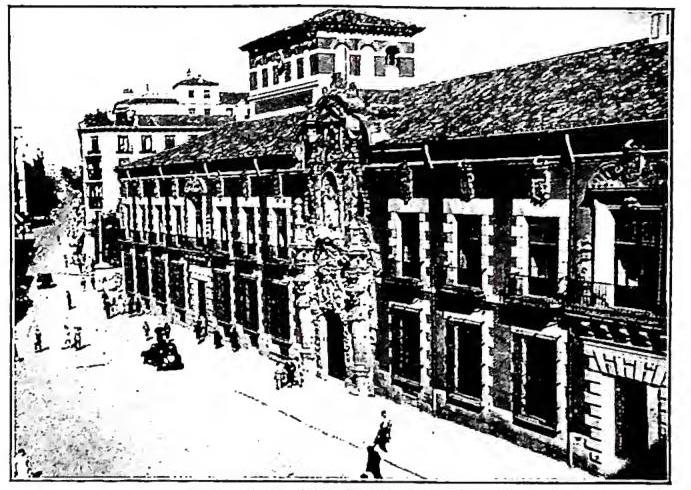
Image from page 1071

MADRID, DIOCESE OF

Diocese and capital city of Spain.

The diocese covers an area of 7,988.75 sq km with a population of 1,909,003 inhabitants, of whom 1,901,503 are Catholic; it comprises 28 parishes, 936 diocesan priests and 752 religious; two seminaries; 91 male religious communities and 360 female (Annuario Pont., 1951, p. 259).

The city of Madrid held little importance until the 16th century, when it was chosen as the natural and permanent residence of the Spanish monarchy, being the geographical centre of the peninsula. Until then it belonged ecclesiastically to the Archbishop of Toledo, and only with the Concordat of 1851 did the project for a Madrid diocese prevail, though it was not erected until 1885, following the bull of Leo XIII dated 7 March of the same year. In memory of the ancient and vanished diocese of Complutum, the name of Alcalá was added to that of Madrid, since this territory was included in the new diocese which embraces the entire central civil province. The first bishop, Narciso Martínez Izquierdo, fell victim to an assassination attempt on 12 April 1886 in the provisional cathedral of St Isidore the Farmer, patron of the city, which still serves as the episcopal church since the construction of St Mary of Almudena, begun in 1881 under the Toledo archbishop Cardinal Moreno, and whose crypt has been open to worship since 1911, has not yet been completed. In the present cathedral, built in the 16th century for the Society of Jesus, are preserved the incorrupt bodies of St Isidore the Farmer and his wife St Mary of the Head; the theologian Laynez and the mystic Nieremberg are also buried there. At Alcalá, former seat of the famous University of Complutum, one admires the beautiful collegiate church of Sts Justus and Pastor, built in 1136 and rebuilt in 1497 by Cardinal Ximénez de Cisneros.

MADRIGAL

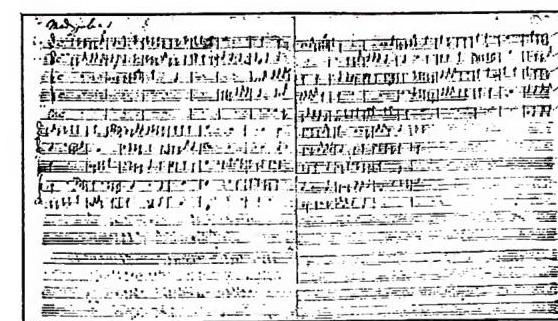
From *matricale*, with reference both to the language and to the mother tongue; or from *mandriale*, a shepherd’s song. In its most common form from the 14th to the 16th century, the madrigal consists of two triplets of hendecasyllabic lines variously rhymed, followed by a couplet of hendecasyllables rhyming together (schemes: aab aab cc; abb acc dd, or others). From as early as the 14th century the addition of a heptasyllabic line to the triplets is not excluded; but the seven-syllable verse was more often mixed in the 16th century and after, when the original idyllic inspiration of the madrigal was transformed into literary refinement, and gallant content and even the biting wit of the epigram were preferred to its former freshness. Musically (since the madrigal is essentially poetry to be sung or meant to be sung), its triplets have melodies and rhythms different from those of the final couplet (which forms the refrain). Characteristic of the madrigal is that it is not based on pre-existing themes: it is, so to speak, of free invention.

In a first period, namely in the 14th century, with Jacopo da Bologna, Gherardello, Giovanni da Cascia, and Landino, the madrigal appears as one of the genuine forms of the splendid flowering of Italian Ars nova (v.). The music, which seeks to follow the text not only in accentuation but often also in its imagery, is written for two or three voices. The prevalence of homophony (i.e., the vertical concordance of the voices) lasted until the development of the madrigal by the composers of the 16th century, especially those Franco-Flemish musicians who lived in Italy and owed much to it: such as Verdelot and Arcadelt. But from the mid-16th century to its decline, the best polyphonists, both in Venice and in Rome, from Willaert to O. Lasso, from A. Gabrieli to Palestrina, brought the madrigal to a much more complex technique, writing for four, five or six voices in a style that reflects the contemporary perfection of the motet and that benefits from the expressive intensity proper to these composers. Their tendency could not fail to result in a more solemn conception of the madrigal: hence the spiritual madrigal arose (also as a reaction to the licentious subjects vulgarised by madrigal music). There also appeared collections or series of madrigals forming more or less organic wholes of varying extent and duration, such as Banchieri’s *Festino* or Janniquin’s *Le caquet des femmes*; in these, a lively and uninhibited descriptive vein asserts itself and onomatopoeic cries and sounds abound, with animal noises and imitative effects. Madrigals were also performed, or expressly composed, as interludes in theatrical representations at the end of the 16th century in Italy (leading to the so-called *opera madrigalesca*). In the forms of the polyphonic madrigal, L. Marenzio and Gesualdo, Prince of Venosa, achieved singular harmonic innovations, oriented towards chromaticism and the search for colour. In its final phase, the madrigal assimilated what was the great novelty, the new word of music: the recitative melopoeia created by the Florentines. Thus Caccini in *Le nuove musiche* has madrigals for a single voice; and C. Monteverdi employed the “concitato” style for his warlike and amorous madrigals, with instrumental accompaniments and the use of that pyrrhic rhythm from which his genius drew the idea of measured tremolo. From Italy the vogue of the madrigal spread, besides to other countries, to England, where both collections of Italian madrigals in translation and those by English composers such as Byrd, Morley, and Gibbons enjoyed great favour. A Madrigal Society was founded there in 1741.

BIBL.: E. Vogel, *Bibliothek der gedruckten weltlichen Vocalmusik Italiens 1500–1700*, 2 vols., Berlin 1892; P. Wagner, *Das Madrigal und Palestrina* (*Vierteljahrschrift für Musikwissenschaft*), Leipzig 1892; T. Troyer, *Die Anfänge der Chromatik im italienischen Madrigal*, ibid. 1902; I. Wolf, *Geschichte der Mensuralnotation von 1250 bis 1460*, ibid. 1904–1905; G. Cesari, *Le origini del m. musicale cinquecentesco*, in *Rivista musicale italiana*, 19 (1912), pp. 1–34, 380–428; A. Einstein, *Das Madrigal*, Leipzig 1921; E. N. Felloves, *The English madrigal composers*, London 1921; N. Schultz, *Das Madrigal als Formideal*, Leipzig 1939; W. Apel, *Harvard dictionary of music*, Cambridge (Mass.) 1947, pp. 417–420; A. Einstein, *The Italian madrigal*, Princeton 1949.