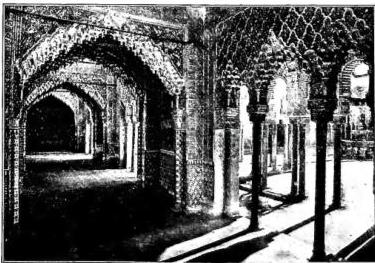
SPAIN. - The Spanish State encompasses a little over eight-tenths of the territory and a little under eight-tenths of the population of the Iberian Peninsula. With an area of 505,720 km² (including the Canary Islands), it ranks second in Europe (excluding the U.S.S.R.) in size, after and not far behind France. In terms of population, however, (28 million inhabitants in 1950), it stands in seventh place, just ahead of Poland. Its territory borders only two states: Portugal (989 km of frontier) and France (667 km), if one does not consider the tiny Republic of Andorra (in the Pyrenean sector) and Gibraltar at the southern extremity.
SUMMARY: I. Geography - II. Civil History - III. Muslim Spain - IV. Ecclesiastical History - V. Legal Status of the Church - VI. Literature - VII. Archaeology - VIII. Sacred Art - IX. Educational System.
I. GEOGRAPHY
Spain consists of a vast internal plateau (meseta), which a series of central mountain ranges (sierras) divides into two parts (Old and New Castile), and which other peripheral ranges isolate from marine influence: the Cantabrian Mountains and the Pyrenees to the north, the Iberian Mountains to the northeast, the so-called Catalan range to the east, and the Sierra Nevada to the south. This mountainous barrier is locally reinforced by other, more internal ranges, separated from the first by depressions corresponding to the basins of the Ebro to the north, between the Pyrenees and the Iberian Mountains, and of the Guadalquivir to the south, between the Sierra Nevada and the Sierra Morena. The Pyrenees do not reach heights comparable to those of the Alps (Aneto Peak: 3404 m.), but, compact and cut by few and elevated passes between one slope and the other, they constitute a defensive wall that has, at all times, isolated the peninsula from neighboring Western Europe.The Sierra Nevada culminates in the Cerro de Mulhacén (3481 m.), the highest peak in all of Europe outside the Alps: on it lies a small glacier, the southernmost among the European ones. All other mountain groups have far more modest dimensions and heights. Of the two parts forming the meseta, the northern (Old Castile) averages 700-900 m. in altitude, the southern 500-600 m.; but both slope from the steep eastern margins toward the Atlantic, where they end in broad terraces. The morphological contrast between interior and periphery is exacerbated by the resulting climatic contrast: to the oceanic climate of the latter, with abundant (to the north) or even modest (to the east) precipitation, is opposed, in the meseta and the internal basins, a typical continental climate, with strong daily and annual temperature ranges and scarcity of rainfall almost everywhere. Thus, while the coastal or sub-coastal regions present a landscape rich in local variety and with more or less lush vegetation, the plateau corresponds to an arid and mountainous steppe, which sometimes (La Mancha) even transitions into desert.
Iberia, and even more so Spain, is essentially an agricultural country, despite the ample possibilities that mineral resources offer for industrial development: overall, however, the country's economic potential is certainly much greater than what appears from the current situation, which reflects the consequences of the recent civil war and, no less clearly, those of the long decline that preceded II. Arable land represents less than one-fifth of the national territory: roughly half of it is devoted to cereals. In reality, agriculture finds its optimum in woody crops: the olive tree (Spain leads the world in olive oil production), the vine (14.3 million hl. of wine: Spain ranks third in Europe), citrus fruits, and fruit trees (figs and almonds), but this production primarily concerns the peripheral regions (Andalusia for oil, Catalonia for wine, the Levant for citrus). The meseta and the internal regions are the domain of cereal cultivation: half of the land is devoted to wheat (30-35 million quintals; especially the two Castiles), alongside which barley (10-15 million quintals), maize (5-6 million), rye, and oats are important; and even more so the potato (30-40 million quintals), sugar beet, and legumes. Natural meadows, pasture, and scrub occupy nearly half of the national territory, but in livestock farming, sheep (16 million head) prevail over goats (4.2 million) and cattle (3.3 million): the latter find more favorable conditions in the wetter northern regions, while sheep and goats adapt to the central and southern ones, and especially to the meseta. Notable are sericulture and beekeeping, and even more so fishing, which sustains a thriving canning industry (Galicia). Forests are scarce, but cork oak is a widely diffused and industrially utilized species.
Among industries, the most developed are textiles (Catalonia); in other sectors, the country is still far from meeting domestic demand, despite the great progress made in recent years and the variety of represented branches.
The Spanish population appears more cohesive from a religious than from an ethnic standpoint, due to the regional varieties resulting from its millennial history and the many, diverse contributions of blood that have converged in it, which are reflected more in the centrifugal tendencies of some of these regions (v. CATALOGNA) than in the vigor
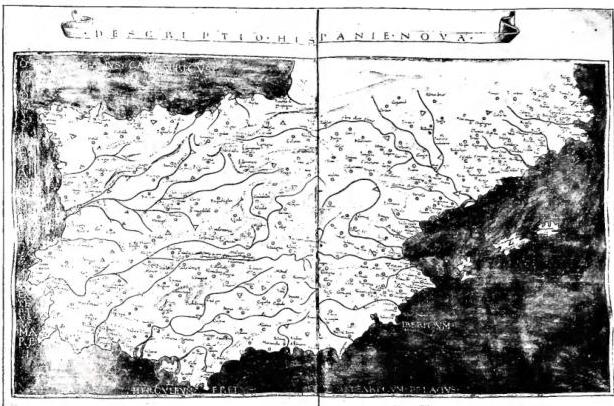
SPAGNA - Map of S. James by Angelo Fiorentino (1472) - Vatican Library, cod. Urb. lat. 277, ff. 122-23.
This population is quite unevenly distributed: the highest densities are found in the northern coastal regions (Biscay, Catalonia), while the lowest are in the interior, where, over vast areas, the density falls below 25 inhabitants per km².
| Historical Regions | Area (km²) | Population (1948 census, in thousands) | Density (per km²) | Capital (and relative population in thousands) |
|---|---|---|---|---|
| Andalusia | 87,218 | 5,219 | 60 | Seville 383 |
| Aragon | 47,609 | 1,059 | 23 | Saragossa 267 |
| Asturias | 10,895 | 837 | 77 | Oviedo 104 |
| Balearic Islands | 5,014 | 407 | 81 | Palma 138 |
| Basque Provinces | 7,260 | 956 | 131 | Bilbao 231 |
| Canary Islands | 7,273 | 680 | 91 | Las Palmas 150 |
| New Castile | 72,347 | 3,129 | 43 | Madrid 1,440 |
| Old Castile | 50,221 | 1,577 | 32 | Burgos 70 |
| Catalonia | 31,940 | 2,891 | 91 | Barcelona 1,240 |
| Extremadura | 19,940 | 511 | 30 | Badajoz 85 |
| Galicia | 28,449 | 2,496 | 86 | La Coruña 125 |
| León | 53,338 | 1,732 | 32 | León 53 |
| Murcia | 26,179 | 1,093 | 42 | Murcia 215 |
| Navarre | 10,421 | 370 | 35 | Pamplona 73 |
| Valencia | 23,304 | 2,177 | 93 | Valencia 527 |
| Spain | 503,061 | 25,878 | 51 |
Giuseppe Caraci
II. CIVIL HISTORY
1. Roman Domination. - When the Romans conquered the Iberian Peninsula, they found a land where profound racial mixing had already occurred. The oldest stratum of the population consisted of Ligurians and Iberians: in the 6th century B.C., according to Herodotus, Celtic tribes had advanced as far as the Gulf of Cadiz; linguistic traces of the Celts extend as far as the Tagus. The intermingling of these elements gave rise to the general term Celtiberians. On the coasts, before 1000 B.C., the Phoenicians used the emporium of Cadiz for the tin trade from the Cassiterides and that of Tartessos (Tharsis) for the silver of Andalusia; the Phocaeans had descended from Massalia along the coasts. Iberian mineral wealth had been significant in the formation of Mediterranean civilization since prehistoric times. The Carthaginian plan to create a vast Afro-Iberian empire encountered opposition in Rome. In 210, the consul Gnaeus Scipio appeared in Spain; in 206, Baetica was conquered, the first colony, Italica, was founded, and from that year begins the era of the Roman province of Spain.After Zama, Roman legions began a fierce struggle with the rebellious Celtiberian tribes; amid the uprisings, the two provinces known as Citerior and Ulterior were organized (197). Violent repressions were followed by no few in-
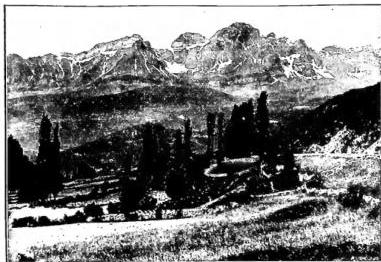
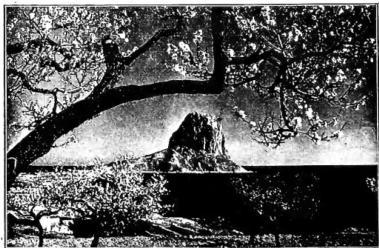
(courtesy of the Spanish Tourism Office)
### The Aragonese Pyrenees.
The pacification achieved with the destruction of Numantia after its heroic defense in 133 B.C. was followed by a resurgence with the rebellion of Sertorius, caused by the struggle between Marius and Sulla; the rebel leader was assassinated in 72 B.C.
Roman colonies and old centers organized as municipalities became centers for the diffusion of the Latin language. Especially the southeastern cities managed to integrate perfectly into Latin civilization and became notable centers of culture; Latin letters had from Spain no few writers of great importance: Seneca, Lucan, Martial, Pomponius Mela, Columella, Quintilian; politics had several great emperors, Trajan, Hadrian, Marcus Aurelius, Theodosius I. During the imperial age, few political events are to be remembered for the Spanish provinces. In the Diocletian reorganization of the Empire, Spain formed a diocese of the prefecture of Gaul and was divided into five provinces: Lusitania, Tarraconensis, Baetica, Carthaginensis, and Gallaecia.
2. The Visigothic Domination
In 409, some Germanic tribes that had invaded Gaul in 406 crossed the Pyrenees and began to plunder the Spanish provinces: Suebi and Vandals Asdingi in Gallaecia, Alans in Lusitania, Vandals Silingi in Baetica. The imperial government, to combat them, used as allies the Visigoths, whom it had settled in those same years in Gaul around Toulouse. In 429, the Vandals Silingi abandoned Spain, and possession of the peninsula was contested among the Suebi, Alans, and Visigoths. The Suebi attempted the conquest of all Spain, but the Visigoths under King Theodoric II repelled them from Lusitania into the mountains of Gallaecia. It is difficult to specify the stages of Visigothic expansion: from 466, King Euric expanded into Tarraconensis, and after 484, Alaric II into Carthaginensis and Baetica. This period represents the maximum development of Visigothic power. Euric initiated Visigothic legislation, having the national customs written down; Alaric II collected in the Breviarium Alarici the laws of the Roman subjects. Against the danger of a Frankish advance, the young Amalaric, successor to Alaric II (d. 507), was protected by his relative Theodoric, king of Italy, who placed in Spain as regent his trusted Theudis.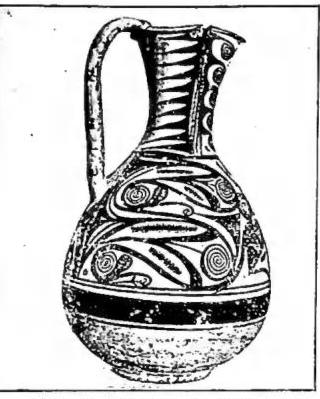
Within King Leovigild’s family, serious discord now began: his eldest son, Hermenegild (v.), under the influence of his wife, the Frankish Ingund, and the bishop of Seville, St. Leander, converted to Catholicism and rebelled against his father; defeated, he was imprisoned and killed (585). Leovigild was succeeded in 587 by his second son, Reccared, who converted to Catholicism, compelling his subjects to follow him.
This event favored the fusion of the two races: the abolition of the marriage prohibition in 583 is indicative. Reccared accelerated the legal equality between Goths and Romans and published laws valid for both populations. After Reccared’s death (601), his son Liuva II was the victim of a rebellion by Arian nobles who, defending the principle of election, brought Witteric to the throne; after Witteric was assassinated in 610, he was succeeded by Gundemar; in 612, Sisebut ascended the throne, being the first to be consecrated, thus introducing sacred unction into royal coronations. Sisebut obtained from Governor Caesarius the cession of Málaga and Cartagena, and the Empire retained the possession of Algaviva with the cities of Ossonoba and Lacobriga, though these too were occupied after 620 by his successor, Suinthila, Sisebut’s son-in-law. However, subsequent rebellions show how the Visigothic monarchy failed to subdue the overly wealthy and powerful aristocracy; even the episcopate was bound to it by family ties and shared its interests.
King Chindaswinth strove to overthrow the aristocracy, putting to death all suspects; in the Seventh Council of 646, he decreed exile and confiscation of property against lay and ecclesiastical rebels. But all his efforts were in vain. In the Eighth Council of 653, it was established that the king must be elected by the great laymen and prelates; a sort of moral code was drawn up for the king: the obligation to defend the Catholic faith, to be moderate, not to extort money from subjects, not to use state property for personal interest; every king, before ascending the throne, had to swear these commitments under penalty of excommunication and loss of the throne. Under King Chindaswinth, there was notable legislative activity among the Visigoths: the Breviarium Alarici was abolished, and it was established that all subjects, both barbarian and Roman, were to be judged according to the sole Visigothic law (Forum judicum or Fuero Juzgo) and by the same judges. The Visigothic monarchy thus moved toward the fusion of the two societies, Roman and barbarian, under the auspices of the Catholic Church.
After the death of King Recceswinth in 672, civil strife resumed. The court aristocracy proclaimed King Wamba, while in Septimania, Count Hilderic of Nîmes was proclaimed king. Duke Paul, after suppressing the rebellion, was in turn proclaimed king. The crisis was rapidly overcome by Wamba: he defeated and subdued the rebellious Basque tribes; reoccupied Tarraconensis and Septimania; captured
3. Christian-Visigothic Organization of Northern Spain
Fleeing before the advance of the Arab-Berbers, Visigoths and Romans organized resistance in Asturias. Their leader was Pelagius, who carried the struggle into the Peñas de Europa mountains. Asturias, Santander, Burgos, León, and Galicia formed the Christian stronghold, while the invaders halted at the Duero; between them stretched an abandoned, deserted region over which both sides contended. Around 717, Pelagius was succeeded by an Alfonso I. The history of these princes is reduced to repelling enemy attempts and suppressing rebellions by autonomist noble factions. In the age of Charlemagne, the main Christian center was Oviedo; other centers formed in Navarre and Aragon. By the end of the 8th century, Catalonia was liberated from the Muslims by Charlemagne and became the Spanish March within the Carolingian organization.The life of the Christian petty states in the 8th and 9th centuries was quite miserable: the poverty and narrowness of the land, ill-suited to agriculture, drove the princes to conquer the fertile and wealthy Muslim territories. The southward advance provided the princes not only with Mozarabs but also with Mudejars.
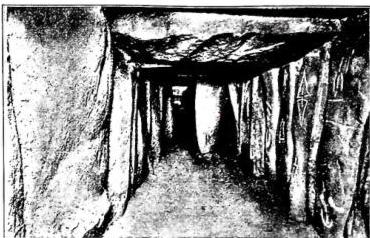
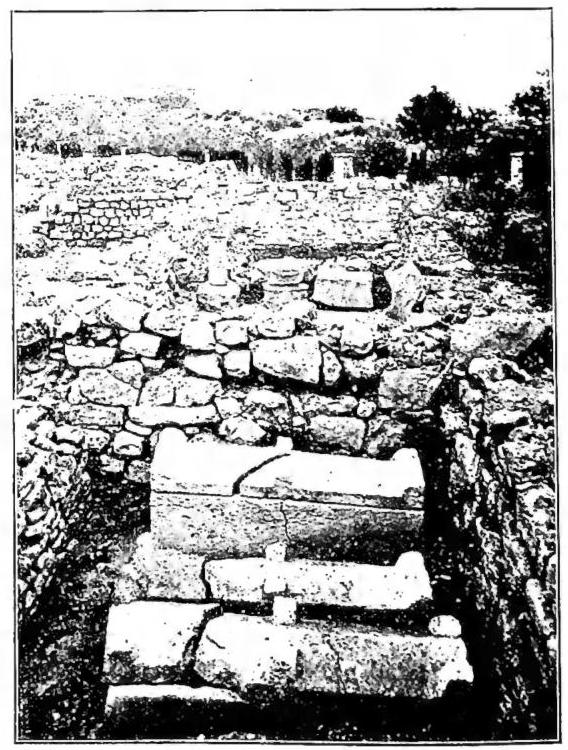
SPAIN - Interior of the great dolmen of Soto (Huelva), composed of monolithic stones with ritualistic carvings.
The defeated Muslims who remained under the rule of Christian princes with their own laws and religion formed a valuable element for the economic life of the Christian states. Not only the princes, but also wealthy lords, churches, and monasteries engaged in the settlement of conquered lands through cartas pueblas (settlement charters), which granted the right to possess occupied lands, own cultivated fields, and be exempt from taxes. By the end of the 9th century, the entire northern region from Galicia to Catalonia was free from Islam, but there could be no talk of a systematic advance southward, nor was there unity: upon the death of Ordoño I (866), his sons divided the domains but fell under the dominance of 'Abd ar-Rahmān III; internal struggles facilitated the caliphs of Córdoba. Sancho, son of Ramiro II, in conflict with his brother Ordoño, took refuge in Córdoba, and an Arab army restored him to the throne.
Only the decline of the caliphate at the beginning of the 11th century marked the beginning of the Christian Reconquest, and for five centuries, the entire history of Spain was dominated by this driving idea. It is true that among the Christian princes, struggles were continuous. León, Castile, and Navarre were ruled by closely related princes but in conflict with one another; Sancho of Navarre succeeded in absorbing Castile and León. In 1035, his sons divided the domains; in 1037, Ferdinand reunited Castile and León and dominated all territories between the Duero and the Cantabrian Sea. Meanwhile,
(from Ars Hispaniae, 1, Madrid 1917, fig. 212) An Iberian jar, originating from the necropolis of Cabecico del Tétoro. Murcia, Provincial Museum.
In the west, however, the Kingdom of Castile-León suffered a weakening Portugal (v.). Alfonso Henrique arbitrarily proclaimed himself king in 1139, then in 1143 became a vassal of the Pope; reconciled with the king of Castile, he recognized him as his lord, but in 1179 he had himself released from all ties.
After the death of Alfonso VI of Castile, his daughter and heir Urraca, widowed from Raimondo of Barcelona, married Alfonso I, king of Aragon. Thus, for a moment at the beginning of the 12th century, the union of Aragon and Castile was achieved; but the marriage was declared null by the Pope, and the two kingdoms returned to being divided. Urraca’s son, Alfonso VII, in his ambition to dominate all of Spain, assumed the title of emperor of Spain in León in 1135, imposing feudal homage on the various princes. He did not, however, forget the struggle against Islam: in 1146 he occupied Córdoba. In 1147, the leader of the Almohads, a new Islamic movement that had developed in the Maghrib, appeared in Spain. The new wave retook many cities conquered by the Christians: the defense of Castile and Aragon was hampered by conflicts between the two kings. Only after 1147 was an agreement reached between Castilians and Aragonese, and in 1179 Alfonso II of Aragon and Alfonso VIII of Castile established the division of future conquests. The Almohad caliph an-Nāṣir was defeated in the great Battle of Las Navas de Tolosa (1212) by Alfonso VIII of Castile and Peter II of Aragon. Although the victory was not immediately exploited, it was evident that with the fall of the Almohads, Spanish Islam had lost all its vitality and offensive capacity.
4. The balance between the Spanish monarchies in the 13th–15th centuries
If during the 12th century Castile had held supremacy among the various Iberian states, in the 13th century the Aragonese-Catalan state, further enlarged by the counties of Montpellier and Urgell, was able to rival Castile victoriously. Peter II visited Pope Innocent III in 1204 and obtained the royal crown from him. After the Battle of Las Navas, the struggle against the Arabs subsided; only James I in 1229 resumed the advance: he dislodged the Muslims from Majorca and Minorca, then occupied the Kingdom of Valencia up to Cape de la Nao. Meanwhile, Ferdinand III of Castile occupied Andalusia, made the King of Murcia his vassal, and imposed his alliance on the King of Granada. The two Christian kings then concluded an agreement to divide the conquests: the border point would be Biar near Alicante; the lands conquered to the south would belong to Castile. Castile and Aragon now had independent lives. Ferdinand III was succeeded in Castile by Alfonso X the Wise (1252–84). He dedicated an expedition against Cádiz and another against Cartagena to the struggle against the Moors of Granada.Aragon, untouched by the Almoravid wave, resumed the struggle at the end of the century. Peter I occupied Huesca in 1096 and Barbastro in 1101; Alfonso I conquered the cities of the Ebro, Tudela in 1110, and Zaragoza in 1117; in 1125, crossing the Kingdoms of Valencia and Murcia with force, he reached the Mediterranean, and in 1134 he died beneath the walls of Lleida. The successor of Alfonso I, his brother Ramiro, neither a warrior nor a politician, gave his daughter in marriage to the count of...
His attention, however, was directed elsewhere. His legal work Las siete partidas was inspired by Roman law, and his political activity revealed an absolutist tendency against which the nobles of the kingdom rose in arms. Reviving old ambitions of his ancestors, he aspired to make Spain the center of European politics by conquering the imperial crown: in 1257, some German Electors elected him King of the Romans, but he never dared to face the problem of a journey to Germany. Although he established as a principle the succession of the firstborn son and his descendants, upon the death of his son and heir Ferdinand de la Cerda, he was forced by the nobility to recognize his second son Sancho as heir instead of the de la Cerda grandchildren; later, he retracted and recognized the right of the grandchildren. The reign of Sancho IV was now plagued by the struggle against the de la Cerda. The conflict worsened due to the intervention of the king of France in favor of the de la Cerda, and only in 1308 was the matter settled with compensation for the claimants. At the beginning of the 14th century, there was military activity against Granada; peace was restored, and the Moorish king of Granada pledged to pay tribute. After the death of Ferdinand IV (1295–1312), the long reign of Alfonso XI (1312–50) was marred by prolonged civil strife over the claims of various princes to the regency and then to the government. More violent struggles took place after 1350 between Peter the Cruel, son of Alfonso XI’s first marriage, and his illegitimate brother Henry of Trastámara, who had himself proclaimed king in 1366. France and England intervened in the conflict, and the war in Castile became a lively episode of the Hundred Years' War. With French help, Henry of Trastámara prevailed; he succeeded in ending conflicts with neighboring monarchies. His heir, John I, also reconciled with England by marrying his son Henry—who was first called Prince of Asturias—to an English princess. Henry III ascended the throne through a new phase of struggles among princes for the regency; once peace was restored, he initiated a vigorous military campaign, destroying the pirates of Tetouan and occupying the Canary Islands. During this period, the internal political life of the Kingdom of Aragon proceeded more tranquilly, as it was compelled to address Mediterranean issues.
Peter III, son and successor of James I, having married Constance, daughter of the Swabian Manfred, King of Sicily, landed at Trapani in August 1282 to aid the Sicilians who had rebelled in March against King Charles of Anjou. The war between Anjou and Aragon became complicated by the intervention of the Pope and the French monarchy. Boniface VIII, in 1295 with the Treaty of Anagni, granted James II the islands of Sardinia and Corsica, but Frederick, James’s brother, retained Sicily with the Treaty of Caltabellotta. The conquest of Sardinia occupied the reigns of Alfonso IV (1327–36) and Peter IV the Ceremonious (1336–87): the Aragonese kings, forced to fight the Republics of Genoa and Pisa, which had interests in the two large islands, sought the alliance of Venice. Under John I (1387–95), the Sicilian question resurfaced due to the extinction of that branch of the Aragonese dynasty: Martin, who had married Maria, heiress of the Sicilian kingdom, died in 1409, leaving the island to his father Martin I, who had succeeded his brother John in Aragon.
5. The internal organization of the Spanish states in the 14th–15th centuries
Formed slowly through successive conquests over various centuries, the Spanish states had the character of a conglomeration of different regions with distinct organizations and customs. The kings who had led their warriors to war against the infidels had earned privileges and wealth. They granted lands to those who aided them in conquest, but feudalism of the Frankish type did not develop in Spain, with the exception of Catalonia, a Carolingian March.Alongside the kings were the ricos hombres, who in the 13th century formed the mayorazgos to guarantee the indivisibility of the family patrimony; below them were the hidalgos, ancient nobility, and the caballeros, a noble class open to those who could procure a horse and arms. In Aragon, Catalan feudalism was gradually introduced. The cities had a special status due to the freedoms or privileges obtained through conquest and recorded in their fueros.
The Spanish bourgeoisie could organize hermandades to defend itself against the violence of nobles and princes; in the 14th century, they had statutes, assemblies, and officials; they gathered in arms to punish serious crimes (somatent). In the Catalan state, Barcelona held exceptional importance, where a wealthy bourgeoisie of merchants and shipowners held sway. The Cortes were general assemblies derived from the development of the royal Curia and included: the ricos hombres, ecclesiastics, and the procurators of the cities. They convened by order of the king to hear the proclamation of royal decrees and the imposition of taxes; they swore fealty to the new king; participated in the formation of regencies; presented petitions; and in the 14th century, exercised a certain control over revenues and expenditures. The Cortes of Castile were dominated by a sense of monarchical loyalty, devotion, and collaboration with the kings. In Aragon, there were no general Cortes, but rather the particular ones of Aragon, Catalonia, and Valencia, which dealt with the affairs of each individual kingdom. Despite local variations, Castile and Aragon presented a typical unity of institutions and race, and thus were destined to unite.
6. The Castilian-Aragonese Unification. — The 15th century saw the conclusion of medieval political history in the Iberian Peninsula with the unification of the principal Christian kingdoms and the definitive destruction of Muslim domination. The two dominant states were now Castile and Aragon. Navarre, caught between the influence of Castile and that of France, lost all possibility of active engagement in the peninsula. In Castile, King Giovanni II, by marrying his cousin Maria of Aragon in 1418, established a bond of great importance between the two kingdoms. The king’s weakness allowed a resurgence of civil strife, poorly managed by the constable Álvaro de Luna in his attempts to subdue the overbearing nobility. The reign of King Enrico IV (from 1454) was feeble and turbulent: the struggles now concerned the succession. Forced to recognize the legitimacy of his daughter, the king acknowledged his sister Isabella as heir, who pledged to marry her cousin Ferdinand of Aragon (1468). In Aragon, with the extinction of the old dynasty upon the death of Martino I (1410), the Cortes, among various claimants, elected Ferdinand of Antequera, a Castilian, as king, though he had to fight against his rival, the Count of Urgell. Alfonso V, who succeeded his father in 1416, soon became embroiled in the Italian wars for the conquest of the Kingdom of Naples and was more an Italian than a Spanish king; of his 42-year reign, he spent 29 in Italy. In Aragon, his consort Maria governed in his stead, followed by his brother Giovanni, king consort of Navarre, who succeeded him in 1458. Aragon then entered a prolonged period of conflict due to the rivalry between the king and his firstborn son, Carlo of Viana. Only in 1472 did Aragon regain peace; upon Giovanni’s death in 1479, his son Ferdinand II succeeded him, having married Isabella, queen of Castile since 1474.
The organization of the dual Kingdom of Castile-Aragon was regulated by the agreements established in the marriage contract (capitulationes) and by the arbitration pronounced between the two monarchs in 1474 by Cardinal Ximenes: justice was administered jointly and separately by each; royal documents were signed by both; the coins bore the effigies of the two kings; the seal and the arms displayed those of both kingdoms. The principle of absolute equality is evident in the famous formula: «tanto monta, monta tanto Isabel como Fernando». The Castilian-Aragonese union led to the resumption of the struggle against the Muslims of Granada, which had been dormant since 1431, when Álvaro de Luna had defeated the Moors at La Higuera and imposed a tribute. The conflict resumed in 1482 with the Castilian advance under Granada. The internal strife within the family of King Abū l-Ḥasan facilitated the occupation of all the fortresses around Granada: in 1487, Málaga fell; in 1489, Almería did as well; and the capital, Granada, was besieged and forced to capitulate on 2 January 1492. The Muslim inhabitants were granted their lives, property, and the right to leave.
7. The Age of the Catholic Monarchs. — The reign of Ferdinand and Isabella represents an era of great glory for Spain. In the same year that the Christian reconquest was completed, Christopher Columbus, under the contract agreed upon with the queen at Santa Fe (17 April 1491), departed from Palos with three caravels, reaching the island of Guanahani in the Bahamas (San Salvador, Watling) on 12 October. Thus began that series of geographical discoveries which, within a few decades, would make Spain the most important colonial power in Europe until the 19th century. Disputes with Portugal, which was also engaged in exploration and colonization voyages toward the East, were settled by the bull of Alexander VI, which established a line of demarcation (4 May 1493), and by the Treaty of Tordesillas (7 June 1494). Free from internal concerns, the two monarchs followed European political events with the greatest interest. With the Treaty of Barcelona (1493), Ferdinand reclaimed from France the Cerdagne and Roussillon, lost by Giovanni II; later, the conquest of Naples by Charles VIII reopened the conflict. By participating in the anti-French coalition, Ferdinand drove back
(from J. Puig y Cudafalch, A. De Falguerra, J. Godoy y Casals, L'arquitectura románica a Catalunya, I. Barcelona 1989, p. 373)
SPAGNA - Floor plan of the baptistery of S. Michele, built between the 6th and 7th centuries. Tarrasa.
(from Ars Hispaniae, II, Madrid 1917, p. 166)
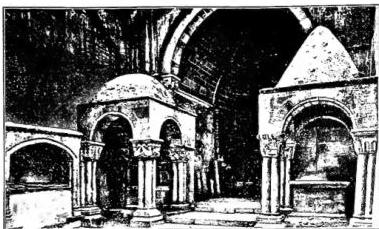
SPAIN - The paleo-Christian "memorial cella" of Ampurias (4th-5th century).
(from J. Puig y Cadalsich, op. cit., pl. 1)
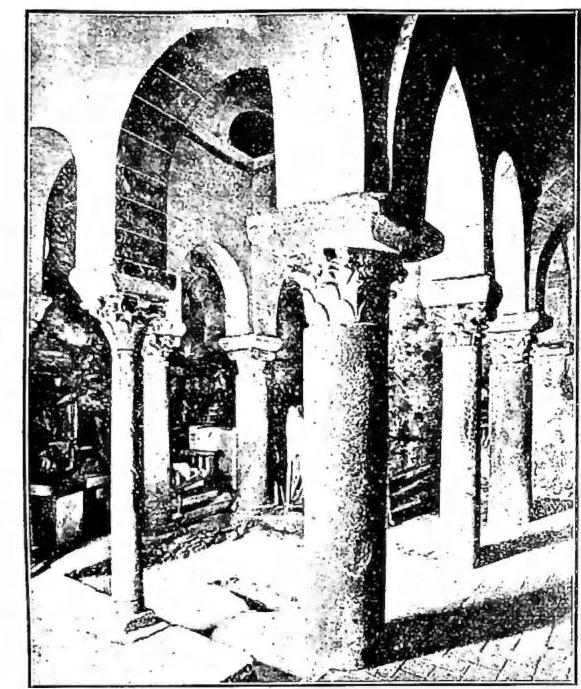
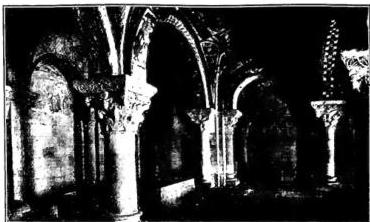
SPAGNA - Interior of the baptistery of S. Michele, renovated in the 9th century - Tarrasa.
from Naples by Charles VIII and established his dominance over the Aragonese of Naples; the new invasion by Louis XII led to the Franco-Spanish agreement for the division of the Neapolitan Kingdom (Treaty of Granada, 1500); but ultimately the French were expelled, and Ferdinand became master of the entire Kingdom (1503). Spain now became one of the fundamental pillars of the European political system, participating in the League of Cambrai against Venice (1508), in the Holy League of Julius II against France (1511), and definitively securing dominance over the Italian peninsula. In domestic policy, under the Catholic Monarchs, monarchical power gained strength. The aristocracy's agitations no longer had the power to impose themselves. Government centralization made progress: royal officials were created to conduct inquiries. The nobility found itself having lost much of its political authority but retained its social privileges and began to become a court nobility. The authority of the Cortes also weakened considerably: in Castile, the queen convened them nine times; in Aragon, Ferdinand only seven, six in Catalonia, and once in Valencia. Great reforms were made in the financial sector, reorganized by creating new taxes, as well as in justice. A standing army was organized, modeled after the Swiss companies, through the work of Gonzalo de Córdoba. Isabella died in 1504, and the government keenly felt the loss in terms of cohesion and political direction. Her only daughter who could succeed her was Joanna, called the Mad (due to mental incapacity): Isabella appointed her consort Ferdinand as regent. He sought to maintain a firm direction in affairs. He conducted a series of expeditions against the Barbary States (1508-11); in 1512, he attempted the annexation of Navarre. Ferdinand died on 23 January 1516.
8. The Habsburg Monarchy
The Habsburgs reigned in Spain from 1516 to 1700: they truly created the unity of the Spanish state. Charles I, son of Joanna the Mad, wife of Philip of Habsburg, assumed the regency for his mother in 1516 but soon considered himself the true king. He did not know Spain nor the Castilian language, having been born in Ghent (1500). Upon arriving in Spain, he surrounded himself with Flemish advisors, and when elected emperor in 1519, he saw Spanish interests only within the broader context of his various domains: the Netherlands inherited from his father, the Empire, the Spanish and Italian states inherited from his maternal ancestors. The government of Charles I in Spain initiated a very strict financial policy and soon aroused discontent; many cities rebelled: Toledo, Segovia, Ávila, Burgos, Zamora, and the bourgeois comuneros movement was led by noble figures, among whom Juan de Padilla stood out. The kingdom's governor, Cardinal Adrian of Utrecht, failed in his attempt to suppress the uprising with an expedition against Segovia. The deputies of 15 cities created the Santa Junta on 29 July 1520, swearing to live and die in the service of the King and the Comunidad.The rebels protested their devotion to the King but demanded reforms in finance and justice; however, the movement later took on an anti-noble character and lost strength. Already in 1521, the militias of the Santa Junta were defeated; the leaders Juan de Padilla, Maldonado, and Bravo were beheaded. Charles V, returning to Spain in 1523, announced a general pardon but with many exceptions that masked a harsh repression. After the crisis, royal authority appeared even more strengthened; the Cortes, however, retained the right to complain and to vote on servicios. Social unrest also occurred in Valencia and Majorca but was harshly suppressed. The war that broke out between France and Spain in 1521 also had a military phase at the border, particularly in Navarre. The comuneros seemed to attempt agreements with Francis I against Charles V: the latter, due to the internal crisis, was in a position of inferiority compared to the united France. The Franco-Spanish war was transferred from Navarre to Italy: at Pavia, Spanish forces won on 24 February 1525, capturing Francis I, who was taken to Madrid, where on 15 January 1526 he signed the Treaty renouncing his aspirations over Italy and the Netherlands. After his release, the King of France organized a league against Charles V to deprive him of Naples and Milan. To punish Clement VII for having joined this league, Charles V organized the expedition that ended with the Sack of Rome. The news of this terrible event made a strong impression in Spain and embarrassed Charles V.
After the Peace of Cambrai with France (1529), the King of Spain reconciled with the Pope, who crowned him emperor in Bologna. In 1535, upon the death of Francesco II Sforza, Spanish forces occupied Milan, although it legally belonged to the Empire. The struggle between Spain and France for dominance in Italy resumed: in 1544, a brief peace was achieved (Crépy) only to resume and last until the Peace of Cateau-Cambrésis (1559). Forced to address the serious problems of Germany, Charles V paid little attention to Spanish affairs after 1530. He ensured the defense of its prestige in the Mediterranean with the expedition to Tunis in 1535 to suppress piracy. A complete failure was a second expedition to the African coasts in 1541. Spanish troops later went to Austria to support Ferdinand of Austria, the king's brother, against the Turks. While the King used the financial and military forces of Spain without restraint to establish the primacy of his House in Europe, beyond the Ocean, Spanish officials explored the American continent and created the great possessions of Central and South America: the discovery of the silver mines of Potosí significantly strengthened Charles V's European policy. In 1556, the King, weary (though not old) of a political life so tumultuous that had lasted forty years, abdicated the throne of Spain in favor of his son Philip, who also received the Netherlands, the Italian domains, and the American possessions; in 1558, he relinquished the Empire and the Habsburg domains to his brother.
Philip II reigned over Spain from 1556 to 1598. The program of his 42-year government was to establish Spanish dominance over Europe, which for him was indistinguishable from the triumph of the Catholic faith over heresy. After the war ended with the Battle of Saint-Quentin (10 August 1557) and the Treaty of Cateau-Cambrésis, which marked the humiliating surrender of France, Philip II had to direct his activity in various directions. The threats of the Turks against Malta and Cyprus led to the League...
the Christian fleet, commanded by Don Giovanni d'Austria, the King’s brother, defeated the Turks at Lepanto (7 October 1571), though it failed to save Cyprus. After 1565, he faced the rebellion of the Netherlands, led by the Prince of Orange and the Count of Egmont. In 1580, with the extinction of the House of Aviz in Portugal, the King of Spain, by virtue of his maternal inheritance rights, occupied the Kingdom, thus achieving the complete unification of the peninsula. In the following years, Philip II’s relations with the Queen of England, who had taken the rebels of the Netherlands under her protection, deteriorated to the point of complete rupture, and after the condemnation of Mary Stuart, the King of Spain organized a great naval expedition to land in England, which, however, ended in miserable failure (1588). He then threw his support behind the French Catholics who were fighting against Henry of Navarre, the pretender to the French throne, Henry IV. The struggle, however, led to the triumph of Henry IV, who, having converted to Catholicism, succeeded in uniting all his subjects around him: peace between France and Spain was concluded in 1598. All this policy of armed interventions across Europe weighed terribly on Spain’s internal life. Under Philip II, absolutism took its definitive form. He believed he could merge the various Spanish kingdoms into a homogeneous whole. To better serve his political conceptions, Philip II established a new capital in a central location at
Madrid; his residence was the great palace-monastery of El Escorial, 50 km from Madrid. His was a bureaucratic monarchy; he governed alone with his secretaries, who were, at least in appearance, mere executors of orders. The King, however, consulted the Council of State (Consejo de Estado), his private council, as well as the councils of the various kingdoms—Castile, Aragon, Italy, the Indies—and the technical councils of War, the Inquisition, the Orders, and the Treasury (Hacienda). The court, magnificent due to the Burgundian ceremonial imported by Charles V, was complex, cumbersome, and costly. The Cortes continued to exist but without real importance. Finances had to bear ever-increasing burdens, and despite the influx of precious metals from the Americas and both direct and indirect taxes, it was never possible to obtain what was necessary. The deficit became constant: despite resorting to Genoese bankers, in 1557–1560 the King had to endure a first bankruptcy; a more severe one followed in 1574.
Discontent in the country was severe, but under the pressure of the government, it turned into grim resignation. In the 17th century
(from Ars Hispaniae, II, Madrid 1917, fig. 201)
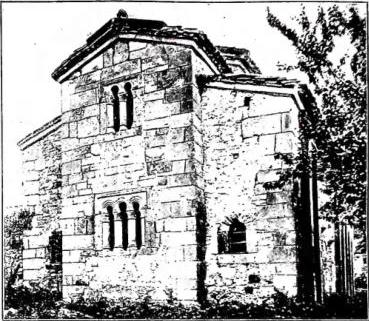
SPAIN - Apse of the church of S. Salvatore of Valdediós (Asturias), consecrated on 16 Oct. 893.
economic conditions worsened. Agriculture was in full decline due to the growth of latifundia, the increasing formation of mayorazgos, the organization of the Mesta in defense of grazing and the wool trade, the destruction of mariscos, emigration to America, and above all the marked disdain of the Spanish people (unmatched in discoveries and conquests) for all forms of manual labor. The decline of Mediterranean commerce from the 15th century greatly affected Aragon and Catalonia: the great port of Barcelona was emptied. Instead, the Castilian ports of Cádiz and Seville flourished due to relations with America, but protectionist legislation and the organization of commerce funneled all benefits into foreign hands. Commerce, in fact, was not part of Castilian traditions, and despite the vast colonial empire, there was no impetus for commercial activity that might have led to the formation of a wealthy bourgeoisie. The feudal nobility, in turn, suffered the consequences of the price revolution, and in response to the decline in land revenues, it remedied
SPAGNA - Interior of the church of S. Maria di Naranco (Oviedo), founded by King Ramiro in the 9th century, restored in 1930-34.
by integrating itself into the Court and drawing from the treasury. The consequence of this crisis was a decline in population: by the end of the 17th century, it was estimated to have been reduced to seven million. Such a disastrous economic situation no longer allowed the monarchy to sustain, in the 17th century, the policy necessary to defend its dominions and prestige. After Philip II, Spain still participated in the great European conflicts, but in conditions of ever-increasing inferiority. In 1609, it was forced to recognize the existence of the Republic of the Seven United Provinces with the Twelve Years' Truce.
In Italy, it barely managed to impose itself on Carlo Emanuele I of Savoy between 1614 and 1618. The War of the Valtellina (1621-26) ended with the humiliation of the Madrid government. The War of the Mantuan Succession saw Spain defeated again (1627-31). In 1640, Portugal rebelled and regained its independence. The Thirty Years' War, which concerned the dominance of the Habsburgs in Germany, forced the Madrid government into a harsh struggle to defend its
SPAIN - Church of the 12th century - S. Comba de Bande (Orense).
its dominions in Italy and the Netherlands; with the Peace of Westphalia, it recognized the independence of the Seven United Provinces (1648); with the Peace of the Pyrenees, it ceded Artois, Roussillon, and Cerdagne to France (1659). It then became necessary to resist the attacks of Louis XIV’s France: the War of Devolution deprived Spain of several cities in Flanders (Treaty of Aachen 1668); the Peace of Nijmegen gave France the Franche-Comté and other cities in Flanders (1678). Spain no longer had the money or men to resist; it endured more by the rivalry among the Great Powers than by its own strength.
9. The Bourbon Monarchy
With the death of Charles II, the Habsburg dynasty came to an end (1700), and the succession was contested by the King of France, Louis XIV, on the basis of rights derived from his mother, Anna of Austria, and his wife, Maria Theresa of Austria, and by the Emperor Leopold of Austria, on the basis of rights derived from his wife, Margaret Theresa of Austria. From Vienna, the Emperor’s son, Charles III, was sent to Spain, supported by the Anglo-Dutch, while Louis XIV installed his grandson, Philip V, in Madrid, in accordance with the will of Charles II. The long War of the Spanish Succession ended with the Peace of Utrecht (1713): Philip V obtained the throne of Spain with its colonial possessions, but Spain lost its Italian and Netherlands dominions, as well as Gibraltar and Minorca. However, as soon as the Peace was signed, the Bourbons immediately resumed diplomatic activity to prepare for the reconquest of the lost dominions. The driving force behind this new policy was Philip V’s second wife, Elisabeth Farnese, concerned with securing the Farnese inheritance for her sons, and supported by the minister Cardinal Alberoni. Yet the attempt to restore Spanish power failed: Elisabeth Farnese succeeded only in having her son Charles recognized as heir to Parma and Piacenza, which later passed to her other son, Philip, while Charles of Bourbon obtained Naples and Sicily with the Peace of Vienna (1738). The government of Madrid, in the Polish and Austrian succession wars, ended up following the government of Versailles step by step. Thus emerged a family policy that led Spain to fight against England, sacrificing its colonial interests and undermining its internal reconstruction program. The first act of this policy was the Family Compact of Fontainebleau (1743). The promises made to Philip V to grant him Lombardy, Naples, Gibraltar, and Minorca vanished with the Peace of Aachen. During the Seven Years' War, Spain remained neutral; a new Family Compact was renewed in 1761 by the minister of Charles III, Grimaldi: the four Bourbon monarchies—France, Spain, Naples, and Parma—united in defense. Thus Spain entered the war against England, but with the Peace of Paris (1763), it lost Florida and received Louisiana from France in exchange. The Family Compact continued to dominate Spanish policy as the only defense against British imperialism.In the struggle for the independence of the United States, Spain joined the alliance with the rebels (Convention of Aranjuez, 1779), but hopes of regaining Gibraltar and Florida failed with the Treaty of Versailles (1783). The loss of European dominions proved advantageous rather than harmful to the Bourbon monarchy, as it allowed it to focus on the country’s internal problems. There arose a need to restore national wealth, and industries and commerce, still entirely in the hands of the French and English, were revived. To carry out this action, the Bourbons gave their government an even more pronounced absolutist and centralizing direction. Thus, the fueros of Aragon, Catalonia, Valencia, and Majorca were abolished, and the administrative autonomies and particular laws of various regions disappeared. Under Charles III, the political direction of enlightened despotism was imported into Spain. Agriculture felt the influence of new methods; reclamation works were initiated; the privileges of the Mesta were reduced; associations of landowners were authorized; and the arable lands of the communes were distributed among the peasants.
10. Spain and the French Revolution
The Family Compact lasted until 1790, when the Constituent Assembly declared it null and void. The Spanish court made every effort to save Louis XVI, and after the King’s execution, it broke off diplomatic relations; the Convention declared war on Spain on March 7, 1793. Fighting took place in the Pyrenees; the Spanish army advanced toward Perpignan, but in 1794 the French entered Catalonia. The war was popular in Spain due to the preaching of the clergy, although a severe economic crisis afflicted the population. Those who sympathized with revolutionary ideas were forced to flee to France. After the defeats of autumn 1794, peace negotiations began: the Treaty of Basel of July 22, 1795, ceded the Spanish part of the island of Santo Domingo to France. Secretly, Spain became an ally of France for action against England. The war was ruinous: the Spanish lost Minorca and Trinidad, while the French oppressed them with their arrogance. The First Consul continued the policy of the Directory; he compelled the government of Madrid to place its ports and fleet at his disposal. After the occupation of Portugal in 1808, Napoleon deemed it necessary to bring Spain directly into his system; taking advantage of dynastic disputes, he imposed the abdication of Charles IV and the renunciation of the throne by Prince Ferdinand to give Spain his brother Joseph as king. Joseph entered Madrid on July 20, 1808, but rebellion immediately broke out in Oviedo. Insurrectional juntas formed everywhere; the one in Seville proclaimed itself supreme and assumed government. The struggle took on an extremely atrocious character; the French burned villages and destroyed populations; the Spanish killed isolated Frenchmen and prisoners. In November 1808, Napoleon intervened with the corps of the Grande Armée and restored Joseph to Madrid, but after his departure in January 1809, Spain was again in full insurrection. The junta of Seville moved to Cadiz in January 1810 and organized a Council of Regency; the Cortes convened there and created a government. However, this activity was disjointed due to discord between military and civilian leaders and the population’s discontent with conscription. No more than one hundred thousand men were ever under arms, and the war against the French, conducted through guerrilla tactics, lasted until 1813. In 1812, the Cortes, dominated by a majority of liberal deputies who did not represent the conservatism of the population, drafted a constitution that mimicked the French Constitution of 1791: abolition of privileges; proclamation of national sovereignty; separation of powers; monarchy limited to the executive with a suspensive veto. Catholicism, however, was considered the state religion.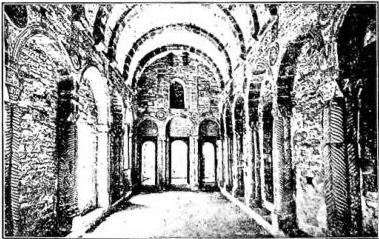
11. The Struggles of the 19th Century for the Organization of the State
The French invasion had ruined the country; the American colonies, risen against Napoleon, remained in arms against the government. In 1820, at the camp of Cadiz, the movement of the liberales officers broke out; initially suppressed, it resumed in La Coruña: an insurrectional junta proclaimed the Constitution of 1812. King Ferdinand yielded, and a constitutional government was organized. The intervention of the Holy Alliance and French military forces restored absolute government: the repression was ferocious; the same occurred after the liberal uprising of 1824. Later, King Ferdinand’s government inclined toward mildness and amnesty; the discontented gathered around the King’s brother, Don Carlos.Then the crisis took on a new aspect when King Ferdinand recognized the succession of his daughter from his fourth marriage, Isabella, to the detriment of his brother (1833). Two parties now contended for Spain: the cristinos, supporters of the regent queen Cristina, and the carlists: the former liberal, the latter conservative. In 1834, the Regent granted a Statute modeled on the French Charter of Saint-Ouen: a constitutional monarchy with a non-responsible ministry and Cortes divided into two estamentos that voted on laws and taxes. Parliamentary life in Spain remained insignificant: the mass of citizens did not participate. The liberals, however, were divided into moderates and progressives; the latter harassed churches and monasteries in retaliation against the carlists, who had risen in 1834 and dominated the northern provinces, where Don Carlos had established his own government. The war was extremely harsh for several years.
After 1840, with Queen Cristina having left Spain, the generals contended for power around the young Queen Isabella. From 1840 to 1843, General Espartero was dictator; overthrown, he was replaced between 1844 and 1851 by General Narváez; then Bravo Murillo governed; in 1854, Narváez reappeared, followed by Espartero. Queen Isabella, declared of age in 1843, married her cousin Francis of Assisi; in 1845, a new Constitution was proclaimed, and another in 1855.
After the republican insurrection in Barcelona in 1912, Alfonso XIII called the liberals to power. Spain faced serious problems: the need to establish effective domination over the Moroccan zone granted
SPAGNA - The "Panteón de los Reyes". Basilica of S. Isidoro (11th century) - León.
the Powers of Europe had granted to Spain; and the stance to adopt between the two blocs of Powers into which Europe was divided. When the European conflict erupted in 1914, Spain remained neutral, although sympathies leaned toward Germany. Neutrality proved profitable, as the country reaped great benefits by supplying the belligerents, but Spain emerged from the war equally exhausted: the governing parties were corroded, while extremist parties showed renewed vigor. The war against Moroccan rebels concluded in 1921 with a grave disaster, the responsibility for which was attributed to the King. After attempting to rely on conservative elements, Alfonso XIII allowed General Primo de Rivera to establish a dictatorship in 1923, in correlation with Fascist Italy. Parliamentary government was restored in 1930. However, the municipal elections of April 1931 resulted in a clear prevalence of the Republican Party, and to avoid a popular insurrection, Alfonso XIII abandoned Spain (14 April 1931). The proclamation of the Republic, instead of bringing peace, marked the beginning of a continuous chain of strikes, riots, and the burning of churches and convents: soon, the old-style bourgeois republicans were overtaken by socialists and anarchists. In 1933, an attempt was made to organize a strong moderate government, but Asturias and Catalonia were in serious insurrection. In the 1936 elections, the left-wing groups of the Frente Popular prevailed, attempting to impose a proletarian dictatorship on the country; they did not succeed but only provoked a more intense phase of anarchy.
The reaction came through a military uprising led by Generals Sanjurjo and Franco (July 1936). Spain was now divided between the "democratic" government of Madrid and the revolutionary military government organized by Franco in Burgos. A merciless civil war erupted between the two factions. The Spanish problem quickly assumed great importance in European politics: Italy and Germany sided with Franco, aiding him with the dispatch of volunteers and matériel. The Soviet Union and, more discreetly, France aligned with the "democratic" government. The civil war lasted until 28 March 1939, when General Franco occupied Madrid, and the Republican government took refuge in France. Thus began the work of restoration and the repression of the most radical left-wing elements. The government took on the character of a military dictatorship supported by conservative elements. Italy and Germany sought to drag Spain into the European war, but Franco proved a rigid and fortunate guardian of neutrality.
(da Ars Hispaniae, V, Madrid 1918, fig. 27)
Interior of the church of the Knights of St. John (12th century).
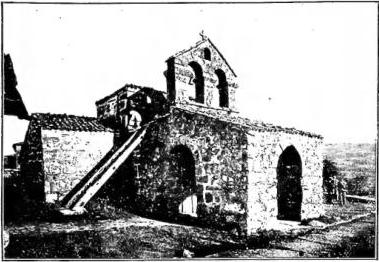
Duero (Soria).
BIBL.:
For general works, see the bibliography at the end of the preceding section. For the history of art, see the bibliography in V. ARTE, and for ecclesiastical history, in V. CHIESA.
Francesco Cognasso
III. MUSLIM SPAIN
12. The Occupation (710-36)
In 710, Rodrigo ascended to the throne of the Visigothic Kingdom, defeating the supporters of Witza. The latter, along with the governor of Ceuta, don Julián, facilitated the Arab invasion. After a small-scale landing by Tarif in 710, Ṭāriq b. Ziyād disembarked at the site of the future Gibraltar with troops mostly composed of Berbers in 711 and, in the same year, defeated Rodrigo at the lake of La Janda, pushing as far as Toledo. He was followed in 712 by Mūsā b. Nuṣayr, the Muslim governor of North Africa; the conquest continued rapidly, only halted at Poitiers by Charles Martel (732). The moderate policy of occupation (v. ISLAM) reconciled the population to the Muslims; however, internal struggles between Berbers and Arabs, and between southern and northern tribes, weakened them. The Berbers abandoned thenorthwestern provinces, where resistance and the first reconquista organized around the Christian state of Asturias. By 756, the Muslim frontier extended from Coimbra to Toledo and from there to Tudela and Pamplona in the Pyrenees.
13. The Umayyad Emirate (756-929)
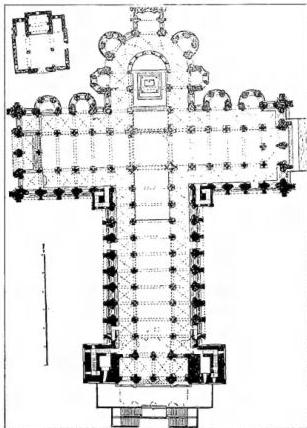
The Umayyad ʿAbd ar-Raḥmān, who had escaped the massacre of his family by the ʿAbbāsids, arrived in Spain in 755 and was recognized as emir in Córdoba in 756, founding the Spanish Umayyad dynasty. He firmly organized the state, suppressing a Berber revolt; during this period, the episode of Roncesvalles (777) occurred. He was succeeded by Hišām I (788-96), under whom the power of the jurists (fuqahāʾ) was affirmed. These jurists rose up against SPAGNA – Romanesque floor plan of the church of S. Giacomo di Compostella.the son al-Hakam I (796-821), displeased by his dissolute life, inciting the renegados—that is, converts to Islam who, despite their conversion, were treated as inferiors—in Córdoba. The revolt was bloodily suppressed, as was an insurrection in Toledo. 'Abd ar-Rahmān II (821-52) had to confront unrest among his Christian subjects (mozarabs) in Mérida and Toledo; under the leadership of St. Eulogius (v.), they met martyrdom. Their revolts continued even under Muḥammad I (852-86); moreover, the renegados established autonomous centers in Toledo, Aragon, Medina, and Bobastro ('Omar b. Ḥafsūn). The crisis, after the emirate of al-Mundir (886-88), worsened under 'Abdallāh (888-912); 'Omar b. Ḥafsūn extended his power, and the Arab aristocracy rose in Seville. It was 'Abd ar-Rahmān III (912-61) who restored the situation. In 929, he assumed the title of caliph.
14. The Umayyad Caliphate (929-1031)
'Abd ar-Rahmān put an end to the civil wars among Arabs, Berbers, and Spaniards; he counterattacked the Christian kingdom of Asturias to the north, which in the meantime (910-24) had taken the name of León and gained ground, stabilizing the frontier along the Duero. He extended his influence into North Africa, repelling the Fatimid threat. Under his son al-Hakam II (916-76), peace and culture flourished; with Ḥišām II (976-1008), military campaigns resumed, led by the famous al-Manṣūr (d. 1002), who, at the head of an army of foreign Slavs, Berbers, and Christian mercenaries, carried out major raids into Christian territory, reaching as far as Barcelona, León, and Santiago de Compostela. After al-Manṣūr’s death, a rapid crisis ensued amid internal struggles among the military factions. The caliphate fragmented into small local kingdoms (reinos de taifas) and ended in Córdoba in 1031.15. The Reinos de Taifas
The principal ones were as follows: in the south, with a Berber majority: Málaga (Ḥammūdids) and Granada (Zīrids). In the east, with a Slav majority: Almería, Denia, and Valencia. In the northeast: Zaragoza. In the center: Toledo (Dū'n-Nūnids). In the west: Badajoz (Aftasids) and Seville ('Abbādids). The Christian states took advantage of this fragmentation: in the northwest, the Kingdom of León, which from 1037 became León and Castile; in the northeast, Navarre. Aragon and other minor states, emerging from obscure origins during this period. Ferdinand I of León and Castile made Zaragoza, Toledo, Badajoz, and Seville tributary. The growing power of his son Alfonso VI prompted the southern states to call upon the Almoravids of Africa.16. The Almoravids and the Almohads
Yūsuf b. Tāšufīn landed at Algeciras and defeated Alfonso VI at Zallāqah (1086). After withdrawing to Africa, he returned in 1090 and conquered nearly all Muslim Spain. The Almoravids honored the fuqahā' and established a regime of religious intolerance, alienating Jews and mozarabs. In the north, the Christians pressed forward: Alfonso I of Aragon defeated the Almoravids at Cutanda in 1120 and in 1125 carried out a major raid into Muslim Spain; Alfonso VII of León and Castile advanced as far as Jerez and Almería. The Almoravid state fragmented into new reinos de taifas, which in 1145 provoked the intervention of the Almohads, already established in North Africa. The Almohads progressively conquered Muslim Spain; only Majorca resisted until 1202. For several decades, they confronted the Christians, who were themselves troubled by internal discord. But in 1212, the Christian forces united and defeated them at Las Navas de Tolosa. As the Almohads fragmented into smaller kingdoms (including Valencia and Murcia), Ferdinand III of León and Castile conquered Córdoba (1236) and Seville (1248), subjugating Murcia (1243); James I of Aragon took possession of Majorca (1235) and Valencia (1238). By around 1270, only the Kingdom of Granada remained in Muslim hands.17. The Kingdom of Granada (1232-1492)
This state, which extended along the coast from Gibraltar to beyond Almería, maintained its autonomy for a long time, pursuing a policy of balance between the Christian states and the Marinids, who had supplanted the Almohads in Morocco in 1269 and occupied some points on the Spanish coast (Tarifa, Algeciras, Ronda). After unsuccessfully attempting to defeat Granada in alliance with the Marinids (1309), the Christians managed to expel the latter between 1340 and 1344. Gibraltar was taken in 1462. Finally, the Catholic Monarchs, after SPAGNA - Interior of the Cathedral dome (late 12th-early 13th century) - Salamanca.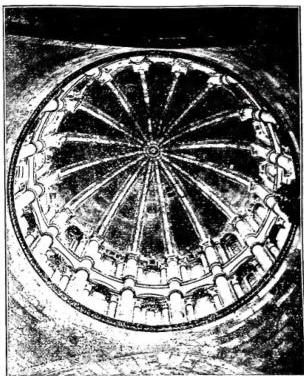
IV. ECCLESIASTICAL HISTORY
18. Origins to the invasions of Germanic peoples
The Apostle St. Paul speaks of his intention to preach in Spain (Rom. 15, 24, 28), and a few years later Pope St. Clement bears witness to this (Cor. 1, 5, 6), recalling St. Paul’s journey “to the limits of the West,” an expression then used to indicate Spain. The Fragmentum Muratorianum explicitly asserts this; however, we lack any details about his work. The preaching of the Apostle St. James, on the other hand, is not historically proven, and no mention of it exists before the 7th century. Therefore, it is with St. Paul, and not with St. James, that the seven “apostolic men” should be associated, whose historical reality is increasingly accepted by scholarship: Torquatus, Ctesiphon, Secundus, Indaletius, Caecilius, Hesychius, and Euphrasius, who would have governed the first seven episcopal sees.St. Irenaeus in the 2nd century (Adv. haer., I, 10) and Tertullian at the beginning of the 3rd century (Adv. Iud., 7) generically refer to the flourishing Christian communities in Spain. In 250, St. Cy-
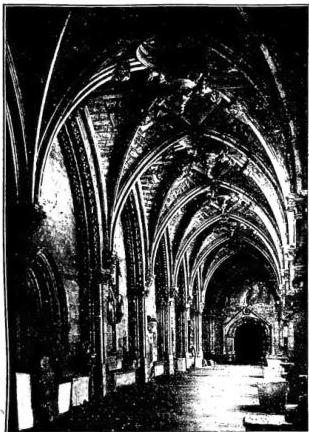
Gothic Cloister of the Cathedral (late 14th century). - León.
St. Cyprian specifically mentions (Ep., 67) the dioceses of León-Astorga, Mérida, and Saragossa, and alludes to other episcopal sees; that of Tarragona appears in the Acts of St. Fructuosus. At the Council of Elvira (ca. 304), the sees of 19 bishops are recorded, and of the 24 priests who attended, at least some were delegates of bishops unable to be present. It is known that persecutions raged in Spain. During that of Decius (250), Basilides and Martial, bishops of León-Astorga and Mérida, apostatized, obtaining the libellus pacis, and the Spanish Church reacted energetically against them; in that of Valerian (257-58), the bishop of Tarragona, Fructuosus (v.), suffered martyrdom with the deacons Augurius and Eulogius. Of the Diocletian persecution, a long list of martyrs is preserved, attested especially by the hymns of Prudentius and the acts contained in the Hispanic Passionary; such are, for example, Emeterius and Celedonius of Calahorra, Justa and Rufina of Seville, the "innumerable" of Saragossa, the two Eulalias of Mérida and Barcelona, Vincent, Sabina, and Cristeta of Ávila, etc. Some of the 81 canons of the Council of Elvira still reveal an environment of persecution.
2. The invasion of the Germanic peoples, Alans, Vandals, Suebi, and Visigoths. - In 409, a climate of terror was created in Spain, described by the chronicler Hydatius, bishop of Aquae Flaviae (Chaves), which partially paralyzed the life of the Church: part of the clergy, such as Orosius of Braga, fled to Africa, and some bishops did the same, but the majority endured all dangers for the defense and assistance of their faithful (St. Augustine, Ep., 168); an example was given by the aforementioned Hydatius. At the beginning of the sixth century, the Visigothic Kingdom encompassed Narbonensis and Spain, except for the northeast of the peninsula, occupied by the Suebi. The latter, upon their entry into Spain, were pagans; in 448, they converted to Catholicism with King Rechiar, perhaps due to the preaching of St. Toribius of Astorga; but his successor, Remismund, dragged his people into Arianism (465), preached by the monk Ajax, who came from the court of the Visigoths. They returned to Catholicism during the time of Charriaric or Theodemir (558-70), thanks to St. Martin of Braga, who had great influence at court and celebrated two very important councils. In 583, they were subdued by Leovigild, and many embraced the official Arianism of the Visigoths, only to abandon it definitively at the Third Council of Toledo (589). The Visigoths, on the other hand, were Arians due to the preaching of Ulfilas; since their stay in the Danube valley, they had formed a national Church, probably organized according to the military divisions of the Visigothic people (Schubert). Generally, they were tolerant toward Catholics: Euric and Alaric II exiled some bishops, more for political reasons; Leovigild (568/572-586) was the only one who harshly persecuted Catholicism: he punished some bishops and clerics with exile and confiscation of goods and facilitated the transition from Catholicism to Arianism by abolishing the obligation of rebaptism (580); there were several apostates, including Vincent, bishop of Saragossa. One of the best defenders of the faith was Masona of Mérida, who later presided over the Third Council of Toledo. In 583, under the influence of his wife Ingund and St. Leander of Seville, Hermenegild (v.) converted to Catholicism; his rebellion against his father seems to have been predominantly political in character and was not approved by the Church; defeated, he was beheaded in 585 after refusing to receive communion from an Arian bishop; for this reason, he is venerated as a martyr (St. Gregory the Great, Dial., III, 31). Reccared, successor of Leovigild, converted to Catholicism, and with him, at least morally, the entire Visigothic people, as was officially proclaimed at the Third Council of Toledo (589). The merit of this conversion belongs to St. Leander of Seville.
The organization of the Church was already well defined by the beginning of the fifth century; it had five ecclesiastical provinces and, at a certain period, six, while in the Suebi Kingdom, the two distinct provinces of Braga and Lugo were formed; throughout the Visigothic era, 77 bishops are counted, including the twelve of Narbonensis. National, provincial, and diocesan councils were held, primarily of a disciplinary nature: in the Second Council of Toledo (527), the first prescription on the education of the clergy in episcopal schools is found, which would later be enshrined in the Fourth Council of Toledo (633). A part of the province of Carthage, occupied by the Byzantines, could not follow the general course. Constant relations were maintained with Rome, the East, and the Gauls, and in the early period with Carthage. Christianity was already deeply rooted, although numerous traces of paganism still remained. With the conversion of the Visigoths to Catholicism, one of the most glorious centuries for the Church in Spain began. The national councils acquired extraordinary importance, also from a political point of view. The realization of perfect unity between Church and State was achieved through the collaboration of the kings, who in Arianism had been supreme arbiters of religion, and great ecclesiastical figures, such as St. Leander and St. Isidore of Seville, St. Braulio, St. Ildefonsus, and St. Julian of Toledo, influenced by the ideal of Byzantium.
BIBL.:
For the early period: E. Flórez, España sagrada, Madrid 1747-1879, vols. I-XLVI; P. B. Gams, Die Kirchengeschichte von Spanien, Regensburg 1862-79, 3 vols.; F. Fita, La España cristiana, Barcelona 1908; J. Vives, Concilios visigóticos e hispano-romanos, Barcelona-Madrid 1963; Id., Inscripciones cristianas de la España romana y visigoda, Barcelona 1942; H. Leclercq, in DACL, IV, 2, coll. 2047-2112; P. de Labriolle, Histoire de la littérature latine chrétienne, Paris 1924, pp. 483-488; A. Ferrua, La persecuzione di Diocleziano in Spagna, in RAC, XX (1943), pp. 213-224; J. Madoz, El priscilianismo, Madrid 1940; Id., León y las diócesis del noroeste de España en la antigüedad cristiana, in Hispania sacra, I (1948), pp. 159-212.
For the Visigothic period: C. Sánchez-Albornoz, Ruina y extinción del municipio romano en España e instituciones que lo reemplazan, Buenos Aires 1943; Id., En torno a los orígenes del feudalismo, Mendoza 1942; Z. García Villada, Historia eclesiástica de España, Madrid 1929-36, 3 vols.; J. Pérez de Urbel, Los monjes españoles en la Edad Media, Madrid 1933-34, 2 vols.; Id., Historia del condado de Castilla, Madrid 1945; Id., San Isidoro de Sevilla, Madrid 1945; A. K. Ziegler, Church and State in Visigothic Spain, Washington 1930; H. Leclercq, in DACL, XV, 2, coll. 2345-2412; E. A. Thompson, The Goths in Spain, Oxford 1969; J. Orlandis, Historia de España: La España visigótica, Madrid 1977.
At that time, a series of general councils was held, which regulated ecclesiastical discipline with the intervention of the king, who convened them and proposed in the tomus the civil and religious matters to be addressed, together with some magnates. The bishops, as delegates of the kings, oversaw civil judges in the administration of justice; although the king himself intervened in their election, which a Council defines as a "sacred regalia" (599). The metropolitan of Toledo acquired primatial authority, with the right to present to the king and consecrate the bishops of the entire Kingdom, in the Twelfth Council of Toledo (681). The clergy enjoyed privileges and immunities. Monasticism also gained great importance; St. Isidore wrote a rule for the governance of monasteries, and St. Fructuosus wrote two, while also founding cenobitic communities throughout the western part of the peninsula. In the 7th century, double monasteries appeared, which would multiply in the following centuries. During the same period, the liturgy was organized, later receiving the name of Visigothic or Mozarabic (v.), or better yet, Hispana; in the Kingdom of the Suebi, at least until its annexation to the Visigothic Kingdom, the Roman liturgy was partly followed, communicated in the 6th century by Pope Vigilius to Bishop Profuturus of Braga. There was no significant heresy; but the most serious error of the Hispano-Visigothic Church was having exerted strong pressure to induce Jews to embrace the faith. The legislation of the Spanish Councils, collected in the Hispana canonical collection, had great influence in the Middle Ages, particularly in Carolingian councils and capitularies.
19. The Arab invasion in 717
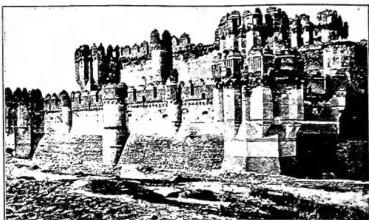
It brought new conditions of life to the Church. In the territory dominated by them, there was generally tolerance: the organization into three provinces with 29 bishops was preserved, though not without Arab interference in the election of prelates and the governance of dioceses. 'Abd ar-Rahmān II and Muhammad I persecuted Christians in the 9th century, provoked by the excessive zeal of some of them, which caused divisions: St. Eulogius of Córdoba, whose writings are the most important source for this era, was the most illustrious martyr. Another important figure was Álvaro Paulo, of whom part of his correspondence is preserved. In the Mozarabic Church, the Adoptionist heresy arose in the 8th century, first defended by Elipandus of Toledo and then by Felix of Urgel, and combated by Beatus of Liébana and Eleuterius of Osma, and definitively annihilated by the Frankish theologians, led by Alcuin. In theSPAGNA - Coca Castle (Segovia). Hispano-Moorish art (15th century).
In the same period arose the error of Nigezio, who identified the three persons of the Most Holy Trinity with David, Jesus, and St. Paul; it was combated by Elipando of Toledo and by Saulo of Córdoba and condemned by two Councils of Seville in 782 and 785. The Mozarabic Church continued in the same tolerance, without lacking a certain ease of communication with the Holy See and with other Churches, and entirely preserving the Visigothic structure and institutions until the end of the "Reconquista" in the 15th century. The organization and internal life of the Church suffered more in the northern part of the peninsula. Many bishops and monks, fleeing the invasion, passed into France, bringing with them that Visigothic spirit and culture which had such a great influence in the cultural sphere; some of them became leading figures in the Carolingian Church, such as St. Pirminius and St. Benedict of Aniane, Claudius, bishop of Turin, Prudenzio Galindo, bishop of Troyes, Theodulf, bishop of Orléans, and Agobard, bishop of Lyon. Many other bishops, clerics, and faithful took refuge in the northern mountains and effectively collaborated in the work of the "Reconquista" and in the repopulation of territories devastated by Arab raids and battles with Christian armies. From the very beginning, the "Reconquista" had a well-defined national and religious character, tending toward the political restoration of the vanished Visigothic Kingdom. The fundamental nucleus was the Asturian region, with its capital first at Oviedo
and then (914) at León, where Ordoño I established a bishopric. The religious character of the struggle was greatly enhanced by the devotion and cult of the Apostle St. James of Compostela, beginning in the 9th century, when the news of the discovery of his tomb moved spirits and immediately made it a destination for pilgrimage, not only for Spaniards but also for other European nations; St. James indeed became the patron of Spain and the inspirer of liberation from the Moors, and "Santiago y cierra España" was the battle cry in the crusade against the Muslims. Religious spirit pervaded the Christian people as never before; while against the laxity of the clergy and simony, the Councils, which met quite frequently according to Visigothic tradition, reacted, as did the remarkable number of saintly bishops and monks: those sacrificed by Almanzor (al-Manṣūr) in Cardeña and in Sant Cugat del Vallès were considered martyrs. Overcoming the natural isolation in which the conditions of the Reconquista placed them, contacts with the papacy began to intensify in the 9th century and even more so in the 11th; beginning with Alexander II, the popes began to consider the Spanish struggle