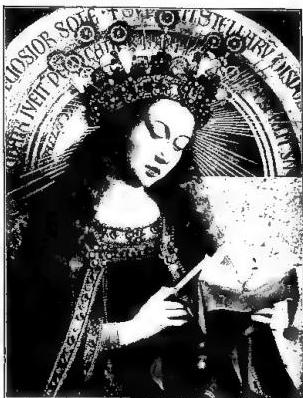
FIAMMINGA, ARTE. — The designation Flemish art refers to the complex of artistic manifestations proper to the southern Low Countries, that is, to the territory corresponding broadly to present-day Belgium; the artistically predominant regions were the counties of Flanders (with Bruges and Ghent), Hainaut, and also Artois, the duchy of Brabant (Brussels, Leuven, Hal, Antwerp), Limburg (Maaseyck, Tongres), and the Meuse region (with Liège and Namur). Flemish art has numerous connections with the art of the neighboring regions of northern France, the Lower Rhineland, and especially the northern Low Countries (Holland), so that at times a clear distinction must be excluded between the production of Flemish artists working in their homeland and that of artists active in neighboring countries. On the other hand, while numerous Dutchmen worked in Flanders, many Flemings helped to make the Burgundian court artistically important toward the end of the fourteenth and in the fifteenth century, and many also practiced their art in Italy from the late sixteenth century onward.
There are two periods in which Flemish art, always important, occupies a predominant place in the general development of European art, and this above all in painting. During the fifteenth century, in the period following the transition from the Late Gothic to a more pronounced naturalism, that is, in the period between the work of the van Eycks and that of the successors of Rogier van der Weyden; and in the seventeenth century, through the large group of painters active around Rubens and Van Dijck. In addition, the late-Romanesque and Gothic Flemish goldsmiths’ works, as well as the miniaturists of the late fourteenth and early fifteenth centuries, are of the greatest importance. The manufacture of tapestries, from the fifteenth through the seventeenth century, also held considerable importance within the framework of European art.
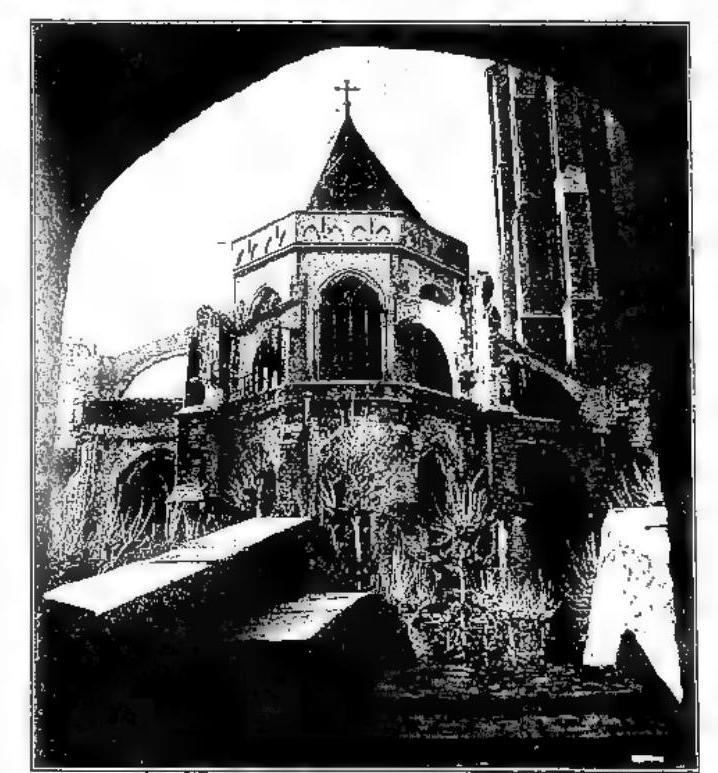
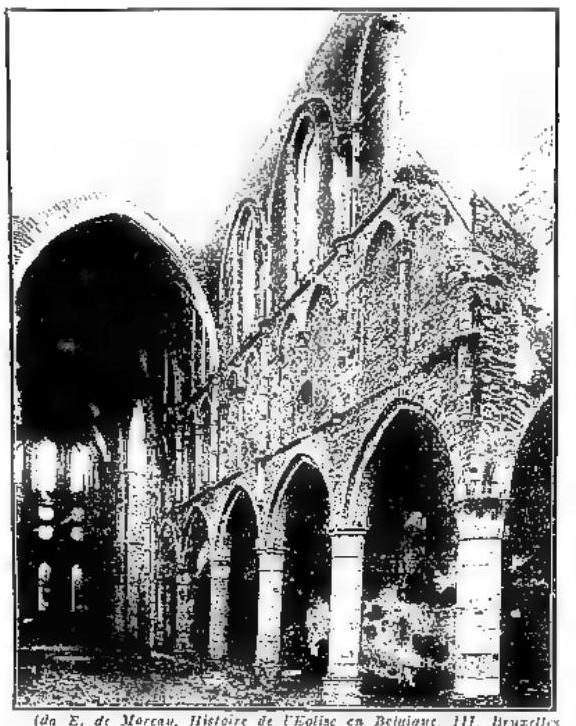
Of the church architecture of the Romanesque period, besides the small buildings at Waha and Celles, parts have survived incorporated into the later Gothic constructions of the cathedral and of St-Quentin at Tournai, of the cathedral of
No Flemish painter before the Van Eycks possessed comparable European importance. The most significant had been M. Broederlam, active not only in Ypres, his native city, but also with the sculptor Sluter at the court of Burgundy, while a Giovanni of Bruges had designed cartoons for the tapestries of Angers: the largest preserved cycle of Gothic tapestries. Little is known about the masters of Jean Mansel, Guillebert de Mets, and Jacques Coëne. With the brothers Hubert and Jan van Eyck, and their Altarpiece of Gand, one of the most eminent masterpieces of European art, begins that extraordinarily rich, uninterrupted chain of great Flemish painters which, for more than two centuries, made a. f. one of the most vital centers of European painting. The most important painters of the fifteenth century are: Petrus Christus, a direct follower of Jan van Eyck, master in Bruges in 1444, and deceased there in 1472; Robert Campin, born around 1379, active in Tournai and deceased there in 1444; his pupil Jacques Daret, mentioned in 1404–68 and master in Tournai from 1432; the Master of Flémalle, identified by some with Campin, by others with the young Rogier van der Weyden; Rogier van der Weyden, born in Tournai ca. 1399 and deceased in 1464; Giusto di Gand (Joos van Wassenhove), who worked at the court of Urbino; Ugo van der Goes of Gand, d. in 1482; Dierick Bours, of Dutch origin, born in Haarlem around 1420 and deceased in 1475, active in Brussels and Louvain; Giovanni Memling, born German but resident in Bruges, between 1435 and 1494; Gerard David, born Dutch, influenced by U. van der Goes and Memling, active in Bruges, born after 1455 and deceased in 1523.
The a. f. of the Renaissance immediately turned toward a rich and at times complicated Mannerism, under strong Italian influences; the principal artists lived between Brussels and Antwerp and had frequent contacts with Dutch artists. In Brussels: Jan Gossaert Mabuse (ca. 1478–1535); Bernaert van Orley (1492–1542); L. V. Valckenborch (ca. 1540–1625); Colin de Coter; in Antwerp: family (v.); Joos van Cleve (d. in 1540); Quentin Massys (1466–1530, from Louvain); P. Aertsen (1508–75, from Amsterdam), together with M. V. Roymerswaele and J. V. Hemessen; Pieter Coecke van Aelst 1502–50; Joachim de Patinir (1475–1524); Cornelia and Frans de Vriendt (Floris, before 1520–70, also a theorist of architecture); Joachim Bueckelaer (ca. 1533–73); M. de Vos (1532–1603); the two portraitists Pourbus, the younger of whom (1509–1622) was also active in Mantua. A. Moro, Dutch by birth and active between 1512 and 1576, was also a portraitist. In Bruges were active J. Prevost of Mons, d. in 1529, who also worked in Antwerp; A. Isenbrant (a pupil of G. David), d. in 1551; Lancelot Blondel, who was also a sculptor; P. de Witte, called Candido (1548–1628), a pupil of Vasari, active also in Florence, Rome, and Bavaria; in Italy, besides the Floris mentioned above, etc.: M. Coxie (1499–1502) and M. P. Brill (1530–84; 1554–1626), active in Rome; D. Calvaert (1540–1619), who worked in Bologna, influencing Rent and other Bolognese artists; Martin de Vos (1532–1603) and L. Toepot Pozzoserrato (1550–97), who worked in Venice; Bilivert, and Stradano (1523–1605), active in Florence, and many others up to Rubens, van Dijck, Sustermans, etc. One of the principal «Romans» was L. Lombard, who, together with Coecke and Blondel, exerted a profound influence on Flemish architecture and sculpture. In Spain, Juan de Flandes worked.
(Jules Masters photograph)
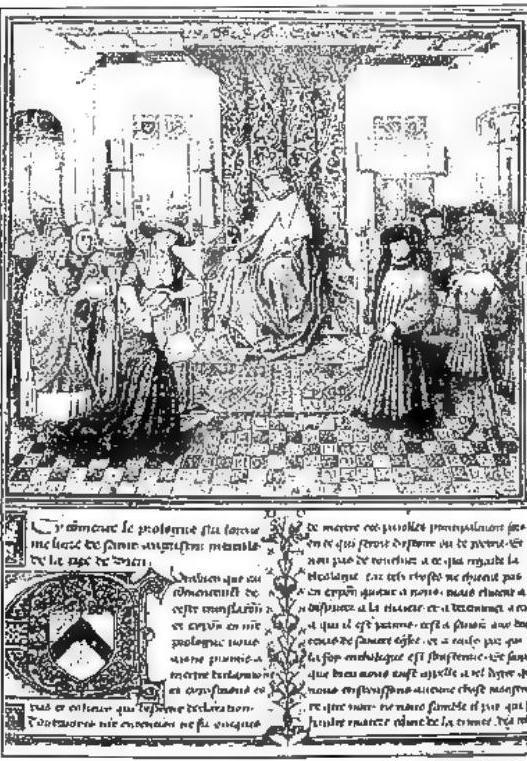
FIAMMINGA, ARTE — Jacipit of Book XI of the City of God, translated into French. Illuminated manuscript made around 1445 for J. Chewot, bishop of Tournai, by the friar Cottin of Tournai, kneeling at the feet of the sovereign’s throne — Brussels, Royal Library, no. 9015, 16.
He died before 1519. In architecture during the Renaissance, Italian influence became more pronounced, especially in the Jesuit churches at Ghent, Antwerp, Bruges, Leuven, and Namur. Architects such as Venc. Coebergher (1561–1634; church at Montaigu), P. Huyssens (1577–1637), and Jac. Francquart (1582–1651) continued, in the late Renaissance, especially at Antwerp, the architectural forms that Lombard and Floris (works at Tournai, Gheel, etc.) had prepared. The same applies to Renaissance sculpture and then to the Baroque period, which produced notable artists in Jean Monc (late fifteenth century—ca. 1549); J. Dubroucq (ca. 1500–84, works at Hal and Mons); A. Quellinus the Elder and the Younger (1609–68; 1625–1700); the Verbruggen family; P. Duquesnoy (1594–1643), also active in Rome; and L. Delvaux (1696–1778), working under the influence of Bernini.
But it was once again painting that gave Flemish art European importance during the seventeenth century, with P. P. Rubens (1577–1640; v.), pupil of Othogenio V. Veen (1558–1629), and his greatest followers, including A. van Dijck (1599–1641) and J. Jordacq (1593–1678). Around these masters, schools and groups of artists formed, expressing themselves with penetrating naturalism and a strong sense of movement, always good and often daring colourists. Among landscape painters, after the Brueghels, Valckenborch, Coninelco, and Vinckebcons, we should mention: J. V. F. de Momper (1564–1635); G. de Witte; S. Vranex (1573–1647); R. Savery (1576–1650); J. Wildens (1586–1653); L. V. Uden (1595–1672); J. Siberechts (1627–1703); J. F. Millet (1642–1679); C. Huysmans (1648–1727). Among portrait painters: F. Pourbus (1569–1622); Corn. de Vos (1585–1651); Philippe de Champaigne (later in Paris: 1602–74); G. Coques (1614–84). Sacred and genre scenes were generally painted by: G. Seghers (1591–1651); G. de Crayer (1584–1669); Th. Rombouts (1597–1637); C. Schut (1597–1655); G. Douffet (1594–1660); Th. V. Thulden (1606–70); A. Brouwer (1605–ca. 1638) and D. Teniers the Younger (1610–90), together with Ryckaert, Craesbeeck, Tilborch, etc.; A. F. van der Meulen (battle painter: 1632–90); G. de Lairesse (1640–1711). Among painters of animals and still lifes we should recall: Fr. Snijders (1579–1657); P. de Vos; J. Fyt (1611–61). Important, especially around Rubens, were also the engravers and woodcut artists: L. Vorsterman, the two Bolwerts, Cr. Jegher, Dirk Vellert, P. Pontius, and van Dijck himself. Meanwhile, tapestry-making continued in Brussels, Tournai, Audenarde, and Antwerp, partly based on designs by Rubens, his school, Teniers, etc. Stained-glass windows were also made from designs by D. Vellert; porcelain was produced at Tournai and lace at Brussels.
For the nineteenth century, we must be content with a few indications. Among the nineteenth-century artists, the following stand out: as painters of historical scenes, G. Wappers (1603–74); A. Wiertz (1606–65); H. Leys (1615–69); Ch. De Groux (1625–70); as a naturalist painter, A. Stevens (1623–1606); as an illustrator, F. Rops (1633–98); C. Meunier (1631–1605), a sculptor of new social tendencies; and James Ensor (1650–1648), one of the leading figures of modern painting and graphic art. Among the pointillists, Th. van Rysselberghe gained renown; among the expressionists, C. Permeke; among the sculptors, G. Minne (a. in 1866). Architecture, after the historicism of an L. Suys and a J. Poelaert, was directed toward Holland, Germany, and France with Henry Vandevelde, V. Horta, V. BORGHESE, and G.
V. Rysselberghe
Vedi tavv. LXXXI-LXXXII.Brm., A. Michiels, Histoire de la peinture flamande, 10 vols., Brussels 1865–76; A. J. Wouters, La peinture flamande, there 1883; G. Debois-Buzold, Die bichliche Baukunst des Abendlandes, Stuttgart 1884–85; C. C. A. Dehalouss, Hist. de l'art dans les Flandres, l'Artois, le Hainaut avant le XVIe siècle, Lille 1886; H. Hymans, L'Association des primitifs flamands à Bruges, Paris 1902; H. Fierens, Recueil de documents visés, à l'hist. de l'industrie drapée en Flandre, edited by G. Espines and H. Fierens, Brussels 1906; J. Helbig-J. Brassins, L'art Récon depuis l'introduction du christianisme, there 1906–11; H. Fierens Gevaert, Les primitifs flamands, 4 vols., there 1908–12; J. de Bosscher, La sculpture auversoise, there 1909; M. Rooses, Flandre, Paris 1913 (with bibliography); L. Cloquet, Les artistes wallons, Brussels 1913; M. Rooses, L'arte in Flandra, Italian translation, Bergamo 1914; J. Casier, L'art ancien dans les Flandres, 3 vols., Brussels–Paris 1914–22; M. Wackernagel, Die Baukunst des 17. a. 18. Jahrhunderts, Potsdam 1915; P. Clemen — C. Guillin, Die Klosterbanken der Zisterciener in Belgien, Berlin 1916; P.