GAND (FIAMMINGO GENT), DIOCESI DI

GAND (Flemish: Gent), DIOCESE OF. – A city and diocese in Belgium, capital of the province of East Flanders, situated at the confluence of the Scheldt and the Lys; it is traversed by many canals.

Article illustration

It covers an area of approximately 2,094 sq. km. with a population of 1,226,465 inhabitants, of whom 1,120,000 are Catholics. It comprises 387 parishes served by 1,325 diocesan priests and 392 regulars; 65 male communities with 1,631 professed members and 564 female communities with 9,103 professed members, and two seminaries (1949). It is a suffragan of Mechelen.

St. Amandus (7th cent.) founded two abbeys in the territory now occupied by Ghent: one at St. Peter on Mont Blandin and the other of St. Bavo at the place called Ganda. Egimund was abbot of both monasteries from 814 to 840; subsequently the abbey of St. Bavo became independent (N. Grisson, *The early abbots of St. Bavon of Ghent*, in *Revue bénédictine*, 49 [1937], pp. 37 ff.; F. Gansshof, *Einhard à Gand*, in *Bulletin de la Société d'histoire et d'arch. de Gand*, 1926, p. 14).

These two abbeys of St. Peter and St. Bavo functioned simultaneously as monastic and as parochial institutions; but toward the end of the 11th century, the increase in population was such that the monks of St. Bavo built a new abbatial church, while those of St. Peter erected for the faithful the church of St. Mary; in addition, there were chapels in the castle and at the port dedicated to St. John, St. James, and St. Nicholas.

On 22 July 1536, Paul III granted to Charles V the secularization of the abbey of St. Bavo, and the monks transferred their chapter to the parochial church of St. John the Baptist.

St. Salvator was the parochial church of the ancient village of St. Bavo, distinct from that of the nearby abbey from the beginning of the 12th century. Charles V had it demolished in 1540 to build the citadel, also called by the Spaniards St. Farraide; the parochial and collegiate church was sacked in 1566 and destroyed in 1579.

Ghent was erected as a diocese by Paul IV on 12 May 1559. Among the bishops of Ghent, noteworthy are Cornelius Jansenius (1568) and Antonius Triest (1622–57), distinguished for their generosity and the establishment of charitable foundations.

The seminarians of Ghent offered strong resistance to the Napoleonic decree of 1813.

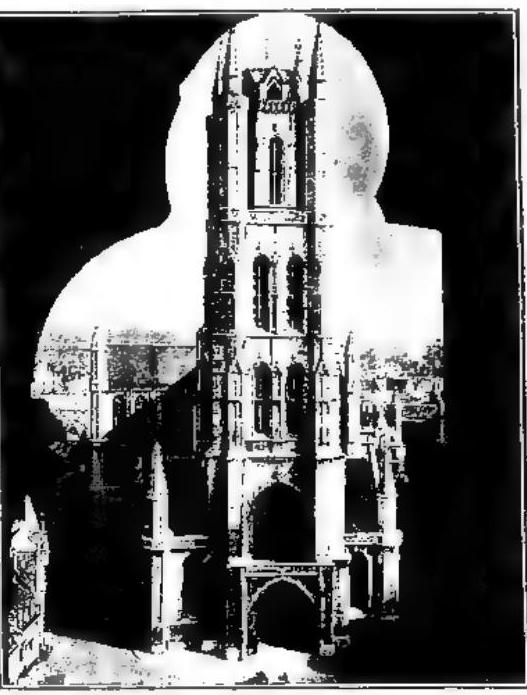
The important cathedral of St. Bavo is in the Gothic style. Beneath the choir is a vast Romanesque crypt. Before the high altar stand four large red-bronze candelabra (1525) by Benedetto da Rovezzano, bearing the arms of Henry VIII of England, to whom they belonged, and of Bishop Triest, who donated them to the church. One of the altars houses the *Adoration of the Mystic Lamb*, the masterpiece of Flemish painting of the 15th century, commissioned from Hubert van Eyck, who died in 1426, and completed by his brother Jan van Eyck, lord of Pamele, and inaugurated on 6 May 1432; it represents the adoration of the Divine Lamb. The altarpiece was restored to its original integrity in 1920. Also notable in another altar is a painting by Rubens (1623–24) depicting the entry of St. Bavo into the abbey of St. Amandus.

The belfry, erected c. 1330, is 118 m high and was surmounted in 1378 by a gilded bronze dragon 3.50 m tall. The town hall consists of two buildings: the old aldermen’s house in the original style by Rombaut Keldermans and Herman de Waghemakere (1518), and the new aldermen’s house, known as the *Parchons*, in a style inspired by Italian Renaissance architecture (1600–22).

In the quarter of St. Peter, the church of the great Béguinage dedicated to St. Elizabeth was built in the 12th century; it served as a parish church only for the Béguines. When these were transferred to the new great Béguinage on Mount St. Amandus, the church of St. Elizabeth became a parish on 24 September 1874. The church of St. Nicholas was begun in the 12th century but rebuilt in the 15th.

The church of St. Michael, in Gothic style, begun in 1445, was completed in the 17th century; its interior was restored in 1893. In the transept is the painting of the *Crucifixion* by van Dyck (1629). The church of St. James was begun in the Romanesque style in the 12th century and completed in the Gothic style at the end of the 15th, and has been modified several times since. The church of St. Peter was erected between 1629 and 1719; its dome is 57 m high.

The Archaeological Museum occupies the former church of the Carmelites. The Museum of Fine Arts offers a rich collection of sculptures and paintings, ranging from the primitives to modern works. The State University in the Flemish language was founded in 1816 by William I, King of the Netherlands, and comprises all faculties.

BIBL.: Th. Herwyn de Volckaerbecke, *Les églises de G.*, 2 vols., Ghent 1860; F. Claeys-Bouëart, *Le diocèse et le Séminaire de G.*, 1 vol., Ghent 1913; L. van Puyvelde, *La Bible de G.*, in *Rec. Travaux Universitaires de G.*, Ghent-Paiggi 1927, fasc. XXVII; E. De Moreau, *Histoire de l'Église en Belgique des origines aux débuts du XIXe siècle*, 2 vols., Brussels 1940–49, passim. Enrico Josi.