
ABATE (or ABBATE). — A word of Aramaic origin, Abba, meaning Father. It is found several times in the New Testament (Mk 14:36; Rom 8:15; Gal 4:6); each time it is addressed to God and followed by the translation: Father. Our Lord uses it when speaking of the Father. In the Syriac language it is also written with a single b (Aba); in the monasteries of Egypt: Apa.
1. HISTORY
Among the earliest monks of Egypt and Syria, it designated the spiritual father of small groups of monks, or monks especially venerated for their age and holiness. This meaning survived for several centuries in the West as well. The title was naturally given to the superior of several groups of monks gathered in the same monastery. In Basilian convents the superior was called: hegoumenos. With the Benedictine Rule (chapters III, LXV), the word a. acquired a meaning that gradually eliminated the others. The a. is the superior of the monastery sui iuris, with general authority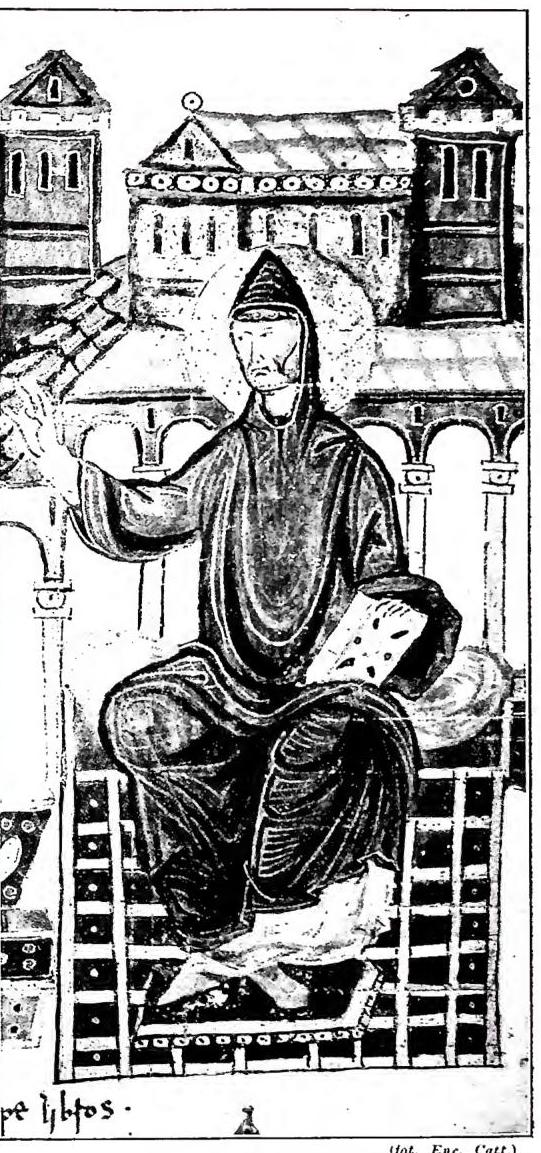
There is no need to dwell on the various forms taken by the word in the Middle Ages, e.g. Abbas cardinalis, Abbas capellanus, Abbas castrensis, etc. In certain countries, such as France and Belgium, all secular clerics who do not possess an ecclesiastical dignity are called Monsieur l'Abbé. The origin of this usage must be sought in the abuse whereby, over the centuries, one or more abbeys in commendam were conferred upon simple tonsured clerics, indeed even upon laymen.
S. Pacomio (292–346) was the first organizer of cenobitic life, in which the various groups of monks have a common superior or abbot. Within a few years this form of perfect life spread to eastern Asia and the western countries. In the monasteries of Bene-
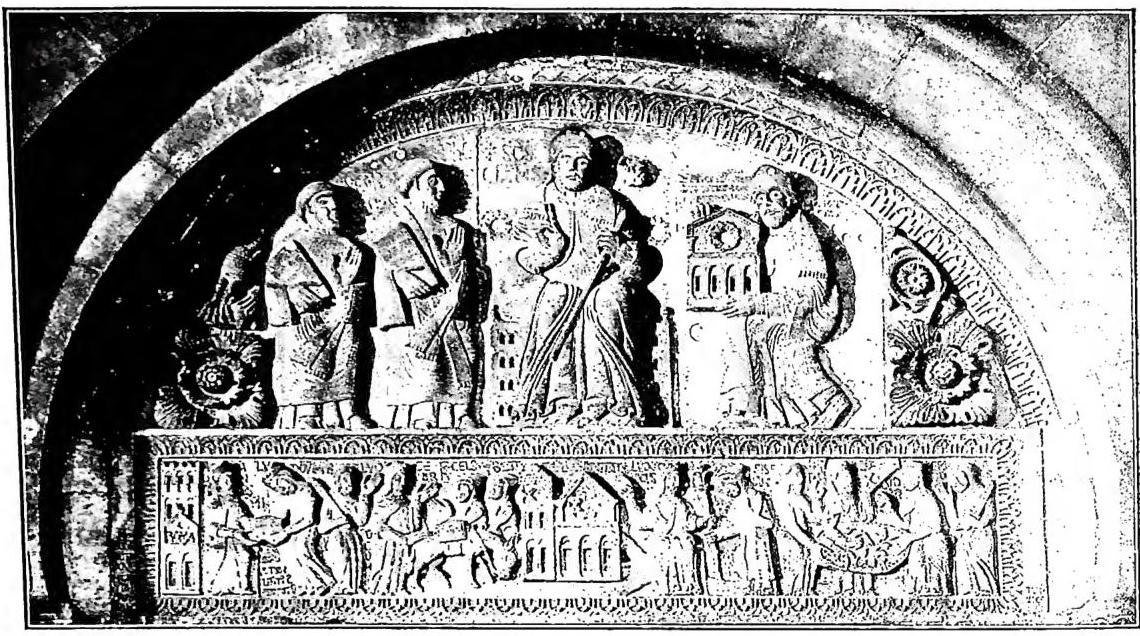
In the Benedictine monasteries, where stability and an almost family-like life prevail, the authority of the a. directs the entire spiritual and material life of the monastic family. At first he could be a layman, although he exercised powers that were later reserved to priests; for example, he gave certain blessings, pronounced a certain form of excommunication, etc. But from the 5th century in the East, and from the 7th century in the West, almost all were chosen from among priests. In Western ecclesiastical law, the title of a. would become a major ecclesiastical dignity, immediately following the episcopate.
The a. were elected by the group of monks, but in some regions the people dependent on the abbey also had a part in the appointment of the a. From the 7th and 8th centuries onward, princes improperly intervened in abbatial elections, though not always to the detriment of the monastery’s religious life, at least under Charlemagne. Feudalism, both before commendation (v.), also had a harmful influence in monasteries, to such an extent that in certain monasteries the abbatial office became a benefice.
For centuries the diocesan bishop retained a certain power of confirmation in abbatial elections, all the more because he had the right to bless or consecrate the a. This power, which some bishops abused in order to arrogate to themselves an authority in the monastery that was not always disinterested, was greatly exemption (v.) spread. This was promoted by the discipline proper to the Irish monasteries, which St. Columbanus transferred to the Continent (585–90). In those monasteries there were one or two bishops who, like the other monks, were entirely subject to the authority of the a.; consequently, the latter did not even have to turn to a diocesan bishop for the ordination of his monks. Moreover, in Ireland the a. exercised his authority over a more or less extensive territory, as the a. nullius would later do.
Already in the first centuries, the a. of various monasteries united by common origin or by other spiritual bonds gathered to discuss suitable means of maintaining or renewing religious discipline. When monastic congregations were established, these meetings became more regular. The Council of Trent imposed them on monasteries that did not belong to a monastic congregation (Sess. XXV, De Regularibus et Monialibus, chap. 8). Leo XIII showed great favor toward the establishment of monastic congregations; indeed, he contributed greatly to the formation of the federation of all the black Benedictine monks, with a primate a. in Rome.
The a. had a great influence on religious life in the Middle Ages, for example in the elections of bishops, in the support given to the reform efforts of several popes, and in the spread of Christian life among those dependent on the monastery, etc. By virtue of their dignity, they took part in both particular and general synods and councils. Before the secularization of the States, some a. were ex officio members of governing bodies. For example, the a. of St. Denis was a member of the parliament of Paris, and a considerable number of a. were members of the English parliament.
2. BENEDICTION OF THE ABBOT
For the blessing of a., the Church has established a special rite, already known in the 6th century but more fully developed in the 8th. The bishop in whose diocese the monastery is located is always competent to confer this blessing, but he must in every case be authorized by a papal mandate.The rite begins with the reading of the mandate; after this, the elected candidate takes an oath of fidelity to the Church and of fulfillment of his duties toward the Order or the monastery. After an examination conducted by the bishop, Mass begins. It is celebrated by the bishop himself according to the pontifical rite at the high altar, while the elected candidate celebrates it at an adjoining altar. After the Gradual, the elected candidate is led by the two assisting a. before the high altar, to the left of the faldstool, where the bishop is kneeling, and there remains prostrate. The seven penitential psalms and the litanies of the saints are recited, during which the elected candidate receives the blessing of the officiating bishop. The elected candidate then remains kneeling before the bishop, who, in a prayer in the tone of a Preface, invokes the Lord’s grace upon the one being blessed, so that with wisdom and example he may lead his subjects to the heavenly reward. The officiant says three further prayers, then presents the elected candidate with the book of the monastic rules, the pastoral staff, and the blessed ring. Mass is resumed, and after the Offertory has been read, the new a. leaves his altar and, with the assisting a., again appears at the high altar, where he offers the bishop two lighted candles, two loaves of bread, and two small casks of wine. From this point onward, the new a. does not return to his own altar, but continues the Mass kneeling before the high altar and reading together with the celebrating bishop; he does not pronounce the words of the Consecration and receives Communion from the celebrant’s hand under the species of bread. At the end of Mass, after the pontifical blessing, the bishop places the mitre and gloves on him and leads him to his stall in the choir, where, while the Te Deum is sung, the monks make an act of obedience to their new father and superior. When the Te Deum is finished, the bishop says the prayer super Abatem; then the newly appointed a. imparts his first pontifical blessing and pays homage to the bishop with the acclamation Ad multos annos.
Francesco Monay
3. CURRENT CANON LAW
The a. may be religious or secular. Religious a. are divided into the following grades and categories: 1) the primate a., who presides over all the religious congregations of the same order united in a confederation; 2) the general a. of a monastic congregation; 3) the a. of a monastero sui iuris, also called the a. de regimine. All of these are included under the name of major superiors and ordinaries (cann. 198, § 1; 488, n. 8°). However, as canon 501 § 3 of the CIC establishes, the primate a. and the superior of the monastic congregation do not possess all the power and jurisdiction that common law attributes to major superiors, but enjoy only that power and jurisdiction indicated by the constitutions of the order and by the special norms established by the Holy See, without prejudice to the provisions of canons 655 and 1594 § 4.The primate a. and the superior a. of the monastic congregation have the right to participate with a deliberative vote in the ecumenical council; and, if they are prevented from attending, they must justify their absence and send a procurator in their place (cann. 223 § 1 n. 4°, 234 § 1). The a. sui iuris governs his own monastery with full authority, in both the internal and external forum. In some cases he is also an a. nullius, and then, as we shall see below, he has the same rights and duties as a residential bishop.
The appointment of the primate a. and of the general a. of the monastic congregation is regulated by the constitutions of the respective Order and by special provisions of the Holy See. The a. de regimine is elected by the monastery chapter by secret ballot. He must be at least 30 years of age; he must have been born in legitimate marriage and have been professed for at least 10 years in the same religious institute to which he belongs at the time of the election. Confirmation of the election belongs to the immediate superior or to the Holy See, according to the circumstances. The a. de regimine ordinarily, in accordance with his own constitutions, must receive solemn blessing within three months of his election (Pontif. Rom., De benedictione Abbatia). After receiving the blessing, even if he is not endowed with episcopal character, he may confer the first tonsure and minor orders upon his subjects, use episcopal insignia in his own territory, including the throne
and baldachin, wear the pectoral cross, the ring with a precious stone, and the zucchetto, though not the violet one. By common law, the blessing must be imparted by the bishop of the diocese in which the monastery is situated (can. 625). Some Orders, e.g. the Benedictine, enjoy the privilege that all a. may, in certain cases, receive the blessing autoritate apostolica from any Catholic bishop (Benedict XV, Apost. Lett. Pro benedictione Abbatum, 19 June 1921; AAS, 13 [1921] pp. 416 ff.).
The a. de regimine has no right to take part either in the ecumenical council or in the plenary or provincial council; he must, however, take part in the diocesan synod, with a merely consultative vote; and if he is prevented from attending, he must notify the bishop of the reason for his legitimate absence, but he may not be represented by a procurator (cann. 358 § 1 n. 8°, 359 § 1).
The a., being major superiors, must be temporary if the constitutions do not provide otherwise (can. 505). Cessation from office occurs in the customary ways and cases, determined by the sacred canons or through the direct intervention of the supreme authority of the Apostolic See.
A. and abbey nullius. — The a. nullius is a prelate who exercises ordinary jurisdiction over the clergy and people of a determinate territory of his own, separated from every diocese; hence it is called a nullius territory, that is, belonging to no diocese. Depending on whether the church is endowed with abbatial dignity or merely with prelatic dignity, the person placed in charge of governing the aforesaid territory is called an a. or prelate nullius. He is a true ordinary of the place, and therefore all the provisions of the CIC concerning ordinaries of places are applicable to him.
For a properly so-called abbey nullius, three conditions are required: 1) its own territory, wholly detached and separated from every diocese; 2) clergy and people subject to the prelate; 3) full jurisdiction in the internal and external forum over the entire territory. If the abbey does not comprise at least three parishes, it is singulari iure regitur, and consequently the provisions of the code concerning an abbey nullius do not apply to it (can. 319 § 1). The abbey may be religious or secular. If it is religious, the a. is always a religious; if it is secular, he is ordinarily a secular priest. Under the name of diocese, in the code and in various pontifical documents, the abbey nullius is also included; likewise, under the name of bishop, the a. is also understood to be included, nisi ex natura rei vel sermonis contextu aliud constet (can. 215 § 2). The erection of the abbey, its circumscription, division, union, and suppression belong exclusively to the Supreme Pontiff. The appointment of the a. likewise belongs solely to the Pope, except where the right of election or presentation has been legitimately granted by pontifical concession to someone. Even in this case, however, confirmation or canonical institution belongs exclusively to the Roman Pontiff.
The candidate must possess the bishop (v.). If the elected person ex praescripto apostolica vel ex propriae religionis constitutionibus (can. 322 § 2) must receive the blessing prescribed in the Roman Pontifical (title De benedictione abbatio), he is required to receive it within three months after receiving the apostolic letters, provided he is not legitimately impeded; and, if he fails to do so, he is ipso facto suspended from jurisdiction (cann. 322 § 2, 2402). The a. must take possession of his own abbey according to the sacred canons; and before such possession he may not, either directly or indirectly, under any title or for any reason, interfere in its government. He may freely designate the vicar general.
The a. has the same ordinary powers and the same obligations as a residential bishop in his own diocese. He therefore possesses legislative, judicial, coercive, and administrative power, both in the internal and in the external forum. Even if he does not possess episcopal character, nevertheless, after receiving the abbatial blessing, when he is obliged to receive it, he may impart blessings reserved to the bishop; consecrate chalices, patens, movable and immovable altars, and churches, using oils blessed by the bishop; grant an indulgence of 100 days and the papal blessing with a plenary indulgence twice a year; designate and declare an altar privileged, whether daily or perpetual: all this only within his own territory and munere durante. Likewise, with the same restrictive clause concerning territory and duration in office, and under pain of nullity, he may confer the sacrament of Confirmation, the tonsure, and minor orders; grant his subjects dimissorial letters for the conferral of sacred orders; and, if he possesses episcopal character, he may confer them himself. In his own territory he has the right to wear pontifical insignia and to use the throne and baldachin, and to celebrate the divine offices according to the pontifical rite; outside his own territory he may wear the pectoral cross, the ring with a precious stone, and the violet zucchetto. Like the residential bishop, he is bound by the law of residence, by the application of the Mass pro populo on both holy days of obligation and suppressed feast days, by the canonical visitation of the abbey, by the ad limina visit, etc., according to the norms established by common law.
The a. nullius has the right to take part with a deliberative vote in the ecumenical council, the plenary and provincial councils, and the episcopal conferences that must be held at least every five years (cann. 223 § 1 n. 3°, 282, 286, 292). The code does not expressly state whether he may convoke the diocesan synod, but, in view of cann. 215 § 3 and 323, it must be regarded as certain that this faculty belongs to the a. nullius. During a vacancy, if the abbey is religious, the chapter succeeds; it must, within eight days, elect the capitular vicar, who will govern the abbey until the appointment of the new a. If the abbey were otherwise impeded, the provision of can. 429 would have to be applied.
V. elenco delle Abbazie nullius s. V. ABBAZIA.
For A. Commendatario - V. COMMENDA.