
SACERDOZIO. - From sacra dare, "to provide, to perform the sacred action," it is the religious-social office and function that an individual holds as an official intermediary between the human group and the divinity.
I. S. IN NON-CHRISTIAN RELIGIONS. - In primitive groups, the functions of the priest merge with those
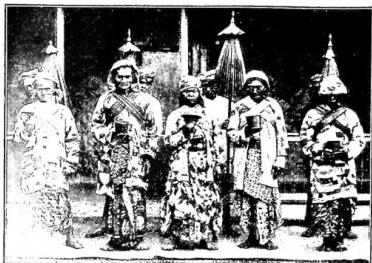
The sacrificer is entrusted with the sacrificial action, which forms the center of worship in every religion; the exorcist provides purifications which may be directed against moral stains and faults (sins), against contagion caused by evil spirits, the evil eye, or various spiritual infections; the diviner can predict the future by reading it in the most diverse elements (flight of birds, liver of victims, course of the stars, etc.). These three types, which may be united in a single person in primitive social groups, are found separated in natural religions that have reached the civic stage. In the ancient city of Greece and Rome, the priest has only the technical functions of a ritual expert, while religious functions are performed by the head of State or by other political magistrates; the divinatory and exorcistic tasks remain prerogatives of the priest, as they require special knowledge and technique. Sometimes priests are organized into a college.
In mystery religions, the priest assumes a completely different character, since these are of a supranational type, not bound to the political life of the State. In them, the priest is no longer the technical consultant of the magistrate, but the spiritual director of those enrolled in the mystery, who himself lives and instills in them the life of the founding or patron god of the mystery; he is detached from political life, sometimes even celibate, for greater dedication to his cult and his faithful.
Access to the priesthood, even if under a caste system, is not granted without a special initiation that endows the candidate with those superior powers that will make him an effective intermediary between men and divinity. However, admission requires certain conditions, the absence of which renders the candidate, in the estimation of the group, unfit to perform his function: these are immunity from physical defects, legitimate birth, bodily integrity, and good reputation. A subsequent obligation upon investiture to the priesthood is to maintain oneself in a state of ritual purity so as to be fit at all times to perform the function of intermediary. Such purity is attained by:
1) observing ritual chastity, that is, prior to the sacred action to be performed; 2) avoiding contact with blood; 3) avoiding contact with a corpse. In some religions these prescriptions are perpetual (ecclesiastical celibacy, vegetarianism of the Orphics, Hindus, and Buddhists).
A special rite of passage (initiation, ordination) is required to transition the candidate for the priesthood from the profane to the sacred state. Such a rite may be unique or it may be divided into various grades that progressively render the individual fit for his function (grades of Mithraic initiation; Minor and Major Orders, in the Christian priesthood). The sacred character is conferred by placing the vestments of his office on the candidate or making him touch the related objects, laying hands on his head, anointing him, etc. A special rite is required to strip the consecrated person of the sacred investiture with which he has been endowed.
Nicola Turchi
II. S. IN HOLY SCRIPTURE. - 1. In the Old Testament. - In the religion of Israel, the importance of the priesthood was correlative to that of sacrifices, the basis of cult. Echoing J. Wellhausen, the critics of the Pentateuch attribute to the time of Ezra (5th century B.C.) the distinction of sacrifices and the resulting priestly functions (the supposed "priestly code" P); but the documents of Ugarit (15th century B.C.) demonstrate that all the sacrifices described in the Pentateuch were known and practiced in the Canaanite milieu at least ten centuries before Ezra. In Israel, the unity of cult was strictly required, reflecting the unity of God. At first, legitimate worship took place in the tent or tabernacle (v.) called "of meeting", ark (v.) of the covenant was kept; but Temple (v.) in Jerusalem (10th century B.C.), departures from cultic unity were frequent with the erection of altars in various places. It may be considered that, before the unification of national and religious life in Jerusalem by David and Solomon, sacrificial worship was offered to Yahweh in various places where an altar or even a modest sanctuary had been erected.
The originality of the priesthood of Israel derives from the ethical monotheism that inspires its cult. Female priesthood is excluded from it; biblical Hebrew lacks a term meaning "priestess". Both divination and magic or sorcery, typical "abominations of the nations" (Deut. 18, 9-14), are totally foreign to II. The sole term designating the legitimate priest in the Hebrew Bible is kōhēn (Septuagint ἱερεύς), which also occurs in Phoenician, Aramaic-Syriac (kāhēn), Arabic (kāhin), and Ethiopic (kāhēn). By most, kōhēn is considered a participial form of kān, with the meaning of "he who stands"; in fact, the priest "stands" (āmadh) before Yahweh to serve Him and to bless in His name (Deut. 10,8; 18,7). Although kōhēn also designates the priests of false gods, the specific disparaging term kēmārim (always plural) was used for the latter. The denominative verb kīhēn (always in the pi'el) means (23 times) "to perform the sacred rites pertaining to the priest", mostly (14 times) with the determination "to (for) Yahweh". From kōhēn the abstract noun kēhannāh "priesthood, priestly service" was also formed, used 13 times (Septuagint ἱερατεία). A. Kuenen, B. Stade, A. Bertholet, and others have speculated much on the fact that Arabic kāhin today means "diviner"; but this sense is not original: kāhin (= "priest") was the name given by pre-Islamic Christians to the idolatrous priest, who was generally considered a "diviner", and this sense remained and was accentuated in Islam, which has no priesthood; Arabic-speaking Christians still give kāhin the meaning of "priest".
Before Moses and Aaron, the priesthood was exercised among the monotheists descended from Shem and Abraham, based on
a tradition that must have gone back to the beginnings of humanity. The ius sacerdotale belonged, among all the most ancient peoples, to the heads of the people and the fathers of families. A Jewish tradition (Ešēhāhîm, XVI, 4) holds that before Moses worship was performed by the firstborn; this is reproduced by St. Jerome (Quaest. Hebr. ad Gen. 27, 15 and 49, 3, and Ep. 73 ad Evang.; PL 23, 980. 1056; 22, 680) and St. Thomas (Sum. Theol., 1ᵃ-2ᵃᶜ, 103, 1 ad 3). Each head of a family offered his sacrifices directly (Cain and Abel, Noah, Job, Moses); the patriarchs Abraham, Isaac, and Jacob perform all priestly functions: "calling upon the name of God", sacrificing. There were some sanctuaries where the oracle was consulted (Gen. 25, 22) and to whose priest tithes were paid, as at Bethel (ibid. 28, 22). A vestige of the ancient priestly function of the head of the family remained in lamb (v.) (Ex. 12, 3-11. 21-27). It appears that true priests existed in Israel before the consecration of Aaron, since they appear at Sinai (Ex. 19, 22-24; 24, 4-5). The existence of a priestly class is affirmed already by the most ancient collection of laws, the "Book of the Covenant" (Ex. 20, 24; 21, 13; 22, 8: mentions of a sanctuary with sacrifices, asylum, oracle). Although generally young (Judg. 17, 5-18, 20), the priest was honored with the title of "father" (ibid. 17, 10; 18, 19). Moses "set apart" the sons of Levi, consecrated to God to replace the firstborn of Israel who belonged to God (Ex. 22, 29; Num. 3, 13; 8, 18), to make them a special body of priests (Ex. 32, 26-29); among the Levites (v.) he chose Aaron (v.) and his sons and consecrated them priests (Ex. 28-29, 39; Lev. 6-10. 21-22). The hierarchical superiority of the Aaronic priesthood was made perceptible by the right to oblations and sacrificial victims; it was confirmed by various miraculous interventions of God (Num. 16-18). The priests had under them, for auxiliary services, the ordinary Levites. Since Deuteronomy and the prophets call the priests "levitical priests", the "critics" wrongly assert that, according to the legislation of Deuteronomy (written, according to them, in 622 B.C.), any descendant of Levi was thereby a priest, adducing passages (Deut. 10, 8; 18, 6-7; 31, 9) in which the duties of the priests and Levites appear identical; they assert that, given that the priests are called "sons of Aaron" in the "priestly code" (P. Leviticus) and never in Deuteronomy, the "Aaronic" priesthood, distinct from the "levitical", was a post-exilic innovation.
All the sons of Israel were dedicated to divine worship; they are therefore called a "kingdom of priests" (mamīšēhēh bōhānîm: Ex. 19, 6). From among all, Yahweh "chose" the tribe of Levi and within it the family of Aaron (Num. 3, 10), to which He assigned the hereditary priesthood. The prerogative of the priests was "to draw near to Yahweh" (Ex. 19, 22); God calls them "those who approach me" (qērōbhaj: Lev. 10, 3; qērōbhim: Ex. 42, 13); God chose them to make them approach Him (Num. 16, 5; Ex. 44, 13) and delivers to them the Levites "given to Yahweh, that they may do the work of the tent of meeting" (Num. 18, 6). It was therefore a very grave crime to arrogate to oneself priestly functions: "the stranger (hae-sār) who draws near (haq-qārēb) shall die" (Num. 3, 10); indeed, terrible was Korah (v.) and his kinsmen (Num. 16), and of the king of Judah Azariah-Uzziah (II Chron. 26, 16-21). Since the priesthood was hereditary among the "sons of Aaron", to be co-opted among the priests one required, besides legitimate birth, unbroken direct descent from Aaron, to be demonstrated by genealogical tables; unable to produce these, various families were excluded from the priesthood after the exile (Ezra 2, 61-63 = Neh. 7, 63-65); Fl. Josephus, instead, could exhibit his priestly genealogy (Vita, 1).
The priests were the necessary mediators between the believer and God, praying, offering, sacrificing, purifying for all. They "put the name of Yahweh upon the sons of Israel" by blessing them with the triple auspice of divine custody, grace, salvation-peace (Num. 6, 23-27). "Set apart" by God from the people of Israel, "set apart" from all peoples (Lev. 20, 24. 26; Deut. 14, 2; 26, 18 ff.), they were the mediators of "holiness". To them, and through them to all Israel, is directed the divine command that echoes in the "Holiness Code" (Lev. 17-26): "Be holy, for I am holy,
I, Yahweh, your God" (ibid. 19, 2; 20, 26; 21, 8); "I am Yahweh who sanctifies you (or them)" (ibid. 20, 8; 21, 8; 22, 32; etc.). Their "closeness" to God imposes upon priests a rigorous "segregation" from any profane contact; for those who approach God, holiness also demands bodily perfection (ibid. 21, 17-23; 22, 9, 16). The "Law of Sacrifices" (ibid. 1-7) and the "Law of Purity" (ibid. 11-15) are also aimed at the restoration and safeguarding of holiness. One of the principal offices of the priest was to "distinguish the holy (qādhē) from the profane (bāh), the unclean (tāmē) from the pure (tāhōr) and to teach the sons of Israel all the laws enjoined upon them by Yahweh" (ibid. 10, 10-11). The norms concerning the holiness of the priests (ibid. 21, 1-22, 16), which open the final group of cultic laws in Leviticus (21-25), manifest the high purpose: "they shall be holy to their God" (21, 6). The Mishnah (Bēhōrōth, VII) would bring to 142 the "irregularities" that excluded individuals from priestly functions. During the time they were discharging their sacred ministry, priests had to abstain from "drinking wine or intoxicating drink" (Lev. 10, 8-11) and from marital relations, which rendered both spouses impure until evening (ibid. 15, 16-18).
The Aaronites eligible for the exercise of divine worship were publicly consecrated, before beginning their sacred service, by "sanctification" (described in Ex. 29, 1-37; 40, 12-15; Lev. 8, 1-36), which consisted of a double rite of purgation (Num. 8, 6-7) and oblation. After a bath (Lev. 8, 6), they put on the sacred vestments and received anointing with holy oil: "anointing shall confer on them a perpetual priesthood" (Ex. 40, 15). The high priest was "the anointed one" (ham-mušāh) par excellence (Lev. 4, 3, 5, 16; etc.), and it may be that the other priests were only sprinkled with oil mixed with blood (Ex. 29, 21; Lev. 8, 30). Then the new priests offered various sacrifices for themselves: a bull "for sin," a ram as a holocaust, and a ram as a special "salutary" or "peace" offering of investiture (called milla'im "filling" [of the hand]), with whose blood they smeared the tip of the right ear and the thumbs of the right hand and right foot of the consecrated person; the noblest parts of the ordination ram (the fats, the right shoulder), along with a loaf of bread, a cake, and an unleavened wafer, were placed upon the hands of the new priest, who "waved" them to symbolize the invitation to God to accept and be pleased with them; they were then burned on the altar, and the remainder was eaten with breads by the new priests in the sacred place. This rite of investiture, called mille' jādh "filling the hand" (cf. the Akkadian mullā qātē), was repeated for 7 days; on the 8th day the new priests blessed the people and began their office (Lev. 9, 1-23). Priestly anointing conferred a perpetual, indelible dignity (ibid. 10, 7; 21, 12). But many hold that for ordinary priests there was no other consecration after that conferred upon the sons of Aaron "with perpetual validity" (cf. Ex. 40, 13) and that the new priest subsequently had only to put on the sacred vesture and present the offering prescribed in Lev. 6, 12-16. It may be maintained, with the medieval rabbis (Levi ben Gerson, Isaac Abarbanel), that the consecratory rite was not considered obligatory for individual ordinary priests, but only for the high priest.
The descendants of Aaron's two surviving sons, Eleazar and Ithamar, became numerous and were divided into shifts corresponding to each family (bēth 'ābhōth). In the time of David, there were 16 family heads among the descendants of Eleazar and 8 among the descendants of Ithamar; their rotation in cultic service was determined by lot (I Chron. 24, 3-19; II Chron. 8, 14); the various classes (mahlēqōth "divisions," or mīmārōth "guards") functioned in the sanctuary for a week: they "entered" and "went out" of service on the Sabbath (II Chron. 23, 4, 8). Upon the return from the exile, only 4 priestly family heads remained (Neh. 7, 39-42); they reconstituted the 24 classes with the ancient names (cf. Lk. 3, 5: Abijah). The priests, like all Levites, dressed in linen (wool was excluded). Four mandatory elements, predominantly white, constituted their "sacred vestments," which they could not wear (except for the undergarments) outside the sacred place (Ex. 28, 43; Ex. 39, 41 [recte 39, 27-29]; 44, 19): the undergarments, the ankle-length tunic with sleeves, the belt of multicolored fine linen, and the tiara or turban consisting of a band.
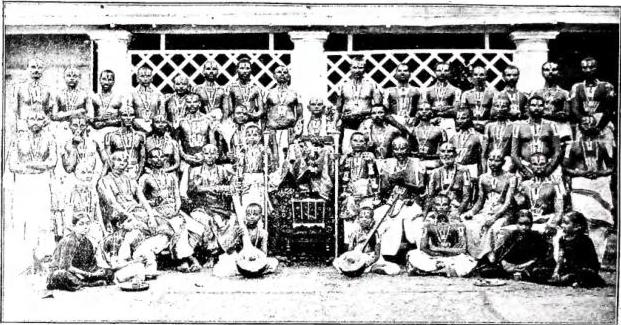
The high priest (hak-kōhēn hag-gādhōl, Vulg. sacerdos magnus), more often called "the priest" (hak-kōhēn) par excellence, at the pinnacle of the hierarchy of sacred ministers, personified the unity of worship. His office was for life; he had a vicar ("the second priest") who replaced him when he was hindered. Aaron was succeeded in the high office by his third son, Eleazar, and he by his son Phinehas; but Eli (11th century B.C.) descended from Ithamar, the 4th son of Aaron. At the beginning of David's reign, two high priests coexisted: Zadok (from Eleazar) and Abiathar (from Ithamar). But Solomon restored unity by deposing Abiathar, and from Zadok onwards the priesthood remained in the lineage of Eleazar until the Syrian king Antiochus IV Epiphanes (175-164 B.C.), who began to depose the high priest, replacing him with his own creatures; from then on, the high priesthood remained at the discretion of the civil power. After the destruction of the first Temple (587 B.C.), he was consecrated solely by investiture (thus Jonathan Maccabeus: I Mach. 10, 21) and by sacrifice, no longer by anointing, because the sacred anointing oil had disappeared nor could it be made anew (Ex. 30, 33).
Besides the supreme direction of worship, the most important special function of the pontiff was the annual expiation (v.) of kippūr (Lev. 16, 3-34): after sacrificing a young bull for his own sin, he entered "beyond the veil" and into the "holy of holies," where he offered incense and sprinkled the "propitiatory" on the ark of the covenant with the blood of the bull and then with the blood of a scapegoat for the sin of the people; then, laying both hands on the head of the live goat ('āzd'zēl), he confessed "all the iniquities of the sons of Israel." A "man of omen" (Zach. 3, 7), he also had to consult Yahweh, by means of the 'ūrim (v.) and tummim (lost with the exile), in doubts concerning decisions affecting national life. The pontiff's authority was supreme; Philo (De virtutib.; De vita Mos., III) demonstrates that the high priest transcends royal dignity just as the care of divine things transcends that of human things.
The high priest wore the ordinary priestly garment, with which he entered the "holy of holies" on the day of
expiation; over it he wore sumptuous garments (Ex. 28, 3-39; 39, 1-31; Lev. 8, 7-9): 1) a special sleeveless tunic (mē'il), adorned on the lower hem with embroidered pomegranates alternating with golden bells; 2) the ephod (v.) formed of two squares that covered the chest and the back; 3) superimposed on the front was the oracle-breastplate (v. RAZIONALE), a kind of pouch adorned with 12 gems, on which were engraved the names of the 12 tribes of Israel, containing the 'ūrim and tummim; 4) the tiara, taller than that of ordinary priests, with a gold plate on the front bearing the inscription qādhōl lē-Jahweh ("holy to Y."). The pontiff's precious garments were kept by the Hasmoneans, and later by the Romans, in the "Baris" fortress, which subsequently became the "Antonia"; in 45 the Jews obtained from the Emperor Claudius that they be returned to the Temple.
The symbolism of the high priest's sacred vestments has been noted by both Jews and Christians. St. Jerome states "vestes Aaronis et totum ordinem Levitarum caelestia sacramenta spirare" (PL 22, 545) and sees in the individual sacred vestments the virtues that must shine in the pontiff (PL 25, 844 and 1557); so also does St. Thomas (Sum. Theol., 1a-2ac, 102, 5 ad 10). The Fathers frequently saw Christological-ecclesiological allegories in them (Tertullian: PL 2, 387; St. Jerome: PL 25, 270 ff.; St. Augustine: PL 34, 637 and 641; etc.). Minute and bold is the cosmic allegorism (cf. Sap. 18, 24) expounded by Philo (De vita Mos., III, etc.), followed by Flavius Josephus (Antiq. Ind., III, 7), Clement of Alexandria (PG 9, 64) and Origen (PG 12, 391), supported by St. Jerome (PL 22, 619) and well known to St. Thomas (loc. cit.).
2. In the New Testament
With the definitive destruction of the Temple of Jerusalem, the priesthood of Israel, already emptied by the sacrifice of Christ, was also suppressed de facto; the Jewish religion remained without a priesthood because it was deprived of the sacrifices that were offered in its single temple. The New Testament, whose characteristic task is the spiritualization of worship (Io. 4, 23; Act. 7, 48; Rom. 2, 29), transposes Mosaic cultic institutions into the messianic-heavenly sphere. The "ministers (θιέχονοι) of the New Testament," freed from the letter that kills, serve the spirit that gives life (II Cor. 3, 6). Hebrews and Revelation describe how Jesus, crucified and risen, is the supreme priest, unique because he is divine and eternal; his cross is the altar, his death is the sacrifice, heaven, the seat of his glorious life, is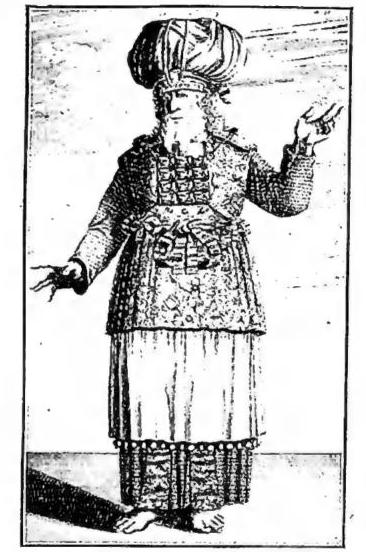
upon the earth. But this
spiritual priesthood does
not exclude external
and social worship; on the
contrary, it demands II. The
spiritualization of wor-
ship in the New Te-
stament has its ful-
crum in the priesthood of
Jesus, a superhuman
reality of supreme sav-
ific efficacy in which all
the mysteries of Christ are
summarized.
In Christ the priesthood
reaches its summit and
transcendent unity.
Jesus perpetuated
his succession among
men by conferring upon
his Apostles "until the
consummation of the
age" (Mt. 28, 20) his
salvific mission as a
"visible and external
priesthood" (Conc. Trid.,
sess. XXIII, 1; Denz-
U, 957 and 961), as
"Ministers (ὑπερέναι) of
Christ and stewards
(οἰκονομίοι) of the mysteries of God" (I Cor. 4, 1), they renew
the sacrifice of Jesus (v. EUCARISTIA; Lc. 22, 19; I Cor. 11,
25 sq); they govern the Church (Mt. 18, 18), remit
sins, and teach the Gospel, moved by the Holy Spirit
(Io. 20, 21-23; cf. 14, 16-26; 16, 12-15; Mt. 10, 19-20).
Theirs is "the ministry of reconciliation," identical
to that of Christ (II Cor. 5, 17-21): the ministry of the
apostles and their successors is, together with the sacrifice of Christ
the priest, one of the two aspects of the redemption of the world.
The Apostles in turn transmitted their priesthood to chosen
the faithful by the laying on of hands (Act. 13, 3; 14, 22),
and thereafter succession in the priesthood was ensured by the
same rite (I Tim. 4, 14; 5, 22; II Tim. 1, 6). But, until the
second half of the 2nd cent., the priest was not designated
by the explicit title ἱερεύς, to avoid confusion with
the Judaic or pagan priesthood; ἱερεύς, like ἱερατεία and ἱεράτευ-
μα, in New Testament writings always refers to the Israelite
(or pagan: Act. 14, 13) priesthood; instead of the technical term ἱερεύς,
the title πρεσ-
βύτερος, Lat. presbyter, whence "priest" (a term that became
exclusive in many modern languages: prêtre, priest, Priester),
is applied to the priest as "minister of Christ".
Often equivalent to it is ἐπίσωπος (Act. 20, 28; V. VESCOVO;
cf. F. Puzo, Los obispos presbíteros en el N. T., in Estudios
Bíblicos, 5 [1946], pp. 41-71, with previous bibl.). The pre-
sbyters were "set apart" (Act. 13, 2), like the Apostles
(Rom. 1, 1; Gal. 1, 15), like the priesthood of Israel; they were
established in every city (Tit. 1, 5); they are probably identified with
the "rulers" (προϊστάμενοι: I Thess. 5, 12; Rom. 12, 8; cf.
I Tim. 5, 17) and the "superiors" (ὄγουμενοι: Hebr. 13, 7.17.24).
For the priesthood as a sacrament, v.: PRESBITERO E PRE-
SBITERATO.