
ABIA. – Name of various biblical figures (Heb. Abiyām in Reg., 'Abiyāhu and 'Abiyāh in Par., ‘Jahweh is father’).
1. Son of Roboam and his successor on the throne of Judah, he reigned for three years—more exactly, two years and a few months—from 912 to 910 B.C. His mother was Maacha; he had 27 brothers and 60 sisters on his father’s side, but only three brothers also on his mother’s side (II Par. 11, 20 ff.). Roboam’s preference for A. was a consequence of the king’s predilection for Maacha. To prevent the brothers from overshadowing the chosen one, he gave each of them command of a fortified place (ibid. 11, 21–23). A. was enjoying himself in the palace of Ge-
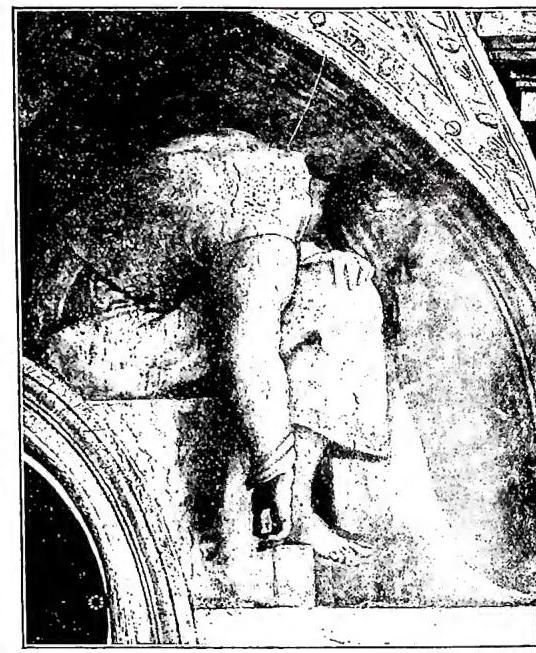
The war, which had been smouldering from the beginning of the separation of Israel from Judah, broke out under A., and the clash was tremendous. Before giving battle to Jeroboam, A. harangued the opposing forces, asserting the inalienable right of the house of David to reign over the entire people of God (II Par. 13, 4-12). On the occasion of this war, A. made a vow, later fulfilled by his son Asa with rich gifts to the temple (I Reg. 15, 15; II Par. 13, 16-19). A. had 14 wives, 22 sons and 16 daughters. At his death, he was buried in the city of David.
Salvatore Garofalo
2. Son of Jeroboam I, king of Israel, who died at an unspecified age in Thersa as punishment for his father’s wickedness. Jeroboam sent the queen disguised as a poor woman, bearing modest gifts (10 loaves of bread, honey, and a cake), BAHIA (v.) in Silo. Although blind, he recognized her, foretold her son’s death (at the moment when the mother would cross the threshold of the palace, as then happened), and the destruction of her family and the kingdom of Israel. A. was buried amid the mourning of the people (I Reg. 14, 1-18).
3. One of the sons of Bechor, son of Benjamin (I Par. 7, 8).
4. Second son of Samuel, who associated him with his brother Joel in administering justice; but he gave a very poor account of himself, and the people demanded a king (I Sam. 8, 2; I Par. 6, 28).
5. Descendant of Elezzaro, son of Aaron, head of the eighth of the 24 priestly families established by David; from him descended Zachariah, father of John the Baptist (I Par. 24, 10; Lc. 1, 5).
6. One of the priests who signed with Nehemiah the renewal of the Covenant (Neh. 10, 7).
7. Biblical women: A., wife of Hesron, grandson of Judah, mother of Ashur (I Par. 2, 24). - Wife of Achaz and mother of Ezechias, king of Judah (II Reg. 18, 2 she is called Abi: contracted form; II Par. 29, 1).