
FAMIGLIA. - It is the institution that unites spouses and the children born of their union or assimilated to them.
CONTENTS:
I. Natural and biological foundation of the family
II. Evolutionary theories on the origin of the family and the positive data of ethnology
III. The family in Roman and medieval law
IV. The family in Catholic doctrine
V. education.I. NATURAL AND BIOLOGICAL FOUNDATION OF THE FAMILY.
Theories on the consistency of associated forms are varied and of different nature. In Darwin, one finds only sociological hints that frame the problem within an essentially naturalistic field. However, he acknowledges that, even in earliest times, man must have lived in family groups, and he maintains that, as soon as marriage becomes common—whether monogamous or polygamous—jealousy leads to inculcating female virtue, which, being honored, will tend to extend to all unmarried women. Darwin, however, does not go
(from M. Gusinde, Anthropologie der Feuerland-Indianer, Multinor, 1920)
A Selk'nam family - Tierra del Fuego.
too far, a tendency instead found in sociologists who extend the evolutionary principle to human social organization. H. Spencer, precisely, establishes his famous parallel between organic evolution and the evolution of associated forms, which he defines as superorganisms. In this, the sociologist takes an arbitrary step from Darwinian naturalistic conceptions to those of family aggregates, attempting to reveal an evolution within them as well. However, Spencer's followers have further distorted the foundations of his analogical parallelism, conceiving human society as a true organism (J. Novicow, R. Worms, A. Schäffle, P. Lilienfeld). Yet modern criticism has indeed demonstrated the groundlessness of these attempts. Nevertheless, a merit must be recognized in such precedents: that of illuminating the social manifestations of man by considering their naturalistic aspects, deduced from analogies in the behavior of other animals. Some, extending certain behaviors of mammals to the human species, have even asserted the existence of a primitive stage of promiscuity (or the hetaeric state of J. Bachofen). Others, conversely, always drawing inspiration from nature, have advanced the more realistic conception of the solidity of the family nucleus from its very origins (E. Westermarck, 1891).
Subsequently, the opposite error was committed: forgetting nature and focusing solely on currently observable facts in the social sphere. Only more recently have works oriented themselves toward a more organic and balanced consideration of the problem, while the old theories of evolutionist organicism have, on the whole, left their traces. Indeed, for some authors, they have regained life, albeit in a different guise, as in the case of H. Driesch and other proponents of so-called neo-organicism. Human social organization must instead be interpreted according to a principle of objective research into its causes, among which naturalistic factors inherent to the characteristics of the species must certainly be considered.
Among the biological characteristics most influential on social forms are, first and foremost, the duration of life and the duration of development, while premising that they must not be considered individually but in their entirety and simultaneous coexistence.
The duration of life in man is preferably deduced from the normal duration, given by the mature age at which the highest number of deaths is observed.
In Italy, it fluctuates (in 1930-32) around 76 years, and in 1881-82 around 70. The increase observed over time is mainly due to sanitary progress, but in general, it is found to be greatly slowed, if not entirely nullified, once certain favorable environmental and hygienic conditions of the population have been achieved. Therefore, the immobility that the aforementioned value seems to have reached today, in the face of further mortality progress, indicates its coincidence with a typical biological value. The other characteristic, given by the duration of development, must be specified to study the age at which the individual achieves full autonomy. A vague age, but one that certainly fluctuates between the end of puberty and the end of organic growth. There are racial differences; however, the differences between man and other animal species, in the ratio between the normal duration of life and the duration of development, are so pronounced that they do not in the least diminish the demonstrative value of the conclusions that can now be formulated.
In the strictly biological and relative sense, the time man takes to grow to autonomous life is much longer (three, four, up to ten times) compared to all other mammals. This difference is even more noticeable when considering the time required for man to truly become capable of reproduction (not only physiological) and of defending his offspring, without which one cannot properly speak of autonomy. Regarding the modalities of growth, it can also be added that, even over the same period, in man it occurs much more slowly than in other mammals. In these, moreover, newborns manifest their psychic progress with independence of movement and action much sooner than in man. This holds true even for anthropoid apes, for which the task of rearing and protecting offspring is much lighter, whereas in man the newborn remains for a long time in a state of complete helplessness. If one then considers the succession of multiple births when the burden of the previous one has not yet ended, it becomes clear that for the human species, the protection of children constitutes a singular commitment.
Another characteristic of the species influencing the type of association is the long duration of human senescence, understood as the inability to work and material uselessness for the family. Conversely, in animals, the working capacity useful for their life extends autonomously for much longer relative to the normal duration of existence. It is certain that the duration of working life is much shorter in the human species. Furthermore, since the age of menopause
marks the maximum limit of procreative aptitude, it is evident that in women the duration of fertile life is relatively very brief compared to the animal world. The consequences of this can be observed in the size of domestic nuclei and their continuity and solidity over time. The numerical balance of the sexes then justifies, together with other circumstances, the human union in its monogamous, continuous, and stable form. For this reason, it must be affirmed that the family and society have a single origin and cannot have followed a hypothetical evolutionary process.
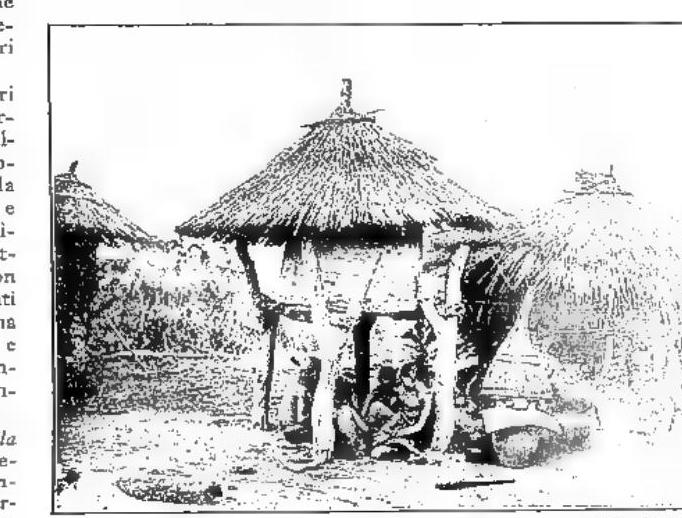
FAMILY - Group of children sheltering from the sun under a branch. Acioli of Uganda (British East Africa).
Overall, the study of social tendencies in animals also leads to the conclusion of the universality of a natural law that demands the procreators be all the more united the weaker the offspring. There are exceptions, but these only demonstrate that we cannot fully control all the factors determining the phenomenon.
Given the premises on the biological foundation of the monogamous family organization, investigations have been conducted to see how much the outcome of colonizations depends on the form of demographic transplantation in new territories. The serious drawbacks that scholars of colonial studies have repeatedly noted—depending, for example, on the numerical predominance of males over females—are well known: the lack of attachment to the family, various social disorders, the serious increase in criminality, immorality, and unbridled individualism. For this reason, such drawbacks have been fewer in agricultural colonizations (when the demographic equilibrium of the group was less disrupted) and greater, instead, in cases of industrial, commercial, or purely military colonies. In this sense, colonizations have been true scientific experiments that have once again confirmed the human value of the monogamous family institution. The lasting results of many Greek
and Roman colonizations are precisely due to their agrarian character and the balanced stability of their political-demographic settlement for the valorization of lands. But the clearest proofs of the success of colonization in relation to the demographic structure of the group are provided by modern history. In particular, the grand experiments of colonization carried out in Canada and Australia must be cited. Both have become, over time, true successes and are based on a sound biodemographic structure of the populations, so much so that they record a high birth rate even compared to the countries of origin.
The family bond, however, also rests on other circumstances—moral, social, and environmental—which contribute to shaping its characteristics and making it more or less solid. In exceptional cases, these factors can even contrast the natural union and lead back to polygamy; conversely, as a rule, they contribute to the spiritual cohesion of the couple. Based on considerations of this kind, literature has often oriented itself also with the aim of investigating the origins of the family in relation to the broader organization of the State (or Civitas in general). Opposing theories have been formulated in this regard, which posit the State as a subsequent and larger-scale extension of individual families aggregated together, or establish the priority of the State, which would have subsequently given life to the smaller domestic groups. But more securely, biological observations support the view that the monogamous family and the State (in a general sense, as a larger political aggregate) share a common foundation in the purposes that are always aimed at the conservation and good reproduction of the species. In a naturalistic sense, therefore, the very search for a priority in time should not be posed as a general problem. The two forms of aggregates complement each other for the same purpose, and one finds its necessary equilibrium in the other, so that from a biological point of view, the two institutions are a unity and define the natural order of society. The problem of origins is therefore only a problem of individual cases, but the paleoanthropologist and the ethnologist have a much broader task to address, in light of the aforementioned solution, to more deeply understand the social aspects of human nature as well.
In the context of individual cases, modern life in the civilized Western world has magnified and strengthened all the factors of disintegration of the family bond. The consequences of this process are of a spiritual and moral nature, but also of a biological nature, because they undermine the very foundation of social coexistence. Children procreated under such conditions are progressively abandoned to themselves and would be to the extreme limit if not for those natural, instinctive brakes—
inherent in human nature—which we define in the realm of sentiment. It is for this reason that rampant materialism also combats sentiment, erroneously believing it can lead man back to the path of natural laws. Conversely, the positive historical observation of human society seems to increasingly confirm a natural law according to which the social order of individual groups would also be governed by an internal force of rebalancing, of a demogenetic nature, so that every phenomenon of disintegration has limits of development, in time
and space, as if facing a threshold of biological nature, but whose finalism is evident.
Divorce, in particular, as a solution of continuity in the family bond, is a consequence of disintegrating factors, which unfortunately exist equally where legislation does not provide for its recognition. Divorce is therefore like a symptom of an ongoing social disease whose therapy must trace back to the causes, which consist of a lost biological, spiritual, and moral education. Just as the symptom of altered temperature identifies—
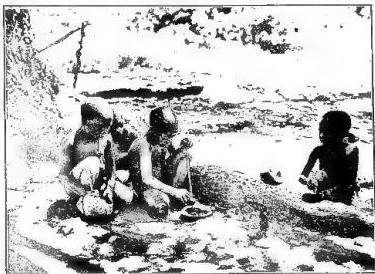
FAMILY - Girls playing at cooking - Acioli of Uganda (British East Africa).
Other means of family disintegration have a purely biological character, such as artificial insemination and paradoxical maternity, which is also experimentally possible, whereby a fertilized ovum can be transplanted from one female to another. But these are aspects of human degeneration, which exploit biological research to perpetrate a vile process of falsifying life.
II. EVOLUTIONIST THEORIES ON THE ORIGIN OF THE FAMILY AND THE POSITIVE DATA OF ETHNOLOGY.
In 1861, Bachofen drew the attention of ethnologists to the fact that in certain populations, succession occurs not in the paternal line but in the maternal line. With the examples he collected and by applying the law formulated by evolutionism—according to which the development of man's spiritual manifestations would have been characterized by a uniform and ascending line (thus by continuous progress)—he constructed the theory that matriarchy, that is, the supremacy of the mother, would have preceded patriarchy and extended it to all peoples.
However, the classical construction of the evolutionist theory on the origin of the family was only made later by H. Lewis Morgan, who accepted and expanded Bachofen's theory by constructing other stages of social evolution preceding even matriarchy: group marriage, the consanguineous family, and sexual promiscuity.
"Group marriage" would be that social stage in which "a group of men jointly marries a group of women"; in other words, all men belonging to one group would have had free access to all women of another group, and reciprocally, all men of this group with the women of the first.
The stage of the "consanguineous family" would have been characterized by marriage between brothers and sisters and the sole exclusion of marriage between parents and children, or in general between members of different generations. This stage would have been preceded by "agamy," that is, "unlimited sexual promiscuity," whereby all men would have had access to all women without any incest prohibition.
Morgan constructed the following schema of family evolution:
1. Initial phase: agamy, that is, unlimited promiscuity. There is no limit to the sexual instinct.
Intermediate phases:
2. The consanguineous family: only marriages between parents and children are prohibited.
3. Group marriage: within the tribe, all members of the same sex can still have conjugal relations with every member of the opposite sex, but another limitation arises: not only are marriages between parents and children prohibited, but also those between brothers and sisters.
Phases 2 and 3 are characterized by the absence of any principle of individual marriage: neither father nor mother is known.
4. The matriarchal union: individual marriage begins; only the mother is known, the father is still uncertain.
5. The polygamous patriarchal family: children live with their wives under the command of the father or the eldest brother. In this phase, there is already a true family where both father and mother are known.
6. Final phase: monogamy, that is, individual marriage in all its precision.
This scale was constructed on the tacit conviction—which for Morgan and the evolutionists of his time had the value of a logical postulate that did not need to be demonstrated—that the development of humanity had been a continuous progress, unfolding along a uniform and ascending line. In our case, between the starting point (1), characterized by the absolute absence of rules in the sexual instinct, and the opposite point of arrival (6), determined by the very precise norms on which the monogamous family is founded, it was necessary to place intermediate phases (2, 3, 4, 5), all conceived in such a way that the preceding phase appeared less complex than the following. Furthermore, each phase (1, 2, 3, 4, 5, 6) was conceived as an obligatory passage for all humanity in its development: no people could have reached monogamy (6) without having passed through the succession of phases 1, 2, 3, 4, 5.
A few examples taken here and there, even from peoples of very different cultures, were sufficient to construct a phase of development; often, transitional forms were even constructed without any positive documentation simply because they were deemed necessary to build the basis of a given theory or to link the links of an evolutionary chain constructed with a purely psychological criterion.
Only on the basis of these a priori assumptions and without the slightest attempt at positive investigation did Morgan establish the chronological precedence of the consanguineous family over group marriage: in the former, he saw the first and simplest limitation to absolute sexual promiscuity in the sole prohibition of marrying one's own parents, while in group marriage he found the prohibition extended also to the union between brothers and sisters.
For the same reason, "matriarchy"—in which one saw above all a social stage where the child knew with certainty only who his mother was, while the father was still unknown or at least uncertain—had to precede "polygamous patriarchy," in which children live with their wives under the command of the father or the eldest brother. In this phase, there is already a true family, where both father and mother are known.
"Monogamy" was placed at the apex of development because it is entirely based on individual marriage, governed by very precise norms and thus entirely contrary to the supposed original stage of sexual promiscuity, characterized by the absolute lack of rules.
The kinship system of the Punalua of the Hawaiian or Sandwich archipelago (Polynesia) — who use a single term to designate all relatives of one generation, without any distinction of their degree of greater or lesser consanguinity — was interpreted by Morgan as a remnant of the consanguineous family.
Indeed, a Punaluan refers to his father, mother, paternal and maternal uncles and aunts with the name sankua, specifying only sex with qualifying terms that indicate "man" or "woman." The same occurs in the descending line: the father calls his own children and those of his sister by the same name, whether male or female. A similar system is found among the inhabitants of central New Mecklenburg (Melanesia), as seen in the following summary table, which reproduces only a part of the kinship system of these natives (reported in full in W. Schmidt and W. Koppers, Völker und Kulturen, Regensburg 1924, p. 137):
This simplicity in the kinship system, uncommon among primitive peoples, was interpreted by Morgan and his followers as a remnant of the consanguineous family, founded on marriage between brothers and sisters, and led to the conclusion:
1) that the father is still called by the same name as the maternal uncle because in an earlier phase both married their sisters and were thus actually fathers;
2) that the true father is not distinguished from his tribal brothers because, given the lack of rules in sexual relations, he was unknown.
To the two examples provided by the kinship systems of the Punalua and the natives of central New Mecklenburg, others taken from different peoples were later added, interpreted as further evidence in favor of Morgan’s theory, which, despite strong opposition and reservations even from evolutionists, was for several decades the most widely accepted among ethnologists and sociologists. And the opponents, since they shared Morgan’s postulate that evolution had unfolded along a uniform and ascending line, could not offer a critique based on positive inquiry but merely constructed new unfounded theories to counter II. Thus, McLennan — who had defined Morgan’s work as entirely unscientific —
KINSHIP SYSTEM OF THE NATIVES OF NEW MECKLENBURG
| Father | Mother | ||
|---|---|---|---|
| TAMA (n) | Paternal uncle | NA (n) | Maternal aunt |
| indicates: | Paternal aunt | indicates: | |
| Husband of the maternal aunt | Wife of the paternal uncle | ||
| Son or daughter (both for the father and the mother) | |||
| NATI (n) | Paternal uncle or maternal aunt | of the maternal uncle | |
| indicates: | Nephew or niece | LAUA | Nephew or |
| of the | indicates: | niece | |
| Wife of the paternal uncle | of the husband of the | ||
| Husband of the maternal aunt | paternal aunt |
constructed another scale of social evolution according to which the family would have reached monogamy (patriarchal) only after passing successively from sexual promiscuity to polyandry and from this to matriarchy.
H. Morgan and McLennan were widely followed by scholars of the origin of the family, society, and the various manifestations of law. Morgan’s theory was particularly welcomed by Marx, Engels, Simons, and popularized by Bebel. But even outside the scientific current of socialism, treatises, manuals, and even modern encyclopedia articles still reflect the influence of Morgan’s, McLennan’s, and other evolutionists’ theories, which ethnology, based on positive data, has long since surpassed.
All forms of marriage (polyandry, levirate, sororate) and customs (covata), which the continuous but often chaotic collection of documentation provided in ever greater numbers among the most diverse peoples, were systematically explained by the postulate of uniform and ascending development and placed, according to the greater or lesser degree of crudeness they presented, in a more or less low stage of evolution, constructed with the same preconception.
"Polyandry" is the institution opposite to polygamy: the latter allows a man to have multiple wives, the former allows a woman to have multiple husbands. Polygamy has sometimes had a broad development in human history; instead, absolutely certain cases of polyandry are very few; Lewis enumerates them and rightly says they can be counted on one’s fingers. Polyandry presents itself with different cases and aspects, some now clear, others still obscure. However, it can be affirmed with certainty that the polyandric family is the least stable of all family institutions found among primitives.
Based on this single observation, several evolutionists immediately saw in polyandry the first phase of marriage, naturally very ancient, through which humanity would have passed just after emerging from the chaos of sexual promiscuity, even before reaching the matriarchal family.
Moreover, the preconception that this phase, like all others, had been universal for all peoples led explorers, ethnologists, and sociologists to see remnants of polyandry in every collective sexual disorder and in every unstable family institution, and was the cause of serious errors in information and interpretation regarding the social life of primitives, errors that only careful and patient examination of the facts has gradually managed to correct or completely eliminate from ethnological works.
The "levirate" is the matrimonial institution by which the brother of a deceased man has the duty — often become a right — to marry the widow.
The "sororate" consists in the right that a widowed man has to marry the sister of his deceased wife.
These two institutions are often found associated among a considerable group of peoples, but they are not at all universal.
Tylor, like all the evolutionists of his time, believed in the historical precedence of matriarchy over patriarchy and postulated an intermediate stage between the two, which he called "mother-father," in which he placed all institutions presenting a transitional character. He saw in the levirate (and sororate) "a substitution custom belonging to the period in which marriage is a convention not so much between two individuals as between two families." Arising in the maternal stage, it would have reached its maximum development in the mother-father stage, then slowly disappeared in the paternal stage.
Frazer explains the sororate as an innovation of the license actually found in certain peoples, for whom the husband has the right to have marital relations with all the sisters of his wife, even if she is still alive. He gives an analogous interpretation of the levirate and sees in these two forms of marriage remnants of an earlier stage in which the husband would have had relations, without any limitation, with all the sisters of his wife, and likewise the wife with all the brothers of her husband. Essentially, this would be group marriage. But Frazer’s explanation is entirely a priori, because the author does not even seek to determine whether there exists a genetic and historical connection between marriage by levirate and sororate, which is only possible when one of the spouses is widowed, and the husband’s right to access his sisters-in-law even if the wife is still alive.
Ethnologists call "covata" (couvade) a set of curious and often very amusing practices performed, in certain populations, by the husband after his wife has given birth. The woman in childbed leaves the bed and resumes her work, while the father of the newborn lies down and subjects himself to a series of prescriptions and diets, as if he had given birth himself. Hence, this custom is also called "male childbed."
BIBL.:
W. Schmidt - W. Koppers, Völker und Kulturen, Regensburg 1924; L. H. Morgan, Systems of Consanguinity and Affinity of the Human Family, Washington 1871; J. F. McLennan, Primitive Marriage, Edinburgh 1865; E. B. Tylor, Primitive Culture, London 1871; J. G. Frazer, Totemism and Exogamy, London 1910; H. Lewis, Polyandry in the Himalayas, in Journal of the Royal Anthropological Institute, 1889; F. Engels, Der Ursprung der Familie, des Privateigenthums und des Staats, Zürich 1884; A. Bebel, Die Frau und der Sozialismus, Stuttgart 1879.
A. M.
The evolutionists (Bachofen, Giraud-Teulon, Tylor, and several others) interpreted this custom as a fiction to represent the father as a second mother, tracing its origin back to the transitional period between matriarchy and patriarchy, when the primitive bond of kinship, based on maternity, was replaced by the later bond of paternity.
The theories of Bachofen, Morgan, McLennan, Tylor, and Frazer characterize the change produced by biological evolutionism in philosophy and, in general, in all historical and moral disciplines. The followers of this school unquestioningly accepted as a logical postulate that humanity had begun its social, moral, and religious evolution from a phase characterized by the absolute absence of ethical and religious laws, just as the evolutionary philosophers accepted the axiom of spontaneous generation.
Positive facts have dismantled all the constructions of classical evolutionism regarding the origin of the family, society, and religion.
1) The theory of sexual promiscuity has long been abandoned by ethnologists of all tendencies, as no traces have been found in any primitive population that would authorize the supposition of the existence of this phase.
2) The in-depth study of the kinship system of the Punalua, the indigenous people of central New Mecklenburg, and various other peoples who similarly or analogously include different degrees under the same name, has demonstrated that these designations do not indicate blood kinship but rather different age groups, which hold great importance in primitive societies. In these societies, hierarchy is based almost exclusively on age, and the elderly hold privileges over the young. The common term for father and uncle, which is also given to the chief, indicates respect for greater age and does not mean "father" or "uncle," but "lord." Some ethnologists have, with finesse, compared it to the respectful mode of address that was also used among us: "signor padre" (Mr. Father).
3) Marriage between brothers and sisters—which is truly found among very few peoples and is always limited to the king or the aristocracy—is the expression of a particular form of pride of these social classes, which do not wish to degrade themselves by uniting with lower classes. It is practiced by the indigenous people of the Hawaiian archipelago (Polynesia), by populations of West Africa, and was common in the great civilizations of Peru and Egypt.
The boundless dynastic or caste pride, even if it does not culminate in incest, can give rise to other customs that undermine the family; thus, the sisters of the king of the Shilluk (Anglo-Egyptian Sudan) cannot marry, because the only person worthy of uniting with them would be the king; however, they may have lovers. But these incestuous and disorderly forms, which developed slowly, are limited to particular cultural aspects that no longer have anything primitive about them. The people consider them natural for the king and the aristocracy but incestuous for themselves and do not practice them at all.
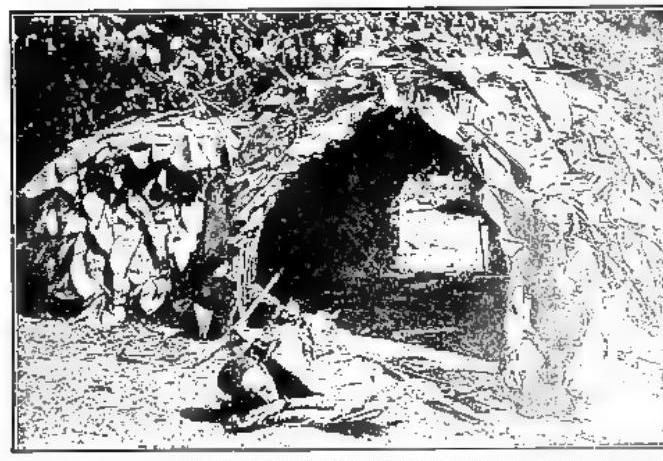
A Wahima who is so poor that he cannot pay the dowry necessary to acquire a bride is helped by his brothers, who in this way acquire the same rights over the bride as the husband. But as soon as the wife becomes pregnant, she belongs only to the husband, and all the rights of the others cease.
Certain groups of Eskimos and the Toda often kill females at birth or shortly after and keep males alive; this form of infanticide, which is completely absent in more primitive societies, produces an excess of men over women and causes polyandry.
5) The levirate and the sororate are also relatively late forms of marriage, arising from particular social and economic conditions and limited to certain cultures.
6) The couvade is an expression of the extreme consequences reached by late matriarchy. It is intimately connected with this cultural cycle, which is poorly suited to human nature, was not universal for all humanity, and arose after patriarchy.
FAMIGLIA - Capanna dei Pigmei-Elo con a lato il dormitorio per i bambini. Congo Belga.
7) Il patriarcato e il matriarcato non hanno fra loro un rapporto cronologico; ossia dal primo non si è sviluppato il secondo e nemmeno viceversa. Il patriarcato è caratteristico dei popoli pastori e il matriarcato dei popoli agricoltori.
8) La monogamia è lo stato naturale della f. e come tale è riconosciuta dalle popolazioni più primitive: essa è più diffusa della poligamia. Lo studio accurato delle popolazioni ancora
primitive ha dimostrato che la poligamia si è sviluppata più tardi e prevalentemente in civiltà più evolute. Al passaggio dalla f. primitiva monogamica alla poligamia o alla poliandria hanno decisamente contribuito le forme economiche proprie delle culture più recenti (la caccia perfezionata dei totemisti, l'inizio dell'agricoltura e l'allevamento del bestiame). A loro volta la poligamia e la poliandria hanno esercitato un'influenza negativa sulla religione (v. ESOCAMIA; ETNOLOGIA; EVOLUZIONISMO CULTURALE).
DIBL: Autori evoluzionisti: J. J. Eschofen, Das Mutterrecht, eine Untersuchung über die Gynähebsrötie der alten Welt nach ihrer religiösen und rechtlichen Natur, Stoccarda 1861 (trad. francese parziale di A. Turet, De règne de la mère au patriarcat, Parigi 1938); H. Lewis-Morgan, Systems of consanguinity and affinity of the human family, Washington 1891; id., Ancient society, Londra 1877; J. Lubbock, I tempi preistorici e l'origine dell'insivilimento con un capitolo - Intorno all'uomo preistorico in Italia - del prof. A. Istel, Torino 1875; J. Ferguson McLennan, Studies in ancient history, Londra 1876; Ch. Letourneau, L'évolution de la morale, Parigi 1887; id., L'évolution du mariage et de la famille, ivi 1888; E. B. Tylor, Sopra un metodo per investigare lo sviluppo delle istituzioni sociali applicato alle leggi del matrimonio della discendenza, trad. di G. A. Colini, in Archivio per l'antropologia e la etnologia, 10 (1889), p. 467 sgs.; J. G. Fraser, Totemism and exagony, 4 voll., Londra 1910; M. Matus, Manuel d'ethnographie, Parigi 1947 - Autori con indirizzo storico: N. W. Thomas, Kinship organisations and group marriage in Australia, Cambridge 1906; W. Schmidt, Die Stellung der Pygmaenbölker in der Entwicklungsgeschichte des Menschen, Stoccarda 1910; W. T. R. Rivers, The history of millennium society, 2 voll., Cambridge 1914; E. Westermarck, The history of human marriage, 2 voll., 5 ed., Londra 1924 (opera fondamentale benché in parte ancora evoluzionista; trad. francese di A. van Gemen, Histoire du mariage, Parigi 1934-35; trad. II. di G. De Rossi, Storia del matrimonio umano, Pistoia 1894, fatta su un'ad. precedente ormai antiquata); W. Schmidt e W. Kopper, Völker und Kulturen, Rotisbona 1924; W. Schmidt, Die Moral-Ethnologie, in IV Settimana Internazionale di etnologia religiosa, Milano 1925 (Parigi 1936); id., Familie, in Handwörterbuch der Staatswissenschaften, 4ª ed., III (1936); il miglior lavoro etnologico di sintesi sulla f., benché in qualche punto antiquato;
l'autore svolge la storia della f. nelle varie culture e fa osservazioni utili anche dal punto di vista religioso, morale, economico e sociale; id., Der Ursprung der Gottesidee, I, 2ª ed., Münster in West, 1926, p. 219 sgs.; R. H. Loehr, Primitive society, 2ª ed., Londra 1929 (trati, francese, di E. Métraux, Traité de sociologie primitive; critica serrata con acqua documentazione alla teoria evoluzionale); W. Koppers, Ehe und Familie, in Handwörterbuch der Soziologie, W. D'Amico, La f. prosa i popoli primitivi, in Enc. Ital., XIV (1932), pp. 764-70; R. Thurnwald, Die menschliche Gesellschaft in ihren elfen-soziologischen Grundlagen, 2 voll., Berlino-Losia 1931-34; id., in Lehrbuch der Lutherkunde, 2ª ed., Stockton 1939; R. Mohr, Ricerche sull'etico sessuale di alcune popolazioni dell'Idrìa centrale e orientale, in Archivio per l'antropologia e la etnoiesia, 70 (1939); R. Corso, Le istituzioni sociali, in R. Basanti, Le razze e i popoli delle terre, I, Torino 1941 (la trattazione del Corso risente ancora molto dell'evoluzionismo); P. Cavazza, Intorno all'origine dell'umana sociabilità, in Annali lateranensi, 5 (1941). La f. è stata particolarmente trattata nella Vª Sessione Internationale d'Ethnologie religieuse, Luxembourg 1929 (Parisi 1931). Tutta la XII Sessione de missiologie de Louvain (1934) è dedicata al Mariage et famille aux missions, Louvain 1934. — Lavori di buona volganizzazione sono: A. Gemelli, L'origine delle f., Milano 1921; W. Koppers, La famille chez les peuples primitifs. La famille dans les civilisations primaires et secondaires, in Les documents de la vie intellectuelle, inc. 1920 e genn. 1930; Juviny, Seine-et-Oise; M. Schulien, La f. prosa i popoli primitivi, in Il pensiero missionario, 2 (1930); id., vari articoli sull'Osservatore Romano (tra gli altri 3 maggio, 22 luglio, 1ª sg., 6 ad. 1942); id., L'unité del genere umano alla luce delle ultime risultanze antropologiche, linguistiche ed etnologiche, 3ª ed., Milano 1946; R. Boccasano, La religione e la morale delle popolazioni primitive, in Studium, 1930 (ripubblicato a parte con parecchie aggiunte, Roma 1941); id., La religione dei primitivi in P. Tacchi Venturi, Storia delle relazioni, I, 2ª ed., Torino 1940. Vedi pure la bibl. s. V. BOSNIA. Renato Boccasano
III. LA F. NEL DIRITTO ROMANO E INTERMEDIO.
I. IN ROMAN LAW
The Roman famiglia (family) was constituted by a group of persons united solely under the authority of a head (pater familias). This distinctive feature, which renders it primarily a political organism, remains visible even after a long historical evolution has largely modified its structure. The function the famiglia was meant to fulfill, especially in ancient times, was a defensive one, aligning in this respect with other groups relevant to the primitive legal order (gentes); and it naturally underwent an involution as the authority of the State progressively strengthened. The State, however, while it soon dismantled the barrier separating the subordinate members of the famiglia in matters of public law, respected the autonomy of the family organization from a private-law perspective, to the extent that Roman private law may truly be considered, as long as it remained free from external influences, the law of the heads of families.Alongside this famiglia, whose head is living (famiglia proprio iure), there exists another (famiglia communi iure) composed of those who would be subject to the same authority if the pater familias had not died. The bond linking the members of the famiglia is called adgnatio.
Subject to the power of the pater familias are: the children (patria potestas); women who entered the famiglia through marriage and who have completed a special legal act (conventio in manum) aimed at subjecting them to the pater familias (manus); slaves (dominium potestas); and individuals belonging to other famiglie, handed over for a committed offense or as security for an obligation (mancipium). The singularity of this power of the pater familias is that, even with regard to children and other free members of the famiglia, it does not expire upon reaching a certain age but only with the demise of the person exercising authority or with their renunciation.
The pater familias is not only the head but also the priest of the famiglia, and its judge. However, even in his primitive function and in the exercise of the faculties that most heavily weigh upon his subordinates—such as the power to kill, sell, or expose children—he encounters the limit, of a sacred nature, of the mores; while, on the other hand, custom first and legislation later tend to abolish these harsher aspects of patria potestas. Over time, indeed, the potestative bond weakens, and the bond of blood kinship (cognatio) assumes greater relevance.
Patrimonial capacity was also originally concentrated entirely in the hands of the pater familias, and the acquisitions of his subordinates produced their effects in relation to him. However, with regard to children (slaves are not of interest here), the pater familias customarily constituted for them a small patrimony (peculium), entrusting a branch of administration to them. From this began to develop the concept that children, too, could have patrimonial capacity (in relation to acquisitions made in military service [*peculium castrense] or in public offices [peculium quasi castrense]); so that by the end of this evolution, the child acquired for the head of the famiglia* only if the acquisitions were made with the father’s assets or by his order.
II. NEL DIRITTO INTERMEDIO
Le f. si costituiscono entro una più vasta cerchia parentale (fara o sippo) volta ad assicurare, nella reciproca difesa, la protezione che mancava da parte dello Stato. Alla potestà del capo della f. si sostituisce, nel diritto longobardo, il mundio, come funzione protettiva di individui non pienamente capaci (donne e minori); il padre aveva delle facoltà che potevano ricordare il potere del padre romano (diritto di esporre il figlio, di venderlo, di votarlo al sacerdozio, di costringere le figlie al matrimonio); ma tale potere, limitato da un lato dall'intervento dell'autorità statutale, finisce quando il figlio entra a far parte dell'assemblea degli uomini armati. Da questo momento il figlio prende anche parte all'amministrazione del patrimonio familiare.Nel periodo feudale ed in quello dei Comuni, in cui il vincolo dell'autorità statutale si faceva ancora sentire molto debolmente, la f. mostrò la tendenza ad allargare la propria sfera di azione, dando vita, principalmente a scopo difensivo, ed in relazione anche a costumanze germaniche, ad altri aggruppamenti (consorterie nobiliari, associazioni mercantili, comunioni familiari nelle campagne). Tali organizzazioni, basate sull'autonomia, furono però osteggiate dai principi, che, tendendo a pareggiare i sudditi, combatterono questi raggruppamenti politici. Si affermano in seguito il principio della temporaneità della potestà paterna, i diritti patrimoniali del figlio, il diritto agli alimenti, la frequente pratica dell'emancipazione; sì che la f. assume un'organizzazione ed un aspetto molto vicini a quelli attuali.
IV. LA F. NELLA DOTTRINA CATTOLICA.
I. CONCEPT OF THE FAMILY — For the Catholic Church, the family is the institution that gathers the spouses and the children born of their union or assimilated to them.
Thus, there are parents and children. The relations between the former are established by the Christian concept of marriage, that is, by the indissoluble bond, freely contracted and elevated, for the baptized, to the dignity of a Sacrament (v. MATRIMONIO). The relations between the latter are determined by birth regulated by law. Thus, one speaks of legitimate and illegitimate children, natural children, incestuous, adulterine, recognized, legitimated children, etc. (v. PROLE). The relations between the two groups
derive from the purpose of Marriage and from the closest bond that is established as a result of generation and the common life.
The purpose of Marriage, in fact, is not only to transmit physical life but also intellectual and moral life, that is, not only to generate but also to nourish and educate. This entails (v. EDUCAZIONE) that the means necessary for the child’s development be increasingly placed at his disposal and that he be trained to use them in an ever more autonomous manner, until complete independence is achieved. It is therefore a relationship that by its nature tends to become increasingly diluted: in the first six or seven months of its existence, the new creature is so dependent on the mother that it cannot live without her; in the next six months of uterine life, the mother is already less necessary; when the new creature is born, the mother is even less necessary; after some time, the child begins to walk alone; later, he learns to express himself; still later, to think independently; then, subsequently, he also acquires affective autonomy, until he completely detaches from his parents, focusing his attention and concern around a new marital-family nucleus. For this very reason, the parent-child relationship is by its nature altruistic. Parents must remember this so as to know how to withdraw in time, concealing themselves behind a line of loving and generous respect for the freedom and autonomy that, through their educational work, they will have ensured for their children.
In this way, the fulfillment of the duties that generation imposes toward parents will be facilitated for the children. Indeed, as the educational relationship of the parents is gradually exhausted through the growing acquisition of autonomy, an ever greater duty of affection and assistance from the children toward their parents is established. Now it is the children who must give to their parents, not to initiate them into life, but to preserve them in II.
There is, therefore, something constant and something mutable in the parent-child relationship: constant is the love that must unite them; variable is the form in which it is expressed. During the time of formation, love must lead parents to give to their children (especially to give advice and correction) and children to receive from their parents (especially to receive correction, advice, and guidance); later, love must lead children to give to their parents (especially to give affection and assistance) and parents to receive from them.
In light of these considerations, the problem of authority and obedience in the family must be posed and resolved. The right and duty to command derive to parents from their superiority, just as the duty to obey derives to children from their inferiority. But precisely for this reason, neither the right to command in parents nor the duty to obey in children can be perpetual. Both evolve with the changes that occur in parents and children.
Establishing these evolutions with precision is not easy and perhaps not even possible. It can only be said that the transition to autonomy does not occur in an instant, nor does it occur in the same way and at the same time for everyone. It is therefore impossible to establish with precision and in a general manner when the obligation of obedience ceases for children. Legal determinations in this field (e.g., Article 2 of the Italian Civil Code) arise from considerations of a statistical-practical nature and must be applied with great discernment. Care must be taken to avoid granting freedom to children before they are trained to use it well, but also to deny it to them when they are sufficiently formed.
This leads to a consideration of the deviations in the parent-child relationship. On the part of the parents, these may be: insufficient care of the children when they are small, or insufficient respect for their freedom when they are adults (especially in the affective and familial sphere). On the part of the children: insufficient obedience when they are not mature and insufficient economic and affective assistance when the parents are elderly. Only a constant cultivation of love and a strong habit of generosity can prevent both from becoming victims.
II. IMPORTANCE OF THE FAMILY - The considerations made thus far sufficiently indicate the importance of the family in human life. Within it, man finds that horizontal completeness (through marriage) and vertical completeness (through children) for which he deeply yearns. In it, man and woman complement each other and achieve that diffusion and even bodily perpetuation that each desires. It is the natural environment in which human life blossoms and takes shape.
This explains the profound aspiration each person has for the family and the powerful affective drive to overcome all difficulties in order to establish II. Literature from every era and every country is filled with this theme.
This also explains the attention that legislators devote to II. For example, the Italian Civil Code dedicates almost the entire first book to it, and the new Constitution devotes nearly the entire second title of the first part (for a more detailed analysis, V. GENITORI; PATRIA POTESTÀ; PROLE).
III. FAMILY AND PROPERTY
The importance of the family makes it easier to understand the rights that exist in this domain. By way of example, we may mention those concerning property and education.It is well known—and here we take it as given—that everyone has the right to use things at least to the extent necessary for the full development of their personality. It is also known that, at least for human nature as it historically presents itself, the normal way to truly ensure this right is through the institution of private property. Even if, in the abstract, other ways of ordering goods are conceivable and possible, in fact, for humanity as it historically presents itself, the normal way is that each person freely disposes—as if it were their own—of what they must use. From this it follows that among the fundamental rights of the person is that of being able to contract marriage at the appropriate time and to establish a family.
Everyone, therefore, has the right to dispose—and moreover in the form of private property—of that minimum of goods indispensable for entering marriage at the right time and forming a family. "Should not private property," says Pius XII in the Radio Message for the Fiftieth Anniversary of Rerum Novarum***, "assure the father of a family the healthy freedom he needs to fulfill the duties assigned to him by the Creator concerning the physical, spiritual, and religious well-being of the family?" (AAS, 32 [1941], p. 202).
The primary means to achieve the aforementioned goal is the work of the head of the family and, consequently, his wage. Therefore, his wage cannot be called just if it does not offer the possibility of providing not only for individual needs but also for his family needs in the indicated sense—that is, if it does not enable him to contract marriage and form a family. This is the principle of the so-called family wage, for which Christian sociology has consistently fought and which has been repeatedly affirmed in the encyclicals of recent pontiffs. "It is indeed just," says Pius XI in Quadragesimo Anno, "that the rest of the family, each according to their strength, contributes to the common sustenance... but the age of childhood and the weakness of women must not be abused. Therefore, everything must be done so that fathers of families receive a wage sufficient to adequately provide for common domestic needs" (AAS, 23 [1931], p. 200).
From the principle just affirmed, the technical question of how to implement it (family allowances, etc.) must be carefully distinguished. For it is one thing to affirm the moral necessity of the family wage and another to ask what is the most opportune way to deliver it to the worker. Here it will suffice to recall the duty to continually study and experiment with ever more perfect forms. In any case, one must seek to detach the worker’s family relationships—and thus burdens—from the employment relationship; otherwise, one would inevitably create a condition of favor for the unmarried worker over the married worker, and for the worker without children or with few children compared to others. Indeed, in both hiring and dismissal, the employer would be inclined to prefer those who are unmarried and, among those who are married, those who have no children or fewer children than others.
It follows from the very nature of the family wage that it is directed to all members of the family, at least to all those who are dependent. For this reason, too, as well as for general motives, the head of the family—husband and father—must think of the sustenance of his wife and children. If this does not occur, the wife and children, taking their share, commit no theft: they are, in fact, taking what is theirs. For the same reason, what remains of the family patrimony after the death of the head must be devolved to the members of the same. In this way, at least in a minimal form, alongside the assistance obligations within the family, the institution of inheritance is outlined.
Another important question regarding the family and property is that of the family patrimony. Immediately or proximately, the institution of private property derives its necessity from the historical condition of the human person—that is, from their egoistic and utilitarian inclinations, by which work is normally more strongly stimulated by the prospect of gain than by other motives, and one is practically much more inclined to fulfill their duties if they have the assurance that no material disadvantages will arise from II. It follows that where altruistic behavior is professed and where, therefore, other stimuli for action and other protections of freedom intervene, the institution of private property tends to give way to communal forms of possession. This occurs precisely in marriage and the family. When a man and woman truly love each other, they are instinctively inclined to put everything in common. The same can be said of parents and children. On the other hand, however, when love wanes (for example, to say nothing of conflicts between spouses, when children grown in years move toward establishing their own family), the tendency to break the communal form spontaneously reemerges, more or less manifestly initiating a new property. Particularly on this second phenomenon, one cannot insist enough: all members of the family (beginning with the parents) must be convinced of it and take timely measures if they do not wish to sow the seeds of inevitable and most painful discord. Even pastors of souls should be guided in their counsel by a sound realism, the benefits of which time will make ever more evident.
The legislator has sought to give more concrete content to the indications or exigencies of natural law thus far expounded. For the family wage, the provisions for family allowances are well known (v. SALARIO). Regarding the patrimonial regime in marriage, it is known that the Italian Civil Code provides for a legal regime (that of separation of property) and conventional regimes (family patrimony, dowry, community of profits); it thus admits, albeit with many temperaments, the communal form toward which love inclines, but it does not conceal its preference for the non-communal form. Appropriately, the law considers the hypothesis that love may wane, for otherwise difficulties will not arise or will be resolved without recourse to the legislator. The question of alimony is treated in great detail. Title XIII of Book I addresses it, specifying the obligated persons (art. 433 ff.); the measure (art. 438 ff.), and the forms (art. 443). The legal regulation of the institution of inheritance is also very detailed, occupying almost the entirety of Book II: noteworthy are the institution of the legitimate portion and legal succession, by which, without entirely suppressing the freedom of disposition that belongs to the holder of the right of property, provision is made for the continuity of the family patrimony and for the rights arising from bonds of blood or legitimate family life in common.
On the content and limits of the wife’s and children’s right to property, moralists speak at length (de dominio uxorum, de dominio filiorum familias), seeking to specify, often with excessively casuistic concerns, what the wife or children can legitimately acquire; consequently, they deal extensively with establishing when and to what extent the persons in question sin by taking something in the home, and to what extent they are bound to restitution. In general, for the fault in the "thefts" of the wife and children, they require a more serious matter than for others (v. FURTO).
The communal, and thus transpersonal, demand for the goods of the family seems to require particularly stable forms. Along these lines is to be placed the affirmation of Pius XII in the Radio Message for the fiftieth anniversary of Rerum novarum on the family farmstead (AAS, 33 [1947], p. 202).
IV. FAMILY AND SCHOOL
It has been recalled above that the right and duty of education originally belong to the family (though see the rights of the Church regarding formation for the supernatural life). However, the family is not always able to attend to this directly: "in fact, it is evident that most often parents cannot fully assume the absorbing task of carrying out the work of educating and instructing the child" (Unione internazionale di studi sociali, Codice sociale, Rovigo 1927, n. 20). First, due to a lack of the knowledge and guidance to impart (consider the vast amount of knowledge an educator must possess, especially in an advanced society); then, due to a lack of time (consider the average worker who usually leaves home early in the morning to go to work and returns very late in the evening, without the possibility of spending much time with their children); finally, due to a lack of the necessary tranquility (reflect on how much calm and patience are truly required for education, etc.). The family compensates for its insufficiency by entrusting to others what it cannot do directly: thus, the school arises. However, parents are not always able to establish a school themselves. Society then intervenes: thus, the state school arises, regarding which parents retain the freedom of choice and the right of oversight if, out of necessity or other reasons, they choose the state school (v. EDUCAZIONE; INSEGNAMENTO, libertà d').V. FAMILY AND SOCIETY
The relationships between the family (f.) and society clearly follow from what has been said. They essentially reduce to three: 1) the family precedes society; 2) society must enable the family to fulfill its great mission; 3) society must compel the family to attend to its task, at least to a minimum, substituting itself if necessary.The precedence of the family over society is first of all temporal: the family was the first form of social organization, the first school, and the first temple; the head of the family was the first civil superior and the first priest; hence the importance of lineages and tribes. The precedence of the family over society is also one of value, since society is a means to ensure for the family—and through it, for the individual—what is indispensable for attaining its own end. Consider, for example, what has been said regarding the school. This requires that «the State must recognize the family as constituted by God; protect it against all its enemies, removing from the public sphere every element of perversion and creating a healthy and suitable moral atmosphere; assist it in fulfilling its mission; urge it to fulfill its duties...» (I.C.A.S., Per una comunità cristiana, Rome 1945, n. 24). These concepts have been strongly and repeatedly affirmed by the most recent Pontiffs against the dictatorial tendencies of certain governments and the pseudo-mystical conceptions of social life. Worthy of note for their importance are the encyclicals Divini illius magistri and Mit brennender Sorge of Pius XI (AAS, 22 [1930], pp. 49-86; 29 [1937], pp. 145-67, 168-88) and the Christmas Radio Message of 1942 by Pius XII (ibid., 35 [1943], p. 19). These concepts inspire, albeit with expressions at times insufficiently clear, the new Italian Constitution. Article 29, in fact, states that «the Republic recognizes the rights of the family as a natural society founded on marriage»; and Article 31: «The Republic facilitates, through economic measures and other provisions, the formation of the family and the fulfillment of its related tasks, with particular regard to large families».
State intervention may extend to compelling the family to fulfill its mission, even substituting itself in extreme cases. The child, in fact, «has the right to physical, intellectual, moral, and religious formation» (Unione int. di studi soc., Codice sociale, Rovigo 1927, n. 19). The natural environment for this is the family; thus, it is primarily the family’s duty to provide II. But if the family, due to incapacity or ill will, fails to do so, state intervention becomes indispensable. Hence, «legislation protecting the rights of the child against incapable, negligent, or perverse parents is necessary» (loc. cit.). Rightly, Article 30 of the Italian Constitution states that «in cases of parental incapacity, the law provides for the fulfillment of their duties».
A particularly delicate point in society’s action is the harmonization between the rights of the family as the sole legitimate means of transmitting life and the inalienable rights of the person, even if born outside the family. While «the legislator is compelled to distinguish between legitimate and illegitimate transmission of life» (op. cit., n. 15), on the other hand, «even the child born outside marriage has rights that must be protected» (op. cit., n. 18). «The legal treatment of children born outside marriage has always constituted a serious problem for the sociologist, the politician, and thus the legislator. Two contrasting exigencies are indeed evident. In one sense, one would wish to extend the protection due to these unfortunates, granting them the benefits derived from a recognized filial relationship as if they were legitimate children, given that they are innocent and, moreover, more exposed to the moral and material difficulties of life. On the other hand, it is also necessary to clearly distinguish their position, for the prestige and honor due to the legitimate family, which is the foundation of the social fabric and from which it is therefore desirable that new generations for society arise: it is necessary to avoid that the phenomenon of filiation presents itself to the citizens’ conscience as a merely natural phenomenon, while it is connected to a whole moral question and the social problem of rearing and educating the beings one has brought into the world» (A. Trabucchi, Istituzione di diritto civile, 3rd ed., Padua 1947, p. 240). From this perspective, the formula adopted in the Constitution (Art. 30) is sound: «The law ensures to children born outside marriage every legal and social protection compatible with the rights of the members of the legitimate family».
BIBL.:
I.C.A.S., Per una comunità cristiana, Rome 1945; Unione int. di studi soc., Codice sociale, Rovigo 1927; A. Trabucchi, Istituzione di diritto civile, 3rd ed., Padua 1947. For the encyclicals, see the references in the text. For the Italian Constitution, see the official text.
VI. FAMILY AND POLITICS
The importance of the relationship between the family and society seems to demand a greater presence of the family in the conduct of public affairs. Defining the forms of such presence is difficult at the current state of studies. Here, it will suffice to recall point VIII of the Déclaration des droits de la famille, read in Lille on 5 December 1920 by Gen. Castelnau, and the position of the Codice sociale of the Union of Malines. Point VIII states: « La famille, vraie cellule sociale, a le droit d'élire des mandataires aux assemblées de la commune, du département, de la région, de la nation. Le père dispose, en sus de sa voix personnelle, d'un nombre de voix égal ou proportionnel à celui des enfants mineurs non émancipés qui sont sous sa puissance. La mère vote au nom du père mort, absent, interdit, déchu ». And the Codice sociale: « To guarantee the rights of the family, it is important that it be represented in the assemblies of the municipality, the region, and the nation. Thus, for example, the father could dispose, in addition to his personal vote, of a number of votes equal or proportional to the importance of the hearth of which he is the guardian » (n. 33).V. EDUCATION.
I. EDUCATION IN THE FAMILY — In logical order, the family presents the first environment and the first type of education. Indeed, education is the right of the family, just as procreation is (v. EDUCAZIONE); one might even say that education is nothing but the moral extension of the physical fact of procreation, insofar as the new creatures that come into the world are human persons, endowed not only with a body but also with a spiritual soul, both of which require the care and attention necessary for their development and progress.Moreover, the family presents the first environment and the first type of human education also in historical order; schools, in fact, come later, when society, having grown in number and complexity of functions, will require in its citizens particular physical, cultural, and moral qualities, which will demand the "supporting" or "integrating" work of others—not "substituting," because nothing can overturn the aforementioned logical order, and no work by others, as experience shows, equals the work of the family, which is founded on natural instinct, disinterest, love, and the right, so to speak, of property, felt and conscious, that parents have over "their" children. And even in deplorable cases where the work of others necessarily becomes "substituting," education will all the more compensate for the lack of others the more it approaches the form, warmth, and affection of the education that the family knows how to impart. Witness the common phrase, always delicate and delightful, pronounced in such cases: "I will be a father to you; I will be a mother to you."
1. Value of family education. — Family education assumes greater or lesser value, greater or lesser completeness, according to the end one intends to achieve and the dignity attributed to the institution of the family. Now, Christianity assigns to every individual a totalitarian end, which embraces natural life in its physical, intellectual, moral, and social aspects, and supernatural life, bestowed by Grace, which culminates in eternal salvation: and to the family, through Marriage elevated to the dignity of a Sacrament, it gives a value and at the same time a strength that it would not otherwise have. Domestic education, therefore, must aim at all the aforementioned ends and must know how to strengthen the means to achieve them with the salutary influences that derive from Christianity and its practice.
2. Didactics of family education. — As for the didactic art by which to impart and develop education, it must be observed that it differs fundamentally from the didactics of the school. The latter, in fact, requires particular environmental and technical elements; the former, instead, is nothing but the spontaneous and continuous fruit of that same love that gave children life and now intends to preserve it for them and make it progress. Love, and therefore art, that is not learned from schoolbooks; so much so that parents, even those of little culture, have proven and continue to prove themselves, in practice, excellent educators. This does not at all justify the opposite excess, unfortunately alive in many families, of thinking that for family education the spontaneous inclination of nature is sufficient. Which is not always constant, orderly, timely, ready to offer a sure hand in all the most variable and ever-changing situations of character, temperament, age, and environments. Hence the necessity, for parents, to acquire that culture specialized in the subject, which, allied with nature, will offer them a sure and conscientious criterion. Precisely because the psychological situations of children, even within the same family, are different and sometimes contrasting, an effective education requires elasticity of judgment, discernment, breadth of ideas, and ease of application, which nature does not always provide in full efficiency by itself, and therefore must be strengthened through reading, study, and observation. And if the art of the educator is always difficult, it becomes even more arduous when it comes to domestic education.
3. Aspects and means of family education. — As with every other type of education, family education also has two aspects: negative (preventing evil) and positive (forming for good).
Under the negative aspect of preventing evil, the means to be used are sometimes imposition, sometimes punishment: it is better, however, to seek, on the one hand, to prevent evil so as not to have to punish it later, and on the other, to form strong and resolute consciences so as not to need impositions. This immediately indicates the extraordinary importance of the positive aspect.
a) To form for good, the first necessary requirement in the family is the example of the parent-educators. Everyone copies one another; children, especially, are more exposed than others to imitating adults and prefer those who are close to them, especially parents, who seem to them exceptional beings in whom there is nothing to condemn; all the more so since example can precede the word and produce its effect even before the child can understand an exhortation or grasp the importance of something. Following example should come invitation, exhortation, explanations, and teachings, always varying according to circumstances, types, and ages.
In this regard, however, one must avoid appearing importunate, heavy, oppressive, monotonous, or tedious. b) The second means is understanding youth and one’s own children. A small retrospective reflection on what one would have desired when one was oneself a child is of the utmost orienting efficacy. Understanding also the times, which may change and bring with them particular demands. c) The third means is loving one’s children. In this regard, several defects must be avoided: excessive indulgence under the pretext that, as they grow, children will understand on their own; too many caresses, which quickly risk transforming whims into impositions by spoiled children; the separation of severity from indulgence; leaving, for example, severity to the father and indulgence to the mother, whereas the work of both parents must be substantiated by love and authority, dosable in their fusion or tempering according to circumstances. d) The fourth means is respecting one’s children, avoiding in their presence discussions or displays of others or visions that, even if they do not understand them in that particular moment, easily sink into the subconscious to surface later and disturb. e) Watching over the development of one’s children to provide them, from time to time, according to their age and maturity, with those explanations necessary to orient themselves, understand life, create relationships, and thus avoid morbid introspections, wicked suggestions, missteps that sooner or later plunge into the abyss. f) Considering children from a supernatural perspective: that is, as gifts from God to be safeguarded and preserved for Him, to be perfected and sanctified for His glory and the well-being of society: educating them, therefore, to frankness, purity, obedience, love of sacrifice and renunciation, generosity, the heroism of daily duty; of irreplaceable value in this field will be the means offered by the Catholic religion with its Sacraments (Eucharistic education; formation of conscience through Confession and spiritual direction) and with its loftiest spirit of brotherhood and love (education in charity, respect for work, for the less fortunate, for workers, for servants; benevolence toward those who suffer; service to one’s neighbor in any necessity; the spirit of society, which extinguishes every sense of egoism and egocentrism to establish the true art of human coexistence: living for one another).
BIBL.:
In addition to the works cited in the preceding article, see: A. Gemelli, La famiglia educatrice, Milano 1928; G. Maritain, La famiglia e la civiltà, Brescia 1948; G. Toniolo, La famiglia cristiana nella società moderna, Roma 1906; P. Lippert, La famiglia, trad. it., Torino 1930; F. X. Eggersdorfer, La famiglia, trad. it., Brescia 1931; A. Pottier, La famiglia, trad. it., Torino 1925; G. B. Guzzini, La famiglia e l'educazione, Roma 1948.
Giovanni Battista Guzzini
II. EDUCATION FOR THE FAMILY — From what has been briefly outlined, it follows that the art of domestic education is, in its importance and consequences, highly challenging. Preparation is therefore necessary, for every art is learned through practice, lest one find oneself in the novice phase when the situation demands its application. Leaving to the entry MATRIMONIO what pertains to the specific pedagogical preparation for that great act, it suffices here to mention the remote preparation necessary for all those who, in a future family, will be called to educate. This preparation requires that the means indicated for forming others in goodness be first employed for one’s own formation; for only thus can they one day be proposed with the authority and efficacy that derive from experience. The reply of Napoleon I to the question, «When does the education of a child begin?» — «Twenty years before his birth, with the education of the mother» — has become famous. Preparation also demands the reading and study of family pedagogy and constant reflection on two principles, expressed in proverbial form: a) «Every man is heir and every man is ancestor» — that is, he receives, through the long series of generations from which he descends, and especially from his parents, something of his forebears, and at the same time, by founding his own family, he will give something of himself to his descendants. Heredity does not destroy free will, except in most exceptional cases; yet the defects of an ancestor may reverberate, sometimes in a mysterious and tragic manner, in near and distant descendants; b) «The hand that rocks the cradle rules the world», in the sense that the mother must prepare her children for the life of tomorrow (and among them, some may one day be called to direct affairs and the nation) and for the task they will have to fulfill in any case.
The specific purpose is to make reparation for the offences against the Sacred Heart of Jesus through special devotion to the Eucharist, to educate and instruct youth in the Christian faith, to promote the splendour of sacred functions by producing sacred furnishings, and to visit and assist the sick at home or in public hospitals.
The Institute has 22 houses with 143 sisters.