
PONTIFICAL FAMILY. — This is the family, in the broad sense, of the Roman Pontiff, as head of the entire Church, and therefore invested with sovereign prerogatives.
I. DEFINITION
It is composed of ecclesiastical and lay persons assigned to the personal and domestic service of the Supreme Pontiff, whether permanent or honorary; hence the distinction between numbered and supernumerary members. This pontifical family is proportionate to the importance of the Head of the Catholic Church and Sovereign of the Vatican City State.The pontifical family has its own internal hierarchy, and the designation of a member of the pope’s household is highly honorable. It is also commonly called the Pontifical Court, although the term is less appropriate, since it is used more particularly for temporal sovereigns; and at times, under the ambiguous name of Roman Court, Curia (v.) is also understood, whereas this denotes something quite different. The fact of a common historical origin contributes to this confusion; a genuine distinction between the pontifical family and the Roman Curia becomes perceptible only later. The still-current fact that many members of the Roman Curia belong to the pontifical family also encourages the interchange of the terms. It was logical that the ecclesiastics and lay persons present in the palace should take part in the sacred functions celebrated there, especially when the pontiff himself was present or officiating. Hence the other term, Pontifical Chapel (quite distinct from the Pontifical Musical Chapel), denoting the body of ecclesiastics and lay persons participating in the solemn liturgical service at which the Supreme Pontiff is or might be present (Papal Chapel).
II. HISTORICAL INFORMATION
The first historically certain record of the existence of a f. p., in the manner of a small court, is found in the Ordo Romanus, I, 8th century (cf. M. Andrieu, Les Ordines Romanes, II, Louvain 1948, pp. 38–45). It mentions various officials, from the vicedominus, head of the f. p., to the primicerius, who was entrusted with directing the personnel; the sacellarius, responsible for the chapel; the paraphonista, director of the singing; the nomenclator, responsible for audiences; the primicerius of the apostolic notaries; the primicerius defenzorum; the cesterarii, charged with guarding the wardrobe and therefore often also serving as treasurers; the ostiarii or doorkeepers; those responsible for the household’s food supply; and the prior stabuli, superintendent of the stables.(fot. The Associated Press)
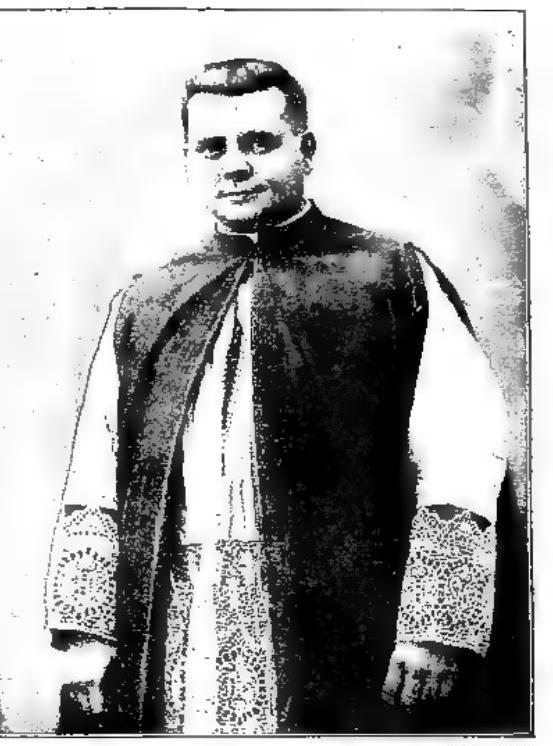
FAMIGLIA PONTIFICIA - The prelate of pontifical ceremonies.
The maintenance of the f. p. was provided by the offerings of pilgrims, the revenues of the duchy of Rome, in practice administered by the popes, and the revenues derived from the possessions which the S. Sede held in the south and in Sicily. A pontifical militia, established for the defence of ecclesiastical property, is found in the 9th century. Further information concerning the f. p. also dates from the Carolingian period. At its head there was still the vicedominus (vice-lord), upon whom depended the cubicolarii (chamberlains), the cellerarii (cellarers), and the stratores (grooms). The nomenclator was the grand master of ceremonies; the cestarius or prior vestiarii was the treasurer. The employees of the Chancery were called notarii or scrinarii, among whom the notarii regionarii were important; the first two of the group, the primicerius and secundicerius, were among the great dignitaries of the Church. The primicerius was later succeeded by the primicerinus, as head of the chancery. Attached to the administration were the arcarius (cashier) and the sacellarius (paymaster), under whom was a body of causidici, clerics and laymen. The clerics subsequently gave rise to the body of the seven palatine judges (primicerius, secundicerius, arcarius, sacellarius, protoscrinus, primicerius defenzorum, nomenclator). The consiliarius and the ordinator are also mentioned; these figures soon disappeared from the f. p. The body of persons belonging to the palace is referred to by the name familia s. Petri, although the term appears to have had a broader meaning, as a synonym for ecclesiastical bureaucracy.
With the expansion of the Papal State and of ecclesiastical affairs, the f. p. grew progressively.
A document from the first year of the pontificate of Niccolò III (1277) provides a picture of the composition of the f. p. (P. L. Galletti, Memorie di tre antiche chiese di Rieti, Roma 1765, pp. 171-83); it mentions the camerlengo, now at the head of the SS. Palazzi, 5 chamber masters, the last of whom was the auditor camere, the vice-chancellor, the marescalcus iusticis, etc. Also mentioned are the: domicelli, camerarii, cappellani, cubicolares, ostiarii maio-
res et minores, officiales domicelli, servientes nigri et albi, cursores; mention is likewise made of the: cancellaria, elemosyna, coquina magna et parva, marestalla alba et nigra.
The greatest development of the f. p. occurred during the Avignon period (1306-96), when many bishops and abbots also flocked to the court, so that Innocenzo VI (1352-62) felt obliged to send them back to their own residences. During this period the direction of the f. p. was entrusted to the magister sacri hospitali Palazzi Apostolici, who was a layman, since the cardinal camerlengo had been dispensed from residing at court (cf. S. Fantoni Castrucci, Istoria d'Avignone, Avignone 1678, p. 163 sgg.). Precisely in order not to leave the f. p. in the hands of a layman, Martino V established the prefecture of the S. Palazzo Apostolico, entrusting it to an ecclesiastic. Under Urbano VIII, however, the prefect bore the title of “pontifical majordomo.” At times the prefect of the SS. Palazzi and the majordomo were two distinct offices.
The collection of pontifical registers, complete from Paolo IV (1555) onward, progressively provides the condition and development of the f. p. in subsequent centuries. Under that same Pontiff, the f. p. included: 10 prelates; 6 secretaries; the president of the Apostolic Chamber, the confessor, the chamber master; 8 chamberlains of higher rank; 12 other chamberlains, each with two servants; 24 other chamberlains belonging to the nobility, each with one servant; 5 assistants to the chamber; 7 physicians; 1 pharmacist; the grand baker; 24 chaplains; 2 sealers; 3 carving squires; 28 ordinary squires; various employees such as sensibili, couriers, etc.; 50 palafrenieri; 2 mace-bearers; 2 mestri uscieri de virga rubra; ushers; examiners of petitions; clockmakers; compatiati, librarians; copyists of Latin, Greek, and Hebrew manuscripts, etc.; in all, about 800 persons, who, together with various other employees, brought the number of those belonging to the f. p. to one thousand. These, at least in part, accompanied the Pontiff on his journeys as well (cf. G. Moroni, Dizionario di erudizione storico-ecclesiastica, XCVII, pp. 179-84). They received board at court and were remunerated in kind until Urbano VIII, who partially replaced this with payment in money; the latter was subsequently made exclusive by Pio VI.
III. PRESENT STATUS OF THE PAPAL HOUSEHOLD
The CIC has introduced no change in the offices of the Palace. Canon 328 declares: “With regard to the members of the household of the Roman Pontiff, whether or not they enjoy the title of prelate, the privileges, rules, and traditions of the f. (donata) p. are to be observed.”Privileges, rules, and traditions are contained chiefly in the constitutions of: Pio IV, Circunspecta of 12 Apr. 1562; Gregorio XV, Venerabili fratri of 23 March 1621; Alessandro VIII, Venerabilibus fratribus of 12 Jan. 1690; Innocenzo XIII, Venerabilibus fratribus of 26 May 1721; Benedetto XIII, Circunspecta Romani of 15 Dec. 1724; the breve of Pio VI of 22 June 1775; his chirograph of 6 Apr. 1775; the motu proprio of Pio VII of 3 May 1800; that of Leone XII of 23 Nov. 1824; of Gregorio XVI of 10 Dec. 1832; of Pio X of 21 Feb. 1905 (cf. Bullarium Romanum... ed. Taurinensis, VII [1862], p. 110 sgg.; XII [1867], p. 509 sgg.; XX [1870], p. 231 sgg.; XXII [1871], p. 120; Bullarii Romani continuatio, VI [Frato 1847], pp. 106 sgg., 35 sgg.; VII [ivi 1850], p. 9 sgg.; VIII [ivi 1854], p. 12 sgg.; Acta Gregorii XVI, ed. A. M. Bernasconi, I [Roma 1901], p. 203 sgg.; Pii X Acta, II [ivi 1907], p. 26 sgg.; P. Gasparri, Codici iuris canonici fontes, III, Roma 1925, p. 633). The functions of the principal members of the papal household are normally dealt with under their respective entries; here an overall view will be given, with mention of those figures not treated elsewhere in their own right.
(pic. Felici)
FAMIGLIA PONTIFICIA - Participating Secret Chamberlain.
1. The list of the f. p. opens with the palatine cardinals, who are the Pope’s first household officers: indeed, they (v. Roma, n. 1724) are listed first under the heading: f. p.
In 735, seeing that the regional cardinal deacons had increased from 7 to 14, S. Gregorio III added another 4, under the name of palatine cardinals: these were to assist the Pope when he celebrated in the Lateran and Vatican Basilicas and to chant the Gospel in the Lateran. The palatine cardinals subsequently lost their original function and assumed the principal offices in the f. p., which had previously been exercised by prelates. Included in the ancient lists of the Apostolic Palace were those palatine cardinals who were registered in the class of participating secret chamberlains.
The palatine cardinals appointed by each new pope, unless he confirmed those of his predecessor, often varied in number. They included the datary, the Secretary of State, the secretary for internal affairs of State, the secretary of memorials, the secretary of pontifical briefs, as well as the cardinal-nephews. The prelate auditor of the pope, if raised to the purple, while retaining the designation of cardinal pro-auditor, was considered palatine; likewise the librarian, provided that he resided in the Vatican. When Pio IX assigned the prefecture of the Sacred Apostolic Palaces to a cardinal (on 1 Nov. 1848 he conferred it upon Card. Antonelli), he created another palatine cardinal.
At present there are two palatine cardinals: the Datary of His Holiness and the Secretary of State.
2. The very distinguished body of ecclesiastics and laymen now to be considered constitutes what, in courtly language, is called the noble secret antechamber (Camera secreta SS. mi Domini Nostri Papae). This designation commonly indicates the principal and intimate household ministers of the pope, who have a place in the secret antechamber and in the other various and distinct antechambers of the Apostolic Palace.
This designation cannot be very ancient, since Lunadoro, in his Account of the Court of Rome (Rome 1664), makes no mention of it, while Zaccaria, in his Ratio instit. studii ritualis, art. 1 (v. Onomastico con rituale, Faenza 1787), names the pope’s secret chamber when dealing with the offices proper to the papal palace. In the Diario di Roma, which began publication in 1716, the collective body of persons assigned to the pope’s immediate service is repeatedly called the secret chamber.
The first members of the secret antechamber also bear the designation of prelati palatii, and the first three the title of Most Reverend Excellency; they are: the majordomo of His Holiness (Praefectus Palatii Apostolici), the master of the chamber (Praefectus Cubiculi Secreti Pontificis), who at present also exercises the functions of the majordomo; the auditor of His Holiness (Auditor SS. mi D. mi Nostri Papae), whose functions are entrusted to the secretary of the Tribunal of the Apostolic Signatura; and the master of the Sacred Apostolic Palace (Magister S. Palatii Apostolici).
The most important lay office of the f. p. is that of grand master of the Sacred Hospice (Magister S. Hospitii), which, hereditarily held by the Conti family, passed, upon the extinction of that family, to the Ruspoli, who likewise enjoy it as a hereditary office. Benedetto XV, by apostolic letter of 28 May 1916 (AAS, 9 [1916], p. 72), separated the office of master of the Sacred Hospice from that of intimate cubicularius and from the body of chamberlains of sword and cape, of whom he is the first; he constituted it a proper and singular order and assigned to it the title of grand master. By decree of the S. Congregation of Ceremonial, of 29 Apr. 1886 (cf. A. Ruspoli, Del maestro del S. Ospizio Apostolico, Vignanello 1925, pp. 71-75), it belongs to the grand master to receive, attend upon, and serve royal personages or heads of State who solemnly proceed to an audience with the supreme pontiff. He is the only layman of the noble court who has a place in the papal Chapel, where, within the quadrangle formed by the benches reserved for the cardinals, he stands beside the bench of the cardinal deacons. Since he is entrusted with the custody of the said chapel and of the public consistories, which must be regulated «ad instar cappellae», he also bears the title of Custos S. Sacelli (v. S. Congregation of Ceremonial of 30 May 1901). In their absence he substitutes for the princes assisting at the Throne. Whenever he proceeds in public form to exercise his office, the grand master is accompanied by four Swiss Guards. He receives his appointment, made by the supreme pontiff, by a note from the Secretary of State, after which the apostolic brief is sent to him.
3. The class of cubiculari (syncelli), ecclesiastics entitled to the title of monsignor (the secret almoner and the secretary of the Cipher also to that of Most Reverend Excellency), now called participating secret chamberlains, begins with the secret almoner (v. SANTITÀ), the secretary of Briefs to Princes (Pro litteris in forma brevi ad Principes Secretarius; V. SEGRETERIA DELLE LETTERE LATINE), the secretary of the Cipher (Notarum arcanarum S. P. Secretarius vulgo cifrarum Secretarius; V. SEGRETERIA DI STATO), and the secretary of Latin letters (Litterarum latinarum Scriba seu Secretarius; V. SEGRETERIA DELLE LETTERE LATINE).
The participating secret chamberlains, by serving directly near the person of the pope, also shared at his table, whence their name. Some of them hold the three permanent offices of: cupbearer (pincerna),
FAMIGLIA PONTIFICIA - Secret Chamberlain of Sword and Cape.
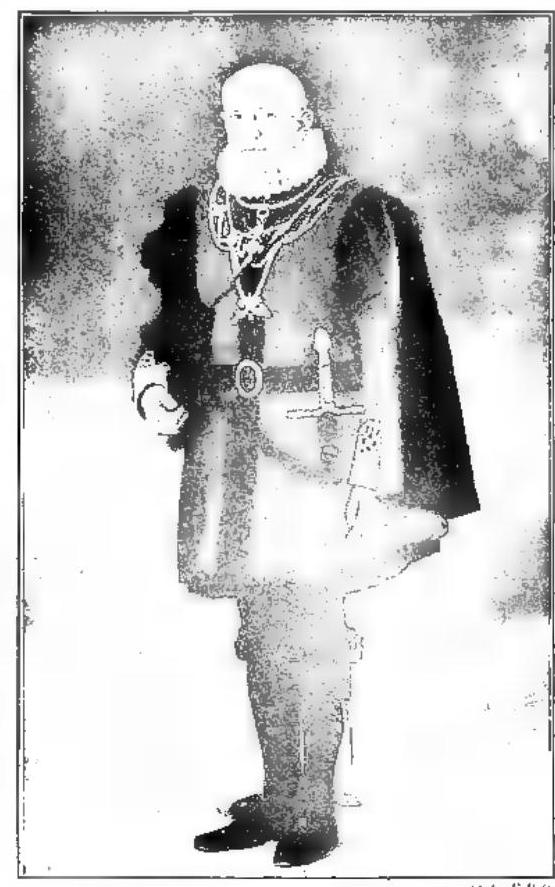
4. Next come other lay participating secret chamberlains who, from their attire, take the name of participating secret chamberlains of sword and cape. Each is distinguished by a special title which, through secular privileges, is hereditary in certain of the foremost noble families of Rome (Massimo, Barbarini, Sacchetti, Serlupi Crescenzi, etc.). Thus there are the chief usher of the Apostolic Palaces (Forerius maior), the chief equerry of His Holiness (v. : Praefectus stabilis), the general superintendent of the post (Praefectus tabellariorum), the bearers of the golden rose (v. 1084 d'oro), and the secretary of embassies. The exempt officer of the Noble Guard on duty and the colonel of the Swiss Guard are also numbered among these secret chamberlains.
In former times the general superintendent of the Posts was called praefectus cursus publicis; throughout the Papal State, the dispatch riders and special couriers were under his authority; he supervised the posts for the changing of horses; accompanied the Supreme Pontiff on journeys; and opened and closed the door of the papal carriage. He went to meet sovereigns who came to Rome, as far as the borders of the State. Beginning with Sixtus V, the popes issued various constitutions to regulate his prerogatives. He was also entrusted with the supervision of the postal service at the Ministry of Finance, and his powers were established in the motu proprio of Gregory XVI of 4 November 1840 (Acta Gregorii XVI, IV, Rome 1904, p. 373).
The bearers of the golden rose are two Roman princes, to whom the Supreme Pontiff entrusts the task of presenting the golden rose, a papal token of special devotion, to cathedral churches and distinguished sanctuaries, and, as a sign of esteem and paternal affection, to Catholic sovereigns and sovereign women, princes and princesses, valiant captains and persons deserving of the Holy See, as well as to illustrious republics and cities that are likewise Catholic. On 30 June 1948 Pius XII (NAS, 40 [1948], p. 343) instituted a new participating secret chamberlain of sword and cape, conferring upon him the office of secretary of embassies, while leaving his ecclesiastical participating secret chamberlain (nuntius) with the same qualification.
The chief usher of the Apostolic Palaces (Forerius maior) is a palatine official who, with the rank of participating secret chamberlain of sword and cape, belongs to the pontifical noble household and forms part of that secret chamber which precedes and follows the pope when he solemnly leaves his private apartments. The origin of this office, which under the designation Florerius Palati is already found in a codex from the time of Alexander V ([1409–10], cf. G. B. Gattico, Acta selecta caeremonialia S.R.E., Rome 1752, p. 268), must almost certainly be placed between the end of the fourteenth century and the beginning of the fifteenth. This office was also held by an ecclesiastic. At present it is held hereditarily by the family of the marquises Sacchetti. The chief usher, head of the floreria, is responsible for supervising the buildings, water supply, and furnishings of the Palace. It is also the responsibility of the chief usher to precede the Supreme Pontiff on journeys, to supervise these journeys, and to prepare accommodations and everything necessary both for the pope and for his court. At present the chief usher has a coadjutor who belongs to the same Sacchetti family. In the floreria he is assisted by a regent of the floreria and by the clerks. His powers are established in the motu proprio and in the regulations issued by the Supreme Pontiffs to ensure the proper functioning of their floreria. At present they are determined by the «regulation» of Leo XIII of 1882.
5. Next, in the order of precedence within the f. p., come the domestic prelates (antistites urbani, V. PRELATI).
6. Next come the Papal Noble Guard, whose commander, lieutenants, and exempt officers are participating secret chamberlains of sword and cape.
7. The members of the College of Pontifical Masters of Ceremonies are likewise secret chamberlains, but ecclesiastical ones. A document of 710 records that at that time they existed under the name Ordinatores; later they were called Clerici caeremoniarum; in 1563, by a brief of Pius IV dated 10 May, they changed this name and assumed their present one, Magistri caeremoniarum apostolicarum. Besides regulating papal ceremonies, they assist the cardinals of the S. R. C. at solemn functions, ceremonies, etc.; for the prefect of ceremonies assigns a pontifical master of ceremonies to each cardinal. They serve as notaries on pontifical missions accompanying the cardinals sent as papal legates. Famous are the «diaries»
of papal ceremonies, which the masters of ceremonies have written since the earliest times and continue to write, and which are preserved in the archive of their college. Their number varied under the different pontificates. At present there are nine: the first five are «ex numero», and the others «supernumerarii». At their head is the Praefectus seu Antistes caeremoniarum, who is elected by the Supreme Pontiff by a special brief, has the rank of domestic prelate and of an apostolic protonotary «ad instar», and, when accompanying and assisting the pope, always stands to his left. During functions he regulates all movements, supervises the actions of the masters of ceremonies, and, when necessary, advises the pope what is to be done. In consistories he announces who is entitled to approach the papal throne, to withdraw from it, and to leave the consistory hall (l'extra omnes). Functions and consistories are announced by a printed notice (intimatio) signed by the prefect of ceremonies. The extensive privileges of the masters of ceremonies (who likewise bear the title of monsignor) were confirmed by Benedict XV by decree of the Sacred Congregation of Ceremonial of 27 June 1917. They do not cease upon the death of the Supreme Pontiff; indeed, during the Vacant See they serve as participating chamberlains.
8. The last class of ecclesiastical secret chamberlains is that of the supernumeraries, whose precise name is supernumerary secret chamberlains of His Holiness (cubicularii intimi seu segreti). Their institution is undoubtedly, as has been seen, extremely ancient; certain information about them, however, is available only from the time of Urban VIII. Since the pontificate of Pius VI, they have served in the secret antechamber and at chapels and functions without remuneration. For antechamber service they depend on the chamberlain; for other functions, on Monsignor the majordomo. They are appointed by a note from the Secretariat of State and cease upon the death of the pontiff. They too are entitled to the title of monsignor.
9. There are also the lay secret chamberlains, who, from their dress, take the name of secret chamberlains of sword and cape (cubicularii intimi ab esse et lacerna). They are distinguished from the participating chamberlains, already mentioned, because the latter have their own offices and duties. Their institution dates back to the sixteenth century (1573), according to the Manuel des dates (Paris 1839, camerieri segreti); or to 1592, according to F. Buonanni (s. V. in Gerarchia ecclesiastica, Rome 1720). They hold the rank and office of true chamberlains both at Court and at functions celebrated by the supreme pontiff. They are divided into chamberlains of number, who are four (they are appointed for life by the supreme pontiff by a note from the Secretariat of State and also serve at all ceremonies held during «sede vacante»), and supernumerary chamberlains, who assist the aforementioned four in the antechamber and at other functions. All secret chamberlains of sword and cape must be noble or at least distinguished by their social position. Their church dress is black, in the Spanish style; for service in the antechamber they wear civilian dress.
10. Next come the ecclesiastical and lay chamberlains of honour. a) First among these are the chamberlains of honour in purple dress, instituted in recent times, although not precisely defined (they were already numerous in the time of Benedict XIV, 1740–58). They are designated by the title cubicularii honoris and serve in the antechamber of honour (the throne room). They accompany the supreme pontiff to the Vatican Basilica on the occasion of functions. They enjoy the title of monsignor and the same insignia and privileges as the secret chamberlains, whom, however, they follow in the order of precedence at Court. They cease to hold office upon the death of the pontiff who appointed them. b) Then come the chamberlains of honour «extra urbem» (cubicularii honoris extra urbem), of recent institution, attributed to Pius VI. They have insignia and privileges similar to those of the preceding group, but their service is limited to residences «extra urbem», so that wherever the supreme pontiff may find himself, he has his chamberlains of honour to perform Court service for him. Their office ends upon the death of the supreme pontiff who conferred II. c) The last chamberlains of honour are laymen who, from their dress, take the name of chamberlains of honour of sword and cape (cubicularii honoris ab esse et lacerna). Because of the devastation suffered by the papal archives, their origin, although extremely ancient, is imprecise; reliable information about them is available under Paul IV (1355). On the collar-shaped insignia they wear, they bear a designation different from that of the secret chamberlains and hold a lower rank at Court. They too are divided into chamberlains of honour of number (four) and supernumeraries. Those of number were formerly chosen according to seniority of appointment; now, like all the others, they are chosen by sovereign favour. They serve in the antechamber of honour (the throne room) and at other functions according to the orders of their superiors (the majordomo and the master of the chamber).
11. In the papal household, between the chamberlains of honour already examined and the classes of chaplains come the general staffs and senior officers of the Armed Forces. Precedence among them is established as follows: the general staff and senior officers of the Pontifical Swiss Guard; next come those of the Palatine Guard of Honour, and finally those of the Pontifical Gendarmerie.
12. The chaplains who form part of the papal household appear as early as the twelfth century among the pope’s familiars. It should be noted that, under this designation, among others, the auditors of the S. R. Rota originated; they are recognized as perpetual chaplains of the pope and perform their duties in the public chapels and at solemn functions at which the pope is present or which he celebrates. After the sixteenth and seventeenth centuries, these chaplains constantly retained their present titles and prerogatives, being divided into secret chaplains (cappellani segreti) and common chaplains (cappellani communes).
a) The secret chaplains perform services requiring particular trust and assist the supreme pontiff at functions. When the pope celebrates Holy Mass in his private chapel, a chaplain immediately afterward celebrates another pro gratiarum actione. The office of train-bearer is reserved to the first secret chaplain, while the second acts as cross-bearer, that is, he carries the cross before the pope at public functions. There are also secret chaplains of honour (cappellani segreti honoris), instituted by Clement XII, who form a separate class. They wear the same dress as the active chaplains and attend them in the pontifical chapels and at other functions, replacing them when necessary. They hold the title of monsignor. Pius VII appointed chaplains of honour «extra urbem» (cappellani honoris extra urbem). They hold the title of monsignor and enjoy pontifical privileges only outside Rome. b) As has been said, the common chaplains form a college. Their existence is attested in the sixteenth and seventeenth centuries, with offices and prerogatives no different from those of the present day (v. in fact the constitution Grata familiaritatis of Innocent X, issued on 16 January 1647; and the apostolic letter of Clement XII dated 18 May 1731 (Bullar. Roman., ed. H. Mainardi – C. Cocquelines, Rome 1739–62, VI, p. 102; XIII, p. 255). They serve in the common chapel. They are appointed for life by a brief and therefore remain in office during a vacancy of the Holy See. They are divided into participating and supernumerary members.
13. Before the college of common chaplains, in the papal household, come the secret clerics, ecclesiastics attached to the private chapel of the supreme pontiff, who adorn its altar and prepare what is needed for the celebration of the pope’s Mass and of the thanksgiving Mass. They are appointed by the majordomo and enjoy the status and favours of true familiars. They wear purple dress with a mantellone. They cease to hold office upon the death of the supreme pontiff who appointed them.
14. The final members of the papal household are the preacher, the confessor, the physician, the chamber assistant, and the steward. The apostolic preacher (Pontificia aulas orator, Concatenator Palatii Apostolici), who is a Capuchin, was instituted by the bull Inctyrum Fratrum Minorum of Benedict XIV, dated 2 March 1743. He preaches in the throne room on Wednesdays during Advent and on all Fridays of Lent to the supreme pontiff, who listens to him from behind a screen; and to the Sacred College, the bishops, and the prelates of the Curia. The household confessor is a theologian, a religious and professor of the Order of the Servants of Mary, by a brief of Clement XIII dated 17 January 1762. At present he exercises his office when the papal household gathers in the Vatican, in order to distribute Holy Communion there from the pope’s hands. The physician of His Holiness was formerly designated by the particular title of archinero or pontifical archinero (v.). The chamber assistant serves the person of the supreme pontiff in his private apartments; he also belongs to the class of cubicularies. A celebrated chamber assistant was Gaetano Moroni, author of the Dizionario di erudizione storico-ecclesiastica (Venice 1840–79). The secret steward (this office has been vacant since 1923) supervised everything relating to the papal household table, also serving at the supreme pontiff’s solemn banquets. At times he combined this office with that of the pope’s secret master of the household.
15. The bussolanti, so called from the word bussola, which since the seventeenth century has denoted the door of the palatine hall, are other officials attached to the papal antechamber, where they perform Court duties. Gregory XVI in 1832 brought them together into a single class and divided them into participating and supernumerary members. The office of bussolante is held for life. The last of the papal familiars is the dean of the hall (magistice palafrenariae), head of the palafreniers and chair-bearers (bearers of the papal chair), who serve in the first papal antechamber.
RUM.: Transumptum litterarum facultatum et privilegiorum R.R. DD. cappellonorum dongisticorum S.D.N.D. Pii Papae IV, Roma 1564; Pio IV, Balla S.D.N.D. Pii., super confirmatione ac ampliatione privilegiorum DD. cubicolariorum et scutiferorum apostolicorum, there 1564; A. Tontouche, Trait de tout ce qui s'observe dans la cour de Rome, Paris 1623; A. Gennaro, Relazione della corte di Roma, Leiden 1663; Statuti del collegio dei maestri ostiari della camera dei paramenti del Sommo Pontefice dati di perga rubra, confermati per bolla apost. della S. di N.S. papa Clemente X. L'anno MDCLXXI, Rome 1671; G. Loti, Itinerario della corte di Roma e vero teatro historico camolegico e politico della Sede Apostolica, Dotaria e Cancelleria Romana, Valencia 1675; I. Ayman, Tableau de la cour de Rome, The Hague 1707; L. Muratori, Dissertazione sopra le antichità italiane, I, Modena 1717, diss. IV. Degli uffici della corte; F. Buonarroti, Gerarchia ecclesiastica, Rome 1720; G. M. Allegri, La spirito delle corti di Roma, Naples 1725; R. A. De Vetroi, Origine de la grandeur de la cour de Rome, Lausanne 1745; I. F. Gattico, Acta selecta ceremonialia Sanctae Romanum Decisione ex scutis manuscripti, codibus et diuria succulorum XV. XVI et XVII, Rome 1733; P. L. Galletti, Del casticario della S. Romana Chiesa, there 1758; id., Del primiero dello S. Sede Apost. e di altri ufficiali maggiori del S. Palazzo Lateranense, there 1776; L. Ferraro, Pompa bibliotheca, III, Bologna–Venice 1766, p. 1562; F. M. Benazzi, Notizie storiche degli antichi vicedomini del patriarchio lateranense e dei moderni prefetti del Sacro Palazzo Apost. ovvero maggiordomi pontifici, Rome 1784; F. Cancellieri, Descrizione delle Capelle Pontificie e Cardinalizie di tutto il mondo e dei conditori pubblici e segreti, there 1790; id., Storia dei solenni possessi del Sommo Pontefice, there 1803; id., Descrizione delle funzioni della Settimana Santa nella Cappella Pontificia, there 1802; V. Palaschi, La gerarchia ecclesiastica e la f. p., Macerata 1824; G. Lunadore, Relazione della corte di Roma, Bracciano 1641 – Rome 1839; G. Moroni, Dizionario di erudizione storico-ecclesiastica, XVII, pp. 296–98; XXIII, p. 27 ff.; I. F. Andri, Histoire politique de la monarchie pontificale au XIVe siècle, Paris 1843; I. H. Sangre, Die römische Curie, ihre gegenwärtige Zusammenarbeit und ihr Geschäftsweg, Münster 1854; F. Frezza di Sant Felice, Dei camerieri segreti e d'onore del sommo pontefice: memorie storiche, Rome 1884; id., Brevi notizie sul Collegio dei bussolanti pontifici, Venice 1886; Th. Rither V. Sickel, Ein Ruolo di famiglia dei Papstsi Pini IV, Innsbruck 1893; G. Bourgin, La f. p. sotto Eugenio IV, Rome 1904; T. Ortolan, Cour Romaine, in DThC, III, coll. 1931–83; V. M. Vicentini, Il confessore del S. Palazzo Apostolico e l'ordine dei Servi di Maria. Memorie storiche, Vicenza 1925; Mauro da Leonessa, Il predicatore apostolico, Note storiche, Isola del Liri 1929; H. Goring, Die Beamten der Kurie unter Bonifaz VIII., Königsborg 1934; B. Rosch, Die Behörden und Hofbeamten der päpstlichen Kurie des 17. Jahrhunderts, Königsborg and Berlin 1936; P. Pisani, Corte Pontificia, in Circ. Ital. XI (1931) pp. 334–335; G. Felici, La R. Camera apostolica, Rome 1940; P. Torquedina, Cour pontificale, in DDC, IV, coll. 736–20; Annuario Pontificio 1930, Vatican City 1950, pp. 877–96 and moreover pp. 861–76. Guglielmo Felici