
VICENZA, DIOCESE of. — The city, crossed by the Bacchiglione and the Retrone, which divides the centre of ancient Berga (Berica), is the capital of a vast province (2,722.36 sq km), extending for the most part across the region of the hills and the Pre-Alps, and is an episcopal see, suffragan to Venice. The boundaries of the province reflect the numerous changes that took place in various periods, especially after the year 1000, whereas those of the diocese essentially mirror the territorial jurisdiction of the Lombard Duchy. The diocese (2,151 sq km) has 308 parishes, with 702 secular priests, 194 religious priests, and 602,000 faithful.
I. HISTORY
The first inhabitants of the Vicenza area of whom there is some information were the Euganei, perhaps intermingled with groups of Italic peoples, on whom the discovery of the pile dwellings at Fimon and the necropolis of Angarano in the Bassanese region has shed some light. Between the end of the eighth and the beginning of the seventh century, the Euganei, overcome by the Veneti, a people of Illyrian origin whose principal centre was at Atheste (Este), were driven toward the mountains where they probably formed the 34 oppida of the Euganeae gentes mentioned by Cato, cited by Pliny (Nat. hist., III, 24). The Veneti, probable founders of V., had to withstand the continuous onslaught first of the Etruscans and then of the Gauls. In the first half of the third century B.C., the Romans occupied the small domain of the Veneti, and V., as a municipium (modicae municipio vires, says Tacitus), was incorporated into the Menenian tribe. Archaeology has made possible a fairly reliable reconstruction of the civitas and the urbs, equipped, especially during the Empire, with palaces with mosaic floors, aqueducts, bridges, and the Berga theatre, and governed by quattuorviri iure dicund with its Collegia, among them that of the Centonarii.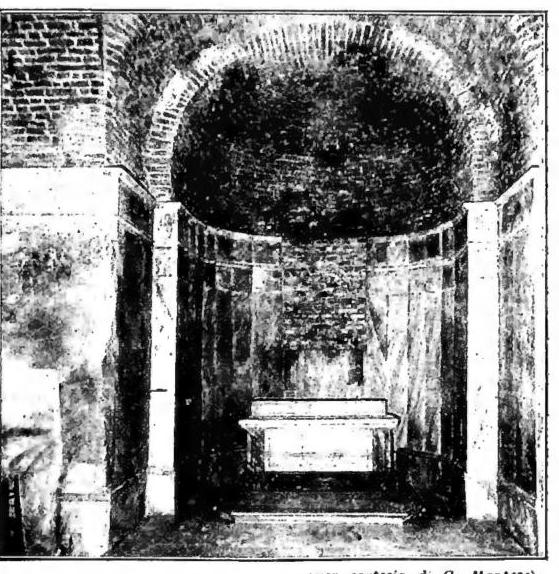
The first Christian community began to organize itself, from the fourth century onward, around the tomb of SS. FORTUNA (v.), natives of Vicenza according to tradition and martyred at Aquileia. An inscription assigned by G. B. De Rossi to the Constantinian period, together with the fruitful excavations carried out, has demonstrated the existence of a chapel in the first half of the fourth century and of a large basilica at the end of the fourth or the beginning of the fifth century, when, in all probability, V. Aquileia; but Orontius (590), the first securely attested bishop, appears only during the struggle over the “Three Chapters.” Under the Lombards V. was the seat of one of the 36 duchies; but there is an absolute lack of information about the bishops of the Lombard period, and it is only from the eighth and ninth centuries that the regular succession of the bishops Reginaldo (808), Andrea (820), and Franco, who took part in the Council of Mantua (827), is known. After the general ecclesiastical decline that accompanied the fall of the Carolingian Empire, Bishop Rodolfo (967), having rebuilt the church and monastery of S. Felice, destroyed by the Hungarians (899), also attempted a reform at V. Vercelli. Since a diploma according to which Bishop Girolamo, by a privilege of Otto III (1001), had supposedly been invested with the county over the city and territory, until then held by the Counts, is false, perhaps the chronicle of Paglierini (fifteenth century) may be closer to the truth in suggesting that this comital investiture took place in the last decades of the eleventh century, that is, during the Investiture Controversy, in which Bishop Ezzelino favoured imperial policy. In any case, it is certain that his successor Torengo, “holding the imperium of the city and having many citizens opposed to him,” had to sustain a long struggle that ended only when the bishop resigned himself to abandoning that authority which belonged to the people of Vicenza. This was the beginning of a painful and interminable chain of civil wars within the Commune, where the consulate had already been established in 1122 (the first election of a foreign podestà dates to 1175), against the rights of the bishop and against the feudal nobility in general.
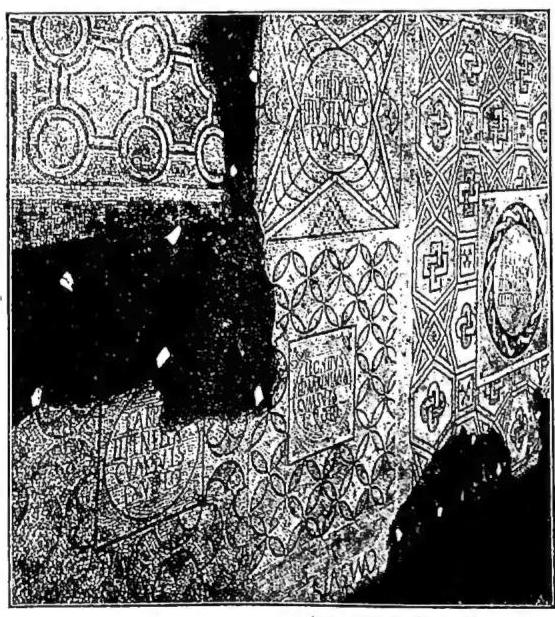
(courtesy of G. Mantova)
VICENZA, DIOCESI di — Fragments of the walls of the cemetery church of SS. Felice and Fortunato (330–50) — Vicenza.
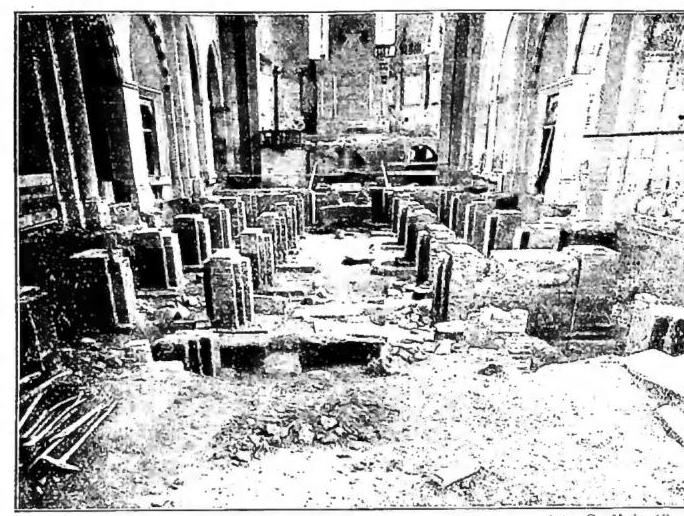
(photo by C. Fajenti)
VICENZA, DIOCESI di — The remains of an earlier church discovered beneath the floor of the Cathedral, struck by the 1944 bombardments — Vicenza.
This reform, officially begun under Bishop Matteo Priuli (1565–79), who had attended the Council of Trent and deserves credit for founding the Seminary, was fully implemented under his successors Michele Priuli and the two Delfino, whose work is attested by the numerous files of the pastoral visitations. The political upheavals of the last century found the bishops Marco Zaguri and Giuseppe Cappellari in the see of Vicenza; the latter’s name is particularly associated with the construction of the present Seminary. Monsignor Ferdinando Rodolfi, bishop from 1911 to 1943, left a widespread reputation for his multifaceted pastoral activity during the First World War, for the construction of many churches, for the development of liturgical reform and sacred music, for the Seminary, and for assistance to emigrants and Catholic Action.
V. ROMAGNA e medioevale, in numero unico: La diocesi di V
Pagine di storia, there 1943; G. Mantese, La chiesa vicent. nei tempi napoleonici, there 1944; id., Memorie storiche della Chiesa vicentina, I. Dalle origini al Mille, there 1952; cf. S. Rumor, Bibl. storica della città e prov. di V., there 1916, updated with a supplement of 1924.II. ART
Of particular historical and artistic importance is the monumental complex of S. Felice, which scholars date to a period between 310–20 and 460–70. A first church of modest proportions was built between 330 and 350; a large part of its votive pavement mosaic still remains. Between 380 and the early years of the fifth century it was followed by a great basilica (almost 90 m. long), with atrium, narthex, majestic entrance, columns of Greek and eastern marble, mosaics, frescoes, etc. It was destroyed, as stated by the anonymous biographer of Bishop Theodoric of Metz and by the chronicler Sigebert of Gembloux, by the Hungarians in 899. Rebuilt by Bishop Rodolfo in the final decades of the tenth century and, in part, after the earthquake of 1117, it substantially withstood all subsequent alterations. In recent years it has been almost completely restored and freed from its Baroque masking.The excavations beneath the Duomo, which had only just risen again from the ruins of the recent war, brought no small surprise to scholars. It became certain that a building dating from the classical period had stood there. Indeed, the remains of two Roman structures have appeared, lying respectively 1.35 m. and 0.85 m. from the bases of the pillars of the eighth-century church; the more recent of the two displays the characteristics of a public building (perhaps a basilica or market). At a depth of 20 cm. below the bases of the aforementioned pillars, a mosaic with a votive inscription was found, certainly Christian, though opinions differ as to its date. In any case, it seems established that a church arose here between the fourth and sixth centuries, and the secondary dedication, s. Eufemia, which is still preserved, would favor the fifth or sixth century as the date of its construction. The sacred building was rebuilt around the eighth century; and the dedication to s. Maria, if it did not already exist, would suggest as the most probable date for this construction the period immediately following the end of the Aquileian schism and the complete conversion of the Lombards to Catholicism.
In the fourteenth century four Gothic churches arose in V.: S. Lorenzo, S. Corona, S. Michele, and S. Bartolomeo, of which the first two still remain. Built on the ruins of one of the city’s primitive chapels, granted by the Canons to the Franciscans in 1280, S. Lorenzo, with its magnificent portal and artistic funerary monuments, was rightly called the S. Croce of V. S. Corona was built in 1260 by Bishop b. Bartolomeo, known as da Breganze, to house the relic of the Savior’s crown of thorns, which the Blessed had received as a gift from s. Luigi IX of France. The church of S. Agostino in the district of S. Felice, with notable frescoes of the Emilian school, belongs to the fourteenth century. Its origin, however, is certainly older and, in all probability, contemporary with those numerous little churches that arose in the territory between the eighth and tenth centuries and of which the following still remain substantially preserved: S. Martino di Ponte del Marchese, S. Zeno di Costabissara, S. Maria in Favrega, S. Michele di Caldogno, S. Giorgio di Angarano, S. Benedetto and S. Vito di Marostica, S. Bartolomeo sul Brenta, S. Niccolò di Pianezze, S. Martino di Schio, S. Martino di Brogliano, SS. Filippo e Giacomo di Longara, S. Giustina di Sossano, S. Vito di Lovertino, S. Maria Etiopissa di Polegge, S. Silvestro and S. Giorgio di V. Among the ancient parish churches, that of S. Maria in Colle di Bassano del Grappa still preserves some elements of its primitive construction; there, in the late fourteenth century, the beautiful church of S. Francesco was also built, restored to its original state a few years ago. The construction of the church of S. Rocco (1485) was inspired by the Renaissance style of Lorenzo da Bologna and, perhaps, of Rocco da Vicenza. PALLIO (v.) did not leave V. great religious monuments as he did other cities; nevertheless, his original and modern interpretation of classical architecture, substantially followed by Scamozzi (1548–1616) and others up to the nineteenth century, exerted a great influence on religious art as well. The Paduan architect Frigimelica (1653–1732) gave V. S. Gaetano, which in no way suffers by comparison with the Ca’ d’oro. Also worthy of representing its period is the church of the Filippini, the work of G. Massari and O. Calderari (1730–1804). Among the principal monuments of sculpture should be recalled, besides the portal of S. Lorenzo (fourteenth century), the altar of S. Giovanni at S. Corona, the portal of the former church of S. Marcello, and the statues of the Albanese brothers (sixteenth century) and of Orazio Marinali, of Bassano (eighteenth century). The beautiful Madonnas by Bartolomeo Montagna, Veronese, and Tiepolo, and the paintings of Battista da V., Giovanni Buonconsiglio, Tintoretto, Fogolino, and Francesco Maffei, to mention the most representative names, still adorn the churches of the city or are found in the city museum. Of the greatest value are the fourteenth-century wall paintings of S. Agostino, the frescoes of the church of S. Rocco, the fresco of the Beheading of S. Paolo by Montagna at S. Lorenzo, and, in addition, the Tiepoloesque frescoes of the various villas of Vicenza. Among the many works that adorn the church of S. Corona, particular attention should be given to the altarpiece of the Baptism of Jesus by Giambellino, the S. Maria Maddalena by Mantegna, and the Adoration of the Magi by Veronese.
The confraternity of S. Nicola erected (sixteenth century) the oratory of S. Nicola, which F. Maffei and G. Carpioni transformed (mid-seventeenth century) into a veritable gallery of paintings; they also worked in the other gallery of seventeenth-century Vicentine painting, the church of S. Giacomo.
Music, too, boasts a glorious tradition. In the musical chapel of the Cathedral, for which documented information exists from the beginning of the sixteenth century, Fr. Niccolò Vicentino (Nicolaus de Vicentinis), inventor of an archicembalo and archiorgano, and Fr. Leon Leoni served; his sacred and madrigal compositions still await the patient work of the musicologist.
Among the cultural resources, besides the Civic Library and the Museum, with an adjoining picture gallery of approximately 400 paintings, the Library of the Seminary deserves mention, with approximately 35,000 volumes and precious incunabula; as do the Chapter Archive and that of the Curia, with a collection of feudal codices dating from the twelfth to the nineteenth century. Worthy of note is the flourishing art of printing in V. during the fifteenth century: in 1476 the second edition of the Vulgate was published there, prepared by the printer L. Achates of Basel, with a text taken directly from the codices.
III. SANCTUARY OF MONTE BERICO
The first small church in the Gothic style, whose façade is still preserved, was opened on 25 August 1428, following two apparitions of the Virgin to a woman named Vincenza Pasini. An enlargement project submitted by Palladio in 1576 did not come to fruition, and the architect C. Borella built the present Baroque basilica between 1687 and 1702. The church, with the venerated image of the Madonna, attributed to the sculptor Antonino da Venezia, the paintings by Bartolomeo Montagna and Veronese (in the adjacent convent of the Servants of Mary), and the three façades adorned with flights of steps and statues by O. Marinali, represents for V., and not only for V., the heart of the whole of religious life (cf. S. Rumor, Il santuario di Monte Berico, Vicenza 1926).IV. ILLUSTRIOUS FIGURES
In the first half of the 13th century, the Dominican friar b. Giovanni da V. (c. 1200–c. 1260), better known as Giovanni da Schio, carried out his reforming and peacemaking work in the cities of central and northern Italy. The reform movement began at the assembly of 23 Aug. 1233 at Paquara, near Verona, where, before a great multitude of ecclesiastics and laypeople, peace was sworn among most of the communes of central and northern Italy. Although it achieved only ephemeral success, that peace movement responded to a genuine need among populations by then exasperated by so many hatreds and conflicts.Antonio Loschi, born in V. (d. 1441), a good Latinist and writer, served as secretary, notary, and abbreviator of the Curia from 1406 until his death; he was especially dear to Popes Alexander V (Pietro Filargi, formerly bishop of V.) and John XXIII, who appointed him notary at the Council of Constance. Between 1450 and 1550, the following men from V. achieved renown in Rome: Leonardo Nogarola (1476), made an apostolic protonotary by Sixtus IV, philosopher and theologian; I CONCORDIA (v.), a member of the household of Cardinal Marco Barbo; Francesco Chieregato, bishop of Teramo, many (v.); Girolamo Bencucci (1481–1533), commonly called da Schio, secretary to Cardinal Regino and subsequently bishop of Vaison, apostolic nuncio in Barcelona (1527–1530) and at the Diet of Augsburg (1530); Girolamo Gualdo (1492–1566), apostolic protonotary and founder of the Gualdo museum of V. LICENZA, Fr. Luigi Sodiro (1836–1909), a missionary in Ecuador for thirty-eight years, where he was appointed by the president of the Republic, Garcia Moreno, as professor of botany at the University of Quito, achieved fame as a great naturalist. His studies on the vascular cryptogams of Quito and on the flora of Ecuador made him famous among the most eminent scholars, so much so that in 1898 the French botanist C. De Candolle published a work entitled: Piperaceae Sodirianae. In recent times, the ecclesiastical, as well as the civil, history of V. found two devoted students in the two librarians of the city library: D. Bortolan (1850–1928) and S. Rumor (1862–1929). — Vedi tav. CXLI.