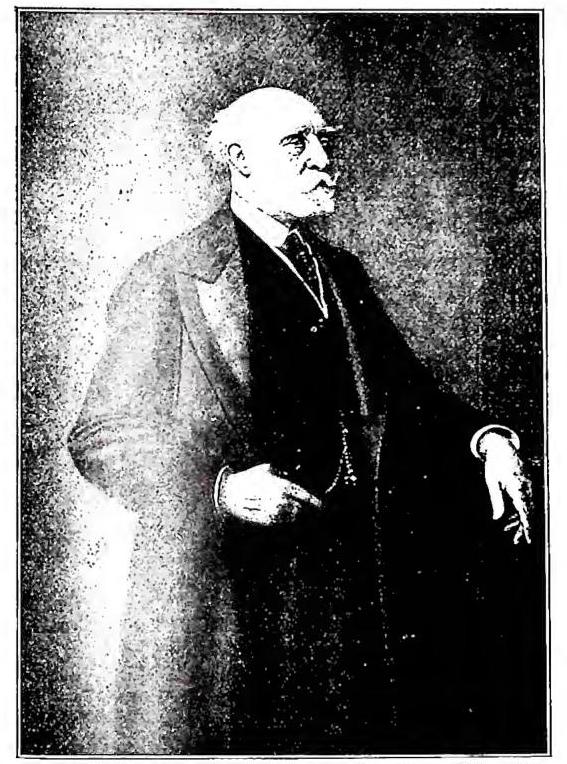
DE VIO, TOMMASO, known as il GAETANO. — Dominican philosopher and theologian, born in Gaeta on 20 February 1468 and died in Rome on 10 October 1533.
I. LIFE
He entered religious life in 1484 at Gaeta and completed his studies at Naples, Bologna, and Padua. There, in 1493, he was created bachelor after having expounded the Sentences, thereby becoming a member of the University. The following year he obtained the chair of Thomistic metaphysics there, while at the same time, apparently, holding the office of regent of studies in his convent of S. Agostino. At the General Chapter of Ferrara (1494), after a brilliant disputation with Pico della Mirandola, he was created master of theology at the request of Duke Ercole. During the two-year period 1497–99 he taught theology, using the text of St. Thomas, at the University of Pavia. After 1500 he was appointed to important offices: from 1501 to 1508 he held the office of Procurator General of his Order, while teaching philosophy and exegesis at the Sapienza in Rome; in 1508 he was elected Master General of the Order. From 1512 to 1517, both as head of the Dominicans and as procurator of Prince Giorgio of Saxony, he took an active part in the XVIII Ecumenical Council (V of the Lateran), celebrated under Julius II and Leo X. In 1517 he was created cardinal with the title of S. Sisto by Leo X, though he remained General until 22 May of the following year; on 8 February 1518 he received the archbishopric of Palermo in commendam, and in April of the same year he went to Augsburg as legate of the Holy See to proceed against Luther. In 1519 he attended the Diet of Frankfurt, where he effectively promoted the election of Charles V as emperor. While he was still in Germany, he was appointed bishop of his native city (13 April 1519). Returning to Rome in the summer of 1519, he worked on drafting the bull Exurge Domine against Luther. At the Conclave of 1527 he supported the candidacy of the Dutch pope Adrian VI. From 1523 to 1524 he was legate in Hungary. In the same year he was recalled to Rome by the new pope, Clement VII. After the sack of Rome (1527), during which he was taken prisoner and suffered the most serious humiliations, he resided in his diocese of Gaeta. Returning to Rome in 1529, he remained there until his death. He was buried outside the church of S. Maria sopra Minerva.II. WORKS
A scholar by temperament, even amid demanding offices, Gaetano worked with tireless diligence. His philosophical, theological, and exegetical output is imposing.His most notable works in philosophy are: Commentaria super tractatum de ente et essentia Thomae de Aquino (Venice 1496, recent ed. by H. Laurent, Turin 1934); Commentaria in Libros posteriorum analyticorum (Brescia 1496); Commentaria in Porphyrii Isagogen ad praedicamenta Aristotelis (ca. 1497, recent ed. by J. Marega, Rome 1934); Commentaria in Aristotelis praedicamenta (Pavia 1498; new ed. by H. Laurent, Rome 1939); De nominum analogia (Pavia 1498; reprinted under the direction of P. Zammit, Rome 1934); Commentaria in III libros Aristotelis de anima (Rome 1509; the new ed. by I. Coquelle contains Book I [1938] and Book II [1939]); De conceptus entis (Rome 1509; reprinted by P. Zammit together with De nominum analogia, Rome 1934); Opuscula oeconomico-socialia: under this title Zammit reprinted in Rome in 1934 an interesting collection of brief economic and social questions, the principal ones being: De elemosynae praecepto (1496); De monte pietatis (1498); De cambiis (1499); De usura (1500).
Gaetano is renowned for his classic commentaries on the entire Summa theologica of St. Thomas, to which his name and most enduring fame remain attached. The commentary on the 1ª was completed in 1507; that on the 1ª-2ª in 1511; that on the 2ª-2ª in 1517; and that on the 3ª in 1520. In the Leonine edition of the works of St. Thomas (begun in 1882), they occupy volumes 3–12. He also wrote Summula de peccatis (reprinted several times from 1525 to 1627) and the celebrated De auctoritate Papae et Concilii utque invicem comparata (Rome 1511), together with the related Apologia de comparata Papae et Concilii auctoritate (there 1512; a new ed. of both works was prepared by V. M. Pollet, there 1936). He also left numerous treatises (ca. 80) on the most controversial points of dogmatic and moral theology. D. V. also has a place in biblical exegesis for his commentaries on the Old and New Testaments, to which he devoted himself during the final decade of his life, wishing to oppose Lutheranism.
III. THOUGHT
Born in an age of transition, Gaetano experienced the entire travail of two ages in conflict. A genuine scholastic and convinced Thomist, he penetrated deeply into the latent potentialities of Aquinas’s thought, bringing out its inner harmony and its assimilative power with regard to the best philosophical currents; but, concerned to defend it from the attacks of the Scotist Antonio Trombetta and the Paduan Averroists (Pomponazzi and Nifo), he indulged in a polemic that was to impart to his powerful work something contingent and transitory.Even the proverbial obscurity—«si vis intelligere Caietanum lege Thomam»—perhaps arose from his frequent excursions into a philosophical field that left no mark on the general development of thought and therefore remains unknown territory for posterity.
Endowed with extraordinary intellectual vigor, D. V. personality. Thus, perhaps unconsciously, he happened in certain points to depart from s. Tommaso and from the best tradition of his school, both in philosophy (the object of metaphysics, the concept of analogy, the formal constituent of the person, the principle of individuation, the philosophical demonstration of the immortality of the soul) and in theology (the form of Baptism, the validity of Baptism conferred in nomine Christi, the salvation of children in voto parentum, the possibility of a figurative meaning of the words of consecration, and the distinction between the inspired canonical books «ad firmandum illa quae sunt fidei» and the uninspired canonical books «ad aedificationem fidelium»). But these are slight fissures that do not undermine the solid block of the extensive work.
Particularly attached to the Apostolic See, Gaetano defended its prerogatives with depth and verve in the celebrated treatise De auctoritate Papae, together with its Apologia, which crushed the conciliarist aspirations of Pisa (1511) and anticipated the condemnation of the Gallican error.
With an open mind, sustained by sincere piety and heartfelt love for the Church, he lived with profound awareness through the tragic events in which he took part; and, confronting the arduous problems posed by the emerging error of Luther, he traced their solution with a sure hand in his golden Eucharistic and penitential pamphlets, which were widely used at the Council of Trent. His exegetical works too, undertaken with a spirit superior to his inadequate linguistic and positive preparation, show, despite their serious defects, insights (for example, the inauthenticity of the Johannine comma) belonging to an acute and farsighted mind.
The anger and indignation aroused even among his confrères (Bartolomeo Spina, Ambrogio Catarino, Melchior Cano), and which naturally culminated in a posthumous condemnation by the Sorbonne, had already subsided at the end of the sixteenth century, when s. Roberto Bellarmino described him as «vir summi ingenii et non minoris pietatis» (De scriptoribus ecclesiasticis, ad annum 1500). In the eighteenth century Ughelli exalted him as «alter Thomas et ingeniorum extrema linea» (Italia Sacra, I, Venezia 1717, col. 544), and at the beginning of our century Pastor declared him, with slight exaggeration, the greatest theologian after s. Tommaso.