DOMINICAN FRIARS, ORDER OF - Mendicant order founded by St. Dominic (hence: Dominicans) for preaching. Its modern constitutions indicate the means employed to prepare the friars for this mission: 1) public recitation of the Divine Office, 2) regular life, 3) observance of certain ascetical practices, 4) assiduous study of sacred sciences.
SUMMARY:
I. Foundation
II. The Dominican constitution
III. Domestic activity and controversies
IV. Missionary activity
V. Crisis of mendicancy and poverty
VI. Return to common life
VII. Thomism
VIII. The Second Order of Dominicans
IX. The Third Order of Dominicans
X. Dominican confraternities
XI. Modern era
XII. Revival
XIII. Present state
XIV. Dominican architecture.I. FOUNDATION
The Order arose from an apostolic undertaking (Sacra praedicatio) in Languedoc among the Albigensian heretics, directed in 1206 by Diego, Bishop of Osma (Spain), and, after his death (6 Feb. 1207), by his companion Dominic, subprior of the regular Chapter of Osma. In April 1215, with the approval of the Bishop of Toulouse, Dominic transformed this association of preaching clerics into a permanent religious community and established it near Toulouse, first in a temporary house and then at the church of S. Romano, which had been ceded to him by the bishop. As a rule for the house, the community adopted certain usages of the Premonstratensian canons, greatly modified by Dominic himself to adapt them to the apostolic aims of his congregation. After a journey of St. Dominic to Rome, the community chose as its code of spirituality the Rule of St. Augustine, generally followed by the canons regular. A few months later, the Holy See approved the new institute (22 Dec. 1216) and its purpose (21 Jan. 1217). On 15 Aug. 1217, the spread of the Dominican Order throughout the Church began, with the expanded aim of forming learned clerics dedicated to preaching, especially among city-dwellers, without being bound to a specific parish. Dominic therefore began by founding convents in the two principal university centers: Paris (1217) and Bologna (1218). The extension of this apostolic mission was announced to the whole Church by Honorius III on 11 Feb. 1218. At the death of the founder (6 Aug. 1221), the Order already had several houses in France, Italy, and Spain; it had established itself in Germany, England, Hungary, and was about to enter Poland and Scandinavia.II. DOMINICAN CONSTITUTION
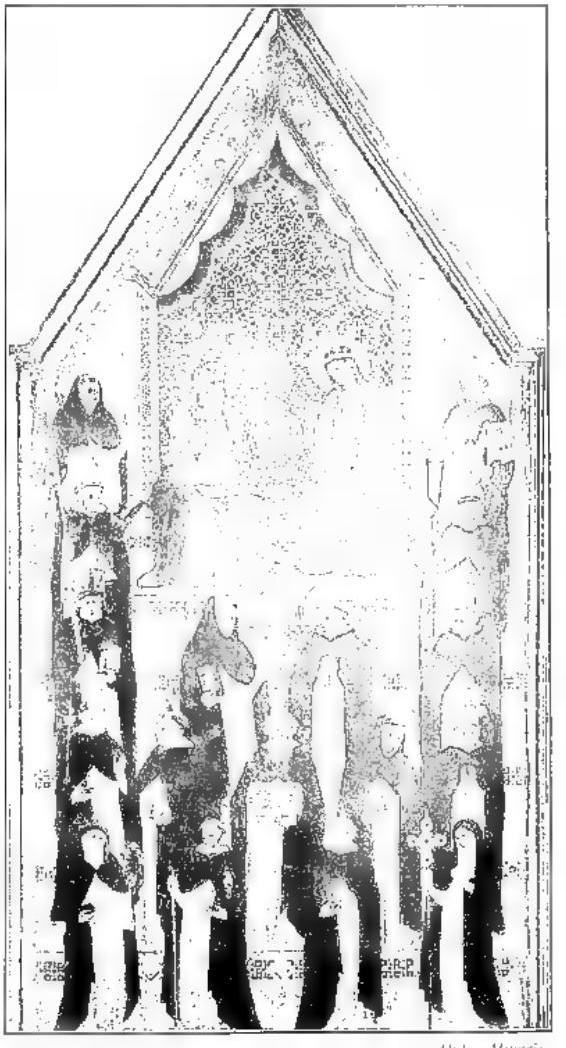
Outlined by the founder (the first part in 1216, the second in 1220), it assigns to the body of representatives of the entire Order the plenitude of legislative power. This periodic assembly, or General Chapter (annual in the 13th century), declares and completes the fundamental statute. Its decrees become an integral part of the constitution if approved by three consecutive Chapters. The executive power is held by the Master General for the whole Order, by the Provincial Prior for each religious province, and by the Conventual Prior in each convent (a house with at least 12 religious, one of whom is a lector, i.e., a teacher of sacred sciences). The Master General, elected by the General Chapter, does not require any further confirmation to take office. Appointed for life (now for 12 years), he is subject to the control of the General Chapter, which is composed alternately of the Provincial Priors and the definers elected in the respective Provincial Chapters. InFRATI PREDICATORI - Christ, the Madonna and nineteen Dominican saints and blesseds. Painting by the “Master of Dominican Images” (c. 1345) – Florence, church of S. Maria Novella.