
PALERMO, ARCIDIOCESI di. – City and archdiocese of the island of Sicily. It has an area of approximately 1,416 sq km and a population of 707,093, of whom 705,000 are Catholics, distributed among 98 parishes served by 303 diocesan priests and 370 religious priests; it has a major and a minor seminary, 49 male and 124 female religious communities (Ann. Pont., 1952, p. 308).
The boundaries of the diocese in the most ancient period are unknown; the present ones reproduce the arrangement of the Norman period, in connection with the territories of the neighboring dioceses of Monreale, Cefalù, Mazara, and Agrigento. The small territory of the archdiocese of Palermo is explained by the city’s particular position in the division of the island between Roberto and Ruggero.
I. ORIGINS AND HISTORY OF THE CITY IN ANCIENT TIMES
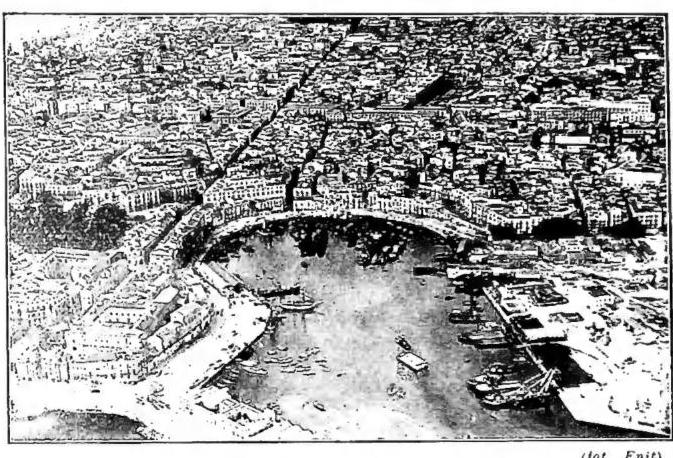
The hills surrounding P., ancient Panormus, and the plain itself, in caves and open-air sites, preserve evidence of the earliest humanity in Sicily, belonging to the Upper Paleolithic. Other remains of a more recent, sub-Neolithic civilization are to be attributed to the Sicani of the ancient historiographical tradition, of Mediterranean stock and language, and attest to their presence in the boroughs and in the present site of P., especially on the slopes of M. Pellegrino (Valdesi district). Toward the end of the 8th century B.C., the Phoenician-Carthaginian colony of Panormus was established in the area; it occupied the rise of Piazza Vittoria, beside a deep harbor inlet, which gradual silting reduced to the present-day «Cala». The Phoenician necropolis with underground tombs along Corso Calatafimi attests to the life of the city, which rapidly flourished through maritime trade and the development of agriculture in the surrounding area, already called a «garden» (of Sicily) by Polybius in the 4th century B.C., and celebrated by so many writers, from Ugo Falcando (12th century) onward, and from the 16th century to the present known as the «Golden Shell». From the original hill, P. expanded toward the sea, adding to the old quarter (Paleapoli) the new one (Neapoli) along the little rivers Papireto and Maltempo; the two quarters together were enclosed by a powerful wall, whose remains display diverse techniques and dates.PALERMO, ARCIDIOCESI di. — Old Harbor and panorama of the city from the air. Palermo.
II. INTRODUCTION OF CHRISTIANITY AND EARLY HISTORY OF THE CHURCH OF PALERMO
Open to trade with Carthaginian Africa, a region of ancient Christianity, P. probably received the seeds of the new faith very early. But the information concerning the hierarchy is relatively late: the tradition of a Theodore, bishop of P. at the beginning of the 2nd century, rests on no critical foundations; nor does the mention of P. in the Passio s. Agathae, a pious work no earlier than the 5th century, have chronological value. A letter of Pope Leo the Great mentioning a bishop of P. is likewise apocryphal. The first certain bishop(photo Enit)
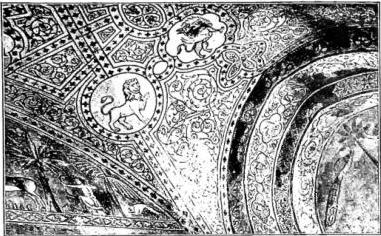
PALERMO, ARCIDIOCESI di - Detail of the mosaic decoration of the room of King Ruggero. Norman art (12th century) - Palermo, Royal Palace.
III. P. FROM THE ARABS TO THE ARAGONESE. — In 833 Zijâdat Allâh sent to P. as his lieutenant the prince of the blood Abû Fihr, with the title of yâhib, in which the autonomy of Sicily, with an almost nominal dependence on the caliphate of Qajrawân, was already delineated. A whole system of judicial, political, and administrative magistracies gradually arose, which was to leave lasting traces in P. The history of P. during the Arab period reflects the fundamental theme of the Sicilian events of that time: a conflict between the authority of the prince—first of the ağlabite house, then of the kalbite—and the Muslim nobility, against which the weight of the Sicilian people was set. Among these conflicts, notable was that of 899–94 against the ties with Africa, which led to an agreement with the Christians of Val Demone. The struggle against the sons of the emir Jûsuf (d. in 998) provoked a certain Byzantine revival, with some success during the time of Giorgio Maniace (1038), which was to sow the seed of the disappearance of Arab rule, and for the moment shattered the unity of the emirate, in whose place independent dominions and communities arose in several areas. P., driving out the emir Samşân ad-Dawlah, governed itself as a republic under the authority of the gamâ'ah, a council of heads of families, representatives of religious corporations, and individuals of particular wealth and learning, which had already exercised local administrative functions. The economic development of P. increased through commercial relations with Africa and agricultural innovations, with the expansion of gardens and the introduction of citrus fruits, the great gift which, together with the carob tree, the Arabs gave the West, and which flourished in the Conca d'Oro. Nor are documents lacking that attest to a flowering of Muslim letters. The Sicilian Abû 'Abdallâh translated Dioscorides into Arabic; a famous teacher of law at P. was Abû Sa'îd Luq-mân; the names of several Sicilian authors of biographical narratives have been preserved. A splendid flowering is found in the eleventh and twelfth centuries in the sciences and philosophy, law, and philology, as well as in poetry and music. Fifty years after the conquest, the monk Teodosio, who had been taken prisoner to P. with his bishop after the fall of Siracusa, speaks of P. as a famous and populous city, surrounded by suburbs that seemed themselves to be splendid cities. More vivid are the praises of a merchant from Bagdad, Ibn Hawqal, who visited P. at the end of the tenth century; he describes it as divided into five quarters, all differently populated and seats of various activities. According to the calculations of M. Amari, from some element of this description P. would at that time have had 350,000 inhabitants. If the principal mosque was the ancient Byzantine Cathedral, Ibn Hawqal identifies no fewer than 300 other mosques in the city and 200 in the suburbs, among them public mosques, those of corporations, and private ones. Yet of so many Arab monuments, only a few remnants of foundations and a rectangular hall near S. Giovanni degli Eremiti have remained in P.; but this is, strange as it may seem, a condition common to the whole of Sicily. Although the original buildings are lacking, the influence of Arab art
(fot. Enit)
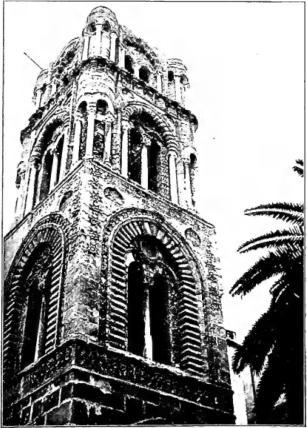
The Sicilian spirit immediately created works of art and cultural initiatives of universal significance. The church of the Martorana, already completed in 1143 by the admiral Giorgio d'Antiocchia, inspired in its central plan and mosaic decoration by the courtly taste of Constantinople, incorporates Muslim elements in its broad ogives and decoration. In the Cappella Palatina, already partly decorated at the time of its consecration (1140), some mosaics show the intervention of local craftsmen upon Byzantine taste, while the ceiling is a monument of pure Eastern art. Muslim-type structures and friezes predominate in the church of S. Giovanni degli Eremiti, in the original buildings of the Norman Reggia (here the use of bricks suggests the white-and-red appearance of P. noted by the traveler al-Muqaddasi), and in the suburban villas of Maredole and Baida, of the Zisa and the Cuba. At the same time, especially in sculpture, there appears the direct experience of the marble workers of southern Italy, to whom are owed the porphyry sarcophagi of the duomo of P. (formerly at Cefalù), the candelabrum of the Palatina, and the first expressions of the cloister of Monreale. This experience interweaves with elements suggested by the Norman ruling class, which assert themselves in the Cathedral (1184), but are already discernible in the Magione (1161) and at S. Spirito (1173). Some influence was also exerted by those Lombard masters who moved to Sicily. Roberto Guiscardo had scarcely entered P. when the bishop Nicodemo, who, like his predecessors throughout the Islamic period, had exercised his ministry in the suburban church of S. Ciriaca—in the place, apparently, where the duomo of Monreale was later to arise (v.)—returned to the city and repossessed the ancient Cathedral, which was reconsecrated.
The influence of the Arab element in Sicily is a mere commonplace of half-knowledge, which mistakes Mediterranean characteristics for ethnic and cultural survivals of the Arabs. Living side by side—at times for fifty, at times for two hundred years, and nowhere for more than three centuries—Sicilians and Arabs neither merged nor intermingled, nor did they cross the religious barrier. The Arab element, after a gradual dwindling during the period that might be called the “captivity,” when it had not ceased to cause some political trouble, was opposed during the reign of Guglielmo II, who was induced to leave Sicily, and was radically eliminated in 1223, when Federico ordered its deportation to Lucera; in the following years it was definitively removed from its last settlements.
(from G. V. ARATO, L'Architettura arabo-normanna in Sicilia, Milano 1213, fasc. 50)
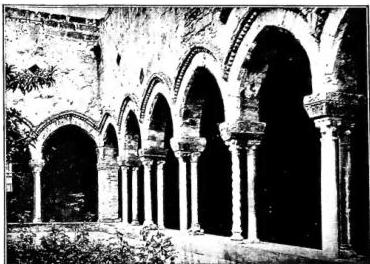
PALERMO, ARCIDIOCESI di - Cloister of the church of S. Domenico (second half of the fourteenth century).
A tradition attributes to this period the virgin St. Rosalia, of illustrious lineage, who abandoned the court to live as a hermit in caves on the Quisquina and M. Pellegrino; her cult flourished again after the discovery of her relics in 1624, when, during an epidemic, she was proclaimed patroness of P. (R. Pirro [V. BIBLICA.], II, p. 226).
These gifts and the sovereigns’ initiative in the religious revival, especially with regard to the palatine churches, which arose in all the Norman castles and residences, represented the first event in that religious policy which was to be completed in the institution later called the «Sicilian monarchy» (v.). The son and successor (1134) of King Roger, William I, confronted the combined hostilities of the Pope, the Byzantine Emperor, and the German Emperor; but above all, the growing disintegration of the internal forces, overseen by his minister Maione di Bari. The splendour of the Kingdom and of P. did not diminish, according to the contemporary description of Ugo Falcando. William II enjoyed a better reputation than William I, who nevertheless had been nicknamed the Bad. At his death (1189), the parliament elected King Tancred, count of Lecce, belonging to another branch of the house of Guiscard, while William had designated as his successor his aunt Constance, daughter of Roger II and wife of Henry VI. Bitter struggles between the followers of the two parties, marred by excesses committed by the German sovereign, continued until Queen Constance arrived in P. as regent for her son Frederick II, who, still a child, was crowned king in the Cathedral (1198); Constance placed the Kingdom under the protection of the Church, enfeoffing it to the Holy See with an annual tribute of 1000 gold pieces, and in her will appointed Pope Innocent III guardian of her son, assisted by a regency council composed of the archbishops of P., Monreale, and Capua. An image of P. at that time is found in a miniature in the Berne codex of the poem by Pietro da Eboli, which depicts groups of inhabitants arranged in their respective quarters. During this regency the Muslims left P., regrouping in the mountains of Val di Mazara. The German counts took advantage of this, sending Marcovaldo to Sicily; he pillaged the Conca d’Oro, engaged the national troops in battle with the help of Muslims, and laid siege to P.
A II (v.), at four-
IV. THE SPANISH PERIOD
Consistently with the new political condition of 1409, P., the administrative centre of the Island, with a population estimated at 65,000 inhabitants in 1492, experienced a certain revival during that century, owing to a flourishing of internal and external commerce, for the benefit of which the pier called Punta della Garita was constructed (1445). It began to adorn itself with a series of new buildings, churches, monasteries, and palaces; it saw the flourishing of notable men of culture and artists. Pietro Ranzano, born towards the end of the preceding century, was the city’s first historio-grapher; Antonio Beccadelli, called il Panormita, was papal legate in Germany; Salvo Cassetta was a mathematician; Leonardo di Bartolomeo was a jurist; the Blessed Pietro Geremia took part in the Council of Florence. The painters Antonio Crescenzo and Tommaso de Vigilia inaugurated the renewal of art. In 1476 the commune called Andrea di Worms to open the first printing press, from which, two years later, came the first book, the Consuetudini of P. Opposition to the Spanish regime is the fundamental theme of the history of Sicily and of P. in particular over several decades, and repeatedly erupted. The municipal magistracy of P. protested fiercely against the expulsion of the Jews ordered by Ferdinand the Catholic; the inquisitor was driven out by popular violence in 1516; the following year an insurrection broke out under the leadership of Gianluca Squarcialupi; some years later the conspiracy of the Imperatori brothers was ordered. The arrival of Charles V in P., after the expedition to Tunis, his oath of fidelity to the Constitutions of the Kingdom (1535), and the opening of Parliament marked a certain truce. Special arrangements mitigated the hardship of belonging to a distant State through the viceroyalty, to which men of generally considerable ability were appointed, while during vacancies the archbishop of P. was ex officio lieutenant. The magistracy of P. watched over the observance of its prerogatives; when the viceroy Vigliena took initiatives contrary to the Constitution, the uprising (1609) of the praetor of P., the Count of Comiso, and of the vicar of Monreale, in the name of the Church, led him to request his withdrawal. His successor, the Duke of Ossuna, acted in the economic and moral spheres and promoted the expedition against the Turks entrusted to don Ottavio d’Aragona, which, with the victory of Scio, revived the national sentiment of the Sicilians. The popular revolt of 1647, connected in some way with the Neapolitan revolt of Masaniello, demanded, through its ephemeral capitán general Giuseppe d’Alesi, political guarantees and pressed for the advancement of higher studies; it opened a series of uprisings extending throughout the rest of the century.
Towards the end of the sixteenth century, despite the severe plague of 1575, confronted by the protomedico Filippo Ingrassia, P. numbered 19,286 inhabitants (the first figure that can in some way be calculated gives 106,000 inhabitants in 1501). Splendid buildings had come to enhance the city’s prestige. The inertia of the Swabian period continued through almost the whole of the fourteenth century; from this age remain the Palazzi Chiaramonte (in which the first surviving document of the new popular Sicilian painting is preserved), and Sclafani, as well as the churches of S. Agostino and S. Francesco, still echoing with Romanesque survivals. The fifteenth century saw the flourishing in P. of the epigones of medieval architecture, nourished by the new currents of Catalan construction, in the side portico of the Cathedral (1426), in the church of the Gancia, in the works of Matteo Carnalivari, such as the Palazzi Abbatellis and Aiutamicristo, and the church of the Catena; while painting and sculpture became more responsive to the seeds of the Renaissance. In the sixteenth century, while painting chiefly modified Sienese and Catalan tendencies and admitted Flemish influences, and sculpture flourished under the stimulus of Lombard artists, architecture drew closer to the taste of the Renaissance, with the Porta Nuova (1535), the arcades of the Palazzo reale, the Palazzo Costantino, the rebuilding of the Palazzo Pretorio, and the Loggia dei Genovesi at the Garraffello. A centre of attraction for the Island’s principal centres, P. could boast throughout this period a considerable number of eminent figures; among the foremost were Pietro Gavina, Elisabetta Aiutamicristo, and Iano Vitali, dear to Leo X, who cultivated poetry around the hearth of the Accademia degli Accesi, founded in 1568; Giovanni Matteo Gioberti, papal datary and later bishop of Verona; the historiographer Mariano Valguarnera; the sculptor Antonello Gagini; and the painter Pietro Ruzzolone. During the following century the population of P. grew slowly until it reached 160,346 inhabitants in 1714, and the city was enriched with further monuments in the taste of Spanish Baroque, palaces, monasteries, and churches, including S. Giuseppe dei Teatini (1621), Casa Professa (1636), and the sumptuous urban arrangement of the Quattro Canti (1609–20), due to the Roman architect Giulio Lasso. Among the most notable intellects of this period should be remembered
Paolo Silvio Bocconi, a botanist of European renown; the naturalist Carlo Ventimilia; the archaeologist Filippo Paruta; and, above all, the poet Antonio Veneziano, who opened new paths for Sicilian dialect poetry. The end of the War of the Spanish Succession ushered in better times for P. and Sicily. Initially assigned to Vittorio Amedeo di Savoia, crowned king in P. (1713), the Island regained its independence. The disturbances that followed, echoing European events, brought war to the gates of P., where troops of Philip V and Charles VI came to fight. The praetor, Count of S. Martino, summoned the people to the defence and opposed both sides. Under the agreement that assigned the Island to the Austrians, Count de Mercy came to P. in 1719 to take possession in the name of Charles V of Austria, III as king of Sicily; but this lasted only a very short time. In connection with the War of the Polish Succession, he was succeeded by Philip V’s son, Charles III of Bourbon. Under him, although he was also sovereign of Naples, Sicily’s full autonomy was secured; he was crowned in P. in 1735, and with him Sicily entered the phase of its full revival.
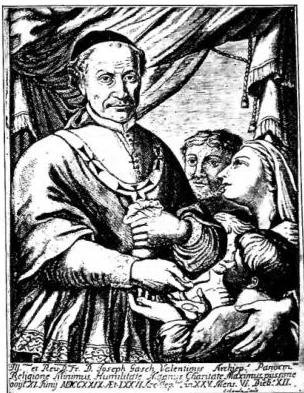
Historical studies can boast the canon Antonio Mongitore, investigator of every aspect of Sicilian erudition; the canon Domenico Schiavio; Giovanni Amato; the Cassinese brothers Salvatore and Evangelista Di Blasi; the archaeologist G. L. Castelli di Torremuzza; and the diarist, the Marquis of Villabianca; above all, the jurist canon Rosario Gregorio. Also worthy of remembrance is the archbishop G. Gasch, of the Minims, called another Tommaso Villanova on account of his charity. The creation of the Biblioteca civica and of that of the Filippini at the Olivella was promoted; the Jesuit library was enlarged; and the present Academy of Sciences and Letters was founded (1718) under the name Accademia del Buon Gusto. The stuccoes of Giacomo Serpotta, admirable for their composed vitality, enriched, among many others, the oratories of S. Zita, S. Lorenzo, and the Rosario; marble «mischi» decoration embellished many churches, chiefly Casa Professa and S. Caterina. A reorganization of the old city was undertaken, with the opening and improvement of streets and new, systematically planned quarters. Public services were established, including night lighting — under the viceroy Orsini in 1744 — then unknown in many European capitals. In the economic sphere one should record the international treaties designed to promote commerce, the increase in the extraction and export of sulphur, the revival of craftsmanship, and the birth of new industries. A road network intended to link the principal centres with one another and with the capital was created by reorganizing and improving the ancient royal «trazzere». In the Albergo dei poveri, P. found, in 1772, a modern welfare institution housed in a building of Roman breadth.
(courtesy of Fr Moretti)
PALERMO, ARCIDIOCESI di - Mons. G. Gasch, archbishop of P. Copperplate engraving, from an oil painting, currently in the convent of S. Andrea delle Fratte.
The early nineteenth century opened with the poet Giovanni Meli, followed by the naturalist and historiographer Domenico Scinà and the sculptor Valerio Villareale. The oratory of the Olivella, by the architect G. Venanzio Marvuglia (1729–1811), the church of the Salvatore, by the architect Paolo Amato, and many palaces of the nobility were built.
V. FEUDALISM. — The new constitution of the English type, approved by Parliament after the nobility had abolished the feudal order on 18 July 1812, was short-lived. After the Congress of Vienna, it was revoked by Ferdinando, who, through an artificial formula, had become the first king of the Kingdom of the Two Sicilies. The liberal ferment, already operative in the memorable renunciation of feudal privileges, set against the absolute monarchy the flower of the nobility and the great bourgeoisie of culture and wealth, endowed with eminent figures, through whose efforts P. experienced one of the happiest periods of its intellectual life. The insurrection of 1820 and that of 1848, under the leadership of this élite, pursued the interconnected aims of regaining the privileges of autonomy and attaining constitutional freedoms. In both upheavals P. was the driving centre of popular action and the interpreter of the aspirations of the whole of Sicily. After the provisional government headed by Ruggero Settimo, “president of the Kingdom,” fell in 1849, P. remained the hearth of the bold initiatives of the reconquest. In the first decades of the unity of the Kingdom of Italy, P., having remained a centre of attraction for the whole Island—in 1861 it had 213,909 inhabitants, rising to 309,935 in 1901—saw the beginning of a new period of cultural development, through the impetus provided by educational institutions, principally the University, and by scholarly associations, among them the Società siciliana per la Storia patria. The great names of Michele Amari, Antonino Salinas, Giuseppe Pitrè, and mons. Gioacchino Di Marzo are recorded in historical and artistic scholarship. Economic and industrial development was no less significant, chiefly owing to the fruitful initiatives of the Florio family. — Vedi tavv. XLI-XLII.