
EUROPA. - One of the five continents of the Earth.
CONTENTS:
I. Geography
II. History.I. GEOGRAPHY.
It is the smallest of the three parts traditionally recognized in the ancient continent. The shape of this
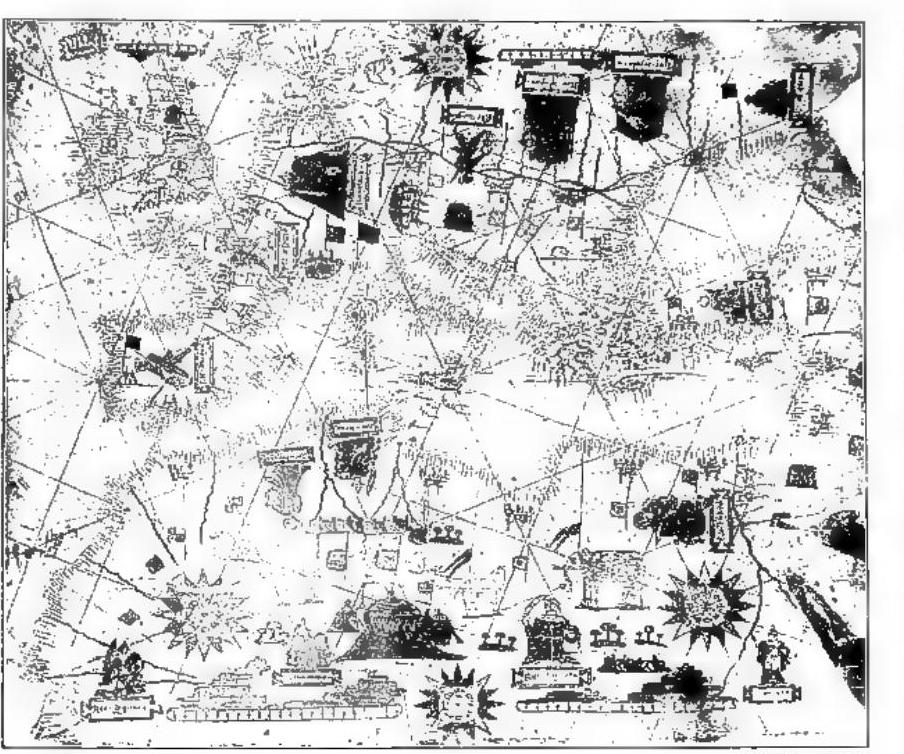
A portolan chart of Pernambuco for European seas. Sixteenth-century manuscript with miniatures. Rome – Biblioteca Nazionale.
It features reliefs and is traversed by great rivers. Northwestern Europe, from Ireland to Scandinavia, constitutes a territory of ancient reliefs that, leveled by a long erosive cycle, were "rejuvenated" by the Cenozoic uplift: massifs and mountains with rounded forms rise to over 2000 meters, generally presenting abundant traces (lakes, moraines, fjords) of the glacial invasion they underwent. Central Europe, from France to southwestern Poland, consists predominantly of highly fragmented mountainous zones, irregularly arranged and interspersed with depressed strips (plains, seas), with rounded and tabular summits usually not exceeding 1500-1800 meters, also remnants of ancient masses that were eroded or truncated. Only southern Europe retains areas of
the extreme western peninsula, never definable by physical boundaries from the Asian mass on which it rests with a broad base from the Arctic to the Mediterranean. With the 10 million square kilometers usually attributed to it, it represents barely 6.7% of the earth's emerged lands, 12% of the ancient continent. Sixty-five percent of its surface belongs to the main body, 27% to the peninsulas, and 8% to the islands: it follows that it is the most articulated of all parts of the earth, as it is the most deeply penetrated by the sea. However, this character attenuates moving from west to east: the so-called "Ponto-Baltic isthmus," from Riga to Odessa, allows distinguishing from the oceanic-Mediterranean sector, with its highly indented outline, a continental block almost entirely segregated from direct maritime influence. Europe occupies a central position relative to most of the earth's emerged lands and is almost entirely within the temperate zone (only 7% north of the Arctic Circle). Its extreme limits fall at 71° 11' (Cape Nord) and 34° 48' (18th Gozo Island) N; 10° 25' W (Cape Dunmore in Ireland) and 68° 5' E Greenwich (Gulf of Kara); its territory thus extends 36° 23' in latitude and 78° 30' in longitude.
The modest dimensions of the continent contrast with the complexity of its geological history and the resulting variety in its surface forms. In a small space, plains alternate with mountains, valleys, and hills, with a generally fragmented plasticity, rich in transitions and nuances. Only its eastern half, where it expands to the Urals with a vast lowland, participates in the character of massive uniformity typical of the Asian continent. This lowland, almost entirely below 200 meters in elevation, continues westward into the Germanic and French plains, uninterrupted even by
relief still fresh and vigorous, with peaks exceeding 3500-4000 meters: a series of "chains" traverses it, from the Strait of Gibraltar to the Aegean and the Black Sea (Sierra Nevada, Pyrenees, Alps, Apennines, Carpathians, Balkans), enclosing among the corrugated and arched folds fragments of older uplifted masses (Spanish Central Sierras), where depressions once invaded by the sea or occupied by lakes were later wholly or partially filled. The highest elevations in Europe are found in this zone (Mont Blanc, 4810 meters in the Alps; Mulhacén, 3481 meters in the Spanish Sierra Nevada); in the other two, the highest values remain considerably lower (Glittertind: 2478 meters, in Norway; Mont Dore: 1886 meters, in Auvergne).
Excluding the narrow peri-Arctic fringe and high mountain regions, all of Europe lies within the domain of temperate climates. The countries around the Mediterranean are characterized by mild and short winters, hot and long summers, predominantly winter rainfall, summer drought, and great atmospheric luminosity. In the remaining sectors, one gradually transitions from the typically oceanic climate of western Europe, with cool summers, mild winters, weak thermal excursions, and abundant rainfall distributed throughout the year, to the distinctly continental climate of the Sarmatic lowland, where winters become harsh and long, summers brief, daily and annual temperature contrasts high, and precipitation decreases, falling predominantly in summer. The extreme conditions also foreshadow, in this case, the behavior of adjacent Asian sectors (Siberia), to which the circum-Caspian depression likewise refers (Central Asia), where thermal excursions remain very strong and rainfall, almost entirely in spring, is reduced to minimal values.
Natural vegetation originally reflected well, in its landscape aspect, the complex range of these variations: long human occupation, however, has significantly altered and erased almost everywhere,
through deforestation and cultivation, the primitive conditions. Apart from the thin tundra fringe bordering the circumpolar area, most of the European territory falls within the forest domain (coniferous in the northern region, mixed and deciduous in central Europe), while toward the southeast, treeless zones extend into true steppes in the circum-Caspian sector. The maritime countries of the Mediterranean are instead covered by the so-called macchia, formed by low thickets of evergreen plants and small trees: the widespread presence of the olive tree and the oak is particularly characteristic.
Europe's absolute population today hovers around 540 million inhabitants: less than half that of the Asian continent and just over one-fifth (22.7% in 1958) of the world's total. Over the last two centuries, it has nearly quadrupled: it was 100 million in the mid-seventeenth century, 175 at the beginning of the nineteenth, over 400 at the start of the following century, and roughly the same as today before the two world wars, in 1914 and 1940. The population density (53 inhabitants per square kilometer) is by far the highest among the world's regions (about 6 times that of Asia, more than 9 times that of Africa and South America): but this average value results from maxima (282 inhabitants per square kilometer in Belgium, 280 in the Netherlands, 207 in the United Kingdom) and minima (10 in Norway, 13 in Finland, 15 in Sweden) that are quite distant. Both density and urban agglomeration tend to decrease, roughly speaking, from west to east, being higher in regions where large-scale industry flourishes. Europe counts 16 of the 41 cities with over 1 million inhabitants and 30 of the 72 with over 500,000 inhabitants worldwide (around 1948).
The current (1950) political situation is summarized in the table below.
Although this situation must be considered still fluid in some cases (Germany, Trieste), the table immediately reveals the profound political changes brought about by the Second World War: only 13 of the 31 European states (excluding, that is, Turkey
and the Free Territory of Trieste, destined to disappear) show no territorial variations. No less notable are the voluntary or forced population displacements (especially German and Polish) that preceded, accompanied, or followed the war events; as well as the territorial and demographic enlargement of the U.S.S.R., which now absorbs within its borders more than half of Europe's surface and over a quarter of its population. Regarding the distribution of the latter among the three main ethno-linguistic groups—Neo-Latin, Germanic, and Slavic—the numerical balance recorded a century ago (one-third each) has now broken in favor of the Slavs, who alone now face, with about half of the total, the two other groups combined.
BIBL.:
A. Penck, Europa, in Geographisches Handbuch, I, Leipzig 1930; E. de Martonne, Traité de géographie physique, III, Paris 1927; L. Gallois, Régions naturelles et noms de pays, Paris 1908; H. Hassinger, Geographische Grundlagen der Geschichte, Freiburg 1931; E. Banse, Europa, Braunschweig 1926; G. Braun, Deutschland, Leipzig 1926; A. Philippson, Das Mittelmeergebiet, Leipzig 1904; id., Europa, Leipzig 1922; F. Machatschek, Das Relief der Erde, Berlin 1938; W. Geisler, Europa, Breslau 1928; E. Romer, Geografia dla klas wyższych, Lwów 1923; The Statesman's Year-Book, London 1949; Annuario statistico italiano, Roma 1949-50; Statistisches Jahrbuch für das Deutsche Reich, Berlin 1941-42; Annuaire statistique de la France, Paris 1946; Statistical Abstract for the United Kingdom, London 1948; World Almanac, New York 1949.
G. Nangeroni
In the last century, particularly as a consequence of the two world wars, a profound upheaval has taken place in Europe’s economy. While this is evident, it may still be premature to attempt to define this transformation in statistical terms, also because—aside from the difficulty of accounting for the new political order—data concerning the European sector of the U.S.S.R. are lacking. Nevertheless, the need to refer to pre-war conditions is justified by the rapid recovery now underway in all sectors of this economy, even if its value has clearly diminished in the new framework of international relations.
Approximately half of Europe’s land is cultivated (the highest percentage in lowland countries); less than one-third is covered by forests (northern and eastern regions) and scrubland (Mediterranean countries); roughly one-tenth is devoted to natural meadows and pastures (in the north); the remainder is unproductive (the highest percentage in the northeastern zones). Before the Second World War, Europe contributed to global production with 90-95% of rye, 85% of olive oil, over 80% of oats, flax, and sugar beet; 75% of linen, 60% of wheat and barley, etc., while for other crops (maize, rice, tobacco, cotton) the quantities were modest. Even today, most of these continental records are maintained or are about to be regained, but increased consumption has necessitated a greater volume of imports, as Europe, even before the war, was clearly deficient overall in raw materials of vegetable origin, particularly in sectors destined for industry (textiles and oilseeds).
Pre-war Europe raised 25% of the world’s cattle (U.S.S.R., Germany, France), 32% of sheep (U.S.S.R., Ireland, Mediterranean Europe), 40% of pigs (U.S.S.R., Germany, Poland, France), and 40% of horses (U.S.S.R., Poland, Germany); a livestock heritage decimated by the war but now almost entirely restored or in the process of being restored (except for pigs). Today, there are probably around 150 million head of cattle, 140 million sheep, 50 million pigs, 25-30 million goats, and 20 million horses. As for fishing, the Atlantic countries of Europe alone account for slightly less than one-third of the world’s total production.
Although poor in gems and precious metals, Europe also played a notable role in extractive activities, as its geologically older terrains contain substantial reserves of
| STATES | Area (km²) | Population (in thousands, census or estimate 1947-49) | Density (inhabitants per km²) | Capitals (and their population in thousands) |
|---|---|---|---|---|
| Republic of Albania | 28,738 | 1,175 | 41 | Tirana (31) |
| Principality of Andorra | 452 | 6 | 14 | Andorra (6.8) |
| Republic of Austria | 83,841 | 6,953 | 83 | Vienna (1,600) |
| Kingdom of Belgium | 30,506 | 8,603 | 282 | Brussels (953) |
| Republic of Bulgaria | 110,842 | 7,048 | 64 | Sofia (435) |
| Czechoslovakia | 127,827 | 12,339 | 103 | Prague (930) |
| Vatican City | 0.5 | 1 | — | — |
| Kingdom of Denmark | 44,330 | 4,190 | 98 | Copenhagen (930) |
| Republic of Finland | 337,113 | 3,058 | 73 | Helsinki (372) |
| Republic of France | 551,700 | 41,000 | 74 | Paris (5,100) |
| Germany | 355,994 | 66,100 | 185 | Berlin (3,300) |
| United Kingdom of Great Britain and Northern Ireland | 243,476 | 30,340 | 207 | London (3,500) |
| Kingdom of Greece | 132,562 | 7,780 | 59 | Athens (1,200) |
| Republic of Ireland (Eire) | 70,283 | 3,000 | 43 | Dublin (510) |
| Republic of Iceland | 102,846 | 137 | 1 | Reykjavik (52) |
| Republic of Italy | 301,020 | 47,000 | 156 | Rome (1,628) |
| Yugoslavia | 256,588 | 15,752 | 61 | Belgrade (288) |
| Principality of Liechtenstein | 159 | 13 | 82 | Vaduz (4) |
| Grand Duchy of Luxembourg | 2,386 | 292 | 113 | Luxembourg (62) |
| Principality of Monaco | 1.5 | 20 | 13 | Monaco (2) |
| Kingdom of Norway | 385,883 | 3,181 | 10 | Oslo (500) |
| Kingdom of the Netherlands | 35,058 | 9,794 | 280 | Amsterdam (814) |
| Republic of Poland | 311,730 | 23,930 | 77 | Warsaw (480) |
| Republic of Portugal | 88,620 | 7,900 | 90 | Lisbon (720) |
| Republic of Romania | 237,752 | 15,873 | 67 | Bucharest (1,000) |
| Republic of San Marino | 61 | 13 | 214 | San Marino (2) |
| State of Spain | 498,025 | 27,761 | 55 | Madrid (1,420) |
| Kingdom of Sweden | 449,165 | 6,883 | 15 | Stockholm (703) |
| Swiss Confederation | 41,295 | 4,610 | 112 | Bern (140) |
| Territory of Trieste | 718 | 293 | 400 | Trieste (270) |
| European Turkey | 23,975 | 1,600 | 67 | Istanbul (850) |
| Republic of Hungary | 93,011 | 9,201 | 90 | Budapest (1,100) |
| U.S.S.R. (European part) | 5,110,000 | 150,000 | 30 | Moscow (4,500) |
| Total | 10,056,240 | 535,986 | 33 | — |
(fot. Bildarchiv d. O. Nationalbibliothek)
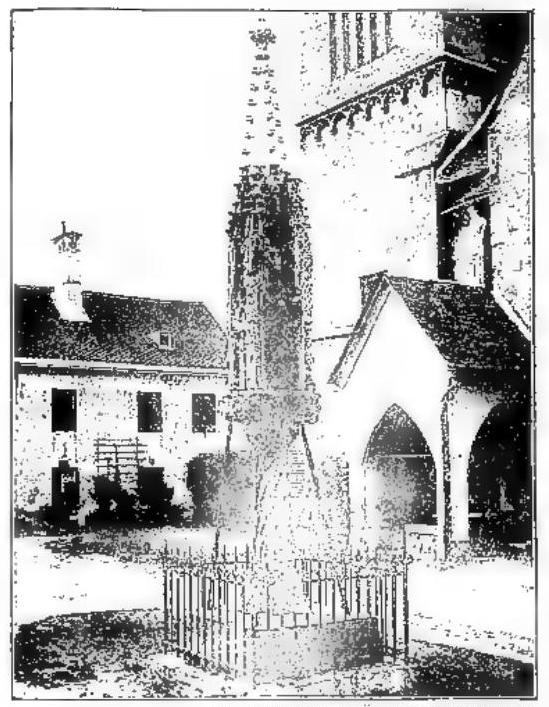
EUROPA – Austria, Cemetery tabernacle with perpetual light. Church of S. Maria-Saal (diocese of Gurk). fossil fuels and iron. Before the war, the small continent thus accounted for, among other things, 45% of the world's coal and pig iron production and over 40% of its steel. Moreover, while it held a monopoly on certain raw materials (e.g., graphite and magnesium), it could rely on the contribution of colonial countries for those it lacked (e.g., copper, zinc, tin, lead, and silver) or which were necessary for its industry. The contraction that occurred after the war appears all the more significant given that the preparation and conduct of the conflict had led to a much more intense pace in extractive activity. Nevertheless, recovery has been fairly rapid, as demonstrated by the indices of industrial production, which these raw materials condition and sustain.
For an equal surface area, the European space was and remains the most densely involved in industrial development worldwide. The greatest expansion of these industries occurs in correspondence with the most compact population settlements: two circumstances that are evidently interdependent. Thus, the center of gravity of modern large-scale industry essentially coincides with the regions of central Europe, from the Seine to the Elbe, from the Rhône to the Danube, from the North Sea to the Po, as well as with southern Great Britain. Meanwhile, the post-war period is characterized by the rapid development of new centers in some sectors of the European zone of the U.S.S.R. (Ukraine, central Russia, lower Volga, Urals, central and southern regions), and the progressive decline of craftsmanship. Industrial production, disrupted by the war, has regained and continues to regain almost everywhere its pre-war positions, but without being able to restore the continent to the place it once held in international trade. While in 1913 European imports and exports represented approximately three-fifths of global trade, today they have likely fallen to barely one-third, with the added fact that nearly all the continent's states now have a trade deficit.
II. HISTORY.
I. IN THE CLASSICAL GREEK-ROMAN AGE
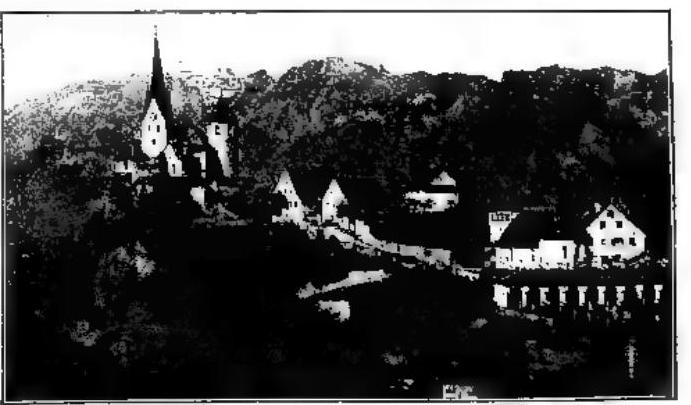
Europe is a geographical complex with its own plastic configuration, possessing a distinct character in its terrain relief, watercourses, and climate. But Europe is also a historical complex, with a moral configuration characterized by its own traditions, memories, customs, taste, art, religiosity, thought, and culture. The concept of these two Europes—one physical, the other spiritual—gradually took shape and developed over time, both EUROPA - Austria. Sanctuary of the Visitation, built within a castle of the Counts of Montfort (late 15th century) - Rankweill, Vorarlberg.(from the author of Belgique, Collection published under the auspices of the Commissariat général du Tourisme, Brussels 1931, no. 23)
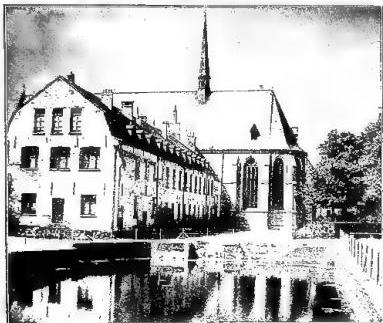
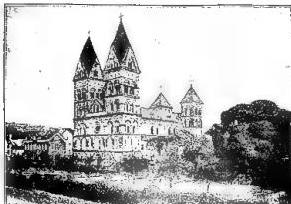
EUROPA - Belgium. Abbey of La Cambre. The church dates from the 14th century.
in European lands as in distant countries, and expanded and clarified with the increasingly precise affirmation of a European civilization and its knowledge in the world. Very late was Europe conceived as a distinct organism, both geographical and historical, or as a counterpart to other continents, Asia or Africa. European civilization began in Greece with its forms of city-states, whether democratic or military, each jealous of its own independence but all driven by a will to primacy. The Greeks felt superior to other peoples, whom they thought of with disdain, qualifying them as barbarians. They thus had a Hellenic, not a European, consciousness; but they anticipated the future Europe’s republican tendency, that is, unlike Asian despotism, the limitation of central political power in favor of local and individual freedoms. Greece defended these freedoms from Asian imperialism, but the struggle against Persia weakened it and delivered it into the arms of the princes of Macedonia, powerful enough, with Alexander the Great, to carry the originality of the culture and thought of little Athens as far as the Indus River.
The Hellenic world expanded, but its geographical breadth was precisely an obstacle to a European conception of itself, as was the expansion of the Roman world; if the former straddled Europe and Asia, especially with the Empire of Alexander the Great, which rested upon various capitals—Athens, Pergamum, Rhodes, Alexandria—the latter embraced only part of Europe, up to the Rhine-Danube line, and various parts of Asia and Africa. A European consciousness could not arise from pluricontinental or intercontinental extensions. Greece, instead, had a presumptuous self-awareness, contrasting itself with those who, not Greek, had to be ascribed to the great barbarian family. Hellenism was all of Europe. Greece was the only homeland of the human spirit, the sole civil value of its time. For three hundred years, Europe was summed up in Greece. The
European problem was rather seen as an Asian problem, that is, as liberation from any Eastern interference. This is the impression one receives reading Herodotus, Isocrates, Theopompus. Isocrates felt Greece in the Europe-Asia contrast, especially after the Peace of Antalcidas in 387 B.C., which assigned Greek cities in Asia to the king of Persia; but it was always the contrast between Greek and non-Greek, Greek and barbarian. And precisely then, for the first time, faced with the duality of the Greek world, divided between European land and Asian lands, Lysander speaks of a European policy and an Asian policy, while he invokes from Philip II an expedition into Asia to restore Europe’s superiority over Asia, and shows himself favorable to accepting Philip’s supremacy in order to free Ionia from the Persian yoke. His student Theopompus returns to the same theme, suggesting to Philip II the creation of a great European state to balance the great Asian state of Persia. Thus, Europe is felt within the framework of Persia.
The Roman age does not have the concept of Europe; it operates in the Mediterranean sector, of which Europe is a mere annex. It does, however, have a clear consciousness of Italy as a geographical and historical entity, with traditions that associate all Italians around Rome as their common center.
Caesar perceived the northern danger and, with his expeditions into Gaul, sought to give the peninsula a barrier to defend it on the western Alpine side. "Fata trahunt", "the republic becomes an empire, but retains the republican modalities of Greece, safeguarding the rights of the individual and perfecting the system of public and private justice. The policy of conquest beyond Italy met with disapproval, especially among poets, even before Annius Florus condemned all imperial policy, guilty of excessive expansionism, while there was a chorus of praise for those who had fortified the Alpine circle, the "bulwark of Italy", the "wall of Italy"*, as found in Polybius, Strabo, Cicero, Pliny the Elder, and many others.
But Rome could not stop at the Italic borders or the lands of Europe. The persistence of the Persian danger, the ca-
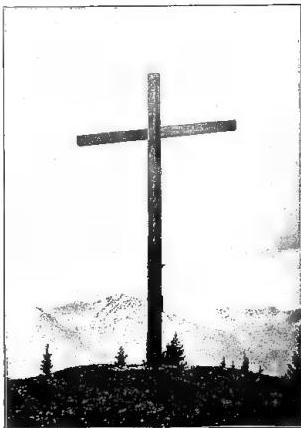
EUROPA - Bulgaria. Alpine landscape.
The barbarian invasions disrupted the work of Romanity. With the beginning of Odoacer's reign in 476 A.D., that much of European unity which the Rome of the Caesars had managed to construct up to the Rhine-Danubian line dissolved, and Europe, prey to various Germanic tribes, began to become a mosaic of small kingdoms. But another unity was arising, founded on the religious motive.
II. IN THE MIDDLE AGES
At first glance, it might seem that the opposition between European and non-European must cease forever, since the religion of Christ transcends territorial and racial differences, aspiring to the unity of mankind under a single spiritual head with a tendency to become temporal: the papal theocracy. Yet, in reality, the Church is the only organism that extends its authority and vitality across European lands without the political limitations imposed by the barbarian kingdoms. Through the Church, the Hellenic sensibility endures; whoever accepts its dogmas is a civilized man; the unbeliever is the barbarian who must convert if he wishes to ascend to the height of new moral values.With sound historical foundation, G. Schnitzer was able to establish that the constitutive elements of the ancient world, endowed with intrinsic and enduring value, survived thanks to the great Christian family, which assimilated them, employing them to unite the various peoples of Europe when it risked becoming an immense barbarian encampment.
As early as the 5th century, the triumphal hymn of the Church, the Te
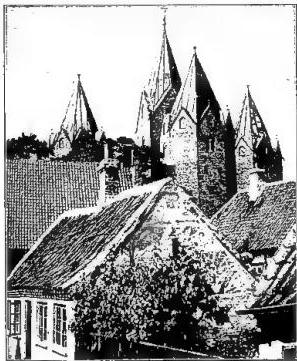
EUROPA - Denmark. Church of Esben Snare.
Thus, the Church represents, amid the great variety of peoples occupying Europe, the sole European reality, unitary even in the language it employs as a sign for believers, the only means of intellectual cooperation and the conduit of ancient culture to the continent’s new peoples. The term of differentiation, therefore, is christianitas or ecclesia; the universitas ecclesiae, which is the foundation of medieval political thought, absorbs within itself every new and possible conception of Europe. And with the spread of Christianity among the barbarians, it can be said that the medieval European unity is the creation of the Christian Church. This Church spreads its missionaries and monks to every corner of the old continent, to make known to all the Nordic, Germanic, or Slavic peoples the message of the Gospel. It prepares their fusion through spiritual elements: the communion suggested by faith in Christ, a shared conception of the divine and the human, of guilt and forgiveness, of sin and expiation, of duty and right; it is the new European unity achieved through a progressive drawing together of all souls at the foot of the altar and before the image of the Crucified.
Gradually, the European world is no longer divided into barbarians and non-barbarians, but constituted of believers in Christ; this presupposes a religious consciousness that tends to create political unity, according to the medieval idea of the ordinatio ad unum of the entire respublica christiana, unus populus, una civitas, corpus mysticum.
In the 11th century, the religious bond that held East and West together breaks, and the Byzantine Church, increasingly tied to the Empire of Constantinople, becomes entirely estranged from the Church of Rome. European Christendom emerges more clearly as a religious entity, culturally distinct from the Eastern world, and can more actively turn to the conversion of the Nordic lands, where the Vikings still offered stubborn resistance; but soon Rome wins them over to the Christian f
The term Europe does not yet encompass all of physical Europe, but above all the bloc of Romano-Germanic peoples, at whose center lies Italy. Russia is not yet Europe, as it has not yet been culturally and morally reclaimed on par with the other Western nations.
The Church’s unitary ideal must struggle not only against the last unknowns of the European geographical world but, even more so, against the particularism of the various tribes that filled barbaric Europe during the period of invasion.
Against the political principle of the Regnum, which these tribes attempt to permanently alter as they approach civil order, the Church opposes the Roman tradition of imperial unity, striving to make it coincide with Catholic unity through the sacred investiture of the Empire. The coronation of Charlemagne on Christmas Day in 800 is a defense of Latin Europe against barbaric Europe; the new emperor must wield his sword for the conquest of still-pagan lands in the name of the Gospel.
Charlemagne remains faithful to his religious investiture: his wars are evangelical missions, acts of possession in the name of Christ. He is not the successor of Rome’s Caesars but of St. Boniface. His life is entirely and always a sacred apostolate, even amid the heat of battle. On Easter of 774, during the siege of Pavia, he rushes to Rome to kiss the floors of St. Peter’s Basilica as a simple pilgrim. A felicitous expression of the Catholic program, the religious unity of Europe, Charlemagne halts Islamic expansion beyond the Pyrenees, along the Ebro, subdues and converts pagan and rebellious peoples between the Elbe and the Oder, attends their baptism with the waters of the Weser and Paderborn, sends new missionaries among the Germans and Slavs, and initiates the fusion of Mediterranean Europe with Baltic and Danubian Europe.
Monasticism is the Church’s most active militia, the perennial source of its energies in times of disorientation and battle. The monk is a pilgrim who traverses Europe, bringing everywhere a light of life, hope, and faith into the stormy night that from time to time darkens souls and peoples. He is a conservator, but also a driving force in the evolution of Christian civilization. Irish monasteries were centers of culture, labor, artistic education, and schools of divine service. Celtic monasticism soon gives way, in the 7th–8th centuries, to Benedictine monasticism, an instrument of higher conquests. Prayer, chant, communal reading, labor, discipline. Monasticism then becomes religion, economy, agriculture, love of the land, reclamation of marshes, reforestation, school, library. The monastery safeguards ancient culture: it reworks it in the sacred vessels of Christian thought; it incorporates it into the world, provides counselors to princes, amalgamates the most disparate nationalities, permeating them with its spirit of charity, extending the network of its family, and preserving the Church’s universal mission. Disciples of Benedict were St. Augustine, St. Wilfrid of York, and St. Boniface, who brought the Message to England, Frisia, and Saxony. No less vast was the civilizing and moralizing action of the monks of Cluny, in Burgundy—the monastery founded in 910 by Duke William of Aquitaine—from which emerged the program of a more rigorous monastic discipline, but with the new concept of coordinating all monasteries into a single organism with vital members, numerous branches, and all subordinate to a single head, dependent on the Holy See. At the beginning of Cluny’s decline arises the power of the Cistercians, who spread throughout Europe and renew II.
A grand purpose, in which there is a foreshadowing of a Europe obedient to Rome’s command, presides over the movement of the Crusades, which unfolds on a vast battlefield as a European movement, uniting military and religious elements. The warrior who fights against the Hungarians, Slavs, or Arabs—whether Norman or Spanish, from Genoa, Pisa, or Venice—is always and still the old soldier of Christ, bearing the banner of St. Peter’s gonfalon, carrying with him the cry of St. George or St. Benedict, making it resound loudly on the battlefields where the symbols of Faith fly, the flags with the Cross and the images of the saints.
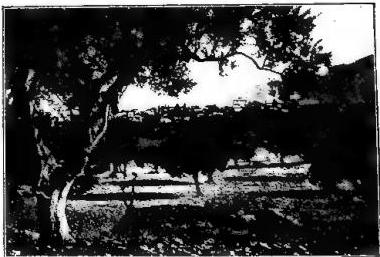
EUROPA - Greece. Modern Sparta viewed from the ruins of the ancient city.
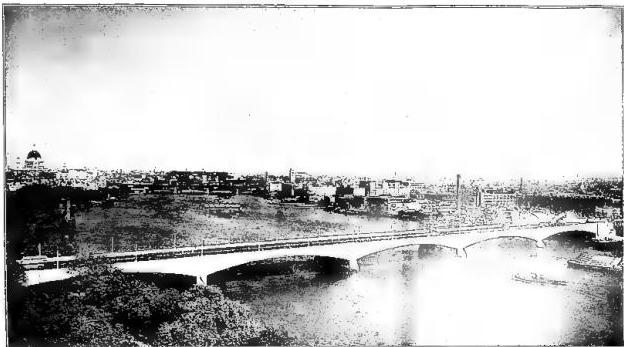
EUROPA - England. Waterloo Bridge over the Thames - London.
(Int. British Council)
The great struggle envisioned as the battle of the Lord and "proelium Domini" fragmented into individual episodes, losing its original character as a united front before God for the cause of Christ, whose temple had been profaned on the roads of the Holy Land. Yet even personal and local impulses coalesced into unity by virtue of that religious soul within them, which gave all a common meaning: to secure the existence and freedom of a Christian and Roman Europe within the sacred circle of its borders.
Thus, the Crusades, the work of knights, pilgrims, princes, nobles, and people from every corner of the old continent, forged a European consciousness within the framework of shared religiosity. The papacy’s initiative for a global enterprise was crowned by Europe’s astonishing response to Urban II’s call, expressed in the mighty cry "Deus vult" and the departure of some 200,000 toward the distant East, of whom no more than 50,000 arrived. If this sacrifice did not yet reflect a clear sense of unity, it nonetheless revealed an awareness of a danger looming over all at the same moment, and the concrete expression of a common will to resist.
III. IN THE MODERN AGE
The European unity expressed by medieval theocracy now suffers violent ruptures.Constantinople – the second eye of Europe – passed into Turkish hands, complicating the Balkan situation on Europe’s destiny and reducing the dominion of the Christian idea. A part of Europe is once again tied to Asia, as during the crisis of Greek civilization. Yet the fall of Constantinople also provokes a resurgence of religious combativeness against the spreading Turkish peril, in Hungary, Transylvania, the Danubian countries, and Poland, which become bulwarks of European unity under the sign of the Cross of Christ.
Europe, made manifold by the variety of national monarchies, remains one through the fundamental solidarity born of a common religion and hatred of the infidels. The combative spirit of the old Crusade continues under the banner of Christ and the guidance of the papacy, which renews until the Battle of Lepanto the attempt to save the Holy Places for Europe. The last crusader, Christopher Columbus, unconsciously opens to the old continent new tasks of labor and wealth, and to the Church new lands to convert.
Humanism, though originating in Italy as its homeland, asserts itself in its subsequent development as a European phenomenon, so that once again, whoever encounters Humanism on European soil encounters Italy. The Church had unified; the Renaissance, which has in the pontiffs its patrons and promoters, continues the unifying work. The sense of harmonious balance and wise concord, the will to conciliation, the famous concordia discors, are the vital soul of Humanism because Humanism is above all Christian in the face of the mysteries of the absolute, the creations of art, the most beautiful pictorial representations, in the exaltation of nature, in the effort to realize with new methods—not scholastic or medieval—the unity of Faith and knowledge, of theology and philosophy; thus, alongside aesthetic values, importance is given to moral and religious values, and rinascenza comes to signify regeneration, the exaltation of man in the exaltation of God. Humanism imposes upon the arts and the process of the spirit a uniform style: in Rome, Florence, Paris, London, Madrid, Brussels, the conception of the world presents itself renewed in the same way. Humanism is Europe, all of Europe in a rediscovered harmony between the dignity of man and the sublimity of God.
Amid the torment caused by the rupture of religious unity, classical art offers all its comfort of lights and colors, of realism and naturalism, to enrich with beauty and sweetness the aspects of the Christian creed, while the humanist sees Europe as the assembly of scholars who love classical texts and art in this form reborn to new life.
(fot. Fotocicci, Torino).
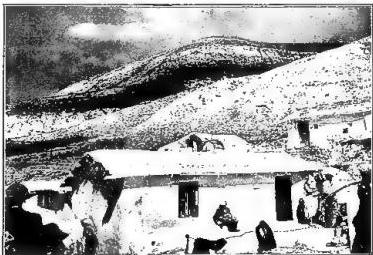
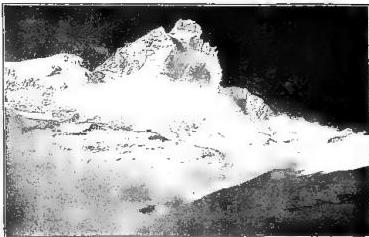
EUROPA - Italy. Cervino (4,482 m) and the Breuil basin (2,050 m).
and European. With the Portuguese discoveries, Europe positions itself at the center of world history and is contemplated as a whole.
The era of christianitas is not over. The Council of Trent revives it on a global scale; beyond the oceans, the renewed Church unfolds another history of conquest. The new Empire of Charles V arises by papal investiture, and the Habsburg condemns Lutheranism. The Renaissance period also provides a clear conception of Europe as possessing its own political, moral, and traditional identity.
It is Machiavelli who judges it an entity unmistakable from other continents. In his discourses on war, he proposes not to exceed «the bounds of Europe» and «not to account for what is customary in Asia!» because he perceives a profound difference between Asia and Europe: the former, enslaved by despotic rule, the latter always intent on defending the benefits of freedom and at times even republican virtue. Christopher Columbus plays no small part in renewing the world of opinions and interests. The discovery of America and the knowledge of lands populated by savages, while defining the old continent more clearly, helps the European to distinguish himself even more luminously as a superior civilizational complex compared to other peoples. To the learned humanists, who pride themselves on being heirs to ancient greatness, it seems almost incredible to have found other peoples to whom they could apply the epithet of barbarians, thereby ennobling their own culture and all European civilization that depends on II.
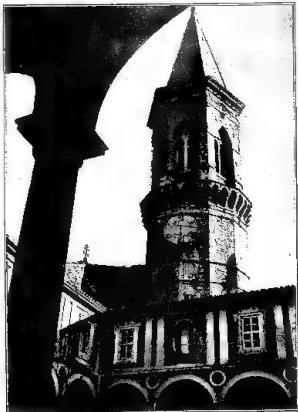
EUROPA - Italy. Cloister with bell tower of S. Pietro (15th-16th centuries) - Perugia.
(courtesy of Averroli)
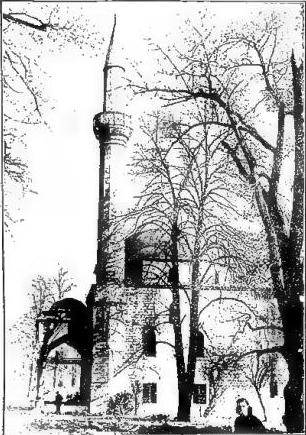
EUROPA - Yugoslavia. Mosque with minaret - Sarajevo.
When, in the 17th and 18th centuries, the anti-European sentiment arises, nourished by the exaltation of savages as beings untainted by the evils of civilization, it too contributes, through a play of opposites, to a better study of the European, thus leading to a deeper understanding of him, as seen in Montesquieu, who employs this method to define what the European man is.
Thus, in the overall balance, the modern age, despite initially passive factors, ultimately valorizes the European entity as a whole, managing to flatter national ideals and tendencies toward European unity.
Yet the idea of the nation also exerts its own forces, which manifest particularly in the pursuit of European hegemony after achieving national independence; this comes into conflict with the formation of a European consciousness, which can only coexist on the basis of equality and mutual respect, despite disparities in power. Nation against nation, the will to predominance over all of Europe—these are the first great acts of war in the modern age. But the principle of equilibrium, intended to prevent any state from becoming territorially stronger than another so as not to endanger the independence of individual states, becomes the guiding norm of the new European politics. It determines the formation of leagues and counter-leagues, of small and great alliances, which serve as a preparatory school for the concept of European unity and federation as the sole guarantee of general peace.
From the 16th to the 18th century, the course of history continues to oscillate between the two poles of hegemony and equilibrium. The attempt by one or another of the major powers to conquer Italy—a condition for prevailing over all—repeats itself multiple times and characterizes modern Europe. But the reaction to restore equilibrium, that is, a certain constancy in the relationship of forces composing the continental system, is pursued with equal insistence. This is a dynamic, not static, equilibrium, achieved with general advantages, all or nearly all, at Italy’s expense.
In the following century, Ferdinand II, making himself the champion of the crusade against heresy, aims to subjugate the Germanic countries that had broken away from the Church of Rome, and initiates the Thirty Years' War, but with unfortunate results.
The alliance of Richelieu’s France with the Protestant princes confirms the freedom of conscience in their countries; the Peace of Westphalia strengthens Brandenburg territorially and politically, the central nucleus of the future Prussia, destined to become, after the activity of Frederick II, the antithesis of Austria in the realm of European primacy ambitions.
But with Louis XIV, the Sun King, France returns to the offensive in the Low Countries and on the Rhine, then in Italy and Spain, with the intention of replacing its own hegemony with that of the Habsburgs. The rivalry between Paris, Madrid, and Vienna fills three centuries of European life. In these continental events, England, having abandoned its aspirations over France after the negative outcome of the Hundred Years' War, takes an increasingly keen interest in Europe’s fate and achieves the separation of the two crowns, of France and Spain, with a progressively clearer awareness of the need to prevent the formation of any hegemony, so as not to have formidable competitors in its own oceanic expansion. From this moment, London considers itself the needle of Europe’s balance. But in this game, France and England alternate. Indeed, both come to glimpse the common interest of all Europe: that Italy’s servitude should disappear, to remove from European ambitions what is the element of discord and the principal cause of repeated wars of predominance in Europe.
This entirely new idea begins to emerge from the laborious discussions of the Congresses of Utrecht and Rastatt, and then from the peace treaties following the wars of Polish and Austrian succession, in which Italy had always been the object of territorial rearrangements.
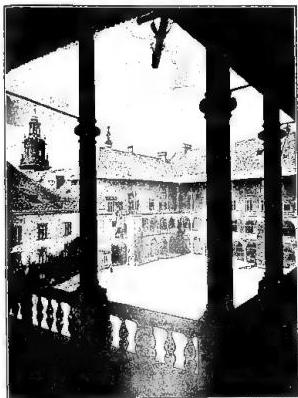
EUROPA - Poland. Cloister of Wawel Castle, a characteristic
monument of the Italian Renaissance (1502-23). Work of
Francesco della Lora, a Florentine.
A foretaste of this great idea, which would bring about a
revolution in European diplomacy, are the doctrinal
experiments for a settlement of Italy: from that of Henry IV and Sully formulated in 1601 to the later one of ea, a century and a half later by the Marquis d'Ar-
genson. Meanwhile, the European family is enriched by
two new members: Prussia and Russia, destined to enter the ranks of the great powers. This is the product
of a slow evolution, forced by the intervention of strong
personalities, especially in Russia which, due to its greater
distance, struggles more to enter the orbit of Western life. Frederick II and Peter the Great are the principal architects of the European greatness of Prussia and
Russia. Catherine II, continuing Peter's work, opens for Russia the path to the Me-
diterranean, with Taurida, Sevastopol and
Odessa: her gaze looks even further,
toward Byzantium. A sad compensation: the disappearance
of Poland and the expulsion of Sweden from
the Gulf of Finland.
The political figure of E. is almost
entirely formed in its plurinational character.
Italy is still missing, as an independent
state. There is unity of customs
in the variety of political forms. A unity
to which France, with the diffusion of its lan-
guage, gives the appearance of linguistic unity. And already
a movement of ideas toward a
more conscious unity is noted.
Related to the theory of equilibrium, which
presupposes equality of forces, is the struggle
against any idea of primacy that here and
there emerges in some eighteenth-century
writers, an idea that is a prejudicial
obstacle to a European federation.
When Vico dedicates his first
Scienza nuova «to the Academies of E.»,
he makes a public acknowledgment of that cultural unity
which he discerned in the E. of his time,
and shows that he had a clear concept of E.
But this concept is still entirely and strictly bound to and dependent on Christianity. European civilization for
Vico is the civilization of Christian E., «by virtue of the
Christian religion». He writes: «Christian E. shines with such humanity that it abounds in all the goods that can make human virtue happy no less in the comforts of the body than in the pleasures of the mind as well as of the soul». But this Vichian observation of a civil primacy of E., conceived globally,
excludes the idea of particular primacies, of national hegemonies,
which Vico considers an offense to spiritual
unity. He censures the arrogance of nations and with reason,
all being equally indebted for their civil
patrimony to a single generative principle, Christianity.
And the idea made progress. A Swiss,
Johann Georg Zimmermann, in 1758 published a much-acclaimed work: Von Nationalstölze («On National Pride»): therein he condemns every
presumption of primacy, which denies human brotherhood.
In the same humanitarian climate arise the projects of
Kant, Rousseau, Saint-Pierre, and Abbot Scipione Piattoli,
to shield all of E. from wars.
Meanwhile, the Enlightenment works to overthrow
the ancien régime in all its traditional content of maxims and beliefs.
But the eighteenth-century myth of a natural reason
sovereign over the world, of a natural goodness of man,
and of a new world entirely free and happy through the lights
of «raison raisonnante», also prepares confidence
in the possibilities of organizing E. within perennial forms
of a peaceful and meritorious international solidarity,
and detaches the idea of E. from the conception of the
«respublica christiana» and its religious foundations.
And it is France that presumes in the eighteenth century
to be able to represent E. and to be all of E. with its
culture, its books, its popularizing genius,
and also with its laws.
In 1783 Rivarol writes: «Le temps semble
être venu, de dire le monde français, comme autre-
fois le monde romain». It was the time of the great
inventors of the European spirit and of the esprit de société,
of a culturally and civilly associated E.,
an immense republic of letters and arts: from Vol-
taire to Abbot Galiani, from Verri to Beccaria, from the
Prince de Ligne to Goethe, from Montesquieu and Fon-
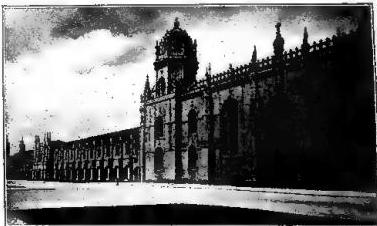
EUROPA - Portugal. Monastery of the Hieronymites - Lisbon.
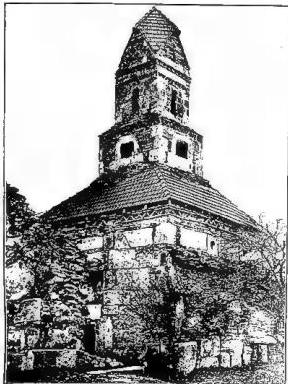
(from J. D. Stephanus, La peinture religieuse en Valachie et en Transylvanie, Paris 1831, no. 21)
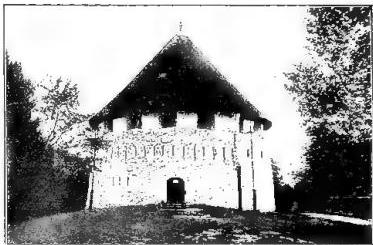
EUROPA - Romania. Church of Demsua (late 12th century).
In these thinkers, a strong contingent traverses the paths of Europe, carrying everywhere the exaltation of the European man as an active, progressive, sociable, industrious being, master of science and art.
These premises, which already render Europe a psychological reality and France a mediator of knowledge, prelude to the crucial year 1789. But when the French Revolution, contradicting its principles of liberty and reverting to the foreign policy traditions of Louis XIV, becomes Napoleonism with its unlimited aspirations for conquest, Europe opposes it with the force of seven coalitions, organized and sustained by England. Once again, a European collectivity rises to defend the freedom of individuals from Caesarist oppression, and once more, the idolatry of equilibrium is restored.
Napoleon, even in his delirium of universal monarchy, sought to persuade posterity that he had harbored a vast design for peace: the confederation of peoples, the creation of a new European system—"a single code, a European Court of Cassation, the same laws, the same currency, the same measures"—and a federal congress like that of America.
The Corsican drew from the ideologies of the Enlightenment and cosmopolitan century. This unity of life was also, in part, the ideal of the Revolution, with its fixation on equality and fraternity. But Napoleon went even further. Judging Europe a mere warren, in his imagination he crossed the Urals and dispersed his dreams into the immense expanses of Asia. Metternich, too, looked beyond the Habsburg borders, contemplating an
ordering of Europe, but departing from the schemes of French democracy, which he distrusted as dangerous to the discipline of the people and the free activity of police governments.
IV. IN THE CONTEMPORARY AGE
These precedents, drawn somewhat from the nebula of utopianism (Campanella is an old forerunner), are not lost. The Congress of Vienna was considered the most sordid market of territories, under the guise of justice, and the most criminal violation of every reasonable national aspiration of the peoples. But the Holy Alliance, which has nothing in common with the treaty of 1815, stands apart like the Declaration of the Rights of Man in relation to the French Revolution, stemming from a fundamental good and progressive concept: it is a kind of international creed that recognizes the need for a permanent and normal institution as arbitration in the internal conflicts of every State of Europe, and reveals the sense of a responsibility of European order, perceived by some diplomats, and the intention to create among the powers a common will to act effectively against the recurrence of disorders.A European consciousness of a conservative nature, informed by the principles of the ancien régime, not the offspring of a unitary concept of Europe as had evolved in the last fifty years of history. Tsar Alexander, a curious blend of despot, mystic, and liberal, dreamed of uniting "all the powers of Europe into a single league," of placing the new European order under the immediate and high sovereignty of Jesus Christ, considering himself the founder of the European federation.
Madame de Staël then noted that people were beginning "to think in European terms." And so thought, but with the principles of '89, Henri de Saint-Simon when he hoped for the formation of a new sense of homeland, "le patriotisme européen"; and in the impassioned pages of De la réorganisation de la société européenne (Paris 1814), written in collaboration with Augustin Thierry, he hailed Charlemagne as the first and true organizer of European society, already mature, after so many centuries of disastrous wars, to constitute a single political body with full independence of the various nations; to the concept of a political alliance among several States, he proposed substituting the notion of a "Society of European States" having a European parliament, entrusted with
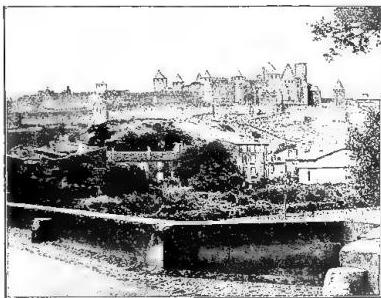
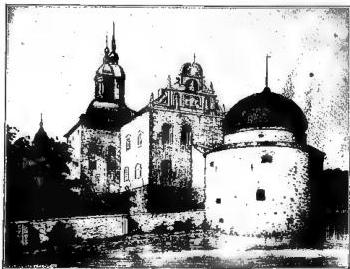
SWEDEN - Vedatena Castle. Pen drawing.
The image contains no discernible text or characters. The OCR result "F" is a hallucination and does not correspond to any content in the source image. Therefore, the correct OCR output must reflect the absence of any visible text.
\( ∴ m = \frac{3}{11} \)
to resolve above all the problems of labor, favoring them through colonial expansion. Only in this way did Saint-Simon see the possibility of preserving for Europe its hegemony over the world, a hegemony it had actually lost by persisting in internal hegemonic conflicts.
Now the idea took on great development. The love of peace was oriented in that direction, even in Italy, where war against the foreigner was expected and preparations were underway. Luigi Andrea Mazzini, in his work De l'Italie dans les rapports avec la liberté et la civilisation moderne (Portici 1847), argues that an associative impulse arises almost spontaneously from European civilization itself as a fruit of general cooperation and a cohesive force in its own right. However, he excludes Russia from the new political system, considering it foreign to Western liberalism, the foundation of associationism.
G. Mazzini, whom Morandi defines as the most Italian among European spirits and the most European of Italians, symbolically establishes Young Europe in Bern in 1834, in the presence of 18 young men from different nations: "for the good of humanity, nations unite in a pact of defense, aid, and brotherhood." Like Saint-Simon, Mazzini also combines the political and social motives for a complete reform of European life. Carlo Cattaneo reaffirms the concept in 1848: "We will have peace only when we have the United States of Europe."
Echoing this in Germany were Fleck, Blum, and Vogt; in France, Victor Hugo, during the inaugural session of the Peace Congress (August 1849), with words that resonated throughout Europe.
The idea, having entered the congresses, found in them the easiest means of popularity. A second Congress in Geneva in 1867, with the participation of Garibaldi, inaugurated the formula "United States of Europe" and called for the creation of international arbitration. Shortly thereafter, in 1868, the term "Federation of European Peoples" was used in homage to Switzerland. Then followed a great number of pacifist congresses, where the way to reconcile the sovereignty of individual states with European union was studied; and from time to time, waves of pacifism, though in a purely lyrical form, radiated from the sessions of the Hague Conference, promoted by the Russia of Nicholas II, which was moving toward great social and humanitarian reforms after the emancipation of the serfs decreed in 1861 by Alexander II.
It was the 1867 Congress that gave life to a newspaper, Le États Unis d'Europe, though with limited circulation. But the continuous, beneficial action was that of Geneva. To give this nascent European consciousness concrete manifestations in the institutional and welfare spheres, Switzerland, situated among four great nations and privileged with a multilingual character, not only safeguarded its own neutrality but also served as a link between the various states of Europe, with the right of asylum so advantageous to political exiles, with its tenacious intellectual struggle against the evils of war, and with the creation of numerous international offices for peace and international conventions of the same tenor. Notable among these was the one in favor of war wounded (29 August 1864) and, later, the even more significant International Labour Office (1901), composed of delegates from different nations.
But the great idea had a curious fate, imposed by Europe's political circumstances: it awakened with every phase of war and slumbered during periods of peace. At the beginning of Bismarck's chancellorship (1862), his policy, which he declared averse to sentimentalism, aroused grave concerns, and the peace movement intensified. Napoleon III, the sentimental politician destined to be Bismarck's greatest victim, opposed him: in 1863, he proposed the convening of a European congress to lay the foundations for perpetual peace. An anti-historical utopia, while Italy worked to achieve its unity and independence, hoping for a European conflict. Nevertheless, the idea progressed and culminated in 1870 in Renan's appeals, which seemed like the lament of the French rising over the disasters of that year. Then came the armed peace until 1914 and the vertiginous growth of armaments. Those who were not to be ruined by war were ruined in the
(courtesy of H.E. the President of the Council of the Turkish Republic)
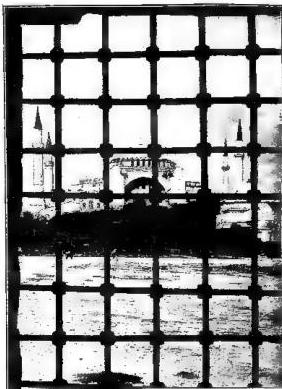
EUROPA - Turkey. View of the church of Hagia Sophia. Constantinople.
to prepare for II. After 1870, apart from the Balkan wars and the war in Manchuria, only colonial expeditions took place. Yet the major powers did not renounce their bellicose ambitions, maintaining a kind of peaceful equilibrium that was suddenly and dangerously disrupted. The system of blocs prevailed over the ideal of a united society. The Triple Alliance between Germany, Austria, and Italy led to the Franco-Russian alliance, followed by the Franco-British entente for colonialist purposes, and later by the Italo-British and Italo-French ententes.
The education of humanity still struggled painfully to achieve progress. People spoke, wrote, and met, but nothing positive was done. The first Peace Conference, convened at The Hague in 1899 at the initiative of Nicholas II, yielded no practical results, not even regarding the issue of disarmament, which seemed to be its primary aspiration.
Discussions continued within individual countries, but they only served to create discordant opinions. The idea of unity was rejected in favor of that of union; not even a federation of peoples, but of states.
The Spanish-American War and the Russo-Japanese War broadened the field of observation and highlighted the need for international agreements.
The Great War, which shattered Bismarck’s equilibrium after 43 years, ended with American intervention and revived the ideal of European unity under the impetus of Woodrow Wilson, who fostered hopes for the pacifist miracle of a League of Nations. But this reflected a spiritual state tied to recent wartime memories, and as it was born, so it died. From the war, old nationalisms emerged strengthened, and the idea of European unity gave way to the eighteenth-century notion of equilibrium. Faith in the myth of armed force persisted, and after Wilhelm II came Hitler, who sought to impose German hegemony over Europe by those same means. Then, amid the ruins of war—no longer merely terrestrial but aerial—discussions of a European Federation and the United States of Europe resumed in European conferences, global journals, and diplomatic meetings. These took various forms, from high culture to popular culture, from l’esprit international—where Carlo Sforza played a notable role during his voluntary exile—to the insightful pages of Europa. The latter, a meticulous political review directed by Pier Fausto Palumbo, is the most active organ of the European question. Published in Rome, it represents Italy’s voice in the European movement. Meanwhile, from Rome, the Vatican’s action unfolds—marked by the Pope’s frequent messages—as it embraces new forms of human solidarity in the name of Christ. In recent years, public initiatives have not been lacking to promote a more intense Europeanist action, supported by dedicated educational and cultural institutions. The first congress of the Union européenne des Fédéralistes, held from 27 to 30 August 1947, concluded with a proposal to establish a Centre fédéraliste d’éducation et de culture in Geneva. The following year, at the Hague Conference, which gave birth to the European Movement, the same need was affirmed, with the name specified as Centre européen de la Culture. But only in 1949, in Lausanne, from 8 to 12 December, did the idea take more concrete form at the Lausanne Congress, with a precise questionnaire, thoughtful reports, and working commissions divided into various sections, each with defined aims—though still within an ideological and somewhat abstract framework, filled with good intentions that lacked real prospects of translating into political force and action. The Gospel calls upon men of good will, yet when man assumes a political role, such good will is still lacking.
A recent difficulty, of no small weight, arises from the conception of a Russia that is not Europe but Asia. This emerged following the Russian Revolution, in a communist sense, and the subsequent isolation of its regime, so different from that of the rest of Europe. An old term is revived: the West, as a synonym for Europe, since only the western part is considered the true Europe, still closely tied to the history of many centuries. This narrowing of the idea of Europe, and the growing differentiation between the two sides—West and East—creates a crisis of no small significance and serious doubts about the stability of Western civilization, threatened by the contagion of another civilization that is not European.
A European consciousness, to move from the realm of poetry into that of reality, presupposes a precise understanding of the inescapable needs of various peoples and the willingness not to suppress but to satisfy them rationally and peacefully.
V. CHRISTIAN DEMOCRATIC THOUGHT
This presupposes, in practice, that at the close of an armed conflict, what follows is not a peace imposed with a wartime mentality, destined to leave in the hearts of the vanquished motives for provocation and desires for revenge, but one concluded in a spirit of peace, capable of preventing new causes of friction. It is therefore necessary that humanity appeal to universal principles of justice. There exists a tradition of Christian thought regarding the problem of European unity as well; and only within this thought are those principles contained.This is expressed particularly by Antonio Rosmini, Vincenzo Gioberti, and the pontiffs of the 19th century, and in a more concrete form by the work and writings of Benedict XV.
The idea of Europe is ever-present in the two great philosophers who made their own, alongside the love of God, the passion of the Risorgimento; and the dream of Italian independence is accompanied by the aspiration toward European unity, just as the latter is seen in function of the former.
For Rosmini, European unity already exists as a unity of civilization and history, ever since Christianity reached the soul of the barbarians: but every attempt to substitute a new law for that of Christ, from which the respublica christiana was born, has failed: whether the formula of hegemony or that inspired by a policy of equilibrium. A sound rule of coexistence among the States of Europe cannot be based on law, segregated from religion; and the latter, according to Rosmini, understood as an interior fact, manifesting itself in the morality and justice of actions as well as of international relations.
Gioberti, too, derives the concept of European unity from the commonality of civilization and history, deduced from the traditions of Rome and Christianity, but within the framework of the independence of each nation. He desires Italy to be free so that it may fulfill its mission as a universal Christian monarchy, moving from Europe and embracing here all humanity in the task of uniting peoples under the arbitration of the pontiff, light and guide of evangelical persuasion, supreme judge of nations.
"Europe," says Gioberti, "needs its politics to become a religion—that it substitute Christian law for international law: that the pontiff be conferred the power of pacification, harmonizing the ends that each nation must pursue around a goal of general harmony that transcends the interest of any single State with the very interest of the fraternity of peaceful existence."
During the First and Second World Wars, these maxims were not only repeated but translated into the reality of international life through the work of the pontiffs, their encyclicals, their frequent appeals to the peoples and governments of Europe, and their numerous initiatives to alleviate the sorrows of war. It suffices to recall the encyclical Patrem Dei munus of 23 May 1920. - Vedi 1899. LII-LV.