
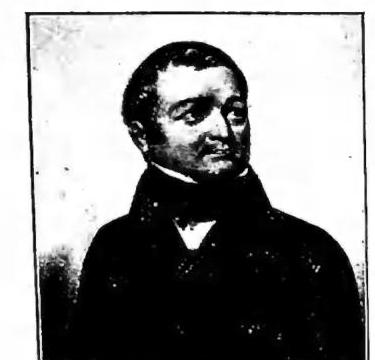
THIERRY, JACQUES-NICOLAS-AUGUSTIN. — French historian, born in Blois on 10 May 1795, died in Paris on 22 May 1856.
After graduating from the Ecole Normale in 1813, he is found in 1814 serving as secretary to Henri de Saint-Simon, with whom he dreamed of a «reorganization of Europe» through a reform of minds and institutions, a federative system, a common parliament, and the adoption in every State of the English Constitution, which was considered perfect. In 1817 T. resumed his independence, after having continued to collaborate on L'industrie with the utopian philosopher-sociologist. Against the background of the Enlightenment polemic, he then grafted a romantic revaluation of the past, in the service of a liberal political faith. Thus he rediscovered the childhood of the «Third Estate» and defended the «oppressed races»: the first fruits of his immense researches would later be gathered in the Dix ans d'études historiques. In the Histoire de la conquête de l'Angleterre par les Normands, 4 vols., of 1824, the idea of the opposition of races predominates; but the Lettres sur l'histoire de France (1827, already partly published in 1818–19), which suggested certain themes to Manzoni, remain more vivid.
Under the July Monarchy, which embodied many
Ettore Passerin
His brother, SIMON-DOMINIQUE-AMÉDÉE, born at Blois on 22 August 1797 and died in Paris on 26 March 1873, was likewise a historian and politician. As a young man he distinguished himself as a brilliant journalist; later, in 1828, he published the Histoire des Gaulois, his major historical work, which earned him the chair of history at the University of Besançon. His political ideas, which caused him to be suspended from teaching during the reign of Charles X, brought him into favor after the Revolution of 1830. Th. was appointed prefect of Vesoul, where he displayed sound administrative abilities, and, eight years later, a member of the Council of State. Between 1840 and 1847 he published the Histoire de la Gaule sous l'administration romaine, which earned him appointment as a member of the Academy of Political and Moral Sciences. A moderate liberal, he disagreed with the «socialist» direction of the Revolution of 1848, and instead applauded Napoleon III. He continued serenely to work and produce studies of Roman history, among them the notable Histoire d'Attila, de ses fils et de ses successeurs jusqu'à l'établissement des Hongrois en Europe (Paris 1850) and Récits de l'histoire romaine au Ve siècle (1860); he also wrote studies on the origins of Christianity, including St Jérôme, la société chrétienne à Rome et l'émigration romaine en Terre Sainte (1867) and the St Jean Chrysostome (1872). In 1860 Napoleon appointed him senator; in 1868 he received the grand officer’s cross of the Legion of Honour. He suffered greatly from the defeat at Sedan in 1870, because he saw in it a refutation of his ideas as a historian and politician. From a historiographical standpoint, T. appears imprecise in his criticism of documents and more inclined to give colour to the events he narrates than to penetrate their spiritual significance. His style was romantic, and his temperament inclined toward a moderate nationalism.