
MANZONI, ALESSANDRO. — Writer, born in Milan on 7 March 1785, died there on 22 May 1873. Outwardly, his life was that of a Milanese gentleman well provided with worldly goods, with a marked taste for study and little inclination toward social life. Too much had already been said about him and his family: his mother, Giulia, daughter of the celebrated marquis Cesare Beccaria (v.), had married an elderly nobleman, Pietro M.; she had left him to live in London and Paris with another Milanese patrician, Carlo Imbonati, a pupil of Parini; and the little boy had passed from one boarding school to another, from Merate and Lugano to Milan. Having returned to his father’s house, he spent several years in unsatisfying dissipation; in 1805 he joined his mother in Paris, widowed both of her husband and of her friend; in 1808 he married Enrichetta Blondel, daughter of a Genevan banker established in Milan and a Calvinist. His family life was peaceful and calm, between his wife and his mother: increasingly detached from Paris, where he had stayed during his early years, and increasingly withdrawn between the villa at Brusuglio, a few miles from Milan, and the house in the contrada del Morone, in the city centre. It could be narrated in detail through the chronicle of births, illnesses, and deaths; but it does not lend itself to dramatization, so Christianly modest and nobly reserved is II. In 1833 Enrichetta died (he wrote cecidere manus on the draft of the hymn in her memory: he said «dear» and fell silent); he married Teresa Borri, widow Stampa, as his second wife, and almost all his children predeceased him. The fame that seized him after his novel grew after the unification of Italy; yet he knew how to surround himself with silence, in every circumstance. For the great event of that life, the organizing centre of that exceedingly long series of days, was his conversion in 1810; and this is a fact from which history descends, not one that in itself has a history. And the poet, although he was able to speak of the episode at the church of S. Rocco in Paris, where he entered asking for a sign and emerged a believer, preferred to remain silent, in adoration. Among the most intimate circumstances one would place Enrichetta’s profound seriousness, which gave religious content to his moral expectation and decisively accepted his uncertain beginnings (the Catholic Baptism of their firstborn, Giulietta, might have been a generic act of homage; but Giulietta’s Christian mother was ready to accept the extreme consequences of premises that had been forgotten); among the external circumstances, that movement of return to Christianity, or at least of reconciliation between a secular society and a «substance of things hoped for», which found its poet in Chateaubriand and a political realization in the Napoleonic Concordat.
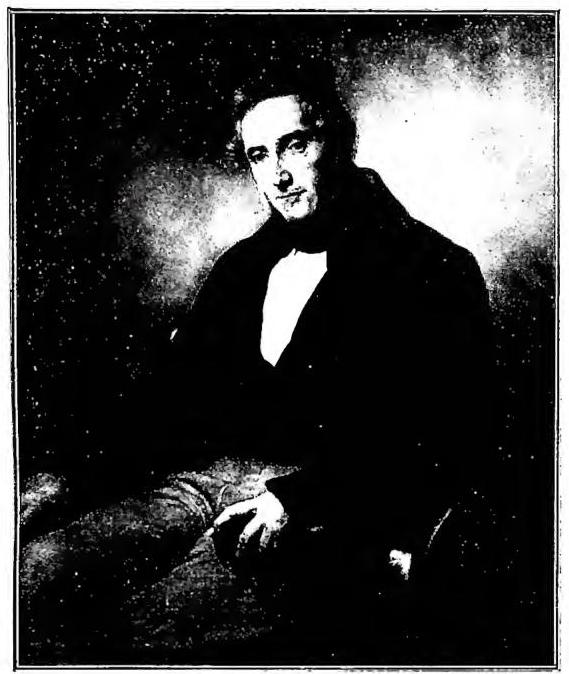
Between the outwardness of the chronicle, however decorous and carefully supervised, and the impenetrable intimacy of Faith, one must also seek the secret of his speech. By birth and by life he belongs to the circle that acted most actively in Italian history between the late eighteenth and early nineteenth centuries: the Lombard patriciate, whose most conspicuous, though not its only, cultural component was encyclopedic Enlightenment thought. As a youthful man of letters, M. was received with enthusiastic affection by the two poets, Monti and Foscolo, who grafted upon the Parinian heritage the academic tradition of the grand manner and the lofty eloquence of the new historical humanism. And in the literary exercises that won him a prominent place, as he passed from the Dantean imitation of the Trionfo della Libertà to the neoclassical carme of Urania, one senses that he was tending to move beyond the patterns of imitation and to attempt a definitive solution, which he glimpsed only uncertainly. In Paris, between Condorcet’s widow and Claudio Fauriel, the nephew of Cesare Beccaria effected the passage from a still sensationalist culture to an already Romantic culture. He came to know other circles as well, though he belonged to none of them, when he returned from Paris to Milan; and these too played a major role in the historical life of the Risorgimento: he was among the “Independents” at the fall of the Napoleonic regime, that is, among those who rejected Eugenio’s Bonapartist solution without being able to avert the calamity of Austrian hegemony, and who vainly asked the powers that the peoples of the Italian Kingdom be allowed to decide their own fate; and he stood beside the men of the Conciliatore on the literary eve that preceded the political trials and the uprisings of ’21, preserving in faithful memory, until ’48, the hymn Marzo 1821, the most inspired poetry of the Risorgimento. Once his novel had been published (1827), fame attempted to take possession of the man and wrest him from his guarded defense: perhaps by trying to surround him with a generic reverence in order better to evade the irresistible evidence of his word, and to turn away from his Romantic and liberal Catholicism, the historical path that he followed and taught others to follow between time and eternity.
Politicians and publicists who claim to exhaust the moral inspiration of life in gestures, however generous, have spoken of an M. who was timid and distracted amid events greater than himself: the Risorgimento does not shed light, but receives it from such a man, who, with the purest of his companions from the preceding period, Pellico and Confalonieri, taught people to make a spiritual judgment of history, to triumph through suffering. If one then approaches him in the sphere of religious rethinking, one must, in order to understand him, avoid exhausting him within the sphere of a limited association, confusing him with persons who were likewise venerated and dear, or identifying him with a doctrinal system. Whoever chronologically details his religious conversion, for example, encounters a Jansenist association: such was the religious circle he frequented in Paris after returning there with his wife, having loosened his ties with Condorcet; such was the catechist of the neophyte Enrichetta, the Genoese abbot Eustachio Degola, formerly a follower of Bishop Scipione de’ Ricci; such were the readings in the M. household, and the veneration for the men, writings, and memories of Port Royal. Yet even within this circle, and not only within it, M. maintained a steadfast guardianship of his responsibility, an unshakable firmness in avoiding mediocre and secondary commitments, in binding himself to a sect, or in adapting dogma—which he was investigating in its fullest purity—to a political situation. A friend of the Jansenists, though not himself a Jansenist, was Monsignor Tosi, provost of S. Ambrogio and later bishop of Pavia, to whose spiritual direction Degola entrusted the new family after its return to the homeland; and here, certainly, the new environment also had an influence, although the convert’s religious itinerary was very slow, circumspect, and meditative. The new spiritual director, though doubtful that he was doing right, released Enrichetta from the catechist’s excessively rigid instructions and directed her toward religious practices traditional in the Ambrosian Catholic Church, although he himself had emerged from the Pavia school of Tamburini and Zola. The fruit of long meditation, though only in part of Monsignor Tosi’s insistence, the Osservazioni sulla morale cattolica was directed toward refuting Sismondi’s assertions, which attributed responsibility for the moral decline of the Italians in recent centuries to Catholicism. Yet what appeared to be a pensum imposed by the spiritual director upon his spiritual son was in reality a completely free meditation, pursued for years and years, on the relations between morality and custom. The work was not completed; but it remains at the center of Manzoni’s thought and is essential to the history of the Promessi Sposi: the history of meditation and the history of poetics. Nor could the course of nineteenth-century Italian culture, through its final conclusions, from liberalism to socialism and onward to the religious revival of twentieth-century culture, be explained without this appeal, which, beyond every utilitarianism, every conventionalism, and every historicism, thus transcending all the immanentist positions of old and new theories, demonstrates the unity of religion and moral life, and shows that Catholic morality and morality without any qualifying attribute are one and the same thing.
Through the golden little book of the Morale cattolica, one better understands the meaning that the experience of the various cultural circles had in Manzoni’s spirituality: through multiplicity he tended toward unity, through custom and history he tended toward moral life, which is religious life. His biographical course too is thus illuminated almost by a providential light: for he retraced in reverse the stages of the Protestant schism toward Catholic unity; and just as the schism had passed from the demand for moral reform to free examination, to Calvinism, and to revolutionary encyclopedism, the young Alessandro had set out precisely from this revolutionary encyclopedism, had frequented and meditated upon the dramatic and pitiless Calvinist absolutism, and had ascended to meditation on Catholic morality, accepting all the responsibilities of a critical inquiry. But how could it have been otherwise, if the great epochs of his family life had been the milestones on the itinerary of a returnee? The civil marriage, the Calvinist marriage, the Catholic Baptism of little Giulia, the Catholic marriage. His life is a deliberate specification of meaningful and responsible acts, and the poet of the new human comedy passes total judgment upon himself before passing it upon others. Such admirable coherence can be observed again by studying the horizons, affinities, and rhythms of development of his thought: encyclo-
encyclopedism, Romanticism, and liberalism are the terms indicative of some of his foremost concerns; and they adequately designate certain recurrent chapters of his extraordinarily extensive reading. But where encyclopedism overstepped its bounds into scientistic idolatry and the presumption of intellectualism, he recovered that dignity of human reason which had been the authorized premise of the achievements of the Renaissance; and where Romanticism yielded, in more than one of its spheres, to the seductions of pantheism, panlogism, and decadence, dissipating once again the generous purpose of a culture that would be the life of the spirit traversed by the word of poetic creation, he indeed freed reflection on art from the entanglements of external rules, from the stale and false traditionalisms of mythologism and formalism, but urged it toward the synthesis of truth, beauty, and goodness, and toward the unity of the created image; and where liberalism soon settled into the defense of a class-based solution of economic life independent of morality, he restored beside the divine gift of reason the divine gift of freedom, both being occasions for the dignity of the person. And the pre-eminent themes of his meditation are history, Providence, and unity. The author of the finest historical novel in a European tradition extending from Scott to Tolstoy, he is a historian expert in every subtle technicality of research, a scholar equipped with every aid supplied by the complementary sciences, especially the juridical sciences, extraordinarily acute in investigation and vigorous in synthesis: above all, he is a philosopher conscious of the decisive significance that the circumstance of time assumes in the life of man, both individual and society; and by native inclination, as well as through the prompting of his age, which witnessed the predominance of sociability over individualism, he possesses a taste for collective movements and crowd psychology: heir to Muratori and Vico, founder not only of the Neo-Guelph historians but also of the Italian medievalists, and an indirect promoter of studies in economic history. But beyond history, still following a path that connected the meditation of Augustine and Bossuet with Vico, he understands Providence, which gathers together the scattered threads of human wills: poet of Providence, even in the tragedy of his political pessimism, Adelchi, he understands the aid that the people of the defeated await in a sphere of religious expectation. He moves toward the metaphysics of unity through meditation on discord: the search for unity is political life, which in his years sees the triumph of the unitarian idea in the history of Italy; the search for unity is the linguistic definition that he attempts within the problematic of art; the search for unity is the inner life of poetry, which fixes its gaze upon the purity of the created image.
In the midst of an effort that persistently returns to life from all the peripheral regions of chronicle and discourse, the catalogue of works of thought and works of poetry can be no more than a provisional indication of a moral achievement: so far is he from the act by which the human spirit closes itself within its own work, thinking or composing poetry, and delights in its own image. If the new culture denounces the placid conformism that isolated the life of the spirit and blissfully contemplated the perfect and empty form, M. is a Romantic because he accepts the task of reconsidering every moment of history and language, guiding man to face his ultimate responsibilities before God. The Notizie that he appends to the tragedies are far more than evidence offered by a writer who documents his work: above all, from the outset, they introduce the problem of the relations between history and invention; and they treat individually, in essay form, problems of the greatest importance: such as the division between Lombards and Latins developed in the Discorso sopra alcuni punti della storia longobardica in Italia, which, continuing at the level of documentary research the image of Adelchi, a tragedy of peoples, sees at the origins of the Lombards’ catastrophe the irreparable split between rulers and subjects, the humble and the powerful. And yet another paragraph in an uninterrupted problematic of unity is the last of his historical works, carried forward in what some considered an indolent or barren old age: La rivoluzione francese del 1789 e la rivoluzione italiana del 1859, which indicates the historical potential of the Italian Risorgimento in the fact that it proceeded in a direction contrary to the French Revolution, toward unity rather than toward its dissolution.
The same movement can be discerned in his aesthetic studies, beginning with the Lettre à M. Chauvet sur l'unité de temps et de lieu dans la tragédie, which develops and documents ideas hinted at in the preface to Il Conte di Carmagnola: unity is not an extrinsic fact, to be sought through external devices, such as representing events in the same place and compressing them into the space of twenty-four hours, but the intimate substance of the work, to be sought through a meditation that detaches itself from circumstances and touches the work’s authentic truth, moving from gestures to felt reflection. He thus takes part not so much in the polemic as in the discussion of Romanticism, beginning from one of its most debated and closely examined points, given the popularity, especially in France, of theatrical literature; but he carries the inquiry considerably further: even beyond the circle within which the Lombard Romantics confined themselves, recognizing him as a leader of the school, although he was alien to a career in publicistic literature. His own Romantic “manifesto,” the Lettera sul romanticismo al marchese d'Azeglio, from the same year, 1823, as the letter to Chauvet, was in reality a private letter, an apology by a man of letters who had been directly asked why he had involved himself with a school; and in it, through indications completed in subsequent versions, he elaborates the doctrine of truth, beauty, and goodness: a metaphysics of art, expounded in terms that were not inappropriate to a literary defense. If this manifesto, which was thought to confine itself to a limited milieu of Lombard Romanticism, seems—but is not—theoretically less demanding than the doctrines of contemporary German Romanticism, this is because attention has been allowed to fall upon the discussion’s modest and informal tone, rather than upon the theoretical responsibilities of the thesis; a thesis that proposes that art should be, even if following the path of a doctrine of Platonic origin never wholly abandoned throughout the centuries of aesthetic culture, a way, truth, and life: and thus that it should take its place within meditation on the Christian message. This is also the aim of the dialogue Dell'Invenzione, which, discussing the term “artistic creation,” uttered by one of the interlocutors and then eluded, investigates the divine origin of ideas, which the artist invents only insofar as he finds them: a true finding in the mind of God the creator. Here M. could acknowledge his debt to Antonio Rosmini: the most fervent of the Manzonian encounters, the one that enabled the poet to descend from truth to certainty and to see his own intuition confirmed within a well-equipped doctrinal system. Finally, there is the chapter of his studies on language, which may be summarized in that work carried so far forward, yet never completed, Della lingua italiana, entrusted chiefly to the posthumous little work Sentir Messa and to the letter Sulla lingua italiana a Giacinto Carena: a doctrine which, inserting itself into a centuries-old and mediocre tradition of linguistic studies, seemed to debase itself; and yet another paragraph in the doctrine of unity, as well as the political act of a community of speakers which, in order also to resolve the problem of semantic language in practical terms, chose one among the many Italian dialects to represent them all.
The modes of his intelligence have entered proverbial usage, entrusted to humble and wise phrases such as «sentire e meditare» or «pensarci su», which are cited here also to note the contrast between the many grandiloquent attitudes of Romanticism and its Italian leader; and above all to point out the profound seriousness of the commitment the writer undertakes and the indissoluble connections he establishes between poetic composition and reflection. This is the most direct way of understanding the virtue of his poetic work, after tracing it backward through his life and culture. He never loses sight of the responsibilities that bind poetry to thought, as the consequent acts of a moral life; and although few, if any, have possessed to an equal degree his habit of discrimination and clarity of argument, as the conscious heir of a victorious rationalism he never agrees to isolate, in intellectual operations forever distinct, poetic meditation from philosophical meditation. The poems written before his conversion, beginning with the Trionfo della Libertà, in which, through Monti, he seeks Dante and sings the praises of the Italian campaigns that overthrow Austrian rule and absolute governments, are far more than the literary exercise of a highly gifted young man; they establish the themes—freedom, precisely, and morality, or rather freedom as moral life—that in time prove to him to be problems resolvable only in the direction of an all-encompassing relationship between man and God; and to the extent that he advances in philosophical speculation, he gathers himself into an increasingly scrutinized circle. The Trionfo is almost contradicted by the Autoritratto, in which he awaits from men and from the years «di saper chi sono»; and the Sermoni, wavering between the example of Parini and the more facile and uninhibited attentiveness of Gaspare Gozzi, await the solemn personification of the poem In morte di Carlo Imbonati; and once again he oscillates between an ambitious objectification—this time the poetics of grace—and individual reconsideration, as he passes from Urania to Porteone.
The balance between the individual world and the social world, which he had sought, in neoclassical fashion, either in an outspoken solitude or in refined reserve, is found with a far greater fullness of life and poetic felicity in the Inni sacri. They were to be twelve hymns celebrating the principal feasts of the liturgical year; he published five, in the following order: Il Natale; La Passione; La Resurrezione; La Pentecoste; Il Nome di Maria. Although in their literary forms they also connect with an uninterrupted tradition of sacred poetry, their inspiration reaches back to the origins of Italian poetry and language, calling the life of the people to liturgical participation, gathering it in a religious celebration that may comfort it, instruct it, reveal it to itself, make it conscious of the dignity of its customs, in which religious life plays so great a part, and of the intimacy of family life, within whose circle the rite is relived. But the chronology of the composition of the Inni reveals the poet’s path: La Resurrezione (1812) also expresses the surge of life in his soul, reborn to Faith, and gathers together certain themes that will return to him in the episode of the conversion of the Innominato, with the family and village feast, helpful to others, as a counterpoint to the theme of the proud man redeemed. Il Nome di Maria unfolds from the scene of the Visitation, in an intimate and fervent narrative, itself belonging to a remote tradition, toward the warrior image with which it concludes. In Il Natale, the scene of the Nativity, although it expands into the song of the angels and the memory of the prophets, gathers itself into an atmosphere of family intimacy, from which it is easier to move through fabulous thematic departures to La Passione, which develops from its opening threnody into a trusting abandonment to the certainty of the Resurrection. But La Pentecoste, the last hymn composed, gathers together, in its praise of the consoling Spirit, in the history of the Church, active upon the face of the earth and throughout the centuries, and in its announcement of the freedom granted to the peoples of the world, the political and historical meditation that M. pursues in those fervent years: indeed, it comes at the end of the tragedies and political lyrics; and it is an evocative prelude to the novel, indeed a prayer, so vividly does it seal within itself the unity of the themes of the humble, freedom, and Providence. The poetics of the Inni sacri is continued, moreover, in the Strofe per una prima Comunione, in the fragments for the hymn of Ognissanti, magnificent in the animation with which they celebrate the life of nature and the virtue of the humble unknown to the world, and in Natale 1833, written on the death of Enrichetta.
With La Pentecoste always regarded as a summation of all Manzoni’s lyric poetry and as the condition of the novel, the tragedies and political lyrics may be gathered into a single group of works. The canzone Aprile 1814 reflects the illusions of the independence advocates and hastily hastens to note a punctual intervention of Providence in history, remedying human injustices in full accord with the reasonable and obvious demands of men. More indignant and at the same time more meditative is the canzone Per il proclama di Rimini (1815), which uncertainly understands war as an act of sacrifice and redemption. Meanwhile, in the two tragedies, Il Conte di Carmagnola and Adelchi, he meditates on war and politics: they have been called tragedies of political pessimism; but there is no need to dispute that misfortune, in his poetic meditation, is
“provident”: provident for individuals, who redeem themselves through suffering; provident in the history of men, who suffer in order to open themselves to the dignity and freedom of a new life. The fifteenth-century commander, impatient with inaction and bold, falls victim to the devices of the Venetian politicians, who would subordinate his strength to their designs of conquest, and who regard as treachery the human pity with which, after victory, he releases the prisoners. And the Lombard Adelchi succumbs to a historical force against which he reacts in vain, fighting bravely and dying on the field: just as the passionate and forsaken Ermenarda, likewise innocent, likewise a victim of that fierce force, wastes away in vain. If the generous perish in their unequal struggle against selfishness, it is precisely through suffering that they are redeemed; but peoples live beyond the passing course of power and fortune. If the battle of Maclodio, in which Carmagnola is victorious, is the mournful episode of a civil war that will end in the subjection of victors and vanquished alike to the foreigner, the chorus that celebrates it extends the particular event to the whole history of Italy, now finally understood as a moral judgment, to be understood not within the chronicle-like limits of the event but across the span of centuries. And if Franks and Lombards alternate in dominion over the conquered Latins (though contemporaries readily read in the affair the wars of supremacy between France and Austria on Italian soil), the deacon Martino proclaims an appeal to a supreme power against the force of politics and arms: thus the neo-Guelphs would understand the aid of the Church to the historical life of the Italian people. The tragedies conceive the human drama far beyond a conflict rigidly fixed in the clash of representative characters: indeed, they unfold within an epic space, and flash forth, in dialogues and choruses, within a space of concentrated popular attention. Political meditation continues in the political hymns: the Marzo 1821, which entrusts to God, to whom the new popular arms are consecrated, the sacred judgment upon the history of peoples, and concludes in unforgettable accents the tablets of the new Christian nationalism; and the Cinque Maggio, on the death of Napoleone, dramatically agitated between the immensity of the epic adventure and the solitude of the hero’s decline: where the conflict is once more resolved in adoring resignation, while the tumult of history continues, beyond the fate of individuals, who die aided only by immortal Faith, in the destinies of peoples.
Between 1821 and 1823 he composed the Sposi Promessi, submitted them for censorship approval, and announced to his friends that they were ready for printing; yet he did nothing with them—or rather, he did everything, for, withdrawing them from expectation, he went through them from beginning to end, made of them a new work, and published it in 1826–27: I Promessi Sposi. The first novel complied with a very evident Romantic and Scottian narrative situation, certainly welcome to the European public, if that public continued to read the initial themes, more vividly and theatrically dramatic, through their definitive transfiguration.
The outline says very little; yet one perceives that history is no longer a scenic pretext, as in most fashionable historical novels, for fantastic escapism or a lively colouring of information: the relationship already changes when the centre of the novel lies no longer in the powerful, who believe they make history, but in the humble, who apparently undergo II. In reality history moves toward them, and everything contributes to their poor affair, overturning every intellectual and social prestige of solemn deeds. Even in the first novel the author’s attention, the seriousness of his moral world, and the firmness of his judgment are extreme; but if, in passing from the tragedies to the novel, he has, as he said, become dialectical, if he has abandoned the appeal to the eloquence of feelings for a firmer inquiry into truth, he still indulges in an excess of artistic richness and inventive vivacity, making lavish use of that substance and those methods by which the vast tradition of the nineteenth-century novel is enriched, especially of the representation of manners, psycholo-
gism, and portraiture: observation of manners, subtlety of analytical introspection, vivid representation of human types. It is a most singular fact—indeed unique in the history of European letters—that M. should renounce those evident riches which would become the currency of so many memorable works, in order to seek a more authentic treasure by devoting himself to the second novel: that he should retain the old plot and its psychological and historical substance, but reconsider everything in a deeper meditation, bring it closer to a more intrinsic truth, and investigate it within a permanent substance. There history became chronicle, and assistance to the humble still retained something of the mechanism arranged for a theatrical plot, which sets matters right in the final act; here history becomes providence, not merely because it broadens the constrictions of ordinary life and dismantles its traps, but because it opens a living spiritual space within life and immerses events and creatures in an aura of active spirituality, in the wave of the consoling Spirit whom he had invoked in the hymn that serves as a prelude to the novel. In that strenuous craftsman, before the Promessi Spasi, the word was still an elaborate and diligent decoration arranged for the thing itself; now, however, it becomes the mediation of truth in action, and the poet reveals a truth which, through his work, if he knows how to remain faithful to it, passes on to other men. The fable embraces the entire world of nature, the entire world of men, the entire world of the spirit: one single thing, animated by one single creative force. Living is that world of nature, extending from the cautious chorography of the prologue (but there too one perceives how much earthly force, in time, transforms the image of the countryside) to the flourishing miracle whereby nature, in the mysterious force that pervades it in the year of the plague, overruns Renzo’s vineyard. Living is that world of history, which likewise draws the protagonists away, now into the mediocrity of chatter (the march of mercenary troops through the territory of Lecco is an episode of the Thirty Years’ War; and its heroes, Vaglienstein and Riciliù, are discussed at don Rodrigo’s table), now into the severity of condemnation. Living is that moral world which at every moment summons even the smallest actions to the judgment of the life of the spirit; which does not deride but smiles with a trusting and consoling cheerfulness; which demands a strict account from everyone of what they do, yet never condemns them for what they are, nor confines them within a peremptory verdict. The entire history of nineteenth-century European literature oscillates between the pole of art and that of morality; but no poet has travelled through life from one to the other with calmer firmness. This is why what is said of Manzoni’s work in investigating its moral life is also said in investigating its aesthetic life: for it is one single life, gathered into a wonderful equality of meditation and tone, raised to a serene certainty. Even the most striking features that tend to remain isolated in the reader’s memory are there so that, stirred by living recollection, the reader may traverse again the whole territory traversed by the poet: animation, in short; and it is by virtue of life, which gathers within itself every virtue of art and intellect, that the work lives. Every distinction made in reading it is only provisional: you have scarcely attempted to divide the world of imagination from the world of religion when everything, in recollection and in the word, is recomposed as a living presence.
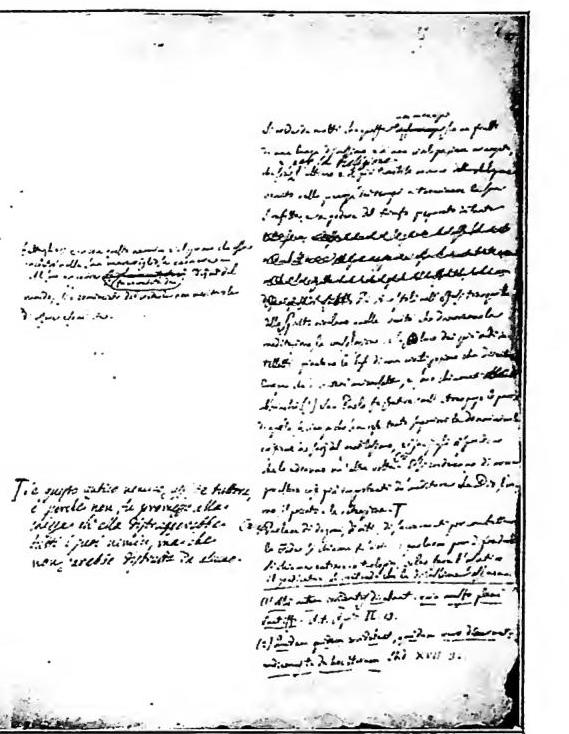
(by courtesy of the Casa del Manzoni)
MANZONI, ALESSANDRO - Page from the autograph manuscript of the Osservazioni sulla Morale Cattolica with additions (lower left) by Canon Luigi Tosi - Milan, Casa del Manzoni.
hang the Vicar of Provisions, or the resigned caution of the innkeeper of the full moon; the bravi who threaten don Abbondio and the small troop that follows the unarmed Innominato against the looters; the monatti on the cart of the plague-stricken and the little crowd attentively listening to the sermon of padre Felice: one by one and all together, the poet observes them and entrusts them to memory. But not to a nostalgic memory: rather, to an active recollection which, in the act of remembering, breathes that spiritual atmosphere—most concrete and open, conscious and cordial—in which the author has immersed his creatures. The old comedy, with its masks and comic devices, referred back to a fundamental and irrevocable distinction between the sacred and the profane; and force and deceit were the motives of every action, while the pathetic aura surrounding the lovers was in vain, and the buffoons in vain escaped toward the fictitious freedom of the gag and the comic retort. The new comedy sees that force and deceit do not interrupt life; it perceives that among things and persons there is an active virtue which, while apparently leaving them untouched, opens unexpected spaces both for exile and for return; and laughter does not stiffen the human face into a mask, but rather the smile is the light of truth making its way and helping to make it, the new light of the word. Only in the face of evil does the word become grave and that light grow dim: not that the voice does not open itself to prayer, nor the soul unfold itself to hope.
The novel ends with the Storia della Colonna Infame: chronicle and history of that trial of the anointers, which, through a terrible judicial crime, persecuted innocent persons. In the novel, the epic had expanded from famine to war to plague, with an austere and solemn crescendo; and the poet’s victorious rationalism had narrated those facts and events, always emphasizing how far human designs, especially the pompous ones, were inferior to events, and how short-sighted was the judgment of politicians and administrators. But the judges called upon to judge the alleged anointers ought, reason-
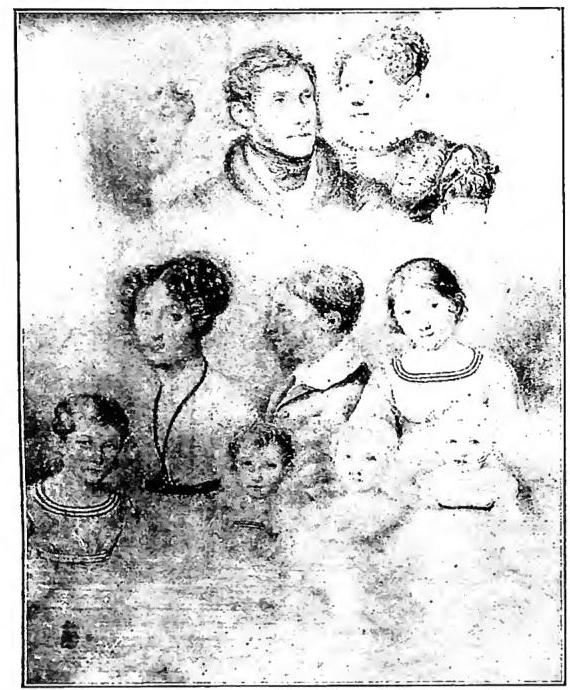
In the literary history of Italy, the unassuming figure of the Lombard nobleman gradually grows with the passing of the years; and the chronicle of his renown shows him present and active in ever wider territories of life and language. Within the culture of the new people, which Romantic literature offers to Italy when the civilization of Renaissance humanism has completed its cycle, he appears among a circle of poets who, moved by Alfierian voluntarism, still elementary in its generous and ingenuous will, had laboured at the foundation of a new popular humanism, and he carries Foscolian pietas, nourished by feeling and history, to its ultimate and legitimate conclusions: assuring Christian concreteness to that expectation which remembered Christianity without recovering it in its entirety. And by reason of the spiritual inheritance entrusted to the humblest inflections of language, the Manzonian word, which is the most often repeated among the people of today and which has gathered up and directed toward new purposes the natural inheritance of dialect, compels our civilization
to retrace, willingly or unwillingly, the synthesis of Christian thought. Easily discernible, yet even more active in depth, is the influence of M. upon European culture: for he was received, with an attention not accorded for centuries to a poet of Italy, by men representative of such diverse currents of thought as Goethe, Comte, and Ste-Beuve; and, directly or through Stendhal, he acted upon the orientations of the European novel, being present whenever an author or a school opposed one or another of the Romantic codifications, impelling fiction toward a total interest in human life and a moral problematic: from the historical novel to the realist novel to the spiritualist novel, it is always the Manzonian synthesis that worked upon European narrative for a century. And if polemic continually pauses to confine him within the presumed limits of gnomical literature (while gradually recognizing in him an ever broader spiritual experience: the first detractors attributed to him the mentality of fra' Galdino, without even perceiving how much the humble beggar rises in the wave of fabulous expectation that he unreflectively echoes; today he is described as heir both to the moralism of the Seicento and to the encyclopaedism of the Settecento), criticism continually establishes new poetic values and the creative animation of every moment of his feeling and meditation.