
PARINI, GIUSEPPE. — Poet, born at Bosisio (Brianza) on 23 May 1729, died at Milan on 15 August 1799. He studied in Milan at the Arcimboldi Schools, conducted by the Barnabites. In 1752 he published Alcune poesie di Ripano Eupilino (that is, Parino dell’Eupili, or Lake Pusiano), which earned him admission to the Accademia dei Trasformati. Out of necessity more than vocation, having embarked upon an ecclesiastical career, he was ordained a priest on 14 June 1734.
From that year until 1752 he was tutor in the household of Duke Gabrio Serbelloni. Living there and frequenting other noble households, P. studied that frivolous and pompous world with a moralist’s severity and prepared himself to become its judge. He acquired a certain notoriety from two celebrated controversies: with the Servite Alessandro Bandiera and with the Barnabite Paolo Onofrio Branda. To the years spent with the Serbelloni may be attributed several writings that prepared Il giorno: poems with which he trained himself to use blank verse masterfully; the first three odes (La vita rustica, La salubrità dell’aria, L’Impostura); the Lettere del conte N. N. ad una falsa devota, a satire of false devotion beneath the veil of continuous ironic instruction; the Discorso sopra le caricature, that is, on the absurdities of fashionable society; a group of satires in terza rima (Il trionfo della Spilorceria, La maschera, La studio, Il teatro); and the Dialogo sopra la nobiltà, between two recently deceased men, a nobleman and a poet born a commoner, who debate the origin and merits of the nobility.
Count Imbonati, head of the Trasformati, entrusted his son Carlo to him in 1763 or 1764; P. dedicated to the young man the ode L’educazione, which may be regarded as the interlude between Il mattino and Il mezzogiorno, published in the summer of 1765. In 1768 P. accepted the position of poet at the royal ducal theatre. Throughout 1769, at the request of Count Carlo di Firmian, Austria’s plenipotentiary minister in Lombardy, he worked on the compilation of the Gazzetta di Milano. In November of the same year Firmian appointed him royal professor of belles-lettres at the public Palatine Schools; and in July 1773 his chair at those schools was reconfirmed, shortly afterward being transferred, under the name of the R. Ginnasio, to the Palazzo di Brera. Outside the school as well, P. received assignments from the government: in 1771, for the wedding of Archduke Ferdinando of Austria and Archduchess Maria Beatrice d’Este, he wrote a melodrama (Ascanio in Alba), set to music by the fifteen-year-old A. W. Mozart; he prepared the statutes of the Accademia di belle arti and of the Accademia di agricoltura. But above all he devoted himself to the school, for whose service he collected, before 1777, his lessons: Dei principi generali e particolari delle belle lettere applicati alle belle arti: in the first part, a treatise on classicist aesthetics; in the second, a historical survey of Italian writers. When the Accademia di belle arti was inaugurated at Brera (1776), P., while remaining professor of eloquence at the R. Ginnasio, welcomed into his school the young men enrolled in the fine-arts courses. Superintendent of all the arts, friend and adviser to Andrea Appiani and his colleagues at Brera and to other younger artists, he drew up programs for paintings and sculptures and supplied subjects for ballets and theatrical performances; he was one of the leading figures of Neoclassicism in that Milan which, not without his merit, became the stronghold of neoclassical art.
In October 1791 he was also assigned the position of superior superintendent of the public schools at Brera (in that year one of his disciples had prepared the first edition of the Odi). Out of a desire to make himself useful to his country, he entered the new municipality established in Milan in the first days after the arrival of the French (May 1796). Having in vain endeavored to claim for the municipality the right to give the Cisalpine Republic a constitution without awaiting orders from Paris, he resigned after three months in office, secretly having his parish priest distribute among the poor the remuneration he had received. He recovered inner peace in thoughts of the eternal and in the serenity of study. His final meditations concerned Leonardo’s Cenacolo.
P.’s masterpiece is Il giorno, whose first two parts, Il mattino and Il mezzogiorno, were published in 1763 and 1765; the final two, Il vespro (unfinished) and La notte, appeared posthumously in 1801. It is a poem in unrhymed hendecasyllables, unique of its kind: satirically didactic, insofar as the poet pretends to be writing a sort of etiquette manual for the « giovin signore »; epic-satirical, insofar as he gives satire the proportions of a poem. In it P. contrasts the working people with a class that has fulfilled its historical mission; and he seeks to vindicate the Italian character of the customs, language, thought, and culture corrupted by the foreign imports embraced by the nobles of his time. The poet knows how to animate his material and lend variety to the representation of a world that would have liked to be the world of Pleasure but was instead the world of Boredom: not only through the highly praised episodes, but through the continuous social antithesis, through the comparison of the nobles of that time with the « incitti avi », through the depiction of natural scenes, through inspirations drawn from classical art, mythology, and chivalric epic, through scenes and vignettes exo-
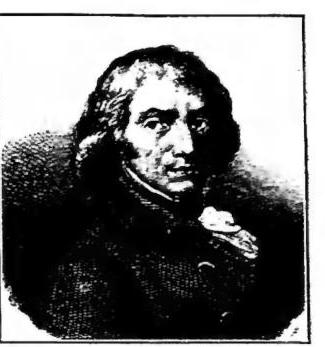
P. wrote several excellent sonnets, easy and cheerful canzonette, witty “jests”; he left little poems, epistles, and fragments of idylls: but his greatest claim to glory, after Il giorno, is the 19 Odi (first complete edition, 1795). The ironic “precettor d’amabil rito” here becomes a teacher of civilization and life: he contrasts the freedom of the countryside with corrupt urban life (La vita rustica); he celebrates civil progress (L’innesto del vaiuolo, La laurea); he combats the ills of society (La salubrità dell’aria, L’Impostura, Il bisogno, La evirazione); he creates a Christian Achilles in Educazione; he expresses a lofty conception of art (La recita de’ versi, In morte di A. Sacchini, Alla Musa); he pricks the frivolity of those who cannot see in immodest dress the symbol of corrupt morals (A. Silvia). Entirely intimate and subjective are La caduta and the three gallant odes (Il pericolo, Il dono, Il messaggio). Carducci distinguishes two periods in the development of Parini’s lyric poetry: the first, from 1757 or 1758 (La vita rustica) to 1777 (La laurea), is not lacking in vigour, but neither is it free from inequalities and hesitations; the second, from 1783 (La recita de’ versi) to 1795 (Alla Musa), is that of the Horatian manner, that is, the more properly Parinian manner. P. created the neoclassical ode, which he would bequeath to Monti and Foscolo. It must be acknowledged that the ideal and sentimental world of the Odi is less extensive than that which, through the veil of irony, can be glimpsed in the Giorno: but it can be supplemented by the thoughts and sentiments expressed in other lyrics by P., of lesser artistic value but historically important; and one arrives at the conclusion that the Italian renewal—which reconciled new ideas with tradition, was not lacking in historical awareness, and respected religious sentiment—had in him its greatest representative among poets.
Religious feeling was more alive in P. than appears in the Odi. He fought false devotion (Lettere a una falsa devota) and regarded religion as the sole restraint upon the impetuosity of the passions, a bond of love among men, and an aspiration toward heaven (Mezzogiorno, vv. 975-79). Among his religious lyrics, the tercets Nel dì di i. Bernardino sanese, the canzone Per z. Ambrogio, the sonnet Suonami in sulle labbra dedicated to the Virgin, those Per Girolamo Miani and Per Caterina di Pallanza, and the discourse Sopra la carità deserve mention. Since, in the edition of Parini’s works (Milan 1801-1804), F. Reina replaced the word Dio in the prose with “natura,” and the word Provvidenza with “le leggi,” and changed an unfavorable judgment on Machiavelli into praise (cf. G. Mazzoni’s introduction to the edition of Tutte le opere edite e inedite di G. P., Florence 1925, p. xci), P. could be regarded by some as an Enlightenment thinker and a Jacobin. He rejected the philosophy of Voltaire, “the soft Aristippus of our century,” and of Rousseau, “the new Diogenes”; of Catholic worship he sensed, as Carducci noted, “more sympathetically that which is more closely connected with social life... by virtue of his temperament, more civil than mystical.”