
LOMBARDIA. -
I. GEOGRAPHY
As a natural region, Lombardy encompasses the territory bounded by the crest of the central Alpine zone and the course of the Po River between the Ticino and the Mincio; however, its political (with Switzerland) and administrative borders exclude the northern Alpine portion (Swiss Canton Ticino) while including areas beyond the Ticino (Lomellina), the Po (Oltrepò Pavese, Gonzaga, and Sermide), and the Mincio (Goito and Ostiglia). Only in Valtellina does Lombardy reach the Alpine watershed, which it surpasses with the small (307 km²) protrusion of Val Livigno. It is one of the largest and the most populous among the Italian regions, and in terms of population density, it is surpassed only by Campania and Liguria, which are significantly less extensive.The Low Lombardy, corresponding to the central part of the Po-Venetian plain, remains almost everywhere below 200 meters and is further divided into high and low plain. The latter benefits from resurgences, flowing at the contact with the high plain: agriculture and livestock farming (irrigated meadows) have enabled the highest productivity achieved in Italy. The high plain, formed by coarse and permeable alluvial deposits (heathlands or groane), favors industrial crops (mulberry, flax) and the
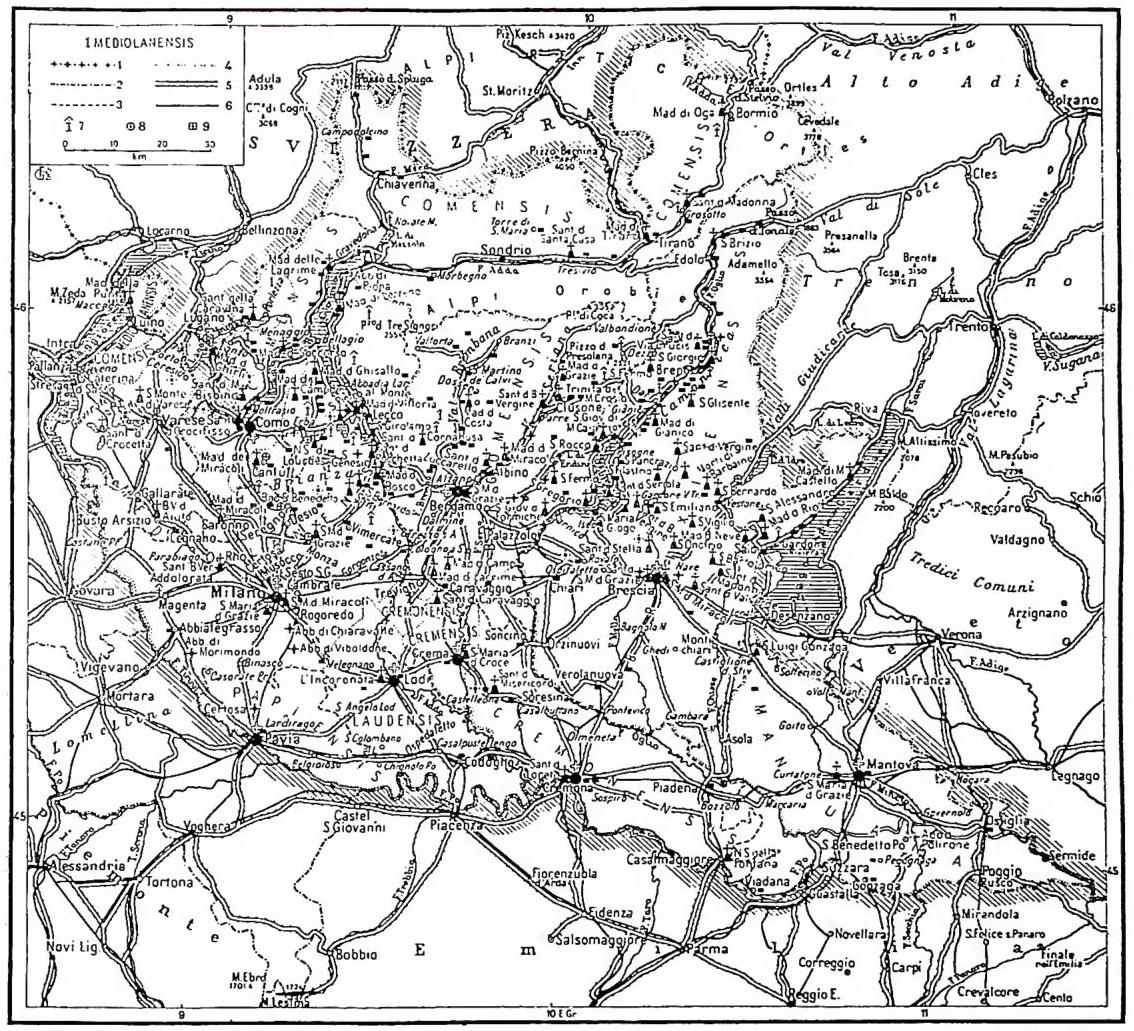
Lombardy is the Italian region with the highest level of industrial development: 47.5% of its active population is engaged in industry (compared to 28.6% in agriculture, which nonetheless remains one of its economic foundations). All branches of industry flourish here, but foremost among them is textiles (with cotton mills leading the way), followed, in order of importance, by iron and steel, metalworking, mechanical, chemical, and food industries (dairy products), etc. The area of greatest industrial concentration corresponds to the provinces of Milan, Varese, and Como, with an absolute predominance of the first. Lombardy also leads Italian regions in commerce: approximately one-fifth of those engaged in this activity in Italy are concentrated in Lombardy.
The population is very unevenly distributed, as is clearly evident from the extremes in its density. Nearly all of Lombardy’s main urban centers lie in the plain or at its edge. Excluding Sondrio, all provincial capitals (as well as Monza and Busto Arsizio) exceed 50,000 inhabitants. Two of them (not counting Milan, which has now surpassed one million) are among the cities with over 100,000 inhabitants (Brescia and Bergamo).
| Provinces and capitals (population in 1949, in thousands) | Number of municipalities | Area (sq. km) | Population | ||
|---|---|---|---|---|---|
| 1936 Census | Estimate, 1 January 1949 | ||||
| Absolute | Density per sq. km | ||||
| Bergamo (107) | 235 | 2,759 | 605,810 | 650 | 236 |
| Brescia (151) | 192 | 4,749 | 744,571 | 819 | 172 |
| Como (76) | 217 | 2,067 | 501,752 | 524 | 254 |
| Cremona (72) | 112 | 1,756 | 369,515 | 368 | 210 |
| Mantua (58) | 70 | 2,339 | 407,977 | 407 | 174 |
| Milan (1,287) | 245 | 2,759 | 2,175,400 | 2,389 | 866 |
| Pavia (67) | 186 | 2,966 | 492,303 | 490 | 165 |
| Sondrio (14) | 73 | 3,208 | 142,919 | 141 | 44 |
| Varese (59) | 119 | 1,119 | 396,232 | 443 | 370 |
| Lombardy | 1,449 | 23,722 | 5,836,479 | 6,231 | 262 |
II. CIVIL AND RELIGIOUS HISTORY
The name Lombardia (medieval Longobardia), introduced by the Byzantines to denote, in contrast with Romania, the territories occupied from the 6th century by the Lombards, was applied after 888 to the Carolingian March of Italy; under the Visconti, the Ticino Valleys and Valtellina were also called Lombardia; the territories of Bergamo, Brescia, and Mantua were later aggregated to Lombardia; but already under the dukes, vast territories beyond the Po and toward the Apennines were part of Lombardia, which now includes only the province of Pavia in the Oltrepò. In antiquity, it corresponded to the eastern part of Transpadana (XI Augustan Region) and, from the Oglio to the Mincio, to the western part of Venetia (X Augustan Region), while the province of Pavia was Liguria, a district which under Diocletian also included almost all of present-day Lombardia.Lombardia is now divided into the 9 provinces of Milan, Varese, Como, Sondrio, Bergamo, Brescia, Mantua, Cremona, and Pavia; among the dioceses, 9 already existed in 1300, namely Milan, Lodi, Como, Bergamo, Brescia, Mantua, Cremona, Pavia, and Bobbio; Bobbio was later suppressed (v. BOBBIO).
Late traditions, largely legendary, claim that in Milan Christianity was introduced by the apostle Barnabas himself; in Pavia, St. Hermagoras, bishop of Aquileia, would have sent Sts. Syrus and Eventius to evangelize. In reality, it emerges, especially from episcopal catalogues, that the diocese of Milan was established around 200, that of Brescia around 300, that of Pavia in the mid-4th century or shortly before; those of Bergamo, Lodi, and Como in the mid-4th century, and later that of Cremona. The first bishops would have been: in Milan, Anathalon; in Brescia, Clateus; in Bergamo, Namo; in Pavia, Syrus; in Como, Felix; in Lodi, Bassianus. Christianity, therefore, entered Lombardia as an organized institution no earlier than the beginning of the 3rd century, and it became established throughout the territory only in the second half of the 4th century; the oldest dated Christian inscription known to date is from Milan, from 244 (CIL, V, 6181). Uncertain, partly legendary, and fundamentally late is also the tradition of martyrs in the Lombard region, which would date them to the Neronian age, whereas they should be attributed to the 3rd century. The names of the principal martyrs will be recalled under the individual place names; the same will be done for the most illustrious bishops of the individual dioceses, but two names cannot be forgotten here, because they had, especially the first, a broad Lombard, indeed Italian, resonance: St. Ambrose (374-97), who extended the ecclesiastical province as far as the present-day Swiss district of Chur, and St. Charles Borromeo (1560-84), the principal architect of the Lombard "Counter-Reformation."
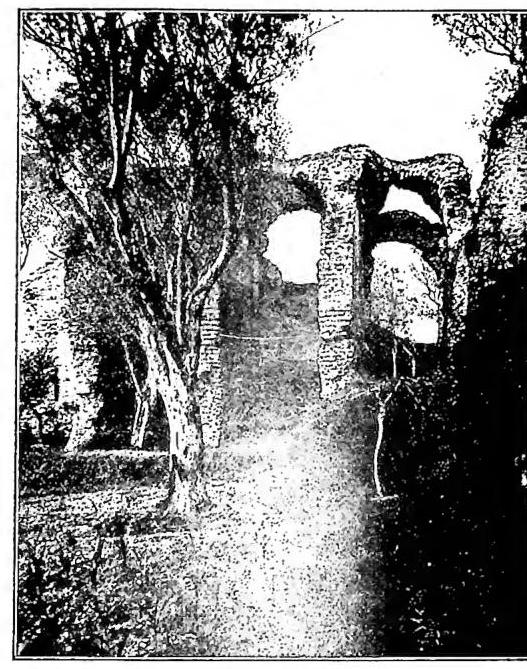
(fot. Alinari)
Lombardy - Remains of Catullus' villa - Sirmione.
In the Iron Age, the settlement of Golasecca, near Sesto Calende, and others in the Como, Milan, Pavia, and Mantua areas. Around 500 B.C., the Etruscans penetrated the region (Mantua, Melzo?); in 400 B.C., the Gauls, who gave their name to the entire Po Valley. In the second half of the 3rd century B.C., the Romans entered, establishing themselves in the first half of the 2nd century, though for them Lombardy did not represent a single, characteristic district. While the events of the wars against the Alpine peoples, imperial organization, and later the Arian-Catholic conflicts involved the entire region, they often affected only parts of II.
Contested, occupied, and oppressed by barbarians or their antagonists—the Heruli, Goths, Byzantines, and finally the Lombards—Lombardy was frequently subjected to plunder, and its plains became battlegrounds for the various contenders. At times abandoned by other authorities, it found its sole defense and aid, even for the protection of civil life, in its bishops, who often became actors and sometimes victims of every new order. Thus, while in 560 the Milanese bishop Onorato was forced to transfer to Genoa, in Pavia—the new seat of the Lombard government, hostile to Milan—the distance between victors and vanquished gradually narrowed through coexistence, though conflicts reemerged in another form as struggles between Catholics and Arians.
In 645, the Ambrosian Church regained its bishop and, renouncing schismatic movements that had distanced it from Rome, became the champion of the Lombards' conversion to Catholicism against Pavia, the stronghold of Arianism. Queen Teodolinda, whose preferred residence was Monza, contributed to the victory of Catholicism, until the arrival of Charlemagne's Franks, summoned by the Church of Rome, when the last Lombard king, Desiderius, surrendered (774) in Pavia to the conqueror.
For a century, Lombards, Franks, and Romans coexisted in Lombardy until 888, when the region, detached from the Carolingian Empire, gave its name to the Eastern March, subdividing into the comitati of Milan, Pavia, Seprio, Bergamo, Lodi, Cremona, and Mantua, to which Piacenza, Parma, Reggio, and Modena were added. In the 9th century, the struggle between Lombard bishops and lay feudal lords unfolded, with the former gradually overcoming the latter, so that the bishops—and particularly the Milanese metropolitan—became the most important political figures in the region. This was the era of Ansperto and the German Ottonian kings, who relied on the clergy to overcome the opposition of feudal lords, and thus began the new struggle of the people against the feudal bishops: in 933, Milan rebelled against Bishop Landolfo; shortly after, Cremona against Bishop Olderico. The rise of the Commune was prepared, sometimes favored, sometimes opposed by episcopal authority.
During the 11th and 12th centuries, the evolution from feudal to communal rule in Lombardy was completed, and the bishops participated in the general compromise, ultimately abandoning temporal dominion—a source of disorder, abuses, and sometimes immorality. Such abuses gave rise to the heretical Patarine movement, which took root especially in Milan and contributed to weakening episcopal authority.
But the Lombard League once again strengthened the bonds among the communes against the Empire, and at Legnano (1176), Barbarossa was defeated. The Peace of Constance restored an agreement between the parties, including the bishops, but within the communes, factions increasingly clashed (among others, the Waldensians against the Catholics, the latter supported by the Humiliati), until at Cortenuova (1237) the communes were defeated by Frederick II. This was the time of the Guelph and Ghibelline struggles, with the Colleoni and Suardo fighting in Bergamo, the Beccaria and Langosco in Pavia, the Rusca and Vittani in Como, the Vignati and Vistarini in Lodi, and the Visconti and Torriani in Milan. Meanwhile, the commune of Milan expanded through imperial concessions, acquiring territories and privileges while respecting the great ecclesiastical fiefs elsewhere in Lombardy, until in 1294 Matteo Visconti obtained from the Emperor the appointment as imperial vicar for Lombardy, with Milan, Como, Bergamo, Lodi, Cremona, Piacenza, Pavia, as well as Novara, Tortona, Vercelli, and Alessandria subject to him. Thus arose the Duchy of Milan, that is, the Lombard lordship, which unified the region and laid the foundations for a great state in the center of the Po Valley, extending toward Genoa and Bologna. Later, the duchy was fragmented by civic particularism, against which Francesco briefly seemed to stand.
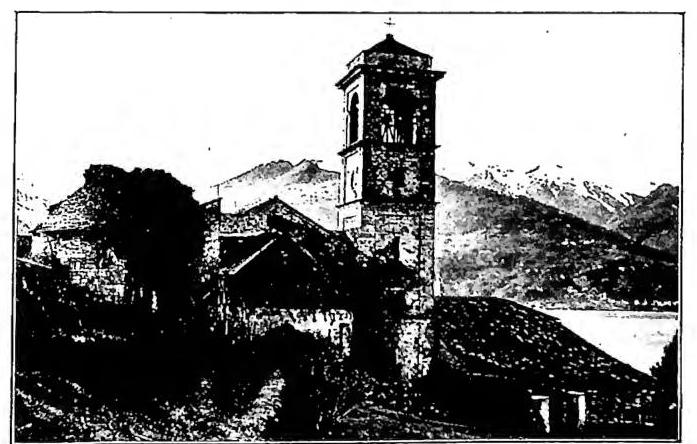
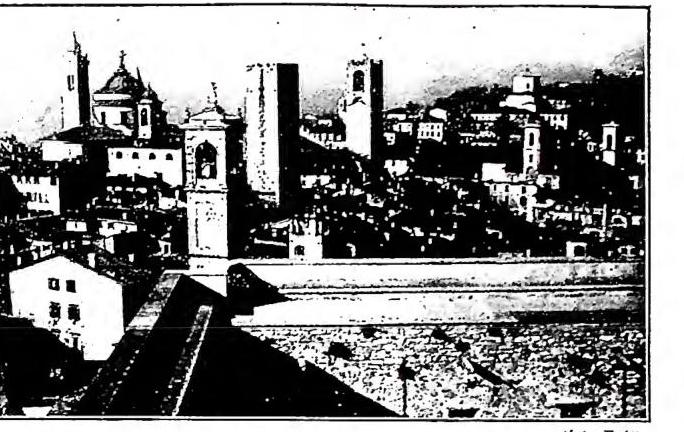
View of Bergamo.
(photo: Enit)
The Sforza family, up to the Peace of Lodi (1454). Under Ludovico il Moro, Lombardy still enjoys moments of splendor before, with his fall, it becomes prey to foreign powers, who regard it as the fulcrum of Mediterranean hegemony. Indeed, as a result of the struggle between Francis I and Charles V, for nearly two hundred years Lombardy remains tied to Spain, from which it depends politically, economically, and morally; not even ecclesiastical assets resist the fiscalism from beyond the Alps.
The Catholic religious spirit is still widely alive throughout Lombardy, especially in Bergamo and the Bergamo region. This broad diffusion of religious spirit has a long history, rooted in episodes of religious struggles, epidemics, wars, and dangers, and manifests itself in the rise and flourishing of nearly 150 sanctuaries, particularly dedicated to the Virgin, which are characteristic especially in the hilly and mountainous areas of the region.
LOMBARDIA - Cistercian Abbey of Piona (11th century) - Colico, on Lake Como.
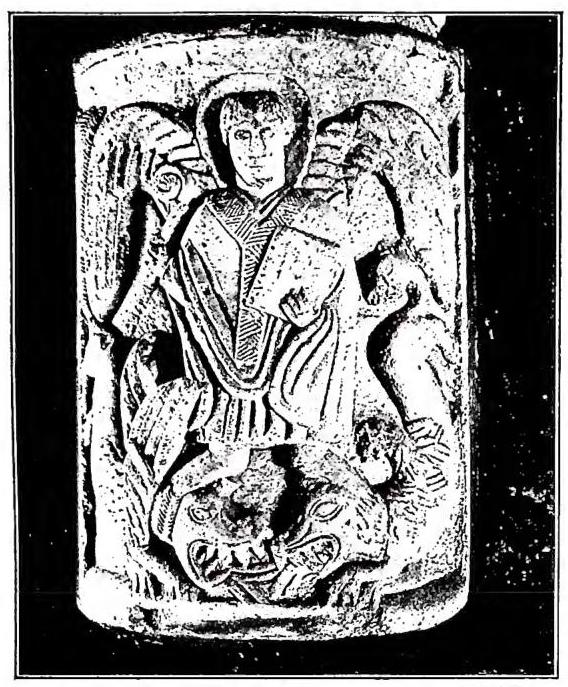
LOMBARDIA - Fragment of an ambo (11th century) - Como, Civic Museum.
Shrines from the 15th century include S. Maria dei Miracoli near S. Celso in Milan, S. Maria dei Miracoli in Brescia, the Incoronata in Lodi, the B. Vergine di Caravaggio, the Madonna di Galle-
S. Maria della Croce in Crema, the B. Vergine dei in Saronno, the sanctuary of S. Girolamo Miani in Vercurago (Lecco), named by the founder of the Somaschi, and still from the early 16th century are the Madonna di Tirano, the B. Vergine dell'Aiuto in Busto Arsizio, that of the Madonna delle Lagrime in Treviglio, built in memory of the salvation obtained in 1522 from the threats of Marshal Lautrec, S. Maria delle Grazie in Milan, and the sanctuary of the Addolorata in Rho; from the 17th century are the Madonna della S. Casa in Treviso (Valtellina), the Madonna del Bosco near Merate, the B. Vergine di Lezzeno above Bellano, S. Maria delle Grazie near Mantua. A certain number of these sanctuaries are located in the mountains: the Madonna del Ghisallo near Asso in Valassina, S. Maria della Cornabusa near Cepino in Valle Imagna, partly carved into a cave; the Madonna della Seriola on Montisola in the middle of Lake Iseo and the sanctuary of Alpe di S. Colombano, near Bormio, at almost 2500 meters above sea level.
III. CONCILIAR REGION
The conciliar ecclesiastical region of Lombardy extends within the boundaries of the ecclesiastical province of Milan and does not coincide everywhere with the borders of the civil administrative region. It groups around the metropolitan see of Milan the suffragan bishoprics of Bergamo, Brescia, Como, Crema, Cremona, Lodi, Mantua, and Pavia.A characteristic of the Archdiocese of Milan is the present persistence of the so-called Ambrosian rite, which, reorganized by St. Carlo Borromeo, reveals its pure Latin character, though it differs from the Roman rite in significant peculiarities. Exceptions are the districts of Monza, Trezzo d'Adda, and Ghignolo Po, and the towns of Civate, Varenna, and Sesto Calende. Conversely, the Ambrosian rite is also followed in some towns of the Diocese of Bergamo, in the Valle Cannobina of the Diocese of Novara, and in some Swiss localities near Lake Lugano.
The episcopal conferences of the Lombard region are convened and presided over annually by the Archbishop of Milan or, in his stead, by the most worthy and senior bishop of the region (S. Congregazione dei Vescovi e Regolari, 24 Aug. 1889; S. Congregazione Concistoriale, 15 Feb. 1919 and 22 Mar. 1919; S. Congregazione del Concilio, 21 June 1932), who, assisted by the secretary of the conferences, coordinates their work and submits their resolutions to the S. Congregazione del Concilio for the necessary approval and any observations.
Since the entire region forms a single ecclesiastical province, the decree of 15 Feb. 1919 exempts it from the obligation to hold a regional plenary council: therefore, it follows the common norms of can. 283 et seq. regarding the convocation and presidency of the provincial council.
IV. ART
The origins of art in Lombardy coincide with the advent of Roman civilization in this region (theThe few objects from the pre-Roman era found in Lombard territory, with their primitive forms and coarse ornamentation, belong more to the history of costume than to that of art. The artistic civilization of imperial Rome left important monuments in Milan in the Columns of S. Lorenzo, in Brescia in the remains of the temple of Vespasian, in Sirmione in the ruins of a large villa, and in numerous floor mosaics, statues, and bronzes, among which the Victory of Brescia is famous.
The legacy of Roman art, especially in its austere architectural forms and idealistic figurative aspects of the late Empire, remained alive throughout the Middle Ages, even if at times it was mixed with or precariously overwhelmed by elements imported from the East and by the barbarian invasions. Suffice it to prove this, the solemn architecture of the basilica of S. Lorenzo in Milan (5th-6th century), closely linked to those of Ravenna, and the early Christian mosaics of the annexed chapel of S. Aquilino. Similarly, in Brescia, the massive church of S. Salvatore (8th century) reveals in its solid structure the influence of late Roman art with Lombard elements; the latter are more evident in the carved decorations, in a style that has moved away from naturalistic representations to adhere to a world of fantasy, sometimes abstract, as indicated, moreover, by the remains of sculptures in the museums of Pavia, Como, Brescia, and Milan. An exceptionally important monument of the early Christian era is the small chapel of Castelseprio (Varese) with its frescoes, discovered only a few years ago.
In the architecture of the 8th to 11th centuries, which saw the rise of very interesting constructions in Lombardy, the Maestri Comacini, originating from the region of Lake Como, played a remarkably significant role. To this period belong S. Pietro in Civate, S. Pietro d'Agliate, S. Vincenzo in Galliano; in Milan, the oldest parts of S. Eustorgio, S. Babila, S. Celso, as well as the apses of S. Ambrogio and S. Vincenzo in Prato. The signs of the style of this period, aiming to achieve broad decorative effects, appear both in the sculptures, which are almost always ornamental in character, and in the sacred furnishings, such as in the ivories and silvers of the treasures in the churches of Monza, Brescia, and Milan. A unique monument of radiant beauty is the gemmed and enameled silver antependium, the work of Vuolvinio (9th century), preserved in the basilica of S. Ambrogio in Milan, in which Byzantine elements are combined with those of transalpine art.
Vast, indeed, was the flourishing of Romanesque art in Lombardy, and to the examples cited others will still be added, such as the Rotonda of S. Lorenzo and the Palazzo Bonaccolsi in Mantua, such as the Cathedral with the Torrazzo
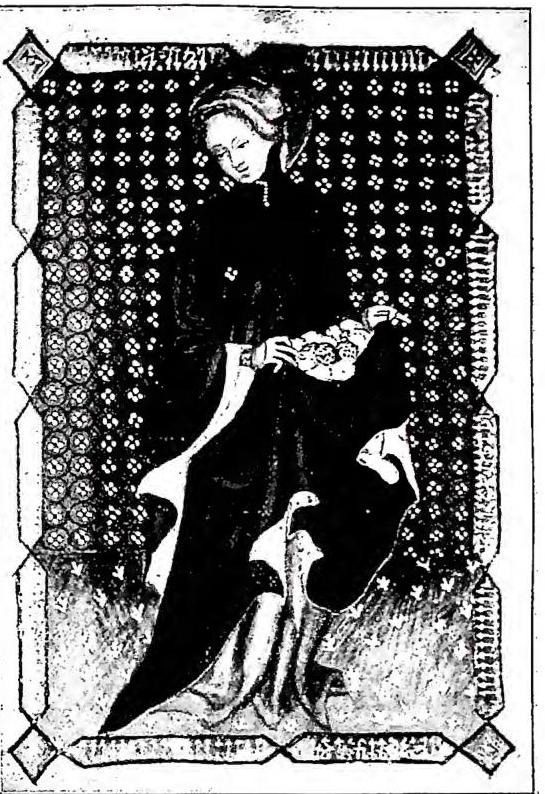
LOMBARDIA - S. Dorotea. Miniature by the Lombard school (15th century) from the Officium B. Mariae Virginis - Modena, Biblioteca Estense, ms. a. R. 7. 3., c. 244.
In the fourteenth century, this flourishing development continued, but Gothic elements were added to, and then superimposed upon, Romanesque ones, almost always, however, tempered by a sense of classical measure and balance. Only in the Duomo of Milan, begun in 1386, did Gothic architecture find an expression of northern flavor: and it remains the sole original and admirable example in Italy. Elsewhere, the harmonious equilibrium of the Romanesque tradition prevailed over Gothic elements, as in the Duomo of Monza, built by Matteo da Campione at the end of the fourteenth century, where Tuscan influence is evident. Indeed, a revival of artistic contacts with Tuscany took place during that period. And Lombard sculpture, dominated by Balduccio da Pisa, who created, among other works, the admirable ark of S. Pietro Martire in the Church of S. Eustorgio in Milan, also imposed itself on the art of the Campione Masters flourishing in Lombardy.
But above all, the stay of Giotto in Milan was of great significance, as he worked in the Ducal Palace during the last period of his life (frescoes unfortunately lost), and directed taste toward the new Tuscan painting. His followers worked in Lombardy, creating a new school; and Giovanni da Milano was its most prominent figure. The result of this pictorial direction were the fine cycles of Vibolone, Vertemate, Mocchiolo, and S. Maria in Solaro, in which, however, that spirit of "Lombard" taste—courtly and reminiscent of the North—could still be felt, which at the end of the fourteenth century was known in miniature as ouvrage de Lombardie. Giovannino de Grassi, painter and sculptor, represents at the close of the fourteenth century the artist who best embodied "Lombard Gothic naturalism" and the current of "international Gothic."
The Gothic taste persisted in Lombardy for much of the fifteenth century. There were moments when it dominated the field of art, especially with the imposing construction of the Duomo of Milan, which continued in its soaring lines, its flying buttresses, its ogives, and its slender spires. In Como, the façade of the Duomo arose in a strange flamboyant Gothic style. In Milan itself, even shortly after the mid-century, buildings were still constructed in the Gothic style, such as the nave of S. Maria delle Grazie, S. Pietro in Gessate, etc. And near Pavia, the Certosa arose, Gothic in its main lines.
It was shortly after the mid-century that the Renaissance infiltrated Lombardy: Michelozzo built the Palazzo Mediceo and the Portinari Chapel in Milan, Filarete the Ospedale Maggiore commissioned by Francesco Sforza; Leon Battista Alberti designed the models for the temple of S. Sebastiano and the basilica of S. Andrea in Mantua. But above all, it was the activity of Bramante that decided the shift in taste from Gothic to Renaissance. His works in Milan at S. Maria delle Grazie, in Pavia at the Duomo, in Vigevano at the Castle, and in Abbiategrasso at the façade of S. Maria, constitute the milestones of the new architectural style: in which, however, there was not a mere Tuscan transposition but a judicious adaptation to the Lombard tradition. Guiniforte Solari, who built the Certosa of Pavia in its substantial lines; Giovanni Antonio Amadeo, to whom the Colleoni Chapel in Bergamo is due; Giovanni Battaggio, who constructed the Incoronata in Lodi and S. Maria della Croce in
Lombardia - S. Benedetto in trono fra s. Bonaventura e s. Ludovico, arcivescovo di Tolosa. Painting by A. Previtali (1524). Bergamo, Cathedral.
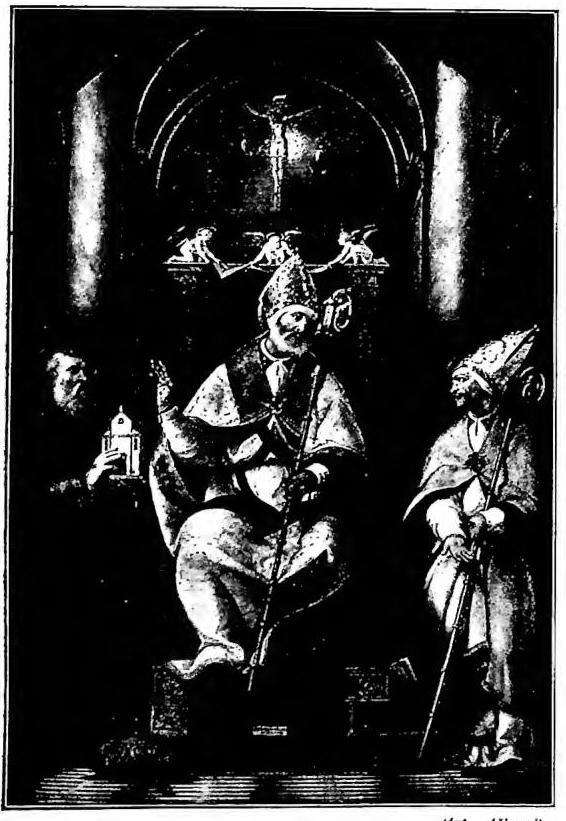
Some of these architects were also sculptors, such as Amadeo, among the very first: his style was a blend of Gothic and classical, with many Nordic affinities in the taste for deep carving and the "rocky" sense of drapery. Other excellent sculptors of Lombardy at that time included Benedetto Briosco, Cristoforo Solari, the Mantegazza family, and the Rodari. Similarly, in painting, still tied to the "international Gothic" throughout the first half of the fifteenth century—exemplified by the Zavattari with the Chapel of Teodolinda in Monza, as well as Leonardo da Besozzo and Michelino da Besozzo—the new Tuscan Renaissance style gradually made its way. Masolino da Panicale, though still imbued with Gothic spirits, worked in the Collegiate Church and baptistery of Castiglione Olona, and his creations, among the most exquisite of the period, formed the humus for further developments. From Tuscan and Mantegnesque art, Vincenzo Foppa of Brescia drew nourishment, with whom the Lombard school of Renaissance painting was established. His figure dominated for nearly half a century, until the early sixteenth century, followed by Butinone, Zenale, Civerchio, and Borgognone. In the last decades of the fifteenth century, Bramante also worked in Lombardy as a painter. His influence in Milan and Bergamo was considerable, as seen especially in Bartolomeo Suardi, known as Bramantino, an architect (Trivulzio Mausoleum, Milan) and exquisite painter, whose activity extended into the first decades of the sixteenth century. The art of Andrea Mantegna had great weight in the development of Lombard painting; he worked at the Gonzaga court in Mantua, where he left that monument of enduring beauty, the Camera degli Sposi.
The presence of Leonardo in Milan marked the beginning of a new pictorial era. Artists looked to him as a new sun, which he was, and his works, such as the Vergine delle Rocce, the Cenacolo, the Sala delle Asse, the equestrian monument to the Sforza, and his portraits, were revelations. A group of young artists gathered around him, among whom Boltraffio, Giampietrino, Andrea Solario, Cesare da Sesto, and Cesare Magni stood out. Bernardino Luini achieved a serene sweetness that produced unforgettable pages in Lombard painting of the first half of the sixteenth century; and Gaudenzio Ferrari added, in turn, other exquisite works, as can be seen especially in the church of Saronno.
During this period, other artists and schools emerged: in Brescia, Romanino and Moretto worked, the former formed on Giorgione’s examples in Venice, the latter rather grown in the local tradition after Foppa, from whom Ferramola and Paolo da Cailina had already sprung. In Bergamo, the figure of Lorenzo Lotto channeled spirits toward the renewed Venetian painting; and Giambattista Moroni, an excellent portraitist, followed him. In Cremona, after the Bembo, the art of Boccaccino, followed by the dynasty of the Campi, dominated the pictorial scene. In Lodi, Bernardino and Callisto Piazza imposed themselves. In Mantua, an important artistic center, Giulio Romano worked and gave a new imprint to fresco art in the Palazzo del Te. In the second half of the sixteenth century, Mannerism spread, and the level of art declined. Neither the painting of Tibaldi, nor that of Figino, nor of other mediocre artists sufficed to revive II. But soon, through the energetic impulse of Cardinals Carlo and Federigo Borromeo, painting
found new momentum with works, all imbued with the fervent spirit of the Counter-Reformation, by Giulio Cesare Procaccini, Cerano, Morazzone, and finally Daniele Crespi, whose activity already extended into the first decades of the seventeenth century.
Sixteenth-century architecture, after the aforementioned flourishing that lasted until the first decades of the century, did not have a distinctly Lombard character. It was immigrant architects, such as the Perugian Galeazzo Alessi or the Bolognese Pellegrino Tibaldi, who gave shape to Lombard buildings of the time, mostly inspired by Vignola’s rules. Sculpture, however, had moments of high beauty, first with Agostino Busti, known as Bambaja, author of the (later dismantled) monument to Gaston de Foix, then with Leone Leoni, whose works brought the breath of Michelangelesque art to Lombardy. Annibale Fontana, finally, with his exuberant forms, was already a child of the Baroque.
The seventeenth century, which began, as mentioned, under the auspices of the fervent Counter-Reformation activity of the Milanese Church, saw the rise of numerous buildings, largely religious, thanks above all to two excellent Lombard architects, Fabio Mangone and Pier Maria Richini, the latter author of the monumental Palazzo di Brera. Sculpture adhered to the magniloquent aims of architecture, in its essentially decorative character: no prominent personalities emerged (except the aforementioned Fontana and a few others), and only the dynasty of wood sculptors, the Fantoni from Rovetta near Bergamo, active from the mid-seventeenth to the mid-eighteenth century, is worth mentioning. Among the examples of seventeenth-century decorative sculpture in Milan, the lower part of the façade of Milan Cathedral should be recalled, also for the strangeness of its insertion into the Gothic structure.
Nor did Lombard seventeenth-century painting boast preeminent artists, apart from Merisi, a native of Caravaggio, educated for some time in Milan but soon moved to Rome, leaving no other trace of his art in his homeland than the small basket now in the Pinacoteca Ambrosiana. Alongside the painters of the Counter-Reformation, led by Cerano, others worked in the Lombard capital, such as the Fiamminghini, del Cairo, and the Nuvoloni: among the latter, Carlo Francesco Nuvoloni, known as Panfilo, stood out, who, for the sweetness of his painting, was also called the "Guido Lombardo." In Bergamo, Carlo Ceresa emerged as a skilled portraitist, a worthy follower of the Moroni tradition. At the
end of the seventeenth century, genre painting, landscapes, and still lifes spread in Lombardy under the influence of Flemish, Spanish, and Dutch art. From Genoa, Alessandro Magnasco arrived in Milan with his scenes of witches, beggars, and friars, offering a vivid and striking mirror of life at that time, harshly oppressed by Spanish domination.
With the eighteenth century, the Baroque gradually evolved into lighter and more welcoming forms, transforming into
Rococo. Architecture became gayer, life itself and customs shed the heavy austerity of the seventeenth century. Villas, palazzinas, and theaters arose more frequently. Numerous palaces throughout Lombardy testify to the new taste. In Milan, the façade of Palazzo Litta with its stuccoes, Palazzo Archinto (destroyed by the 1943 bombings), Palazzo Dugani, Palazzo Clerici with their Tiepolo frescoes reflect the new artistic ideals. Sculpture was entirely devoted to exquisite decoration; stucco workers, carvers, and decorative painters flourished.
But in painting, no prominent figures emerged, apart from the aforementioned Lissandrino and, for animal and still-life painting, Crivellone; and only with the arrival of Tiepolo, who worked in Milan in
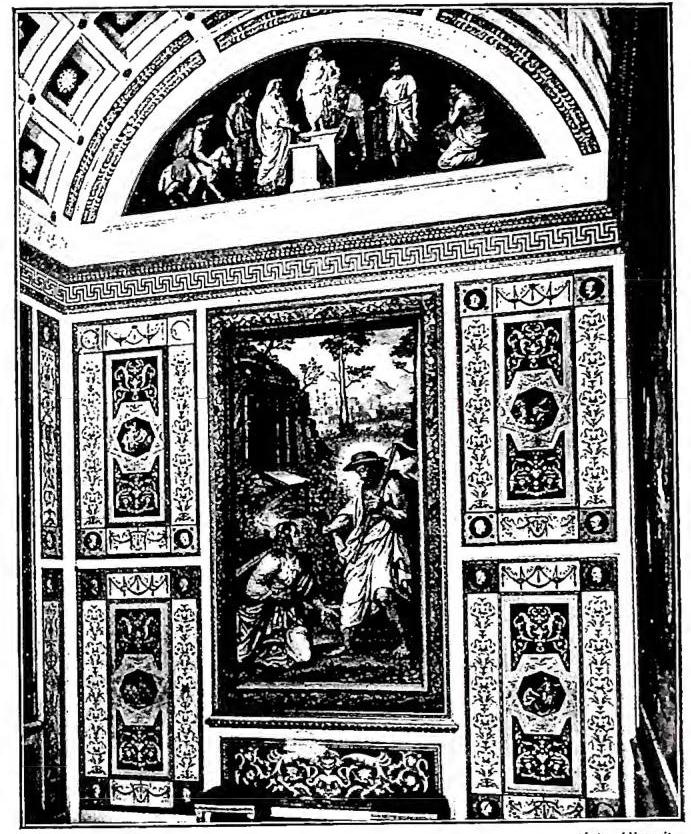
Neoclassicism quickly made its appearance in Milan, primarily with the architect Giuseppe Piermarini from Foligno, who built the façade and reformed the interior of the Royal Palace between 1770 and 1776, and between 1776 and 1778 constructed the Teatro alla Scala. Lodovico Pollack continued
(photo: Fides)
Romanticism was led, in painting, by Francesco Hayez, initially, then by Domenico and Gerolamo Induno in Milan, and by Giovanni Carnevali, known as il Piccio, in Bergamo. From these sources, the painters of the Lombard Scapigliatura drew nourishment, such as Daniele Ranzoni and Tranquillo Cremona, alongside whom stood the pre-Impressionist sculptor Giuseppe Grandi.
The development of 19th-century Lombard painting concluded with Giovanni Segantini and his followers Previati, Grubicy, and other "Divisionists." In architecture, Romanticism mostly assumed deteriorating aspects, with artificial revivals of medieval styles. - Vedi tavv. CI-CIII.