
COIRA, DIOCESE of. – City of Switzerland (Latin Curia Rhaetorum, Romansh Cuera, French Coire, German Chur), capital of the Canton of Grisons. Of ancient origin, it was an important road junction from the Roman period onward. Seat of a very ancient bishopric, whose first bishop, according to legend, was St. Lucius (1st century AD). In 450, the bishop of C. took part in the Council of Milan. From the 5th century onward, some bishops, belonging to the family of the Vittoridi,
Following the donations of the Ottonians, the bishop became lord of a large part of the country and, from 1170 to 1805, was also a prince of the Empire. The bishop’s temporal rights were abolished by the Articles of Ilanz of 1524–1526, at the time when the Reformation was introduced into the country; but the bishop continued to exercise the right to mint money until 1767, and only in 1798 did all his temporal power come completely to an end. Today the jurisdiction of the diocese extends over the Catholics of the Cantons of Grisons, Uri, Lower and Upper Unterwalden, Schwyz, Glarus, and Zurich, and of the Principality of Liechtenstein. The territory of the diocese, which measures 12,455 sq. km, comprises, out of a total population of 899,460 inhabitants, 327,345 faithful, divided among 257 parishes, in which 563 diocesan priests and 475 religious work (1948).
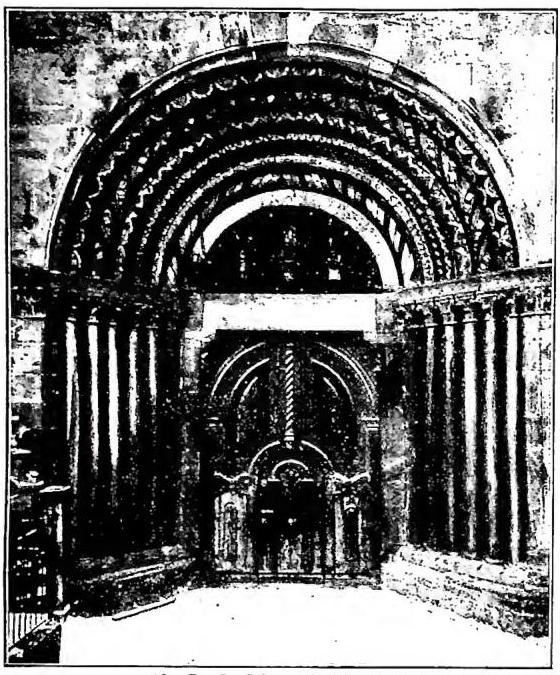
Among its monuments are the Cathedral, built in the years 1179–1282 in place of an ancient church of the fourteenth century; it contains the tomb of Bishop Ortlieb de Brandis (fifteenth century), and a beautiful high altar in carved wood, the work of Jacob Russ of Ravensburg (1491).
Also noteworthy is the church of S. Martino, with remains of the original ninth-century building, erected in the Gothic style in 1491 and currently used for Protestant worship. Among the abbeys existing in its diocese, Einsiedeln (v.) Engelberg (v.), mention should be made of the Premonstratensian abbey of S. Lucio (1040), suppressed in 1806, and the Benedictine abbey of Disentis, founded by Sigisberto in 614, originally dedicated to the Madonna and SS. Martino and Pietro, then to SS. Placido and Sigisberto, and established as a Swiss congregation in 1617.