
MARIA, most holy - Mother of Jesus Christ, Son of God made man.
In the Masoretic Hebrew, M. is Mirjām; Aramaic form: Marjām (Syriac and Targumim); Μαριάμ in the Septuagint and the Gospels for the Most Holy Virgin; the apocopated form Μαριάμ appears in the Gospels and in Flavius Josephus (Bell. Iud., VI, 3,4), who however ordinarily uses Μαριάμ and Μαριάμ.
The etymology is uncertain; many explanations have been given. O. Bardenhewer reviewed approximately 60 of them. Most ignore the rules of Hebrew word formation and are based on simple assonance. Thus, "she who illuminates the sea" (= mē'ir jām); "star of the sea" (St. Bernard); "bitter sea," mar jām (though it should be jām mar). Mirjām is not a compound name. Modern scholars revive the ancient meaning "Lady" (cf. St. Jerome, Onomastica sacra), following the usage of the people in Jesus' time, linking it to the Aramaic māre "lord" (M.-J. Lagrange, A. Valensin-J. Huby, F. Prat, L. Marchal, G. Dorado). The equivalent is found in Italian "Madonna," French "Notre Dame," and German "Unsere Frau." The primitive Semitic meaning of the name M. now seems sufficiently established by a text from Rās Šamrah, where a noun mrjm (probably marjam[s]) is found, derived from the root rnm: "exalted," "august" (cf. the name Mibbhār of similar meaning in I Par. 11:38).
SUMMARY: I. M. in Sacred Scripture. -
II. Mariology
III. Marian devotion
IV. Marian liturgy
V. Marian archaeology and iconography
VI. Marian folklore.I. M. IN SACRED SCRIPTURE.
I. THE FIGURE OF M. IN THE OLD TESTAMENT. – Ancient Christian writers and liturgical literature make extensive use of the Old Testament to illustrate the privileges and virtues of M., treating texts, figures, and events "with a certain freedom" (cf. apostolic constitution Munificentissimus Deus of Pius XII, 1 November 1950) with regard to literal-historical exegesis and the requirements of rigorous theological proof.It is especially worth recalling that, from the 2nd century onward, the Virgin M. is presented by the Holy Fathers as the "new Eve" (cf. the aforementioned apostolic constitution). Marian literature appeals to many other figures, for example: the burning bush (Ex. 3:2), which, burning without being consumed, represents M., who conceived and gave birth to the Son without detriment to her virginity; the ark of the covenant, made of incorruptible wood like the body of M.; the fleece of Gideon (Judg. 6:37-38), which receives dew from heaven as M. received her Son from heaven; the bride of the Canticle of Canticles (v.); the enclosed garden (Cant. 6:12) and the sealed fountain (ibid., 4:12), figures of the virginity of M. The texts on Wisdom (Prov. 8:22-31; Ecclus. 34:5-31) and Psalm 44 (Hebr. 45) significantly enrich the liturgy, not to mention the Marian themes and applications offered by the noble figures of women such as Sarah, Deborah, Judith, and Esther. These motifs, flourishing from the richness of theological thought and spirituality, do not detract from the precise value of the true messianic prophecies concerning the Mother of the Savior.
From these mysterious distances, the figure of the Virgin-Mother of the Emmanuel emerges clearly on the messianic horizon in the time of Isaiah (734 B.C.) (Is. 7:14; V. EMANUELE), and the prophecy is explicitly cited by Mt. 1:22 in direct relation to M. Ahaz (v.) of God’s help, the prophet offers him a "sign," which the king hypocritically rejects. The refused miracle will nonetheless be granted: "Behold, the Virgin shall conceive and bear a son, and shall call his name Emmanuel." Attempts to see in the Virgin an ordinary, anonymous, symbolic woman or one identifiable among Isaiah’s contemporaries do not account for the solemnity of the oracle (introduced by "Behold"), the mystery that surrounds it, the drama of the moment, and the context. The Virgin is specified by the article, which does not require that the subject be known to the listeners: the Virgin is determined in herself and in the prophet’s vision, though she eludes precise identification by the audience. The use of the Hebrew Bible (Gen. 24:43; Ex. 2:8; Cant. 1:2 and 6:7; Ps. 68 [67]:26; Prov. 30:18-19) gives the noun 'almāh the sense of a young unmarried woman, who must be presumed intact, as the Septuagint understood before any polemic with Christians, translating it as ἡ πάρθενος. If the Virgin were to become a mother according to the laws of nature, "all her greatness would consist in being the mother of the Messiah; consequently, why designate her according to her previous state of virginity, to which no one pays attention and which is of no importance?" (A. Condamin, La livre d'Isaïe, Paris 1905, p. 69). Ahaz had believed he must secure the stability of the throne of Judah by human means; but the "house of David" (Is. 7:13) must not doubt divine assistance, for it is to give the world the Messiah, who, moreover, will be born of a Virgin, without the cooperation of man (cf. S. Garofalo, L'Emanuele, in Il Regno, Assisi 1942, pp. 43-46).
The prophet Micah, a contemporary of Isaiah, also speaks of "she who is to give birth" to the "ruler in Israel," who will be born in the humble village of Bethlehem (Mic. 5:1-2; Vulg. 5:2-3). The highly difficult text of Jer. 31:22, in St. Jerome’s translation: "Creavit Dominus novum super terram: femina circumdabit virum," would refer to the virginal conception of the Savior: an interpretation common from the Middle Ages onward and supported even by modern exegetes (Knabenbauer, Trochon, Fillion, etc.)—by another path, G. Closen (in Verbum Domini, 16 [1936], pp. 295-304) defends the messianic sense—but most recent Catholic commentators (Condamin, Tobac, Nötscher, Clamar, Ceuppens, Dennefeld) hold that there is no traditional interpretation, in the theological sense, of the text, which philologically and contextually assumes a different meaning and value.
II. THE LIFE OF MARY IN THE WRITINGS OF THE NEW TESTAMENT
1. During the infancy of Jesus
The biographical data and texts for a direct understanding of the life and personality of Mary are found in the four Gospels, and especially in Matthew and Luke, which are the richest in details concerning the early years of Jesus. The relative scarcity of these data and texts in the inspired narrators of Jesus’ life is explained not by a lesser interest or secondary consideration in which they held the Mother of the Son of God, but by the demands of the apostolic catechesis gathered in their small books. The testimony (cf. Acts 1:8, 22; 2:32-3:15; 5:32; 10:36-43) of the Twelve focused on the sayings and deeds of Jesus’ public life to extract fundamental teachings and highlight polemical references and the concrete demonstration of the nature and divine powers of the Master, while the accounts of the Passion and Resurrection aimed to provide extensive proof of the two events that reveal the meaning of Christ’s entire life. Greater attention to the messianic content and prophetic references of Jesus’ life led Matthew to collect some episodes of Christ’s infancy, which are completed by Luke’s accounts, who took upon himself the task of an orderly and diligent historian of Jesus’ life from its very beginning (Lk 1:1-4).The circumstances of these events obviously assigned Mary a prominent place, but from the Gospel accounts it clearly emerges the importance that their authors, sparing in words, attributed to the presence and participation of the Virgin. The two observations by Luke (2:19, 51), regarding Mary’s attention and meditation during these events, make it understood that the historian draws from her (v. INFANZIA DI GESÙ).
(by courtesy of the Superior of the House of Exercises of the Sacred Heart - Rome)
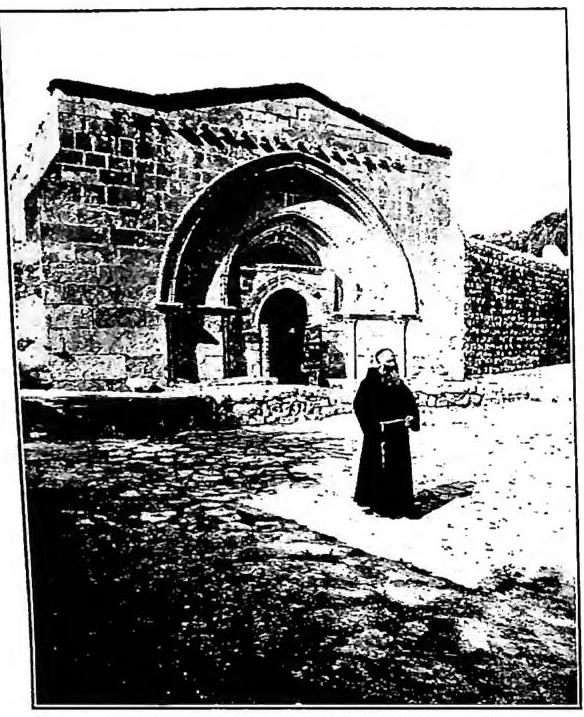
MARIA, Most Holy - Coptic church erected on the believed tomb of Mary at Gethsemane - Jerusalem.
Nothing is said of Mary’s parents (v. ANNA and GIOACCHINO), of her place of birth (v. NATIVITÀ DI M), or of the events preceding her betrothal (v. PRESENTAZIONE). From the very beginning, Mary is as if isolated in the Gospel and absorbed by her mission as Mother of Jesus. If her parents, in giving her the name, wished to express, according to ancient custom, their own wishes and hopes for the newborn, etymology might help to reveal these sentiments; but perhaps the name Mary was simply chosen in memory of Moses’ sister (v. MARIA), the prophetess dear to the devotion of the Israelites.
Annunciation (v.), Mary fully enters the Gospel. The combined accounts of Lk 1:26-38 and Mt 1:18-25 allow us to conclude that the heavenly message was communicated to her during the time, ordinarily a year, that elapsed between the betrothal, which for the Jews had the legal effects of the Christian Marriage (Philo, De leg., especially 3, 12, 72), and the actual cohabitation of the spouses (Mt 1:18; 20:24).
Recently, an ancient exegesis has been revived, according to which, at the time of the Annunciation, Mary and Joseph had already begun living together; but philology and Jewish customs thus far give greater credence to the first interpretation. The Angel greets Mary with solemn words, which acknowledge in her a stable fullness of Grace (κεχαριτωμένη) already preceding the encounter (v. IMMACOLATA CONCEZIONE) and indicate that the Lord is about to entrust her with an arduous mission, pledging to sustain her with the necessary graces (cf. the value of the greeting “the Lord is with you” in the biblical tradition). Mary’s profound “trouble” demonstrates that she has understood the solemnity of the Angel’s words and reflects (διελογίζετο) on what, precisely, he intends to refer to (Lk 1:29). Gabriel speaks to her with clear biblical echoes (cf. Is 7:14) of the birth of Jesus the Messiah and Son of the Most High, and Mary replies with a question from which the Angel’s behavior excludes any hint of doubt. The Virgin reveals her vow or purpose (v. VERGINITÀ DI M) of not having conjugal relations with Joseph (“knowledge of man” is a well-known biblical euphemism: Gen 19:8; Num 31:17; Judt 11:39) and asks, practically, for further explanations regarding the circumstances accompanying the miracle in which she believes; those circumstances that will suggest to her, among other things, how to behave with Joseph. Gabriel refers everything to the power and holiness of the Most High (Lk 1:35), and Mary, who will remember his words (ibid. 49), deems it necessary to remain silent even with her spouse (Mt 1:18-22). Her absolute surrender to the will of the Lord (Lk 1:38), which Mary, as a “handmaid” (Gr. δούλη), has no reason to question or oppose, together with the trouble provoked by her humility, the prudence shown in her decisive questioning of the Angel, and the purity revealed by her purpose, provide an initial and already complete portrait of the depth of Mary’s interior life, to whose spiritual richness bestowed by God the heavenly messenger had already paid homage.
From Nazareth, the scene of the preceding events, upon receiving the news from the Angel of Elizabeth’s miraculous conception of John the Baptist, Mary sets out, probably not in the company of Joseph but with a caravan of relatives or friends, near one of the three great feasts celebrated with a journey to Jerusalem, toward the hill country of Judea to offer her solicitous services (Lk 1:39) to her elderly relative. Mary greets Elizabeth first (ibid. 1:40), but at her voice, the Baptist leaps mysteriously in his mother’s womb, who, in turn, “filled with the Holy Spirit” (ibid. 1:41), blesses Mary and the Son she has conceived, hailing her as Mother of the Lord, protesting her humility before her, and praising the faith of “she who believed that what was spoken to her by the Lord would be fulfilled” (ibid. 1:45, according to the Gr.).
Faced with this soul open to the mysteries of God, in the exquisitely feminine intimacy of such delicate confidences, M. can no longer contain her joy, which erupts in the Magnificat canticle (v.): a lyrical outpouring in which the spontaneity of improvisation reveals a soul assiduously nourished by the ancient faith and literature of her people. Yet within it there is already an announcement of new times: the exaltation of humility and poverty (ibid., 1:48, 51-53) foreshadows the Beatitudes of the Sermon on the Mount (Mt. 5:1-12; Lk. 6:20-23), which will inaugurate the stable economy of God’s ancient and new mercy (Lk. 1:55). M. exalts the dignity conferred upon her by the Lord (ibid. 1:48), but attributes all glory to Him (ibid. 1:47, 49), reserving for herself a conscious humility (ibid. 1:48).
After three months in Judea, M. returned to Nazareth. Luke (ibid. 1:56), placing M.’s departure before the birth of the Precursor, seems to imply that M. was absent from the event, but the evangelist is accustomed to concluding his accounts with long-range perspectives (cf. V. 80; 3:19 ff.). Ancient Western interpreters held that M. remained until the birth had taken place.
In Nazareth, the brief yet intense tragedy of Joseph’s perplexity erupts, confronted with M.’s maternity, the cause of which he did not know (Mt. 1:18-24). M. remains silent, mindful of Gabriel’s assurances, and it is once again an angel who dispels the heavy shadow from her spouse’s heart. The solemnity of their cohabitation (v. 24) concludes the drama in joy.
An edict of Augustus ordering the census of Palestine compels Joseph to travel to Bethlehem of Judea, the city of origin of his lineage (v. QUIRINO), where it seems the descendants of David held property in common (Miññāh, Ta'ānīth, 4:5). M. accompanies him either because, with the birth imminent, the spouses do not wish to be separated, or, more likely, because women were also required to personally register for the census, and M. likewise belonged to the house of David.
The account of Jesus’ birth places M. in significant prominence (Lk. 2:16). Among the details of the event, the Evangelist notes that M. personally attended to the newborn’s first care, from which the Fathers deduced that the birth occurred without weakness or pain (v. VERGINITÀ DI M). Luke’s restraint is most delicate in comparison with the crude and tasteless narratives of the apocrypha (cf. G. Bonaccorsi, Vangeli apocrifi, I, Florence 1948, p. 303). When the shepherds, warned by an angel, came to the grotto, Luke contrasts the people’s admiration (Lk. 2:18) with M.’s demeanor, who “kept (durative imperfect) these things in herself and pondered them in her heart” (ibid. 2:19). M. compared (Gr. συνβάλλουσα) the revelations and events, deepening in joy and humility her meditation on the mysteries of the Incarnation and the birth of her Son. Eight days after the birth, Jesus was circumcised (ibid. 2:21), with the imposition of the name already revealed to M. (ibid. 1:31).
Forty days after Jesus’ birth, M. presented herself at the Temple for the rite of purification (Lev. 12:2-8) and the redemption of Jesus in observance of the law concerning firstborn sons (Ex. 13:2, 11-16). Though the miraculous nature of her childbirth exempted M. from common obligations, she, reluctant to prematurely reveal the mysteries accomplished in her, and finding it difficult to otherwise justify a conspicuous absence while deeply attached to the laws given by God to her people, scrupulously fulfills the rite. Taking advantage of the dispensation granted to the poor, she substitutes a turtledove or a pigeon for the prescribed lamb in the sacrifice (Lk. 2:24). In the Temple, the pious Simeon (v.), enlightened by the Holy Spirit, identifies the nature and messianic destiny of the infant Jesus, to the “wonder” of M. and Joseph at the extraordinary revelation (ibid. 2:33). The man of God paid particular attention to M. (ibid. 2:34-35), announcing her intimate participation in the destiny of contradiction awaiting Jesus: a “great sword” (ἐγώσις) would pierce her soul; the Mother would be afflicted in the deepest seat of her being (ψυχή) as she witnessed the contradictions and persecutions culminating in the unjust condemnation and cruel death inflicted upon Jesus.
During the episode of the Magi’s visit (v.), whose chronology is difficult to determine, M. stands alone in prominence (Mt. 2:11). Having fled to Egypt to escape Herod’s persecution, the three from Bethlehem finally return to their homeland, withdrawing to Galilee, in Nazareth (ibid. 2:19-23; Lk. 2:39).
The long parenthesis of Jesus’ adolescence is interrupted by the episode of the twelve-year-old Boy’s loss and rediscovery in the Temple, where He had accompanied His parents for Passover (Lk. 2:41-51). In this painful circumstance,
M. awaits the day of separation for about twenty years, during which Jesus’ complete submission and His life, which appeared ordinary in the eyes of men (cf. ibid. 13:55-57; Mk. 6:2-3), provide her with matter for meditation, faith, and sweet memories (Lk. 1:51).
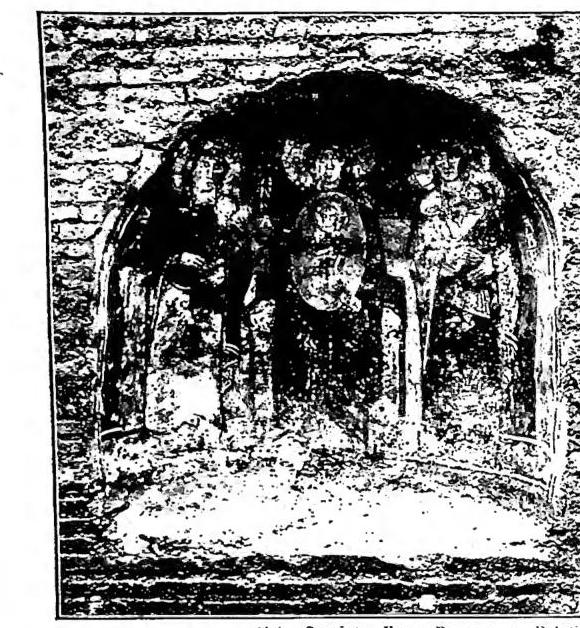
MARIA, santissima - St. Anne holding the child M.; the Virgin with the Son; St. Elizabeth with the young St. John. Fresco (8th century) - Rome, Church of Santa Maria Antiqua.
(fot. Soprint. Foro Romano e Palatino)
The Gospels do not state that M. usually followed Jesus on His apostolic journeys, though the presence and assistance of other pious women (Lk. 8:2-3) may naturally imply hers as well. At least once in Galilee, she seeks out her Son, besieged by the crowd (Mt. 12:46-49; Mk. 3:31-35; Lk. 8:19-21).
BIBL.:
A. Vaccari, Maria SS. nella Sacra Scrittura, in Maria SS. nella storia e nella fede, Rome 1947, pp. 1-32;
L. Cignelli, Maria nel Vangelo di Luca, Jerusalem 1954;
J. B. Carol, Mariology, 3 voll., Milwaukee 1955-1961;
H. du Manoir, Maria. Études sur la Sainte Vierge, 8 voll., Paris 1949-1971;
F. Ceuppens, De Mariologia biblica, Rome 1948;
A. Müller, Ecce Mater tua, Fribourg 1954;
E. Zolli, Il messaggio di Maria, Rome 1955.
A. M. ARTOLA
Qualcuno annunziò a Gesù la presenza della Madre e dei parenti, e si ebbe la risposta che madre e parente di lui era chi faceva la volontà del Padre. È indiscutibile che M. aveva già dato perfetto esempio di fare la volontà del Padre (Lc. 1, 38) e che quindi i suoi vincoli naturali erano rinsaldati da altri spirituali ed intimi. Altra volta Gesù risponde a un commosso elogio di una donna per la Madre fortunata che aveva portato nel seno e nutrito tanto Figlio, e anche allora Gesù manifesta in quale direzione sia necessario orientarsi per identificare l'esatta misura della grandezza di M.: la sua adesione alla parola
di Dio e la sua dedizione nel metterla in pratica (Lc. 11, 27-28); al gratuito privilegio della maternità di M. corrispose la sua capacità e volontà di amore, di ubbidienza e di sacrificio. Le parole dell'anonima ascoltatrice di Gesù sembrano notare, in Luca, il primo compimento della profezia di M.: «tutte le generazioni mi diranno beata» (Lc. 1, 48). M. ricompare durante la Passione di Gesù, dolente sotto la Croce del Figlio, che le rivolge una delle ultime parole per affidarla al suo discepolo prediletto Giovanni (Io. 19, 25-27). La solennità e gravità dell'ora, il contesto messianico della tragedia, hanno fatto giustamente pensare che le parole di Gesù: «Donna ecco tuo figlio (Giovanni)» siano il segno e il pegno di una più vasta maternità spirituale (v. INFANZIA SPIRITUALE).
3. M. dopo la morte di Gesù. - Della vita di M. con Giovanni (Io. 19, 27) e degli avvenimenti successivi i testi tacciono. Luca, storico dei primi giorni della Chiesa, menziona M. a capo dei discepoli radunati in preghiera, in attesa dello Spirito Santo, dopo l'Ascensione di Gesù (Act. 1, 14): le parole non notano una presenza occasionale, ma presentano M. al centro della vita della Chiesa, naturale fonte e testimone della storia del Figlio, naturale presidente delle assemblee caritatevoli ed eucaristiche (cf. ibid. 2, 42, 46).
Nella maniera consentanea alla loro essenzialità e brevità, le fonti ispirate forniscono, dunque, sufficiente materia di detti, di fatti e di notazioni per mettere in piena luce la Madre di Dio, colma di privilegi e di doni, che tutta la S. Scrittura «ci presenta... unita strettamente al suo Figlio divino e sempre partecipe della sua sorte» (Pio XII, Munificentissimus Deus del 1º nov. 1950).
III. THE APOCALYPSE OF THE VIRGIN MARY
Apocryphal book connected with the Apocalypse or Vision of Paul (v.); like the latter, it admits an attenuation of the punishments of Hell.Two recensions of it are known. One, in Greek, was edited by Rh. James: Ἀποκάλυψις τῆς ἁγίας θεοτόνου περὶ τῶν κελάσιων («Apocalypse of the Holy Mother of God concerning the punishments»), in Apocrypha anecdota (Texts and studies, 4), Cambridge 1893: an Armenian text of it exists, edited by the Mechitarists
(Ankanon girkh Nor Ketakar anatz, I, Venice 1898, pp. 388-450).
While the Virgin is praying on the Mount of Olives, the Archangel St. Michael shows her the punishments of Hell. The damned Christians beseech her to intervene on their behalf; other saints of the Old and New Testaments also intercede. After her Assumption, the Virgin obtains from her Son that the damned Christians may have rest on the feasts of Pentecost so that they may glorify the Most Holy Trinity. This recension dates back to the 9th century.
Another Apocalypse or Vision of the Virgin Mary, in Ethiopic, recounts that while she was praying on Golgotha at the sixth hour of the sixth day, she was raptured to the third heaven; she saw the judgment of souls unfold and contemplated the realms of the afterlife. She obtained a mitigation of punishments, especially for monks and ecclesiastics, from the vespers of the sixth day until the matins of the second day. This recension was written after the 7th century. Edited by J. Chaine: Apocalypsis B. Mariae Virginis, Apochrypha de B. Maria Virgine, III, Visio seu Apocalypsis, in Corpus Scriptorum Christianorum Orientalium, Script. Aeth., 1st series, VII, Rome 1909.
I. ORIGIN
The first seeds of Mariology are found in Sacred Scripture of the Old and New Testaments, in the aforementioned passages, and in the various writings of the Church Fathers.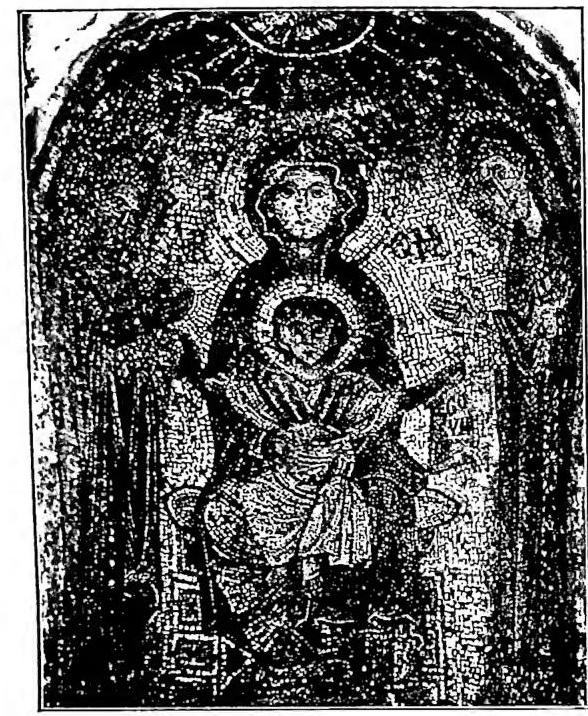
After the Council of Nicaea (325 A.D.), many contributed to the development of Mariology: St. Ephrem (cf. M. Ginnetti, Un precursore di Efeso: s. Efrem e la sua mariologia, Milan 1931), the great cantor of Mary; St. Epiphanius, author of the first monograph on the Madonna; St. John Chrysostom; St. Ambrose (cf. M. Pagnamenta, La mariologia di s. Ambrogio, Milan 1931); the "father of Western Mariology," St. Jerome (cf. M. Niessen, Die Mariologie des hl. Hieronymus, Münster 1913); and St. Augustine (F. Friedrich, Die Mariologie des hl. Augustinus, Cologne 1907), who was the first to pose the problem of the Immaculate Conception and offered a tentative solution.
II. DEVELOPMENT
The true development of Mariology, based on biblical and traditional data from the ancient Fathers, began in the East with the definition of the dogma of the Divine Maternity, proclaimed against Nestorius at the Council of Ephesus in 431. While the preceding Fathers emphasized the concept of Mary as the new Eve, the post-Ephesian Fathers, in their homilies, focused primarily on the Divine Maternity, the tessera of faith and the foundation of the entire Mariological edifice, as well as on related questions, particularly her perpetual virginity, her immunity from any stain of sin, and her queenship. The explicit assertion of Mary’s cooperation in the distribution of all graces also began to emerge.This period was dominated by St. Cyril of Alexandria, president of the Council of Ephesus (cf. Nilo da S. Brocardo, De Maternitate divina B. Mariae semper Virginis Nestorii Constantinopolitani et Cyrilli Alexandrii sententia, Rome 1944), St. Proclus of Constantinople, St. Romanos the Melodist (cf. C. Chevalier, Mariologie de Romanus, in Recherches de science religieuse, 28 [1938], pp. 48-71), St. Modestus of Jerusalem (cf. L. Carli, L'Encomium in Dormitionem S.mae Deiparae di s. Modesto di Gerusalemme, in Marianum, 2 [1940], pp. 386-400), St. Germanus of Constantinople (cf. M. Jugie, Les homélies de st Germain de Constantinople sur la dormition de la ste Vierge, in Echos d'Orient, 16 [1913], pp. 219-21), St. Andrew of Crete, and St. John Damascene, with whom Eastern Mariology reached its zenith (cf. C. Chevalier, La mariologie de st Jean Damascène, Rome 1936). After Damascene, worthy of special mention are St. Theodore the Studite (cf. M. Jugie, La doctrine mariale de st Théodore Studite, in Echos d'Orient, 25 [1926], p. 421 ff.), Leo the Wise, Gregory Palamas, Nicholas Cabasilas, Theophanes of Nicaea (cf. M. Jugie, Sermo Theophani Nicaeni in S.mam Deiparam, Rome 1935), George Scholarios, and Elias Miniatis.
In the West, from the Council of Ephesus to St. Bernard, Mariology remained in an initial stage. Only in the 12th century did a true scientific development begin, thanks especially to St. Anselm (cf. E. R. Jones, S. Anselmi mariologia, Mundelein 1937), St. Bernard (cf. D. Nogues, Mariologie de st Bernard, Paris 1935), Eadmer, Hugh of St. Victor, St. Amadeus of Lausanne, and Arnold of Chartres. In the following centuries, significant contributions were made by St. Anthony of Padua (cf. G. Roschini, La mariologia di s. Antonio da Padova, in Marianum, 8 [1946], pp. 16-67), St. Albert the Great (cf. J. Bittremieux, S. Albertus M. Ecclesiae doctor praestantissimus mariologus, in Ephemerides theol. Lovanienses, 10 [1933], pp. 217-31), St. Bonaventure (cf. E. Chiettini, Mariologia s. Bonaventurae, Sebenico-Rome 1942), St. Thomas Aquinas (cf. G. Roschini, La mariologia di s. Tommaso d'Aquino, Rome 1950), Scotus (cf. C. Balié, Ioannis Duns Scoti doctoris Mariani theologiae Marianae elementa, Sebenico 1933), Raymond Lull, Raymond Jordan, Jean Gerson, St. Bernardino of Siena (cf. G. Folgarait, La Vergine Bella in s. Bernardino da Siena, Milan 1939), Ambrose Spiera (cf. A. Poka, Doctrina Mariana in sermonibus magistri Ambrosii Spiera Tarvisini, Rome 1943), Denis the Carthusian, and Bernardino de Bustis (cf. F. Cucchi, La mediazione universale della S.ma Vergine negli scritti di Bernardino de Bustis, Milan 1943). The question of the Immaculate Conception, resolved negatively by St. Bernard and the great Scholastic doctors, made such progress that by the mid-15th century it achieved full triumph. The question of Marian mediation, from St. Bernard onward, also saw notable developments. The Assumption of Mary in body and soul into heavenly glory, after some doubts raised in the 9th–12th centuries, was commonly accepted as certain from the 13th century onward.
Mariology had reached these milestones when the Protestant opposition of the 16th century arose. Traditional Mariology was violently attacked by Luther, Calvin, Zwingli, and their followers. Against the innovators fought valiantly St. Robert Bellarmine, St. Peter Canisius with his polemical work De B. Virgine incomparabili, St. Lawrence of Brindisi with his golden Mariale (cf. G. Roschini, La mariologia di s. Lorenzo da Brindisi, Padua 1951), G. B. Novati with the work De eminentia Deiparae, and Fr. Hippolytus Marracci, author of numerous Mariological works and a staunch defender of the Immaculate Conception.
After the Protestant opposition arose a far more dangerous one, because more insidious: Jansenist opposition. This can be divided into three periods: the initial phase, that of the Jansenists of Port-Royal; the codification of various Jansenist errors through the infamous Monita salutaria B. Mariae ad cultores suos indiscretos by A. Windenfeldt (placed on the Index in 1676); and the implementation of the Monita salutaria in the Gallican liturgical reform. Among the Jansenists were Launoy (1603–78), Baillet (1649–1706), Tillemont (1637–1750), and, in some respects, even L. A. Muratori (1672–1750). Jansenist Mariology was combated by St. Louis Grignion de Montfort (1716), St. Alphonsus M. de’ Liguori (1787), G. Grasset (1618–92), E. Boudon (1624–1702), Bossuet (1628–1704), Bourdaloue (1632–1704), T. Raynaud (1583–1632), George de Rhodes (1661), Contenson (1641–74), and P. Poiret (1584–1637). Once Jansenism was overcome, the idea of the definability of the Immaculate Conception emerged, culminating in its proclamation by Pius IX in 1854. This was, after the Ephesian definition of Mary’s Divine Maternity, the second milestone of Mariology—a starting point and, even more, a point of arrival. A new period began, marked by the rigorously scientific progress of Mariology, nourished above all and most richly by the ecclesiastical Magisterium through its encyclicals and other documents. Among those of Leo XIII are the encyclicals Magnae Dei Matris (8 Sept. 1892), Jucunda semper (8 Sept. 1894), Adiutricem populi (5 Sept. 1895), and Augustissimae Virginis (12 Sept. 1897), in which Marian doctrine is summarized under the principal aspects of Mother of God, our Mother, and Mediatrix (cf. J. Bittremieux, Doctrina mariana Leonis XIII, in Eph. theol. Lovanienses, 4 [1927], p. 359 ff.); of Pius X, the encyclical Ad diem illum laetissimum (2 Feb. 1904), which, on the occasion of the 50th anniversary of the definition of the Immaculate Conception, expounds its fruits and the duties arising therefrom; of Benedict XV, the apostolic letters Inter sodalicia (22 March 1918) and Locarni intra fines (3 Jan. 1919), which dwell on the themes of Mary’s mediation, spiritual maternity, and the dispensation of graces; of Pius XI, the encyclicals Lux veritatis (25 Dec. 1931) and Ingravescentibus malis (29 Sept. 1937) on the Divine Maternity of Mary and the Rosary (cf. G. M. Roschini, La Madonna nel pensiero e negli insegnamenti di Pio XI, in Marianum, 1 [1939], pp. 121-72); of Pius XII, the encyclicals Mystici Corporis (29 June 1943), Auspicia quaedam (1 May 1948), the apostolic constitution Munificentissimus Deus (1 Nov. 1950 for the definition of the Assumption of Mary), and the numerous discourses and radio messages in which he develops, in a marvelous doctrinal synthesis, the themes of Mary’s Divine Maternity, holiness, mediation, Assumption, queenship, and cult (cf. Le encicliche mariane, ed. A. Tondini, Rome 1950, with a complete list of Marian documents from 1849 to 1950 at pp. 579-626). To these should be added the publication of patristic and liturgical documents, Marian study congresses, and various theological journals.
BIBL.:
For the patristic period: M. Jugie, Homélies mariales byzantines, Paris 1922-26; Id., La mort et l'Assomption de la Sainte Vierge, Vatican City 1944; C. Chevalier, Notre-Dame dans la tradition byzantine du VIe au Xe siècle, Paris 1934; L. Carli, La mariologia di s. Modesto di Gerusalemme, Rome 1941; G. Roschini, La mariologia di s. Giovanni Damasceno, Rome 1946.
For the medieval period: E. R. Jones, S. Anselmi mariologia, Mundelein 1937; D. Nogues, Mariologie de st Bernard, Paris 1935; G. Roschini, La mariologia di s. Antonio da Padova, in Marianum, 8 (1946), pp. 16-67; Id., La mariologia di s. Tommaso d'Aquino, Rome 1950; C. Balié, Ioannis Duns Scoti doctoris Mariani theologiae Marianae elementa, Sebenico 1933.
For the modern period: G. Roschini, La mariologia di s. Lorenzo da Brindisi, Padua 1951; A. Tondini, Le encicliche mariane, Rome 1950; J. Bittremieux, Doctrina mariana Leonis XIII, in Eph. theol. Lovanienses, 4 (1927), p. 359 sgg.; G. M. Roschini, La Madonna nel pensiero e negli insegnamenti di Pio XI, in Marianum, 1 (1939), pp. 121-72.
G. M. Roschini
III. THE CURRENT STATE
Mariology is currently in full development. In various university institutes and theological faculties, special chairs have been established, where the Tractatus de B. Maria Virgine, separated from the treatise De Verbo incarnato, has become an organic and independent discipline. Various treatises on the Madonna have thus emerged, among which those by Scheeben, Jamar, Van Combrugghe, Lépicier, Campana, Müller, Alastruey, Merkelbach, Neubert, Lennerz, Ceuppens, Roschini, Boyer, and Bertetto should be mentioned. Several monographs on various mariological questions have been published by J. Bittremieux, Godts, M. Jugie, Lebon, J. M. Boyer, C. Balié, G. Philips, and A. Luis. With the aim of further promoting the scientific development of mariology, mariological societies have arisen in various nations, in France, Spain, Portugal, Canada, and the United States of North America.The studies of these various societies are published in their respective bulletins, which constitute a true treasure trove for Marian science. To these is added the journal Marianum (Ephemerides mariologiae), published since 1939 by the Servite Fathers of the International College of S. Alessio Falconieri in Rome, where, since 1940, an international Marian center with various initiatives has been established. Another mariological center is the Franciscan Marian Commission, instituted in 1946, which has already organized several Assumptionist mariological congresses.
IV. MARIOLOGICAL QUESTIONS IN THEOLOGY
Mariological questions treated in theology can be divided into two series: questions of a general nature and questions of a particular nature. Among the questions of a general nature, those concerning the method of organizing a mariological treatise, the sources of mariology, and the principles governing it dominate, particularly the first principle of all Marian science. The questions of a particular nature address: a) the privileges of the Blessed Virgin: divine maternity, Immaculate Conception, immunity from all sin, plenitude of Grace, perpetual virginity, Assumption and glorification, veneration; b) her mission: spiritual maternity, universal mediation in its twofold phase, that is, as it signifies cooperation both in the acquisition (redemption) and in the distribution of all graces, queenship.III. MARIAN DEVOTION.
Marian devotion considered in itself, that is, in its intimate constitution, encompasses the questions that address its nature, its constitutive elements, its legitimacy, its utility, and its necessity.
I. NATURE OF MARIAN DEVOTION
This is expressed by the technical term hyperdulia (cf. Sum. Theol., III, q. 25, a. 5), which signifies a special honor, superior to that given to the saints, rendered to the Most Holy Virgin due to her singular excellence as Mother of God and Queen of the saints (cf. Denz-U, nn. 1225 ff., 1316, 1570; CIC, can. 1255). This devotion of hyperdulia, offered to Mary, differs only in degree from the devotion of simple dulia if one considers as its motive her singular holiness, superior in degree but not in kind to that of the other saints; it differs instead in kind if one considers as its motive her singular dignity as Mother of God, which places her in an order of her own, specifically superior to that in which all other saints are found (cf. Sum. Theol., II-II, q. 103, a. 3, a. 4, ad 2). The Collyridians erred by excess, as St. Epiphanius attests (Adv. haer., III, haer. 78: PG 42, 735), by rendering to the Virgin a cult of latria or adoration due to God alone. Conversely, the Antidicomarianites (4th century), Protestants (16th century onward), and Jansenists erred by defect, rejecting as superstitious, idolatrous, or at least excessive the devotion rendered to Mary.II. CONSTITUTIVE ELEMENTS
Three acts or elements, primarily, constitute or integrate the Marian cult, corresponding to the three principal titles of excellence proper to the Most Holy Virgin, namely: veneration, invocation, and imitation. As Mother of the Creator and of creatures, she is worthy of special veneration; as mediatrix between the Creator and creatures, she is to be invoked with the most unlimited trust; as All-Holy by antonomasia, full of grace and virtue, she is to be imitated in a particular manner.The cult of special veneration, founded on the singular greatness of Mary, has its solid bases in both Sacred Scripture and tradition. From the Gospel, it appears that the angel Gabriel (Lk. 1:28) and St. Elizabeth (Lk. 1:42) address her with words full of profound veneration, words echoed thereafter by all Christian centuries in the rough paintings of the catacombs from as early as the 2nd-3rd century, in the liturgy, in the various temples
The special cult of invocation, founded on the singular power of Mary’s intercession, finds solid bases in the ancient tradition of the Church. In an Egyptian papyrus, which, according to the paleographic examination of Lobel, dates back to the 3rd century, published by Roberts (in Catalogue of the Greek and Latin Papyri in the John Rylands Library, III, Manchester 1938, no. 470), is contained the well-known prayer Sub tuum praesidium, later incorporated into the Roman, Ambrosian, Byzantine, and Coptic liturgies—a prayer that is entirely an invocation
(fot. Biblioteca Vaticana)
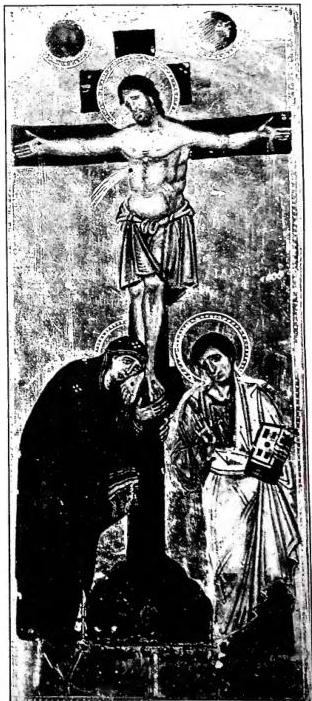
MARIA, santissima - Mary and St. John at the foot of the Cross. Painted wooden casket (11th century) - Vatican Library, Museo sacro.
of confident trust in the protection of the Mother of God to be delivered from all dangers. In the 4th century, St. Gregory Nazianzen (d. 389) recounts the confident recourse of a Christian virgin to Mary (Or. XXIV In laudem s. Cypriani: PG 35, 1181). Toward the end of the same century, St. Ambrose exhorted virgins to turn to the Virgin by antonomasia (De instit. virg., nn. 86-88: PL 16, 339 ff.).
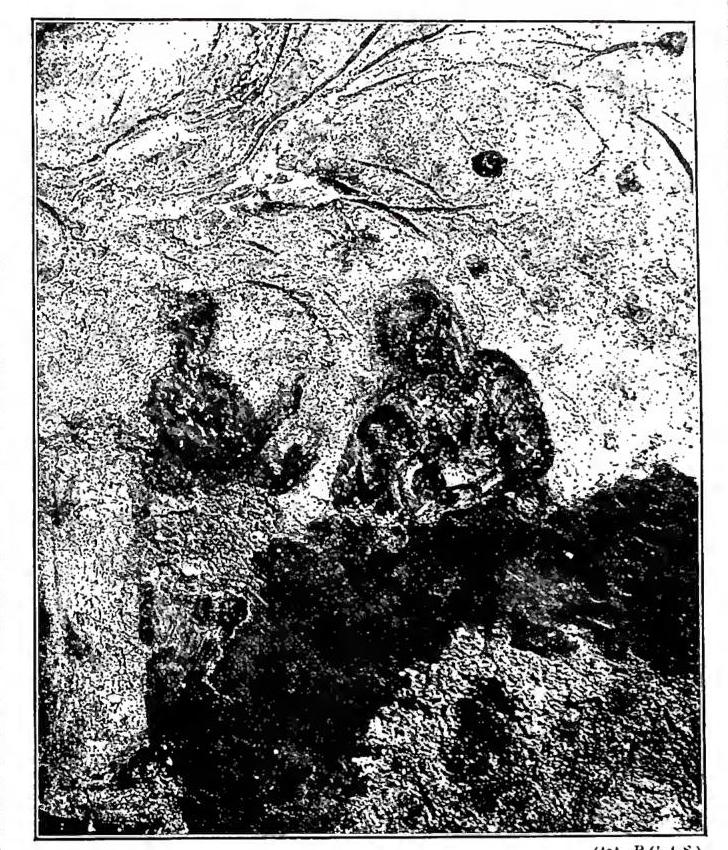
The cult of special imitation, founded on the singular holiness of Mary, was greatly emphasized by St. Ambrose, who asserted that “the life of Mary alone is a school for all,” and therefore exhorts all to imitate her (De Virgin., II, c. 2, n. 9, 15; c. 3, n. 19: PL 16, 221-23). In a particularly notable way, the Most Holy Virgin was proposed in early Christianity as a model for virgins. Thus, in the Catacombs of Priscilla on the Via Salaria, in a 3rd-century cubiculum, a bishop is depicted in the act of imposing the sacred veil upon a virgin, pointing to the Most Holy Mary, painted there with the Child Jesus in her arms, as her model. There have been those, such as Erasmus of Rotterdam, followed by Luther and others, who, exaggerating this element of cult, have gone so far as to say that the actual imitation of the Most Holy Virgin belongs to the essence of Marian devotion. Catholics generally hold that, although true devotion to Mary without the intention or at least a desire to imitate her is inconceivable, the actual imitation of her is not essential to her cult but is rather its fruit.
BIBL.:
For veneration: A. MERCATI, Il culto di Maria Ss.ma nei primi secoli, in Marianum, 1 (1939), 11-34; J. LEBRETON, La Vierge dans la tradition primitive, in Maria, I, Paris 1949, 13-60.
For invocation: H. LECLERCQ, Sub tuum praesidium, in DACL, XV, 1685-1690; A. WILMART, La plus ancienne prière à la Vierge, in Revue Bénédictine, 29 (1912), 365-368.
For imitation: A. WILMART, L'imitation de la Vierge dans la spiritualité médiévale, in Maria, I, Paris 1949, 343-368; G. PHILIPS, La Vierge modèle des vierges, in Ephemerides Theologicae Lovanienses, 15 (1938), 3-24.
A. G.
III. LEGITIMACY OF THE MARIAN CULT
The legitimacy of the cult rendered to the person of Mary arises from her singular and unparalleled excellence, being the Mother of God, "full of grace," "blessed among all women." For the legitimacy of the cult of the Heart of Mary, V. relevant entry. The legitimacy of the (relative) cult rendered to the relics of the Virgin (should their authenticity be proven), denied with particular acrimony by Protestants, arises from that psychological law which compels us to venerate not only the person but also the things that belonged to her (Sum. Theol., III, q. 25, a. 6). The legitimacy of the (relative) cult paid to the images of the Most Holy Mary (denied by iconoclasts [8th century] and Protestants) is affirmed not only by the decisions of councils (Second Council of Nicaea and Council of Trent, sess. XXV), the ancient usage of the Church, and the miracles worked through them, but is also legitimized by the fact that the image, insofar as it is an image (not insofar as it is a material thing), constitutes one thing with the person it represents, to whom, therefore, the act of cult is ultimately directed.IV. UTILITY
The utility of Marian devotion is clearly evident from the countless individual and social benefits derived therefrom. Individual benefits extend to life (source of graces, sign of predestination), to death (special assistance), and after death. Social benefits, on the other hand, concern domestic society (fountain of Grace), civil society (progress of truth, beauty, and goodness through the advancement of sciences, arts, and good morals), and religious society, that is, the Church (progress and preservation of the true faith and good morals).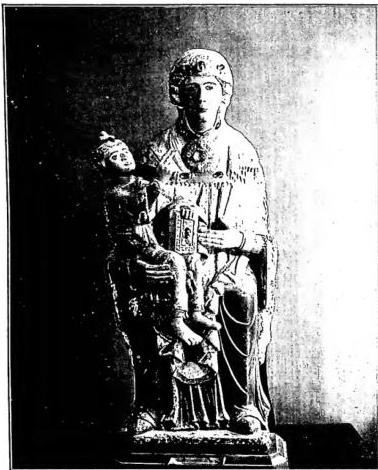
[Int. Annar]
MARIA, Most Holy - Madonna known as «di Acuto». Polychrome wood sculpture with gems (12th century) - Rome, Museo di Palazzo Venezia.