
PANFILO, CEMETERY of. – Situated in that stretch of the Via Salaria Vetere now corresponding to the Via Giovanni Paisiello. The Notitia Ecclesiarum recalls there only the martyr P., 24 steps underground; the de locis adds the martyrs Candido and Quirino, along with many others, but at a depth of 80 steps; the Notitia portarum recalls P. and Quirino at a depth of 70 steps; the ensidienne mentions only the former, indicating that he was buried on the right side of the Salaria Vetere.
The cemetery was situated closer to Rome than that of Bassilla, on the same road, and farther west than that of Massimo, located on the Salaria Nova. Identified on 9 March 1920, it consists of two principal levels and an intermediate one. Part of the first level was explored on 16 May 1594 by Pompeo Ugonio and Antonio Bosio (A. Bosio, Roma sotterranea, Roma 1632, pp. 559–60); this region is later than the intermediate level and the second, situated at a depth of approximately 20 m, which is reached by a single-flight staircase that had approximately 70 steps and consequently impressed the authors of the itineraries.
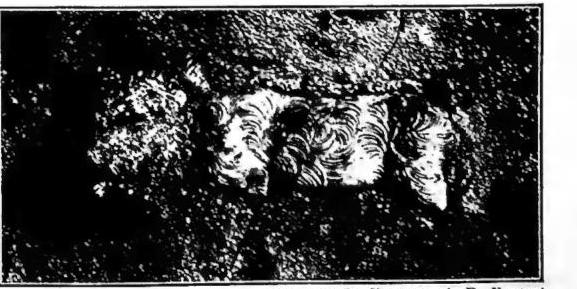
that is, Trifone who sleeps in the Lord; and of a « Ilara Septimia », to whom the invitation is addressed: « pete pro me, pete pro marito tuo, pro Alexandria »; on the tomb of a Lucernio, servant of Christ, the cross, the lamp, and a burning candle are represented twice, symbols of his name. On the tomb of the girl Apronianete, who lived 5 years and 5 months, the following was engraved: « Aproniane, crededisti in Deo, vives in ΧΡ (in Christo) ». In one gallery, the wall already occupied by loculi was subsequently cut through in order to excavate a double cubiculum; in the second, built against the rear arcosolium, a masonry block altar was installed, faced with slabs of porphyry and paonazzetto, with the fenestella below. The plastered walls were covered with graffiti by presbyters (« Johannes, Grimoaldus, Istefanus, Anastasius »), by clerics—« Martinus acolothus sanctae romanae ecclesiae », « Paschalis neapolitanus »—and by a « Maiulus monachus peccator ». Lead lamp-holders and glass lamps were also found. This is undoubtedly the tomb of a martyr (P.?) who was deposited in this specially excavated double cubiculum. Two cathedrae were excavated in the right wall; in the floor, entirely occupied by formae, a marble slab was found in front of the two cathedrae, bearing the following inscription composed of inserted porphyry letters: « In Deo patrem omnipotentem fecit Vitalio libertus una cum Quodvisideus domino suo Taecifilo et domine Pontianeti merentibus in refrigerium ». In the gallery leading to this double cubiculum, an apsidal niche was made, in which the Madonna with the Child was painted, together with the inscription in white letters + SCA DEI GENETRIX intercede PRO NOBIS, of the same type as the image painted in a niche in the cemetery of S. Valentino (v.) on the Flaminia. Above it, graffiti with the names of the presbyters Gaido, Christophorus, and Andreas could be read; they are the same men who inscribed their names on the image of S. Luca (668–85) in Commodilla. But the image in this cemetery was barbarously defaced by the excavating workers in February 1920.
During the explorations, 64 Roman imperial coins were found: 55 on the second level, 8 on the intermediate level, and 1 on the first level; the oldest is a sestertius of Trajan (98–117), found among the earth.
In situ on the second level, the latest dates are provided by seven specimens of a denarius of Aurelian and three denarii of Severina (270–75), all ten found fixed in the same loculus; and by an Antoninianus of Probus (276–82). On the intermediate level, coins of Maximian Herculius and Galerius Caesar were found in situ.