Machine translation of the 1948–1954 Italian original. The original text is authoritative.
AURELI, IPOGEO degli. – Discovered in Rome in 1919 near Viale Manzoni, this sepulchral complex consists of four rooms built at different levels, comprising an atrium and three chambers, with a subsequent extension of funerary galleries. It is valuable above all for its paintings, which probably date to the first decades of the 3rd century and whose content presents a mixture of distinctly Christian subjects with elements wholly foreign to the usual Christian repertoire.
The first chamber, at ground level, has preserved on the rear wall a double composition referring to the creation and fall of the Protoparents, while four figures of doctors appear on the side walls, linked to one another by architectural backgrounds. In the atrium, among other features, a male figure pointing to a cross appearing above is noteworthy. In the second chamber, beneath the first, the central composition of the vault (a veiled woman between two old men, one of whom holds a virga taumaturga over the woman’s head), all set within a reddish light, the numerous
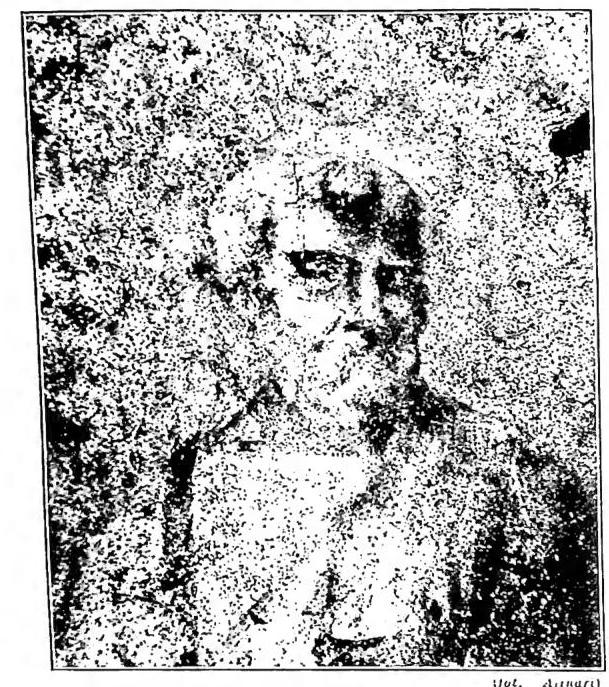
AURELI, IPOGEO degli – Fresco with the presumed figure of s. Pietro (3rd century) – Rome.isolated figures of men holding the scroll and the rod in their hands, as well as a nude female figure holding an open veil with both hands, suggest unorthodox beliefs, with which the number twelve, apparent in the mixed groups of men and women depicted in the background of the arcosolia, may have some connection. The cubiculum, on the other hand, is characterized by the frequent repetition of the figure of the Good Shepherd and by the presence, on the walls, of tall figures of men in whom the group of the Apostles seems to be recognizable. Also visible are the Sermon on the Mount, a banquet scene with twelve guests, a probable evocation of the Celestial City, and, finally, two compositions that are still the subject of much debate. The first depicts the arrival of a horseman welcomed at the city gates by a dense group of citizens; the other, against a background representing the countryside, presents three nude men before a hut and a woman conversing with a man seated on the ground; between the two groups is a loom. In the floor of this chamber is the mosaic inscription placed by an Aurelius Felicissimus for his brothers and fellow freedmen Aurelius, Onesimus, Aurelius Papirius, and Aurelia Prima Virgo.
Among the numerous syncretistic or heretical sects, it is still difficult to establish which one owned this hypogeum.
BIBL.: G. Bendinelli, Il monumento sepolcrale degli A. al viale Manzoni in Roma, (Monumenti pubblicati per cura della Accademia Nazionale dei Lincei, 28), Rome 1922; G. Wilpert, Le pitture dell'ipogeo di Aurelio Felicissimo presso il viale Manzoni in Roma, in Memorie della Pont. Accad. Romana di Archeologia, 3ª serie, 1 (1924), pp. 1-43, tavv. I-XXIV; C. Cecchelli, Monumenti cristiano-eretici di Roma, Rome 1944. Luciano de Bruyne
Cite this article
“AURELI, IPOGEO DEGLI.” Enciclopedia Cattolica, vol. II (1949), p. 255. Azione Romana digital edition, https://azioneromana.com/article/aureli-ipogeo-degli.