
INNOCENZO XII, PAPA. – Antonio Pignatelli, born on 13 March 1615 near Spinazzola, of a Neapolitan princely family, died in Rome on 27 September 1700. He pursued his studies at the Jesuit Collegio Romano. He entered the Roman prelature under Urban VIII and was vice-legate of Urbino. Innocent X appointed him inquisitor in Malta, where he remained from 1646 to 1649. He was then governor of Viterbo, and in 1652 received the nunciature of Tuscany, followed in 1660 by that of Poland and in 1668 by that of Vienna. Having fallen out of favor with Clement X, the latter removed him from Rome by giving him the bishopric of Lecce. Recalled to Rome in 1673, he was appointed secretary of the Congregation of Bishops and Regulars and then Master of the Chamber. I. XI, who held him in high esteem, appointed him cardinal on 1 September 1681, and bishop of Faenza and legate of Bologna. Upon the death of Cardinal Caracciolo, he assigned him the archbishopric of Naples, where he distinguished himself through his exceptionally extensive charity. On 12 July 1691 he was elected pope.
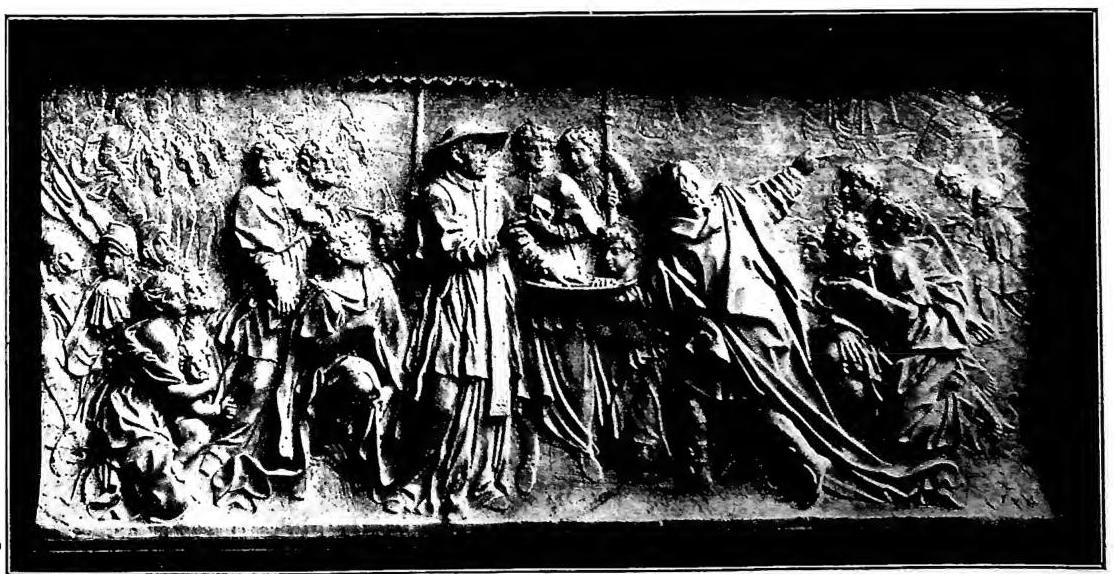
A priest of the purest morals and inexhaustible charity, I. devoted every care to the moral and material improvement of his people: he greatly expanded the Ospizio di S. Michele a Ripa Grande, where poor young people were received and educated, and assigned the Lateran Palace to those disabled for work. He reorganized the administration, curbing the abuse of the sale of offices, and compensated for the loss of revenue by reducing court expenses. Through judicial reform he sought to ensure impartial and honest justice for his subjects and, to facilitate the functioning of the tribunals, brought them all together in the Curia Innocenziana (Palazzo di Montecitorio). With the bull Romanum decet Pontificem of 22 June 1692, he forbade pontiffs to enrich their nephews and established a limit on the income of a relative of the pope who was appointed cardinal. He devoted constant attention to the improvement of the clergy: in 1694 he founded the Congregation for the Discipline and Reform of Regulars; in 1695 he prohibited electoral capitulations for the assignment of bishoprics and monasteries (used especially in Germany). He promoted the development of Propaganda in America, Persia, and China.
In his relations with the Gallican Church, I. was able to reach an agreement with Louis XIV. The latter revoked the decree imposing on bishops the obligation to teach the four articles, and the bishops sent letters of apology to the Pope. Although the retraction was only general, I. had won a moral victory and avoided a schism. He also had to intervene in the Jansenist disputes in Belgium. In a brief of 1694 he forbade bishops to make any addition to the formula of Alexander VII or to discuss the five propositions further. And since the Jansenists used this to declare the book of Jansen free from censure, I. confirmed the decisions of Alexander VII, ordering bishops to proceed canonically against anyone who contravened them through external acts, while forbidding any inquiry into intentions. The question of French Quietism, prompted by Guyon (v.), was also referred to I.’s judgment. Since Guyon had received Fénelon’s approval, a long and bitter conflict arose between the latter and Bossuet, which ended with the condemnation by the Pope (1699) of a substantial part of the propositions formulated by Fénelon.
As regards the international relations of the Holy See, Leopold I, although the Pope had extensively subsidized him in the war against the Turks, proved suspicious and hostile, so that I. was prompted to reach more cordial understandings with France. At his suggestion, Louis XIV imposed in the Peace of Ryswick the clause that in all the countries restored, the Catholic religion was to remain in the condition in which it had been at the time of their delivery. This clause brought little advantage to Catholicism, because the king of France, in complying with the Pope’s desire, was chiefly intent on rekindling religious clashes in Germany and skillfully exploited the persistent tension in relations between Rome and Vienna. The first will of the king of Spain, Charles II, was
(photo: National Photographic Office)