
INSTITUTES OF HIGHER STUDIES. — This name designates the athenaeums or universities for ecclesiastical studies, where instruction is imparted scientifically, in the university manner. Mention is made here especially of those existing in Rome (in the order in which they appear in the Annuario Pontificio), which receive students from all parts of the world; those existing outside Rome are mentioned under the entries for the individual dioceses where they are located.
I. PONTIFICAL GREGORIAN UNIVERSITY
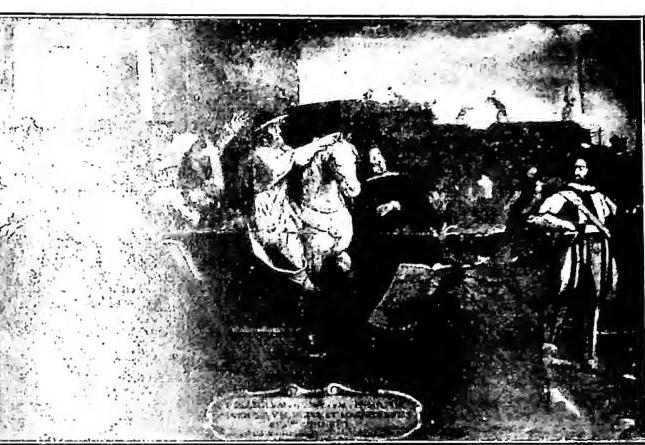
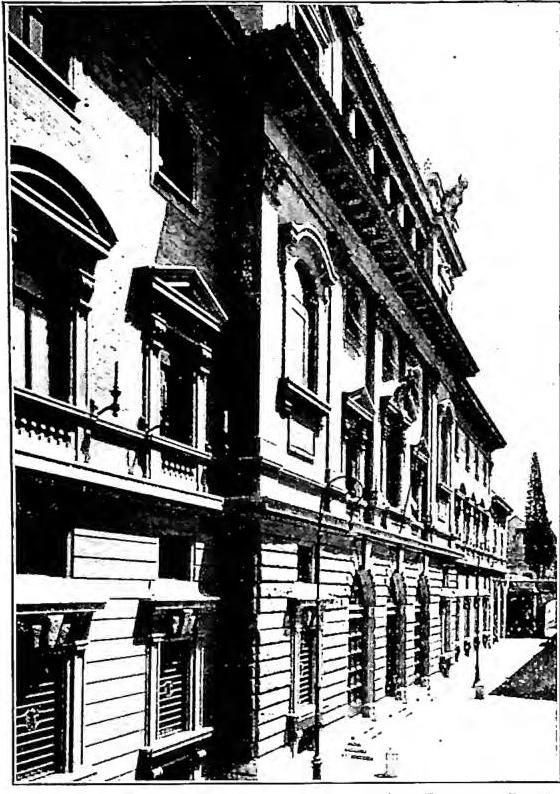
The beginnings of the Pontifical Gregorian University go back to 1551, when St. Ignatius of Loyola, with money received from St. Francesco Borgia, rented a modest house at the foot of the Capitoline Hill and opened the Roman College there on 18 February. The following year Julius III, with the bull Sacrae religionis, granted permission to establish chairs of philosophy and theology (which were instituted in 1553) and to confer upon the students doctorates in philosophy and theology, with all the privileges of the other universities. Since both the first and the subsequent temporary premises had become inadequate to accommodate the students who, coming from every part of Europe, already numbered more than a thousand in 1567, Gregory XIII wished to provide this seminary of all nations and all languages, as he called it, with suitable endowment and a dignified building, constructed by the architect Ammannati and inaugurated in 1584. In memory of the Pontiff, who was truly «fundator et parens» of the Roman College, it eventually took the name of the Pontifical Gregorian University. In 1773, following the suppression of the Society of Jesus, the University was entrusted to the secular clergy under the supreme direction of a commission of cardinals, which governed it until 1824, when Leo XII, by the brief Cum multa, once again entrusted its direction to the Society of Jesus. As a result of the political events of 1870, the Roman College was deprived of its premises; the literary schools were suspended (later resuming with the foundation of the Istituto Massimo alle Terme), while the Faculties of philosophy and theology continuedin the nearby Palazzo Borromeo. In 1876 Pius IX added the Faculty of canon law, and it underwent further development under his successors, so that, when the Palazzo Borromeo became inadequate, it moved in 1930 to the new premises in Piazza della Pilotta, constructed by the architect G. Barluzzi. New faculties and new chairs were established, while the affiliated Biblical and Oriental Institutes were founded and developed, thus fulfilling the wishes of Pius XI, who in the motu proprio Quam maxime desired the Pontifical Gregorian University to be a «true and perfect University of all ecclesiastical studies, fully
adapted to the needs of the times». It is, in the words of Pius XI, the Pope’s true and proper University; the grand chancellor is the same cardinal prefect of the S. Congregation of Seminaries and Universities, and the rector is appointed by the Holy Father.
It is recognized as a pontifical university by the Italian State and, by virtue of the Lateran Pacts, enjoys special privileges.
It comprises 8 faculties (Theology, Canon Law, Philosophy, Church History, Missiology, Sacred Scripture and the Ancient East [at the Biblical Institute], the Modern East [at the Oriental Institute]); an Institute of higher religious culture for laymen, a higher school of Latin literature, and special chairs of ascetical and mystical theology, economic and social sciences, the history of religions, etc.
It is attended by students from every part of the world; approximately 50 nations, 500 dioceses, and 70 religious Orders and Congregations are represented there; the official language is Latin.
The purpose of the Pontifical Gregorian University is to form, under the vigilant and paternal gaze of the vicar of Christ, these select ranks of young ecclesiastics in the purity of Catholic doctrine and in the spirit of Christian Romanitas, and to prepare them for an effective apostolate. Indeed, the characteristics of its teaching have always been «sentire cum Ecclesia» and adherence to the reality and needs of the apostolate.
In its four-century history it recalls distinguished teachers such as Toledo, R. Bellarmino, De Lugo, F. Suárez, G. Vázquez, G. Maldonado, Cornelius a Lapide, Silvestro Mauro, C. Clavio, L. Taparelli, G. Perrone, G. B. Franzelin, L. Billot, F. X. Wernz, F. Ehrle, etc.
The Library, re-established after 1870, numbers 260,000 volumes. It publishes two scholarly journals: Gregorianum, Periodica de re morali canonica liturgica, 4 collections: Ana-
INSTITUTES OF HIGHER STUDIES - Gregory XIII ordered Ammannati to rebuild the Roman College with more noble materials. Anonymous, 16th century - Rome, Gregorian University.
ISTITUTI DI STUDI SUPERIORI - Exterior of the Pontifical Gregorian University. Architect G. Barluzzi (1930) - Rome.
lecta Gregoriana, Textus et documenta, Miscellanea historiae pontificiae, Studia missionaria, and numerous books printed in its own printing press, heir to the ancient printing press of the Collegio Romano, founded in 1556, the first and model for those that were subsequently established in the Society of Jesus.
II. PONTIFICAL BIBLICAL INSTITUTE
Since the time of Leo XIII, the foundation of an institute to promote biblical studies and train professors of the biblical sciences had been planned, but only in 1909 was Pius X able to carry out the plan, thanks to the generous provision of the necessary capital by the noble French family du Coëtlosquet. The Institute, established in Rome at Via della Pilotta 25, was entrusted to the Society of Jesus; its material and scientific organization was directed by Fr. Leopoldo Fonck, the Institute’s first rector (d. 1930). A branch in Jerusalem, intended especially for the study of archaeology and biblical geography and planned from the outset, could be opened only in 1927.The purpose of the Institute is to train professors of Sacred Scripture and related sciences, especially the Oriental sciences; to establish a library well supplied with all the works and journals necessary for such studies; and to publish books, articles, and journals on biblical and Orientalist subjects. Instruction is given in two faculties: the Biblical Faculty (from the beginning) and the Faculty of Ancient Near Eastern Studies (canonically established on 7 August 1932). The Orientalist Faculty comprises four sections: Semitics, Assyriology, Egyptology, and Sanskrit-Iranian Studies. Both faculties confer academic degrees: the licentiate after two years of study (three in the Orientalist Faculty), and the doctorate no earlier than four years after the beginning of the course of studies.
In the academic year 1950–51, the Institute had 25 professors. It was attended by 203 students: 74 secular priests, 127 religious, and two laymen, belonging to 29 different nations. The Institute publishes the three journals Biblica, Orientalia, Verbum Domini, and four series of monographs: Scripta Pontificii Instituti Biblici (so far 100 numbers), Analecta Orientalia (28 numbers), Monumenta Biblica et Ecclesiastica, and Biblica et Orientalia. To date, the Institute has trained more than 600 professors of Sacred Scripture.
III. PONTIFICAL INSTITUTE FOR ORIENTAL STUDIES
Benedict XV founded it with the motu proprio Orientis Catholici of 15 October 1917. Its tasks and organization were established therein, and were later completed and perfected in the constitution Rerum Orientalium of Pius XI and in the statutes of the Institute drawn up and approved following Deus scientiarum Dominus (1932). The Institute, whose activities include teaching and the publication of scholarly works on the Christian East, has the twofold purpose of revealing the treasures of the East to Latin priests and of completing among Easterners, including non-Catholics, instruction concerning their own rite and Church, while emphasizing the truth of Catholic teaching. The Institute aims to be a meeting point between East and West, so as to dispel through scientific research the many prejudices born of mutual misunderstanding, which constitute one of the most serious obstacles to union.The course of instruction comprises three years, at the end of which the degrees of bachelor, licentiate, and doctor are conferred successively. All the disciplines that illustrate the Christian East are taught: theology, patrology, history, liturgy, asceticism and mysticism, archaeology, and liturgical and living languages. There is a plan to establish a special faculty for Eastern canon law. In 1926 Pius XI founded a chair of Islamology.
The Institute’s first pro-dean, who opened its classrooms on 2 December 1918, was Fr Antonio Delpuch of the White Fathers, formerly a professor at the Melkite Seminary of Jerusalem. The teaching staff consisted of specialists drawn from the various religious Orders, the secular clergy, and the laity. In 1919 the abbot Fr Ildefonso Schuster, later cardinal archbishop of Milan, was appointed dean. In 1920 Benedict XV granted the Institute the authority to confer degrees. At the dean’s proposal, in 1922 Pius XI entrusted the Institute exclusively to the Society of Jesus, transferring it from its original location in Piazza Scossacavalli to the Pontifical Biblical Institute and, in 1926, giving it its present location on the piazza S. Maria Maggiore. During this new period the deans were Fr Michele d’Herbigny (1922–31) and Fr Emilio Herman. Among the deceased professors, the distinguished Fr Guglielmo de Jerphanion deserves mention (v.).
The Institute possesses a rich specialized library of approximately 60,000 volumes. In normal times the number of ordinary students ranged between 25 and 30, to whom an equal number of “guests,” who attended some lectures, must be added. In the 1950–51 academic year there were 24 professors and 48 students. In 1923 the Institute began the series Orientalia Christiana, which, after reaching 100 fascicles in 1934, was divided into two: Orientalia Christiana Analecta, a continuation of monographs (34 numbers of which have appeared), and Orientalia Christiana Periodica, a half-yearly journal begun in 1935. In addition, the Institute initiated two monumental works: the edition of the Anaphorae Syriacae quotquot in codicibus adhuc repertae sunt (thus far 3 fascicles) and that of the acts of the Council of Florence (thus far 6 fascicles). To these books must be added many other works by the professors, dealing with every field of the Christian East.
IV. PONTIFICAL LATERAN ATHENAEUM
Its origins go back to the time of the suppression of the Society of Jesus, when the schools of the Roman College were entrusted to the secular clergy. After the Society was restored and the Jesuits returned to the Roman College (1814), the Roman Seminary was housed in the College building near S. Apollinare, while retaining its own schools with the faculty of conferring academic degrees in theology; in 1828 Leo XII added the faculty of conferring degrees in philosophy as well. In 1853 Pius IX founded alongside the Roman Seminary the Pius Seminary for young ecclesiastics from the dioceses of the Papal States and added schools of canon and civil law with the faculty of conferring academic degrees (3 October); he thus constituted the Athenaeum of the Pontifical Roman Seminary.In 1878 Leo XIII added a Historical-Juridical Academy, and in 1885 the Leonine Institute of Higher Literature, both of which, after a brilliant beginning, declined and ceased to exist. In 1913 Pius X founded the Minor Seminary with its own premises; and he assigned to the Major Seminary as its own premises a new building on the Caelian, on land adjacent to the Lateran Basilica, where the schools of the Philosophical and Theological Faculties were also transferred; while those of the Juridical Faculty were housed first at the Leonine College in the Prati district, and then once again at S. Apollinare in 1920. In 1932, in application of the Deus scientiarum Dominus of 24 May 1931, the studies were reorganized, and the cardinal vicar of Rome was appointed grand chancellor of the Athenaeum. Finally, to promote the development of scientific activity, Pius XI erected a new building for the schools on the same Lateran site and personally inaugurated it in the presence of the Sacred College and the Roman prelature on 3 November 1937; from that time the Institute was called the Pontifical Lateran Athenaeum, and the seat of the Juridical Faculty was also transferred there. The Institute is entrusted to the secular clergy, is open to students of every nation, and teachers from both clerical bodies and of different nationalities take turns in teaching. It possesses a library containing many thousands of volumes, pamphlets, and periodicals, particularly on philosophical, theological, and juridical subjects, which is used by the students and also by other scholars for their research. Many distinguished cardinals, bishops, prelates of the Curia, and persons of outstanding stature have emerged from the Institute.
The following taught in the Juridical Faculty: Aliprandi, G. Sebastianelli, F. Cavagnis, M. Lega, P. Gasparri, F. Maroto, and Albertario; in the Theological Faculty: F. Satolli, R. Tabarelli, M. Hertzenhauer, Vizzini, T. Armellini, G. Antonelli, etc., to say nothing of those still living. Many among the most distinguished cardinals, bishops, diplomats, Curial officials, and scholars of recent times graduated from the Athenaeum.
It publishes the periodicals: Lateranum, since 1935, for historical-theological studies; Apollinaris, commentarius iuris canonici; Studia et documenta historiae et iuris, almost as a continuation of the celebrated periodical of the same name published by the Historical-Juridical Academy from 1880. Pio Paschini
V. PONTIFICIO ATENEO URBANO DE PROPAGANDA FIDE: V. ATENEO URBANO « DE PROPAGANDA FIDE » (PONTIFICIO).
VI. PONTIFICIAL ATHENAEUM « ANGELICUM »
This Athenaeum succeeded the College of S. Thomas in Rome, founded at the Minerva on 4 August 1577 by Msgr. G. Solano, bishop of Cuzco. Established in 1908–1909 in Via S. Vitale by the Rev. Fr. G. M. Cormier, the Angelicum began its academic activity in November 1909, with three Faculties: Theology, Canon Law, and Philosophy. Directed by the Dominicans, it is attended by Dominican and non-Dominican students, both ecclesiastical and religious, as well as lay students. In the encyclical Studiorum ducem of 29 June 1923, Pius XI praised the « Angelicum ubi Thomam tamquam domi suae habitare dixeris ». Its first rector was Fr. Sadoc Szabo (1909–27).In the summer of 1932 the Angelicum moved to the Salita del Grillo, near the church of SS. Domenico e Sisto at Magnanapoli. In 1936, a lyceum or propaedeutic course for the Faculty of Philosophy was added to the three ecclesiastical Faculties. Since 1948, the International Residence of S. Thomas Aquinas has housed ecclesiastical students who wish to attend the Angelicum. In 1949–1950 the Athenaeum numbered 46 professors in the three Faculties and 620 students.
The library contains more than 70,000 volumes. Since 1924 it has published the journal Angelicum; the Kalendarium and the Status personalis provide the Athenaeum’s annual regulations and statistics.
Among the deceased professors were Fathers E. Hugon, A. Zacchi, R. M. Schultes, M. Sales, J. Noval, P. E. Barbado, H. Pope, J. M. Vosté, J. Woroniecki, and M. Cordovani. Former students occupy high positions in the ecclesiastical hierarchy and in pontifical and civil universities.
From that seat at S. Paolo fuori le mura there emerged an illustrious group of teachers (M. Armellini, Bibliotheca Benedictino-Cassinensis, 2 vols., Assisi 1731–32), among them G. B. Chiaramonti, later Pius VII, who was a student there (1763–66) and subsequently professor of theology (1772–81). Interrupted by the Napoleonic suppression (1810), the College came to an end in 1837 (the year of the cholera epidemic in Rome). Reopened under Pius IX for a very brief period (1867–70), it was reconstituted by Leo XIII, who assigned it to all the Congregations of the Black Benedictines (brief Abhianae appressa of 4 January 1887). Inaugurated a year later (4 January 1888) in the Palazzo dei Convertenti, it was transferred in 1893 to the Palazzo in Bocca di Leone, and in 1896 to the new seat that the Pope had built on the Aventine. The right to confer academic degrees, already granted by Pius IX for Theology and extended by Leo XIII to the three Faculties of theology, philosophy, and canon law, was renewed by Pius X « pro alumnis universi cleri, tam regularis quam saecularis » (motu proprio Praeclara inter of 24 June 1914). By decree of the S. Congregation of Seminaries and Universities of Studies of 15 January 1933, the Anselmian Institute was granted the title of « Pontificio ». The Athenaeum publishes the collection Studia Anselmiana (26 issues, Rome 1933–51). In 1950 a liturgical institute was established there, Societas Anselmiana studiis cultus christiani augendis.
VIII. PONTIFICAL ANTONIANUM ATHENAEUM
In 1883 the minister general of the Franciscans, Fr. Bernardino Del Vago da Portogruaro, founded the International College of St. Anthony of the City. Courses began on 20 November 1890. In 1905, six Faculties were established (Sacred Scripture, Dogmatic Theology, Canonical-Moral Sciences, Philosophy, Ecclesiastical History, Sacred Eloquence). In 1923, an “Institutum Biblicum Franciscanum” in Jerusalem was attached to the Antonianum, for the advanced training of students of Sacred Scripture. From 1924, for a decade, there was an advanced course for the preparation of missionaries. Following Pius XI’s Deus scientiarum, and the new academic regulations, the Institute’s premises were enlarged; by decree of the Sacred Congregation of Seminaries and Studies dated 17 May 1933, it was canonically erected as an Athenaeum with Faculties of theology, canon law, and philosophy. By a subsequent decree of 14 June 1938, it was granted the title Pontifical.In 1946, Fr. Pacifico Perantoni, minister general, began further enlargements to the building for the library, seminar rooms, classrooms, and especially for the grand aula magna (aula Assumptionis B. M. Virginis), inaugurated on the occasion of the dogmatic proclamation of the Assumption on 30 October 1950.
The Order’s Central Library is available to the Athenaeum, with more than 150,000 volumes and over 200 scholarly journals. The Athenaeum publishes the quarterly periodical Antonianum and various scholarly collections (Spicilegium Pont. Athenaei Antoniani, Bibliotheca Pont. Ath. Ant., Studia Antoniana, Editores Pont. Ath. Ant.). It also houses other cultural institutions, such as the Commission for the critical edition of the works of G. Duns Scotus and the International Marian Academy.
IX. PONTIFICAL INSTITUTE OF SACRED MUSIC
The Pontifical Institute of Sacred Music was founded in 1910 by His Holiness Pius X at the initiative De Santi (v.); at that time it bore the title of Higher School of Sacred Music and began functioning on 3 January 1911. The same Pontiff granted it full approval by the brief Expleverunt (4 November 1911); on 10 July 1914 he declared it Pontifical, granting it the power to confer academic degrees. His Holiness Pius XI gave it its statutes on 22 November 1922, confirming its direct dependence on the Holy See; on 24 May 1931, with the apostolic constitution Deus scientiarum Dominus, he designated the “School” as an “Institute,” including it among the pontifical universities.The Pontifical Institute of Sacred Music has an international character and is intended to train students who can promote an ever-greater diffusion, knowledge, and perfection of sacred music, in accordance with the spirit of His Holiness Pius X’s motu proprio De musica sacra (22 November 1903). The Institute has four courses: Gregorian chant (ordinary course: 3 years); Gregorian chant and musicology (higher course: 3 years); sacred composition (5 years); organ (4 years). The Institute awards diplomas in baccalaureate, licentiate, teaching, and doctorate.
The heads of the Institute were: Fr. Angelo De Santi (1911–21); Abbot Paolo M. Ferretti, Benedictine (1921–1938); Abbot Gregorio M. Suñol, also a Benedictine (1938–46). Since 1946, the head has been Prof. Msgr. Igino Anglès.
Luisa Cervelli
X. PONTIFICAL INSTITUTE OF CHRISTIAN ARCHAEOLOGY
Founded by Pius XI (11 Dec. 1925) in Rome in order “to give the study of sacred archaeology new encouragement and assistance, commensurate with the importance of the discipline, with the results that have been achieved and with those no less significant that we must still await...”.In order to respond worthily to the initiative of Pius XI, Msgr. G. P. Kirsch (v.) was appointed director and outlined the activities that the Institute was to undertake: 1) to gather all the scientific material necessary for the complete study of the documents and institutions of primitive Christianity, so as to examine the various aspects of the monuments themselves and establish their proper value for knowledge of the Christian life of the primitive Church; 2) then to initiate and promote scientific studies of the Christian monuments of Rome and the ancient world,
and of the various problems that may arise from their examination, as constructive elements for ancient Christian culture; 3) finally, to train true and methodical scholars in the field of Christian archaeology; to acquaint them de visu with the various Christian monuments of Rome, initiate them into personal research concerning individual questions, make them capable of teaching sacred archaeology and the history of the primitive Church, and train them in the preservation and publication of the sacred monuments scattered throughout the various regions of the Christian world.
The Institute’s Library, established from the time of its foundation, has been enriched by donations from Pius XI, the Pontifical Commission of Sacred Archaeology, Msgr. Kirsch, Msgr. Wilpert, Mrs Strong, and others, and is also supplied by periodicals received in exchange for the Rivista di archeologia cristiana, founded in 1924 by the Pontifical Commission of Sacred Archaeology to replace the Nuovo Bollettino di archeologia cristiana, and published at the Institute’s expense since 1927. Msgr. Kirsch established four publication series: 1) Monumenti di antichità cristiana; 2) Le iscrizioni cristiane di Roma e d'Italia dell'antichità e del Medioevo; 3) Studi di antichità cristiana; 4) Sussidi per l'archeologia cristiana.
The Institute has been enriched by the collection of watercolours executed for Wilpert’s « Pitture delle Catacombe » and « Musaici e le pitture cristiane dal VI al XIII sec. »; it also possesses a rich photographic archive.
The Institute also promoted and organized the two most recent International Congresses of Christian Archaeology: the Third, held in Ravenna in the autumn of 1932, and the Fourth, held in Rome in the autumn of 1938. The publications of the « Atti » were the fruit of these Congresses; in them the most recent discoveries in the field of Christian archaeology are illustrated, and in particular studies concerning the origins and development of Christian places of worship.
Since 1932, the Institute’s professors have formed the permanent committee for the organization of future International Congresses of Christian Archaeology.
During its twenty-five years of existence, the Institute has been assiduously attended by students from the secular and regular clergy and by laypersons from the following countries: Austria, Belgium, Canada, France, Germany, England, Ireland, Italy, Yugoslavia, Lithuania, Luxembourg, Holland, Poland, Spain, the United States, Switzerland, Turkey, and Hungary. The young men trained at the Pontifical Institute of Christian Archaeology have become professors at theological universities in Rome, Italy, France, Holland, Spain, Germany, and Canada; they carry out their fruitful work in the historical section of the Sacred Congregation of Rites and in other Sacred Congregations; in the Pontifical Commission of Sacred Archaeology, in museums of sacred art, in episcopal archives, etc. The current director is Msgr. Luciano De Bruyne, one of the Institute’s first students.
XI. PONTIFICAL THEOLOGICAL FACULTY OF THE CONVENTUAL FRANCISCAN FRIARS
The present Theological Faculty, established on 24 January 1905 by a rescript of the Sacred Congregation of Bishops and Regulars at the International College of the Conventual Franciscan Friars, was raised to pontifical status by a decree of 13 June 1935 of the Sacred Congregation of Seminaries and Universities of Studies, which approved its new statutes in conformity with the apostolic constitution Deus scientiarum Dominus.It is linked to the ancient General Studies of Theology, with university degree status, which flourished in the Franciscan Order from the first half of the thirteenth century (Paris, Oxford, Cambridge, and later Toulouse, Bologna, etc.), and especially to the celebrated College of S. Bonaventura, founded by Sixtus V in the Roman convent of SS. XII Apostoli by a bull of 17 December 1587: a true Theological Faculty, which enjoyed a glorious existence until 1873, when it was suspended because of the law suppressing religious Orders. Among the professors and students of its most recent period (1905–50), the following should be remembered: H.E. Mons. D. Jaquet, bishop of Jassy in Romania (d. 1931); the canon lawyers Mons. L. Bondini, apostolic visitor to the Armenian Catholic patriarchate of Cilicia (d. 1936); Fr. F. S. D'Ambrosio (d. 1943); the brilliant historian Mons. S. N. Falcoi Folgorani (d. 1940); Fr. D. Sparacio (d. 1929), a writer on Franciscan history; and Fr. S. Ignudi (d. 1943), author of a commentary on the Divine Comedy. The Faculty has an attached library containing approximately 30,000 volumes.
Gastano Stano
XII. THEOLOGICAL FACULTY OF THE INTERNATIONAL COLLEGE OF THE DISCALCED CARMELITES
The first international college of the Order in Rome was the Seminary of the Missions, decreed by the General Chapter of 1605, inaugurated in 1620, and suppressed in 1873. The present International College owes its foundation to the General Chapter of 1920.It was inaugurated in 1926; erected as a Theological Faculty by pontifical decree of 16 July 1935. Curriculum: licentiate, 5 years; doctorate, 6 years. Present status (1949): 17 professors; 51 resident students, 10 external students. Library: 40,000 volumes. Periodical publication (historical-doctrinal): Ephenerides carmeliticae. Benno di San Giuseppe
For the PONTIFICAL LATERAN ATHENAEUM (IV): vedi tav. XX.