
FRATRES MINORES (FRANCISCANS). – Mendicant order founded by St. Francis of Assisi, now comprising three autonomous branches: 1) Friars Minor: O.F.M.; 2) Conventual Friars Minor: F.M.Conv.; 3) Capuchin Friars Minor: F.M.Capp.
CONTENTS:
I. From the foundation to 1517
II. The great division of 1517: I – Observance. The Friars Minor (O.F.M.). –III. The Conventual Friars Minor
IV. The Capuchin Friars Minor
V. Franciscan architecture.### I. FROM THE FOUNDATION TO 1517.
CONTENTS:
I. Foundation and development of the Order
II. External activity of the Order
III. Foreign missions
IV. Scholarship
V. Constitution and activity of the Order until 1517
VI. Diffusion
VII. Origin and development of the Observance.I. FOUNDATION AND DEVELOPMENT OF THE ORDER
The Order of the Friars Minor was founded in 1208 in Assisi by St. Francis (v.), who, already in the first Rule, wished to name it thus out of humility, likely alluding to the minores of his city—that is, those of the most modest social condition in comparison to the maiores. The primitive Rule, composed of some Gospel texts and a few exhortations, was approved orally by Innocent III in 1209; finally, in 1223, Honorius III confirmed the definitive Rule by bull, which was a compendium of another Rule composed two years earlier. In addition to the three essential vows, the Friars Minor were to profess absolute poverty both in private and in common, living on alms when they could not obtain what was necessary for life and for the exercise of their apostolate through work. The Order led a mixed life of prayer and apostolate according to Gospel norms and the express command of St. Francis: "Non sibi soli vivere, sed aliis proficere." Thus, in Chapter XII of the Rule, it was further commanded to leave free all those who, by divine inspiration, wished to go preach the Gospel among the Saracens and other infidels.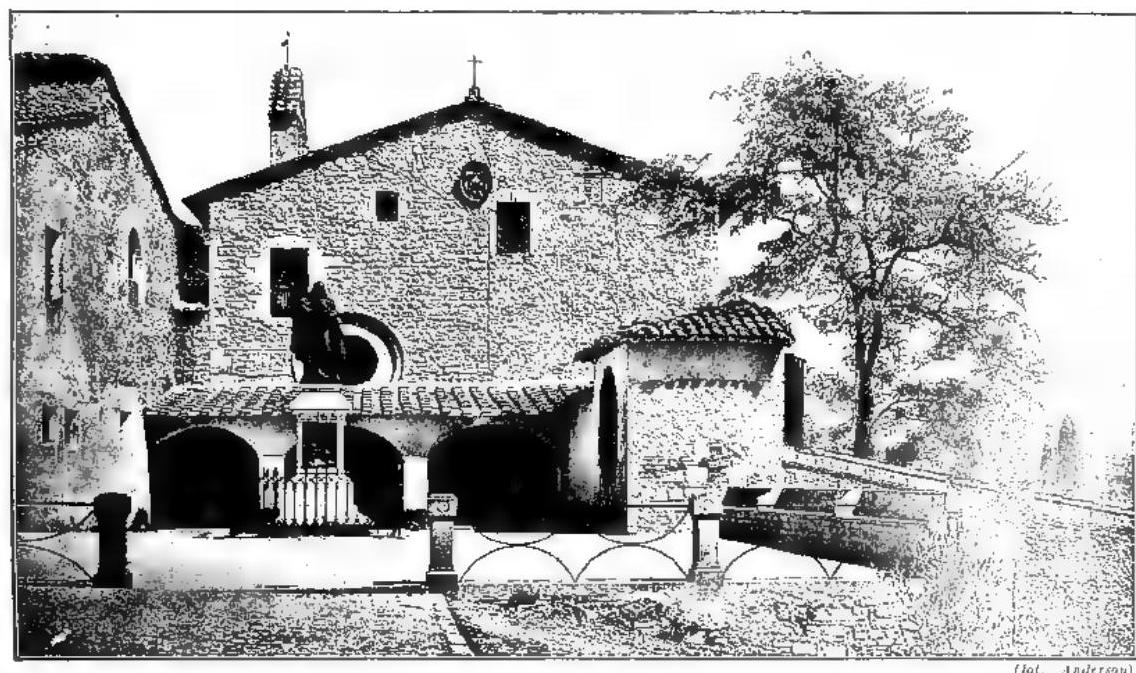
The facade of the Convent of San Damiano, completed in 1212 - Assisi.
(Int. Andrima)
who had played a role in the definitive composition of the Rule itself as protector of the Order and advisor to St. Francis. The result of this appeal was the bull Quo elongati of 28 September 1230, which constitutes the basis of future pontifical declarations, and in which, following a juridical criterion, every obligatory value of the Testament was denied.
Regarding the observance of the evangelical counsels, it was declared that the friars were bound only to observe those expressly indicated in the Rule; the daily economic process for the use of money was then facilitated by the institution of nuntii (later called syndics), who could receive and administer money in the name of benefactors. From this declaration by Gregory IX, it was easy for Innocent IV and Martin IV to proceed to the institution of apostolic syndics, who could administer the movable and immovable goods of the religious in the name of the Holy See, considered the sole and true owner. Since the Minorite Rule was not a perfect or adequate code of organization, other statutory norms began to supplement it as early as 1224 (Constitutiones antiquae). At the Chapter of Rieti (1232 or 1233), Brother Elias was elected general, powerful with Gregory IX, who had entrusted him with the construction of the monumental basilica of Assisi. He organized the Order into 34 provinces, giving impetus to its multiple activities, generally bound only by the provisions of the Rule; but his authoritarian character and some excesses of rigor by his visitors, laymen like himself, aroused various complaints, so that at the General Chapter of Rome (1239), convened by the same Pope, Brother Elias was relieved (absoluto) of his office and replaced by Albert of Pisa, the first priestly general. Appropriate constitutions were compiled, giving the Minorite family a more distinctly democratic character, while the Order always remained centralized in its government.
Subsequently, the Englishman Haymo of Faversham (1240-44), Crescentius of Iesi (1244-47), and Blessed John of Parma (1247-57) governed the Order. With the election of St. Bonaventure of Bagnoregio at the Chapter of Rome in 1257, the Order first had a wise moderator, whose leadership was needed after the governance of the Parmesan. To him are owed the Constitutiones Narbonenses (1260), the first legislative code possessed in its integral text, besides the Rule, and the foundation of the numerous statutes drafted over the centuries. In an Order so vast in men and ideas, he strove to maintain peace within and spiritual and scientific prestige without: he defended the just observance of the Rule and of pontifical constitutions, and did not permit the imposition of excessive austerity or absolute poverty in buildings, means of study, and the necessities of life.
After St. Bonaventure, who became a cardinal in 1273 and died during the Council of Lyon, Jerome of Ascoli succeeded him, a former missionary in the East and later pope under the name Nicholas IV, followed in turn in 1279 by Bonagratia of San Giovanni in Persiceto, to whom is owed the admirable constitution Exiti qui seminat, with which Pope Nicholas III, protector of the Order, sought to resolve the controversies over poverty.
Even during the lifetime of St. Francis, and especially after his death, tendencies toward forms more suited to a rapidly developing Order gained ground. This did not please some religious, stricter but of very narrow mentality, also infected with Joachimism and already repressed by St. Bonaventure, who took the name of "Spirituals." They exerted their influence especially in Provence, the Marches, and Tuscany, where they gained the adherence of men of talent and audacity. The master of the Provençals was the celebrated Peter John Olivi; in Tuscany, Ubertino of Casale excelled, who learned much from Olivi during the time the latter resided in Florence. Finally, in the Marches, the leaders of the new ideas were Angelo Clareno (v.).
Punished in 1274 and sent as missionaries to the East, they later appealed to Pope Clement V, who, with the bull Exivi de Paradiso (1312), attempted to reduce them to living in peace with the other religious, who constituted a body of about 35,000 members, with over a thousand convents. Finally, John XXII in 1317 and 1318 proceeded against them with various bulls, forcing them to submit or disappear. Under the same pontiff, another serious controversy arose over theoretical poverty, which he resolved with the bulls Ad conditorem canonum of 8 December 1322 and Cum inter nonnullos of 12 November of the following year.
From this time onward, alongside profound vitality, a marked disciplinary decline is observed in the Franciscan Order, as indeed in other religious Orders, particularly regarding poverty.
This decline, attested by contemporary writers such as Álvaro Pelagio O. M. in his De Planctu Ecclesiae (ed. Venice 1517) and by the documents of popes and the Order, did not stifle the spiritual, scientific, and missionary activities of the Order itself, nor did it interrupt its vast influence in all fields, so much so as to earn the official praise of popes, particularly Gregory XI. The Farinerian Constitutions of 1354, which remained in force for the Conventuals until the Alexandrine of 1500, and special provisions by popes and zealous generals, such as Blessed Henry Alfieri of Asti (1367-1405), reinstated the discipline of internal life on the common basis of moderate observance of poverty. Sixtus IV, who had been minister general of the Order (Francesco Della Rovere), with various bulls from 1472 to 1479 confirmed all previous privileges and also possessions, always under the dominion of the Holy See.
BIBL.:
A. G. Little, The Grey Friars in Oxford, Oxford 1892; L. Wadding, Annales Minorum, Roma 1731-41; L. Oliger, De origine regularis observantiae Ord. Minorum, Roma 1906; M. Bihl, Statuta generalia Ordinis edita in capitulis generalibus celebratis Narbonae an. 1260, Parisiis an. 1292, Assisii an. 1316, in Archivum Franciscanum Historicum, IX (1916); P. Sabatier, Speculum perfectionis, Paris 1898; E. Longpré, La vie et les oeuvres de Pierre de Jean Olivi, in Archivum Franciscanum Historicum, XVIII (1925); L. Hardick, Die Regel des hl. Franziskus, Werl 1954; V. Doucet, Commentarius historicus in Constitutiones Ordinis Fratrum Minorum, Roma 1940; A. G. Matanic, Le costituzioni dei Frati Minori, Roma 1968.
(G. Abate)
II. EXTERNAL ACTIVITY OF THE ORDER
Its merits toward the Church and society are immense. In this period, it gave the Church two popes: Nicholas IV (1288-92) and Sixtus IV (1477-84), as well as the antipope Alexander V (1409-10), 37 cardinals (two of whom were Observants), numerous legates, apostolic nuncios, and bishops. Thanks to the spread of the Third Order, it penetrated deeply into the life of the people, transforming it and guiding and moderating their spirits through charitable activity. Indeed, in every place where they managed to establish themselves, the friars revived piety, became heralds of peace, extinguishing hatreds and settling public and private enmities. They provided assistance in the exercise of works of mercy for the most wretched—the lepers, the abandoned—giving rise to new charitable institutions. They stood in defense of the oppressed, denounced vice, preached against avarice and usury, and fostered the establishment of Monti di Pietà. Among the great preachers, it suffices to recall St. Anthony of Padua, Leone Perego, Gerardo Boccadabati, Hugh of Digne, and Berthold of Regensburg in the 13th century; and in the 15th century, the four pillars of the Observance (St. Bernardino of Siena, St. John of Capistrano, St. John of La Marca, Bl. Albert of Sarteano), along with Bl. Bernardino of Feltre, Anthony of Vercelli, Bernardino de Bustis, Michele Carcano, Cherubino of Spoleto, and the Conventuals Roberto Caracciolo of Lecce, John of Werden, and Conrad Grütsch.The work of the Friars Minor was not lacking in the liturgy. At the behest of Gregory IX, Haymo of Faversham reformed the Roman Missal and Breviary in the manner that later became common in the Curia and the Church. They introduced the feasts of the Most Holy Trinity, the Name of Jesus, the Visitation and Betrothal of the Virgin, and St. Joseph. Everyone is familiar with their battles in defense of the Immaculate Conception, later defined as dogma. The veneration of the Humanity of Christ, particularly cherished by the Friars Minor, led them to become promoters of devotion to the Passion (Via Crucis), the Child Jesus (the Nativity scene), the Most Holy Name of Jesus, and the Eucharist.
III. FOREIGN MISSIONS
These are a particular glory of the Order. Saint Francis himself initiated them in 1219 and 1221; in the Rule, there is a special chapter, the twelfth, dedicated to missionaries. In every century, they have shed their blood for the propagation of the faith. In 1220, Saint Berard and his four companions were slaughtered in Morocco; in 1227, the same fate befell Saint Daniel and his six companions in Ceuta. Since the time of Saint Francis, they have been present in Palestine, and in 1342, they obtained from the Holy See the custody of the Holy Places of the Redemption, which they had acquired ten years earlier from the Neapolitan monarchs, and which they have guarded to this day at the cost of much blood. Still in the thirteenth century, Giovanni da Pian del Carpine and Guglielmo Rubruc ventured as far as China, where they were followed in the fourteenth century by Odorico da Pordenone, Giovanni Marignoli, and Giovanni da Montecorvino. The latter, thanks to the fruits of his apostolate, was elected archbishop of Khanbalik (Beijing), and six fellow bishop-confraters were sent to him as suffragans, while the blessed Tomaso da Tolentino with three companions and Riccardo di Borgogna with five companions suffered martyrdom in eastern India (1321).In the fifteenth century, Conventuals and Observants worked especially among the infidels and heretics of the Balkans (where they remained almost alone until modern times), Lithuania, the Canary Islands, Portuguese Guinea, and the Congo.
IV. SCIENCE
From the very foundation of the Order, science was conceived as a means of apostolate, all the more necessary as the errors permeating society grew more subtle and dangerous, and could only be overcome through doctrine and the practice of virtue together. It is found that already around 1240 the friars attended and taught in the major universities; soon they established convents near them, forming the so-called studia generalia of Bologna, Paris, and Oxford, which quickly became centers of religious culture. St. Anthony, the first doctor of the Order, opens the glorious series of masters: Alessandro di Hales, Giovanni de la Rochelle, Adamo di Matsch, St. Bonaventura, Giovanni Pecham, Matteo d'Acquasparta, Riccardo di Middleton, Giovanni Duns Scoto; later came the exegete Nicolò de Lyra and the mystic David d'Augusta. In the fifteenth century, the Observants, with Nicolò da Osimo and Teodorico Coeld, gave theology a special practical orientation, manifested particularly in the Summa angelica of Angelo da Chivasso and the Summa pacifica of Pacifico da Cerano. Meanwhile, however, the great studies continued to flourish under the Conventuals, along with their respective libraries. Indeed, in 1450 there existed 16 university studia and 28 studia generalia of philosophy and theology, in addition to provincial and local studia in the principal cities of the time.It is also fitting to mention here those friars who excelled in their times in other activities, such as Tommaso da Celano (ca. 1255), Giacomo da Verona (1300), Jacopo de Todi (d. 1306), Giovanni Bertoldi da Serravalle, Bartolomeo da Colle (1486), and Alberto da Sarteano as writers; Ruggero Bacone (1294) as a promoter of natural philosophy. Nor should we forget ministers such as Giovanni da Lucca; organ builders such as Urbano da Venezia; mosaicists and painters like Jacopo Torriti; and other architects, glaziers, and musicians.
Moreover, in its first three centuries of existence, the Order gave the Church 22 saints, 61 blesseds, and about 1,500 servants of God.
V. CONSTITUTION AND ACTIVITIES OF THE ORDER UNTIL 1517
Legislation consisted, in addition to the common Rule, of special constitutions that were compiled from 1224 (Constitutiones antiquae, not preserved) to 1260, when the Constitutiones Norbonenses appeared, to 1354 (the Farinerie), and to 1500 (the Alessandrine). The Observants had the Martiniane in 1430 and the Barcellonesi in 1451. Beyond the three usual vows of poverty, chastity, and obedience, the Rule obliges "under grave penalty" to the observance of24 precepts. Special regulations govern studies and missions, particularly those in Palestine.
A minister general, who served a three-year term and could be reelected, stood at the head of the Order, assisted by a scribe or secretary; until 1517, he was always a Conventual. The procurator general maintained a separate residence. From 1415 in France and from 1446 in Italy and elsewhere, the Observants were governed by their own vicars general and provincials. The lesser reforms were mostly governed by vicars or commissioners appointed by the minister general or in the Chapters.
VI. DIFFUSION
From the very beginning, it was vast and profound. At the death of St. Francis, there were already 10,000 friars divided into 13 provinces. During the remainder of the 13th century, these increased to 34 provinces with no fewer than 30,000 to 40,000 religious. In the 14th and 15th centuries, these numbers rose further thanks to the new recruits of the Observant family; so much so that in 1517, all the Friars Minor together numbered no fewer than 60,000 friars in 2,700 convents.VII. ORIGIN AND DEVELOPMENT OF THE OBSERVANCE
As a reaction to the aforementioned decline of the mid-15th century, a movement of restoration or reform gradually emerged and asserted itself independently in Italy, France, and Spain, with the aim not of separating from the Order but of returning all religious to the primitive and more rigorous observance of the Rule. It was a return to the original ideal of St. Francis.Without starting anew, the first Observants took into account the failed experiences, remained subject to the superiors of the community and of the Church, introduced no changes in their habits, and remained steadfast in the ideal to be achieved ("Regulam simpliciter in primaeva puritate observare," according to the words of Pope Clement VI), thus leading by example to bring the Order's community to do the same. From humble hermitages, from places sacred to the memories of primitive Franciscanism and its founder, the Observance gradually expanded throughout the 15th century across all of Italy, soon passing into Central Europe, the Slavic countries, and beyond, embracing every field of activity (social action, preaching, missions among the infidels). The phenomenon of the 13th century repeated itself, as scholars, jurists, nobles, and university students by the dozens entered the Observants. And the restoration was not limited to the First Order but gradually extended also to the Second and Third Orders, particularly the regular female branch. The first attempts had been those of Giovanni della Valle (1334) and Gentile da Spolato (1351), but the true initiator of the Italian Observance was the lay brother Paolo or Paoluccio di Vagnozzo Trinci, a noble of Foligno, who in 1368, with the permission of the General Minister Tommaso Frignano, withdrew with some companions to the hermitage of Brugliano between Foligno and Camerino to observe the Rule in its rigor. In 1384, he began to receive novices, and at his death (1391), the convents of the Observance numbered 22 with about seventy religious, rising to approximately 200 in 34 hermitages by 1451. The name of Bl. Paoluccio was later overshadowed when St. Bernardino da Siena and his disciples—St. Giovanni da Capestrano, St. Giacomo della Marca, Bl. Alberto da Sarteano, the four pillars of the Observance—guided it toward its greatest heights.
The Observance in Spain and France. - The origins of the Observance in Spain are more obscure; however, it is known that by around 1400 it was already beginning to flourish there with different aims, such as eremitical life, preaching, and pastoral study.
The French Observance arose around 1388-90 in the convent of Mirabeau and spread to the provinces of Touraine, Burgundy, and France. Sometimes favored, sometimes opposed by their provincial superiors of the Community, the French Observants of these three provinces (11 convents) appealed to the Council of Constance (1415), which granted them the right to elect a provincial vicar for each province and a general vicar for all three. The constitution Supplicationibus personarum of 23 September 1415 thus marks the date of the canonical approval of the French Observants and, practically, of all Observants (cf. L. Oliger, Arch. Franc. hist., 9 [1916], p. 3-41). However, misunderstandings soon arose between Conventuals and Observants, because the former, who held the governance of the entire Order, neither intended nor were obliged to change their way of life, while the latter, growing in number of convents and religious, though not desiring the division of the Order but its reform, attempted to promote it in various forms. Guided by St. Giovanni da Capestrano, they sought to achieve it at the Chapter of Assisi in 1430 with the Martinian Certifications, by which the Observants renounced their vicars and autonomy, while the others relinquished possessions. Beginning with the General Minister Guglielmo da Casale, all swore: "Volumus stare et vivere et mort in dicto Ordine nostro sancto fraternititer secundum constitutiones et reformationes praedictas." But the General Minister himself, forty days later, sought dispensation from the oath and, on 23 August, obtained from the Pope the brief Ad statum, which abolished the capitular decisions on poverty. When St. Bernardino was appointed general vicar of the Italian Observants in 1438, Eugene IV attempted to have the Observant Alberto da Sarteano elected General Minister of the Order in 1443 but failed. Then, in 1446, with the bull Ut sacrio, he granted all Observants the general vicars ciamontano and ultramontano and provincials, making them practically independent, save for the juridical bond with the general and provincial ministers of the Conventuals. Meanwhile, the same Pope had assigned to the Observants the convents of the Portiuncula and La Verna, the Custody of the Holy Land (1434-39), and the convent of Ara Coeli in Rome (1444-45); other convents passed directly to the Observants in Italy and abroad.
Secondary Reforms. - Alongside the Observance, other minor reforms emerged within the Franciscans during that century. Such were the Amadeites (c. 1457-1464), founded by Bl. Amedeo Manes de Sylva with about thirty convents, and the Capreolanti in Italy with a group of Clareni who re-entered the Order in 1473; the friars of the Cappuccola or of the Holy Gospel in Spain; the Coletans with about forty convents in France and the Low Countries; the Martiniani and the Observants "under the ministers," so called to distinguish them from the common Observants, known as "under the vicars."
II. THE GREAT DIVISION OF 1517. THE OBSERVANCE. THE FRIARS MINOR (O.F.M.).

I. The Minor Reforms
II. The Missions of the Friars Minor
III. Preaching and Studies.
With the Friars Minor, the Pope united the other small congregations of the Amadeites, Coletans, Clareni, Discalced, and others, ordering that they be called simply Friars Minor or Friars Minor of the Regular Observance; the latter denomination is the one that officially remained. Thus united, the Observants numbered about 30,000 friars with approximately 1,500 convents divided into 53 vicariates, now regular provinces. During the 16th and 17th centuries, their numbers continued to grow, so that by 1700 they reached between 70,000 and 80,000, spread across all Catholic nations and in the flourishing missions of every continent. Sanctity flourished wonderfully among them, for to this day they have given the Church 41 saints and 84 blesseds.
BIBL.:
L. Oliger, De origine Observantiae franciscanae, in Arch. Franc. hist., 9 (1916), pp. 3-41; L. Di Fonzo, La famosa bolla di Leone X «Ite vos» non «Ite et vos» (29 maggio 1517), in Miscellanea Francescana, 45 (1945), pp. 164-171; L. Wadding, Annales Minorum, ad ann.; C. Cenci, Documentazione di vita assisana, 1300-1400, in Miscellanea Francescana, 61 (1961), pp. 1-220; M. Bihl, Statuta generalia Ordinis edita in Cap. generali Narbonae anno 1260, in Arch. Franc. hist., 30 (1937), pp. 85-171; A. G. Matanic, La riforma francescana del sec. XV, in Studi francescani, 56 (1959), pp. 1-40; V. FRANCESCO D'ASSISI; V. FRANCESCO DI PAOLA; V. BERNARDINO DA SIENA; V. GIOVANNI DA CAPESTRANO; V. GIACOMO DELLA MARCA; V. ALBERTO DA SARTEANO.
A. G. Matanic
I. THE MINOR REFORMS
Though united in the same Franciscan spirit,the Observants were not equally so in governance and internal discipline; for already in the 16th century, the families of the Discalced, the Recollects, and the Reformed arose and developed among them.
The Spanish Discalced (1487), after having accepted the bull of union in 1517, resurged through the work of Giovanni Pasquali (Pasqualiti), placing themselves under the jurisdiction of the Conventuals; they remained thus until the death of St. Peter of Alcantara, who had given them credibility and diffusion, and in 1562 returned under the Observants. They led an extremely austere life and enjoyed great diffusion in Spain and Portugal, so much so that by the end of the 18th century they constituted ten large provinces. They were greatly meritorious for their missions among the infidels in Brazil, Mexico, the East Indies, and as far as the Far East. The Alcantarines at the end of the 18th century numbered about 7,000 with 20 provinces and 450 convents; they had given the Church, besides St. Peter of Alcantara, St. Paschal Baylon and Bl. Giovanni da Prado, and in Italy St. Giovanni Giuseppe della Croce and Bl. Egidio, and in 1597 and 1624, holy martyrs in Japan.
The Recollects, so called from the houses of recollection established from 1502 in the Observant Spanish provinces by order of the ultramontane vicar general Martialis Boulier, were greatly favored by the great general Francesco degli Angeli Quiñones, the future cardinal of S. Croce, who provided excellent statutes for these houses of recollection. From these convents, gradually united, the Recollect provinces arose; the first was formed in Portugal in 1563, but shortly after was aggregated to the family of the Discalced; the second arose in Spain under the name of the Tarraconense province and was founded in 1581 by Angelo del Pas, its first and last provincial. This reform took deeper root in France, where in 1612 the two provinces of S. Dionigi and S. Bernardino flourished with the Custody of S. Antonio; later, two more provinces were added. In Belgium and Germany, too, all the Observant provinces embraced the Recollect form by the end of the 17th century; the same occurred in England and Ireland. The Recollects counted 490 convents and 11,000 religious in 22 provinces at the end of the 18th century.
More important was the family of the Reformed, whose origin is linked to that of the Recollects, proceeding from the same tendency to establish within the individual Observant provinces houses of retreat for living with greater austerity. Clement VII, with the bull In suprema of 16 November 1532, established that in each province one or more convents should be erected where friars desiring a stricter way of life could retire, observing, however, the constitutions of Nicholas III and Clement V; they reserved the right to elect their own custodian and to designate local superiors. Until the mid-16th century, their propagation was very slow in central and especially southern Italy; more rapid was the development in Lombardy and the Veneto; it then penetrated into Austria, Germany, and Poland. Urban VIII, in 1639, with the bull Innocenti nobis, elevated the custodies of the Reformed in Italy and Poland to provinces. The Reformed, who had their principal convent at S. Francesco a Ripa in Rome, the seat of their procurator general, extended their apostolate to missions among the infidels of Africa and Asia, especially China. Among their saints, St. Pacifico da San Severino in the Marches and St. Leonardo da Porto Maurizio in Rome are remembered, of the so-called "Riformella" founded in 1662 by Bl. Bonaventura da Barcellona.
In 1762, they numbered 18,992 religious divided into 808 convents and 38 provinces. Besides these families, it is fitting to recall within the Observants the special houses of recollection and retreat that, entirely dependent on the major superiors, combined the austerity of life with the apostolate, especially of indigenous missions. Among them, St. Teofilo da Corte and his master Bl. Tommaso da Cori distinguished themselves. At the end of the 18th century, the Cismontane and Ultramontane Observants were divided into 87 provinces with 2,330 convents and 39,000 religious. But with the end of that century, persecutions against religious began. In France, the Commission of Regulars, in Germany, Austria, Tuscany, and the Kingdom of Naples, princes suppressed various convents; with the French Revolution, all convents in France and Belgium disappeared, and those in Germany and Italy were decimated; in Spain, the revolution of 1833 reduced the 19,000 Friars Minor who were there until then to a meager number; in Latin America, with the wars of independence, religious, especially Spaniards, were targeted and massacred; in Russia and Poland, too, they were almost entirely extinguished during the 19th century. In Italy, they were involved in the suppression of 1866, later extended to the Veneto and Rome; only after 1880 did greater tolerance allow a gradual recovery, so that from the 11,000 Friars Minor of 1890, the number has now reached 24,993 religious and 9,000 aspirants distributed in 2,336 houses and 92 provinces. Italy is represented by 6,509 religious in 605 convents and 20 provinces. The Order has 12,500 sodalities of the Franciscan Third Order with approximately 1,400,000 members; 394 tertiary congregations, both male and female, with approximately 70,000 members are aggregated to II.
With the bull Felicitate quadrum, Leo XIII, on 4 October 1897, established that the four families of the Observants, Recollects, Discalced or Alcantarines, and Reformed be reunited into a single body, so that, as they had hitherto obeyed a single general, henceforth they would also have a single procurator with equal legislation, habit, governance, and the denomination of Friars Minor: this union endures to this day. Through it, the Order is governed by a minister general who holds office for six years, and by a council or definitorium composed of the procurator general and seven definitors for the various languages and nations. The general chapter convenes as a rule every six years. The individual provinces are governed by a provincial minister, assisted by a custodian and four definitors, all of whom are renewed every three years in the provincial chapter; the formed houses are governed by a guardian, residences and colleges by a president.
BIBL.:
L. Wadding, Annales Minorum, Roma 1731-41; L. von Pastor, Storia dei Papi, tr. it., Roma 1922-53; M. Esser, Die Franziskaner, Werl 1958; A. G. Matanic, La riforma cappuccina, Roma 1964; G. Abate, Storia della provincia francescana di S. Michele Arcangelo, Napoli 1959; A. Chiappini, I Francescani in Italia, Roma 1950; Acta Ordinis Fratrum Minorum, Roma 1882 ss.; V. FRANCESCO D'ASSISI, s.; V. FRANCESCO, ORDINI; V. OSSERVANTI; V. CONVENTUALI; V. CAPPUCCINI.
P. MARCELLO.
II. THE MISSIONS OF THE FRIARS MINOR – In the 16th century, the Observant Friars Minor expanded evangelization to Portuguese India, the Philippines, China, and Japan, where St. Pierbattista and six companions suffered martyrdom. But their greatest glory lies in the evangelization of America: the Antilles, Mexico, New Granada, and later all of Central and South America saw the founding of Franciscan missions and then provinces. They did not merely engage in missions but also studied the ethnography of those peoples and wrote their history. Among the foremost figures were Bernardino de Sahagún, Toribio Motolinía, Gerónimo Mendieta, Andrés de Olmos, Juan de Torquemada, and Marcos de Niza. Nor should we forget Juan de Zumárraga, the first Archbishop of Mexico, and St. Francisco Solano, called the Apostle of the New World, along with many others who labored in this field in subsequent centuries.
The 17th century witnessed Franciscan martyrs in Albania, Morocco (Blessed Giovanni de Prado), Abyssinia, Tunisia, India, and again in China, where they would continue to work in the following centuries. Today, the sons of St. Francis are present in all parts of the infidel world. They are entrusted with 90 missions involving over 4,000 missionaries, 157 million infidels, 11.5 million Catholics, 50 seminaries with 1,500 seminarians, 6,474 schools with 316,561 pupils, 158 orphanages, and 83 nurseries with 11,000 boys and girls; 496 hospitals and dispensaries, and 5 leper colonies. Worthy of mention are the 8 blessed martyrs of Damascus (1880), Blessed Giovanni da Triora, who was martyred in China in 1816 along with many others still awaiting recognition by the Church, and finally the last 8 martyrs of China, victims of the Boxer persecution (1900), of whom 3 were bishops, beatified on 24 November 1936, the last in the series.
Nor should we overlook their labors among heretics, especially Protestants, in Holland with the holy martyrs of Gorcum and those of Alkmaar, in England with the blessed John Forest, John Jones, and John Wall, in Ireland with its 100 martyrs, and in France, where 200 were killed for the Faith. Worthy of remembrance are some of the greatest champions who fought Protestantism, such as Giovanni Wiggers, Giovanni Bergaigne, Bernardo Dapperi, Niccolò Farber, Corrado Kling, and Gaspare Scharageyer.
III. PREACHING AND STUDIES
The Observant Friars continued the glorious tradition of preachers from the preceding era; we recall Evangelista Marcellino, Diego Estella, Tommaso Ilirico, and above all Francesco Panigarola in the sixteenth century; in the following century: Evangelista Traversari da Momigno, Bartolomeo da Saluzzo, who also left a lasting memory as a writer of ascetic works; in the eighteenth century: St. Leonardo da Porto Maurizio and Piermaria da Pederobba; then Pacifico Deani, Leopoldo da Gaiche, Lodovico da Casoria, up to Agostino da Montefeltro and Teodosio Somigli.In the field of learning: Francesco Licheto (1520), Luca Wadding, the great annalist of the entire Order, Antonio Hickey; the great masters of moral theology and law: Patrizio Sporer (1683), Beniamino Eibel (1756), Annaleo Reiffenstuel (1703), then Domenico de Gubernatis, Lorenzo Cozza (1749), Claudio Frassen (1711), Lucio Ferraris (1750), Giovanni Antonio Bianchi (1758), Fedele da Fanna (1881), Marcellino da Civezza (1906).
Today, the Order has its general house in the new large building constructed on Via Aurelia behind the Vatican, and its study centers at the Pontifical Antonian Athenaeum on Via Merulana in Rome, at the colleges of Quaracchi near Florence, Cardenal Cisneros in Madrid, St. Bonaventure Institute (New York State), and Siena College in Loudonville (New York State), at the general studies of Santa Chiara in Naples and San Antonio near Buenos Aires; nor should we forget the two Academies: the Franciscan History Academy in Washington, with its journal The Americas, and the Marina Academy in Rome with its publications. The Or-
### III. THE FRIARS MINOR CONVENTUAL.
SUMMARY:
I. The Order’s Vicissitudes
II. Internal Constitution and Government
III. External Activity
IV. Missions
V. Scientific Activity.In German-, Hungarian-, and Slavic-speaking countries they are simply called Minorites; in Poland and America, simply Franciscans (Franciscans and Black Franciscans); in France Cordeliers and in England Grey Friars. The remote origin of the name Conventuals dates back to the bull Cum tamquam veri of 5 April 1250 (repeated in 1252), with which Innocent IV declared the majority of the Order’s community churches to be “conventual,” that is, equal in rights to collegiate churches; from those distinguished churches the appellation began to pass to the friars, and, having become more established as a specific term in the 16th century to distinguish them from the Observant Friars, it became official in 1517. – From this time (since 1250) the Friars of the Franciscan Order were called Friars Minor Conventual; a common title which, with the emergence of other reforms in subsequent centuries, became specific to the ancient family (Wadding, Annales, 1250 n. 3, Suppl., III, p. 255).
Letteratura: L. Wadding, Annales Minorum, 20 voll., 3ª ed., Quaracchi 1931-48; H. Holzapfel, Handbuch der Geschichte des Franziskanerordens, Freiburg im Br. 1909; M. Bihl, De origine Fratrum Minorum Conventualium, in Archivum Franciscanum Historicum, 28 (1935), pp. 3-33; id., De Fratribus Minoribus Conventualibus saec. XIII, ivi, 29 (1936), pp. 3-40; G. Abate, I Frati Minori Conventuali, Roma 1940; A. Gemelli, Il francescanesimo, Milano 1932, 6ª ed. 1947; R. M. Huber, A documented history of the Franciscan Order, Milwaukee 1944.
Per le Missioni: Marcellino da Civezza, Storia universale delle missioni francescane, 11 voll., Roma-Prato-Firenze 1857-1895; G. Golubovich, Biblioteca bio-bibliografica della Terra Santa e dell'Ordine francescano, 20 voll., Quaracchi 1906-48; A. van den Wyngaert, Sinica Franciscana, 4 voll., Quaracchi 1907-42.
Studi: I. H. Sbaralea, Supplementum et castigatio ad scriptores Ordinis s. Francisci, Roma 1806, 1908-36; M. Bihl, De studiis scientificis in Ordine Minorum Conventualium, in Archivum Franciscanum Historicum, 30 (1937), pp. 3-40.
Spiritualità: U. d'Alençon, L'âme franciscaine, Parigi 1913, 1930; V. BRETAGNA, La spiritualité franciscaine: synthèse, anthologie, ivi 1935, vers. it., Milano 1938; L. Bracaloni, La spiritualità francescana, Milano 1937, Venezia 1940.
Infine: Acta Ordinis Fratrum Minorum Conventualium, Roma 1907-49; Miscellanea Francescana, Roma 1886-49; Collectanea Franciscana, Assisi-Roma 1913-49.
Giuseppe Abate
I. HISTORY OF THE ORDER
After the division of 1517, the Conventuals still counted 34 provinces and 2 vicariates, approximately 1,200 convents with a number of religious ranging from 20 to 30 thousand.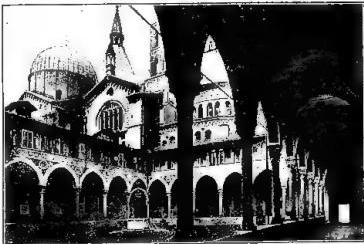
After 1517, the revived Discalced of Spain, with the subsequent reform of St. Peter of Alcantara, placed themselves under the obedience and protection of the Conventuals, until the death of the latter (1562), and then for nearly a century the same family of the Friars Minor Capuchins (1528-1619). A small Congregation of Reformed Conventuals, discalced and of very austere life, founded in Naples in 1562 by Fr. Michele Pulsarini, later illustrated and promoted by Bl. Giambattista Lucarelli of Pesaro, with various convents in Italy and Poland, was reunited with the Order in accordance with the Urban Constitutions (1628) and special decrees of Urban VIII (1626) and Clement IX (1669). Some friars merged with the Alcantarines, whom they had helped to establish in the Neapolitan region.
At the Council of Trent, the Order, which was represented by 91 fathers and theologians, accepted—along with all other mendicant Orders (with the exception of the Observants and the Capuchins)—the so-called Tridentine Privilege, that is, the faculty to possess in common (1563) and no longer under the proprietary dominion of the Holy See, as had been the practice until then, though the private poverty of individual friars remained in force.
Despite the losses suffered, the 17th and 18th centuries were a period of great splendor and numerical growth for the Order. In 1771, with the consent of the royal court of France and Clement XIV, the centuries-old dispute over the 4 former Conventual provinces of France was concluded; these, together with another 4 of the Observants themselves, united with the 3 surviving Conventual provinces and, merging, formed 8 new ones with approximately 2,100 religious, distributed across 39 custodies in 283 convents, including the ancient Parisian Studium. At the end of the 18th century, the Order thus counted 40 provinces, 1,257 convents, and 25,000 friars. However, the French Revolution and the subsequent suppressions decreed by Napoleon and nearly all European states in the 19th century damaged the Conventuals more than the other Franciscan families, stripping them of their houses,
(Fotocop. Terina)
Friars Minor - Choir of the Conventual F.M., known as the Fratini (1450). Basilica of S. Antonio - Padua.
Magnificent churches and their ancient convents, conveniently repurposed as warehouses, barracks, municipal buildings, library and archive headquarters, could not be easily reclaimed.
From the end of the 19th century—when the Order was reduced to 358 houses with 1,481 religious—and particularly after the First World War (1914-18), the Order experienced a vigorous revival in nearly all nations: in the United States of America (1852-58), Spain (1905), France (1875, 1935, 1948), Central and South America (1947), etc. In this restoration effort, several Generals stood out, such as Giuseppe M. De Bonis (1809-24), both during and after the Napoleonic era, Bonaventura M. Soldati (1879-91), later created archbishop, and Lorenzo Caratelli (1891-1904), who reopened convents and seraphic colleges. The bulls Septimo iam pleno and Pancis ante diebus (1909) of Pius X clarified the juridical relations and historical denominations of the three present-day Seraphic families. The Conventuals today number 32 provinces, 434 convents, 3,340 professed religious, and another thousand aspirants and oblates. Of the provinces, 12 are in Italy, one province or commissariat in nearly all European nations, 2 in Poland, 1 in the Near East with convents in Turkey, Greece, Bulgaria, and Syria, 4 in the United States of America with various houses in Canada, missionary convents or residences in Argentina, Brazil, Uruguay, Costa Rica, China, Japan (commissariat), Java, and Rhodesia (Africa).
II. INTERNAL CONSTITUTION AND GOVERNMENT
Alongside the Seraphic Rule of 1223 (the original text with the papal bull is preserved by the Conventuals in the Basilica of Assisi), the latest general constitutions of 1932, conformed to the new Code of Canon Law, are currently in force. These constitutions summarize the substance of all constitutions from the 13th century onward. Special legislation governs colleges, studies, missions, and other general works. The Order is governed by the minister general and his council of four assistants (or definitors) for the various languages, in addition to the procurator general. All are elected in the General Chapter every six years. The provinces are governed by the provincial minister, with a council composed of a secretary and two definitors. Each province is divided into custodies, headed by a custodian. Convents are overseen by guardians or presidents, and colleges of study by rectors or masters of clerics. All these offices are renewed every three years in the Provincial Chapters.Particularities. - Unlike other Franciscan branches, the Conventuals still preserve the original titles of the Order’s ancient provinces and their division into custodies or smaller geographical circumscriptions. They also maintain the ancient general archive, containing documents predating the division of the Order (notable from the 13th century onward, Regesta Ordinis from 1488). Additionally, they retain the title of the ancient magisterium in Sacred Theology and Arts (Fathers Masters, cf. Constitution of 1932, nn. 423-30), like the Dominicans, Augustinians, Servites, etc.
They continue to safeguard and officiate the great sanctuaries: the basilica and tomb of St. Francis, with the sacred convent in Assisi (where the proto-convent of Rivotorto, from 1208, is also located); the pontifical basilica of St. Anthony in Padua; and the most beautiful and grand Franciscan churches, housing the relics of ancient saints and blesseds. Among these are Santa Maria Gloriosa dei Frari in Venice, Santa Croce in Florence, the churches of St. Francis in Bologna, Ferrara, Treviso, Siena, Pisa, Perugia, Palermo, Ascoli Piceno, and Fermo, as well as the churches of St. Lawrence in Vicenza and Naples, and the Santi Apostoli in Rome—thirteen basilicas in total. The churches of St. Francis in Lyon and Cologne, containing the relics of St. Bonaventure and Bl. John Duns Scotus, have been in the hands of the secular clergy since the beginning of the last century.
Today, the Conventuals wear black (instead of the ancient ashen color used until the Napoleonic suppressions), with a hood and a hanging mozzetta-scapular, and they wear regular shoes and a hat. The general curia is located at the convent and basilica of the Santi Apostoli in Rome (since 1463). The official bulletin is the Commentarium O.P.M. Conv. (since 1905). The Order oversees 480 sodalities of the Franciscan Third Order with approximately 230,000 members, around 400 confraternities of the Cordbearers of St. Francis, and is aggregated to about sixty congregations of tertiary and non-Franciscan sisters. Additionally, due to the use of the liturgical calendar or historical and spiritual bonds, 351 monasteries of Urbanist Poor Clares with approximately 6,000 nuns are affiliated.
III. EXTERNAL ACTIVITY
From 1517 to the present day, the following merits and works are briefly recalled. The Martyrology of the Conventuals is enriched by 2 new saints and 2 blesseds, 9 venerables, and over 800 servants of God: among them, St. Giuseppe da Copertino (d. 1662) and Bl. Gianfrancesco Burti, martyr of the French Revolution along with 37 other confreres. The Order has given the Church two more popes: Sixtus V (Fra Felice Peretti) and Clement XIV (Fra Lorenzo Ganganelli); 7 cardinals and approximately 300 archbishops and bishops. The Office of the Inquisition was continued by the Conventuals until the 18th century in the convents of Florence, Padua, Venice, etc. (about ten tribunals in Tuscany, the Venetian territories, and Istria); they were entrusted with two official consultative bodies at the Holy Office (from 1560) and the Sacred Congregation of Rites (1725), and from 1774, the Office of the ordinary apostolic penitentiaries, numbering 12, in the Vatican Basilica; they also held the penitentiaries at Loreto from 1773 to 1934.1. In Liturgy
In liturgy, together with other Franciscans, they promoted the diffusion of the Via Crucis (A. Gigli), the feast of the Most Holy Name of Jesus (1530), the pious exercises of the "Corda Pio" and the "Transitus" in honor of the Passion of the Lord and the stigmata of St. Francis (F. Gesualdi), the cult of St. Joseph (patron of the Order, 1741), and above all, the doctrine and cult of the Immaculate Conception (official patroness, 1719), which today is propagated in the form of spirituality and vast apostolate through the widespread association of the "Militia of the Immaculata," with over 2 million members, instituted in 1917 by Fr. Massimiliano M. Kolbe, a great Marian apostle of our time, founder of the two "Cities of the Immaculata" in Poland (Niepokalanów, 1927) and Japan (Mugenzino-Sono, 1930), with an imposing editorial and Marian apostolic activity. Also to be remembered are the liturgists A. M. Azzoguidi and A. Brandimarte, hymnographer of the Sacred Congregation of Rites and private librarian to Leo XII; the ascetic writers Cardinal L. Brancati with his classic work De oratione christiana, A. Bigoni, and Ven. Benvenuto Bambozzi.2. Preaching and Anti-Heretical Activity
They distinguished themselves as preachers and orators: Lodovico Placenti, Francesco Visdomini, Cornelio Messo (who preached at the Council of Trent), T. Marotti in the 16th century; B. Fausti, Agostino Cassandri, the German Enrico Stolysen, Vito Fagari (or Saiz), G. F. Bernabei, F. A. Gervasi, Giancarlo Vipera in the 17th and 18th centuries; as apostles of charity and social work, the aforementioned Visdomini for the ransom of slaves from the Turks, A. Berlenar, apostle of Austria, Filippo da Ravenna and Carlo Sparavelli, Annibale Santucci and Mauro Saraceni among prisoners and debtors, the vigilant Swiss pedagogue and pioneer of popular schools Gregorio Giraud (1850), Bernardino Metz among workers in Holland (1915). Polemicists and anti-Lutheran writers included Tommaso Murner, Pietro de Cornibur, the bold Alsatian Giovanni Pauli, C. Clinge, A. Hofstadt, F. Polignano. The Conventuals had various martyrs in Austria, England (1538), and Poland (15 between 1656-57, at the hands of Cossacks and Swedes), in Hungary and Transylvania. Among the anti-Quietists and anti-Jansenists were Cardinal Brancati and Domenico A. Baldassarri (1791).IV. MISSIONS
The missionary apostolate of the Conventuals in the last four centuries was not very extensive due to Spanish predominance, which excluded them from Spain and the vast colonial possessions in India and the New World. Thus, a missionary province established in Peru at the end of the sixteenth century could not endure for long. However, the ancient missions in the Province of the East were preserved, with their center in Constantinople (where they served for a long time as patriarchal vicars) and branches in the Greek archipelago, Turkey, Syria, and throughout the Levant of European Orient. From 1622 to 1628, the ancient mission in Moldavia and Wallachia was expanded (transformed into a province in 1893), with numerous missionaries, apostolic prefects, and bishops, mostly sent from Italy: among them Francesco Antonio Frascella, later archbishop and apostolic delegate in the Indies and Japan (d. 1653), Angelo Petricca, Felice Antonio Zauli, F. A. Manzi, Bernardino Pianzola, G. A. Paroni, P. R. Ardoini, and A. Camilli (1916). In the seventeenth century, the Conventuals worked in Russia, Lithuania, and among heretics, Jews, and schismatics in the difficult mission of Mesopotamia, already abandoned by other religious institutes. The Servant of God Pietro Zirano died a martyr in Algeria (1619) with other confreres who went to console and liberate Christian slaves. In 1710, the Missionary College was established in the Sacred Convent of Assisi, later transferred to Rome (1749–1897), of which the first rector and procurator of missions was Father Lorenzo Ganganelli. However, the restoration of various modern colleges for missions (Rome, Assisi, Brescia) dates properly from 1924, along with the foundation of a "Franciscan Missionary Crusade" (a quasi-province that recruits and educates missionary vocations) and the opening of new missions in China (Shensi), Africa (1929), Japan (Marian mission, 1930), Indonesia (Olava, 1937), Albania (1940), Argentina, Brazil, Uruguay, Costa Rica, etc. Today, the Order counts 13 missions, including 1 apostolic vicariate, 136 missionaries, 130 schools with 7,050 pupils, 7 hospitals, about sixty other institutes, orphanages, asylums, etc., and 3,000,000 pagans to evangelize.V. SCIENTIFIC ACTIVITY
The Conventuals distinguished themselves particularly, as in past centuries, in the vast field of sacred and profane science and culture. Having lost in the sixteenth century the Studia of Paris, Oxford, Cambridge, Toulouse, Salamanca, etc., they preserved their other ancient university and general Studia, reorganized into 8-10 "Colleges" between the sixteenth and nineteenth centuries in Rome, Assisi, Bologna, Naples, Prague, Cologne, Malta, Cracow, and Urbino, along with other general and provincial Studia, distributed among first-, second-, and third-class gymnasia, numbering 10, 20, and 43 respectively, in addition to small seminaries. This reorganization, codified in the Constitutiones Urbanae (1628), was carried out by the General Giacomo Montanari with the celebrated Reformatio studiorum issued in Cologne in 1619, following the recognition there of the relics of Blessed Duns Scotus. Among the university colleges, the pontifical "Collegio di S. Bonaventura" or Sistine, established by Sixtus V in the convent of the SS. Apostoli, stood out; for three centuries (1587-1873), it was the highest scientific institute of Bonaventurian and Scotist studies, not only for the Conventuals but for the entire Franciscan Order. At the same time, Conventual philosophers and theologians continued to teach as "public lecturers," especially in chairs of metaphysics and Scotist philosophy, in the principal universities of Europe.Among the doctors and writers, only the philosophers and theologians are recalled here: A. Trombetta, O. Preconio, Cardinal Costanzo Torri da Sarnano, A. Fabri, the Bonaventurians Pietro Capullio, Matteo Ferchio, R. De Augustinis, the Scotists Angelo Volpi, Bartolomeo Mastro, Bonaventura Belluti, and Cardinal Lorenzo Brancati, Ottaviano Strambisti, Sebastiano Dugapier, Andrea Sgambati, G. B. Marrocu, G. B. Tonini (defender of Rosmini), the aforementioned philosopher and pedagogue Gregorio Girard, G. M. Caroli, the moralists and canonists Mastro, F. Steidel, M. Schwartz, and Raniero Sassavelli; the controversialists Giovanni Kymon, Marco Ant. Capelli, Egidio da Cesario; the writers Sisto Senese (later a Dominican), Marco de Berulle, Antonio Kulekstein. Illustrious historians of the Church and the Order include Pietro Ridolfi da Tossignano (1607), F. Ciatti da Perugia, G. Franchini, Antonio and Francesco Pagi (correctors of Baronio), the celebrated critics and bibliographers Giovanni Gusino Sbaniglia (1704) and Nicola Papini (1834), F. A. Benoffi, St. Rinaldi (1837), Luigi Palomino (1906), Corrado Eulchi (1923), D. M. Sparacio (1929).
Worthy of mention among men of letters and poets are the Dante scholars Baldassarre Lombardi (1802) and St. Ignadi; among astronomers and scientists, B. Capridoni, Ilario Altobelli (senior, 1837), the mathematicians Luca Facoli da Borgo Sansepolcro (1817) and P. Bernabei (1823); the geographer and cosmographer Vincenzo Coronelli (1718), the Hungarian naturalist Pio Tanna (1884). In the various arts, the architects Giovanni Gioacondo da Verona and L. Toringola, the painters G. Sacchi (1809) and P. Sarullo (1803), the glassmakers Gabriele da Camerino and T. Rondoni, the art critic Guglielmo Della Valle (1806).
Infine una rinomata scuola e tradizione musicale, unica nella storia degli Ordini religiosi, con le celebri cappelle di Assisi, Bologna, Padova, Venezia, ecc., dalle quali uscirono oltre 300 musicisti di valore. Si ricordano solo, nella lunga serie, Rufino d'Assisi (forl. nel 1520-30), inventore della musica a 2 cori prima del Willaert, O. Colombani, Costanzo Porta da Cremona (6101), con i discepoli L. Baldi, Girolamo Drura (autore del « Transilvano », primo metodo di pianoforte), V. BON; il boemo Bolcalco Czernohorski, il dalmata Giovanni Bucacci, F. A. Vallotti, il sommo contrappuntista Giambattista Martini (1784) con i discepoli L. A. Sabbatini e Stanislao Mattei (1826), alla scuola dei quali si formarono i più grandi geni musicali d'Italia (Donizetti, Rossini, Morlacchi, ecc.). Il p. Martini fondò e dotò a Bologna uno dei più ricchi archivi musicali del mondo, lasciandovi 17.000 volumi; il Liceo musicale bolognese ne porta tuttora il nome. Più recenti F. A. Capanna, Alessandro Borroni (1896), L. Caratelli e l'ebreo convertito Emilio Nona (1910).
L'Ordine ha oggi come centri principali di studio la Pontificia Facoltà Teologica di S. Bonaventura in Roma (dal 1904) e lo Studio generale di Rensselaer in America, aggregato all'Università cattolica di Washington e altri Studi generali e collegi di teologia e filosofia; inoltre 5 Studi e 6 istituti teologici per laici in Italia, a Firenze, Padova, Napoli, ecc., provvida istituzione del dopoguerra (1944) per la diffusione della cultura teologica fra i laici,
con programmi completi quadriennali o biennali. Organo storico, Miscellanea francescana (Foligno-Roma, 1886 agg.), trimestrale.
Per gli studi e scrittori: G. Franchini, Bibliografia... di scrittori M. Conv., Modena 1893; D. Sparacio, De verupli. D. Bonaventura Collegio de Urbe synopsis hist., Roma 1923; id., Fremantati bibliografie di scrittori... M. Conv. dal 1900 al 1920, Assisi 1931; S. Papini, Scriptores... ab n. 1920 ad a. 1920, in Misc. franc., 30 (1930); id., Lectores publici O.F.M. Conv. a corr. XIII ad XIX, ibid., 31-33 (1931-33); F. A. Benoffi, Degli studi dell'Ordine dei M. ibid., 31-32 (1931-33); L. Di Fonzo, La studio del Dottore Serapico nel Collegio di S. Bonaventura in Roma, ibid., 20 (1940), pp. 133-86; id., Studi, studenti e maestri nell'Ordine dei Franc. Conv. dal 1922 al 1927, ibid., 44 (1944), pp. 187-193.
#### IV. I F. M. CAPPUCCINI (O. F. M. CAPP.).
This reform, which had such great importance for the spiritual life of the 14th century and thereafter—first in Italy and later among other Christian nations and in missions—traces its earliest origins to Fra Matteo da Bascio of the Observants of the Marca d'Ancona. Through his personal initiative and without proselytizing intentions, he reinforced the reformist aspirations that animated the most fervent religious of the Observance. In 1525, he obtained from Clement VII permission to wear, in imitation of St. Francis, a rough habit with a long pyramidal hood, to observe the Franciscan Rule literally and without dispensations or privileges, to live in strict poverty, and to exercise the ministry of preaching penance. His first followers were the two brothers Ludovico and Raffaele da Fossombrone, who defended and organized the expansion of this tiny family, placing it in 1527 under the favorable obedience of the F. M. Conv., while the same Pope, with the bull Religionis zelus of 3 July 1528, promulgated the act of canonical erection of the new Congregation, which was called the F. M. of eremitical life, according to the constitutions of the first Chapter held at Albacina in 1529. The popular name of Capuchins derived from the shape of the hood. They were characterized by the strictest poverty and a spirit of contemplation and prayer, both day and night. The friars sustained themselves through daily begging, dressed roughly, went bareheaded and barefoot, wore beards, and gathered in "hermitages" near small chapels, with an external outreach of popular preaching, manual labor, and works of mercy. Their seraphic interiority and ascetic rigor, the heroism of their charity in caring for the
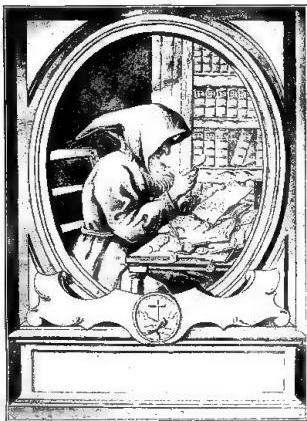
FRATRES MINORES - Capuchin scholar. Watercolor design for a frontispiece (18th century) - Assisi, Museo Francescano.
The care of the sick and plague-stricken brought the austerity and poetry of Franciscan origins back into the hedonistic and ostentatious society of the Humanist era; the people surrounded them with veneration; the esteem and support of prelates and princes served as a valid defense before the curial hierarchies and the Supreme Pontiff against the opposition of the Observant superiors, who defended the unity of the Order.
Many fervent and learned religious flocked to this new family; in 1532, the group of Calabrian reformed friars joined it, the following year they settled in Sicily, and in 1535 in the lands beyond the Po, numbering around 700 religious by 1536, divided into 12 provinces. The new Constitutions, composed Bernardino d'Asti (v.), promoted preaching and permitted sacred studies. The storm unleashed by the passage to heresy, in 1542, TONCHINO (v.), tested the solidity of the reform, which the Council of Trent exempted, along with the Observants, from the obligation of communal possessions (1563). By 1571, the Capuchins of the Italian provinces numbered 3,300; Gregory XIII, on May 6, 1574, permitted their expansion into regions beyond the Alps, and in that year they settled in France, in 1578 in Spain, in 1581 in Switzerland, in 1585 in Belgium, in 1593 in Tyrol, in 1599 in Bohemia and Vienna, in 1600 in Munich, in 1603 in Alsace, in 1611 in the Rhineland, and in 1612 in Westphalia. The clerics completed their studies in general and provincial schools where learned theologians taught, Pistoia (v.), Calatayud (v.). St. Lorenzo da Brindisi (v.) led the opposition to Protestants in Bohemia and Bavaria; other brethren fought the Huguenots in France, where Fr. Angelo di Joyeuse assumed military command of the Catholic League. Eloquent preachers worked for the safeguarding of the Faith and the reform of the morals of the Italian people. St. Giuseppe da Leonessa (v.) ventured to Constantinople, while other missionaries reached the African and Levantine coasts, the islands of the Mediterranean, and Brazil (1612). Many were the orators and writers of esteemed ascetic works. An intense social activity accompanied the oratorical mission with charitable institutions for poor children and repentant women, with service in hospitals and lazarettos, with grain banks in times of famine, and with assistance to soldiers. When, in 1619, the Order obtained complete independence, with its own minister general, it counted 14,846 religious divided into 40 provinces and 1,030 convents.
By 1734, they reached a total of 32,821 members, with 63 provinces and 1,715 convents and hospices, in addition to numerous residences in mission lands. A. Monzon illustrated with historical sense their beneficial power and vast social influence. Capuchin sanctity opposed the pomp of the seventeenth century and rationalistic pride with the figures Benedetto da Urbino (v.), Bernardo da Corleone (v.), Bernardo da Offida (v.), Crispino da Viterbo (v.). The study of the young was organized in the seventeenth century according to a seven-year scholastic program, and sacred culture was directed primarily toward the exercise of preaching. Popular missions were conducted with the practical aid of devotional and penitential rites and processions, sacred representations, and the solemn erection of crosses, images, and chapels. They particularly spread the Eucharistic prayer of the Quarant'ore (v.). In 1743, Benedict XIV entrusted the Capuchins with preaching in the Apostolic Sacred Palace. Among the vast array of orators, the following stood out in Italy: Angelo d'Acri (v.), Emanuele Orchi (v.), a representative of exaggerated seventeenth-century style, Turchi (v.), a renewer of eloquence; in Spain, Giuseppe da Carabantes (v.), Cadice (v.), and Michele da Santander; in France, Onorato da Cannes (v.), Francesco da Tolosa (v.); in Switzerland, Filippo Tanner; in Germany, Procopio da Templin, Dionisio da Lussemburgo (v.), and the catechist Martino da Cochem (v.). Others, Marco d'Aviano (v.), liberator of Vienna against the Turks in 1685, engaged in diplomatic activity among Catholic states. Notable in France was the political influence of the éminence grise Giuseppe Le Clerc du Tremblay. In northern Germany and the Netherlands, the Capuchins conducted internal and parochial missions against Calvinism; other missionaries departed from the continent for England, Scotland, and Ireland. In the Rhaetian missions, Fedele da Signaringa (v.) fell as a martyr. In theological disciplines, Capuchin authors, though not forming a single school due to various Scotist and Thomist tendencies and personal eclecticism, showed a certain preference for St. Bonaventure. In asceticism, they distinguished themselves for the wide diffusion of spiritual works, such as those by Alessio Segala da Salò (v.), PERGAMO (v.), Benedetto da Canfield (v.), Costantino da Barbençon (v.). They effectively polemicized against Molinism, Jansenism, and Gallican, Febronian, and Josephinist theories. Missions were organized in various continents. Giuseppe du Tremblay sent French Capuchins to Constantinople, Greece, and Syria in 1625, to Mesopotamia and Persia in 1628; the Italians settled in Armenia and Georgia in 1661, from where in 1713 they ventured into Russia. They were entrusted with the apostolic prefecture of Tibet (1704-45), from which they founded missions in the kingdoms of Nepal, Patna, and Bettiah. Italian Capuchins settled in Algiers and Tunis in 1624; the French in 1624 and later the Spanish in Morocco; the French in Egypt in 1631; the blessed Agatangelo and Cassiano (v.) ventured into Ethiopia, suffering martyrdom there in 1639 at Azozò near Gondar. From 1634, they were in Guinea, and from 1645 in the kingdoms of the Congo; from 1650 in Canada, Nova Scotia, Maine, and Virginia; in 1633 in the Lesser Antilles, in Santo Domingo in 1680, and in Venezuela in 1650. In 1642, missions were organized in Brazil; the French worked in Louisiana from 1722, ceding their place to the Spanish in 1766.
Due to suppressions, by 1847 the Capuchins had declined to 11,152, and by 1888 to 7,628, but even in such changed conditions, their activity continued uninterrupted in the traditional forms of their apostolate. The general Bernardo Christen de Andermatt (v.) gave the Order a valid organizational revival. New social problems were addressed with various assistance works: in German-speaking countries, the institutions of Fr. Cipriano da Eggsheim (v.) spread; in Switzerland, Florentini (v.); Mathew (v.) combated alcoholism in Ireland and America; Haspinger (v.) defended the freedom of the Tyrolean people; Massimiliano Tarejwa and Agrippino Konarski fell as victims for the independence of their Polish homeland. The apostolate of Cardinal Guglielmo Massia (v.) in Africa is widely known, as is the work of the Capuchins in Eritrea, and the constructive action of Bishop Anastasio Hartmann (v.) and other missionaries in India. In 1841, the college of San Fedele for missions was founded in Rome; in 1883, the Oriental Institute for missions in the Balkans and Asian Mediterranean; all missionary activity received a more effective organization in 1884-87. Currently, there are 43 proper missions with 992 missionaries.
In 1911, the International College of St. Lawrence of Brindisi was inaugurated in Rome for university-level instruction; in 1920, the Historical Institute was established in Assisi and later transferred to Rome in 1940, with a program of historical and bibliographical research and publications. Various journals of culture and action disseminate Franciscan science and piety, especially through the Third Order and the associations of the "Friends of St. Francis." Recently, the Church has recognized the sanctity of St. Francis of Camporosso (v.) and St. Conrad of Parzham (v.). In November 1948, the major superiors promoted an international congress in Rome to adapt apostolic activities to today's particular needs. The Order numbers 14,095 members, across 65 provinces or commissariats and 1,126 houses.
V. FRANCISCAN ARCHITECTURE.
The religious movement inspired by the Franciscans gave great impetus to the construction of churches, and the importance they placed on preaching required special conformations of sacred buildings. Given the rapid spread of the Order, most Franciscan churches were built in the two centuries following the founder's death, coinciding with the full flowering of Gothic architecture, so that in Italy they are among the finest expressions of that style. However, they do not present characteristics that substantially differentiate them from other contemporary churches.
The first builders, adhering to the vow of poverty affirmed by the Rule, followed Cistercian models and adapted them to new needs, resulting in a greater sense of space due to the grandeur of the single nave and an effect of luminosity due to the absence of pillars or projections outside the choir and chapels. Significant in this regard are the norms laid down by St. Bonaventure at the chapter held in Narbonne in 1560, which sought to limit vaulted ceilings to the presbytery alone. However, except for some Umbrian churches that had exposed roofs supported by trusses (Gubbio, Narni, perhaps Perugia, all later rebuilt) or by arches (Sangemini), this disposition was not observed, and ribbed cross vaults were used to cover the entire space. Instead, the norms concerning the exclusion of superfluous ornaments, even for pictorial decoration and stained glass (the church of Assisi represents almost an exception), were more closely followed.
A substantial difference from Benedictine churches lies in their location, since while the latter typically arose outside inhabited areas, forming autonomous centers of life with their adjoining monasteries, the Franciscans settled within towns to better carry out their spiritual ministry in direct contact with the population.
From a planimetric perspective, great variety is also observed. The single nave is adopted in Santa Chiara in Naples and prevails in Umbria: Perugia, Terni (expanded to three naves in 1445), Gualdo Tadino, and in Tuscany, where the Egyptian cross plan is common in Pistoia, Pisa, Arezzo, and Siena. The three-nave plan (generally with the central nave twice as wide as the side ones and with considerable longitudinal development) is used in the Egyptian cross arrangement in Santa Croce in Florence (the most grandiose architectural expression of the Order after the church of Assisi), in Ferrara, and in Pavia (both altered in the sixteenth century); it varies from the simple rectangular form ending in one or more apses (Mantua, Parma, Piacenza) to the Latin cross (Cremona), up to more complex arrangements with radial chapels around the choir (Bologna) or the singular conformation of Santa Maria dei Frari in Venice.
(courtesy of p. Ilarino da Milano)
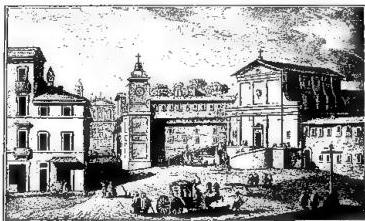
The Church and Convent of the Friars Minor Capuchin at the beginning of the present Via Veneto in Rome. From an 18th-century engraving.