
ERITREA. — Region of NE Africa that takes its name from the sea bordering it (in ancient times the Red Sea was called the Erythraean Sea) and corresponds to the coastal strip between Ras Casar and Ras Dumeira, together with the Danakil Depression and the northern part (to the N. of the Tacazzè and Mareb) of the Ethiopian plateau; altogether 119,472 sq km.
Of the three zones, the first, mostly low-lying and sandy, is essentially a poor steppe, with an extreme, hot, dry climate; the second is a true desert, largely volcanic in nature; and only the third is suitable for human settlement, being generally situated above 2,000 m and therefore having a temperate, healthy climate and soil especially suited to extensive cereal cultivation and livestock raising. To the west, the plateau slopes gently toward another strip of lowlands (the Gase valley), where the intense summer heat permits various tropical crops, above all cotton, wherever irrigation is possible.
The principal resources of E. are the doum palm, cotton, coffee, cereals (dura), fishery products (pearls, mother-of-pearl, and also edible fish), and livestock products (hides, canned meats), and, to a lesser extent, ores and salt. Trade is of modest proportions.
The indigenous population (600,000 inhabitants), consisting predominantly of Abyssinians (50%) and Tigrinya (19%), Christians (of the Coptic rite), with Muslim minorities (Deul Amer, Habab, Saho) and pagan minorities (Cunama), is relatively dense on the plateau, where the major population centres are located, including the capital Asmara (90,000 inhabitants, of whom 50,000 are Italians). On the coast lies the port of Massaua (17,000 inhabitants, of whom 6,000 are Italians). Our compatriots, who numbered 72,500 in 1939, have now been reduced to just over 25,000.
An Italian colony since 1882, annexed to our East Africa in 1936, and conquered by Allied troops in 1941, its fate remains undecided.
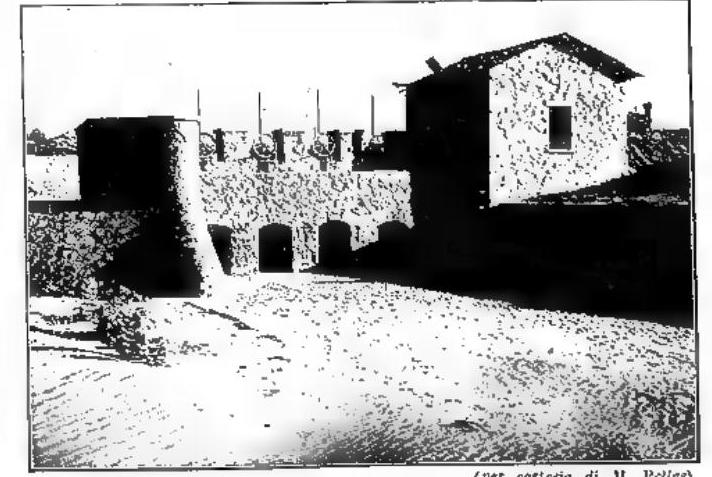
Nor was scientific activity neglected, to which the publication of grammars and dictionaries of indigenous languages made a substantial contribution.
On 7 February 1912, the prefecture was elevated to an apostolic vicariate. The modern Franciscan printing press of Asmara, the Institute of St. Joseph for persons of mixed ancestry in the same city, and the Seminary for the formation of the indigenous clergy at Cheren constitute part of the apostolic activity of the Capuchin Franciscans. At the initiative of the first apostolic vicar (Mons. C. Carrara), the Pontifical Ethiopian College was established in Rome.
In 1931, the ordinariate for the clergy and for the indigenous Catholics of the Ethiopian (Alexandrian) rite was created, governed by Mons. Chidané-Marvam Cassà. The jurisdiction of the indigenous Ordinary, after the Second World War, was temporarily extended to all the faithful of the Ethiopian rite in Abyssinia.
The greatest difficulty for the apostolate is constituted by the opposition of the Monophysite clergy and of the Muslims. - Vedi tav. XXXVIII.