Machine translation of the 1948–1954 Italian original. The original text is authoritative.
ALESSANDRO V, ANTIPAPA. - Pietro Filargo, of very humble origin, born in Crete in 1340. Protected by a
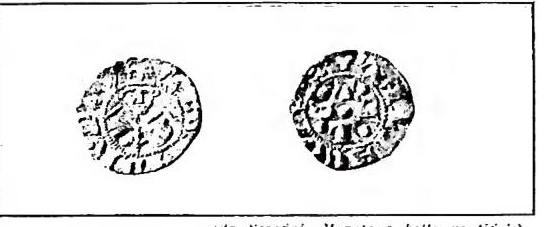
(from Serafini, Monete e bolle pontificie) ALESSANDRO V, antipope - Silver coin.Franciscan friar, he entered the Order of Friars Minor, studied at Oxford and Paris, where, having become a master in theology, he also taught. His remarkable intellect made him highly appreciated, particularly by the Visconti in Milan, so that he successively became bishop of Piacenza, Vicenza, Novara, and archbishop of Milan in 1402. In 1405 Innocent VII created him cardinal of the SS. Apostles. When in April 1408 the cardinals defected from Gregory XII and met in Pisa where they joined a group of cardinals of Benedict XIII, Filargo was absent from the Curia; but he immediately worked for the Council of Pisa summoned by those cardinals to put an end to the schism. Indeed, he was present at that Council from its opening (March 25, 1409) and participated in the sentence of deposition pronounced against the two rival popes. When the conclave met in Pisa itself on June 26, 1409, Filargo was elected pontiff under the name of A. V, allegedly through the efforts of Card. Baldassare Cossa. Thus a third obedience was formed in Christendom to the detriment of the two that had divided the faithful since 1378. A. closed the Council on July 27; in November, because of the plague, he left Pisa for Pistoia. In December, after the defeat of Ladislaus, king of Naples and supporter of Gregory XII, the Roman people declared for A., who would have liked to go there; but Card. Cossa, fearing that Rome was still unsafe, persuaded A. to go to Bologna, where he was legate. There on January 31, 1410, A. renewed the condemnation of his two adversaries and confirmed everything that had been done at Pisa. Death
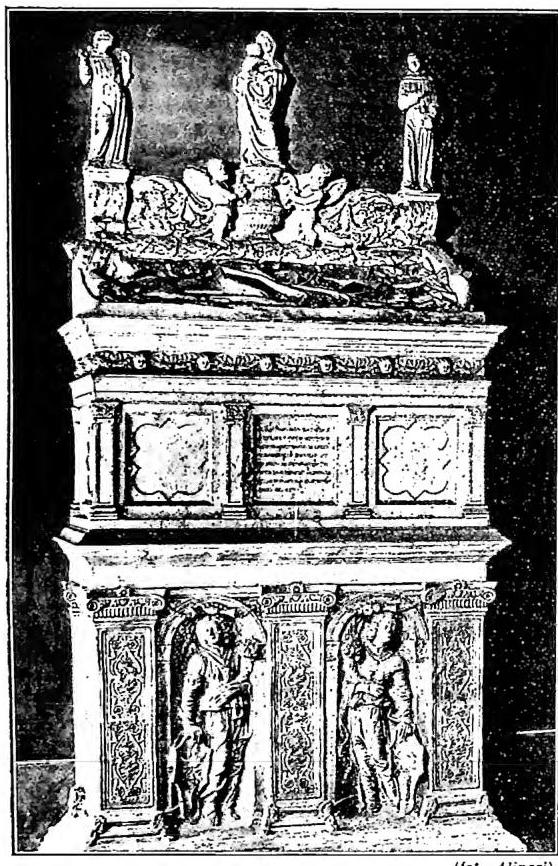
ALESSANDRO V, antipope - Funerary monument executed by Niccolò Aretino (15th century) - Bologna, S. Francesco.suddenly overtook him in Bologna on May 3, 1410. He was buried in the church of S. Francesco.
In his time he was famosissimus in theologia magister and judged doctissimus in sacra pagina; he composed a very notable commentary on the four books of the sentences, published by F. Ehrle in 1925 (Sentenzenkommentar Peters von Candia).
BIBL.: Hefele-Leclercq, VI, p. 1341 ff.; VII, p. 1 ff.; L. Salembier, s.V. in DThC, I, coll. 722-24; id., Le grand Schisme d'Occident, Paris 1921, p. 254 ff.; P. Brezzi, Lo scisma d'Occidente come problema italiano, in Archiv. Deput. Romana Storia patria, 67 (1944).
Cite this article
“ALESSANDRO V, ANTIPAPA.” Enciclopedia Cattolica, vol. I (1948), p. 487. Azione Romana digital edition, https://azioneromana.com/article/alessandro-v-antipapa.