
NAPLES, ARCHDIOCESE of. - City and archdiocese of Campania.
It covers an area of 128,641 square kilometers with a population of 1,250,000 inhabitants, of whom 1,220,000 are Catholics distributed across 152 urban parishes and 85 extra-urban parishes. It has 804 diocesan priests and 710 regular clergy; it includes 2 seminaries, 102 male religious communities, and 170 female religious communities.
Recent discoveries allow us to trace the city's origins further back in time, both in terms of its age and the motherland to which its foundation is attributed, previously thought to be the 8th century and the Chalcidians of Cumae. The existence of a settled center is now attested for the Eneolithic period. A Greek city in language and institutions, and independent, it could not long remain unaffected by the Roman invasion, and in 327 it was drawn into an alliance with Rome. Having first become a Roman municipality, it received from Caracalla (211-17) at least the confirmation of the title of colony, assuming that it was Marcus Aurelius (161-80) who had elevated it to that status. Passing from the rule of Odoacer to that of the Goths, captured by Belisarius in 536, reconquered by Totila in 542, Naples in 553 once again became part of the Byzantine Empire. In the years 581, 592, and 599, it withstood three Lombard sieges victoriously, and in the second half of the 7th century, it was governed as a duchy, first under strict dependence on Constantinople, then autonomously in the second half of the 8th century. The Neapolitan Duchy ended in 1137. In 1139, it passed to the Normans; in 1194 to the Swabians; in 1266 to the Angevins; in 1442 to the Aragonese; in 1503, it fell under Spanish rule, which degraded Naples from the capital of an independent kingdom to the seat of a viceroyalty. After two centuries, in 1734, it once again became the capital of an autonomous monarchy under King Charles III of Bourbon. Apart from two brief interludes in 1799-1806 and 1806-15, during which Naples was first the Parthenopean Republic and then a French kingdom, it remained under the Bourbons until October 1860, when it became part of the Kingdom of Italy.
I. THE CHURCH OF NAPLES - The most important sources for the history of the Neapolitan Church, from its origins to the 10th century, are the Liber Pontificalis and the catacombs. The Liber Pontificalis, previously known as the Chronicon or Gesta episcoporum Neapolitanorum, or by Giovanni Diacono, is preserved in the mutilated codex Vat. lat. 5007. The first 100 folios are in uncial script from the mid-9th century; folios 101-30 are in Lombard-Beneventan script from the early 10th century. In terms of content, it can be divided into four parts: 1) a catalogue of the popes that originally extended to Miltiades (d. 314) but now ends with Pope Clement; 2) the catalogue of the bishops of Naples, from the first, Aspreno, to the 39th, Calvo (d. 762), with some folios missing; 3) the catalogue of the bishops from the 40th, Paolo II, to the 45th, Atanasio I (d. 872); 4) the beginning of the biography of the 46th, Atanasio II (d. 898); the final folios are lost. Of these four parts, the first two (folios 1-100) are by an anonymous author; the other two belong, the first (Paolo II-Atanasio I) to Giovanni Diacono, and the second (Atanasio II) to Pietro Suddiacono, two contemporary writers from the early 10th century. Of the Vat. lat. 5007 codex, there exists a brief compendium in the Laurenziano 604 codex, from the first half of the 10th century, known as the Catalogo Bianchiniano, after Francesco Bianchini, its editor; it concludes with the indication of the duration of the episcopate of Stefano III, successor of Atanasio II.
II. ORIGINS OF CHRISTIANITY
Hagiographic sources no earlier than the 9th century attribute the foundation of the Church of Naples to St. Peter, who, traveling from Antioch to Rome, is said to have stopped in Naples, where he baptized and consecrated the bishop Aspreno or Asprenate. The late and legendary character of the Vita s. Aspreni does not allow any reliance on the alleged foundation of the Church of Naples by St. Peter; nor does the Liber Pontificalis shed greater light, as it names Aspreno as the first bishop but does not specify when he lived, and records Bishop Massimo, who died between 355 and 362, as the 10th bishop in the series. If this were true, Aspreno could not be earlier than the beginning of the 3rd century or, at most, the end of the 2nd, since the duration of ten consecutive episcopates cannot span 300 years. However, there is absolutely nothing that compels us to consider the list in the Liber Pontificalis complete. On the contrary, its lacunose nature is demonstrated by two lines of reasoning: first, the origins of the Neapolitan Church cannot be assigned to a period later than the end of the 1st century; second, from the 1st century to the mid-4th, Rome had 35 bishops, Antioch 27, and Alexandria 20. The oldest Christian paintings in the catacomb of San Gennaro dei Poveri, depicting scenes of Adam and Eve and the construction of a tower inspired by the Pastor of Hermas, date no later than the early 3rd century. However, these paintings presuppose a Christian community in a phase of development and are found in a part of the catacomb that no longer exhibits the characteristics of a private hypogeum but rather of a cemetery for a community that must have already had several decades of existence. Furthermore, the name of the first bishop, Asprenas—a distinctly Roman name, common in the 1st century but becoming rare by the end of the 1st and the beginning of the 2nd century—supports this chronology. Nor is it plausible that Christianity, already firmly established in Pozzuoli by 61, would have taken over a century to assert itself in nearby Naples, which maintained frequent relations not only with Pozzuoli but also with the East. That the Church of Naples was already flourishing by the 4th century is suggested by the Roman Liber Pontificalis, which states that Constantine, under Pope Silvester (314–335), had a basilica built in Naples and bestowed precious gifts upon II. Most of the basilicas constructed by Constantine arose in Rome and its suburban dioceses, while in all of southern Italy, only Naples and Capua were endowed by Constantine with a basilica. Capua was then the capital of Campania; thus, the Church of Naples must have possessed an importance no less than that of Capua, already renowned for its martyrs.III. THE MARTYRS
Naples has no indigenous martyrs. St. Gennaro (v.), principal patron of the city and eponym of the largest of the catacombs, was transported there and venerated, but he was from Benevento. Among the other martyrs venerated in the ancient Neapolitan Church, Sosso is from Miseno; Eutiche, Proculo, and Acuzio from Pozzuoli; Festo from Benevento; Fortunata from Literno. We omit martyrs whose cult appeared late in Naples, such as Restituta, probably an African localized in Lacco Ameno (Ischia), Castrese of Volturno, Giuliana of Cuma, Massimo of Cuma or Compas, Potito of Apulia; and the martyrs Gervasio and Protasio, of Ambrosian influence. The Campanian martyrs Festo, Desiderio, Proculo, Eutiche, and Acuzio, who died in different places and at different times, Gennaro (v.) between the 6th and 7th centuries.Until 1936, a clear distinction was made between the martyr Gennaro, bishop of Benevento, who died in the persecution of Diocletian in 305, and a second Gennaro, also bishop of Benevento, who participated in the Council of Sardica in 343. In 1936, the hypothesis was advanced—though not without difficulties and not yet fully accepted—that the Gennaro of the Passio, that is, of the Diocletianic persecution, is a legendary figure; the historical figure would be the one present at the Council of Sardica in 343, about whom, however, nothing else is known. To explain how he was proclaimed a martyr from the early 5th century onward, it has been supposed that, after the death of Emperor Constans in 350, Gennaro was exiled by Emperor Constantius, a supporter of the theological position opposed to that of Constans, and thus either died in exile from mistreatment or met a violent death. This is plausible but not certain. What is certain, however, is that by the second or third decade of the 5th century, Naples venerated a martyr Gennaro who had recently been transported there. This translation on April 13 is attested by the Liber Pontificalis, the Marble Calendar, and the Martyrologium Hieronymianum. St. Gennaro is a martyr inventus, like many others, discovered in the East and West at the end of the 4th and beginning of the 5th centuries. As elsewhere, a bishop, John I (414-32), rediscovered St. Gennaro, transported him to Naples, and deposited him in the catacomb that later took his name.
In 1137, in a liturgical constitution of the archbishop of Naples, Giovanni Orsini, the rite of the solemnity of St. Gennaro in the month of May is minutely described; however, while the procession of the head of the beatissimi Ianuarii is mentioned, there is no reference to the martyr’s blood or to the procession, either in the morning or in the evening. The first mention of the blood of St. Gennaro and its liquefaction dates to 1389.
Closely connected to Naples is a little-known martyr, yet one deserving of the greatest consideration: Rufinino. He is mentioned in the Libellus precum addressed in 383-84 by the priests Faustino and Marcellino to the emperors Valentinian II, Theodosius, and Arcadius. Between 355 and 350, Epitteto, bishop of «Centumcellae», vented his Arian fury against Rufinino, forcing him to run before his chariot, thereby causing the rupture of his pulmonary arteries and hemorrhages. Rufinino’s blood was preserved in Naples, and the faithful experienced its prodigious power. This testimony is important for the cult of relics.
NAPOLI, ARCIDIOCESI di - Jesus gives the law; and symbol of the evangelist Matthew. Mosaic of the Baptistery (4th-5th centuries) - Naples, church of S. Restituta.
The fact that the Libellus precum speaks of Rufinino immediately after Massimo, bishop of Naples, where Rufinino’s blood was preserved, suggests that Naples or its vicinity was the scene of Epitteto’s ferocity and that Rufinino shed his blood there.
IV. EPISCOPAL SERIES
The series of bishops of Naples is divided into four periods: I: from the origins to the elevation of the Church of Naples to a metropolitan see; II: from its elevation to the archbishopric to the Avignon schism; III: the period of the schism; IV: from the end of said schism to modern times. For the period from the origins to the mid-4th century, the Liber Pontificalis records ten names of bishops: Aspren(as), Epitimitus, Maro, Probus, Paulus, Agrippinus, Eustathius, Ephebus, Fortunatus, Maximus. The name of a Fortunatus appears in the address of the letter from the Eastern bishops convened at Sardica in 343; and, if the reconstruction of the altered text preserved in the manuscript tradition of the Fragments of St. Hilary were certain, Fortunatus would have been bishop of Naples. However, the original address of that letter contained only the names of the bishops; the names of the sees are an addition by a forger, who identifies the Sympheron mentioned therein with Sympherius, bishop of Salona at the end of the 4th century. It is therefore not possible to certainly identify, as has been done until now, the Fortunatus of the Sardica encyclical with the homonymous bishop of Naples, and thus one cannot be entirely certain that he held the see of Naples in 343. More certain, however, is another chronological reference regarding Maximus, Fortunatus’ successor, the 10th in the Liber Pontificalis series, provided by the aforementioned Libellus precum, in which it is read that Maximus, for his steadfastness in the faith, was tormented and exiled by Constantius, and in exile martyr in Domini pace requiesit. Maximus was exiled at the same time as Dionysius of Milan, Eusebius of Vercelli, Lucifer of Cagliari, Hilary of Poitiers, and Rhodanius of Toulouse, therefore between 355 and 356. The bishops were later recalled from exile by Julian the Apostate in February 362. Thus, for the episcopate of Maximus, two certain dates are established: 355 and February 362, the terminus ante quem of his death. The 14th in the series, John I, died on Holy Saturday, 2 April 432. The 15th, Nostrianus, energetically supported Pope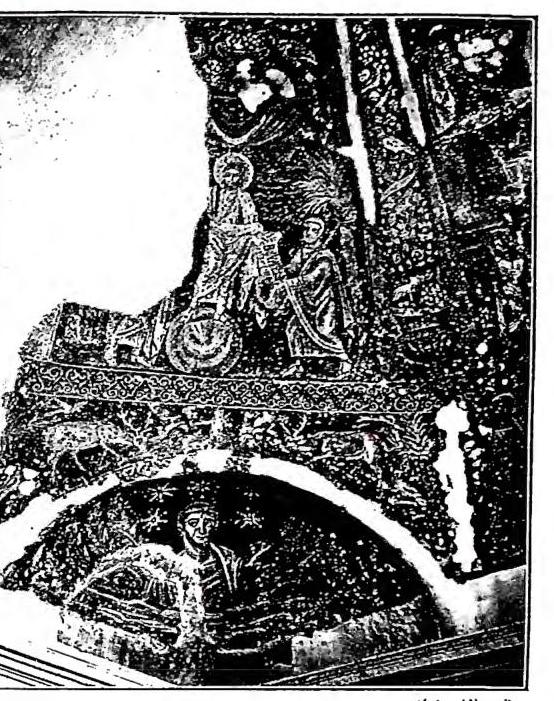
(from Atti del III Congresso hetero. d'arch. cristiana, Rome 1861, p. 631)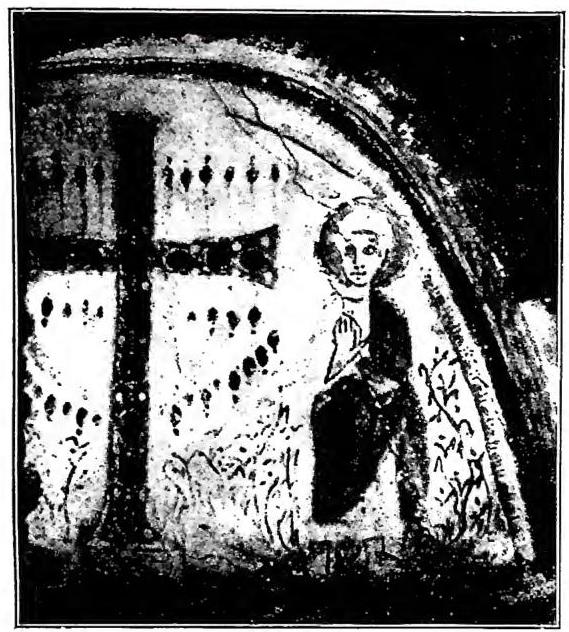
of Ravenna, John VIII. The bishop of Naples sat in the third place after the Pope. During the episcopates of his two successors, Athanasius II (876-98) and Stephen III (898-907), Ausilius and Vulgaris flourished in Naples, defenders of Pope Formosus (891-896), known for their writings and the literary influence they exerted in the city.
Naples was not yet an archbishopric in 966, but by 990 Sergius was already called archbishop. It is very likely that this did not occur long after the identical elevation of Capua (966) and Benevento (969). However, the Church of Naples, until it became the capital of a vast kingdom, suffered, within territorial constraints, the same fate as the Duchy, stifled and often humiliated by the Principalities of Capua and Benevento. Moreover, throughout southern Italy, the ecclesiastical province was modeled on the civil province. The Liber censuum of the Roman Church lists as suffragan sees of Naples: Aversa, Nola, Pozzuoli, Cuma, and Ischia. In 1121, Pozzuoli was a suffragan of Capua; Nola, in 1143 of Salerno, and only in 1179 was it clearly designated as a suffragan of Naples; Aversa was first contested between Naples and Capua, then declared subject to Rome by Calixtus II in 1120; Albinus and Cencius, Innocent III in 1198, and Honorius III in 1225 recognized it as a suffragan of Naples. In 1179, Acerra was also a suffragan of Naples. In 1207, the Church of Cuma was united with that of Naples, its territory passing in greater part to Pozzuoli and in lesser part to Aversa. Among the archbishops of the 11th and 12th centuries, John II (1071) and Marinus, who played a significant role in the establishment of the Norman monarchy, should be remembered. Special mention is due to Blessed Giacomo da Viterbo (d. ca. 1308).
BIBL.:
G. B. de Rossi, La Roma sotterranea cristiana, III, Roma 1877, p. 333 ss.; F. Lanzoni, Le diocesi d'Italia dalle origini al principio del sec. VII, I, Faenza 1927, p. 219 ss.; P. Kehr, Italia Pontificia, VIII, Berolini 1935, p. 321 ss.; E. Caspar, Geschichte des Papsttums, II, Tübingen 1933, p. 567 ss.; V. FEDERICI, GIACOMO, Il Chronicon di S. Sofia di Benevento, Roma 1925, p. 103 ss.; G. Falco, I comuni della Campania, Milano 1926, p. 11 ss.; P. Fedele, Le origini del ducato di Napoli, in Archivio storico per le province napoletane, 42 (1917), p. 3 ss.; G. Galante, Le catacombe di Napoli, Napoli 1905; A. Palmieri, Napoli, in Enciclopedia Italiana, XXIV, Roma 1934, p. 385 ss.; G. B. Proja, La Chiesa di Napoli dalle origini al sec. XIII, Napoli 1941; G. Scherillo, Le origini della Chiesa napoletana, in Atti dell'Accademia Pontaniana, 65 (1935), p. 1 ss.; C. Jullian, Histoire de la Gaule, IV, Paris 1921, p. 481 ss.; L. Duchesne, Fastes épiscopaux de l'ancienne Gaule, I, Paris 1907, p. 253 ss.; H. Leclercq, Naples, in Dictionnaire d'archéologie chrétienne et de liturgie, XII, Paris 1935, col. 973 ss.; G. Ferretto, Note storico-diplomatiche sul ducato di Napoli bizantino, in Archivio storico per le province napoletane, n.s., 15 (1930), p. 5 ss.; G. Gay, L'Italie méridionale et l'Empire byzantin, Paris 1904, p. 481 ss.; A. von Harnack, Die Mission und Ausbreitung des Christentums, II, Leipzig 1924, p. 781 ss.; A. Lapôtre, L'Europe et le Saint-Siège à l'époque carolingienne, I, Paris 1895, p. 253 ss.; G. M. Monti, Le confraternite medievali dell'alta e media Italia, Venezia 1927, p. 11 ss.; P. Batiffol, L'Église naissante et le catholicisme, Paris 1927, p. 333 ss.; A. Amore, I vescovi di Napoli nei secoli IV-VI, in Rivista di storia della Chiesa in Italia, 1 (1947), p. 197 ss.
M. GIAMMARINARO
PERIOD OF THE WESTERN SCHISM
The events of civil history had more serious repercussions on the Neapolitan Church during the Western Schism. Subject to Giovanna I d'Angiò when the schism broke out in 1378, it later passed under the Durazzeschi in 1381, returning after the death of Carlo di Durazzo (1386) to the Angevins, with Luigi II until 1399, and then under Carlo’s son, Ladislao di Durazzo (d. 1414). Naples endured the vicissitudes of this alternation of dynasties. Nor did these dynasties maintain a consistent stance in religious politics. Giovanna I was against Urban and, contrary to the sentiments of the people, supported Clement VII; she was then expelled by Carlo di Durazzo, whose prior agreements made him devoted to Urban. This was followed by Carlo’s rupture with Urban, and thus, once again, the Neapolitan court’s alignment in favor of Clement. The situation did not change with the arrival in Naples of Luigi II d'Angiò, Clement’s trustee. In Naples, therefore, there were initially two "obediences" from 1378 to 1411—the Roman, with five archbishops, and the Avignonese, with four archbishops—and later, from 1411 to 1415, the Pisan obedience with two archbishops.
Among the archbishops from the end of the schism to the present day, the following should be mentioned: Alessandro Carafa, who in 1497 transferred the body of S. Gennaro from Montevergine to Naples; Gian-Pietro Carafa (1549-55), later Pope Paul IV; Alfonso Carafa, who immediately after the Council of Trent, in 1565, held the first diocesan Synod and demonstrated breadth of vision and firmness of purpose in establishing the discipline of the Reform; the blessed Paolo Burali d'Arezzo (1577); Ascanio Filomarino, who played a major role in resolving the unrest of the so-called "Masaniello revolution" (1647); Antonio Pignatelli (1686-91), later Pope Innocent XII; Giuseppe Spinelli (1734-54), patron of Alessio Simmaco Mazzocchi; Sisto Riario Sforza (1848-1877), contemporary with the period of Pius IX’s residence in Naples, exiled from Rome, and with the great political upheavals in the Kingdom of Naples and Italy. He was an example of unshakable firmness in relations with civil authorities no less than in the governance of the archdiocese.
VI. CULTURE
The Church of Naples has known three golden periods in the history of culture: the Carolingian period; the second half of the 18th century; and the second half of the 19th. This last period witnessed, alongside the splendors of humanistic culture and mastery in Greek and Latin letters, the rise and flourishing of Christian archaeology, thanks to Gennaro Aspreno Galante, who founded the Neapolitan archaeological school. The second period was distinguished,in classical archaeology, by the monumental production of Alessio Simmaco Mazzocchi, and—without mentioning others—by that of his worthy disciple Nicola Ignarra. The first, far less known, begins when Bishop Stefano II (767-800) sent some of his clergy to Montecassino, to the school of Paolo Diacono. A century later, two scholars, Ausilio and Vulgario, exiles from Rome, settled in Naples, and at Ausilio’s school Giovanni Diacono perfected his learning, becoming the greatest medieval historian of Naples. Literary culture extended into hagiography, and between the second half of the 9th century and the 10th, Paolo Diacono, Bishop Atanasio II, Guarimpoto, Pietro Subdiacono, the priest Orso, and the archpriest Leone flourished.
Around the mid-9th century, an anonymous ecclesiastic compiled the first part of the Liber Pontificalis, covering the period from the origins to 767, drawing on Jerome, Marcellinus, Gregory of Tours, Isidore, Bede, the Roman Liber Pontificalis, Paolo Diacono, as well as the Epistola Uranii de obitu Paulini and Eugippius’s Vita Sancti Severini. He was therefore a learned man, with a library at his disposal.
VII. ANCIENT MONASTERIES
Monastic life in Naples begins in the 4th-5th centuries. Bishop Severus (363-409) erected a monastery dedicated to a martyr from Apulia, St. Potitus, and another to St. Martin. The latter is also mentioned by Gregory the Great; another monastery was founded by the African bishop of Abitinae, Gaudiosus, a refugee from the Vandal persecution. Monasteries for men and women are recorded by Gregory the Great. Numerous Greek monasteries existed, the most important being those of SS. Sergius and Bacchus, SS. Samonas, Gurias, and Abibus, St. Gregory of Armenia, and St. Theodore. Of ducal foundation were the monasteries of SS. Cyriacus and Julitta, founded by Duke Antimus around 811 with an annexed diaconia, and St. Marcellinus, founded by Theodonanda, widow of Antimus, in the early years of Bishop Tiberius’ episcopate (821-42). The most prominent of all was the Lucullan cenobium, established around 492 with the arrival in Naples of the body of St. Severinus. The Lucullan cenobium was later replaced by the monastery of St. Severinus, founded in the heart of the city during the episcopate of Athanasius II (877-98), and in 902 the body of the holy abbot of Noricum was transferred there.A disciple of St. Eugippius (v.), abbot of the Lucullan monastery, where he founded an important library. This library possessed Jerome’s biblical translations in their original form, as suggested by the subscription of the well-known Epternach Gospels codex. From Naples, codex (v.) reached England. The oldest Neapolitan Capitular that survives, likely from the 6th rather than the 7th century and placed at the beginning of this codex, contains no Marian feasts except the dedication of a basilica to sanctae Mariae. The sanctoral is extremely simple: apart from St. Januarius, celebrated also with a vigil, no Neapolitan or Campanian saint is included. Not even the Misenum martyr, St. Sosius, appears, though Pope Symmachus honored him with an oratory and a poem in Rome between 501 and 506. Of the six basilicas already existing in Naples by the end of the 6th century, only the dedication feast of one is recorded, the Stefania: In dedicatione basilicae Stephani. If the Dedicatio sanctae Mariae refers to the Pomponiana in Naples (ca. 509-37) rather than to a Roman basilica, as some have suggested, a second dedication feast would be present; however, other important ones are still missing. Among the surviving texts of pre-baptismal liturgy, the traditio of the Psalms on the third Sunday of Lent is singular: quando psalmos accipiunt. The traditio of the Pater took place on the fourth Sunday, and the traditio of the Creed on the fifth. Lent was preceded by the Sundays of Sexagesima and Quinquagesima. In 581, the Episcopium also had its library; Bishop Redux enriched it with a codex of the florilegium of St. Augustine’s writings, compiled by Eugippius.
IX. MONUMENTS
For the ancient period, the catacombs, basilicas, baptistery, consignatorium, and marble calendar should be remembered.1. Catacombs
Three remain: St. Januarius, St. Gaudiosus, and St. Euphebius (more correctly, Ephebus). The first is the most extensive and best known. It arose in a gentile area, traces of which have not entirely disappeared. The earliest bishop known to have been buried there is Agrippinus, from the second half of the 3rd century. Between 414 and 432, the martyr St. Januarius was buried there. The adjacent buildings housed Bishop Paul II, exiled from the city by the iconoclastic faction, from 762 to 764. With the translation of St. Januarius to Benevento in 831 by Duke Sicone, the catacomb began to decline. Nevertheless, bishops Tiberius (d. 842), John (849), and Athanasius I (d. 877) were buried there, as was Duke Stephen (d. 832). Iconoclasm left its traces, but decoration continued at least until the 10th century. The oldest frescoes, from the 2nd century, are decorative in nature; from the early 3rd century are biblical scenes such as Adam and Eve, and a unique scene in early Christian painting: the construction of a tower, taken from the Shepherd of Hermas. Later art drew inspiration from Roman symbolism and the cult of saints. In the 5th and 6th centuries, one finds the Lord between two Apostles (though this fresco was in the annexed basilica), the Apostles Peter and Paul, and the martyrs Lawrence and Januarius (v. HILLÉL). Later paintings depict portraits of the deceased, images of St. Januarius and his companions, Christ, and the Crucifixion. The history of painting from the 2nd to the 10th century can be traced here. In the second half of the 9th century, Bishop Athanasius I wished a cenobium to be established there, headed by an abbot; by the mid-15th century, the Benedictines had left. The rites of the 1337 liturgical constitution do not strictly refer to the catacomb but to the basilica; visitors to the catacombs are attested at least from the early 15th century.No less important, in some respects, though not as ancient, is the catacomb of St. Gaudiosus. The tomb with an arcosolium is still preserved, with remnants of mosaic decoration and the inscription of St. Gaudiosus, bishop of Abitinae in Proconsular Africa, a refugee from the Vandal persecution. Other notable arcosolia with mosaic decoration include one with a crowned cross adored by two lambs, and a 6th-century fresco depicting a gemmed cross between the first deacon, Stephen, and the local martyr, deacon Sosius.
2. Baptistery
The baptistery of San Giovanni in Fonte dates to the final years of the 4th century rather than the early 5th. It stands near the Cathedral, specifically to the right of the apse of the basilica of Santa Restituta when viewed from the front. Square in plan, it is crowned by a dome that transitions to the perimeter walls through the transformation of the upper corners into small vaults or hooded niches, so that the square terminates in an octagon. Only fragments remain of the mosaic decoration of the dome. At the dome’s center, within a circle bordered by a band adorned with baskets and bowls brimming with flowers and fruit, flanked by confronting birds, and set against a star-studded blue sky, appears the monogrammatic cross with the apocalyptic letters, crowned by the divine hand. In the band encircling the starry sky, aligned with the cross’s head, is the phoenix between two palm trees. From this central circle extend eight trapezoidal sections, separated by bands ornamented with lush garlands of flowers, fruit, and birds. Of these eight trapezoidal zones, five are preserved in whole or in part; one is vertically subdivided into two, another horizontally. The baptistery’s axis ran from east to west, and the original entrance was either to the east or west; today, entry is from the south. In the northeast zone, two scenes: the Samaritan Woman at the Well and the Miracle of Cana; immediately after, on the east wall, the lower portion of an Apostle in the Multiplication of the Loaves; in the southeast corner, the scene of the Dominus legem dat, Christ on the globe with Peter bearing the cross to His left (Paul is destroyed). Above the current door, the zone is horizontally divided: Peter Saved from the Waters above, and the Miraculous Draught of Fishes below. In the last surviving zone, to the southwest, the head of one of the myrrh-bearing women at Jesus’ tomb and the angel seated on the stone. Of the four vaults, two evangelist symbols remain: the winged man to the southeast and the winged lion to the southwest. In the four compartments between the vaults with the evangelists, eight apostles, two per side, offer crowns. On the frontal arch of the vaults, alternating scenes of the Good Shepherd among two sheep and the Good Shepherd among two stags quenching their thirst.3. Basilicas
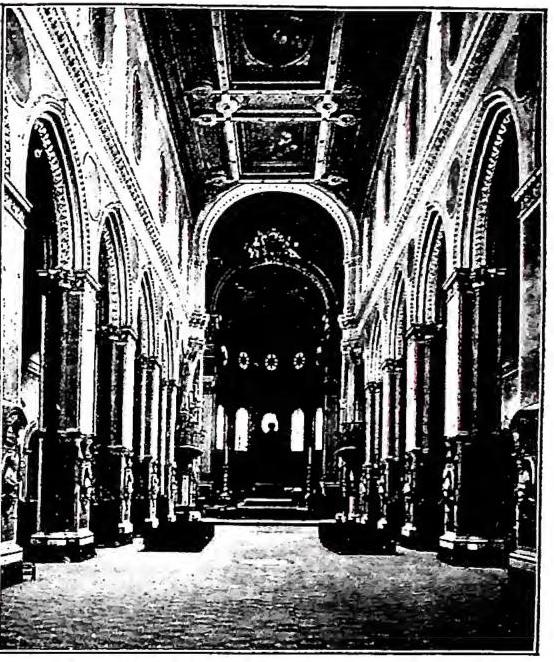
The first is recorded in the Roman Liber Pontificalis. It was constructed and endowed by Emperor Constantine. Neither the Liber Pontificalis nor Bede specify its dedication, nor do the attributions by Ado and the monk John, author of the Chronicle of San Vincenzo al Volturno (12th century), who claim it was dedicated to the Savior, merit credence. By the mid-9th century, however, this basilica was called Santa Restituta, after the martyr, most likely African, greatly venerated on the island of Ischia (at Lacco Ameno), and from there perhaps transported to Naples. The Constantinian basilica had five naves and no transept. Its southern end was truncated in 1294 with the commencement of the present Angevin cathedral; subsequently, the entire upper portion above the capitals was transformed, the floor was raised, and the two outermost naves were walled off. Of the original structure, only the plan, part of the apse, and the colonnade remain. In the left nave, the chapel of Santa Maria del Principio, with a mosaic of the Madonna, Saint Januarius, and Saint Restituta, dated 1313.The second cathedral of Naples was the basilica built by Bishop Stefano I (499-501). It stood near the Bishop’s Palace and was dedicated to the Savior; however, it was commonly known by the founder’s name as the Stefania. It was completely destroyed in 1294 with the construction of the Angevin Cathedral. Bishop Giovanni II the Mediocre (c. 557) rebuilt its apse, which had been destroyed by fire, and had the Transfiguration depicted in mosaic, later restored after another fire in the second half of the 8th century, when it received the bodies of the martyrs Eutyches and Acutius, transferred from Pozzuoli, and, shortly before the mid-9th century, the bodies of Naples’ bishops, brought from suburban cemeteries.
Among the other basilicas erected before the year 1000, the following should be noted in chronological order: the Severiana, built by Bishop Severo (363-c. 409), of which the arched apse remains, with pulvini superimposed on the capitals, decorated with a Greek-Latin monogram; the Soteriana, built by Bishop Sotero (active in 465) in honor of the Apostles; the Pomponiana, built by Bishop Pomponio in the third and fourth decades of the 5th century in honor of the Virgin and called Santa Maria Maggiore; the basilica in honor of Saint Lawrence, built by Bishop Giovanni II the Mediocre; the Vincenziana, erected by Bishop Vincenzo (c. 557-580) in honor of Saint John the Baptist (San Giovanni Maggiore); two of the four columns that supported the drum of the dome remain, with capitals decorated with Bishop Vincenzo’s monogram; the original apse, of importance at least equal to that of the Severiana, remains obscured by later walls and arches.
The basilica of San Gennaro, annexed to the homonymous diaconia, was built by Bishop Agnello (c. 674-695), and the basilica of San Paolo was erected by the city’s duke, Antimo (801-818). The Severiana, Soteriana, Pomponiana, Vincenziana, and San Paolo were all called catholica throughout the Middle Ages; the Severiana, Pomponiana, and Vincenziana are among the oldest parishes and still serve as collegiate churches.
4. Marble Calendar
Discovered in 1742 in the basilica of San Giovanni Maggiore, it consists of two large marble slabs, approximately 6 meters long and 6.88 meters high, on each of which, in twelve columns (two per month), the names of saints and feast days for each day of the year are inscribed (v. above, col. 247). It was created shortly after the mid-9th century to serve as altar plutei or screens. It is not a liturgical monument in the sense of a calendar for the ordo divini officii, but intended for private devotion. Far less is it a historical monument, as some have claimed, or an act of ecclesiastical politics meant to signify attachment to Rome. The attempt by the Patriarch of Constantinople, between 718 and 747, to secure the allegiance of Naples’ bishop, Sergio, by appointing him archbishop, had no effect. The Greek character of Naples’ Church, grafted onto an ethnic, cultural, political, and social foundation, developed in the literary, monastic, hagiographic, and liturgical spheres.Of early Christian relief sculpture, almost nothing remains: the seven or eight fragments in the National Museum, parts of sarcophagi, are either of Roman origin or uncertain provenance. Far more survives of medieval sculpture, including altar plutei and antependia. Among the plutei, those of San Giovanni Maggiore and the so-called chapel of Sant’Aspreno at the Borsa, and, from a later period, those in Santa Restituta, one with the Stories of Joseph and the other with the Stories of Saint Januarius, Samson, and Four Greek Martyrs. For later churches, V. Arte.
5. Epigraphy
The epigraphic harvest prior to the 7th century is sparse. Apart from a few bare Greek and Latin names from the catacomb of San Gennaro, no inscription predates the 4th century; of these, very few bear certain dates, the earliest being from 377. Notable are those of Bishop Massimo (d. c. 361), Bishop Gaudioso of Abitine, Abbot Habetdeus (d. 468), the matron Candida clarissima femina (d. 585), and Abbot Saint Agnello (d. between 593 and 600). A dedicatory inscription is the painted text declaring the name of the saint represented in the lunette of an arcosolium in the catacomb of San Gennaro, between two deceased women: Sancto martiri Ianuario, from the 5th century. Also from the 5th-6th century is the Greek sepulchral inscription of Paola, daughter of the subdeacon Paolo. For the 7th century, the metrical inscription of the deacon Teofilatto; for the 8th, the Greek inscription of Duke Teodoro (d. 729-30), restorer of the diaconia of SS. Giovanni e Paolo in 721-22, and that of Duke Buono (d. 783).BIBL.:
G. Chierici, Il battistero di Napoli, in Atti del III Congresso nazionale di studi romani, I, Rome 1934, pp. 293-300; A. Pantoni, La basilica di S. Restituta, in Napoli nobilissima, 1940, pp. 1-16; G. B. de Rossi, La basilica di S. Restituta, in Bullettino di archeologia cristiana, 1865, pp. 5-24; F. Lanzoni, Le diocesi d'Italia dalle origini al principio del secolo VII, Faenza 1927, pp. 235-245; G. B. de Rossi, Il calendario marmoreo di Napoli, in Bullettino di archeologia cristiana, 1867, pp. 5-32; E. Josi, Le iscrizioni cristiane di Napoli, in RAC, 1924, pp. 161-180; G. Ferrajoli, Le iscrizioni cristiane di Napoli, in Napoli nobilissima, 1912, pp. 1-16, 49-64, 81-96, 113-128, 145-160; A. Bellucci, Le iscrizioni cristiane di Napoli, in Atti della R. Accademia di archeologia, lettere e belle arti di Napoli, 1908, pp. 1-56.
G. B.
6. Clero antico e Capitolo. - Caratteristici uffici nel clero antico sono quelli del Notarius, del Primicerius scholae cantorum, del cimilarca, del canonarca, del paramonario, del vestuario. Si hanno i presbyteri cardinales o semplicemente cardinales, i diaconi cardinales, il primicerio, l'arcidiacono, l'arciprete del clero cattedrale, attestati, prima ancora che sia esplicitamente menzionato il Capitolo cattedrale, per gli anni, rispettivamente, 1000, 1065, 1065. Il Capitolo è, in forma esplicita, nominato la prima volta nel 1167; non c'è dubbio che esistesse già prima; nel secc. XII e XIII, e sino al 1308, spesso ha eletto l'arcivescovo. Dei 30 membri che oggi lo compongono, 7 presbiteri e 7 diaconi hanno un titolo cardinalizio, menzionato nelle bolle di nomina. Sono i titoli delle antiche chiese a cui presiedevano; il più antico di cui sia giunta testimonianza, dell'anno 1337, si riferisce al canonico cimilarca ed è quello dei martiri Eutiche ed Acuzio.
(fot. Alinari)
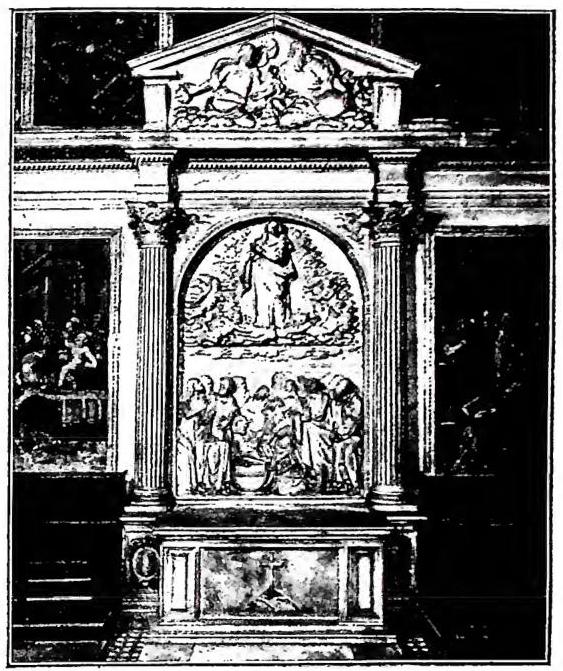
NAPOLI, ARCIDIOCESE di « Assunzione della Vergine. Bassorilievo in marmo di A. Caccavello (ca. 1570) » Napoli.
del « Liber Pontificalis », ibid., 4 (1950), p. 325 sgg.; id., Le origini della Chiesa di N., in Miscell. Pio Paschini, I, Roma 1948, p. 27 sgg.
X. ART
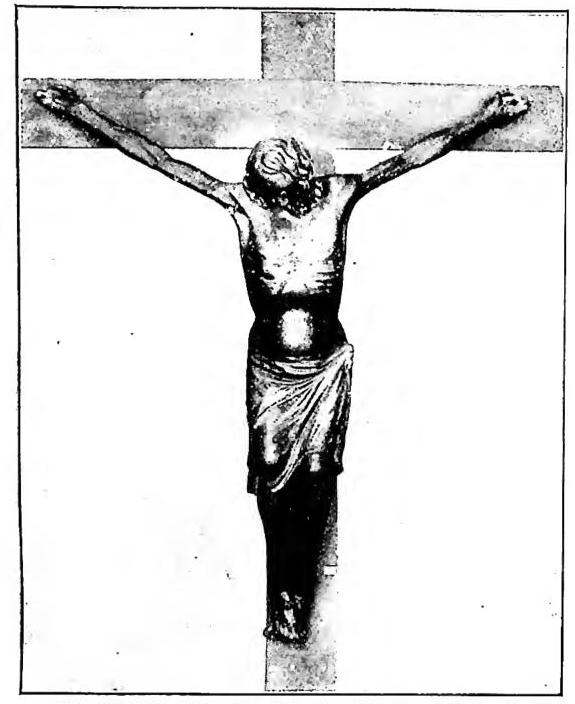
From the Romanesque period, few works remain: in architecture, the bell tower of the church of S. Maria Maggiore, from the 11th century, is a unicum; in painting, some 13th-century icons, including those of S. Domenico in S. Domenico and in S. Pietro Martire; in sculpture, however, a highly prolific production flourished throughout the Campanian region, yielding splendid wooden works: Crucifixes, Depositions, Madonnas, of which magnificent examples are preserved in the Duomo, S. Maria a Piazza, S. Aniello a Caponapoli, S. Giorgio Maggiore, and at the Gerolamini.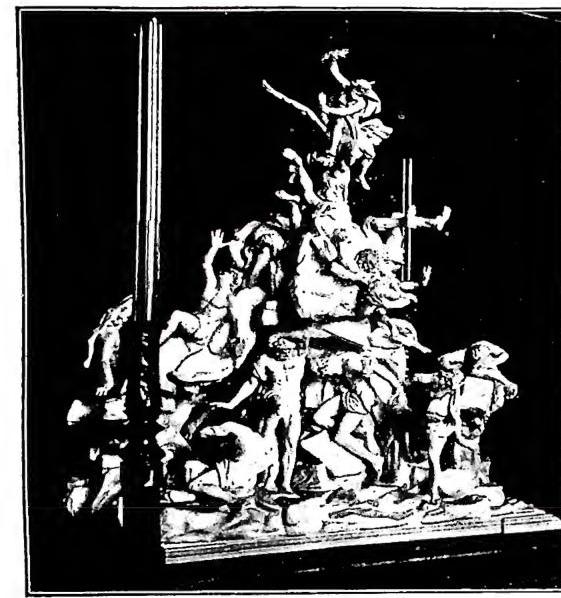
In sculpture, too, the initial contribution was made at the beginning of the Kingdom by French artists; but even more fruitful was the arrival in Naples of the Sienese Tino di Camaino, summoned by King Robert to sculpt the tomb of Maria of Hungary in Donnaregina, and who remained in the city until 1337. His works included the tombs of Carlo of Calabria, Maria of Valois in S. Chiara, Filippo of Taranto, and Giovanni of Durazzo in S. Domenico, in addition to a vast and debated series of fragmentary sculptures. To graft further Tuscan elements onto the cultural landscape of those years, the Florentines Paolo and Giovanni Bertini soon arrived, authors of the grand cenotaph of King Robert in S. Chiara, also disfigured by the great disaster that befell the church during the Second World War. Painting in 14th-century Naples represents an important chapter in art history: the Roman Pietro Cavallini first arrived and left frescoes in Donnaregina, followed by Simone Martini and finally Giotto, who, as sources attest, worked in S. Chiara, S. Barbara, and Castelnuovo on frescoes now all lost; local currents, in turn, continued in the wake of these masters, marking a particularly felicitous period for the figurative arts. The forms established in the Gothic age persisted throughout the first half of the 15th century, gradually adhering to other cultural elements from Catalonia, Burgundy, and Flanders. Yet Renaissance voices were not lacking, such as that of Donatello, who, together with Michelozzo, sculpted the tomb of Cardinal Brancaccio for S. Angelo a Nilo. It was not until the Aragonese Kingdom that the humanistic conception of the Renaissance was consolidated. To celebrate this period, one recalls the triumphal arch built in Castelnuovo for Alfonso of Aragon and the presence in Naples of artists such as Francesco Laurana, certainly one of the sculptors of the arch, Giuliano da Maiano, author of Porta Capuana, Rossellino, and Benedetto da Majano, to whom the Piccolomini Chapel in Monteoliveto is attributed, among others. In painting, where the consequences of foreign culture were especially lively, Colantonio emerged, notable for his mediating role between Flemish art and the southern formation of Antonello da Messina.
In the 16th century, local artists largely repeated the 15th-century forms. Among architects, the Calabrian Mormando, Maglione, d'Angelo, along with the Lombard Domenico Fontana, author of the façade of the Palazzo Reale, the Florentine Dosio, the Aquilan Father Valeriani, who built Gesù Nuovo, and the Spaniard Pirro Luigi Scrivà, who erected the new parts of the fortress of Castel S. Elmo for Don Pedro of Toledo, are noteworthy. In sculpture, a veritable school emerged, producing a series of remarkable artists throughout the century, until the arrival of the Tuscans Michelangelo Naccarino and Pietro Bernini. The leading figure was Giovanni da Nola; together with Gerolamo Santacroce, he drew inspiration from the Tuscan works of the church of Monteoliveto and, like the d'Auria and Annibale Caccavello, adorned Neapolitan churches and palaces with beautiful sculptures. 16th-century painting was influenced by many currents; at the beginning of the century, foreign artists such as Lo Zingaro, Rosso, Cesare da Sesto, and Giorgio Vasari came to paint in the city. A facile Mannerism thus took root in the local environment, evolving from the original style of Andrea da Salerno to the more rigid interpretations of Curia, Imparato, and Santafede.
The brief stay of Caravaggio in Naples, between 1606 and 1607, suddenly elevated these mediocre fortunes.
The 17th century was the golden age of Neapolitan painting. The Caravaggesque novelty, absorbed by three great painters—Battistello, Ribera, and Mattia Preti—gave rise to a school that, for three centuries, maintained uninterrupted prestige on the peninsula. From the immediate Caravaggism of Battistello, who in 1607 adopted the master’s own attitudes in the Liberation of St. Peter from Prison at the Pio Monte della Misericordia, to the more humid Riberesque style with lingering Mannerist residues, and finally to Preti’s personal vision, a new vitality infused Neapolitan painting and continued through all the artists of the century: Luca Giordano, Massimo Stanzione, Francesco Fracanzano, Andrea Vaccaro, Bernardo Cavallino, Salvatore Rosa, Micco Spadaro, Aniello Falcone, and into the 18th century with Solimena, who carried the stylistic memory of Caravaggio into the new era. A notable figure of the 17th century was also Cosimo Fanzago, architect, sculptor, and elegant decorator of church interiors with flourishing polychrome marble inlays.
In the 18th century, the influence of Solimena, who had followers in painting such as Sebastiano Conca, De Mura, and Bonito, was also alive in architecture and sculpture. Ferdinando Sanfelice, Domenico Antonio Vaccaro, the Palermitan Medrano, and the Florentine Ferdinando Fuga embellished the city with sumptuous buildings commissioned by the Bourbon kings, culminating in Luigi Vanvitelli, the greatest exponent of 18th-century architecture, who linked his name to the grand Royal Palace of Caserta. In sculpture, Queirolo, Celebrano, and Sammartino are remembered, the latter a renowned initiator of the minor art of the nativity scene, a characteristic and original expression of Neapolitan art.
The 19th century began in architecture with the refined Neoclassicism of Nicolini, author of the beautiful façade of the Teatro di S. Carlo and the Villa Floridiana. In the second half of the century, sculpture found a strong personality in Vincenzo Gemito, while painting, first with the School of Posillipo—including Giacinto Gigante, followed by Carelli and Smargiassi—then with Domenico Morelli, the Palizzi brothers, Gioacchino Toma, and Saverio Altamura, continued the great tradition of the preceding centuries. - Vedi tavv. CVII-CIX.