
ANTONELLO DA MESSINA. — Painter, born in Messina around 1430, died there in 1479. His activity first became known in 1457, when he was commissioned to produce a painting for Reggio Calabria. His oldest known work, the Christ Blessing, now in the National Gallery in London, dates from 1465. In 1475 A. was in Venice, where he painted the altarpiece of S. Cassiano, preserved in mutilated form in the Vienna Museum. At about the same time Galeazzo Maria Sforza summoned him to Milan as a court portraitist. In 1478 he was in Messina and undertook to paint a gonfalon for S. Maria di Randazzo.
A.’s artistic training is uncertain: in Naples he could certainly have become acquainted with Flemish art through originals and through local painters influenced by them, such as Colantonio, even without the journey to Flanders recounted by Vasari; the latter also credits him with
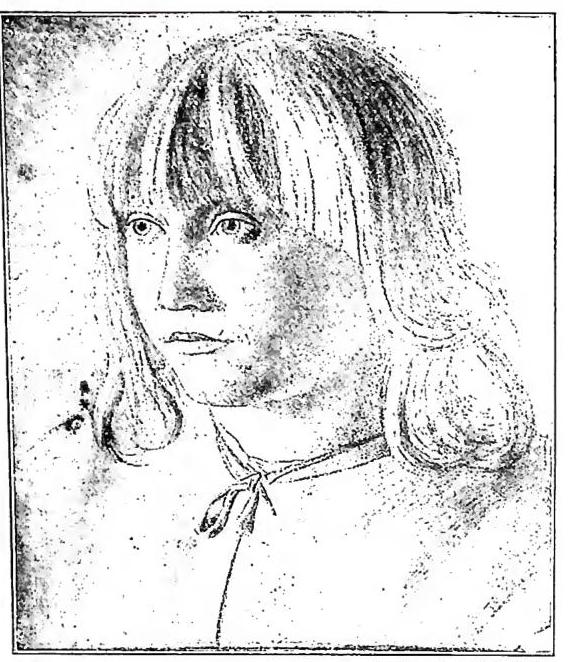
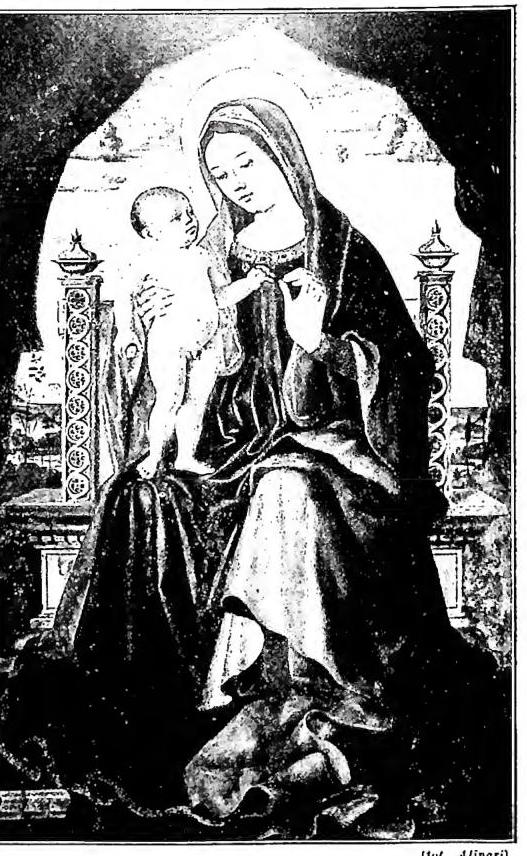
This learning enriched A.’s pictorial language, and he consequently conceived his portraits in a new and unusual manner for the fifteenth century, avoiding the traditional arrangement in profile or full face and introducing instead the three-quarter view: this type became the norm for Italian portraiture and spread universally.
A very clear example of the artist’s sense of volume is the Martyrdom of s. Sebastian in the Dresden Gallery; here A. seems to reduce the human figure—almost anticipating very modern tendencies—to its essential values as a geometric solid; the saint’s limbs are firmly modelled according to a form tending toward the cylindrical, an extremely bold attempt, moreover well situated within the humanistic taste, at the mathematical stylization of reality. But A. overcomes the danger of fleeing from reality through his innate sense of balance, and the purely stylistic conception is tempered by the reality of the object represented and, therefore, by the subject he must render; the religious character of the painting, consequently, is never lost from the painter’s view.
A.’s sojourn in Venice was decisive for the fortunes of that painting and also exerted an effective influence on Giambellino and Carpaccio: the influence of Mantegna yielded before A., who brought with him, also through the technique of oil painting, new refinements of colour that did not impair the solidity of the form.
Among A.’s other better-known sacred works are: the Annunciation in the Museum of Palermo; the Madonna and Saints in the Museum of Messina; the Annunciation in the Museum of Syracuse; the Crucifixion in Antwerp. His portraits are celebrated, such as the Condottiero in the Louvre and the Portrait of an Unknown Man in the Galleria Borghese in Rome. — Vedi Tav. CXX.