ITALIA

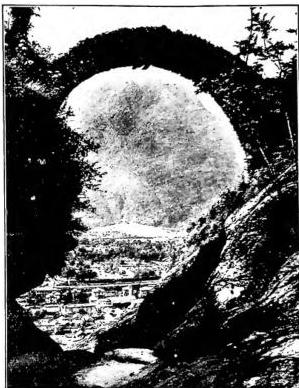
Image from page 241
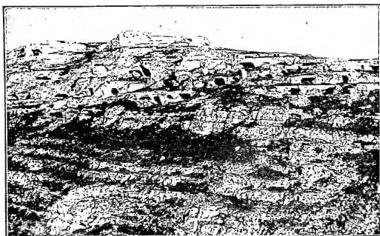
Image from page 241

ITALIA. - Titolo con il quale per lungo tempo si è chiamata l'antica versione latina della Bibbia, Volgata (v.). Ora tale terminologia è sostituita con quella di «antiche versioni latine» o Vetus latina oppure con «versioni pregerominiane», perché non si può parlare di una traduzione latina completa e omogenea della Bibbia prima di s. Girolamo (v. LATINE, VERSIONI della BIBBIA).

La denominazione I. figura solo in un oscuro testo di s. Agostino, che, parlando delle versioni bibliche, afferma: «In ipsis autem interpretationibus, i ceteris praeferatur, nam est verborum tenacior cum perspicuitate sententiae» (De doctrina christiana, II, 15, 22: PL 34, 46). Secondo alcuni s. Agostino indicherebbe la superiorità del testo diffuso in Italia su quello africano; secondo altri, con scarsa verosimiglianza, la nuova versione di s. Girolamo. Taluni, infine, considerano la lezione i. come corruzione di illa, di usitata o di Aquila, magari supponendo una lacuna nel testo.

Bibl.: D. de Bruyne, L'I. de st Augustin, in Revue bénédictine, 30 (1913), pp. 294-314; id., Encore l'I. de st Augustin, in Revue d'histoire ecclésiastique, 23 (1927), pp. 779-835; A. Vaccari, Alle origini della Volgata. I. I. e Volgata, in Civ. catt., 1915, IV, pp. 21-36; id., Una «I. fenice negli scritti di s. Agostino, ibid., 1929, IV, pp. 108-117; F. Cavallera, St Augustin et le texte biblique: l'I. in Bull. de litter. ecclés., 7 (1915-16), pp. 357-371, 410-28; id., Encore l'I. de st Augustin, ibid., 29 (1928), pp. 109-126; B. Botte, L'I. in Bull. de litter. ecclés., 27-28. Anelio Penna

ITALY. - The Italian region corresponds, in its natural boundaries, to that part of Europe which extends south of the Alpine arc, from the mouth of the Var to the Quarnaro.

SUMMARY:

I. Geography

II. Civil and ecclesiastical history

III. Ecclesiastical organization

IV. Legal status of the Church

V. Literature

VI. Art

VII. School system.

I. GEOGRAPHY.

The surface area of the Italian region is about 325,000 sq. km. That of the Italian State, however, as it emerged from the Second World War, remains somewhat below this figure (301,021 sq. km.), not only because of the recent mutilations on the western borders (Col du Mont Saint-Bernard, Mont Cenis Pass, Val Stretta, "hunting territories" on the headwaters of the Tinea and Vesubia rivers, and the upper and middle Val Roja: a total of 710 sq. km.) and eastern borders (Zara, Istria, middle and upper Isonzo Valley: 7,390 sq. km., not counting the 783 sq. km. of the Free Territory of Trieste), but also because the political boundaries of the territory after the war (310,190 sq. km.) did not coincide, even then, with the natural ones. Remaining and still remaining outside the Italian State, in addition to those already mentioned, are strips that geographically belong to the Italian region: the Principality of Monaco (1.5 sq. km.), Italian Switzerland (3,933 sq. km.), the County of Nice and Corsica (9,409 sq. km.), and the Maltese Archipelago (316 sq. km.).

Italy, which occupies a median position among the South European peninsulas, is the smallest of these: one-fifth of its area belongs to its insular part, two-fifths to the properly peninsular part, and the same to the continental part. Characteristic of its shape, which often resembles a boot, is the development of the peninsula forced into parallels and the strong disproportion between its length (1,200 km) and its width, which averages 350 km in the continental part and 150 km in the peninsular part. To this same obliquity is due the fact that this disproportion almost entirely disappears when one considers the external coordinates of latitude (from 47° 5' 30" N. of the valley of the Isonzo to 35° 20' 24" N. of the point of Cala Maluk on the island of Lampedusa) and those of longitude (from 6° 22' 59" E. Greenwich of the Rocca Chardonnett in the Cottian Alps to 18° 31' 18" E. of Cape Otranto): the difference is respectively 1° 36' 6" and 1° 58' 19". The advantages deriving from the position of the peninsula are evident: situated in the middle of the Mediterranean, between the two basins that constitute it, it appears as a bridge between opposite shores. It lies midway between the natural gateway (Gibraltar) and the artificial one (Suez Canal) of this basin, and thus along the sea, land, and air routes between the north-eastern Atlantic and Western Europe on the one hand, and Northern Africa, the Middle and Southern Asia, and Australia on the other.

In the physical geography of Italian territory, hills (40%) and mountains (39.6%) prevail. Plains occupy barely one-fifth of the surface area: of these, the only one that stands out for its size and complex geographical importance is the Po Valley, which the Alps and Apennines enclose on three sides and open onto the Adriatic with a broad lagoon rim. The Alps and Apennines, though orographically contiguous, differ not only in the greater average height of the former—of which the Apennines form only the shorter and steeper internal slope—but also in the less rugged forms of the latter, characterized by the presence of plateaus (Abruzzi) and volcanic zones (Anti-Apennines), as well as by the frequency of more or less extensive intermountain basins, which often correspond to filled lakes. The relief of the major islands can essentially be traced back to that of the Apennines (Sicily), though in Sardinia more distinctly Anti-Apennine features prevail and Corsica rather recalls the Alps. Taken together, both for the variety of structure and forms determined by their complex geological history, and for the juxtaposition, even over short distances, of uplifted and depressed zones or areas distinguished by the nature of their dominant rocks (typical, for example, in this regard, is the widespread occurrence of limestone in central-southern regions), and for the arrangement of mountain masses relative to the surrounding seas, and finally for the consequences they have had on the original plant cover or reveal in the distinctive economic vocations, the Italian landscape presents a rich range of nuances. The resulting regional compartmentalization is far more detailed than might appear from the 24 historical units recognized by tradition and administration: numerous toponyms still perpetuate, in local usage, the vitality of distinctions that suffice to characterize continental (Monferrato, Brianza, Cadore), peninsular (Lunigiana, Mugello, Marsica, Cilento), and insular (Valdemone, Gallura, Balagna; these are merely random examples) stretches, each possessing a more or less distinct geographical identity.

Such compartmentalization also reflects climatic and natural differences, given Italy’s considerable latitudinal extent, even though these are moderated, as regards thermal regimes, by the protective action of the Alpine barrier and the equalizing influence of the Mediterranean. Less distinctly maritime types occur in northern Italy, not so much because of its continental character as because of the proximity of the Pannonian-Balkan region; hence the notable thermal contrast between the Adriatic-facing side, which is more strongly influenced by it, and the Tyrrhenian side, which benefits from the warmth of the westerly winds. As for rainfall, which is more abundant in the Prealps and the upper Apennines and less so in the plains and especially in the Mezzogiorno, the average annual total exceeds 500 mm (and is considerably higher in the Alpine zone), and is therefore generally adequate for agricultural needs, except in certain areas (e.g., the Tavoliere of Puglia). It should be noted, however, that while rainfall tends to be concentrated in the summer season in southern Italy and the islands (which thus suffer from prolonged summer drought), the rest of the peninsula experiences two maxima (autumn and late spring), and the Alpine arc has a single summer maximum (with a winter minimum).

These climatic conditions, together with the shape of the territory and the arrangement of the relief, explain why Italy lacks major river arteries, with the exception of the Po (650 km; basin 75,000 km²), the only river comparable to the great European watercourses. The instability of their regimes, the steep gradients, and hence their poor navigability are characteristics common to almost all the others, and are especially marked in the Mezzogiorno and the islands. There are relatively numerous lakes, the largest of which lie along the Alpine chain, as well as coastal lagoons and the typical lagoons (e.g., the Venetian-Romagnol littoral). The presence of these latter, which attest to inadequate drainage of water in coastal regions, is linked to the spread of malaria, which for a long time constituted the most pernicious endemic disease afflicting Italy.

Article illustration

The Italian territory, inhabited since the most remote antiquity (at least from the Middle Paleolithic), constitutes one of the European zones with the highest population density. It is therefore not surprising that the original vegetation and fauna have undergone such profound transformations that they are recognizable only in fragments and residual forms. Both the Mediterranean maquis (an association of trees and shrubs with persistent leaves, characteristic of coastal and sub-coastal regions) and the woodland have almost everywhere given way not only to crops but also to pasture, while many marshy or flood-prone areas, or, on the contrary, dried-up ones, have also been reclaimed for agriculture. Moreover, this transformation continues today with land reclamation projects aimed at gaining ever new spaces for the growing population.

In the last hundred years, in fact, the population has more than doubled. The first official census of the population of the Kingdom of Italy (31 Dec. 1861) recorded the presence of 21.8 million inhabitants, corresponding, within the current borders, to a total of 25.6 million souls.

The average population density of Italy (153 inhabitants per sq. km.) is exceeded in Europe only by that of the United Kingdom (207) and Germany (193); the higher figures for Belgium (282) and the Netherlands (293) relate to territorial bases comparable to our regions. The population generally lives scattered in the countryside or gathered in small centers in the northern and central regions; it instead abandons the countryside and agglomerates in large villages and cities in southern Italy and the islands. Around 1800, however, there were only 5 urban centers in Italy with over 100,000 inhabitants (Naples with 400,000, Palermo with 200,000, Rome with 150,000, Venice with 140,000, and Milan with 130,000), and until twenty years ago none of our cities exceeded one million inhabitants. Today, there are 77 municipalities with more than 50,000 inhabitants (of which 65 are provincial capitals), and 14 have a population exceeding 100,000 inhabitants (Messina, Verona, Taranto, Padua, Brescia, Livorno, Reggio Calabria, Ferrara, Cagliari, La Spezia, Parma, Modena, Bergamo, Reggio Emilia), 6 have over 250,000 (Palermo, Florence, Bologna, Venice, Catania, and Bari), 2 over 500,000 (Turin and Genoa), and three over one million (Rome [1,650,000], Milan [1,287,000], and Naples [1,021,000]).

\[\begin{align*}
& \text{for } \alpha \in \mathbb{R}, \quad \text{let } \alpha = \alpha_1 + i \alpha_2 \in \mathbb{C} \\
\end{align*}\]

\[\begin{array}{c}
\text{Fig. 1. Schematic diagram of the experimental setup.} \\
\text{1.} \\
\text{2.} \\
\text{3.} \\
\text{4.} \\
\text{5.} \\
\text{6.} \\
\text{7.} \\
\text{8.} \\
\text{9.} \\
\text{10.} \\
\text{11.} \\
\text{12.} \\
\text{13.} \\
\text{14.} \\
\text{15.} \\
\text{16.} \\
\text{17.} \\
\text{18.} \\
\text{19.} \\
\text{20.} \\
\text{21.} \\
\text{22.} \\
\text{23.} \\
\text{24.} \\
\text{25.} \\
\text{26.} \\
\text{27.} \\
\text{28.} \\
\text{29.} \\
\text{30.} \\
\text{31.} \\
\text{32.} \\
\text{33.} \\
\text{34.} \\
\text{35.} \\
\text{36.} \\
\text{37.} \\
\text{38.} \\
\text{39.} \\
\text{40.} \\
\text{41.} \\
\text{42.} \\
\text{43.} \\
\text{44.} \\
\text{45.} \\
\text{46.} \\
\text{47.} \\
\text{48.} \\
\text{49.} \\
\text{50.} \\
\text{51.} \\
\text{52.} \\
\text{53.} \\
\text{54.} \\
\text{55.} \\
\text{56.} \\
\text{57.} \\
\text{58.} \\
\text{59.} \\
\text{60.} \\
\text{61.} \\
\text{62.} \\
\text{63.} \\
\text{64.} \\
\text{65.} \\
\text{66.} \\
\text{67.} \\
\text{68.} \\
\text{69.} \\
\text{70.} \\
\text{71.} \\
\text{72.} \\
\text{73.} \\
\text{74.} \\
\text{75.} \\
\text{76.} \\
\text{77.} \\
\text{78.} \\
\text{79.} \\
\text{80.} \\
\text{81.} \\
\text{82.} \\
\text{83.} \\
\text{84.} \\
\text{85.} \\
\text{86.} \\
\text{87.} \\
\text{88.} \\
\text{89.} \\
\text{90.} \\
\text{91.} \\
\text{92.} \\
\text{93.} \\
\text{94.} \\
\text{95.} \\
\text{96.} \\
\text{97.} \\
\text{98.} \\
\text{99.} \\
\text{100.} \\
\text{101.} \\
\text{102.} \\
\text{103.} \\
\text{104.} \\
\text{105.} \\
\text{106.} \\
\text{107.} \\
\text{108.} \\
\text{109.} \\
\text{110.} \\
\text{111.} \\
\text{112.} \\
\text{113.} \\
\text{114.} \\
\text{115.} \\
\text{116.} \\
\text{117.} \\
\text{118.} \\
\text{119.} \\
\text{120.} \\
\text{121.} \\
\text{122.} \\
\text{123.} \\
\text{124.} \\
\text{125.} \\
\text{126.} \\
\text{127.} \\
\text{128.} \\
\text{129.} \\
\text{130.} \\
\text{131.} \\
\text{132.} \\
\text{133.} \\
\text{134.} \\
\text{135.} \\
\text{136.} \\
\text{137.} \\
\text{138.} \\
\text{139.} \\
\text{140.} \\
\text{141.} \\
\text{142.} \\
\text{143.} \\
\text{144.} \\
\text{145.} \\
\text{146.} \\
\text{147.} \\
\text{148.} \\
\text{149.} \\
\text{150.} \\
\text{151.} \\
\text{152.} \\
\text{153.} \\
\text{154.} \\
\text{155.} \\
\text{156.} \\
\text{157.} \\
\text{158.} \\
\text{159.} \\
\text{160.} \\
\text{161.} \\
\text{162.} \\
\text{163.} \\
\text{164.} \\
\text{165.} \\
\text{166.} \\
\text{167.} \\
\text{168.} \\
\text{169.} \\
\text{170.} \\
\text{171.} \\
\text{172.} \\
\text{173.} \\
\text{174.} \\
\text{175.} \\
\text{176.} \\
\text{177.} \\
\text{178.} \\
\text{179.} \\
\text{180.} \\
\text{181.} \\
\text{182.} \\
\text{183.} \\
\text{184.} \\
\text{185.} \\
\text{186.} \\
\text{187.} \\
\text{188.} \\
\text{189.} \\
\text{190.} \\
\text{191.} \\
\text{192.} \\
\text{193.} \\
\text{194.} \\
\text{195.} \\
\text{196.} \\
\text{197.} \\
\text{198.} \\
\text{199.} \\
\text{200.} \\
\text{201.} \\
\text{202.} \\
\text{203.} \\
\text{204.} \\
\text{205.} \\
\text{206.} \\
\text{207.} \\
\text{208.} \\
\text{209.} \\
\text{210.} \\
\text{211.} \\
\text{212.} \\
\text{213.} \\
\text{214.} \\
\text{215.} \\
\text{216.} \\
\text{217.} \\
\text{218.} \\
\text{219.} \\
\text{220.} \\
\text{221.} \\
\text{222.} \\
\text{223.} \\
\text{224.} \\
\text{225.} \\
\text{226.} \\
\text{227.} \\
\text{228.} \\
\text{229.} \\
\text{230.} \\
\text{231.} \\
\text{232.} \\
\text{233.} \\
\text{234.} \\
\text{235.} \\
\text{236.} \\
\text{237.} \\
\text{238.} \\
\text{239.} \\
\text{240.} \\
\text{241.} \\
\text{242.} \\
\text{243.} \\
\text{244.} \\
\text{245.} \\
\text{246.} \\
\text{247.} \\
\text{248.} \\
\text{249.} \\
\text{250.} \\
\text{251.} \\
\text{252.} \\
\text{253.} \\
\text{254.} \\
\text{255.} \\
\text{256.} \\
\text{257.} \\
\text{258.} \\
\text{259.} \\
\text{260.} \\
\text{261.} \\
\text{262.} \\
\text{263.} \\
\text{264.} \\
\text{265.} \\
\text{266.} \\
\text{267.} \\
\text{268.} \\
\text{269.} \\
\text{270.} \\
\text{271.} \\
\text{272.} \\
\text{273.} \\
\text{274.} \\
\text{275.} \\
\text{276.} \\
\text{277.} \\
\text{278.} \\
\text{279.} \\
\text{280.} \\
\text{281.} \\
\text{282.} \\
\text{283.} \\
\text{284.} \\
\text{285.} \\
\text{286.} \\
\text{287.} \\
\text{288.} \\
\text{289.} \\
\text{290.} \\
\text{291.} \\
\text{292.} \\
\text{293.} \\
\text{294.} \\
\text{295.} \\
\text{296.} \\
\text{297.} \\
\text{298.} \\
\text{299.} \\
\text{300.} \\
\text{301.} \\
\text{302.} \\
\text{303.} \\
\text{304.} \\
\text{305.} \\
\text{306.} \\
\text{307.} \\
\text{308.} \\
\text{309.} \\
\text{310.} \\
\text{311.} \\
\text{312.} \\
\text{313.} \\
\text{314.} \\
\text{315.} \\
\text{316.} \\
\text{317.} \\
\text{318.} \\
\text{319.} \\
\text{320.} \\
\text{321.} \\
\text{322.} \\
\text{323.} \\
\text{324.} \\
\text{325.} \\
\text{326.} \\
\text{327.} \\
\text{328.} \\
\text{329.} \\
\text{330.} \\
\text{331.} \\
\text{332.} \\
\text{333.} \\
\text{334.} \\
\text{335.} \\
\text{336.} \\
\text{337.} \\
\text{338.} \\
\text{339.} \\
\text{340.} \\
\text{341.} \\
\text{342.} \\
\text{343.} \\
\text{344.} \\
\text{345.} \\
\text{346.} \\
\text{347.} \\
\text{348.} \\
\text{349.} \\
\text{350.} \\
\text{351.} \\
\text{352.} \\
\text{353.} \\
\text{354.} \\
\text{355.} \\
\text{356.} \\
\text{357.} \\
\text{358.} \\
\text{359.} \\
\text{360.} \\
\text{361.} \\
\text{362.} \\
\text{363.} \\
\text{364.} \\
\text{365.} \\
\text{366.} \\
\text{367.} \\
\text{368.} \\
\text{369.} \\
\text{370.} \\
\text{371.} \\
\text{372.} \\
\text{373.} \\
\text{374.} \\
\text{375.} \\
\text{376.} \\
\text{377.} \\
\text{378.} \\
\text{379.} \\
\text{380.} \\
\text{381.} \\
\text{382.} \\
\text{383.} \\
\text{384.} \\
\text{385.} \\
\text{386.} \\
\text{387.} \\
\text{388.} \\
\text{389.} \\
\text{390.} \\
\text{391.} \\
\text{392.} \\
\text{393.} \\
\text{394.} \\
\text{395.} \\
\text{396.} \\
\text{397.} \\
\text{398.} \\
\text{399.} \\
\text{400.} \\
\text{401.} \\
\text{402.}403.

404.

405.

406.

407.

408.

409.

410.

411.

412.

413.

414.

415.

416.

417.

418.

419.

420.

421.

422.

423.

424.

425.

426.

427.

428.

429.

430.

431.

432.

433.

434.

435.

436.

437.

438.

439.

440.

441.

442.

443.

444.

445.

446.

447.

448.

449.

450.

451.

452.

453.

454.

455.

456.

457.

458.

459.

460.

461.

462.

463.

464.

465.

466.

467.

468.

469.

470.

471.

472.

473.

474.

475.

476.

477.

478.

479.

480.

481.

482.

483.

484.

485.

486.

487.

488.

489.

490.

491.

492.

493.

494.

495.

496.

497.

498.

499.

500.

501.

502.

503.

504.

505.

506.

507.

508.

509.

510.

511.

512.

513.

514.

515.

516.

517.

518.

519.

520.

521.

522.

523.

524.

525.

526.

527.

528.

529.

530.

531.

532.

533.

534.

535.

536.

537.

538.

539.

540.

541.

542.

543.

544.

545.

546.

547.

548.

549.

550.

551.

552.

553.

554.

555.

556.

557.

558.

559.

560.

561.

562.

563.

564.

565.

566.

567.

568.

569.

570.

571.

572.

573.

574.

575.

576.

577.

578.

579.

580.

581.

582.

583.

584.

585.

586.

587.

588.

589.

590.

591.

592.

593.

594.

595.

596.

597.

598.

599.

600.

601.

602. \\
\text{603.} \\
\text{604.} \\
\text{605.} \\
\text{606.} \\
\text{607.} \\
\text{608.} \\
\text{609.} \\
\text{610.} \\
\text{611.} \\
\text{612.} \\
\text{613.} \\
\text{614.} \\
\text{615.} \\
\text{616.} \\
\text{617.} \\
\text{618.} \\
\text{619.} \\
\text{620.} \\
\text{621.} \\
\text{622.} \\
\text{623.} \\
\text{624.} \\
\text{625.} \\
\text{626.} \\
\text{627.} \\
\text{628.} \\
\text{629.} \\
\text{630.} \\
\text{631.} \\
\text{632.} \\
\text{633.} \\
\text{634.} \\
\text{635.} \\
\text{636.} \\
\text{637.} \\
\text{638.} \\
\text{639.} \\
\text{640.} \\
\text{641.} \\
\text{642.} \\
\text{643.} \\
\text{644.} \\
\text{645.} \\
\text{646.} \\
\text{647.} \\
\text{648.} \\
\text{649.} \\
\text{650.} \\
\text{651.} \\
\text{652.} \\
\text{653.} \\
\text{654.} \\
\text{655.} \\
\text{656.} \\
\text{657.} \\
\text{658.} \\
\text{659.} \\
\text{660.} \\
\text{661.} \\
\text{662.} \\
\text{663.} \\
\text{664.} \\
\text{665.} \\
\text{666.} \\
\text{667.} \\
\text{668.} \\
\text{669.} \\
\text{670.} \\
\text{671.} \\
\text{672.} \\
\text{673.} \\
\text{674.} \\
\text{675.} \\
\text{676.} \\
\text{677.} \\
\text{678.} \\
\text{679.} \\
\text{680.} \\
\text{681.} \\
\text{682.} \\
\text{683.} \\
\text{684.} \\
\text{685.} \\
\text{686.} \\
\text{687.} \\
\text{688.} \\
\text{689.} \\
\text{690.} \\
\text{691.} \\
\text{692.} \\
\text{693.} \\
\text{694.} \\
\text{695.} \\
\text{696.} \\
\text{697.} \\
\text{698.} \\
\text{699.} \\
\text{700.} \\
\text{701.} \\
\text{702.} \\
\text{703.} \\
\text{704.} \\
\text{705.} \\
\text{706.} \\
\text{707.} \\
\text{708.} \\
\text{709.} \\
\text{710.} \\
\text{711.} \\
\text{712.} \\
\text{713.} \\
\text{714.} \\
\text{715.} \\
\text{716.} \\
\text{717.} \\
\text{718.} \\
\text{719.} \\
\text{720.} \\
\text{721.} \\
\text{722.} \\
\text{723.} \\
\text{724.} \\
\text{725.} \\
\text{726.} \\
\text{727.} \\
\text{728.} \\
\text{729.} \\
\text{730.} \\
\text{731.} \\
\text{732.} \\
\text{733.} \\
\text{734.} \\
\text{735.} \\
\text{736.} \\
\text{737.} \\
\text{738.} \\
\text{739.} \\
\text{740.} \\
\text{741.} \\
\text{742.} \\
\text{743.} \\
\text{744.} \\
\text{745.} \\
\text{746.} \\
\text{747.} \\
\text{748.} \\
\text{749.} \\
\text{750.} \\
\text{751.} \\
\text{752.} \\
\text{753.} \\
\text{754.} \\
\text{755.} \\
\text{756.} \\
\text{757.} \\
\text{758.} \\
\text{759.} \\
\text{760.} \\
\text{761.} \\
\text{762.} \\
\text{763.} \\
\text{764.} \\
\text{765.} \\
\text{766.} \\
\text{767.} \\
\text{768.} \\
\text{769.} \\
\text{770.} \\
\text{771.} \\
\text{772.} \\
\text{773.} \\
\text{774.} \\
\text{775.} \\
\text{776.} \\
\text{777.} \\
\text{778.} \\
\text{779.} \\
\text{780.} \\
\text{781.} \\
\text{782.} \\
\text{783.} \\
\text{784.} \\
\text{785.} \\
\text{786.} \\
\text{787.} \\
\text{788.} \\
\text{789.} \\
\text{790.} \\
\text{791.} \\
\text{792.} \\
\text{793.} \\
\text{794.} \\
\text{795.} \\
\text{796.} \\
\text{797.} \\
\text{798.} \\
\text{799.} \\
\text{800.} \\
\text{801.} \\
\text{802.} \\
\text{803.} \\
\text{804.} \\
\text{805.} \\
\text{806.} \\
\text{807.} \\
\text{808.} \\
\text{809.} \\
\text{810.} \\
\text{811.} \\
\text{812.} \\
\text{813.} \\
\text{814.} \\
\text{815.} \\
\text{816.} \\
\text{817.} \\
\text{818.} \\
\text{819.} \\
\text{820.} \\
\text{821.} \\
\text{822.} \\
\text{823.} \\
\text{824.} \\
\text{825.} \\
\text{826.} \\
\text{827.} \\
\text{828.} \\
\text{829.} \\
\text{830.} \\
\text{831.} \\
\text{832.} \\
\text{833.} \\
\text{834.} \\
\text{835.} \\
\text{836.} \\
\text{837.} \\
\text{838.} \\
\text{839.} \\
\text{840.} \\
\text{841.} \\
\text{842.} \\
\text{843.} \\
\text{844.} \\
\text{845.} \\
\text{846.} \\
\text{847.} \\
\text{848.} \\
\text{849.} \\
\text{850.} \\
\text{851.} \\
\text{852.} \\
\text{853.} \\
\text{854.} \\
\text{855.} \\
\text{856.} \\
\text{857.} \\
\text{858.} \\
\text{859.} \\
\text{860.} \\
\text{861.} \\
\text{862.} \\
\text{863.} \\
\text{864.} \\
\text{865.} \\
\text{866.} \\
\text{867.} \\
\text{868.} \\
\text{869.} \\
\text{870.} \\
\text{871.} \\
\text{872.} \\
\text{873.} \\
\text{874.} \\
\text{875.} \\
\text{876.} \\
\text{877.} \\
\text{878.} \\
\text{879.} \\
\text{880.} \\
\text{881.} \\
\text{882.} \\
\text{883.} \\
\text{884.} \\
\text{885.} \\
\text{886.} \\
\text{887.} \\
\text{888.} \\
\text{889.} \\
\text{890.} \\
\text{891.} \\
\text{892.} \\
\text{893.} \\
\text{894.} \\
\text{895.} \\
\text{896.} \\
\text{897.} \\
\text{898.} \\
\text{899.} \\
\text{900.} \\
\text{901.} \\
\text{902.} \\
\text{903.} \\
\text{904.} \\
\text{905.} \\
\text{906.} \\
\text{907.} \\
\text{908.} \\
\text{909.} \\
\text{910.} \\
\text{911.} \\
\text{912.} \\
\text{913.} \\
\text{914.} \\
\text{915.} \\
\text{916.} \\
\text{917.} \\
\text{918.} \\
\text{919.} \\
\text{920.} \\
\text{921.} \\
\text{922.} \\
\text{923.} \\
\text{924.} \\
\text{925.} \\
\text{926.} \\
\text{927.} \\
\text{928.} \\
\text{929.} \\
\text{930.} \\
\text{931.} \\
\text{932.} \\
\text{933.} \\
\text{934.} \\
\text{935.} \\
\text{936.} \\
\text{937.} \\
\text{938.} \\
\text{939.} \\
\text{940.} \\
\text{941.} \\
\text{942.} \\
\text{943.} \\
\text{944.} \\
\text{945.} \\
\text{946.} \\
\text{947.} \\
\text{948.} \\
\text{949.} \\
\text{950.} \\
\text{951.} \\
\text{952.} \\
\text{953.} \\
\text{954.} \\
\text{955.} \\
\text{956.} \\
\text{957.} \\
\text{958.} \\
\text{959.} \\
\text{960.} \\
\text{961.} \\
\text{962.} \\
\text{963.} \\
\text{964.} \\
\text{965.} \\
\text{966.} \\
\text{967.} \\
\text{968.} \\
\text{969.} \\
\text{970.} \\
\text{971.} \\
\text{972.} \\
\text{973.} \\
\text{974.} \\
\text{975.} \\
\text{976.} \\
\text{977.} \\
\text{978.} \\
\text{979.} \\
\text{980.} \\
\text{981.} \\
\text{982.} \\
\text{983.} \\
\text{984.} \\
\text{985.} \\
\text{986.} \\
\text{987.} \\
\text{988.} \\
\text{989.} \\
\text{990.} \\
\text{991.} \\
\text{992.} \\
\text{993.} \\
\text{994.} \\
\text{995.} \\
\text{996.} \\
\text{997.} \\
\text{998.} \\
\text{999.} \\
\text{1000.} \\
\text{1001.} \\
\text{1002.} \\
\text{1003.} \\
\text{1004.} \\
\text{1005.} \\
\text{1006.} \\
\text{1007.} \\
\text{1008.} \\
\text{1009.} \\
\text{1010.} \\
\text{1011.} \\
\text{1012.} \\
\text{1013.} \\
\text{1014.} \\
\text{1015.} \\
\text{1016.} \\
\text{1017.} \\
\text{1018.} \\
\text{1019.} \\
\text{1020.} \\
\text{1021.} \\
\text{1022.} \\
\text{1023.} \\
\text{1024.} \\
\text{1025.} \\
\text{1026.} \\
\text{1027.} \\
\text{1028.} \\
\text{1029.} \\
\text{1030.} \\
\text{1031.} \\
\text{1032.} \\
\text{1033.} \\
\text{1034.} \\
\text{1035.} \\
\text{1036.} \\
\text{1037.} \\
\text{1038.} \\
\text{1039.} \\
\text{1040.} \\
\text{1041.} \\
\text{1042.} \\
\text{1043.} \\
\text{1044.} \\
\text{1045.} \\
\text{1046.} \\
\text{1047.} \\
\text{1048.} \\
\text{1049.} \\
\text{1050.} \\
\text{1051.} \\
\text{1052.} \\
\text{1053.} \\
\text{1054.} \\
\text{1055.} \\
\text{1056.} \\
\text{1057.} \\
\text{1058.} \\
\text{1059.} \\
\text{1060.} \\
\text{1061.} \\
\text{1062.} \\
\text{1063.} \\
\text{1064.} \\
\text{1065.} \\
\text{1066.} \\
\text{1067.} \\
\text{1068.} \\
\text{1069.} \\
\text{1070.} \\
\text{1071.} \\
\text{1072.} \\
\text{1073.} \\
\text{1074.} \\
\text{1075.} \\
\text{1076.} \\
\text{1077.} \\
\text{1078.} \\
\text{1079.} \\
\text{1080.} \\
\text{1081.} \\
\text{1082.} \\
\text{1083.} \\
\text{1084.} \\
\text{1085.} \\
\text{1086.} \\
\text{1087.} \\
\text{1088.} \\
\text{1089.} \\
\text{1090.} \\
\text{1091.} \\
\text{1092.} \\
\text{1093.} \\
\text{1094.} \\
\text{1095.} \\
\text{1096.} \\
\text{1097.} \\
\text{1098.} \\
\text{1099.} \\
\text{1100.} \\
\text{1101.} \\
\text{1102.} \\
\text{1103.} \\
\text{1104.} \\
\text{1105.} \\
\text{1106.} \\
\text{1107.} \\
\text{1108.} \\
\text{1109.} \\
\text{1110.} \\
\text{1111.} \\
\text{1112.} \\
\text{1113.} \\
\text{1114.} \\
\text{1115.} \\
\text{1116.} \\
\text{1117.} \\
\text{1118.} \\
\text{1119.} \\
\text{1120.} \\
\text{1121.} \\
\text{1122.} \\
\text{1123.} \\
\text{1124.} \\
\text{1125.} \\
\text{1126.} \\
\text{1127.} \\
\text{1128.} \\
\text{1129.} \\
\text{1130.} \\
\text{1131.} \\
\text{1132.} \\
\text{1133.} \\
\text{1134.} \\
\text{1135.} \\
\text{1136.} \\
\text{1137.} \\
\text{1138.} \\
\text{1139.} \\
\text{1140.} \\
\text{1141.} \\
\text{1142.} \\
\text{1143.} \\
\text{1144.} \\
\text{1145.} \\
\text{1146.} \\
\text{1147.} \\
\text{1148.} \\
\text{1149.} \\
\text{1150.} \\
\text{1151.} \\
\text{1152.} \\
\text{1153.} \\
\text{1154.} \\
\text{1155.} \\
\text{1156.} \\
\text{1157.} \\
\text{1158.} \\
\text{1159.} \\
\text{1160.} \\
\text{1161.} \\
\text{1162.} \\
\text{1163.} \\
\text{1164.} \\
\text{1165.} \\
\text{1166.} \\
\text{1167.} \\
\text{1168.} \\
\text{1169.} \\
\text{1170.} \\
\text{1171.} \\
\text{1172.} \\
\text{1173.} \\
\text{1174.} \\
\text{1175.} \\
\text{1176.} \\
\text{1177.} \\
\text{1178.} \\
\text{1179.} \\
\text{1180.} \\
\text

| Number of communes | Territorial area on Jan. 1 (sq.km.) | Resident population | Number of communes with population exceeding | Assessment on Jan. 1 (1000 ab.) |
| Piemonte | 1178 | 25.414 | 3.418 | 135 | 152 | 2 | 1 | 3.423 |
| Val d'Aosta | 73 | 3.263 | 83 | 26 | 38 | — | — | 93 |
| Lombardia | 1458 | 23.801 | 5.836 | 245 | 289 | 5 | 1 | 6.268 |
| Trentino-Alto Adige | 282 | 13.602 | 669 | 49 | 57 | 1 | — | 696 |
| Friuli-Venezia Giulia| 204 | 7.634 | 837 | 110 | 134 | 1 | — | 922 |
| Emilia Romagna | 333 | 22.123 | 3.339 | 151 | 166 | 7 | 2 | 3.478 |
| I. settentrionale | 4338 | 119.630 | 19.216 | 161 | 184 | 19 | 6 | 5.20.259 |
| Toscana | 280 | 22.086 | 2.978 | 130 | 136 | 6 | 1 | 3.097 |
| Umbria | 91 | 8.472 | 723 | 85 | 89 | 2 | — | 793 |
| Marche | 245 | 9.692 | 1.278 | 132 | 139 | 1 | — | 1.338| Central Italy | 982 | 58.332 | 7.634 | 131 | 137 | 9 | 1 | 2.8.504 |
| Abruzzi and Molise | 435 | 15.232 | 1.590 | 104 | 108 | 1 | — | 1.660 |
| Campania | 537 | 13.595 | 3.697 | 272 | 287 | 2 | — | 4.276 |
| Apulia | 247 | 19.346 | 2.642 | 137 | 142 | 3 | 2 | 3.155 |
| Calabria | 405 | 15.102 | 1.772 | 117 | 122 | — | 1 | 2.000 |
| Southern Italy | 1750 | 73.262 | 10.243 | 140 | 146 | 6 | 3 | 11.706 |
| Sicily | 368 | 25.707 | 4.000 | 156 | 164 | 3 | 2 | 4.413 |
| Insular Italy | 693 | 49.796 | 5.034 | 101 | 106 | 5 | 3 | 5.653 |
| Italian Republic | 7764 | 301.021 | 42.127 | 140 | 152 | 39 | 12 | 46.122 |
| Free Territory of Trieste | 718 | 348 | 470 | | | | | 373 |

Less than 50 percent of the active population lives on agriculture (including hunting and fishing), a third on industry (including transport and communications), less than one-tenth on commerce (including credit and insurance); the remainder is employed in public administration (4.3 percent), domestic economy (3.6 percent), the liberal arts and worship (1.5 percent), etc. This distribution refers to the 1936 census: fifty years ago agriculture alone absorbed three-fifths and industry less than one-quarter of the same total.

Only 7.8 percent of the State’s territorial surface is unproductive; the agricultural and forest surface is divided as follows: arable land 43.2 percent, woods and chestnut groves 18.6 percent, specialized woody crops 7.8 percent, productive waste land 5.1 percent, meadows, meadow-pastures and permanent pastures 17.4 percent.

The Mediterranean character of Italian agriculture is well illustrated by its most typical products and also by the limited specialization of crops, since herbaceous crops are normally grown together with tree crops (mulberry, vine, olive, almond, etc.). Cereal production, although relatively significant (second place among European states, the U.S.S.R. for wheat; third for maize), does not cover domestic requirements, so that the relevant items usually figure among the most substantial imports. In the past, wines and oils sustained a respectable export trade, but now the only agricultural products that weigh significantly in exports are dried fruit and citrus fruits, though the latter must now face growing, successful competition.

Italy has a modest livestock patrimony (in millions of head, 1948: 9.4 sheep; 7.9 cattle; 3.8 swine; 2.2 goats; 1.6 equines), further damaged by the two recent wars. Northern Italy was known for its flourishing silkworm breeding: the average cocoon harvest exceeded 300,000 quintals in normal times, securing for Italy first place in Europe for silk production.

Forest reserves are negligible (timber is one of the leading items in imports) and the benefit derived from fishing is modest, essentially limited to national waters.

The last great world conflict severely damaged Italian industry, which, after 1900, had made substantial progress despite the country’s unfavorable position due to the absolute lack or scarcity of essential raw materials. Among energy sources, the only one of which Italy has an abundance is hydroelectric power, with over a million installations producing a total of 20.8 million kWh in 1949; however, aside from the uneven regional distribution of these plants, the major domestic consumption centers (energy is imported from Switzerland) cannot be supported except to a minimal extent by fossil fuels (primarily lignite) or liquid fuels (limited to Emilia), or by the notable production of methane (236.2 million cubic meters in 1949). Among metallic minerals, only mercury, aluminum (though lacking entirely in cryolite), lead, and magnesium stand out.

This severely hampers the expansion of heavy industry to meet demand, and the same can essentially be said for other sectors (consider, for instance, the lack of cotton), with the exception of food industries and a few minor ones. Nevertheless, the abundance of labor, the high level of skill among the workforce, and the traditional industriousness and ingenuity of the Italian people have enabled Italian industry to rank among the foremost in Europe, both in terms of production volume and technical excellence. This is especially true of the textile sector (silk mills, cotton fabrics, artificial fibers, and wool), which, concentrated in the Po Valley and Venetian regions, not only met national demand but also generated a strong export trade.

The remarkable progress in the national economy that occurred over the last fifty years could not, however, prevent the trade balance from closing in deficit; this deficit was normally offset by remittances from emigrants, by the resources of the maritime industry, by the freight earnings of merchant shipping, and by the interest on capital invested abroad. Typically, 60 percent by value of imports consisted of raw and semi-finished materials required by industry, 20 percent of raw materials or foodstuffs, and the remainder of manufactured goods. In exports, approximately 40 percent consisted of finished products, 30 percent of specialized foodstuffs (wines, oils, citrus fruits, fruits, etc.), 20–25 percent of semi-finished goods, and the remainder of raw materials. Germany ranked first both as a customer and as a supplier, followed at a considerable distance by the United States, Great Britain, and France. The recent postwar period has brought notable shifts: in 1949, the United States alone absorbed 35.3 percent of imports, followed by Australia (5.6 percent), Argentina (5.3 percent), and Germany (4.4 percent), while in exports Argentina held first place (12.3 percent), followed by Great Britain (10.6 percent), France (5.7 percent), and Switzerland (5.5 percent).

Article illustration

Germany ranked first both as a customer and as a supplier, followed at a considerable distance by the United States, Great Britain, and France. The recent postwar period has brought notable shifts: in 1949, the United States alone absorbed 35.3 percent of imports, followed by Australia (5.6 percent), Argentina (5.3 percent), and Germany (4.4 percent), while in exports Argentina held first place (12.3 percent), followed by Great Britain (10.6 percent), France (5.7 percent), and Switzerland (5.5 percent).

Internal communications are served by a road network of over 170,000 km (of which 21,000 are state roads and 42,000 provincial roads), not counting the 600 km of highways (almost all in northern Italy). The railways (23,222 km in 1942), heavily damaged during the war, have now essentially returned to their prewar efficiency (21,643 km in 1950), while road transport has seen significant growth and now surpasses prewar figures. In 1939, Italy ranked sixth in the world in terms of merchant fleet tonnage (3.5 million tons) and among the top for the efficiency of its services; despite the losses sustained (tonnage reduced to 2.6 million tons in 1950), the country is regaining this position. Civil aviation (41,033 km of routes in 1949) has also rebounded after the wartime hiatus.

In 1939, Italian control extended over a territory of more than 3.5 million sq km with a population of 14.3 million.

| Territories | Area in sq km | Population | Density per sq km |
|-------------|---------------|------------|-------------------|
| Albania | 27,538 | 1,064,000 | 39 |
| Sasono | 6 | 100 | 17 |
| Europe | 27,544 | 1,064,100 | — |
| Libyan Provinces | 553,940 | 874,000 | 2 |
| Libyan Sahara | 1,205,600 | 51,000 | — |
| Italian East Africa | 1,725,330 | 12,165,000 | 7 |
| Africa | 3,484,870 | 13,090,000 | — |
| Italian Aegean Islands | 2,682 | 122,400 | 46 |
| Asia | 2,682 | 131,200 | — |
| Total | 3,515,096 | 14,285,300 | — |

The fate of former Italian Africa remains uncertain, Somalia (v.), which was returned to Italy by a UN resolution (21 Dec. 1949), with a mandate to administer it under a trusteeship system and prepare it for independence.

Bibl.: G. Marinelli, La terra, IV, Milano 1897; T. Fischer, La penisola II. Saggio di coreografia scientifica, Torino 1902; H. Nissen, Italische Landeskunde, Berlin 1883-1902; G. De Lorenzo, Geologia e geografia fisica dell'I. meridionale, Bari 1904; G. Greine, J. Breslau 1925; P. Gribaudi, L'I., Torino 1925; G. Pullè, L'I. continentale, Firenze 1925; id., L'I. peninsulare ed insulare, ibid. 1926; N. Krebs, I. (Geographie des Welthandels, 1), Vienna 1926, pp. 815-68; O. Maull, I., in Länderkunde von Südeuropa, ibid. 1929, pp. 133-298; E. Migliorini, s. V. ENOCH. Ital., XIX (1933), pp. 693-1063 (richissima bibliografia); H. Kanter, I., in Handbuch der geogr. Wissenschaft: Südeuropa, Berlin-Potsdam 1933, pp. 289-425; A. Marescahh-L. Visentin, Atlante agricolo dell'I., Novara 1935; Ass. Muri, I. Caratteri generali, Milano 1936; Comt. naz. II. per la geografia, La localizzazione delle industrie in I., Roma 1937; D. Gribaudi, Ambiente fisiogeografico ed ampiezza della proprietà terriera con particolari riguardo all'I., colore riguardo all'I., Roma 1940.

Torino 1939; A. Crispo, Le ferrovie italiane: storia politica ed economica, Milano 1940; Dizionario di politica, s. v., II, Roma 1940, pp. 591-681; G. Dainelli, Atlante fisico-economico di I., Milano 1940; F. Ercella, Distribuzione della temperatura in I., Roma 1942; V. GIURATI, Caratteristiche ambientali italiane, agraria, sociali e demografiche, ibid. 1943; A. J. White, The evolution of modern I., 1939-1919, Oxford 1944; G. Volpe, L'I. moderna: 1815-1915, Firenze 1945; J. Thomas, The problems of I.: an economic survey, London 1946; G. Tremelloni, Storia dell'industria italiana contemporanea, Roma 1947; G. Vedovato, Il Trattato di pace con l'I., ibid. 1947; G. Merlin, Le regioni agraria in I., Bologna 1948.

II. CIVIL AND ECCLESIASTICAL HISTORY

### 1. GEOLOGY

Italy is the image of a providential design, with its powerful physical unity, clearly defined within the framework of natural borders—the Alps and the sea—and internally connected by the branches of the Apennines and the numerous river arteries that crisscross the Peninsula in every direction.

Formed in the depths of the sea in the remotest millennia and first raised above the waters with the crystalline rocks that form the intimate framework of the Alpine system and with the Calabro-Sicilian zone of the Apennine chain, later covered by the sea and again emerged with other lands for some time welded to Africa, then separated by fractures, corrugations and various immersions, later filled in the great inlet at the foot of the Alps with alluvial deposits, covered here and there by volcanic eruptions, while the glaciers melted and receded, Italy is found almost definitively constituted in the Quaternary age in the midst of the Mediterranean, like an immense mole thrust southward, toward the Levant, and to the north connected to the Danubian region.

A geological torment, to which there seems to correspond an equal torment in its historical life, where emersions and immersions, fractures and recompositions of moral and political life perpetually alternate in the troubled world of Mediterranean and then European civilization.

But Italy’s geological past always weighs upon its historical becoming, determining constant influences no less

on the conformation of civilization than in plant and animal life.
The most ancient connection with Africa influenced the primitive flora and fauna of Italy; the Mediterranean nature on reciprocal exchanges between regions; volcanic development on soil fertility; the richness of the coasts on marine life; the variety of internal regions on the flourishing of local separatism; but in compensation, the frequency of valleys cut by rivers facilitates communications and ties even between distant regions.

29. THE NAME

It is derived from a tribe of the most ancient Indo-European stage, situated at a point in Bruttium (modern Calabria) that took its name from the calf (vitello vittiu: bull, ox), certainly the sacred animal of the group; rendered by Greek writers as ‘Iταλíα. The name extended as far as Tarentum (4th century), then to central Italy (3rd century) from the Arno to the Rubicon, and in the administrative reform ordered by Augustus it reached the Alpine circle from the Var to the Arsia in the Istrian peninsula: “haec est Italia diis sacra” (Pliny, Nat. hist., III, 5, 46). The origin of the name is confirmed by the fact that at the outbreak of the Social War (90–87 BC) provoked by the Italic Allies (Marsi, Samnites, Lucanians) for the equalization of rights with Rome, the rebels chose the bull as their monetary symbol and gave the name Italica to the city of Corfinium, center of the insurrectionary movement.

Other names of Italy are: Hesperia, for its western position relative to Greece; Ausonia, a Greek form of Aurunci, an Oscan people bordering the Greek colonies of southern Italy; Eutria, from an eponymous Eutrius, colonizer of the land; the historian Antiochus of Syracuse (5th century, in Dion. Hal., I 35, followed by Aristotle, Polit., VIII, 1329 b) derived the name Italy from an eponymous Italus.

30. THE EARLIEST PEOPLES

Italy too, like all the peoples of Europe, after the Paleolithic and Neolithic ages, had a Neolithic age not unlike that of the rest of Europe, which initiated metallurgy with the first imperfect alloys of copper and preceded the Bronze Age, followed in turn by the Iron Age, which, in the Mediterranean, unlike other regions, falls within recorded history.

Its geographical position made it a great crucible where all the human elements of the great Mediterranean civilization met and coexisted, in its variety of dolichocephalic-mesocephalic types in the south and brachycephalic or Alpine types in the north, with funeral rites differing from place to place, from the most ancient inhumation to cremation. Therefore, various prehistoric civilizations flourished in Italy, but they are attributed to peoples mostly autochthonous and ascribed to a single race, the dolichocephalic Mediterranean race.

The descendants of this stock, which is Mediterranean, and which populates the entire peninsula and the islands, preserving the ancestral custom of inhumation, are known by the name of Ligurians, who, akin to the Iberians, were widespread in northern Italy, part of central Italy, Corsica and Sardinia, Malta and Pantelleria, with different local names; the others, in southern Italy, and authors seem to attribute to them the first painted pottery.

Over these Neolithic peoples there supervened, descending through the Julian Alps from transalpine countries, the Indo-Europeans in two waves: an earlier one (c. 2500 B.C.) that cremated its dead and occupied a large part of the peninsula, reaching as far as eastern Sicily; and a later one (1500 B.C.) that inhumed its dead and already possessed iron.

Thanks to this double immigration, without entering into too minute distinctions and subdivisions, often of debatable material, the ethnographic situation of Italy is as follows:

A. Italic Indo-Europeans: 1. Latins, settled in the center of Latium; Faliscans around Civita Castellana. To the east and south of Latium: Aequi in the upper valley of the Aniene, Volsci from the Lepini Mountains to the sea, Hernici in the territories of Ferentino and Anagni.

2. Italics of the Osco-Umbrian group, also called Umbro-Sabellic: Sabines (Safini), in the centers of Terni and Rieti; Umbrians, settled in the upper course of the Tiber; Marsi, in the basin of the Fucino; Peligni, to the west of this basin; Picentes and Pretuzi, on the Adriatic coast between Ancona and Adria; Vestini and Marrucini on the same coast on either side of the Pescara; Campani, in Campania; Samnites, in the mountainous center, with capital Bovianum; Frentani on the slopes
ITALY -

Article illustration
(Photo Bremestampa, Turin)
Italy - Ponte Lunetto - Premosello (Novara).
Ponte Lunetto - Premosello (Novara).

A. Italic peoples: Latins in Latium; Umbrians in Umbria; Sabines in the Apennines; Picentes along the Adriatic coast from Ancona to the Tronto; Samnites in the central Apennines; Frentani on the Adriatic coast of the Abruzzi; Marsi in the central Apennines; Peligni in the Abruzzi; Vestini along the Adriatic coast; Marrucini in the Abruzzi; Paeligni in the Abruzzi; Sabellians in the central Apennines; Lucani from the Tyrrhenian coast to the Gulf of Taranto; Bruttii in present-day Calabria.

B. Non-Italic Indo-European peoples: Greeks of Magna Graecia and Sicily; Celts in northern Italy, subdivided into the tribes of the Insubres, around Lakes Maggiore and Como; Cenomani, around Lakes Iseo and Garda; Lingones, south of the lower course of the Po; Boii, between the Po and the Apennines; Sisones in the Adriatic between Ravenna and Ancona; Sicels and Sicanians in eastern and central Sicily; Veneti, an Illyrian tribe, settled in the Veneto and Istria; Iapygians, another Illyrian tribe, settled in Apulia and subdivided into the three tribes of the Dauni, in northern Apulia below the Gargano, the Peucetii to the southeast of the former, and the Messapi in the present-day Salento peninsula, once called Calabria.

C. Non-Indo-European peoples: Ligurians from the mouth of the Arno to the Ticino; Corsicans; Sardinians; Elymians, on the western tip of Sicily; Etruscans, between the Apennines and the Tyrrhenian Sea; Phoenicians in certain points along the western coast of Sicily and in Sardinia.

31. INFLUENCES OF EXOTIC CIVILIZATIONS: PHOENICIANS, GREEKS,
ETRUSCHI. — From 1000 onward, Phoenician ships sailed the Mediterranean and, according to Thucydides, preceded the Greeks in frequenting the coasts of Sicily, occupying the promontories and adjacent islands. However, nothing Phoenician came to light from explorations of the eastern side of Sicily, unlike the western side.

Phoenician tombs are found in Malta, but not earlier than the 7th century, at Motya, Solunto, and Panormus, especially in the latter, a very famous port and support point in the Tyrrhenian for Phoenician expansion that spread from Sicily to Sardinia. Nora seems to have been the oldest city on the island, the oldest Phoenician colony, succeeded in importance by Cagliari. But Phoenician culture had little influence on the island, lacking originality and reducing itself to a decorative repertoire drawn from Mycenaean art. Of a very different nature was Greek influence, which intensified during the 8th and 7th centuries BC, during the Hellenic colonial movement. It was the Greeks, not the Phoenicians, who transmitted to the peoples of Italy the use of writing, with forms derived from ancient Hellenic alphabets, and, with writing,

much of their knowledge in poetry, science, and law, in religion and philosophy.

Magna Graecia was the name given to the vast region they occupied, including the southern part of the peninsula where the main colonies were Tarentum, Sybaris, and Croton. Tarentum had the longest duration; Sybaris, legendary for the softness of its customs, was later subdued by Croton, famous for its athletes. In Sicily, the city most notable for monuments was Syracuse, but Gela, Agrigentum, Messana, and, further west, Segesta, Selinus, and Himera—considered by Strabo as part of Magna Graecia—should also be remembered. On the mainland, instead, Cumae was one of the richest, built on a volcanic rock, an active landing place for merchants who brought Greek vases in exchange for grain; a bulwark of Italic civilization and mediator of Hellenic civilization to the peoples of Italy. A colony of Cumae was Neapolis, the new city. Rivals of the Greeks were the Carthaginians, who were only to be expelled from Italy by Rome.

A third ethnic and cultural element, also of exotic origin, is represented by the Etruscans. While the Greeks clung tightly to the coast, preferring the hills that jutted out over the sea, almost as if to shield themselves from the interior, and there founded a colonial city equipped with a port, the Etruscans instead entered through the forests and river valleys into the open plain and immediately pushed into the interior of the Italian region, seeking to establish a center of territorial organization, a capital. Their origins are controversial; some consider them of transmarine origin, which is the most probable thesis; others derive them from transalpine regions and descended later from the Po Valley into Tuscany. Despite the veil of obscurity surrounding their language, the Etruscans concentrated especially in the territory of the Umbrians between the Tyrrhenian Sea, the Arno, and the Tiber, where they settled with a firmness unmatched elsewhere. The time of their arrival is also uncertain: some place their Tyrrhenian beginnings around 1000 B.C., others three centuries later. The Etruscan nation enjoyed a magnificent and luxurious development, suggesting a highly refined and aristocratic civilization. The 6th century saw the tombs of the Golds, exquisitely crafted with the jewels adorning them, particularly the tombs along Lake Bolsena near Capodimonte. The city of Volterra was a rich one with a vast perimeter; it had Cyclopean walls five meters thick and seven kilometers in circumference. Etruria was a dodecapolis, a confederation of twelve cities bound by an annual meeting at a location where a common sanctuary stood.
32. ETRUSCAN INFLUENCE ON THE LATINS

Toward the end of the 7th century, the Etruscans crossed the Tiber and blockaded the early villages of Rome: according to legend, this marked the end of Rome’s monarchical period with three Etruscan kings, credited with uniting the various villages on the left bank of the Tiber into a single city.

The greatest temple of Rome, dedicated to the Capitoline triad, was built by Etruscan craftsmen. Regarding religion, V. TURCHIA, RELIGIONE degli. The Etruscans not only gave the Romans and Italics their temples, dwellings, and tombs but also the orientation of temples and the street grid on which houses were arranged; their customs and practices, funeral games, gladiators, symbols of power such as the fasces, the construction of walls and gates, and the architectural and engineering arts applied to public works.

In the 6th century, expanding into Latium and toward the sea, they occupied Campania, where Capua was the principal city. Even more notable was their settlement in the Po Valley, which is dated around 500 B.C. The Etruscans of the Arno Valley, having crossed the Apennine passes, would have emerged into the broad plain that they populated with cities, some on stilts: Adria, Mantua, Ravenna, Bologna, Rimini, Cesena, Modena, Parma, Piacenza. The powerful warlike invasion of the Gauls ruined all the work of organization already undertaken and carried forward by the Etruscans toward the Alps, thus delaying the achievement of this natural frontier by the unified peninsular peoples. Overall, the Etruscan conquest proved extensive rather than solid. A confederation of several cities, each with full autonomy, not a compact bundle of forces; a regime of city-states, as in Greece; not a unitary state, but small states.

Here, by contrast, is the work of Rome: the gradual, continuous rise of a single city that absorbed everything around it through a rigidly unitary policy. This is what explains the disappearance of the Etruscans and the absorption of all other peoples into the great Roman framework, after the fall of the Etruscan stronghold at Vico, which stood opposite Rome on the banks of the Tiber.

33. THE HISTORICAL PROBLEM OF ITALY

Even in earliest times the peoples of Italy displayed a strong tendency toward differentiation from place to place, in government, customs, methods of labor, and age-old rites. To the geographical unity there stands in contrast the variety of life and peoples. The question whether it is possible to speak of an Italian population fused by Rome through its political unification must be answered in the affirmative, in the sense that Rome left Italy united. The idea of an operation rich in centuries past; so much so that regional differences in dialect, costume, and physical type still persist in Italy. The same idea does not annul the fundamental unitary character of Italian history. For this has been facilitated by the geographical unity of the country; by the fact that four of the most widely diffused populations within it—Italic, Greek, Celtic, and Illyrian—belong to the same Indo-European stock, while the Latins, situated at the center of the Italian region on the banks of a navigable river, at the border of the civilized peoples of Etruria and Campania, created a political system that, after subduing the peoples, facilitated their progressive assimilation.
BIBL.: G. De Sanctis, Storia dei Romani, Torino 1907, spec. chaps. 2–5; A. Pignani, Essai sur les origines de Rome, Paris 1917, chaps. 1–3; G. Pinza, Storia delle civiltà antiche d’Italia, 1923; Fr. von Duhn, Italische Gräberkunde, I, Heidelberg 1924; H. J. Rose, Primitiva culture in Italy, London 1926; G. Patroni, Le origini preistoriche d’Italia, 1927; U. Rellini, Le origini della civiltà italica, Roma 1929; G. Devoto, Gli antichi Italici, Firenze 1931.

34. ROME AND ITS CONQUESTS

The founding of Rome is dated to 754-753 B.C. The first historical period of the city was the regal period (754-509), followed by the Republic, which lasted until 23 B.C. and constituted the most constructive epoch in Roman history. Territorial expansion was accompanied by class struggles arising from conflicts of economic interests and from the plebeians' desire to be legally equated with the patricians. The conquest of Italy took nearly 300 years and was the most arduous undertaking.

The conquest of Italy perhaps attracted Rome to the Mediterranean. But the coincidence with Carthage’s rise to greatest power in these waters, on the western side from Spain to Sicily, made conflict between Rome and Carthage inevitable. From the Punic Wars Rome emerged territorially greatly enlarged, dominating both sides of the Mediterranean almost entirely. With the defeat at Zama (202 B.C.) Carthage lost Spain and Sicily. By pursuing Hannibal into the East and after victories over Antiochus of Syria, Rome occupied Macedonia and Greece and opened the way to Asia. By 146 B.C. it held undisputed sway over the Mediterranean.

Serious was the struggle opened by the Italians against Rome; having cooperated in Rome’s great conquests they demanded equality with the Romans in privileges and civil rights, which were attached to the status of Roman citizenship within the city of Rome.

Spartacus stirred up the masses of slaves; Mithridates, king of Pontus, stirred up the East; Catiline conspired against the Senate; pirates impeded maritime traffic. Already Rome was experiencing the gravity of pressure from the Germanic tribes acting along the Alpine line and overflowing into the Po Valley. Among army leaders grew the attractions of fortune and the temptations to risk all. Power was no longer an element of order but prey to ambition; Caesar and Pompey aspired to it, as Marius and Sulla had before. While Pompey contended with Mithridates for the lands of the East, Caesar subdued Gaul, the first episode in the conquest of the Empire. The attempt by Caesar, Pompey and Crassus to divide command over the Republic’s lands resulted in armed conflict between the first two after Crassus’ death in a clash with the Parthians, and ended in Caesar’s victory, making him absolute master of Rome.

Though he posed as a democratic reformer and by his laws declared himself a friend of the people, his guise as an almost omnipotent dictator inspired a republican conspiracy that saw in him a threat to the old form of government (March 44). But Brutus, who wished to be the defender of liberty, killed Caesar, not caesarism. A triumvirate between Octavian, Caesar’s heir, Antony and Lepidus ended in a struggle between Antony and Octavian and saw the latter’s triumph after the naval victory of Actium (31 B.C.).

9. THE ROMAN EMPIRE. By restoring the Republic in appearance, Octavian gave rise to a monarchical regime: the Principate. The territory subject to Rome was divided into 18 provinces: ten senatorial provinces for which the Senate appointed governors; the other eight were imperial provinces, governed directly by legates of Augustus. The principal merit of the imperial regime was its particular concern for their conditions.

The imperial age marks the highest point in Rome’s organization at the peak of its spatial, architectural, and monumental development.

From the shores of the Atlantic, the Empire extended to regions near the Caucasus, and from the limits of the African deserts to a large part of Britain, leaving indelible marks of civilization everywhere with its roads, bridges, aqueducts, its sense of order and discipline, the rule of law, and the unity of right.

Even more remarkable was the rise of Christianity, which overturned local deities, unified peoples in the worship of one God, and brought a revolution to the moral, juridical, and social order of the classical world.

Octavian imposed a truce on party strife and proclaimed the pax romana. In foreign policy, he aimed to create a frontier line to protect Roman territory from barbarian invasions; yet the Rhine-Danube line was not crossed, except to acknowledge the superiority of the Germanic tribes beyond II.
Caesarean power reached its zenith by drawing closer to the absolutist traditions of the East and dissolving into a military government that, given the vastness of its borders, could barely be sustained by the strength of its own army. Thus it had to resort to the aid of barbarian elements, accepting ever more humiliating and dangerous agreements, while Roman society lapsed into political servitude, outwardly sweetened by public games and masked in the eyes of the rich by the growing labor of slaves. Nevertheless, the Epicurean spirit spreading through Roman society did not divert attention from the study of other moral questions, and culture reworked the philosophical thought of the Elfald, which helped consciences to better grasp the innovative force of Christianity. Poetry attained artistic dignity with the great poets of the golden century. Stoicism helped to endure the harshness of the political moment by turning the soul toward a resigned acceptance of even tyranny. This tyranny intensified in the early years of Augustus; it was mitigated by acts of kindness, years of peace, and improvements in the condition of slaves, the poor, and orphans under the Antonine emperors.

Public offices lost their political prestige. The Romans abandoned their old magistracies; civic consciousness waned, and participation in government was no longer an ambition for the citizen.

Then political and military events profoundly transformed the structure of the Empire, especially following the disturbances that endangered its integrity during the 3rd century. The division into East and West had now matured: the former of Latin language, the latter predominantly of Hellenistic language. With this, Rome ceased to be the directing centre of government and administration, which for the West was for a time moved to Milan and Trier; Constantine in 332 founded Constantinople, the new Rome, which became the true capital of the East.

To reform the army, the recruits from Italy were no longer sufficient; all the provinces of the Empire contributed, and even that was not enough: it was necessary to resort to barbarian auxiliaries who entered the Empire in force before attacking it as invaders. They already held some provinces in custody. Theodosius had to cede them some lands in the Balkans in 378 A.D., admitting them as federates of the Empire; the Goths mounted guard on the Danube.

Indeed, the barbarians wished to prolong the life of the Empire by replacing the Germans with the Romans in the army and in the higher organs of government: such was the plan of Ataulf when he married Galla Placidia, the daughter of Theodosius. The plan failed due to opposition from internal groups, jealous of the Roman nationality, offended by foreign contacts. At the beginning of the 5th century, the Western Empire took refuge in Ravenna as a safer place; in Rome remained the head of the universal Church, which, with the collapse of institutions, rose to defend the Italian people. Pope Leo I went to meet the terrible Attila and obtained that he spare part of Italy, delaying its sack. But the breach was open. Rome itself was repeatedly attacked and plundered. The barbarians no longer appeared as isolated war bands, but as masses of people without a homeland or land who wanted to settle on the rich soil of the Empire.

The attempt succeeded with Odoacer, leader of the Heruli, who, having deposed Romulus Augustulus, the last emperor in the West, to whom he granted an annual pension, sent the imperial insignia of the West to Constantinople to give concrete form to the new fact: the cessation of direct imperial authority in the West (476 A.D.).

Italy had become a barbarian kingdom, which still claimed to be Roman, indicating the two types of subjection to the sovereign. Odoacer initiated the traditions of the Regnum in contrast to the old Imperium, but he did not dare to call himself king of Italy; with greater respect for the supremacy of the East he called himself king in Italy.

The fortunes of Odoacer roused the ambitions of Theodoric, king of the Ostrogoths, who, favoured by the policy of the East to weaken barbarians with other barbarians, drove out Odoacer and established a new kingdom at Ravenna. But in vain were his dreams of placing himself in the Roman tradition and removing the contrast between the barbarian element and Roman civilisation; as soon as he died, the latter sought to stifle the former, until the East, with Justinian (q.v.), reasserted its supremacy with the end of the Gothic wars, which left all Italy in ruins. The Byzantine regime in turn was overturned by the Lombard invasion (568), with which, it may be said, the Middle Ages began.

Bibl.: Of the greatest importance are the epigraphic sources, particularly the CIL, especially vols. I, IV, V, VI, IX, X, XI, XIV, XV. P. Ducati, L'Italia antica, Milano 1938; R. Paribeni, L'Italia imperiale, ibid. 1941; A. Piganiol, Histoire de Rome, Paris 1949, with extensive information on the most recent research.

35. CHRISTIANITY IN ITALY

Rome did not intend to impose its specific religious forms in Italy and then throughout the Empire, nor to destroy the traditional cults and shrines of individual places with which were closely bound up the public manifestations of the social life of the inhabitants. It was however inevitable that with the predominance of the new political order the local religious traditions should decline: and with their progressive disappearance they would cease to constitute a social force, reducing themselves at most to mere personal superstitions. The common bond and

it marked the transition to legitimism, the cult of Rome and the emperor became established, since he embodied the ruling power; even the new priestly colleges supplanted those proper to each city or region. Soon, however, the oriental cults of Isis, Cybele, Mithras, etc., gained wide popularity among the various social classes. The soldiery, merchants and slaves carried these cults everywhere, sometimes creating capricious syncretisms of rites and beliefs. Against this heterogeneous blend of religious practices, which persisted in Italy until the 4th century and beyond, Christianity opposed its spiritual intransigence, grounded in a coherent body of truth and a precise moral code.

By the mid-1st century it was already established in Rome and from there spread first to Latium and Campania. Unfortunately, almost no details survive about the subsequent phases of its diffusion, especially in the southern regions and the islands. Local traditions, though late, attempt to trace the origins of their churches back to St Peter and his immediate disciples; in any case, no appeal is made anywhere to apostles of other provenance. Naturally, the major centres in turn became centres of evangelization and organization for the surrounding cities. This was especially true of Ravenna for Emilia by the late 2nd century, Milan for Liguria at the beginning of the 3rd, and somewhat later Aquileia for Venetia and Istria.

The fact that central Italy had many cities, each independent of the others, meant that numerous episcopal sees sprang up there from the outset, unlike the northern regions where cities were comparatively few. It is known, moreover, that in 251 some sixty bishops—if not all, then at least the great majority of them Italians—were present at a council in Rome; and since not all bishops could have been present, the number of sees must have been even greater.

With this first organization, the Italian Churches overcame the imperial persecutions. Details on this matter are also lacking. The martyrs, numerous especially in Rome and in the surrounding areas most deeply Christianized, were not absent from other regions either, particularly during the reign of Maximian, but there are no reliable historical sources offering precise and certain data. With the Constantinian peace, Christianity spread deeply, and new episcopal sees were founded in all the provinces, both through the zeal of the Roman pontiffs and through the spirit of proselytism, which must have been quite lively. Nor did the Arian controversies, which certainly had their repercussions in Italy (it suffices to mention the Council of Rimini in 359) and particularly in Milan and Aquileia, delay the definitive establishment of the new faith. It was especially St. Eusebius of Vercelli and later St. Ambrose of Milan who promoted the rise of new Churches; the same must have occurred through the work of the bishop of Aquileia in the Veneto and in the neighboring transalpine provinces. However, while throughout the early Middle Ages there was no other intermediate authority between the bishops and the pope, in Cisalpine Italy, between the 4th and 5th centuries, the two great metropolitan sees of Milan and then Aquileia were established in the north. Milan presided over Liguria and later Raetia I, Aquileia over the Veneto and Istria, Raetia II, Noricum, and Upper Pannonia. Political considerations led, in the advanced 5th century, to the establishment of the metropolitan see of Ravenna in Emilia. The bishops of the three northern metropolitan sees gathered around their metropolitans; the bishops of peninsular Italy and the islands, however, regularly gathered every year around the Roman pontiff to address current needs; only occasionally did representatives of the entire Italian episcopate gather in Rome.

The controversies regarding Pelagian doctrines had only fleeting repercussions in the clergy of the Veneto; instead, a serious rift arose within the Italian episcopate in the mid-6th century as a result of the condemnation of the "Three Chapters" decreed by the Council of Constantinople in 553. Suspecting that the work of St. Leo the Great had been diminished, the bishops of central and northern Italy protested against the Emperor and against Pope Pelagius I. The bishops of Tuscany and the Ravennate area yielded. Those of the metropolitan sees of Milan and Aquileia, however, gave rise to a schism that ended in Milan at the beginning of the 7th century, but lasted throughout that century in Aquileia, leading to the patriarchate of Aquileia in Lombard territory and that of Grado in the region still subject to the Empire; even after the schism ended, the original unity of the metropolitan see could not be restored.

Alongside the definitively organized hierarchy there arose a new force that was not independent of it, but soon acquired an autonomous development: that of monasticism. Introduced into Italy on the example of the East after the middle of the 4th century, it found followers among the clergy who continued to gather around their bishop, but especially among lay men and women with an initially uncertain organization, oscillating between the eremitical and the cenobitic life, i.e., communal life. It was St Benedict of Nursia (q.v.) who, during the Gothic wars, from the heights of Monte Cassino compiled a Rule that gave absolute preference to cenobitism by establishing communities in which, alongside prayer, work—particularly agricultural work—was made obligatory. Spread also among the barbarian peoples, it was at once a powerful unifier of spirituality in the midst of a world threatened with brutishness through hatred and moral and social misery, and a unifier of civil life by contributing, through work and fraternal coexistence, to the gradual rebirth of better economic and social relations. Later, to Benedictine monasticism was added that of Eastern origin, which reached as far as Rome but had particular expansion in southern Italy and Sicily (q.V. BASILIANS OF ITALY).

Thus organized, the Church in Italy confronted the barbarian invasions and the upheaval of public institutions that ensued. A new task began alongside that entrusted by its Divine Founder: that of saving the relics of civilization and of supporting and directing its efforts toward new destinies.

BIBL.: In addition to general histories of the Church, such as L. Duchesne, *Histoire ancienne de l'Église*, 3 vols., Paris 1910–20; id., *L'Église au VIe siècle*, 1915, and Fliche-Martin-Frutaz, vols. I–V; for particular bibliography on the various topics and figures in ancient Italian Church history, cf.: T. Hodgkin, *Italy and her Invaders*, 8 vols., London 1880–1900; C. Diehl, *Essai sur l'administration byzantine dans l'exarchat de Ravenne*, Paris 1888; F. Savio, *Gli antichi vescovi d'Italia*, 3 vols., Turin 1899–Bergamo 1932; A. Harnack, *Missione e propagazione del cristianesimo*, Italian trans. by P. Marucchi, Turin 1906 (repr. Milan 1945); U. Moricca, *Storia della letteratura latina cristiana*, 3 vols., Turin 1923–34; Lanzoni; P. Batiffol, *Le siège apostolique de St Damase à St Léon le Grand*, ibid. 1924; H. Lietzmann, *Petrus und Paulus in Rom*, 2nd ed., Berlin 1927; J.-R. Palanque, *St Ambroise et l'Emprise romain*, Paris 1933; G. Lucchesi, *Note agiografiche sui primi vescovi di Ravenna*, Faenza 1941; T. Grossi, *S. Benedetto e la sua opera verso la Chiesa e la società*, Turin 1943.

II. THE MIDDLE AGES

The brief reconstitution of Italian unity, albeit under Byzantine dominion with its capital at Ravenna, was completely overturned by the invasion of the Lombards. These barbarians, having descended (568) without any imperial investiture, began on their own initiative an enterprise that led them to establish a kingdom exclusively their own with its capital at Pavia and with two almost autonomous appendages: the Duchies of Spoleto and Benevento, which occupied nearly the entire mountainous backbone of the Apennines. But their ambition did not stop there: after recovering from internal upheavals, they turned their sights on the cities of Apulia and Lucania, where they encountered the Byzantines and later the Muslims; they also aspired to conquer the cities of Campania, pressed upon Ravenna and the Pentapolis, and from Tuscany toward Rome. The Italian populations, however, despite the heresies (Monothelitism and the Iconoclastic Controversy) that Constantinople sought to impose even by force, intended to remain faithful to the Empire, perhaps even providing for their own defense through their own initiatives; it still represented civilization against barbarian systems, and it was not desired that these should supplant the *lex Romana*. In this reaction, the Roman pontiffs were at the forefront, and not even the conversion of the Lombards altered their political-national relations with them, so much so that when the last Lombard kings, having already occupied Ravenna, thought they had Rome in their grasp, the popes, in defense of what still remained of Roman civilization—including the Venetian lagoons and Istria—resorted, in full agreement with the urban nobility, to the intervention of the Franks. Even the Eastern Empire did not oppose this intervention, thinking that it might be useful to drive out the barbarians with other barbarians, in accordance with the maxim of Byzantine policy. But Charlemagne, who led the Franks into Italy in 773, acted differently: he proclaimed himself king of the Lombards, that is, of the northern kingdom and the two duchies, and secured for the Holy See the *patrimonia sancti Petri*, namely the lands that the Lombards had not yet firmly occupied, while the Byzantines retained in the south the territories still subject to their rule. At Christmas of the year 800, Pope Leo III, evidently in obedience to a classical tradition, reconstituted with Charlemagne the Western Empire with the idea of having a qualified defender for Rome and for the Western Church, which at that moment was almost entirely within his dominion. From then on, he became not only king of the Lombards but also Roman emperor (a title that would endure until the dawn of the 19th century), though precisely in Rome and its dependencies he was not truly sovereign, and his authority met that of the Pope; this was certainly not without conflict for him and his successors. Thus began a brilliant, though brief, period during which feudalism matured, great lay principalities and later ecclesiastical ones were established, and the great monasteries that arose everywhere extended their influence. An unaccustomed principle emerged: only Catholicism, guided by the pontiff, was to govern consciences, inform the laws, correct customs, and direct the conversion of the infidels.

A fresh resurgence of barbarism, arising from the decline of Frankish rule and the invasion of the Hungarians, raged during the brief period of the national kings; meanwhile the Muslims, having conquered Sicily, infiltrated the entire peninsula, and it was only with difficulty that they could be resisted and driven out. The great feudal lords, at odds with one another, strove to wrest privileges from the sovereign and to make themselves as independent as possible; yet by weakening the sovereign’s power they weakened themselves, both against the common enemy and against their own subjects, who sought to do to them what they did to the sovereign—dividing up possession (which was a good thing), but also dividing power, increasing arbitrariness, and often setting land against land, castle against castle. Bishoprics and monasteries, by receiving gifts of land and enriching themselves with exemptions and privileges, likewise became secularized in this fragmentation of power. They surrounded themselves with vassals, supplanted the counts even in the governance of cities, and by the end of the 9th century this was already the case with the bishops of Parma, Reggio, Arezzo, Trento, Novara, Vercelli, and Aquileia. Other sees, such as Milan, though lacking direct dominion over the cities, exercised extended control over castles, valleys, rivers, and the like. The abbey of Farfa (like that of Montecassino in the south) wielded such power that it dared to contend even with Rome. All this gradually drew prelates into the orbit of the sovereign, to whom they were bound by service and oath and from whom they received investiture of the feudal rights attached to their office, creating an easy confusion between the spiritual and the temporal. This in turn encouraged sovereigns and princes to interfere in the internal affairs of the Church, to appoint bishops and abbots at their own discretion, and to claim tithes for themselves. Ancient legal institutions and concepts decayed; high ecclesiastical offices were all too often entrusted to rough men-at-arms and ambitious courtiers, ready to dissipate ecclesiastical patrimony for the benefit of partisans and vassals, with little concern for ecclesiastical discipline. Simony became commonplace, and even relations with the supreme ecclesiastical authority threatened to bend before the greed of powerful urban families and the pressure of the feudal world, which engulfed all operative forces, religious and national alike.

With the rulers of the Saxon house, the Holy Roman Empire was reconstituted in the service of the German nation and now included the Kingdom of Italy in the north; yet in vain did these sovereigns attempt to exert their authority in the south, which remained far less influenced by feudal institutions. To emancipate themselves from feudal constraints and create new, more civil relations would henceforth be the aim of both the popes and the Italian people, stirred by fresh spirits and forces.More conscious and more programmatic, it finds its strength in the spiritual awakening, largely due to the great monastic reforms that follow one another until they take concrete form with the Franciscan movement that arose in Italy at the beginning of the 13th century, and with the Dominican one, which found in Italy its most favorable environment; both achieved complete independence from the feudal system. When this was at its height (mid-12th century), the moral reform of the Church gained strength, which, under Gregory VII, also assumed a juridical aspect in the struggle for investitures, lasting half a century, whose result was a clearer definition of the freedom and rights of the Church. This struggle had its dramatic episodes in Italy, and the emperors of the Franconian house vainly expended their best energies there. Meanwhile, the Normans succeeded in forming a solid unitary kingdom in southern Italy, soon adding to it Sicily, reconquered from the Muslims, and triumphing over the various regional elements that kept the country divided. The papacy maintained its dominion in central Italy, much weaker and less organized than the Norman one. In the north, more dramatic and complex events unfolded, in which the ecclesiastical reform proceeded in tandem with popular movements of a social and political nature. Multiple forces were shaping a new age, rich in promise: the maritime cities—Venice, Genoa, Pisa, Amalfi—had the Mediterranean as their field of action and, under the pressure of a freer and more expansive economy, tended toward becoming independent republics with their own spheres of commercial exploitation. In the cities of the interior, thanks to specialized craftsmen,

Through a wise exchange of money, an astute bourgeoisie, and industries, the Commune organized itself socially and politically above the power of the bishop and in opposition to the feudal lords of the countryside.

The city proudly denied the old tributes to the Caesar from beyond the Alps and rejected his envoys as foreign elements to Italy. A dispute arose between the cities, which aspired to a life of their own, and the Swabian emperors, who sought to keep them within their orbit of servitude. Supported by the Church, which aimed to strengthen and make more effective the freedom won through the struggle for inviolability, the cities formed leagues, fortified themselves with the new motto *libertas*, and inscribed the new law of Italy in their Statutes. The Empire was defeated. The victory of Legnano removed the obstacles to the development of the Commune, an Italian creation and the architect of all future history.

The Commune was an expansive force: it conquered the countryside, subdued rural feudalism, dominated the great trade routes, and created around itself ever-wider political and economic units, paving the way for the modern state. It had its own finances, its own army (which sometimes included a merchant fleet), organized military leagues, waged war on other communes, and dreamed of broad dominion. The exigencies of war centralized power, lulled democratic forms to sleep, and paved the way for small and large local and regional dictatorships.

From this arose the larger and more complex organisms—signorie and principates—which gave rise to the problem of a more unified and secure political order. They attempted both federal solutions (such as the idea of Cola di Rienzo) and unitary solutions (as with Gian Galeazzo Visconti in Milan and Ladislao, king of Naples). Hopes were raised, only to be dashed by mutual jealousies, local liberties, the immaturity of national consciousness, and, above all, the balance of power among those aspiring to form a great kingdom, so that the efforts of one side were paralyzed by those of the opposite. Unity seemed a threat to liberty. Under these conditions, only a system of political equilibrium could be achieved, one that Lorenzo the Magnificent’s personal prestige alone managed to prolong.

Yet such an equilibrium, sustained by petty expedients and fallacious compromises, could not produce lasting agreements. None of the contracting states—Milan, Venice, Florence, Naples—was willing to renounce its autonomy and remained distrustful of the others. When the great monarchies of Europe, France and Spain, militarily stronger and asserting spurious claims, hurled their armies onto the peninsula, Italy found no collective force of resistance in time, and Italy lost its freedom.

BIBL.: Fonti: per il medioevo occupano il primo posto le opere di L. A. Muratori, Rerum Italicarum scriptores, 25 vol., Milano 1723-51 (una riedizione, voluta da G. Carducci, iniziata dal 1900, non ha ancora compreso tutto il materiale raccolto dal Muratori, mentre sono pubblicati alcuni voll. di accensioni), e Antiquitates Italicae medii aevi, 6 voll., Milano 1738-43. Inoltre: Historia patriae monumenta, edita iussu regis Caroli Alberti, 24 voll., Torino 1836-84; le Fonti per la storia d'I. (Roma 1890 seg.) e i Regesta chartarum Italiae (ivi 1907 seg.) dell'Istituto storico italiano per il medioevo; i Monumenta, le Miscellanee e i periodici delle Società e Deputazioni di storia patria (particolare) lamente importante la Miscellanea di storia italiana, della Deputazione di Torino (1862 seg.). che riguarda la storia di tutta la penisola); il Bullettino dell'Istituto italiano (1842 seg.). Alcuni testi vanno ricercati nella PL, altri nei MGH; altri ancora non sono nelle collezioni. Sono pure da consultare per i documenti imperiali J. F. Böhmert, Regesta imperii, voll. I-II, Innsbruck 1889-93 (2a ed. del I vol., ivi 1908); voll. V-VII, ivi 1881-88; voll. III, ivi 1887; per quelli pontifici: Jaffé-Wattenbach; Potthast; P. F. Kehr, I. pontificia, 8 voll., Berlino 1906-35.

Studies: F. Dahn, Urgeschichte der germanischen und romanischen Völker, 4 vols., Berlin 1881-88; F. Gregorovius, Storia della Città di Roma nel Medio-Evo, 4 vols., Italian trans., Rome 1900; F. Chalandon, Histoire de la domination Normande en Italie et en Sicile, Paris 1907; L. Halphen, Études sur l'administration de Rome au Moyen Age (751-1252), Paris 1907; L. M. Hartmann, Geschichte Italiens im Mittelalter, 3 vols., Gotha-Leipzig 1897-1911; L. Duchesne, Les premiers temps de l'État Pontifical, Paris 1911; L. Fliche, La Réforme Grégorienne, 2 vols., Louvain 1924-25; F. Schneider, Rom und Morgenlande im Mittelalter, Munich 1926; H. Grisar, Roma alla fine del mondo antico, 2 vols., 2nd ed., Rome 1931; G. Volpe, Il Medioevo, 2nd ed., Florence 1932; R. Morghen, La concessione dell'Impero romano-germanico e la tradizione di Roma da Carlo Magno a Federico II, in Rend. Acc. Lincei, ser. VI, vol. XIII, 1936; E. Jordan, L'Allemagne et l'Italie aux XIIe et XIIIe siècles, Paris 1939; G. Romano-A. Solmi, Le dominazioni barbariche in Italia (395-888), 3rd ed., Milan 1940; L. Salvatorelli, L'Italia compresa dagli inizi del sec. XI alla metà del sec. XIV, 2 vols., ibid. 1940; E. Garin, Il Rinascimento italiano, Milan 1941; G. Falco, La Santa Romana Repubblica. Profilo storico del Medio Evo, Naples 1942; E. Dupré Theseider, L'idea imperiale di Roma nella tradizione del Medioevo, Milan 1942; L. Sorrento, Medievalia, Brescia 1943; Ch. Petit-Dutaillis and P. Guinard, L'Essor des états d'Occident, 2nd ed., Paris 1944; P. Brezzi, Roma e l'Impero medievale, Bologna 1948; N. Valeri, L'Italia nell'età dei Principi, Milan 1949; L. Salvatorelli, Italia medievale, Milan n.d.; R. Cessi, Regnum ed Imperium in Italia, Bologna 1949; G. Fasoli, I Re d'Italia, Florence 1949; G. Mollat, Les Papes d'Avignon, 10th ed., Paris 1950; L. Simeoni, Le Signorie, Milan 1950.

36. MODERN AND CONTEMPORARY ERA

a) The conquest of Italy. — “The year 1494: most unhappy year, the first of wretched years,” wrote Guicciardini, though he could not conceal his great astonishment at the wealth of our cities: robust as economic organisms, masters of art and science, notable centers of a new movement of civilization, sustained by the protection of popes and lords.

The contrast that disturbed Guicciardini lay in the existence of a civil superiority of Italy, compromised at the very moment when Italy itself was about to become the most coveted prey of the great monarchies of Europe, strong in their political unity.

Italy is a constellation of five major states that laboriously balance one another: Milan, Venice, Florence, Rome, Naples; smaller states are also independent: Savoy, Mantua, Ferrara, Saluzzo, Modena, Genoa; Sicily and Sardinia are dependent on the Aragonese of Spain.

Crumbled and therefore weak, worn down by internal jealousies, incapable of lasting agreements, Italy becomes the common object of the ambitions of the rising powers, for Italy means the richest treasure of Mediterranean goods and fortunes, an open road to Asia and to Africa; with numerous ports, merchant and war fleets, banking and industrial wealth, a robust reserve of men, arms, and provisions. At first France and Spain, then the Empire, Switzerland, and the Turks set their sights on the conquest of Italy or part of II.
b) Attempts by French kings. — France develops an Italian policy invoking old rights over Lombardy and the Kingdom of Naples, no longer thinking of the other shore. It abandons its aspirations toward England: it even renounces expansion toward Flanders, Germany, and Spain in order to have Italy. Charles VIII, although he had taken the title of “King of Sicily and of Jerusalem,” aspires only to the Kingdom of Naples as heir of the Angevins.

His government disapproves of this war: it does not see what security a land so distant can provide. But his love of adventure spurs him on, as it does Ludovico il Moro, usurper of Gian Galeazzo and related by marriage to the King of Naples; even more, the Neapolitan barons, in conflict with the crown, urge him toward conquest. The enterprise meets with no resistance because of the superiority of Charles VIII’s artillery. Having crossed the Col di Tenda in September 1494, he passes through Milan after obtaining a promise of free passage from the Duke, and heads toward Florence; Piero de’ Medici, son of Lorenzo the Magnificent, pays him homage, but is forced to leave his city where the people are in ferment. When the King seeks to impose odious terms on the Republic, he finds himself facing the threat of Pier Capponi and desists from his demands. At Rome he forces Alexander VI to come to terms. On 22 February of the following year he enters Naples, greeted by the barons, and takes possession of the kingdom. Swift as the success of French arms was, a coalition soon forms between Spain, the House of Austria, Venice, Milan, and Alexander VI: the beginning of a policy of alliance that arises around the Italian question; Charles VIII, overwhelmed by the forces of the league, barely carves out a passage at Fornovo (6 July 1495) and retreats to France.

In 1498 Charles VIII died without heirs. He was succeeded by his cousin Louis XII (1498–1515) of the Valois-Orléans line. Already lord of Asti in Italy, he assumed the title of King of the Two Sicilies and Duke of Milan, claiming the Milanese as heir of Valentina Visconti, daughter of Gian Galeazzo. He allied with Venice, to which he promised Cremona and the Ghiara d’Adda, and entrusted command of his troops to Gian Giacomo Trivulzio, a Milanese. The Moro fled to Germany, gathered forces there, but was defeated at Novara and taken to France as a prisoner, where he ended his days. Louis XII remained lord of Milan. From there, allied with Cesare Borgia, the son of Alexander VI who had carved out his own lordship in several cities of the Marches and Romagna, he moved to conquer Naples. Secret agreements with Ferdinand of Aragon, King of Spain and Sicily, for a partition of the Kingdom embroiled him in disputes over borders that cost him the renunciation of the Kingdom (1504). Naples became, with Sicily, a province of the Kingdom of Spain.

The Venetians, grown in power with the acquisition of Cremona, the Ghiara d’Adda, and some ports in Apulia and cities in Romagna, seemed on the verge of dominating the peninsula, so that Machiavelli wrote: “Either it will be a door that will open all Italy to them, or it will bring about their ruin.”

After the death of Alexander VI in 1503, Julius II ascended the papal throne and, to reclaim the cities of Romagna that had been seized from him, joined the League of Cambrai with the German emperor, France, and Spain against Venice (1508). Venice, defeated at Agnadello (1509), surrendered to the pope and to the King of Spain its new possessions. Julius II then resolved to drive the French from Italy by force through another league, the Holy League (8 Oct 1511). It included the Spaniards, the imperials, then the English, the Swiss, and even the Republic of Venice. The peninsula was again reshaped. Maximilian Sforza, son of the Moro, received the Duchy of Milan. The Republic of Florence, which had sided with the French, was overthrown and returned to the Medici (Aug. 1512). Parma and Piacenza were ceded to Pope Julius II; the Swiss took Locarno and the Valtellina.

In 1515 Francis I, who had succeeded his cousin Louis XII on the French throne (1515–47), recovered the Milanese at the Battle of Marignano (13–14 Sept.) and subjected Genoa.

c) The dispute between France and Spain. — The following year Ferdinand the Catholic, King of Spain, was succeeded by his sixteen-year-old grandson, who three years later, in competition with Francis I, was elected Emperor. The vast domains that Charles V gathered under the double crown of Spain and Germany hemmed in France on every side, while his overseas possessions seemed to confer upon him a world sovereignty. Francis I dared to challenge such power, and the struggle waged in Italy and France, with the involvement of the major states, lasted 39 years: from 1520 to 1559, with outcomes mostly unfavorable to the French, and brought profound upheavals to the territorial system of the peninsula.

Francis I began the war in 1521. A Spanish-German army conquered Milan. The Swiss, in the service of France, attacked the imperial army near Milan at Bicocca, but were defeated; Genoa was also taken from France and Lombardy was given to Francis II Sforza, brother of Maximilian. Francis I descended from France into Italy via the Mont Cenis Pass and retook Milan (Oct. 1524). The imperial troops were reduced to Pavia, which was besieged by the French. After four months of siege, a pitched battle was fought (24 Feb. 1525), disastrous for Francis I, who was taken prisoner and led to Madrid. All was lost. The Italian states felt the danger of Habsburg power and drew closer to France (Aug. 1525), followed by England, which also took part in a policy aimed at Italy.

Upon regaining his freedom, Francis I found himself at the center of a league now directed against the imperials, together with Pope Clement VII, the Venetians, the Florentines, and the Sforza. Once again the pope appeared as the liberator of Italy. But the league’s troops fared no better. Rome was attacked and sacked by the Landsknechts (1527); the Pope, having taken refuge in Castel Sant’Angelo, after nine months ransomed his city with money; meanwhile, plague devastated Italy, poverty and dissolution struck all, from peasants to artists, scattered and exiled. A brief truce marked by the Peace of Cambrai (1529) restored the Sforza to Milan, the Medici to Florence, while Charles V, lord of Naples, received the imperial crown at Bologna (21 Feb. 1530). Florence, where a republic had been restored in 1527, tried to resist the Medici’s return and for nine months endured the siege of the imperials, defended by Michelangelo’s fortifications. In August it surrendered, and the Medici returned, remaining there until 1737.

The sack of Rome and the capitulation of Florence close the golden period of the Renaissance. In 1520 Raphael died, a year later Leonardo, in 1527 Machiavelli, in 1533 Ariosto, the following year Correggio, in 1531 Andrea del Sarto. Writers and artists carried their genius to foreign courts and spread its light there. Italian Renaissance becomes European, while it declines in its land of origin. The age of the Reformation begins.

After the triumphs of Luther in Germany, the Council of Trent opened in 1545 (v. TRENTO, CONCILIO di). The conflict flared up again in 1536. In 1547, without a declaration of war and with unjustified violence, Francis I entered Turin on 3 April, considering it a base for Imperial resistance and a new starting point for the conquest of Lombardy; Piedmont remained in Francis’s possession for 23 years.

In 1556 Charles V abdicated, leaving the Empire to his brother Ferdinand I and the Spanish dominions to his son Philip II; the House of Austria was no longer a single bloc but divided into two branches, the Austrian and the Spanish. The war continued, now in its sixth phase. Henry II, who succeeded his father Francis I in 1547, renewed the old hostility but for a shorter time and with adverse fortune. Philip II opened the road to Paris with the battle of Saint-Quentin (August 1557). The Peace of Cateau-Cambrésis (1559) confirmed Spanish predominance in Italy: Lombardy, the Kingdom of Naples, Sicily, Sardinia, and the State of the Presidi (fortresses on the Tyrrhenian Sea) remained in Spanish hands for a century and a half. Piedmont was partly restored to the House of Savoy under Emmanuel Philibert, the victor of Saint-Quentin alongside the Imperial forces. The Duchy of Florence, soon to become a grand duchy, remained with the Medici, enlarged by the territory of Siena.

d) The Spanish period: achievements and drawbacks. — This period of war was not all loss for Italy. She lost men, lands, and arms, yet never lost the prestige of her intellectual superiority.

The new political order was already a step forward: it brought greater homogeneity by uniting more lands under a single state authority.

The decline showed itself in economic and civic life, in industry and agriculture; the ablest men emigrated, the nobility withdrew from its accustomed activities, and the bourgeoisie was stifled by foreign competition and by transoceanic commerce from which it was excluded. Yet not all Italy was reduced to provincial misery; the part still free from foreign domination re-entered the arena of great-power politics, revived the old contest between France and Spain, and exploited every new development to pursue an autonomous policy. Through Piedmont, Italy ceased to be a passive element in European politics. Already under Emmanuel Philibert it carried weight in Europe’s councils; he regarded his state as “the bastion of Italy,” sought an outlet to the sea by purchasing Oneglia, and imposed the use of the Italian language in public acts. Even more decisively Italian was the diplomatic and military activity of Charles Emmanuel, who sought concerted action with Henry IV’s France to shake off Habsburg hegemony. He pressed not so much on the transalpine possessions as on the Po valley, aiming at Milan; he targeted Genoa, which resisted, but succeeded in acquiring

Finale; he obtains from Henry IV of France the Saluzzo territory and possessions in French lands. He twice wages war to secure the Marquisate of Montferrat. He opposes Habsburg encroachment in the Valtellina. Great power politics also draw in Venice, which displays strong vitality in the struggle against the Turks at Lepanto (1572), in the ruinous defense of Cyprus and Candia, and in the occupation of the Peloponnese, which it held from 1699 to 1718.

Tuscany makes strenuous efforts to escape the common danger of decline, enjoying moments of commercial and port prosperity under Grand Duke Cosimo I (1537–1574) and later under Ferdinando I (1587–1609). The Papal States, which separate the Spanish domains of the north from those of the south, act as a brake on the spread of Madrid’s power. Fully devoted to the restoration of Catholicism, the papacy regains the forces of order and discipline that had made medieval papal greatness and benefits from the Council of Trent (1545–53), the Society of Jesus, other Orders and Congregations, and the Supreme Sacred Congregation of the Roman and Universal Inquisition in its systematic struggle against heresy, which had also loomed threateningly in Italy. It contributed daily to this work of religious restoration and remained in solidarity with the Church, refusing to adhere to Protestantism. While the papacy nurtured the ideal of a Christian humanism that did not sacrifice, as the old humanism had, the cult of virtue to that of art, the leaders of the Catholic Reformation placed moral perfection above all else, realizing a Christian spirituality infused into religious and civic works—not imagined by Lutheran leaders: schools, orphanages, hospitals, oratories for children, missionary colonies in distant lands, and so forth.

e) Italy and the wars of succession. — Italy’s internal situation is radically transformed by the three wars of succession: the Spanish, Polish, and Austrian. The first, concluded with the Treaties of Utrecht (1713) and Rastatt (1714), strips Spain of its Italian possessions and assigns to Austria the Duchy of Milan, with the addition of the Mantuan territory taken from the Gonzaga, enemies of the Empire, as well as Naples and Sardinia; it grants Sicily to Vittorio Amedeo II with the royal title. The second war (Peace of Vienna, 1718) assigns Tuscany to the Duke of Lorraine, Francesco Stefano, following the extinction of the Medici line with Gian Gastone; it removes from Austria Naples and Sicily, transferring them to Don Carlo di Borbone, while leaving to Austria, along with the Duchy of Milan, Parma and Piacenza; it grants Novara and Tortona to King Carlo Emanuele II of Piedmont. The Peace of Aix-la-Chapelle (1748), which ends the third war, reduces Austrian rule in Italy to Lombardy alone, extends the Savoyard kingdom as far as the Ticino with the Alto Novarese and the Oltrepò Pavese.

These wars found Piedmont prepared to exploit the old Franco-Austrian dualism, seeking among foreigners a point of support to connect with Europe’s forces and enter actively into international life.

Between the First and Second World Wars, the adventure of Giulio Alberoni unfolded, the cardinal who served as prime minister at the court of Madrid with his grandiose plan to wrest the Italian provinces from Austria and deliver them to the sons of Elisabetta Farnese, whom he had united in marriage with Philip V of Spain. The outcome was unfortunate: Alberoni was dismissed.

Vittorio Amedeo had to accept Sardinia in exchange for Sicily, which was ceded to Austria. During the War of the Polish Succession, Charles Emmanuel III of Savoy found a place in the fighting with the promise of Milan, later denied and reduced to the delivery of a few cities.

In the third war, the Austrian one, the same king renewed his collaboration with the same stake of Milan, where he stationed himself for a few months, later advancing further after the brilliant victory of the Assietta (1747). A year earlier, Genoa had expelled the Austrians who had entered Liguria.

f) The reforming period. — And now fifty years of peace. The territorial situation remained unchanged, except for the loss of Corsica, which Genoa sold to France in 1768 to free itself from the continual disturbances on the island. A fertile peace for both ideal and real advancements. No longer much talk of armies, but of thought: study of economic-administrative problems; examination of the Italian question: the need for a free Italy to stand alongside the great powers of Europe begins to take shape. Muratori presents the history of Italy in a coherent body. Vico upholds the intrinsic autonomy in the development of peoples within eternal laws.

Parini deplores the idleness of the nobility; Alfieri laments Italy’s servitude; Genovesi the economic disunity; Baretti the political divisions; Verri the hindrance of internal barriers; Filangieri the lack of colonies on the far shore; Beccaria the inhumanity of penal law and the monopoly of labor. Philosophers and writers urged the governments of Italy to implement reforms that would increase industrial and agricultural output, reduce class privileges, align the clergy with laypeople in tax obligations, free lands from mortmain, and labor from the shackles of medieval corporatism; reforms that would promote trade through a road system and internal navigation. The inferiority of small states within the provincial economy became evident. Italy began to be considered on a national interest level: hence the 1786 project by Galeani Napoleon for a federal unified arrangement of the peninsula, for a military and commercial agreement among all its states. He invoked the moral influence of Rome and hoped for the effective primacy of the Savoys. The first great idea of national collaboration, led by the pope as supreme moderator of a broad-based Savoyard policy.

Italy’s cultured elite made the most of these fifty years of peace, even to the point of favorably receiving the doctrinal innovations that would mature with the French Revolution.

Indeed, the Declaration of the Rights of Man and of the Citizen was enthusiastically received in the circles of philosophers and Masonic lodges in Italy: it fostered the formation of a democratic republican party, unitary according to some, federal according to others. The principle of popular sovereignty was equally welcomed, its significance appreciated as a public affirmation of the right to independence from foreign domination; it gave rise to a «patriotism» no longer local or cultural, but national and democratic.

BIBL.: Sources: for the modern age, there are no general collections of sources; the vast material is scattered across numerous compilations. In monumental editions such as those of Marin Sanudo’s diaries for Venice, those concerning Florence, Naples, etc., one must add correspondence of illustrious figures, diplomatic reports, political speeches, papal bulls, etc. And not all that has been printed has received adequate editions. Pastor; C. Morandi, Idee e formazioni politiche in Lombardia dal 1784 al 1814, Torino 1927; N. Cortese, Stato ed ideali politici nell’Italia meridionale nel ’700, Bari 1927; C. A. Jemolo, Il giansenismo in Italia prima della rivoluzione, 1912; B. Croce, Storia dell’età barocca, 1929; A. Anzilotti, Movimenti e contrasti per l’unità italiana, 1930; F. Valsecchi, L’assolutismo illuminato in Austria ed in Lombardia, Bologna 1931; E. Fueter, Storia del sistema degli Stati europei dal 1742 al 1789, Firenze 1932; E. Walser, Gesammelte Studien zur Geistesgeschichte der Renaissance, Basel 1932; A. Fanfani, Le origini dello spirito capitalistico in Italia, Milano 1933; F. C. Church, I riformatori italiani, trad. it., Firenze 1935; F. Chabod, Per la storia religiosa dello Stato di Milano durante il dominio di Carlo V in Lombardia, Bologna 1938; D. Cantimori, Eretici italiani del Cinquecento, Firenze 1939; P. Paschini, Roma nel Rinascimento, 1940; G. Toffanin, Storia dell’Umanesimo, Bologna 1943; E. Pontieri, Il tramonto del baronaggio siciliano, Firenze 1943; E. Dammig, Il movimento giansenista a Roma nella seconda metà del sec. XVIII, Città del Vaticano 1945; H. Jedin, Katholische Reformation oder Gegenreformation?, Lucerne 1946; E. Codignola, Illuministi, giansenisti e giacobini nell’Italia del Sec. XVIII, Firenze 1947; M. Petrocchi, La Controriforma in Italia, Roma 1947; H. Jedin, Storia del Concilio di Trento, Brescia 1949; F. Chabod, Gli studi di storia del Rinascimento, in Cinquanta anni di vita intellettuale, Napoli 1950, pp. 125-207; P. Tacchi Venturi, Storia della Compagnia di Gesù in Italia, Roma 1950; M. Petrocchi, Il tramonto della Repubblica di Venezia e l’assolutismo illuminato, Venezia 1950.

g) The French Period. — Masonic lodges were converted into Jacobin clubs. Legal reformism gave way to revolutionary agitation. The new ideas already had their advocates in Naples (1794), Palermo (1795), and Bologna (1794). Napoleon crossed the Alps in 1796, promising liberty. The party of innovators, deceived and credulous, smoothed his path. He came to fight Austria in the Po Valley in order to open a route to Vienna through the Alpine passes.

King Victor Amadeus III of Sardinia entered the first coalition alongside Austria and became its first victim.

Bonaparte, having defeated the Austro-Sardinians at Montenotte and Millesimo, forced Victor Amadeus III to cede the County of Nice and Savoy, the fortresses of Cuneo, Tortona, and Alessandria. Piedmont became a free transit route for the French. Bonaparte entered Milan on 12 May 1796 and advanced on Mantua, which surrendered in January 1797.

This first war against Austria concluded with the Treaty of Campoformio, which gave Venice to Austria in exchange for the Belgian provinces for France. Napoleon continued his campaign in Italy to conquer the entire peninsula, even aiming at Rome.

Pius VI had disavowed those French priests who had sworn allegiance to the Republic; thus France regarded the Holy See as hostile. The common people of Italy were also hostile. The victories of the sans-culottes provoked conservative reactions in rural and urban revolts seeking to defend their traditions and their Church; the most notable were the Veronese Easters, marking the anniversary of the Sicilian Vespers.

Bonaparte encouraged the innovators to rise against the old governments and established an Italian Legion, which received the tricolour flag. The ancien régime collapsed everywhere. Regional Italian republics arose, but they were protected by French military commands and Bonaparte’s delegates. Thus came the Cispadane Confederation (7 January 1797: Parma, Modena, Ferrara, Reggio), which, enlarged by Lombardy, became the Cisalpine Republic (18 July 1797); then others of the same stamp—the Ligurian, the Roman (with the Pope arrested and taken prisoner to France), then the Parthenopean (24 January 1799), provoked by Ferdinand IV’s futile attempt to restore the Papal States; likewise Tuscany, transformed into the Etruscan Republic; and finally the Kingdom of Sardinia, where Charles Emmanuel IV, who succeeded Victor Amadeus III, had to renounce Piedmont in favour of France and withdraw to Sardinia, just as Ferdinand of Naples had withdrawn to Sicily.

Napoleon’s temporary absence from Europe for the Egyptian campaign allowed the Austrians to return to Italy.

Russian Leagues (1799). It is the reaction of the 13 months; the republics fall, the former kingdoms rise again. But with Napoleon’s return, a new upheaval. The victory of Marengo secures for him Piedmont and Lombardy. The former is incorporated with Genoa into France, the latter renews the Cisalpine Republic, which shortly thereafter, after the Lyonnais assemblies, takes the name of the Italian Republic. Tuscany, with the State of the Presidios, becomes the Kingdom of Etruria for Ludovico I, son-in-law of the King of Spain, in exchange for Parma and Piacenza; the Pope and Ferdinand IV return to their States.

The development of French imperialism, aimed at the conquest of Europe, again alters the map of Italy. The Italian Republic becomes the Kingdom of Italy (1805): viceroy Napoleon’s stepson, Eugène de Beauharnais, but with the addition of Parma, while Genoa is annexed to France. In 1806 the Kingdom is enlarged by Venice, but its domains on the other shore are annexed to France under the name of the Illyrian Provinces.

In 1807 Tuscany and Parma become departments of France, and Florence is the seat of the court for Elisa, Napoleon’s sister.

In 1808 the Kingdom of Italy is enlarged by the Marches to put it in more direct communication with the Kingdom of Naples, which passes from Ferdinand of Bourbon to Joseph Bonaparte; he, in turn, made King of Spain, cedes it to Joachim Murat. On 17 May 1809 Rome is declared a city of the Empire and all the remaining Papal territory becomes French territory. Pius VII is deported to Savona.

In 1810 the Kingdom of Italy acquires also Trentino and Upper Adige as far as the Brenner Pass. But soon after everything collapses along with Napoleon’s fortunes. Of the Napoleonic regents, in 1814 only Murat remains in Italy: but in vain he tries, with the Proclamation of Rimini (March 1815), to maintain his kingdom, which is restored to Ferdinand IV.
The Austrians enter Milan on 30 May 1814.

h) Restoration and liberal ferment. — The Congress of Vienna decides the new fate of Italy with the Final Act of 9 June 1815; the Lombard-Venetian Kingdom is given to Austria; Genoa is added to Piedmont; Modena and Reggio pass to an Austrian archduke, Francis IV d’Este; the Grand Duchy of Tuscany to Ferdinand III of Lorraine; the Kingdom of the Two Sicilies to Ferdinand I of Bourbon, formerly Ferdinand IV. The Pope is reinstated in his domains, while Austria holds a garrison in Ferrara and strives to direct Italian policy.

The years that follow are a continuous ferment of innovative ideas and preparatory work for the national resurgence. The impetus is still the Napoleonic vicissitude. Twenty years of Italo-French contacts had passed, fruitful even in their daily frictions.

The harsh experience dampened the first illusions. People began to believe no longer in a freedom bestowed, but in one earned. The anti-Napoleonic uprisings organized by a secret society called the Raggi, a prelude to the Carbonari, and the famous attempt by the Cisalpine general Lahoz to give Alfieri’s anti-French sentiment the eloquence of arms, had already tested national consciousness, trained in the insurrectionary proclamations of Bonaparte himself. The 1st [period] continued along that path, making use of the positive results of French rule. If France had given a vain illusion of political freedom, it had nonetheless, if only formally, promoted the exercise of a certain civil and administrative freedom.

Thus the 1st [period] resumed the work interrupted by the Congress of Vienna, but with its own initiatives. Here is the first Risorgimento, which had the same men of yesterday, the former Italian officers of Napoleon. The ideal of independence that took root in the societies culminated in the constitutional uprisings of 1820–21 and then of 1830–31, which were mistakenly hoped to be coordinated with foreign insurrections, first in Spain and then in France. Austria stifled them in their infancy. The last Carbonari uprising, which broke out in 1831 in Modena, was crushed by Duke Francesco IV.
Amid these straits Mazzinianism arose with its new principle: the unitary Republic. Means of action:

Italian initiative, popular intervention, the conception of life as a battle, acceptance of trial as a means of rebirth, harmony between thought and action. Near goal: the freedom of Italy, but as an essential condition for the freedom of Europe and the world. Ultimate goal: Rome as the seat of a theocratic–lay council of peoples for a brotherhood without borders or distinctions of race. Instruments of propaganda: La Giovine Italia, which was both an association and a newspaper.

The revolutionary idea gained ground, but G. Mazzini’s activism led only to the futile sacrifice of young lives. Criticism of Mazzinianism arose as Mazzini himself had criticized Carbonarism. Other means were sought. Vincenzo Gioberti turned to the Church. In his *Primato degli Italiani* (1843) he sought to prepare for Italy a pope who would inspire the national revolution, drawing from Italian history the tradition of a papacy always in solidarity with the Italian cause. This was the historical premise of the Neoguelf party, the Italian expression of a European movement, Catholic–liberal Romanticism. Chateaubriand had written some twenty years earlier: “The Italian arts had Leo X; could a free Italy not have another Leo?” Mazzini trusted in the people. Now trust shifted to the Pope and the princes. Massimo D’Azeglio (1846) condemned insurrectionary uprisings and argued for the necessity of creating a national public opinion around Italy’s economic problems, so as to spur governments toward liberal action and to forge agreement between princes and people.

The election of Pius IX (1846) seemed to fulfill such aspirations. He began the Risorgimento on the ground of legality and state action. His reforms found the princes of Italy disposed to be equally reformist. Public opinion invoked a constitution. It was awaited in the name of the new Pontiff who raised the fateful cry: “Benedict, great God, Italy.” Pius IX became a symbol. When Vienna rose in revolt, stirred by the revolution in Paris, Milan revolted and fought its Five Days to drive Radetzky’s Austrians out. Venice too was in flames. Intervention by Piedmont was invoked, and Charles Albert decided on war. On 27 March 1848 he crossed the Ticino and advanced beyond the Mincio. The first campaign of independence, with military contingents flowing in from every state of the peninsula—indeed even from the Papal States—and with numerous volunteers, began auspiciously at Goito and Peschiera but ended disastrously at Custozza (23–25 July). The princes’ withdrawal, made wary by Piedmont’s refusal to accept a federal league, brought dissolution. Radetzky re-entered Milan on 6 August, and Charles Albert returned to Piedmont. The following year Charles Albert made another attempt but was again defeated at Novara (23 March 1849). He abdicated in favor of his son Victor Emmanuel II and went into exile at Oporto, where he died on 28 July.

Neo-Guelphism fared no better, both because the princes failed to agree—fearing Piedmont’s supremacy—and because of the subversive schemes of Mazzinian extremists. After 1849 conspiracies were renewed.

i) Cavour and Piedmont. — But the Italian question was taken up and monopolized by Piedmont, and it was Cavour who brought it to light, looking to Paris and London. And from those capitals attention turned to Turin. The understanding was reached over the Crimean War. Piedmont, asked to contribute, took part alongside the French and British against Russia. At the peace congress in Paris, Cavour won the first international sympathies. These were the first fruits of European liberal politics. Then came the meeting with Napoleon III at Plombières and the agreement for French collaboration in a war against Austria. The second campaign of independence (1859) moved swiftly from Magenta to Solferino. Lombardy was independent, but Venetia remained Austrian. Yet Cavour reaped a wider harvest. He stirred the populations of central Italy (Modena, Parma, Bologna, Tuscany) to revolt, annexed their territories by plebiscite, and the monarchical idea prevailed through a revolution shrewdly steered in favor of the House of Savoy. Thus when Garibaldi’s march halted at the Volturno, Cavour did not leave the anti-Bourbon initiative entirely at the mercy of the Mazzinian and leftist party of action. He feared a republic and for that reason sent King Victor through the Marches and Umbria to meet Garibaldi, who yielded to the royal army and retired to Caprera.

l) The Kingdom of Italy. — On 14 March 1861 the Kingdom of Italy was proclaimed in Turin, in the first national Parliament composed of 214 senators and 413 deputies, representing all the regions. On 6 June Cavour died, having been engaged in diplomatic preparations for the acquisition of Venice and Rome.

Of the two problems, the first was resolved by La Marmora through an alliance with Prussia against Austria’s hegemony, and thus with a campaign in 1866 in the Veneto both by land (Custoza) and by sea (Lissa). The second, after the failed attempts by Garibaldi, which were thwarted by the intervention of the Savoyard forces (Aspromonte) and the combined Franco-papal forces at Mentana (1867), was resolved thanks to the fall of Napoleon III (1870); the defeat at Sedan gave the Italian government freedom of action, no longer bound by the September Convention (15 Sept. 1864), which had led to the transfer of the capital from Turin to Florence to monitor the restive Garibaldian movement. On 20 Sept. 1870 Italian troops entered Rome, and Pius IX withdrew into the Vatican. The territories of Trent, Trieste, and Istria were still lacking for national unity.

Now remained, for the completion of the national enterprise, the spiritual and material unification of the young State, which was united only in its outward form. A heavy burden of problems weighed upon the new Parliament, composed of a Right and a Left corresponding to the two main tendencies of all national movements: the moderate party and the party of action, the monarchists and the republicans. The solution to the financial problem, first in order of time, was the last merit of the Historical Right; the budget was balanced in 1876, indeed with a surplus of over 20 million; the railway and telegraph networks, powerful instruments of union, were doubled.

In that year the Right ceded power to the Left, which had gradually abandoned its anti-monarchist programme. Agostino De Pretis was the first of the old republicans to assume ministerial office, followed by Cairoli, Crispi, Nicotera, and Zanardelli. The regime of popular sovereignty was strengthened. But foreign policy diverged from domestic policy: the latter drew closer to democratic France with gradual extensions of electoral suffrage; the former drew closer to the Central Powers through the Triple Alliance (1887), Rome’s response to the French occupation of Tripoli.

The ministry of Francesco Crispi attempted (1887–96) a military policy aimed at colonial expansion, but with dictatorial tendencies, culminating in the disaster at Adua. The Socialist Party, officially founded in 1892, began under Leonida Bissolati, supported by Felice Cavallotti, to mount a vigorous opposition to any military adventure.

The government responds with exceptional laws and numerous arrests. Crispi will have to resign (9 March 1896), handing power over to a man of the Right, Marquis di Rudinì. On 29 July 1900 the assassination of King Umberto marks the decline of the old Italy and the decisive affirmation of a liberal and democratic government, first under Zanardelli, then under Giolitti, from 1903 to 1914. These are years of strong industrial growth supported by the bourgeois politics of big business, with an eye also to the working classes, hence respect for the freedom to strike, protection of emigrants, a campaign against malaria, promotion of cooperatives, public housing, social security and insurance institutions. In the broader economy, large-scale industry, land reclamation, agricultural credit and railways are favoured. Meanwhile, as the Socialist Party abandons its programme of socializing property and veers toward a moderate state reformism, the Church relaxes its claims to temporal power, so that gradually even the Catholic masses enter the social and political arena, opposing both liberal agnosticism and Marxist materialism with a Christian conception of public life.

m) Subversive laws against the Church. — With regard to policy towards the Church, it was inspired, as had already been the case in the Kingdom of Sardinia, by the principle of the separation of the two powers. This was meant to signify the Cavourian motto “libera Chiesa in libero Stato” [a free Church in a free State], whose application could not but result in measures contrary to the rights of the Church itself. From 1848 onwards, this had begun with a law against the Jesuits and the Dames du Sacré-Cœur, who were expelled; and with the establishment that differences in religious confession should not be an obstacle to the enjoyment of civil and political rights or to eligibility for civil and military offices. With the Siccardi Law of 1850, civil disputes involving the clergy, disputes over benefices, and those concerning Church property and ecclesiastical crimes were subjected to secular judges, thereby abolishing the ecclesiastical forum; royal assent was required for religious institutions to acquire new property. Another law in 1851 taxed so-called “mortmain” properties. In 1852, civil marriage before public authorities was introduced, and religious marriage was stripped of all legal effect; marriages contracted in this way by persons bound by sacred orders or solemn vows were also rendered valid. With a law of May 1855, religious orders were deprived of legal personality and no longer recognized as moral entities; collegiate churches and benefices without cure of souls were abolished, and an Ecclesiastical Fund was created from their assets to meet the needs of the Church. The political upheavals of 1859–61, which among other things resulted in the loss to the Pope of Romagna, the Marches, and Umbria and the proclamation of the Kingdom of Italy with Rome as its capital, intensified the grounds for discord, especially as the Piedmontese legislation—more or less modified according to the locality—was extended to all territories (including Veneto after 1866), with no regard whatsoever for ecclesiastical authority. Special laws in 1866–67, completing those previously enacted, had as their principal object the suppression of religious congregations, though without preventing the members of individual institutes from continuing their communal life as private societies without legal ownership or recognition. In this form, they continued to exist or were reorganized later, placing any property they managed to redeem or acquire under private ownership. Only parishes were granted the right to own immovable property; for institutes recognized as moral entities—specifically the Roman Church as such, episcopal sees, seminaries and other institutes for clerical formation, missionary institutes, church building committees, and various foundations for the care of souls—it was established that their existing or future assets would be converted by the State into a 5% annuity inscribed in the public debt in favor of the owning entity. In this conversion, however, 30% was assigned to the Fund for Worship (v.), which partly supplanted the Ecclesiastical Fund; and further burdens were added to the detriment of ecclesiastical assets, in addition to taxes and levies. All this, besides creating upheaval

Article illustration
(1ot. Bashrendt - Mlrono)
Italy — Dolomitic landscape and costumes of Selva. Val Gardena (Bolzano).

In the entire ecclesiastical order and a distrust among Catholics toward the new regime led to the withdrawal of Catholics from political life, a situation that intensified with the occupation of Rome (1870), which opened the Roman Question (v.), and led to the adoption of the principle of the *non expedit* as a rule of conduct, namely the inappropriateness of electing and being elected in political elections (hence the maxim: neither elected nor electors); this inappropriateness was soon authoritatively interpreted as illicit. In Rome, the laws in force in the Kingdom were applied, and public relations between Church and State were addressed through the Law of Guarantees (v.), dated 13 May 1871.

The secular spirit gained new strength after the establishment of the unified Kingdom, also thanks to the constant work of Freemasonry (v.); in 1873 the theological faculties were abolished in universities, in 1877 religious instruction was removed from secondary schools, and even in elementary schools it was gradually hindered by often contradictory regulations, even attempting to exclude any minister of worship from teaching. In the field of pious works, so numerous and well-endowed, the government intervened with particular zeal to strip them of any religious character and, in many cases, to exclude ministers of worship. This occurred notably with the law of 1890, which excluded priests from the Congregations of Charity established in individual municipalities with the assets and revenues of multiple benefactors and already placed under the Church’s supervision. This triumphant secularism, which cloaked itself in patriotism and always seemed to fear a restoration of temporal power, even went so far as to proclaim, in the name of science, that the Church was an enemy of progress and freedom. It is therefore no wonder that serious difficulties were created for initiatives and associations that aimed to defend the age-old religious tradition and that, thanks to proclaimed freedom, could not officially be prevented or suppressed. This situation persisted until the First World War, when, thanks to the loyalty of Catholics and the merits of the Holy See, it was thought that an understanding with the Italian State might be possible, and it was with this spirit that the Lateran Pacts (v.) could ultimately be reached.

n) The 20th century. – The beginning of the century saw Italy pushed toward a foreign and colonial policy that culminated in the occupation of Libya and the Dodecanese (1912) and in Italy’s participation, after Austria’s violation of the Triple Alliance commitments, in the world war (v.). Although this war restored the country almost fully within its natural and ethnic borders, it also marked, with the resulting impoverishment and the difficulty of reintegrating the enormous number of mobilized soldiers into peacetime life, the start of a series of agitations; while governments sought to end these through various social welfare measures and by allowing the popular masses’ momentum to dissipate (Giolitti), there arose, formally as a non-Marxist revolutionary force but with a strongly nationalistic orientation, the Fascist movement (v. FASCISMO; MUSSOLINI, BENITO).

The weakness of the ministries of the time, Partito Popolare (v.) and Socialist Party to assume governmental responsibilities, and the king’s fatal reluctance to proclaim a state of siege led to the so-called “March on Rome” and to Mussolini’s premiership (28 Oct. 1922).

Once in power, Fascism, after a period in which it seemed willing to share the direction of public affairs with some democratic parties, took on, following the events surrounding the assassination of Hon. Matteotti, the character of a single party, dissolving or forcing the dissolution of opposition parties and then tirelessly pursuing the elimination of political adversaries (Special Tribunal, etc.). In domestic policy it distinguished itself through a series of social welfare measures, and, in a single instance, through measures adequate to its ideology, often in contrast with Church doctrine—as repeatedly noted by Pius XI (cf. in particular *Non abbiamo bisogno*, AAS, 23 [1931], pp. 285–312)—until the reconciliation with the Holy See (v. PATTI LATERANENSIS); in foreign policy it pursued revisionist attitudes toward the peace treaty and an expansionist tendency, especially in the colonial sphere. Salient expressions of this policy were the war against Ethiopia (1936) and the annexation of Albania (1939). Italy’s resulting isolation pushed the Fascist government into close collaboration with Nazi Germany and Japan, and into the conclusion of a military alliance treaty (the so-called “Pact of Steel,” 1939), following which Italy entered the war on 10 June 1940 alongside Germany (v. GUERRA MONDIALE, I, II).

The activity of the anti-Fascist parties, which had not ceased, either in Italy or abroad, to keep alive the spirit of opposition to Fascism, and the unfavourable course of military operations, finally prompted the Crown to take decisive action. Taking advantage of a vote in the Fascist Grand Council that had placed Mussolini in a minority, the King forced him to resign (25 July 1943) and entrusted the presidency of a government of technical experts to Marshal P. Badoglio. This government found itself compelled, for the time being, to continue the war alongside Germany while simultaneously negotiating with the United Nations for an armistice. The news of the signing of the armistice of Casablanca, announced on 8 September 1943, provoked a German reaction that, within days, resulted in the occupation of a large part of Italy (as far as Naples), the liberation of Mussolini, and the establishment in northern Italy of what became known as the Italian Social Republic (28 September 1943), under Mussolini’s leadership.

Some members of the legitimate government, following the King and the Crown Prince, took refuge in southern Italy. After declaring war on Germany (13 October 1943), they secured recognition from the United Nations, in view of Italy’s loyal fulfilment of armistice obligations, of the limited collaboration of Italian armed forces and the status of co-belligerent for Italy.

In the part of Italy occupied by the Germans, the anti-Fascist parties, organised into a National Liberation Committee, waged a fierce struggle against the occupier and its Fascist satellites. The history of the Italian resistance includes both glorious and dark episodes, uniting all those—priests, soldiers, partisans—who refused to submit to foreign and domestic tyranny. Their sacrifice contributed to the ultimate liberation, achieved through the victory of the United Nations armies (April 1945).

The same parties had obtained from King Victor Emmanuel III a commitment to retire from public life after the liberation of Rome (4 June 1944); his son Umberto, as Lieutenant General of the Kingdom, exercised royal prerogatives until the King’s abdication (9 May 1946). In accordance with the King’s earlier pledge, elections to decide the form of the State were held on 2 June 1946, resulting in a majority for the republic. The Constituent Assembly, elected at the same time, drafted the Constitution of the Italian Republic, which was promulgated on 27 December 1947 (v. REPUBBLICA).

Bibl.: P. De La Gorce, Histoire du Second Empire, vol. I, Parigi 1894-1904; A. Comandini, L'II. nei cento anni del sec. XIX, giorno per giorno illustrata, Milano 1900-29; I. Rinieri, La diplomazia pontificia nel sec. XIX, 2 voll., Roma 1902; P. Silva, Come si formò la Trilogie, Milano 1915; I. Raulich, Storia del Risorgimento politico d'I. (1815-59), 5 voll., Bologna 1920-1925; F. Meda, I cattolici italiani nella guerra, Milano 1921; M. Rosi, Storia contemporanea d'I. Dalle origini del Risorgimento alla conflagrazione europea, Torino 1922; G. Giolitti, Memorie della mia vita, Milano 1922; G. Salvemini, Dal Patto di Londra alla pace di Roma, Torino 1925; E. Vercesi, Il Vaticano, l'I. e la guerra, Milano 1925; G. Ambrosini, Partiti politici e gruppi parlamentari dopo la proporzionale, Firenze 1923; S. Ciliberazzi, Storia parlamentare, politica e diplomatica d'I. da Novara a Vittorio Veneto, 4 voll., Milano 1923-30; M. Rosi, Il popolo italiano negli ultimi due secoli, Roma 1924; A. Ferrari, L'esplosione rivoluzionaria del Risorgimento (1789-1815), Milano 1925; A. Luzio, La Massoneria ed il Risorgimento, 2 voll., Bologna 1925; P. Silva, La politica di Napoleone III e l'I. in Nuova riv. stor., 11 (1927); P. Orsi, L'I. moderna, storia degli ultimi 150 anni, 6a ed., Milano 1928; F. Hayward, Le dernier siècle de la Rome Pontificale, 2 voll., Parigi 1927-28; B. Croce, Storia d'I. dal 1871 al 1915, 3a ed., Bari 1928; M. Rosi, La formazione dell'I. contemporanea (1700-1928), Roma 1929; J. Gay, Un siècle d'histoire italienne. Les deux Romes et l'opinion francaise. Les rapports franco-italiens depuis 1815, Parigi 1931; G. Bourgin, La formazione dell'unità italiana, trad., Firenze 1931; A. Ferrari, La restaurazione in I. (1815-49), Roma 1931; P. Silva, L'I. fra le grandi potenze (1885-1914), Roma 1931; S. Jacini, Il tramonto del potere temporale nelle relazioni degli ambasciatori austriaci a Roma (1860-70), Bari 1931; G. Mollat, La question romaine de Pie VI a Pie XI, 2a ed., Parigi 1932; A. M. Ghisalberti, Gli albori del Risorgimento italiano (1748-1815), Roma 1931; A. Solmi, Napoleone e l'I., in Rend. Ist. Lomb., 66 (1933); G. Volpe, I rapporti diplomatici fra l'I. e l'Europa durante il Risorgimento, in Bull. of Int. Committee of Hist. Sciences, 5 (1933); G. Paladino, Roma. Storia d'I. dal 1861 al 1871, con particolare riguardo alla Questione romana, Milano 1933; I. M. Larocca, Il patrimonio degli Ordini religiosi in I. Soppressione ed incameramento, Roma 1936; S. Jacini, La politica ecclesiastica italiana da Villafranca a Porta Pia, Bari 1938; D. Moltè, Il caso di coscienza del Risorgimento italiano, Alba 1946; C. Sforza, L'I. dal 1914 al 1944 quale io la vidi, Roma 1944; F. Perticone, La politica italiana nell'ultimo trecentenario, 2 voll., Roma 1945; id., La Repubblica di Salò, Roma 1945; A. De Gasperi, Studi e appelli della lunga vigilia, Roma 1946; S. Jacini, Il regime fascista. Esame critico, Milano 1947; L. Salvatorelli, La politica internazionale dal 1861 ad oggi, Torino 1946; S. Bonorni, Diario di un anno (1943-44), Milano 1947; A. C. Jemolo, Chiesa e Stato in I. negli ultimi cento anni, Torino 1948; G. Volpe, L'I. moderna (1815-1915), 2 voll., Firenze 1943-49. Ettore Rota-Pio Paschini.

### III. ECCLESIASTICAL ORGANIZATION

The ecclesiastical organization of Italy consists of 288 dioceses, which include: a) Rome; b) the seven suburbicarian Sees; c) the 18 conciliar Regions. The dioceses are listed according to the 1951 Pontifical Yearbook.

I. Rome

The Bishop of Rome is the Pope, Vicar of Jesus Christ, successor of the Prince of the Apostles, Supreme Pontiff of the Universal Church.

II. Suburbicarian Sees: Albani, Frascati, Ostia, Palestrina, Porto and Santa Rufina, Sabina and Poggio Mirteto, Velletri.

III. Abruzzese Conciliar Region: a) immediately subject: archdioceses: L'Aquila; dioceses: Marsi, Penne-Pescara; Teramo and Atri, Trivento, Valva and Sulmona; b) Metropolitan: i) Chieti with the suffragan: Vasto; 2) Lanciano with the suffragan: Ortona.

IV. Beneventan Conciliar Region: a) immediately subject: Abbazia nullius of Montevergine; b) Metropolitan: Benevento with the suffragans: Alife, Ariano, Ascoli Satriano and Cerignola, Avellino, Boiano-Campobasso, Bovino, Larino, Lucera; San Severo; Sant'Agata dei Goti; Telese and Cerreto San-Nita; Termoli.

V. Calabrian Conciliar Region: a) immediately subject: archdioceses: Catanzaro, Cosenza; Rossano; dioceses: Lungro for the Italo-Albanians; Mileto; San Marco and Bisignano; Squillace; b) Metropolitan: i) Reggio Calabria with the suffragans: Bova, Cassano all'Ionio; Gerace; Nicastro; Nicotera and Tropea; 2) San Severina with the suffragan: Cariati.

VI. Campanian Conciliar Region: a) immediately subject: archdioceses: Gaeta; dioceses: Aversa; Abbazia nullius: Montecassino and Atina (prelature); Abbazia nullius: Beata Maria Virginis de Sancto Rosario or Pompei; b) Metropolitan: i) Capua with the suffragans: Calvi and Teano; Caserta; Isernia and Venafro; Sessa Aurunca; 2) Naples with the suffragans: Acerra; Ischia; Nola; Pozzuoli; 3) Sorrento with the suffragan: Castellammare di Stabia.

VII. Emilian Conciliar Region: a) immediately subject: dioceses: Fidenza; Parma; Piacenza; Metropolitan: 1) Modena and Nonantola, with the suffragans: Carpi, Guastalla; Reggio Emilia.

VIII. Tuscan Conciliar Region: a) immediately subject: archdioceses: Lucca; dioceses: Arezzo; Cortona; Montalcino; Montepulciano; Pienza; Abbazia nullius: Monte Oliveto Maggiore; b) Metropolitan: i) Florence, with the suffragans: Colle Val d'Elsa; Fiesole; Modigliana; Pistoia and Prato; San Miniato; Sansepolcro; 2) Pisa, with the suffragans: Apuania; Livorno; Pescia; Pontremoli; Volterra; 3) Siena, with the suffragans: Chiusi; Grosseto; Massa Marittima; Sovana-Pitigliano.

IX. Regional Council District of Lazio: a) immediately subject to: dioceses: Aquapendente; Bagnoregio; Civita Castellana; Orte and Gallese; Montefiascone; Nepi and Sutri; Tarquinia, formerly Corneto Tarquinia, and Civitavecchia; Viterbo and Tuscania, formerly Toscana; Alatri; Anagni; Aquino, Sora and Pontecorvo; Ferentino; Segni; Terracina; Sezze and Priverno, formerly Piperno; Tivoli; Vercelli; abbacies nullius: S. Martino al Monte Cimino; S. Paolo fuori le Mura; Santi Vincenzo e Anastasio alle Tre Fontane; S. Maria di Grottaferrata; Subiaco.

X. Regional Council District of Liguria: a) Metropolitan: i) Genoa, with the suffragan dioceses: Albenga; Bobbio; Chiavari; Luni (La Spezia); Sarzana and Brugnato; Savona and Noli; Tortona; Ventimiglia.

XI. Regional Council District of Lombardy: a) Metropolitan: i) Milan with the suffragan dioceses: Bergamo; Brescia; Como; Crema; Cremona; Lodi; Mantua; Pavia.

XII. Regional Council District of Lucano-Salernitan: a) immediately subject to: archdioceses: Amalfi; dioceses: Campagna; Cava and Sarno; Melfi and Rapolla; abbacy nullius: S. Maria Trinità di Cava dei Tirreni; b) Metropolitan: i) Acerenza and Matera, with the suffragan dioceses: Anglona-Tursi; Potenza; Venosa; Vercelli; 2) Cosenza, with the suffragan dioceses: Lacedonia; Muro Lucano; S. Angelo dei Lombardi and Bisaccia; 3) Salerno, with the suffragan dioceses: Acerno; Diano-Teggiano; Marsico Nuovo; Nocera dei Pagani; Nusco; Policastro; Vallo di Lucania.

XIII. Regional Council District of the Marches: a) Immediately subject to: archdioceses: Ancona and Numana, formerly Umana; Camerino; dioceses: Ascoli Piceno; Fabriano and Matelica; Fano; Jesi; Osimo and Cingoli; Recanati and Loreto; Treja; apostolic administration: Loreto; b) Metropolitan: i) Fermo with the suffragan dioceses: Macerata and Tolentino; Montalto; Ripatransone; S. Severino; 2) Urbino with the suffragan dioceses: Cagli and Pergola; Fossombrone; Montefeltro; Pesaro; S. Angelo in Vado and Urbania; Senigallia.

XIV. Regional Council District of Piedmont: a) Metropolitan: i) Turin with the suffragan dioceses: Acqui; Alba; Aosta; Asti; Cuneo; Fossano; Ivrea; Mondovì; Pinerolo; Saluzzo; Susa; 2) Vercelli, with the suffragan dioceses: Alessandria; Biella; Casale Monferrato; Novara; Vigevano.

XV. Regional Council District of Apulia: a) immediately subject to: dioceses: Foggia; Gravina and Irsina, formerly Montepeloso; Molfetta; Giovinazzo and Terlizzi; Monopoli; Nardò; Troia; prelature nullius: Altamura and Acquaviva delle Fonti; b) Metropolitan: i) Bari, with the suffragan dioceses: Conversano; Ruvo and Bitonto; 2) Brindisi, with the suffragan diocese: Ostuni; 3) Manfredonia, with the suffragan diocese: Vieste; 4) Otranto, with the suffragan dioceses: Gallipoli; Lecce; Ugento; 5) Taranto, with the suffragan dioceses: Castellaneta; Oria; 6) Trani and Bari, with the suffragan dioceses: Andria; Bisceglie.

XVI. Regional Council District of Romagna: a) Immediately subject to: archdioceses: Ferrara; b) Metropolitan: i) Bologna, with the suffragan dioceses: Faenza; Imola; Ravenna, with the suffragan dioceses: Bertinoro; Cervia; Cesena; Comacchio; Forlì; Rimini; Sarsina.

XVII. Conciliar Region of Sardinia: a) Metropolitan Sees: i) Cagliari, with the suffragan dioceses: Iglesias; Nuoro, formerly Galtelli-Nuoro; Ogliastra; 2) Oristano, with the suffragan dioceses: Ales and Terralba; 3) Sassari, with the suffragan dioceses: Alghero; Ampurias and Tempio; Bosa; Ozieri.

XVIII. Conciliar Region of Sicily: a) Immediately subject: archdioceses: Catania; dioceses: Acireale; Piana degli Albanesi for Italo-Albanians; prelature nullius: S. Lucia del Mello; b) Metropolitan Sees: 1) Messina, with the suffragan dioceses: Lipari; Nicosia; Patti; 2) Monreale, with the suffragan dioceses: Agrigento, Caltanissetta; 3) Palermo, with the suffragan dioceses: Cefalù; Mazzara del Vallo; Trapani; 4) Siracusa, with the suffragan dioceses: Caltagirone; Noto; Piazza Armerina; Ragusa.

XIX. Conciliar Region of Umbria: a) Immediately subject: archdioceses: Perugia; Spoleto; dioceses: Amelia; Assisi; Città della Pieve; Città di Castello; Foligno; Gubbio; Nocera Umbra; Norcia; Orvieto; Rieti; Terni and Narni; Todi.

XX. Conciliar Region of Veneto: a) Immediately subject: archdioceses: Trento; dioceses: Bressanone; Udine; b) Metropolitan Sees: 1) Venezia, with the suffragan dioceses: Adria; Belluno and Feltre; Chioggia; Concordia; Padova; Treviso; Verona; Vicenza; Vittorio Veneto; 2) Gorizia and Gradisca, with the suffragan dioceses: Trieste; Capodistria.

BIBL.: Besides the particular works cited under the individual entries, cf. for the region: F. Ughelli, *Italia Sacra sive de episcopis Italiae*, 2nd ed. edited by N. Coleti, 10 vols.; Venice 1714-22 (v. TALLAGI SACKU; Cappelletti; P. Gams, *Series episcoporum ecclesiae catholicae*, Ratisbon 1873; suppl., 2 fasc; ibid. 1878-86; A. Groner, *Die Bistümer Italiens von der Mitte des 10. bis zum Ende des 12. Jh.*, Tübingen 1904 (dissertation); P. F. Kehr, *Italia Pontificia*, 8 vols., Leipzig 1907-35; Lanzoni. See also the unfinished work by Fr. F. Savio: *Gli antichi vescovi d’Italia dalle origini al 1300*; I. Il Piemonte, Turin 1889; II. I, Bergamo, Brescia, Como, posthumous ed., Turin 1929; II. II, Cremona, Lodi, Mantova, Pavia, posthumous ed., Pavia 1932; A. P. Frutaz, *Le diocesi d’Italia nei secoli V e VI*, in Fliche-Martin-Frutaz, IV, pp. 617-22.

IV. Conciliar Region of Emilia: a) Immediately subject: archdioceses: Modena; dioceses: Piacenza; 2) Cosenza, with the suffragan dioceses: Lacedonia; Muro Lucano; S. Angelo dei Lombardi and Bisaccia; 3) Salerno, with the suffragan dioceses: Acerno; Diano-Teggiano; Marsico Nuovo; Nocera dei Pagani; Nusco; Policastro; Vallo di Lucania.

XIII. Conciliar Region of the Marches: a) Immediately subject: archdioceses: Ancona and Numana, formerly

By virtue of the Lateran Pacts and the constitutional norm mentioned above, the Church presents itself, in relation to the Italian legal system, with the typical characteristics attributed to it by canon law; therefore, it must first be recalled that canon 100 § 1 establishes that the Church has the status of a moral person by divine ordinance.

Nevertheless, as has been said, the prevailing doctrine recognizes the Catholic Church as a subject of Italian public law, deriving this from, in addition to the regulatory principles of the concordatory system and in particular from the commitment contained in art. 1 of the Concordat ("the State ensures to the Church the free exercise of its jurisdiction in ecclesiastical matters"), various provisions of positive law, by which the most relevant aspects of the Church's power of supremacy regarding the regulation of religious interests are taken into consideration.

From arts. 1, 31 and 34 of the Concordat and from art. 7 of the Constitution it follows that the State leaves the Church free to issue legal norms and that such norms are also relevant for the Italian legal system, provided they do not conflict with the regulations laid down by the State. This does not exclude the possibility that, where the need arises to adapt or align the norms in question with the law, additional or secondary norms may be established which, although formally deriving from the will of the State, may stem either from the State’s own autonomous determination or from commitments it has undertaken in the external sphere (concordats). Without entering into the theoretical controversy, still alive among writers, as to whether the recognition of the Church’s power of governance (potestas iurisdictionis) takes the technical form of a referral, reception, or general recognition for matters not regulated by State law, it seems necessary to emphasize a peculiarity of the concordatory system: namely, that the relationships formed within the canonical legal system, unlike those arising in foreign legal systems (provided they concern matters falling within the exclusive competence of the Church), are presented to the State’s law as legally relevant relationships, regardless of any explicit reference by the State law itself. Thus, art. 31 of the Concordat admits the relevance of canonical acts relating to the establishment of new ecclesiastical entities, and on the basis of such establishment their civil recognition will follow. Similarly, certain manifestations of will or knowledge by the organs of the Church in the exercise of their administrative power acquire the capacity to produce further effects in our legal system: art. 5 of the Concordat not only provides that the prerequisite for the validity of an act admitting an ecclesiastic to public office is the “nulla osta” of the diocesan ordinary, but also that “the revocation of the nulla osta deprives the individual of the capacity to continue exercising the office or position assumed.” Art. 9 of the Concordat states that “buildings open to worship are exempt from requisition or occupation”; art. 10 that “demolition of buildings open to worship may not proceed without prior agreement with the competent ecclesiastical authority”; art. 19 that “the appointment of archbishops and bishops belongs to the Holy See”; art. 21 that “the provision of ecclesiastical offices belongs to the ecclesiastical authority”; art. 26 that “the appointment of those invested in major and minor benefices and of those temporarily representing a see or benefice takes effect from the date of ecclesiastical provision.”

In all the above abstract cases, the State’s legal system directly takes into consideration canonical acts that are connected with the exercise of powers proper and exclusive to the Church.

Specific consideration must also be given to the norms that recognize full efficacy in Italy of the manifestations of knowledge (attestations) by ecclesiastical organs in the exercise of the *potestas iurisdictionis* (art. 8 of the law of 27 May 1929, no. 847; art. 2714 of the civil code; art. 29, letter i, 30, final paragraph of the Concordat), since, although the certificatory activity is a typical externalization of the administrative function exclusively reserved to the public offices of the State, it is truly indicative that the concordatory law has explicitly recognized analogous probative efficacy to acts performed within the canonical system by ecclesiastical officials—acts which, as has been precisely stated, possess a unitary character, however different the canonical relationship may be that, through them, comes into contact with the state system, and however different the effects that follow from that contact may be (Giacchi).

Article illustration
(1st. Exit)
Italy — Amalfi Coast from the vineyards of Ravello — Positano.

5. It remains controversial in doctrine whether the concordatory legislation has recognized the Church as possessing jurisdiction in the proper sense.

Granted that there can be no doubt regarding the legitimate faculty of the Church to judge controversies relating to matters of ecclesiastical nature and to the exercise of disciplinary power, the problem that has divided secular doctrine is whether the exercise of this faculty presupposes recognition by the State of a true and proper ecclesiastical jurisdiction. The term *jurisdiction* here is to be understood in the technical sense of the state, namely “the function whose purpose is the realization of the concrete will of the law through the substitution of the activity of public organs for the activity of private individuals or of other public organs” (Chiovenda). A first opinion observes that, since the fundamental principle of the state system is the unity of jurisdiction, if the Italian legislator had intended to derogate from this regulative principle in relation to ecclesiastical bodies, it would have had to declare this expressly, issuing norms to regulate the relations between state and ecclesiastical jurisdictional organs and, in particular, questions of jurisdictional conflict, lis pendens, etc., whereas the legislator has not even envisaged the existence of ecclesiastical jurisdiction in the codes of penal and civil procedure enacted after the Lateran Pacts.

The prevailing orientation of doctrine, moreover, is to recognize the Church’s jurisdiction in the strict sense only in matters of marriage, based on art. 34 of the Concordat (paragraphs 4, 5, 6) and on arts. 17 and 22 of Law no. 847 of 27 May 1929, according to which the principle of the unity of State jurisdiction does not exclude that “by the will of the State itself, to which jurisdiction belongs with regard to its legal order, this may be exercised, with effects also in the State order, not only by special judges rather than ordinary judges, but also by judges extrastatual or even non-State judges” (Del Giudice).

It seems, moreover, that the recognition of the Church’s autonomy (understood as the unconditional faculty to establish legal norms in religious matters not regulated by State law) presupposes the recognition of all activities inherent in the exercise of that autonomy and therefore also of the function entrusted with the power to apply abstract norms to concrete cases. Particularly indicative, in support of the thesis recognizing ecclesiastical jurisdiction in all matters reserved to the Church’s autonomy, seems to be art. 23, second paragraph, of the Treaty, which states: “sentences and measures issued by ecclesiastical authorities and officially communicated to civil authorities concerning ecclesiastical or religious persons and concerning spiritual or disciplinary matters shall have full legal force, even for all civil purposes, in Italy.”

6. However one interprets the aforementioned norm, inserted—evidently by a systematic error—into the Treaty rather than the Concordat, it is clear that, after 1929, the Italian State has recognized in the Church an exclusive disciplinary power that presupposes—substantially innovating the system of art. 17 of the Law of Guarantees—the State’s obligation to enforce ecclesiastical sentences and measures in this matter and to declare its own incompetence with regard to any actions brought before civil courts in the same matter.

From what has been briefly outlined, it follows that positive Italian law in force recognizes the Catholic Church’s position, its traditional structure, and therefore the power to issue legal norms, to grant, suppress, or modify rights in ecclesiastical matters, to give concrete expression to acts of will and knowledge in the exercise of administrative function (power of supremacy), to judge disputes among its members, and to ascertain and punish offenses committed by its officials. It follows that, in relation to the Italian legal order, the Church presents itself as a public-law entity with the same characteristics and purposes attributed to it by canon law, within which it originated.

The problem connected with that concerning the legal status of the Church in Italy is whether the current legal system recognizes the Catholic religion as the religion of the State. As is well known, the Statuto Albertino of 1848, in Article 1, expressly sanctioned that “the Catholic, apostolic, and Roman religion is the only religion of the State” and that “other existing cults are tolerated in conformity with the laws.” This declaration was expressly recalled by Article 1 of the Lateran Treaty of 1929, which states: “Italy recognizes and reaffirms the principle enshrined in Article 1 of the Statute of the Kingdom, in which the Catholic, apostolic, and Roman religion is the only religion of the State.”

In addition to this explicit declaration, the Concordat and other subsequent state laws contain various provisions from which a legal situation of favor toward the Catholic religion can be inferred, even if, as has been authoritatively observed, it remains far from the ideal of a Catholic State as envisaged by the Church. Article 36 of the Concordat states that “Italy considers the teaching of Christian doctrine according to the form received from Catholic tradition to be the foundation and crowning of public education”; Article 29, letter i, prohibits and punishes the abusive use of ecclesiastical dress. Moreover, the already mentioned Articles 31 and 34 of the Concordat indicate the profound difference in treatment accorded to the Catholic religion compared to other cults. This difference also emerges from the law of 16 January 1936, no. 77, which, in Article 1, establishes that “the service of spiritual assistance within the armed forces of the State shall be instituted to complement the spiritual formation of the youth who are part of the militias according to the principles of the Catholic religion,” as well as from Articles 402–405 of the penal code, which provide for and punish the crimes of vilification of the State religion, offenses against the State religion through vilification of persons and through vilification of things, and the disturbance of religious functions of Catholic worship. Article 406, confirming the aforementioned difference in treatment, establishes that the acts described above (with the exception of mere vilification) against a Catholic cult are punished with a lesser penalty.

Article illustration

Following the enactment of the new Italian Constitution, which repealed the Statute of 1848 and which, in articles 8 and 19, not only enshrines the principle of the equality of all confessions before the law but also specifies that “everyone has the right to profess their religious faith freely in any form, whether individual or associated, to propagate it, and to exercise its worship in private or in public, provided that the rites are not contrary to public morals,” it has been argued by some authors and judicial bodies that the norm recognizing a State religion has been repealed. In support of this view, it has been observed that during the drafting of the Constitution, the proposal by Deputy Gennaro Patricolo to declare Catholicism “the official religion of the Republic” was not taken into consideration, and that Hon. Alcide De Gasperi (then President of the Council), in the session of 25 March 1947, stated verbatim: “we, if necessary, at the appropriate time, are willing to vote with you to remove from the penal code any humiliation of minorities,” which has been interpreted as meaning that the content of article 1 of the Statute would be in contrast with the programmatic and ideological principles proclaimed by the Constitution, which would represent “a complete text not integrable by reference to other texts.”

It has been argued that “the Lateran Treaty conferred not upon article 1 of the Statute but upon the principle enshrined therein a further and different validity, namely that of an international legal norm,” and that “for the purposes of this new norm, by which Italy undertook towards the Holy See to treat Catholicism as the official religion of the State, the continued validity of the Royal Statute or its total repeal became substantially irrelevant circumstances” (Lener). The same author has subsequently clarified that “in the Lateran Pacts, that principle, already isolated, generic, and now uselessly solemn in the Statute, is integrated by a series of concrete determinations, direct and consequential applications, which make of the State religion also a true and complex legal institution, around which gravitate all the other institutions of the new systematic arrangement of ecclesiastical matters in Italy.”

The Court of Cassation, with a decision of 16 January 1950, affirmed the principle that “the Constitution, while proclaiming the equal freedom of all religious confessions, allows the relations between the State and the Catholic Church to be regulated by the Lateran Pacts, by which the principle established in article 1 of the Treaty between the Holy See and Italy, by which Catholicism is the sole religion of the State, is constitutionally recalled.”

Even though it must be noted that, even in the face of the aforementioned problem, the new constitutional Charter showed a lack of organic unity deriving from the fact that opposing political orientations did not find, in the legislative outcome, that higher synthesis which alone ensures the enunciation of unambiguous programmatic principles, examining the problem under discussion on the basis of the various norms mentioned above and in particular in the light of article 7 of the Constitution, it cannot be denied that the positive Italian legal system has taken into consideration the Catholic religion as legally preeminent over all other religious confessions and that, consequently, article 1 of the Treaty, which had already assumed an enunciation contained in the repealed Albertine Statute, is still in force with all its related consequences.

BIBL.: For a general approach to the various problems cf. A. C. Jemolo, L'amministrazione ecclesiastica, in Trattato completo di diritto amministrativo italiano, diretto da V. E. Orlando, Milano 1917; G. Lippert, Die Kirche Christi, Friburgo in Br. 1931; A. Oddone, La costituzione sociale della Chiesa e le sue relazioni con lo Stato, Milano 1932; A. Ottaviani, Institutiones iuris publici ecclesiastici, I, 2a ed., Roma 1935; L. De Luca, Considerazioni sull'autonomia e la pubblicità della Chiesa, Milano 1946. On individual points: S. Romano, Lezioni di diritto ecclesiastico, Pisa 1912, p. 34 ff.; A. C. Jemolo, La natura e la portata dell'art. 1 dello Statuto, in Rivista di diritto pubblico, 1 (1913), p. 249 ff.; O. Giacchi, L'ordinamento della Chiesa nel diritto italiano attuale, in Chiesa e Stato, Studi giuridici, II, Milano 1939, p. 17 ff.; P. Gismondi, Il potere di certificazione della Chiesa nel diritto dello Stato, in Rivista di diritto giuridico, 1 (1913), p. 249 ff.; V. GIUDICE, Manuale di diritto ecclesiastico, 7a ed., in Rivista di diritto giuridico, 1 (1913), p. 249 ff.

and the intellectual scope is vast; yet the Christian cannot forget that the center of the world is man, the individual man, one by one, not the abstract idea of man or his dominion over the physical world. The son of a Venetian merchant, Marco Polo, traverses the entire Eurasian continent and rises to honors at the court of the monarch of the largest Empire, Qubilai Khan, before returning to Italy and becoming entangled in the city-states’ wars and suffering Genoese imprisonment. But the son of an Asian merchant, rejecting the temptations of knightly adventure and a life of adornment, is crucified upon the Cross of Christ and proclaims perfect joy in voluntary acceptance, and unlimited freedom even when the bond of bodily suffering grows most severe, and the brotherhood of all creatures, children of God: the widest dominion belongs to Francis of Assisi.

And it is his the Canticle of the Creatures: historically, the first document of a poetic art in the Italian vernacular that claims the right to expressive universality: at the summit of liturgical prayer, the *dossologia*, it proposes the simple and immense formula of a dialectal phrase: “Laudato si, mi Signore.” The scant earlier testimonies of a vernacular language employed for literary purposes—apart from whatever chance may have played in the survival of this or that document (though absolute value can be granted to chance in statistics, not in history)—bear witness to a certain hesitancy. The other European literatures—Scandinavia, France, Provence—had already expressed themselves in memorable works: saga, epic, love lyric; and this firstborn among the nations of Europe remains bound to that Latin which no longer belongs to it more than to the others, reduced now to the cipher of an intellectual language, the “grammar,” splendidly suited to the needs of doctrine, but also for this reason alien to that process of individuation which is the essence of poetry. Scarcely any documents exist before the year 1000 in the formal Latin testimonials of placiti, which, in order to be understood, had to be pronounced in the vernacular, nor in popular songs and proverbs recalled by chroniclers. It is almost always a matter of a Latin, classical, scholastic culture, which occasionally opens itself to expressions of a vernacular and marginal culture. The perspectives change in the 12th century, with the Rhyme of a Tuscan juggler who, in a bishop’s court, asks for the gift of a horse, and, perhaps somewhat later, with the Cassinese Rhyme, which sets before devout listeners the spiritual contrast between the man of the East, ascetic, and the man of the West, carnal. Military life and castle life receive less attention in Italy, where culture instead turns to group life and civilization is urban: on the other hand, the balance between Latin and vernacular culture is realized within the sphere of ecclesiastical life. Even in this sense the beginning of the new literature falls to the Canticle of the Creatures, which calls man, man alone, and as he is, not aided by the class to which he belongs, but by nature and Grace, to participation in universal life, among the other creatures that praise God, for which he in turn praises Him. And the sign of the style, through which the intensity of poetic life is measured, is defined in the arduous process of translation, imitation, and meditation upon the scriptural texts.

The visual arts rushed tumultuously into the space opened by the Franciscan message; and throughout the Renaissance they would never forget their religious justification, so much so that they would recall it later as a lost paradise. Literature, by virtue of the very preponderance within it of those intellectual values to which Scholasticism granted methodological autonomy, made more circumspect acquisitions. While a Franciscan literature, first in Latin and the vernacular and later widely summed up in the splendid prose of the *Fioretti*, continued to flourish, and while the tumultuous participation of the people and confraternal associations in religious life found expression in the songs of the Laudesi during the religious “revivals” that permeated the entire 13th century and were distilled in the *Lauds* of Jacopone da Todi, the vernacular sought new acquisitions. Here, what matters are not news items or critical findings, but historical perspectives in which to situate individual works: thus, after indicating the center of the new literature in the life of the Christian people who expressed their search for God and His praise in new words, other searches and understandings are noted—often complementary to the first—because in that 13th-century Italian milieu every act of human life was understood in its transcendent justification and never isolated in the pride of self-sufficiency. Moralism and mime alternated: one reflected the demand for universality, the other the taste for the particular—this encounter, too, mirroring the antithesis that animated all of European civilization. Moralism belonged rather to northern Italy, where it appeared boldly and ascetically in the work of Uguccione da Lodi; restlessly mocking in that of Gerardo Pateglio; and extended to the end of the century in the vast and stylistically refined output of Bonvesin da la Riva. Mime, which almost always eludes literary documentation since it centers on the improvisation of a performance tailored to the exigencies of a gathering and is embodied in the actor’s very body, was a constant of that poetry. Francis of Assisi, with his limited technical resources, resorted to one: whether entrusting to Brother Pacifico, “king of verse,” the task of turning profane songs composed for the love of a woman into praise of the divine Love, or intoning himself vernacular songs in the French and Italian tongues; and he resorted to one skilled in staging when he instituted the Nativity at Greccio, inaugurating a form of popular drama that would develop among the Laudesi. Mime accompanied, bounded, and supervised all expressions of learned poetry, almost demanding an accounting for generic escapism: not for nothing do we see it, in the anthology of the Sicilian poets or in central Italy with Ruggeri Apuliese of Siena, introducing the ironic and realistic counterpoint that would accompany the achievements of high lyric poetry.

Article illustration

Why it is now fitting to speak of this before observing the varied and manifold life summed up in Dante’s work. The Provençal example, with its wonderfully modulated poetics, expert in the customs of an aristocratic society, was exceedingly effective: yet the mimetic impulse to observe the environment, to circumscribe it, and to evaluate concretely, within the group, the correspondence of the word, leads to the search for and the definition of a circle. Frederick II offers his court: an ideal environment, to be sure; those poets looked to the Frederickian curia as the ideal place of gathering, from whatever part of Italy they came. But the most authentic among them (the leading figure Iacopo da Lentini, known as the Notary) promoted a higher understanding, and in the ways of the Provençal school sought an original form. The very invention of the sonnet, destined to be, alongside and more than the canzone, the prosodic and metrical framework of so much Italian lyric poetry, steered the new taste toward a precious psychological fragmentism and guided the securing of value for intimate sentiment in itself, independently of the courtly canons that solemnized the lyric of love. And through poetic practice language refined itself, modulated on the comprehensible model of Latin, which remained the language of learning and a constant point of reference even for vernacular literature, overcame localism, and took shape in a national *koinē*.

The lesson of that first great Sicilian season of illustrious literature was never lost, even when, after the decline of the Swabian dynasty, the center of culture shifted northward. Around the Aretine Guittone del Viva a poetic school formed, attentive to the mediation of doctrine and to intellectual tradition: until with Guido Guinizelli of Bologna the new poets became conscious of their destiny, called to express the irrational dominion of all reality through love. The religious inspiration, which had remained implicit, now found explicit expression in the new poetry, and the language of love became a form of service, not entirely profane, to eternal truth.

In the canzone *Al cor gentil rempaira sempre amore*, the first Guido boldly declares the universality of amorous investiture, and already prepares himself for judgment before the throne of God; and the program of the Stilnovismo receives direction and meaning. The faithful of Love of the Florentine school, which follows in his footsteps (Dante calls him the father of himself and of the other best love-poets),

and following the example of the second GUIDO CAVALCANTI, they offer the new people of Italy, through lyrical inventions, the proclamation of a life open to the totality of spiritual, religious, and Christian presences. But to confirm the breadth of such experiences that lyric boldly asserts in the direction of religious spirit, almost hastening, within the circle of the laity, indeed of the new people, to verify the Franciscan message, and keeping pace with the forms of profane poetry (profane only insofar as it accepts the movement toward divine Revelation in response to human stimuli), we must not forget three works that declare the vast scope within which the spiritual interests of the new civilization move, at the twilight of that immense century. One is in Latin, in that Latin of Italic usage, full of vernacular expressions and entirely vernacular in syntax, attentive without intellectual concerns to the events of men and things: the *Cronicon* of Salimbeni da Parma, a Franciscan friar, which conveys the richness and joy of a new life open to a message of joy amid the spectacle of Italy’s fatal strife. Another, in French, is by a merchant who, following in the footsteps of the French missionaries Giovanni da Pian del Carpine and Guglielmo di Rubruck, travels all the way to Qubilai Khan, sojourns in an East of historical marvels, and brings back to Europe not only news but the sense of an immense human space that the individual is called to traverse: Marco Polo’s *Milione*. But in the vernacular is the third book, the *Novellino*, a collection of facts, legends, and anecdotes gathered from every quarter, which, from the vast world and the distant reaches of time and space, brings everything back to the harmonious and crystal-clear Florentine intelligence.

HUMANISM AND THE RENAISSANCE. — Thus the Novellino, like the Stilnovismo, leads back to Florence; and from such a vast horizon, from frequenting throughout life and all the experience of the world, from actively participating in and concretizing all the proposals of medieval universalisms, one is reduced, in order to decide the new fate of words, to a civic circle; but civic civilization is the civilization of Italy. Florence is not a hegemonic city: its political power is modest, and even its economic power is notable rather for the multiplicity and extent of its commercial investments than for their mass; moreover, in Italy at that time everything unfolds through the energy of spiritual presences and to deny the calculation of forces, the arithmetic measure of reality. That provincial city of the Tuscan Marches instead decides to play an immense part in the drama of the age. Very close to the court of Rome, where, as the overbearing power of the barons of the countryside declines, the Tuscans assert themselves under Nicholas III and Boniface VIII, and financially powerful at the court of the Capetians, it plays a part in the transfer of the Curia to Avignon: a circumstance of great importance in the history of the Italian Trecento, inasmuch as it indirectly favors philological technicalism and political technicalism. And when Henry VII of Luxemburg attempts an imperial restoration, still beneath the walls of Florence, unsuccessfully besieged by the emperor, there is confirmed what Italian particularism already knew from Legnano and rediscovers now with a clearer resolve: that new life must unfold around individuals who tolerate little abstract, chivalric, and feudal investitures, who demand to understand what they are and to live in their own way within a limited sphere boldly observed to the end. From then on, and until the civilization of the Renaissance reaches its ultimate conclusions, everything destined to be alive in Italy passes through Florence, where it is tested, takes shape, and is rediscovered in the light of that lively intelligence, in that animated encounter of contemplative and active men.

Nor need one repeat what was already clear in the culture of origins: that nothing alive in Europe is not re-examined and embraced in Italy. From then on the message of the new civilization, the new forms of understanding established among people through the language of words and images, the new customs that take shape behind the new words, radiate out from Florence.

But Florence decides as a political organism, as a sphere of practical interests, as a city where a language and a custom are celebrated: ultimate destiny belongs to man alone; and the age of universal decisions hinging upon the choice of men alone began with Francis of Assisi, the Poor Man of Assisi. Who truly decides for Florence, and in a certain sense for all those who speak a language that is still his, alive with him in the intimate depths of its connections and in the most remote echoes of its meaning, and which we have learned from his imagining and from the rhythm of his drama, is Dante. And as his journey will be from the earthly city to the infernal city and to the celestial city, “from Florence to a just and healthy people,” from exile to the heavenly homeland, not only is his poem capacious of man and a dramatization of the universe, but it is a Florentine chronicle. If all the life of the century converged on Florence, all the life of Florence is individuated in Dante. All life, mind you: natural and supernatural; and Dante becomes the demiurge of that history precisely and solely because he does not content himself with being a participant in history, does not return from an abstract experience to an abstract proposal (as those do who claim to ensure human life to history by disregarding the person), is not merely praxis or merely intellect; although in him the measure of active participation in things is overflowing, and his intellectual light is prodigious; but because he decides for a total life, succored by Grace and by reason, and by Revelation brought, through the experience of all the natural and supernatural life of men, to its legitimate end, the contemplation of God. Indeed, from the Comedy there begins in civilization the prevalence of the poetics of vision, with the stupendous flourishing of the figurative arts; and again from the Comedy, with its possession of the past and present world and of reason and ancient culture, understood as a summit of excellence upon which in the fullness of time the message of Christ descended, there emanates the new Humanism. Nor could it ever later be entirely forgotten (not even in times of rhetorical classicism, when it was thought that the exercise of art sufficed to itself, nor in times of realism, when the task of poetry was believed to be the recording of external reality) the poetics of the person, proposed by Dante who escorts man on his journey of the Cross toward the glory of God.

Here, after the one who opened it, the time has come when this word, Humanism, becomes explicit. If we have preserved, in titling the paragraph, the traditional hendiadys, Humanism and Renaissance, it was not because the first term alone was insufficient to define the movement of the new civilization. Rather, first of all, to better understand that this age is a chapter of a perennial Christian humanism, which draws from the dogma of the divine integration of the human with a clarity and insistence perhaps unknown before or since. Secondly, not to forget that it is a partial and complex application of Pauline meditation on the new Adam, who is reborn in Christ and for Christ: a chapter of that immense yearning for renewal which, in the second millennium, invests the whole of life. Lastly, not to neglect the traditional indication, which with the word "humanism" more willingly denotes the philological aspect of that historical phenomenon, while the word "renaissance" (and "renovatio" and "reformatio") is observed in an ontological sense. The dualism of the first millennium, which at times had flared into a violent Manichaean opposition, is optimistically

Reconciled. Already Thomism had restored dignity to nature, albeit humbled by sin, and had restored to reason the right to arrive, by its own means, if not at the possession of being, at least at an intellectual notion of truth, and to ancient philosophy the glory of having touched the threshold of Christian Revelation. But the new literature, and all the culture that follows from it, declares itself ready to rework an image of man in the fullness of his restored dignity. The program is implicit in Dante: we cannot say that it is altogether understood and applied in a concordant way by Italian writers; indeed, if we wish to seek documentation, entrusted to art, of this vast tendency, we must rather follow the course of painting and sculpture (and more of the former, for the character of its immediate translation of the data of visibility, which it could learn from Dante). Literary culture lingers in drawing out the consequences of the poetics of Alighieri. On the one hand, it extends into a more thorough search for Latin expression, into a better archaeological knowledge of antiquity, into an acquisition of the classical world, a world of excellent forms, and ends by forgetting the original complementarity of classical culture and Christian life, understood as the “limbo” of the latter, as a dignified but melancholy waiting for the fullness of time: it is archaeological and philological humanism, intent on the document or the repetition of the formal datum. On the other hand, Florence maintains the leadership of vernacular culture, willingly reducing every novelty to the measure of a somewhat petty and circumscribed sphere of civic life, or insisting on a stylistic technicalism that is worth no more than a craft tradition. Throughout the fourteenth century and much of the fifteenth, Florentine literature, almost bypassing the second and third of the “three crowns” of the Trecento, Petrarch and Boccaccio, remains municipal (even if sometimes with the flexible grace of Franco Sacchetti, author of lively tales and graceful ballad-songs); and it balances itself in the debate over the preeminence of Latin and the vernacular; until it rediscovers, precisely in its municipalism—when philological humanism has run its course—the freedom and breadth of ingenious invention, in the final years of the fifteenth century, with Luigi Pulci, with Lorenzo de’ Medici, with Angelo Poliziano. Meanwhile, the rest of Italy, always orienting itself toward Florence, acquires a sense of the new literature.

14. — *ENCICLOPEDIA CATTOLICA*, — VII. ITALIA - The expanse of the Tavoliere delle Puglie.

Scholarly and historical concerns, especially those of Naples, where the most active study is poetry, guide the varied interests of scholars and ensure the multiplicity of approaches, united by the ready attention of all to the intellectual life of each. Even the mechanism that secured for literature and culture—previously left to the free initiative of cities and monastic orders—the sometimes burdensome protection of the court and politics, spread during this period: a solution certainly imposing in scope to the problem of relations between widespread culture and social life. The printing press became the means to multiply participation in cultural discovery; the printing houses that were founded defended religious and classical texts. The foundation of the new culture and the proposal of a humanity that integrates Christian Revelation with the treasure of ancient intelligence spread from Italy across Europe.

Yet the dualism of philological humanism, strictly adhering to classical models—a dualism of pagan culture set against Christian Revelation, of classical forms preferred over vernacular forms—was but a polemical phase. Far greater in scope and importance was the proposal to arrange these two elements for a process of integration: the new man, enriched by the treasures of ancient wisdom, was nothing less than a Christian more fully participating in life. This is evident in how transient was the intransigence of the purists of Latinity: the pedantic humanist who retreated into his Latin and Greek to escape the assaults of contemporary customs and morality soon became ridiculous; even when philological and philosophical humanism did not become an incendiary machine against Christian society. In Italy, a common sense and good judgment prevailed, seeking to avoid extreme proposals. Nor can it be forgotten in Italy that the discovery of the ancients had led to the creation of great vernacular poets, and that a rich vernacular culture had preceded a rich classical culture, not the other way around. The ease with which Florentine culture of the late fifteenth century could be simultaneously Greek, Latin, and vernacular demonstrates the direction cultural history was to take; and the new poetic inventions became even more fruitful in Ferrara, where the existence of a long-standing dynasty, chivalric traditions, and a certain Gothicizing archaism promoted an even broader understanding of the new syncretism. At the court of Ercole I, one of the most provident and thoughtful princes of Italy, the taste for chivalric romances, epics, and tales of France stood alongside the readings of the classics, promoted by Guarino Veronese, master of classicism for all Ferrarese culture; and the Este poets, from Boiardo to Ariosto, harmoniously wove together a dream of amorous and martial adventure.

In these years, between the expedition of Charles VIII and the sack of Rome, between 1494 and 1527, befalls the catastrophe of the civic civilization of Italy which, shouting against the great unitary States governed by a national dynasty (France and Spain), is unable to save its independence. The political crisis of Italy grows immeasurably within the crisis of Europe, indeed of the world: a religious crisis, which divides the “politeia” of Christendom, while the traditional Eastern enemy, Islam, organizes itself politically in the heritage of Byzantium; an economic crisis, which the great geographical discoveries, the discovery of America, the maritime passage to the Indies, and European oceanic dominion, overturn every traditional arrangement. Italy finds itself at the head of European culture, but with the very grave indictment, promoted by the facts, of an utterly inadequate political preparation. Moreover, it faces unforeseen consequences of its own words; and it suffers the fate that befell its own hero, Christopher Columbus, who set out to discover new lands where

It spreads the faith of Christ, and unleashes the most gigantic race of selfishness that the world has ever seen, entire continents opened to the greed of unrestrained and lawless adventurers; who returns from his voyages in chains, after having freed so much space; who places the experience of his art as a navigator of the Ocean Sea at the service of human knowledge, and unwittingly confines his own country within an inland lake, desolated by the Night of Barbary pirates. Since its destiny is to live, Italy lives; and even in literature, precisely in those years of national decline, it proposes a culture of the people and offers the fruits of its civic civilization and its humanism to a national civilization. The impulse of imagination and of language multiplies: new writers speak to the people of the nation, no longer to the leaders of a single city; Florentine civilization becomes Italian. Niccolò Machiavelli attempts to found a political technicism that might accomplish the miracle of saving Italy from the barbarians, renounces the transcendent justification of political life as moral life, takes a step backward by confining the operations of the State within the limits of an immanent practice, but takes a step forward by assigning to the life of the nation a dignity of faith and hope. Ludovico Ariosto, whom Cervantes calls a Christian poet, in that whirlwind of war dreams of an adventure harmoniously and providentially restored to peace, accepts the old heritage of the Empire as a beloved framework to guide his amorous warriors to harbor, inspires generous trust in men, beyond evil and strife, ranges fantastically across the world, and restores it to peace within the dignity of a noble and prudent word. Baldassare Castiglione, papal ambassador to Charles V who could not prevent the sack of Rome and dies of it, proposes the model of a life attentive to daily gestures yet refined, capable of drawing harmony and dignity from the perfection with which small things are observed and brought to their natural end.

With them literature transcends the humanistic and civic individualization of the great 14th-century writers: indeed, Erasmus of Rotterdam’s departure from Italy marks a turning-point in the history of European culture. Yet even Erasmus, though so zealous in opposing Luther’s nationalist deviations and in safeguarding the Catholic values of tradition and reason, fails to foresee that the next phase of European culture will no longer belong to an intellectual aristocracy speaking Latin and overseeing the customs and beliefs of all while guiding responsible leaders, but to the peoples themselves with their concrete life-needs, their diverse languages and varied customs. Along this path Italian culture sets out; its forerunner is Teofilo Folengo, humanist and philosopher, gentleman and friar, who opposes the Ciceronian elegances of Lorenzo Valla not with Erasmus’s shrewd syncretism but with the plebeian vitality of his macaronic epic. The first European imitators of Italian humanistic literature—even of its vernacular forms—from the Marquis of Santillana to Geoffrey Chaucer, thus from the Iberian feudal lord to the English bourgeois welcomed at the king’s court, had striven to learn modes of more refined elegance; yet they certainly did not dare to step beyond the boundaries of medieval vernacular literature: a pastime of class life within the limits of very circumscribed occasions. But the new literatures of the peoples take up the word and the intention of 16th-century Italian literature, albeit partly stripped of its native elegances; they adopt its poem, its novel, its short story, its theatre in the most immediate and effective expression, and prefer vulgar translations to the original forms. With some delay after Italy of the 1500s, the peoples of Europe turn toward national and popular literatures: Spain first, then England; more slowly France, which must either assimilate or abandon the immense legacy of its medieval vernacular literature. This is the most imposing phenomenon in European culture: the rise of national literatures on the model of Italian literature, and the process is not complete until Romanticism brings Germany and Russia into European culture as well.

From Machiavelli, Ariosto and Castiglione to Torquato Tasso, with whom the new modes of the Baroque age become a consciously suffered experience, the century has less importance, although its anthology is exceedingly rich. There is a prevalence of polygraphs: writers, often professional, who offer to a very active and European book market works that might have greater success. On the other hand, there are works, such as the Life of Benvenuto Cellini, which seem entirely detached from any historical justification and reflect the freest inspiration of a spontaneous disposition arising from a rich nature. Finally, as regards academically supervised culture, we have the most circumspect compositions, elaborated according to the canons of a very rigorous didactic of art, which was being developed, also in application of the new literary criticism. But it would be partiality or historiographical prejudice to repeat for 16th-century literature the usual accusation of inertia, of classicizing conformism, of scarce vitality. This judgment has a long history: from the Protestant and Enlightenment controversy, intended to condemn every work arising within the culture of the Catholic Reformation, to the Romantic controversy, which was by no means inclined to accept those who chose to define themselves within the patterns of formal intelligence and classical tradition, to the historians of the Risorgimento who were happy to link political decline with literary decline. But the judgment is no truer for being repeated; and the life of the word was never so fervent as then. The very opposition of language and dialect attests to this: that proliferation of particular linguistic forms could only arise when the national language had completed its evolutionary process towards the stability and dignity of literary codification. Dialects are a gift of the literature of the people-nation: without the intention and play of antithesis they would not have that character of polemic, adventure, and undisguised discovery of a minor reality. And, still on the subject of language, it must be observed how it was precisely in the stylistic exercise of lyric poets—hastily grouped under the designation of Petrarchists, or rather, from their leader, a great man of culture, a great political figure of literature, and theorist of language and Platonic love, the Venetian Pietro Bembo, founder of vulgar classicism, even called Bembists—that the scheme of Petrarchan verse and its lexicon were directed towards an extremely subtle invention of poetry. Della Casa, Galeazzo di Tarsia, Tansillo, up to the splendid inventions of Tasso, are great lyric poets, and they define exquisitely the truth of an image that moves through suggestive encounters, gathered in an arcane meditation: nor would European lyric poetry, between Góngora and Shakespeare’s sonnets, around the revolution of the French Pléiade, be historically comprehensible without them. For an equally significant space, more frequented by popular attention, are the novellieri: Bandello offers innumerable themes to the narrative and drama of Europe; and Straparola inaugurates the fairy tale, preluding to those magical adventures that transcend the Baroque in search of Romanticism. And from 16th-century Italy the literary and costumary dream of Arcadia spreads across Europe, inaugurated by a Neapolitan, Sannazzaro (q.v.), who lived through the catastrophe of the Aragonese dynasty and the independence of the Kingdom: an “place” more than a form of literature, this Arcadia, which from Montemayor’s Spain passes to Sidney’s and Shakespeare’s England, and also throws a bridge towards Rousseau and Romantic Europe. Finally, it is here, in 16th-century Italy, that the historiography of the new Europe is founded; from Guicciardini, who in the events of Italy’s wars sees the premises for a more complex conception of statism, to the Romanesque curiosities of the European historian Giambullari. And from historiography arises political doctrine, as from historiography and political doctrine the diplomatic technique is enhanced: the humanistic solution of literature, an increment of man, serves to ensure that the plant-man of Italy may remain exemplary even when political conditions are adverse; and Italian is the pedagogical systematization of culture.

Finally, three ideal places are indicated by this 16th-century culture to serve as mediation between the invention of the word and the reflection on conduct: the court, the theatre, and the academy. The court, sign of excellence in living and in the political conduct of the State, gathers up ancient and medieval inheritances, but is codified in the Renaissance, precisely as the importance of the States of the peninsula declines and introduces the courtly civilization of Baroque Europe and the model of aristocratic society. The theatre, more open to popular attention, reflects the court’s demands for elegance and selection, which contribute so much to its formation, but carries the inventions of art among the people. Lastly, the academy sits in guardianship of humanistic literary tradition, catalogues the excellent works while surrounding them with historical and linguistic notions that illuminate them, and selects exemplary and imitable forms.

37. THE BAROQUE AGE

During the Baroque age Italian literature seems to detach itself from common life and to continue, apart, the repetition of its own most characteristic themes. The intellectual unity of Europe, a vast task accomplished by the Middle Ages, had also been the premise of Humanism; and Italy’s cultural hegemony, in its fruitful centuries, had confirmed that belonging. But as the 16th century declined, Italian culture, though still celebrated and admired, could do less and less by itself. And yet, after recent studies have removed the outdated notion of a mortal Italian decline following the Renaissance, we cannot dismiss with a hasty nod an age that may have expressed itself in forms other than literary ones (architectural and musical language operate in a far wider territory than even Renaissance literature and painting: in reality, they absorbed themes elaborated in other expressive forms), yet which unfolded with wondrous coherence and allowed the rediscovery of an untouched fertility of spiritual life, up to the advent of the Romantic age. We are thus led to go beyond the limits of traditional periodization. As long as one spoke of Seicentismo or even of Marinism, one certainly gave up doing history, but could consider oneself justified in condemnation: to embrace in a unitary understanding the new inventions of language, it is necessary to move beyond the political and formalist convention of “decadence,” and broaden the perspective. The Baroque age begins when 16th-century literature, as we have seen, becomes popular and national; and it ends in transition to Romanticism, even though Enlightenment and Encyclopedic intellectualism believed they had forever liquidated, in the name of light and reason, the rights of fantasy in opening and illuminating the path toward being. And yet one must recognize that in Italy the ancient wondrous unity of artistic research is lost—so permeated with moral life, through the easy naturalization of Christianity in custom. Morality and fantasy separate: one monitors life in relationships through a rigid norm of the licit and illicit, and in observance of the rule; the other runs wild in an adventure that risks, at every step, losing any documentable relationship with reality.

More universal than any other form of encounter, than any other ideal “place” for an understanding among people, is the theater: which from its very origins seems to contain within itself the necessity of its destiny and orients itself toward the aspects that the Baroque age will see codified and spread. It began with comedy; and just as a true theater was being founded, a language and a custom established, the first Italian playwrights—LUDOVICO ARIOSTO, NICCOLÒ MACHIAVELLI, PIETRO ARETINO, ANGELO BEOLCO—marked a path that was to be followed for centuries. If ARIOSTO begins in an extremely

The open and loose style of the *Suppositi*, where the servants’ antics still recall the tricks of the jester, leads Ruzzante—who himself began in jesting—to the measured classical restraint of *L’Anconitana*. Here we are not concerned with cataloguing the comedies, from the anonymous *Degli Ingannati*—a work that enjoyed immense success throughout European theatre—to Giordano Bruno’s *Il Candelaio*, overflowing with humor and virulence, where the author invades the stage, hounding the masks of his own phantoms with perhaps an excess of words.

The literary comedy is enriched by the artisanal inventions of the commedia dell’arte, which, though it learned from literary comedy the structure and interplay of serious and comic characters, did so in order to grasp the language of mime and enable the game of improvisation. Parallel to the entry of Neapolitan actors into the companies of the commedia dell’arte toward the end of the 16th century is the influence exerted by Neapolitan playwrights, among them Della Porta.

The other form of Italian theatre in the Baroque age moves from words toward music, just as comedy had moved from words toward mime; and we speak of it because, in contact with music, words either lose their nature or gain new richness. Literary figures like Rinuccini, Rosspigliosi, and Zeno bear witness to the fact that opera accepts the aid of intelligence; and the poet (in reality, the librettist, since in Baroque theatre the genuinely poetic interpretation of the subject falls to the musician) establishes a relationship between word and music that can no longer be forgotten, if it is true that poetic language from now on is steeped in music and becomes entirely songlike, as Burney would see it in the 18th century.

Finally, tragedy, which in theatrical practice is replaced by melodrama, maintains a literary tradition of its own. Notable tragic works are printed, if not performed, throughout this period: from Aretino’s *Orazia* to Pescetti’s *Giulio Cesare*, from the tragedies of Federico della Valle—marvelous in their religious inspiration and profound moral intensity—to Dottori’s *Aristodemo*, Maffei’s *Merope*, and the dramatic works of Gravina, Martello, and Conti. It is precisely this dramatic theory—this reflective construction, this organic proposal entrusted to words—that concerns us, without too much regard for its journey among the public, entrusted instead to the fortunes of the stage.

On the other hand, it is precisely this literary stance that preserves for Italian culture the possibility of opening, at some point, to the great literary dramas of England, Spain, and France—works that had not known the extreme theatricality, the inwardly logical structure, of the commedia dell’arte and opera, and had remained more faithful than the Italians to the mission of the word.

We would suggest, to facilitate the reader’s grasp of a world as complex as that which Italian literature is promoting and illuminating, that we also consider a geographical distribution of literature. Humanism might have sought to free itself from overly strong ties to places, but the popular civilization of the Baroque cannot, for abstract reason, forget concrete nature; and from nature come the images on which the imagination feeds, images now blindly accepted, in a trust that the Renaissance had recommended, now suspected, through a more scrupulous control of their effects. The ideal center of Italian literature now shifts toward the south: the Neapolitan Academy had provided a cultural justification; the precursor Sannazzaro had been called upon to indicate in the fiction of Arcadia the ideal place of encounter between literature and nature; and the “Neapolitan” group of Petrarchist lyricists already brings into the elaboration of Petrarchan themes a novelty of invention more freely abandoned to the suggestions of feeling and image. Of his Sorrentine birth we certainly remember Torquato Tasso, whom the traditional biographical framework always pushes back northward, between his Bergamasque father and the Florentine origins of his mother and the sojourn first blessed and then cursed in Ferrara. But even here nature is stronger than culture, if we do not rather say that, through the miserable vicissitudes of a life so painfully suffered, Tasso achieves that encounter of native imaginative impulse and historical and rationalistic academism, which permits the immense fortune of his work. That culture, that academism, despite prejudices and doubts, knew how to open itself to new messages. Through Tasso the two great themes of the new culture become the Arcadian escape and the heroic escape: Aminta, precisely, and Jerusalem; but the Arcadian escape composes itself into a exquisite, most musical cadence of elaborated harmony, through which every suggestion of a nature impetuous and terrible, or even diabolical, as appears in so many zones of Northern naturalism, is forgotten; and in the sacred deed he discerns the sign and the guidance of Providence: “and under the holy banners he gathered his wandering companions.” The idyllic conception of nature remains in wait for Arcadian codification: a Chiabrera, who touched all poetic modes, as if to anthologize them, varies only their formal experiences; and the mixture of romantic adventure and history, the great novelty of Tasso, awaits Romanticism itself. Meanwhile, through Giambattista Marino and the Marinists, the center of observation and reading of poetry shifts from tradition and reasonableness to fantasy: differently pursued by the theorists of the 16th century, founders of the new justifications of literature, the Marinist lyricists accept that poetic language is outright metaphor. Evidently this passage, that is, the justification of fantasy, and the validation of art, not insofar as it reduces itself, through the process of variations, to reason, but insofar as it “invents,” through metaphor, new correspondences and discovers the previously hidden realm of “marvels,” awaits Vichian theorization. It is indeed Vico who summarizes, by theorizing them, all the valid motifs of Baroque culture: and ideally he joins it to Romanticism. Certainly we must abandon the now outdated interpretation that limited him in opposition to Cartesian intellectualism, and that other, more widespread one, that makes him the discoverer of modern immanentist idealism: for the results of modern investigations, of Vico’s Catholicism there can be no doubt of his stance as a sapiential philosopher and historian of Providence. But here it suffices to observe him as the summarizer of so many salient themes of Italian literature in the Baroque age: literature of

The prevalence of the sentimental and the fantastic, the allusiveness of metaphor, and the historical life of the image: it is through him that history also embraces the life of the imagination. Meanwhile, the tradition of solemn literature did not extend to a grandiose mannerism. Its centre is Florence; and to Florence is owed the respect for authenticated and classicizing forms, the guardianship of linguistic purity, an immaculate and abundant, unreflective harmony of literature and reason, achieved diplomatically by recognizing whatever of reason lay in tradition. To Florence is owed the tradition of civic lyric poetry, aimed at celebrating solemn themes: the Ferrarese Testi and the Pavanese Guidi, alongside the Florentine M. Filicaia. In Florence the tradition of historical and political studies was maintained, together with that particular concreteness of acute and circumspect observation which was, we might say, the methodological legacy of Florentine historians, passed down to Venetian and Piedmontese political writers. Yet interests broadened: and if an Arezzo native who lived in Florence, Vasari, became an art historian, the great historians of the age still looked back to the ideal canon of Tuscan historiography, even in their most diverse approaches: from Baronio, father of ecclesiastical history (a member of the Oratory, indeed, very close to that St Philip Neri who, with astonishing ease and admirable simplicity of faith, nourished Catholicity with the language of Florentine intelligence), to the documentary pioneer Muratori, the Modenese Sigonio; from Paolo Sarpi, so inflamed with political vehemence in his polemical historiography and certainly more open to trends of intellectualism than to religious problematic, to the other historian of the Council of Trent, the meticulous and attentive Sforza Pallavicino. To Florence also belongs scientific prose, which developed organically within an uninterrupted tradition: if the fabulous and the discovery of natural marvels had, at the close of the Renaissance, kindled the hermetic prose of Leonardo, it was around Galileo Galilei that a literary notation of scientific discovery took shape, which far surpassed the Arcadian adventures in its acquisition of nature and its admirable precision of art; from Redi to Magalotti, these are the idyllic and epic figures of scientific prose. And yet the picture of Tuscan culture would not be complete without taking account of a regional and municipal accent that informs II. The guardianship of the Florentine language and diction, entrusted to the Accademia della Crusca, never renounced its games and innocent academic diversions; and literary and philological erudition, between Borghini and Salvini, maintained a tone of cheerful sprezzatura; and Michelangelo’s nephew, Buonarroti the Younger, summed up with astonishing suppleness the grand-ducal culture, alike in his academic works and in the marvellous comedies of *La Tancia* and *La Fiera*.

Another discussion is needed when the center of perspective in literary historiography shifts toward Milan: because the legacy of Lombard moralism, which had already made its voice heard at the origins and had remained submerged in the political catastrophe of the Duchy, resurges with the decline of Spanish rule. Carlo Maria Maggi, between the Senate and the Brera schools, between the friendship of Vico and the panegyric of Muratori, marks and interprets this renewal: its most authentic expressions are not in the illustrious language and style, which Maggi nonetheless interprets with adequate completeness, but in dialect. The taste for the circumscribed circle and for the observation of customs would not be lost thereafter, after the example of his lyrics and comedies; and Parini would feel its influence, even amid the solemn commitments accepted and pursued by his illustrious muse. Indeed, Parini succeeds in bringing back to the people, with a concreteness now lost in observation and analysis, the most solemn tradition of Italian literature. On the one hand, he (who began in the Arcadia, and who from the stylistic and moralistic transformation of the so-called eighteenth-century renewal learned so much, proceeding from Frugoni to Bettinelli, to Cesarotti, tirelessly and attentively traversing the entire literary development of the eighteenth century) connects himself to the academicism of the grand manner; but on the other, as “the first painter of gentlemanly customs,” he attends to the reality of things seen, of circumstantial observations, which with the grand manner seems and is not in contrast: for in Parini the contrast resolves itself into a spirited comic play. Nor should we forget, among the themes that most animated Milanese society in the eighteenth century, the social, economic, and political concerns of that most active patriciate: around the Verri brothers, Cesare Beccaria, and the periodical *Il Caffè*, a new fervor of intellectual life and freely assumed responsibility manifests itself; and encyclopedic intellectualism, with its practical preoccupations and its anti-traditionalism, predominates. Parini avails himself of all this; and it is precisely upon such a prepared environment that the poetic, historical, and moral revelation of the Romantics would descend.

From every side one senses the rise of this vigorous and active moral life. Has the Baroque age therefore come to an end? And is this eighteenth-century renewal anything more than a phase of the prevailing rationalism, triumphant after the predominance of sentiment and fantasy between the 16th and 17th centuries? It would seem so to those who reflect that this was still a movement of aristocratic and intellectual minorities, opposed to populism and to Baroque irrationalism. In reality, the poetics of sensism is much more reducible to a purpose of reconciliation than to a polemic: it will indeed also serve to prepare Romantic sentimentalism. The absolute monarchies and reforming princes, even in Italy, supported this intellectualism and promoted broad trends of encyclopedic culture; but in Italy it remained an episode, except in the political sphere. Enlightened princes, either directly, like Charles III of Bourbon, or indirectly through their prime ministers, such as Bogino, Du Tillot, Fossombroni, and French-influenced or later English-influenced and German-influenced writers (from Ferdinando Galiani to Melchiorre Cesarotti, from Gastone Della Torre Rezzonico to Aurelio de’ Giorgi Bertola), certainly did not observe the life of the masses or the customs ingrained among us. Catholicism endured at the center of social life, and it accorded with the musical language (the advent of comic opera marked an extremely important turning point in lyric theater, which through it opened itself to a fresher sensibility, to a more direct observation, and exerted predominant influences on Romantic populism) and the architectural language: Baroque, even in its rediscovery of minutely observed reality, are the great Venetian painters. The words of Parini (we still return to him, to remove every barrier between the various forms of art, in a historical perspective that still centers on literature to understand the civic life of Italy: “ut pictura poësis”) range from the Arcadia of *La Vita Rustica* to the Romantic description of *La Notte*, which, while heralding the new poetry, still turns its gaze back to the romance of other times “when our fierce ancestors were harsh and rugged...”. And when the foreigners descend upon Italy, they rediscover the customs of the Baroque age and marvel that such ready harmony of life and such lively fervor of sentiment and ingenuity are achieved without first being disciplined and admonished by the mutual pedagogy of intellectualism. The same Arcadia, the Roman academy that establishes colonies everywhere and gathers all poets in its seats, along with high society, with its Renaissance heritage and its preromantic languor, shows how the old in Italy flows smoothly into the new, without revolutionary clamor. In its easy and little demanding pastoral fiction, it pursued the syncretistic classical-Christian program of the Renaissance and welcomed naturalists and poets, playwrights and scholars: a kind of immense encyclopedia.

speaking rather than written, aimed at reasonably searching for whatever of the past could be useful for the future, and at welcoming in a courteously affable manner well-bred people.

Finally, returning to the theater, Italian literature accepts it among its ideal meeting places to attempt new paths. First with Metastasio, it summarizes in simple and adorned words how much music that most musical and vile art had scattered to the winds, echoing in every corner of the country. Then with Goldoni, who begins from a naive and bombastic literary apprenticeship, until he realizes that the tradition of the commedia dell’arte can be modified only from within, through careful attention that transfers the mimetic play into a sphere of moral commitment, not proclaimed nor solemnized, yet sincere and willing, thus giving of that custom a most animated image, and summarizing in a musical cadence, even more subtle and skilled than Metastasio’s melodic abandon, the sense of that life between opera and caprices. Lastly, with the ambition of new heroic times, Alfieri.

38. ROMANTICISM

The literature of the Baroque age, within the broader limits in which it is now situated, had fulfilled worthy tasks; it had proposed a constant harmony between imagination and custom; and it had preserved and spread a poetic tradition, keeping alive and active artistic inventions and the very humanistic conception of life itself. But a crisis in culture grew ever more acute in the final decades of the 18th century, even among us; it seemed suspended while the wars of the Revolution and the Empire swept away the last vestiges of feudal Europe and reopened the question of a political solution to that popular nationalism which had indeed been a widespread attitude fostered by the literature of the Baroque age in all nations; finally, it culminated in the most widely participated and most significant literary controversy for the customs and moral life of the West since literary humanism: of which, in its depths, it is also an integration.

Romanticism, considered here solely from the perspective of the history of Italian literature, first entered into controversy with the intellectualistic and rationalistic interpretation of life and literature, chiefly represented by French culture; it then promoted the sense and feeling of the life of peoples, preserved by that profound and naive poetic spirit which reflective literatures denied, and it animated the national movements of 19th-century Europe; it rose against formal rules and against rhetoric, seeing in classicism the academic codification of the spontaneous inventions of creative poets, and it affirmed the freedom and truth of art. Not only was the classicist codification shattered, but the very dualism between custom and imagination, where Baroque poetics had halted, was overcome in the search for a spiritually broader commitment, in which poetry would bear witness to the whole of spiritual life.

Nevertheless, a literary controversy focused on proposals that seemed most urgent or most easily comprehensible; and of the vast Romantic program, the Italian Romantics, though aware of the ultimate tenets of the metaphysics of art, chiefly upheld the theme of popular literature; and they accepted that Italy was, as it was, the chosen place not of academically inclined scholars in search of canons of abstract beauty, but of those who saw in poetry an intrinsic form of living, the spontaneous revelation of a rich nature.

The political consequences drawn from this stance were obvious; and *Il Conciliatore*, to whose editorial board contributed, among others, Pellico, Porro Lambertenghi, Confalonieri, Borsieri, Di Breme, and Berchet (who had initiated the Romantic controversy in Italy with his *Lettera semiseria di Grisostomo*), soon fell under suspicion with the Austrian police, who, though initially not displeased by this new Lombard culture’s attention to young German literature, soon changed their stance. Political persecution overwhelmed these generous spirits in the Spielberg prison and in the two vigilances of exile; and it became an occasion for them to rediscover, in a more dramatic commitment, the Christian sense of life: which, in the days of literary debate, could only have been a casual attention reacting to the casual scepticism of sensism. Even by this path, Italian literature reasserted itself at the center of the moral and historical life of the nation.

Ma a literary controversy works to accept the truth of poetry; and the Italian Romantics had behind them and beside them the authentic texts of that profound renewal they were seeking; and even the ideal animator of the Conciliator was Manzoni, who, however, deliberately did not write for newspapers: Manzoni who stands at the summit of the new literature, and who, with an amplification that is entirely rhetorical (but which for this reason would have displeased him), can be considered the founder of modern Italian literature. It was Vittorio Alfieri who initiated in Italy a proto-Romantic movement that was to develop, through Foscolo, into the Christian humanism of Manzoni: even if he remained immune from certain polemical consequences when, intent on an ideal dramaturgical canon, he escaped into an exalted zone of classicism and political prophecy. It is he, however, who, insofar as criticism discerns what is active in his truest words, initiates in Italian literature that powerful movement which transforms sentimental and operatic individuation into ethical individualism, and the formalistic humanism of academic tradition into integral humanism. Alfieri is waiting: for the stirrings of the soul that slowly shed light in the darkness of pitiless destinies and in the fierce strength of opposing wills, “in the clash and impetus of terrible passions,” as Parini said, amazed and somewhat jokingly; for a literature that is conscious and exalts the dignity of the poet as man; for the “future Italian people.” And this waiting is fulfilled through the vital experience of the poets who, after him, ideally his disciples, position themselves in an active process of interpretation. It is Foscolo’s task to plunge once more into a more actively synthesized historical sphere the ideal man of Alfieri, and to surround the fate of heroes with pity and a sense of great declines, surpassing, in depth, the fervent and cordial multiplicity of Vincenzo Monti’s literary work, which nonetheless reintroduced, through ingenious imitations and the incomparable translation, the reading of Dante and Homer. And it is Manzoni’s task, who begins where Foscolo ends, from morality and history, to retrace the fate of men, illuminating it with Christian Revelation, and to seek ever more deeply within the ideals of freedom, morality, and truth that had first appeared on the poetic horizon of youth. Conversion marks, with the Sacred Hymns, the beginning of an observation of the social world seen in those zones of sentiment and religious life that had previously escaped notice or been neglected; and the Observations on Catholic Morality, which today appear as a necessary mediation between the Sacred Hymns and the Tragedies on one side, and The Betrothed on the other, trace back to their Catholic origin that popular Italian custom which Protestant and Enlightenment criticism had so much despised, and which Romanticism views with such different eyes. But Leopardi seems to interrupt that concordant ascent. His poetry first appears in heroic dreams and passionate evasions of melodrama, and his philosophy is organized according to the schemas and themes of eighteenth-century intellectualism; but it gains quite another dimension when, after the fall of illusions, it narrows to the refuge of the idyll, in the intimate space, in the silences of the cosmos and human destiny, anxiously interrogated. His word, the more it narrows into crystalline form, the more it learns; and in comparison with the

zoni shows that his message is one of solitude, while Manzoni’s message is one of participation; and the one experiences from the depths of the word what the other explores and attempts from the world of moral life. After Manzoni, Italian literature turns toward the complementary terms—yet still referring back to him—of Pellico and Tommaseo: the spiritual tragedy of a moral freedom won within the slavery of generously endured imprisonment, and the animated, sensuous grasp of the created universe in the work of Tommaseo as poet, narrator, historian, and reader.

The new culture grows out of the new literature: with an attention to religious problems that earlier times had ignored; with a historical and spiritual responsibility that surpasses all caution. A new criticism takes shape and is tested, gradually refining its methods reflectively: it reconnects with Vico and is enriched by the experiences of all the Romantic literatures of Europe. Indeed, the moral and national commitment of the new literature leads philosophers and politicians to evaluate, through literary documents, the historical life of the Italian people—now sought to be understood in its entirety and scrutinized in its spiritual physiognomy. GIOBERTI and MAZZINI, BALBO and SETTEMBRINI, CATTANEO and BONGHI—citing a few better-known names in easy antitheses—have theoretical and political interests that balance and integrate with the study and practice of literature. New currents, from Hegelianism to positivism, succeed one another over the first antithesis proposed by Romantic humanism, but the center of the new criticism and new historiography remains this: a more expert research method retained the great documentary collections of the 18th century by M

writers and Tiraboschi, and the Middle Ages, which the Romantics considered an age par excellence, are examined in every aspect, yet one always returns to integrate those proposals. The work of Francesco de Sanctis, which summarizes the criticism and literary historiography of the entire century, falls short where it resigns itself to the Hegelian wave that briefly submerges Europe, and where it repeats the historiographical schemas of the Enlightenment, but it is incomparably effective where it attempts, in the text, to uncover the secret of the person. His legacy extends to tempering both the assertive positivism of his 19th-century epigones, around D'Ancona, and the dogmatism of the neo-Hegelians who, toward the end of the century, seek to forge a new synthesis to replace the realism of the positivists with idealism. Through this continuation of Romantic criticism, enriched and never overwhelmed by new experiences, modern culture is founded upon a more discerning awareness of the demands of spiritual life and increasingly grasps the truth that poets had enclosed within the synthesis of poetry, awaiting the moment when time would make the new word explicit. Manzoni and Leopardi become, far more than mere names, the poles where the life of the word—and through it, of custom—is gathered: the compassionate participation of the solitary man in the fate of all; and the immense solitude of man lost in an impenetrable cosmos.

A little scattered and adventurous, compared to such lofty poetic and intellectual commitments, was the minor literature of the 19th century; but it seemed there was no time, in the wars of the Risorgimento, for the work of poetry. And yet it was true that it was now a matter of translating into terms of political and social coexistence that deeper trait of reality which the poets’ word revealed; and that language and custom had to adapt and rise to the challenge. Patriotic poetry began with a masterpiece: Manzoni’s *Marzo 1821*: the proclamation of Risorgimento nationalism, with its religious, indeed sacred, accent, a restrained emotion, a sublime dignity of emotion and daring; it continued in the poems of Berchet, already more polemical, and thus tied to the political situation rather than capable of transforming it by dominating it; it proliferated as the century advanced, gradually moving away from its initial religious severity, and willingly dispersed into facile acclaim and adventure that was more precipitate than deeply felt; until, at the end of the century, with the conclusion of the Risorgimento, it found in the lyric and epic poetry of G. Carducci, G. C. Abba, G. Marradi, C. Pascarella, G. Pascoli, and G. D’Annunzio something of the profound seriousness of the original inspiration. Moreover, a decline and a revival occur throughout literature in general. Lyric poetry had barely glimpsed the Leopardiian depths and the boldness of Tommaseo, and immediately declined into the skillfully staged historical vignettes and ambitiously celebrated works of A. Aleardi; and Giovanni Prati often even resorted to journalistic verse when chasing the opportunities of the moment. Only beginning with Giacomo Zanella, who revived with religious accent the scientific naturalism of his time, did one feel that reality was again grasped in its depth and immensity; and, if reality is circumscribed by Vittorio Betteloni and Emilio Praga, one still learns not to forget that poetic exercise is not something abstract, but a light of truth offered by the word in the world. Thus in Antonio Fogazzaro and Arturo Graf, sometimes with ambitions and pretensions; thus in Mario Rapisardi, with an emphasis that vainly attempts to regain from without the Leopardiian prodigy; until in Giulio Salvadori, so humble and detached after his conversion from literary cliques, nature and history, which are the two themes of 19th-century lyric poetry, are summed up in a sense of the divine and in liturgy. A similar historical line can be seen throughout the century in narrative: Manzoni sums up in himself the historical evolution—not we would say of the genre—but

Article illustration
Italy - Panorama and Greek Theatre of Taormina.

Yes in the narrative language: and he imposes that transition from the historical novel to the psychological novel, to the costume novel, up to the achievements of verismo which Verga ties together, proposing the new canon of a literature committed to a total evaluation and an effort at absolute objectification. Thus Tommaso Grossi, Giuseppe Rovani, Ippolito Nievo, Collodi, Anton Giulio Barrili, Luigi Capuana unfold within it in a constant and circumstantial experience, certainly very fruitful. At the end of the century, between Emilio De Marchi and Antonio Fogazzaro, the observation of costume yields to a morally and spiritually highly active problematic. The theater, which had slowly descended from Alfieri’s stage to mingle among the people following Goldoni’s example (thus, between the tragedies of Giovambattista Niccolini and the comedies of Giraud, Nota, and Bon), also attempts, though less frankly than narrative, a broad and communicative expressiveness. Giacometti, Ferrari, Torelli, Giacosa, Giacinto Gallina converge toward the exemplary theater of Giovanni Verga, from which the new realistic theater of Marco Praga and Roberto Bracco develops; and they accompany (sometimes accompanied) the work of interpreters who make the inventions of contemporary French theater native, that is, artisanal and sometimes dialectal.

Art and literature of the people, and he wished them to speak to the heart and imagination of all. The 20th century revives this aspiration, both because of the decline of the bourgeois direction of society and because of the practical need to satisfy the thirst for fantastic escape among the masses of mass civilization: a need which, moreover, the novel or drama cannot satisfy, being overwhelmed by the cinema, which is a visual translation of the novel, and by athletic competition. Criticism attempts to save the values of form and of moral personhood, which are out of date among the masses. The inverted order has now been established, and if in Renaissance civilization critical reflection was an occasional fact that followed artistic creation when it existed at all, already in Romantic culture criticism had assumed a mediating role. Finally, it must be acknowledged that, given the refinement of the means at the disposal of literary criticism and the sheer volume—even statistical—of critics and works of literary criticism, compared with other forms of writing, it seems that even the figure of the narrator who thinks only of writing novels and short stories, or of the playwright who looks only at his characters and wants nothing more, no longer survives: such an acclaimed novelist reveals himself to be a more astute moralist and essayist, while such a critic attempts in novels and dramas experiments that later benefit his essayistic and literary-historical work. And in literary criticism we see the work of Benedetto Croce, through which to view the old and the new as a point of necessary convergence. Italian Romantic humanism is summed up in Croce: although he remains short of the metaphysical demand for absolute spirituality that had animated it; and although the new historical-idealist encyclopedia in which he systematizes the notion of the real, centering it—as is characteristic of the new Italian culture—on a literary experience, still represents the descending branch of a parabola. Yet his polemical efficacy, in transforming the materialist immanentism of the positivists into an idealist immanentism, was remarkable, even if the Croceian philosophical encyclopedia eludes the dualistic premises, so very Cartesian and in a sense Aristotelian, that had justified the first *Estetica*, and accepts the direction promoted by the idealism of Giovanni Gentile. In more than half a century of fervent work, though within the limits of a thought that has no other heaven than the artificial and scenographic one of history, painted in admirable perspectives, he guided the literary politics of Italy and secured for his doctrine and method a hegemony that is not insignificant, continually updating and renewing the debate, and allowing others to linger (or rather, did he not surpass them?) over the philosophical premises of his *Estetica* as a theory of expression and general linguistics. Meanwhile, he provided a public systematization of the literature of the new Italy and that anthology of Italian poets.and through Europe that were in harmony, or were made to conform, with the rules of the idealistic school. Proof of his cultural intransigence, modulated in smiling wit and superior condescension, was the separatism between poetry and doctrine (nay, wisdom!) imposed on the reading of Dante; and, to touch upon the second founder of Italian culture, the deduction from poetry to gnomic and oratorical proposed for Manzoni’s work; or the caution in avoiding—whether it concerned the Baroque age or the Romantic age—the recognition of the centrality of religious and Catholic experience in those new cultural orientations. Undeniable was the truth of his positive results, in the realm of interpretation: it was the application of a humanistic method; but inevitable were the abstractions and insurmountable prohibitions in the methodological and historiographical proposals: abstraction and humanism, in positions that his followers rigidified, remained to contend and divided the field from the earliest years of the century.

Above all in Florence, the new literati, led by Giovanni Papini, made of Romantic ideas an experience that Italian culture had not yet known on such a vast scale, and launched themselves in the ideal conquest of the world: Papini, proceeding from acquisition to acquisition, rose again after *L’Uomo finito*, and confessed his conversion in *Storia di Cristo*; but the magic of the “ideas-forces” continued to attract publicists and politicians, many believing that Christianity itself was merely an idea, or rather a reality: the nationalists, for example, who looked to Corradini, with many affinities in the field of historicists and futurists. To avoid thickening this schematic chronicle with names, let us be content to indicate as representative of literary journalism in the years of the First World War, F. Marinetti, leader of the Futurists, and D. Serra, the most humane shadow of a new method of reading.

Meanwhile, historicism was going on to conquer official culture, solemnized, with Carduccian and D’Annunzian accents, in the celebrations that prepared the new enterprises of the unitary nation and in the propaganda that sustained them, introduced into the school by Gentile’s reform, and encyclopedically ordered in the second great work of Gentile, which was the *Enciclopedia Italiana*: where it left intact the transcendental faith of Christian generations, it could offer some occasion for the religious revival of those years; where it confined itself within itself, immanentistically, it too often reduced itself to a heraldic collection of patient and noble emblems, and withdrew the people from the commitments and responsibilities of an authentic moral life.

Criticism and literature withdrew into the background: D’Annunzio, alive and declining, and while politics between the two wars turned toward dictatorial solutions, it was not a time for literary literatures. The Accademia d’Italia, instituted in 1926, was meant to suffice, as much for legitimate ambitions as for the official recognition of the importance of creative and reflective culture. Criticism learned from Serra, who died on the Podgora after a literary testament in which he recommended individual decision as the ultimate criterion for a judgment of value, the study of the word and of style: a Carduccian descent that was found again in Cesare de Lollis, who fostered stylism and Leopardianism in the *Ronda* (certainly the most significant review of the immediate postwar period: among its promoters, besides others, were a new “neoclassical” attention to matters of language and style, Riccardo Bacchelli, Antonio Baldini, Vincenzo Cardarelli, Emilio Cecchi, destined naturally—as is the case with fruitful literary experiences—to find each his own path and himself by different routes), which finally organized itself into a more robust and consistent critical method in Giuseppe de Robertis, and later, with a complex experience of philological methods that link it to lines of inquiry and method not touched upon here, as more scientifically than literarily engaged, in Gianfranco Contini. But from Serra it also learned something else: so that many who

But they did not stop at the stylistic phases (all the men of La Ronda, for example): the study of man, the investigation of custom and historical life as an occasion for man, the word understood as a revelation of individual secrets. And it was this that became the most fruitful current in literary criticism in the years that, after the Second World War, we must still call the years of the armistice. Riccardo Bacchelli, even in his critical pages, turns toward this moralism, from which he moves on to the expert spiritualism of the deepest message of Revelation. Giuseppe Toffanin, the renewer of studies on humanism, still makes use of this study of man, brought back to his eternal species. The same Concetto Marchesi, the historian of Latin literature and of the great figures of the declining classical age, Seneca and Tacitus, arrives there, though finding in it, rather than liberation, a limit. To this current, with the broadest concerns, belong P. Bargellini and F. Casnati, S. d’Amico and G. de Luca, men of very different orientations and backgrounds, from S. Tilgher to N. Sapego to Zottoli. The rigorous philological criticism and erudition of Mario Casella, in his Romance studies, investigates in this very direction for his most acute doctrinal syntheses. One may say that this moralistic humanism, understood as a central experience, and neglecting the polemical impoverishment in which Luigi Russo exhausts it, was a very frequent occasion for fruitful encounters: among those who recognize themselves in it are A. Momigliano and F. Flora, the one a reader of attentive psychological penetration, the other of lively imagination and sensitivity; P. Pancrazzi does not disdain it, though he stiffens in his cautious reviewing, and Angelini passes through it, straying into an effusive spirituality. But moralism can become apothegmatic, and it is assumed in sentences and example: not for nothing did two of the most active writers of the older generation, Ugo Ojetti, who came to literature from journalism, and Angelo Gatti, who came from history and was the author of a novel Ilia e Alberto, which was the most explicit sign of the new religious concerns of the armistice, pay a final tribute to moralism, which nonetheless reveals, in Sessanta, in Massime e caratteri, their nature and their limits. To draw critical literature out of that limit of moralism, the stimuli came from French literature (Claudel, Gide, Valéry, and the experiences summed up in Du Bos), from German literature (between the poetics of Rilke and the criticism of Gundolf), and from English and American literature (in a more historical than polemical adventure: the Catholicizing directions of Anglo-American literature, from Chesterton to T. S.Eliot, to establish two terms that are both fixed and complementary) and finally the Catholic solution given by the Russian Ivanov, who overcame European symbolism through ritualism (and Ivanov, converted to Catholicism, came to die in Italy, where for years he exerted an influence all the more profound for being less heated and less noticed by the hasty politicians of literature) the so-called hermetic movement is especially important, which gathered together where the demand for the total commitment of art and moral life in the exercise of literature became felt and inescapable: where, naturally, different intentions and habits also came together in the expectant excitement of that review, Il Frontespizio, which at the turn of the new years exerted an influence comparable to that exerted at the first turn by La Ronda. Others made their vigil of arms elsewhere; and to make the vast historical world the center of textual inquiry are not united Oreste Macrì and Luciano Anceschi; while Carlo Bo, the most active and consistent, yet redirects hermetic attention in two directions: the direction of spiritualism, toward the secret of the soul, and the direction of surrealism, toward the emblematic automatic that stiffens and dehumanizes the irrational suggestions of the subconscious. The second postwar period hastily thought to evade the proposed responsibilities of hermeticism, and revived the controversy over literary pretexts, rejecting the positions of historicism or even positivism: in vain, although the chronicle is full of it, moralism, which had been the immediate precursor of hermeticism, made use of it; above all, the conception of integral humanism made use of it, which is defined in the poetics of the person and recognizes in the testimony of the individuated word, pursued back into the secret of the soul, the most authentic itinerary for the knowledge of concrete man. And it is not an inconsiderable episode of that ideological process that has re-proposed religious experience at the center of cultural inquiry, confining to the abstract what seemed concrete to the generations now past: the scientific hypothesis for positivists, and the historical account for idealists; and demonstrating concrete the man who participates in Being.

One does not arrive at an understanding of the new literature without circumscribing it within the events of history and custom, after having arranged the apparatus of a method and of critical experience. The literature of the armistice unfolds along a fateful sequence of years, both mendacious and vainglorious, suspended over an abyss that was all the more ignored the more political force and historical awareness were paraded: while the fortunes of the great national states and the civilization of Europe, now spread across the planet, could no longer find their center in Europe. And yet, in such precarious conditions of life, as the signs of catastrophe gathered and amid a culture whose customs were either closed to the defense of narrow particularism or easily euphoric in the pleasure of improvisation, literary culture asserted itself in the multiplicity of works and commitments. And here we shall seek whether, in the varied mingling of recent inheritances and external stimuli from politics and polemics during the years of the armistice, there emerged what we believe to be—and what must indeed be—the new literature.

Beginning with lyric poetry, which is accustomed to experiencing in pure dialogue the encounter of the soul and the word, two currents had alternated in the last years of peace, and continued through the war and the armistice: that of the crepuscular poets, led by Guido Gozzano, and that of the futurists, led by Filippo Tommaso Marinetti. The former were absorbed in a disheartened half-light, living on ambiguous feelings and letting themselves die (an attitude reminiscent of Pascoli, though without the boldness with which Pascoli attempted the universe and sought Faith), while the latter were acclaimed for their force, their gestures, their sensuality, and the idols of the moment (still following a D’Annunzian model, but rejecting the proposal of an exercise in art and the final indications of contemplative and “nocturnal” prose). The two schools prolonged and merged: crepuscularism reappeared in the work of Marino Moretti, who soon turned from lyric poetry to narrative, becoming a novelist and short story writer of considerable scope and infinite variety of characters, often clashing and ironic in the interplay of his half-lights; and futurism as a preliminary experience for many, from Papini to Palazzeschi, who found his vein in an irony often merciless, powerful in its sign and vivid in its spite. The dialectal poets—still operating within the memory and guardianship of municipal life, the sad nineteenth-century world of G. B. Porta, G. G. Belli, and S. Di Giacomo—continued on their path: Trillussa counterposing the ironies of his political and social satire to the immobility of Pascarella, who after the moving and comic epic of *La scoperta dell’America* attempted in silence and in vain that of the history of Italy; more closely observed as poets of Roman dialectality, though every city in Italy had its own. Ada Negri was still writing poetry, moving from the socialism of her early battles to a spirituality increasingly asserted in Christian terms. Angiolo Silvio Novaro and Antonino Anile attempted, the former in a simple and absorbed manner, the latter with a more robust measure of classicism, to explore themes of religious life; while F. Pastonchi endlessly celebrated a magisterium with D’Annunzian imprint. Meanwhile, new poets were emerging, with few words but great echoes, like Clemente Rebora, or with distant ambitions, like Arturo Onofri. Dino Campana had passed like a shooting star (and each of their trajectories would need to be followed: Rebora into a convent, Onofri toward esotericism, Campana into the darkness of madness—signs, in any case, that the facile programs of positivism and hedonism had been abandoned, and that the exercise of the word had become an inquiry into life). But a new poetics was beginning, consciously

Now, with Giuseppe Ungaretti, the lyric poet of man’s life, who traversed the unity of war and the stony waste to rediscover a universal sense of life—nay, Life itself—if one follows him along his Christian trajectory. Beside him, in a different cadence and with more or less adventurous anxieties, Eugenio Montale and Salvatore Quasimodo embrace the poetics that came to be defined as Hermeticism. More lyrically effusive are other poets, not so sternly committed as Ungaretti to deciding life through the word: Diego Valeri, Renzo Pezzani, Carlo Betocchi. No longer yielding to the facile charms of closed melody, these poets return to a more expansive vocal suggestion. Even Umberto Saba, though he has traversed a long and ample arc of poetic experience, turns inward, absorbed.

To these experiences of a literature intent on the sense of the absolute, even among those who refuse to knock, almost out of fear of hearing the door open to the Father’s house, must be related the forms of narrative. Of course, this experience is extensive and horizontal rather than intensive and vertical; and behind it lies an unmistakable nineteenth-century narrative tradition: one that concluded precisely with the Verga-Fogazzaro antithesis (the former intent on acquiring the real, the latter suggesting sentimental escapes into the indistinct), which in turn echoed the earlier antithesis between Manzoni’s concreteness and the allusiveness of narrative in verse and psychological narrative. D’Annunzio had made the novel another mode of his exalting proclamation of himself. With varying degrees of attenuation, many narrators of precious occasion—Luciano Zuccoli, Ugo Ojetti, Giuseppe Brunati, G. A. Borgese—linked themselves to him; but Alfredo Panzini opposed these preciosities, precisely behind the screen of a refined stylistic elegance and a literary experimentation shared by all of Carducci’s disciples, among whom Adolfo Albertazzi persisted until those years; and Federico De Roberto arrived there as well. Umberto Fracchia, Salvatore Gotta, Virgilio Brocchi were among the most acclaimed novelists of the immediate postwar period: when, however, working together in a literary life still followed by the confident bourgeois public, all forms of literature could converge in narrative—Massimo Bontempelli, with his magical realism, alongside the epigone of the Macchiaioli and Neri Tanfucio, Ferdinando Paolieri; more closely observed, Federico Tozzi, in a realistic direction, and Italo Svevo, with his absorbed and painfully insistent psychologism; alongside the mild archaizing in verse of Riccardo Balsamo Crivelli. Other names that perhaps recur more frequently in the memory of readers are Francesco Chiesa, the robust Ticinese interpreter of geographical and historical landscapes, and beside him his compatriot Giuseppe Zoppi; Michele Saponaro, Bonaventura Tecchi, Milly Dandolo, Bianca de Maj, Emilia Salvioni, and then the host of writers who approached narrative forms while preserving diverse interests, such as G. B. Angioletti, Bruno Barilli, Francesco Lanza, Carlo Linati, Antonio Baldini, Orio Vergani, Curzio Malaparte; while the Tuscans Bruno Cicognani and Delfino Cinelli committed themselves to more expansive forms. The commitment gradually grew in those who reached artistic maturity in the final years of the armistice: Corrado Alvaro and Gianna Manzini worked slowly and deeply. A summary might be valid in observing, against the D’Annunzian Borgese, the ironist Panzini who contradicted that very custom, and the crepuscular Moretti, the authentic narrative venture of Riccardo Bacchelli, the only novelist who possesses such strength of imagination and such a rich demand for moral life as to trace a completed parabola; hence the artistic and comic deviations of Palazzeschi, of C. Zavattini, and closer to us, of G. Marotta, V. Brancati, and Santucci. Against the satirical variations, the somewhat sententious and circumspect commitment of the neorealists, who were exceedingly fortunate in the second postwar period, even if their leader, Alberto
ITALIA - Aerial view of the excavations of Pompeii.

Moravia, who began with the first and most made their debut in the final years of the armistice; such as Guido Piovene and Cesare Pavese and Vasco Pratolini.

To conclude the hasty and necessarily confused and incomplete survey, let the dramatic literature stand, where the first armistice saw the work of Luigi Pirandello, who concluded centuries of comedy and direct theatricality. Before him and alongside him were the epigones of verse and poetic theatre: Dario Niccodemi worked, acclaimed, while authors of broader scope were silent, such as Roberto Bracco, Marco Praga, Renato Simoni; while along D'Annunzio's furrow, later deviating towards the holiness of costume, stood the acclaimed Sem Benelli. It fell to Ercole Luigi Morselli to trace the parabola of returns to the earth and the hearth, after the flight of heroic dreams. A typical form of Italian theatre of the armistice was the grotesque: initiated by Luigi Chiarelli; but it was also felt by different authors: P. M. Rosso di San Secondo, Enrico Cavacchioli, and with more varied attitude Gino Rocca. Another highly experimented form was that of intimate theatre (as it was called with an insufficient formula) by Cesare Vico Lodovici, Giuseppe Lanza, Fausto Maria Martini; and we recall Alberto Colantuoni, Federico Valerio Ratti, Giovanni Cavicchioli. The chronicle prevails up to Ugo Betti, who succeeded in reproposing human dramas in a morally more intense perspective than that in use in the now dissolved bourgeois theatre. However, beyond these names, and others which we pass over in silence so as not to close their research in a provisional judgment, which seems to us still in full development, it must be remembered that the theatre opens itself to writers who occasionally entrust it with words promptly and widely understood; such as Riccardo Bacchelli by way of example; and that in theatrical language the experiences of directors and the circumstances of critics also have value as indications: a chronicle which naturally remains forbidden to us. The movement from novelism to symbolism had also accompanied in Italy the history of pre-war theatre: emblematicism and ritualism with the newest words: although this historical trace (novelism, symbolism, emblematicism, liturgy) is probably to be found in every worthy work.

This thicket of proposed names is too dense, and too randomly pruned: it will happen that today's reader

It does not run its course unobstructed, continually hindered and diverted; and the reader of tomorrow, with more mature judgment, will weave into the names here implied or omitted a more explicit discourse. It is laborious to grasp the truth of the word and the rationality of history in the chronicle and clarity of contemporaries. Yet among the conclusions one must also draw up a rough balance sheet: one would like to suggest these points useful for understanding contemporary literature: the word wrested from the sphere of individual freedom, in the two directions of abstraction (the image not mastered, which overlays moral responsibility) and the abolition of propaganda (the image that serves the dissemination and exemplification of a political situation); and the word that gathers around itself the process of moral life, that engages the individual and reveals him, that confesses his creativity and freedom, enriching the reader: a poetics of the person, on the poet’s part, who makes a final judgment on himself and the world through poetry, and an exegesis, on the reader’s part, that calls around the word the responsibility of the whole historical life. That the literature of contemporaries, despite the din of chronicle and the confusion of tongues, moves in the second direction—thus along the path of perennial humanism—is certain.

BIBL.: Useful is the Bibliografia del Ventennio, Rome 1942, 2nd ed. 1943. The bibliography is very attentive to monographic problems. E. Falqui, Pezze di appoggio, Appunti bibliografici sulla letteratura italiana contemporanea, 2nd enlarged ed., Florence 1904, with a “Seconda serie” published in Florence in 1942. Repertories: G. Casati, Scrittori cattolici viventi, Milan 1928; G. Prezzolini, Repertori, bibliografia della critica letteraria italiana dal 1907 al 1932, 2 vols., Rome 1936; and from 1932 to 1942, 2 vols., New York 1946; L’Italia e gli Italiani d’oggi, edited by A. Codignola, Genoa 1947, and the Dizionario biografico degli italiani viventi, 5th ed., Rome 1948. Syntheses of contemporary literature or collections of critical essays are: C. Pellizzi, Le lettere italiane del nostro secolo, Milan 1929; F. Casati, Novecento, 1932; A. Gargiulo, Letteratura italiana del Novecento, Florence 1940; G. De Robertis, Scrittori italiani del Novecento, 1940. Extensive bibliography for all Italian literature in A. Momigliano, Problemi e orientamenti critici di lingua e letteratura italiana: I. Notizie introduttive e sussidi bibliografici, Milan 1948; II. Tecnica e teoria letteraria, 1948; III. Questioni e correnti di storia letteraria, 1949; IV. Letterature comparate, 1948.

VI. L’ARTE IN I.

The artistic manifestations of the peoples who, from the most ancient times, inhabited the territories of the Italian peninsula are closely linked to those of the civilization that flourished in various forms around the Mediterranean basin. Thus, until the civilization of Rome itself impressed its own distinct character upon those manifestations, it produced works of architecture, sculpture, and painting that clearly bear witness to the creative power of a people, certainly among the most artistically gifted.

I. FROM THE 1ST TO THE 6TH CENTURY

When the civilization of the Roman Empire, having completed the cycle of its dominion, gave way before the new spirit that informed Christianity, this found in the artistic genius of the Italians some of its noblest and most significant expressions. However, before the Edict of Milan in the early 4th century granted freedom of worship, it would be more appropriate to speak of an art of Christians rather than a true Christian art. Indeed, in the oldest paintings of the apses and Christian catacombs, as in the oldest sculptures depicting subjects alluding to the new faith, the stylistic features that inform them are the same as those of contemporary sculptures and paintings with pagan subjects.

Only toward the end of the 3rd century and at the beginning of the 4th, in the paintings of the catacombs and in sculptures, can one sometimes discern an exaggerated or pathetic vision of forms that suggests how the new spirituality had directed some artists toward new research.

To the ideals of ancient classicism, which had placed the perfect harmony of human limbs as the ultimate term of beauty, new ideals are opposed.

This results in a hallucinated, at times frenetic, vision of a reality in continual becoming, and in every aspect of that reality the artist resolves the world of his thoughts.

Thus one arrives at the deformation of images, the decomposition of planes and plastic masses, the crude contrasts of form and color, and a dramatization of form and color that precisely reflect the convulsive agitation of thought of the new anti-classical ideals.

A new anti-academic, anti-official vision of reality asserts itself.

At a deeper level, the earliest Christian buildings constructed in Italy as places of worship after the Edict of Constantine reflect a similar situation. Until the 4th century, the majesty of Rome was reflected, for the peoples subject to it, not only in its strength and laws but also in the grandeur and imposing solidity of its buildings. Beside these, the modest, essential structures of the Christian basilicas erected in Rome by Constantine bore witness to the presence of new, or at least distinct, interests both in terms of their functionality and in the aesthetic field (see ARCHITETTURA; BASILICA; CHIESA). Here it should be emphasized that in these vast rectangular spaces, whether or not preceded by an atrium, divided internally into three or five naves, essentially chromatic and luminous values were exalted—values that were destined to remain at the foundation of the further developments of medieval art throughout the Middle Ages. It would, however, be a mistake to think that these new architectural features, which immediately asserted themselves in the earliest Christian basilicas of Rome, as well as in similar contemporary buildings, and perhaps even older ones, in the East, were in any way consecrated in their particular aspects by reasons other than those functional and spiritual ones mentioned above. They were buildings that were extraordinarily modern for their time, and in which, compared to traditional forms, the process of simplification and the disregard for the somewhat ostentatious opulence of ancient classical forms was already effectively at work—a process that would constitute, until the rise of the Romanesque age, one of the dominant motifs in the evolution of our architectural forms.

It is therefore logical that in Christian buildings intended for other functions or in buildings erected in provinces far from the most vital center of cultural, spiritual, and artistic expansion, which at the beginning of the 4th century was still Rome for Italy, traditional architectural styles and forms were preserved with even greater tenacity.

Thus, in S. Salvatore in Spoleto, which dates back to the 4th century, and in S. Lorenzo in Milan, built between the 4th and 5th centuries. However, it is interesting to note how, even in buildings with a central plan, during the 5th century the principle of simplification mentioned above was evident, as in the church of S. Stefano Rotondo on the Caelian Hill, formed by three concentric rings. Upon these three rings the weight of the roof structure rests directly in a vertical direction, that is, not supported by vaults.

By the 6th century, Rome was already invaded by Greek monks who introduced Eastern elements into the local architectural culture. This was still perfectly alive in the churches of S. Pietro in Vincoli and S. Pancrazio, in the basilica of Pope Pelagius, built near the tomb of

Martyr LAURENCE. In place of an older, presumably Constantinian construction, the church shows signs of yielding to architectural styles and meanings more properly Oriental, evident not only in the use of pulvini crowning the matroneum capitals, but more so in the vivid chromatic effect derived within the building from the complex interplay of shadows and lights generated by the loggia that recurs, not only on the side walls, but also on the internal narthex and by the arcading that must also have been present on the apse wall, connecting the interior of the basilica with a particularly sacred place, presumably the martyr’s tomb in the nearby catacomb. This taste for the vivid interplay of shadows and lights, for architectural picturesqueness, which in Rome at the time of Pope HONORIUS I (625–38) found its noblest expression in the church of St. Agnes outside the Walls—also characterized a complex series of buildings in Campania. These include a group of notable structures such as the basilica of St. Felix at Cimitile, built by St. Paulinus between 394 and 402, the contemporary one of St. Januarius outside the walls in Naples, built by Bishop Severus, to whom we also owe the basilica of St. George Major, while another, that of St. John Major, dates to the 6th century. In these buildings, which feature apses with arcading supported by columns or openings that connected the interior of the church with the exterior or with an ambulatory—for example, in the baptistery of St. John in Fonte, of the 5th century, and in that of Nocera dei Pagani—there prevails, as in ancient traditional Campanian architecture, a very particular taste for the scenographic and the picturesque, a characteristic of Neapolitan builders. In Campania, this taste was in some way reinforced by elements of the Oriental style, which, as in Rome, arrived as reflections of Byzantine artistic culture.

The evolution of sculpture during the first centuries of the Faith presents similar traits. Indeed, to understand how one can move from the fierce realism of the Severan age to the simplified forms, the abstract expressions, and the spirituality of the sculptures of the 4th–6th centuries, it is necessary to consider the complex spiritual factors that characterize that age.

What has been said about the catacomb paintings from the end of the 3rd and the beginning of the 4th century also applies to sculpture. Thus, while a group of marble works, even those with Christian subjects, show a clear adherence to the modes of the traditional realistic style of Hellenistic-Roman court sculpture, others decisively depart from that tradition. While the reliefs of the arch dedicated in Rome to Emperor Constantine already indicate the predominance in the capital of an anti-academic and anti-classical taste, the later famous sarcophagus of Junius Bassus, prefect of Rome, who died in the year 359, still shows fidelity to traditional Hellenistic styles.

Keeping these ideas in mind will make it easier to understand the value of many sculptures from the 4th and 5th centuries, as well as numerous sarcophagus reliefs and the gigantic imperial statues, whose apparently inferior craftsmanship is in contrast not only to the classical beauty of the ivory diptychs of the Nicomachi and the Symmachi (375–94) but also to that of the diptych of Anicius Probus, which, like the door of Santa Sabina, dates to the first half of the 5th century, and the even later Brescia casket. These ivory reliefs were works destined for an environment naturally more tied to the traditions and even the formalisms of past ages (v. AVORIO).

On the other hand, as in architecture, so too in sculpture the taste for certain formal refinements, for delicate pictorial effects, and for expressions suffused with subtle melancholy must also be understood, in some works of the 5th and even the 6th century, as a reflection of a typical aspect of Byzantine artistic civilization, in which one of the most influential elements was the Hellenistic-Oriental figurative tradition.

If the Christian East has preserved none of the great pictorial decorations executed during the reign of Constantine and his immediate successors, in Rome and other cities of Italy numerous mosaics and frescoes remain that can give a sufficiently clear idea of the various stages through which the pictorial culture of that age passed and the different tendencies that characterized it between the 4th and 6th centuries—from the time when Christianity became the official religion of the Empire to when Byzantine art extended its influence over the entire Christian world.

The official status assumed by Christianity in the 4th century and the need to express itself in universally accepted and understood forms meant that the aforementioned expressive and anti-classical styles could not be universally employed in the decoration of the new churches. This is perhaps the fundamental reason why, in the pictorial and mosaic decorations of the 4th and at least part of the 5th century, the stylistic modes of the ancient Hellenistic-Roman tradition were frequently used. Thus, in the mosaics of the vault of the mausoleum of St. Costanza, in those of an apse in the Lateran Baptistery, and in the apse mosaic of St. Pudentiana itself, where, as in the apse mosaic of the oratory of St. Aquilinus near St. Lawrence in Milan (4th–5th century), relations with Eastern art are also evident. The more proper modes of Hellenistic-Roman painting reappear in the mosaic of the Roman church of St. Sabina (412–32), while in the double series of mosaics of St. Mary Major, restored by Sixtus III (432–40) and presumably of his time, clear signs of a precise dualism appear. Indeed, while the panels of the main nave reflect modes of Hellenistic tradition, in the decoration of the triumphal arch, alongside a new strongly rhythmic design, one finds a pictorial boldness, a daring in violent color contrasts, and an extraordinary richness of fantasy coupled with a most rigorous order, as in no earlier work, such as to convince one that one is truly faced with the work of a great artist who intensely felt the drama of the formal expression of his age. This drama finds a quite different externalization in the other Roman mosaic, composed in the time of Leo the Great (440–61) in St. Paul’s. Although much altered and restored, it shows the prevalence of a decorative taste whose signs were already present in Rome in reliefs and paintings of the 4th century and which would find its fullest expression in Byzantine art. On the other hand, forms of the Hellenistic-Roman tradition, even later, between 526 and 530, found their most typical expression in the apse mosaic of the church of SS. Cosmas and Damian, as if that traditional language, on the verge of transformation, wished to emphasize some of its characteristic features.

Between the 4th and 6th centuries, then, there was in Rome a continuous alternation of pictorial styles. In Campania, Hellenistic modes seem to have prevailed, but the region also received the reflection of the pictorial manners used at that time in North Africa. Thus, while the earliest examples of Neapolitan catacomb paintings show themselves to be faithfully connected to the frescoes of Herculaneum and Pompeii, in those of the 4th and 5th centuries the reflections of Eastern Hellenism predominate, as seen in the wonderful mosaics of St. John in Fonte and in the paintings of St. Januarius extra moenia in Naples, to be assigned to the 5th century.

Already at that time the clearest and most luminous reflections of the new artistic civilization that had flourished in Byzantium were mirrored in Ravenna (see BYZANTINE, ART). In the 5th century Ravenna became the artistic capital of Italy. It has already been noted that in 5th-century Rome the mass values typical of ancient classical architecture resolved into chromatic surface values. This phenomenon, from the 5th century onward, is accentuated in Ravenna in the three principal architectural monuments of that age preserved there: the basilica of St. John the Evangelist, the mausoleum of Galla Placidia, and the Orthodox Baptistery. Above all, in these buildings one senses how their architecture is closely linked to their chromatic decoration, which in a certain way nullifies the very peremptory logic of the structures, still tied, as in Rome, to traditional forms.

Similar characteristics are found in other Ravenna buildings of the time of Theodoric, particularly in St. Apollinaris the New, St. Apollinaris in Classe, the basilica of St. Victor, that of the Holy Spirit, and St. Andrew. But in other Ravenna buildings, equally from the 6th century, more complex and different characteristics appear. These buildings are: the mausoleum of Theodoric, the Arian Baptistery, and the basilica of St. Vitalis. In the mausoleum of Theodoric, while from one point of view the elements linking it to Roman tradition are quite clear, it must be admitted that particular technical methods and the very monolithic roofing suggest it was the work of Dalmatian builders; whereas the frieze running along the top already shows the presence of motifs proper to barbarian goldsmithing. The Arian Baptistery, for its part, also of central design, and which in its original arrangement consisted of an octagonal perimeter zone enclosing a terraced building, as there were also in Rome, is a type of construction that, in Ravenna, reveals itself, as Giovannoni observes, as a link between the methods proper to Roman architecture and those of the basilica of St. Vitalis; another most important Ravenna monument of that age, closely connected in its characteristics to earlier and contemporary Byzantine buildings and particularly to the church of SS. Sergius and Bacchus in Constantinople.

Equally evident are its connections with both Roman tradition and Oriental taste in the evolution of Ravenna’s sculpture of the 5th and 6th centuries, as seen in an important series of carved sarcophagi. In these works the figures, executed with a rigorous sense of form, have bodies delicately modeled beneath transparent drapery, a taste not unlike that observed in the sarcophagus of Junius Bassus, though at Ravenna the links with Hellenistic-Oriental forms are more pronounced. In other reliefs, however—such as many capitals and some chancel screens—there is a growing aversion to the composed realism of modeling; symbolism begins to take precedence, in keeping with a new set of spiritual values rendered more complex by Eastern intellectualism and at odds with those of antiquity, which had exalted man in the perfect harmony of bodily beauty.

These ideas must also be borne in mind when assessing the value of the pictorial forms that appear in a remarkable series of mosaics of the 5th and 6th centuries, adorning the walls and apses of Ravenna’s churches. The great names of Galla Placidia, Theodoric, Amalasuntha, Justinian, and Theodora are tied to these wondrous decorations, which even today, after centuries, convey a sense of what Ravenna must have been in those distant times—when, within its walls and marshes, the persistent old Roman tradition, the vigorous new barbarian spirit, and the contributions of the emerging Christian civilization all converged. Perhaps only by contemplating these mosaics, by questioning the ecstatic faces of the saints and the mysterious figures that appear within them—with their eyes reflecting a newfound bewilderment—and by probing the souls and sense of life of those men and women who now appear in an almost miraculously unreal yet true empire, can one grasp their drama and sense the need for that richness, for all that gold, more perhaps than through the study of many other manifestations and relics of those distant times.

At Ravenna, Latin artistic civilization makes its last stand, still attempting to assimilate new Eastern elements, yet failing to do so. The art that arrives from the East reflects a fabulously wealthy and ostentatious court; it possesses the allure of novelty and of what belongs to the most powerful. Moreover, it comes from that East whence, along with traditions, miraculous stories and legends arrive, along with the themes of their graphic representations, their iconographic schemes, and with them the reflections of a new psychology that first appears in painting before anywhere else in the arts.

In the mosaics that cover the entire interior of the Mausoleum of Galla Placidia, one easily recognizes elements already known in Roman and Hellenistic art of the 4th and 5th centuries. Yet those images already belong to a world that is no longer the real and determined one in which we are now accustomed to encounter them; the same can be said of the figures in the vault of the Orthodox Baptistery, where the decorative scheme is also closely tied to Oriental modes. But it is in the 6th-century mosaics of S. Apollinare Nuovo that the new spirit animating Oriental art seems to dominate unchallenged in the double row of Saints and holy women who, along the wall of the main nave of the church, emerging from the city of Classe and from the imperial palace of Ravenna, approach and proceed toward the presbytery, drawing near the thrones of the Redeemer and the Virgin, which, placed thus at the ends of the two rows, serve to balance the composition. Other mosaics in the upper zone of the same nave of the church show different orientations more closely tied to the realistic tradition of late classicism, but they certainly do not reflect with equal power the new sense of life that now dominated the civilization of that time. And here, in another church of Ravenna, in S. Vitale, presumably by artists come from the East, the wise Emperor and the fateful Theodora appear surrounded by their courts in an environment—that of the presbytery of the church—in whose decorations one recognizes some of the highest testimonies of the figurative culture reflected by the East onto Ravenna. Here, in the apse decoration of S. Apollinare in Classe, in that of the archbishop’s chapel, and in the mosaics that were in S. Michele in Africisco (later transported to Berlin), and in other works as well, though in varying degrees, in the 6th century the direct reflections of Oriental figurative culture appear.

Although the surviving Ravenna mosaics are very numerous, they represent only a small part of those that, between the 5th and 6th centuries, adorned the walls and apses of the churches of the city and of the territory over which its political and spiritual dominion extended. Another splendid 6th-century mosaic that can be linked to those of Ravenna is that of the cathedral of Parenzo. Perhaps, if more had been preserved, it would probably be possible to speak, with greater justification than has been done so far, of a Ravenna school of painting, the first flourishing branch of Byzantine art, which at that time had already begun the process of conquering and absorbing the art of all Europe.

FROM THE 7TH TO THE 11TH CENTURY. — The architectural forms that had evolved in the 4th, 5th and 6th centuries according to a very clear logic, linked to the new spiritual orientations of the Italian people, from the 6th to the 8th century almost everywhere show signs of a further extreme impoverishment. Then, at the beginning of the 9th century, a shiver of renewal runs through Italy, seeming to herald some aspects of Romanesque art; yet this artistic flowering in the 10th century once again disperses, though its fruits will be gathered with greater awareness in the 11th and 12th centuries. In any case, precisely between the 7th and 11th centuries, particularly in three Italian centres, it is possible to trace the evolution of architectural forms: Rome, Ravenna and its territory, and Campania.

In Rome, at the beginning of the 7th century, and specifically during the pontificate of Honorius I (625–38), is to be placed the construction of the church of St Agnes Outside the Walls, one of the most beautiful churches of the early Middle Ages in Rome, where the reflections of Eastern art are very much in evidence; these reflections are also evident in the coeval church dedicated to the Holy Four Crowned Martyrs, later transformed in successive periods. But in the other buildings that can be assigned to the 7th century (St George in Velabro) and to the 8th (St Mary in Cosmedin), there is an absolute sense of impoverishment and reduction to the bare minimum of those architectural forms that had been so fine in the 4th and 5th centuries. However, at the beginning of the 9th century, during the pontificate of Paschal I (817–34), large churches were built, decorated with most interesting mosaics that reflect a particularly happy moment for Roman artistic culture, perhaps to be linked with that sense of renewed grandeur of papal power connected with the politics of the Carolingian age. The churches of St Mary in Domnica, St Praxedes, St Cecilia in Trastevere and the subsequent St Mark display, in the ample breadth of their naves, in the solemnity of their proportions and in the elegance of their decorative elements, a refined and assured taste for formal beauty truly exceptional for that age.

In Campania, on the other hand, although it is not possible in those centuries, given the scarcity of evidence, to speak of a true evolution of architectural forms, it is to be observed how, between the 7th and 8th centuries, there continued to prevail that taste for the scenographic and the picturesque that the Campanian masters of the Paleochristian period had inherited from the architects of the classical period. Thus in the apse with arcading of the small cemetery basilica of Prata near Avellino, which dates from the 7th century; thus in the complex centrally-planned church of St Sophia in Benevento, assigned to the 8th century; and thus also in the destroyed church of St Mary of the Five Towers in Cassino. The same tendencies appear in two churches to be assigned to the 10th century: St Saviour and St Michael in Corte in Capua.

Very interesting is the evolution of architectural forms in the territory of Ravenna between the 7th and the 11th centuries. At that time, once the direct Eastern influences had ceased, over the course of four centuries the ancient themes were developed in a nearly autonomous manner through a long series of constructions which, in many respects, foreshadow some characteristics of Romanesque architecture.

Article illustration
(1st. Anderson)
ITALY - Funerary Monument to Maria of Calabria (14th century). Naples, Church of S. Chiara.

architecture of northern Italy. Among the works of the 7th century are remembered the pievi of S. Pietro in Silvis near Bagnacavallo, of S. Maria di Ronta and of S. Pancrazio near Russi, among those of the 8th, besides the Ravenna bell towers of S. Giovanni Evangelista and S. Pietro Maggiore and the pieve of S. Pietro in Trento, while to an age to be placed between the 8th and 10th centuries are to be assigned the pievi of S. Vittore in Valle near Cesena, the church of S. Maria in Arcevoli near S. Arcangelo di Romagna and the pieve of the Tò near Brighella. Also connected with the architecture of the Ravenna territory is the round church of S. Donato in Zara (801-804), which has very lively points of contact with S. Vitale in Ravenna, and the cathedral of Torcello in the parts that can be assigned to the 11th century, as well as the abbey of Pomposa near Codigoro, especially its bell tower, founded only in 1006: among all the buildings that have been mentioned it is certainly the most beautiful, the tallest, the strongest, the one that can truly symbolize in Italy the advent of a new sense of life that will soon reveal itself in Romanesque art.

Substantially similar orientations to those of architecture are shown, between the 7th and 11th centuries, by the other arts of design. This despite the fact that in painting and sculpture barbaric influences (v. BARBARIC, ART) in the former and Byzantine influences (v. BYZANTINE, ART) in the latter assumed tasks of decisive importance.

Even before the 7th century, indeed from the time of Theodoric, some works of goldsmithing and some decorative friezes show stylistic characteristics and motifs different from those of classical art. In fact, besides the tomb of the great Gothic King in Ravenna, in a whole series of gold crosses, fibulae, discs, and jewels found in barbarian necropolises, new decorative motifs recur. They are expressed in forms extremely rough compared to the classical ones, but on these, now exhausted and weary, they are decisively gaining the upper hand, even in marble reliefs. What interests the masters of the chisel is essentially the outline, now destined to express not a physical verisimilitude of the images but essentially a decorative rhythm. The relief, having become flat, is almost always very rough. The marbles seem more incised and hollowed out than sculpted. Even the repertoire of representations changes, and only in some works that can be considered of a popular character, and therefore more tied to the old tradition, are there scenes and figures that show illustrative intentions.

The typical motif of marbles datable to the 7th–11th centuries is the braid, which generally serves to border spaces within which strangely stylized figurations appear; these are not always comprehensible in their meaning unless aided by a kind of traditional symbolism. The term “barbaric” applied to these sculptures also implies a judgment. Although in them there recur, as formative elements, both the memory of Late Antiquity and that of Byzantine art and indeed of the so-called barbarian art (v.), and although it is possible to recognize in different regions distinct characteristics—albeit determined by trade customs—it is undeniable that these plastic styles connect Italian marble-workers with those of other territories around the Mediterranean basin. Thus a low common level was reached everywhere, a sort of primitivism justified by shared ignorance and by the aversion to realistic representation characteristic of Eastern mentality.

Reliefs exhibiting these traits and datable precisely to the 7th–11th centuries are found throughout Italy. Notable, especially in the north of the peninsula, are those in the museum of Pavia, others in the Christian museum of Brescia, the truly substantial group at Cividale (where some marbles can be dated with precision to the 8th–9th centuries), a transenna from S. Colombano in Bobbio, etc. In central Italy the richest group is in Lazio, particularly in Rome: at S. Maria in Cosmedin, S. Sabina, S. Saba, S. Clemente, S. Giovanni a Porta Latina, S. Marco, S. Maria del Priorato, S. Maria in Trastevere, etc.

Campania, too, during this period gave remarkably interesting signs of its own vitality, both by elaborating classical motifs of a locally rich classical tradition (Calvi, Cimitile, Naples, S. Aspreno) and, toward the 11th century, by drawing on decorative schemes of Oriental taste (almost certainly known through textiles) for motifs with more or less fantastic animal figures on plutei and panels (Sorrento, Museo Correale; Rome, Museo Barracco; Berlin, Museo Federico).

Meanwhile, while in the south of Italy between the 10th and 11th centuries revitalized influences of Eastern classicism—almost propelled by the new flourishing of Byzantine art after the iconoclastic controversy—were arriving, in the north of the peninsula the evidence of that revival penetrated through the Veneto, coming into contact with Carolingian culture (v. ARTE). It was in Milan that these two currents met, giving rise to a series of masterpieces, the greatest of all being the golden altar of the basilica of S. Ambrogio, signed by a Magister Faber Tuoli-viniu at the time of Bishop Angilberto II (824-89). Characteristics in a certain sense analogous, but with a decisive prevalence of Hellenistic styles, are found in the ciborium that surmounts the altar of Vuolvino, also linked to later works such as an ivory bucket of Archbishop Goffredo (974-80) and other ivory pieces (v.), and finally, in the 11th century, to the ciborium of S. Pietro at Civate.

The reign of Justinian, the victories of Belisario and Narsete, the general spread of Eastern spirituality and Byzantine culture, and finally the migrations caused by the iconoclastic struggle meant that in Italy, especially in Rome, during the 7th century and in subsequent periods, the styles of Byzantine painting gained a decisive ascendancy. When these styles came into contact with traditional Italian methods, they assumed in Italy a new and complex variety of forms.

Some of these paintings indeed appear stylistically closer to the pure Byzantine idiom, while others are quite distant from II. Thus, while the images in the museum attached to the church of S. Agnese fuori le Mura (625-28), like the older ones on the triumphal arch of S. Lorenzo (578-90) and others from the same 7th century, share with beauty the sense of the "official" quality of Byzantine art, in other Roman depictions the original models are weighed down by heavy shading and outlines, stripping the images of that sense of transcendence which had been one of their greatest charms. In other cases, however, as in the apse decoration of S. Maria Antiqua, the Eastern schema is interpreted in the swift and sure manner of the compendiary style, of which there are also substantial traces in the East. This continued until the 9th century, at the time of Pasquale I (817-24), when—as has already been noted in the architectural field—there was a true flourishing of Roman art, evidenced by a series of works that have their own distinct character in S. Prassede, in S. Cecilia in Trastevere, in S. Maria in Domnica, and, a little later, in S. Marco. There, color reigns supreme, and it is hard to recall that those images are arranged according to ancient and hallowed figurative schemes.

Everything here is new, or at least seen and realized with new eyes and a new spirit. This novelty, however, is very difficult to relate even remotely to Carolingian culture—by which we mean northern culture—whose reflections, nevertheless, appear in Rome in the 9th century in other paintings of the underground basilica of S. Clemente, particularly in an Assumption of the Virgin, where there is a dramatic animation, an expressive violence quite different from that of the coeval and more ancient popular Roman paintings.

Dramatic agitation, violence, and expressive power that, with varying intonations, are also reflected in some paintings from S. Vincenzo al Volturno and others from the underground church of S. Crisogono in Rome, whose styles foreshadow those that will become more characteristic of Benedictine art (v. ARTE). For the 10th century, pictorial remains are very scarce and of almost always uncertain attribution; the works of the 11th century, instead, already reflect the features of the new era that is emerging, that of the Romanesque age. The various intonations, more or less tied to traditional and popular forms or to the different gradations of Eastern art, appear similarly, though in works of lesser importance, in other Italian regions. Nevertheless, a special mention must be made of the paintings of S. Maria foris portam at Castelseprio near Varese, which may be dated to the end of the 7th or the beginning of the 8th century and which, in their vivid narrative style and confident, elegant disregard for convention, reflect characteristics of the purest Hellenistic tradition—alive also in miniatures—of the type found in Rome in the 7th and 8th centuries, especially in the paintings of the church of S. Maria Antiqua.

39. THE ROMANESQUE AGE OF THE 11TH–13TH CENTURIES

The elements, therefore, that in varying measure, depending on the environment and the era, operate in the development of art in Italy from the 4th to the 11th century are numerous and manifold. At the foundation remain those of Hellenistic-Roman tradition, upon which are successively superimposed and fused the others of Byzantine culture, Eastern Hellenism, and Nordic culture, both initially in the guise of barbarian art and, at a later stage, of Carolingian and Ottonian art. Each of these elements, in its subsequent evolution, leaves a kind of sediment that enriches the humus from which there springs, in that characteristic revival of spirits and culture which is proper to all Europe and much of the East during the 11th, 12th, and 13th centuries, Romanesque art (v.).

To define the various aspects that Italian art assumes during the Romanesque age is a task of the utmost difficulty; in any case, it cannot be understood in its deepest values without taking into account how, at that time, the people became a determining factor in the very political life of the cities, regions, and states that had formed in the peninsula. Of that people and its individual and organized forces, nourished by spiritual and religious values, Romanesque art is the highest and most legitimate expression. While the feeling and cult of beauty spread everywhere, artists appear chiefly intent on a continuous search for the new and the original, empowered by the revived naturalistic spirit. And it is the singularity of the individual that triumphs, even when placed at the service of a complex and almost instinctive civil and religious organization, of which the great cathedrals built in that age are the most characteristic expression.

The field of the arts in Italy at that time is extremely varied in aspects and characters, depending on the traditions, cultural precedents, and contacts peculiar to the men of the different regions, sometimes even of different cities. Bearing this in mind, it will be evident how, in the particular case of the artistic manifestations of the Romanesque age, what counts most is the power and felicity of the expression of the vital spirits that inflame consciences.

Article illustration
(BA. Alinari)
Italy — The Assumption of the Virgin, Work by Donatello and assistants, Detail of the Brancacci Monument — Naples, church of S. Angelo a Nilo.

Architecture then regains an absolute preeminence in Italy over the other arts, even because it subordinates all of them in the complexity of its expression. It has often been observed how one of the characteristic motifs of the Italian High Middle Ages consists in the exaltation of essentially chromatic-luministic values in opposition to the plastic ones of ancient architecture. But now, during the new age, in some Italian regions—those in more direct contact with Central and Northern Europe, where within the very forms of Romanesque art certain characteristic aspects of Gothic art were taking shape—something occurs that, from certain points of view, may even appear as a return to those principles of mass-contrasted structures proper to ancient architecture. Yet in the Romanesque architecture of Northern Italy and the eastern slopes of the Apennines, other characteristics either supplement or replace those of ancient art. For in the new architectures, space is rendered palpable, enclosed within organic forms of stone. The clear, limpid opposition of plastic masses characteristic of ancient architecture is replaced by a different organization of heavy, massive structural elements. Buildings are constructed that assume a stern and warlike aspect through the constant use of vaults on brick and brown stone piers, the complexity of their plans, the use of loggias and matronea that crowd, within the dimly lit interiors, depths of severe shadows, and through the lively and intricate plastic decoration whose elements have the most unusual origins. In Tuscany, however, and in Lazio, and generally in the regions on the other side of the Apennines facing the Tyrrhenian, architectural culture preserves at its base the characteristics it had assumed in the first Christian centuries: namely, a love for clear spatial harmonies, for the alignment of columns and entablatures, for the restful rhythm of arcades that extend toward the apses, and for the great smooth walls on which painters, inlayers, and musicians spread their beautiful chromatic fantasies.

If this division into two distinct currents can be valid for a schematic classification of the architectural manifestations of Italy in the Romanesque age, a deeper examination will immediately reveal very different gradations and even the most varied contaminations from region to region. While Lombardy will appear, from the 11th century in northern Italy, as the territory where more than anywhere else new intentions are revealed through the constant use of ribbed vaults resting on clustered piers—intentions manifest in S. Ambrogio in Milan and confirmed in other churches of the same city and in those of S. Michele and S. Pietro in Ciel d'oro, in S. Abbondio (1091) and in S. Fedele in Como, whose complex scheme had a wide echo even outside Italy and in many others that cannot be listed—

in Piedmont, Liguria, the Veneto and Emilia the architecture assumes characters, although distinct, not dissimilar.

ITALIA

Article illustration
(104. Atsmati)
Italy - Angel holding candelabrum, sculpture by Michelangelo. Arca di S. Domenico (1495) - Bologna, church of S. Domenico.

- Angel holding candelabrum, sculpture by Michelangelo.
Arca di S. Domenico (1495) - Bologna, church of S. Domenico.

In Piedmont, where Lombard forms are almost purely adopted in S. Benigno at Fruttuaria, in the basilica of S. Evasio at Casale Monferrato and even in the Sagra di S. Michele near S. Ambrogio, they assume some originality in the decoration of other buildings, such as the SS. Nazario e Celso at Montechiaro d'Asti, while some direct French influence is noted here and there, as in S. Fede at Cavagnolo Po and in the abbey of Vezzolano.

Lombard elements then recur very frequently, indeed almost form their foundation, in the Romanesque architecture of Liguria. Thus in S. Paragone of Noli; but in Genoa in the Cathedral, consecrated in the year 1118, in the church of S. Maria in Castello and in that of S. Donato, alongside the Lombard elements those of Tuscan origin are also very clear. And entirely Lombard in character are also the constituent elements of Emilian Romanesque architecture. Thus in Modena in the Cathedral designed in 1099 by the Lombard Lanfranco, thus in the cathedral of Ferrara completed in 1135 and which preserves elements of Modenese forms, thus in those of Parma and Piacenza, whose façades are characterized by superimposed arcading which helps to lighten their appearance.

More varied is the character of architecture in the Veneto, where, on the mainland, at Verona, in S. Maria Antica, in S. Lorenzo, in S. Zeno, begun in 1120 and completed in 1138, the common Lombard foundation is enriched by the search for pictorial and luminous effects, such as also appear in the apse of the Duomo. Meanwhile in Venice, in the basilica of S. Marco, a deliberate orientation towards Byzantine schemes is evident. Thus the great church, rebuilt around 1063 by Doge Domenico Contarini in place of a much older basilica, had a Greek-cross plan and five domes, like the church of SS. Sergio and Bacco in Constantinople. Beside S. Marco there then stood in Venice the bell tower, rebuilt after the collapse of 1904, which recalls forms linked to those Lombard, such as the exterior of the duomo of Torcello; but also the interior of this church, the other of S. Fosca also at Torcello and the duomo of Murano reveal likewise Eastern influences. And the Eastern influences, whether mingled with Emilian elements and descending from the Veneto, or also arriving directly by sea, appear also in the Marches, thus harmonizing with particular constructive features now proper to the Lombard tradition. Thus in the church of S. Croce near Sassoferrato, in S. Vittore at Chiusi, in S. Claudio al Chienti, in the beautiful S. Maria di Portonovo and in what may be considered the architectural masterpiece of the region in the Romanesque period: S. Ciriaco of Ancona, where an intonation of distinctly Byzantine taste is joined to modes that vividly recall the Lombard tradition. These, then combined with Umbrian, Abruzzese, Apulian and Dalmatian infiltrations, appear again in other buildings of the Marches, such as S. Maria di Piazza, also at Ancona, decorated on the façade with small arches by a master Filippo in the year 1210.

Meanwhile, in Umbria, at the heart of the peninsula, Lombard elements also penetrate and blend with the pre-existing local tradition, which drew on Paleo-Christian elements and others derived from Latium and Tuscany. Thus, in S. Gregorio in Spoleto, begun in 1079, in the cathedrals of Foligno and Assisi and in the cathedral of Narni, while in S. Pietro in Spoleto the division of the façade into rectangular panels adorned with sculptures, which recall very ancient local motifs, shows an interest in pictorial values that at other times, as in S. Felice in Narco, on the façade of the cathedral of Spoleto, on the minor façade of the cathedral of Foligno, and in S. Michele in Bevagna, assume true dominance through the presence of frescoes.

In Apulia, Lombard stylistic elements still prevail in S. Nicola in Bari, begun in 1087 by the Benedictine Elias and consecrated in 1197, which remained the exemplary construction for most of the Apulian Romanesque buildings. But alongside the Lombard elements, Eastern features also appear, such as the blind arcades on the sides and the "curtain" that conceals the apses. Linked to S. Nicola are the cathedral of Bari, the cathedral of Bitonto, the cathedral of Trani, and the cathedral of Ruvo.

Eastern elements prevail instead in coastal Apulia, where Lombard architectural features are somewhat attenuated. Thus, in the cathedrals of Taranto and Otranto, with their simple basilican forms, and in buildings with a cruciform plan such as the cathedral of Canosa, consecrated in 1101 and covered with five domes, as well as in the mausoleum of Bohemond, which stands beside that cathedral, and in the cathedral of Molfetta.

The very close affinities that some churches in the Capitanata region show with certain aspects of contemporary Pisan architecture do not likely stem from inexplicable Tuscan influences, but rather from common derivations from Eastern models, particularly from Syria and Palestine. Thus, the arcading that externally adorns the cathedrals of Troia (1093–1125) and Siponto (1171), S. Basilio in Troia, and the sanctuary of Monte S. Angelo.

Meanwhile, in Calabria and Basilicata, the same architectural cultural elements recur, though those indicating direct relations with the East are more pronounced: S. Marco in Rossano, the Cattolica in Stilo, S. Giovanni Vecchio near Stilo, and S. Maria in Tridetti.

Abruzzese architecture, although in many respects linked to Lombard derivations in some of its most significant monuments, such as the Valvenza basilica or S. Pelino in Pentima—especially in its taste for rich plastic decoration—appears to depend on Apulia. But at times, as in S. Clemente in Casauria near Torre de’ Passeri, transalpine elements intervene.

The elements that characterize Sicilian architecture of the Romanesque period are the Arab and the Norman, the latter of which is also encountered in fairly pure forms in Calabria. Among the constructions of distinctly Arab character in Sicily are cited S. Giovanni degli Eremiti in Palermo (1132) and S. Cataldo in the same city, both crowned by hemispherical domes. S. Maria dell’Ammiraglio, “la Martorana,” built by Giorgio di Antiochia in 1143, instead follows Byzantine schemes even though it incorporates Arab decorative elements, which are likewise intense in the Cappella Palatina (c. 1140). In the Palermo cathedral, begun in 1185 by the English bishop Gualtiero Offamilio, in the cathedrals of Cefalù (1131) and Monreale—built by Guglielmo II between 1166 and 1189—the Arab and Eastern elements marvelously blend with the Norman ones, creating true masterpieces among the highest expressions of Italian Romanesque architecture.

In Campania, the abbatial church of Montecassino, erected by the great abbot Desiderio and consecrated by Alexander II in 1071, in the ancient basilican plan with three naves, served as a model for many churches in the region, where new Eastern elements also arrived, whether through direct influence or derived from Sicily. Thus it is in the church of the Crocifisso and in the cathedral of Salerno, consecrated in 1085, as well as in S. Angelo in Formis near Capua, also of the 11th century, and in the cathedral of Caserta Vecchia, consecrated in 1153, where Arab elements acquire precise definition, as in the cloister and in the still-original parts of the cathedral of Amalfi, in the cathedral of S. Maria Gradillo, and in S. Giovanni in Toro in Ravello, etc., etc.

In Lazio during the Romanesque period, there were two main centers of architectural culture: Rome and Viterbo. In Rome, an important group of buildings denotes a precise return to forms similar to those of the city’s earliest churches. Thus, S. Maria in Cappella of the 11th century, S. Crisogono and S. Maria in Trastevere of the 12th century, and S. Lorenzo fuori le Mura of the 13th century. Meanwhile, in other churches such as S. Clemente (11th–12th century) and in the porticoes of S. Giorgio in Velabro, S. Cecilia, S. Lorenzo, SS. Giovanni e Paolo, and in the series of countless bell towers that rise beside sacred buildings—from that of S. Giovanni a Porta Latina to another of S. Silvestro, and those of S. Giovanni and S. Maria in Cosmedin—constructive principles linked to ancient local tradition are affirmed, even if now elevated to a new stylistic dignity.

Linked to the typically classical taste of the structures just mentioned is the architectural activity of the Roman marble-workers, COSMATI (v.). This is evident in the semi-ruined S. Maria di Fàlleri (12th century) and especially in the portico Civita Castellana (v.). The authors of this work were Jacopo di Lorenzo and his son Cosma. To members of another family of marble-workers, the Vassalletti, we owe the two marvelous cloisters of the Lateran and S. Paolo, built at the beginning of the 13th century.

Among the most interesting constructions in the territory north of Rome, toward Tuscany, is S. Flaviano of Montefiascone. A church of the 11th century with two levels, its plan recalls the ancient cathedral of Arezzo, while in elevation it connects to Lombard forms. These appear almost pure in the church of S. Maria in Castello at Tarquinia, which dates to the 12th century. At that time, two beautiful churches were being built at Tuscania: S. Pietro, consecrated at the end of the 11th century, and S. Maria Maggiore, a few decades later, though both were fully decorated subsequently. With greater stylistic unity, meanwhile, work was being carried out at Viterbo, where S. Giovanni in Zoccoli (11th century), the church of S. Maria la Nova, and the Cathedral—with their solemn, harmonious division of space—are linked to Tuscan forms.

It was in fact during the Romanesque age that Tuscany, where Lombard architectural elements also penetrated, assumed a precise classical intonation that in many respects foreshadowed the Renaissance. Thus in Florence, where the Baptistery was rebuilt or adapted between the 11th and 13th centuries, S. Miniato al Monte was completed between 1018 and 1063, the church of SS. Apostoli was built in the 11th century, the Badia of Fiesole was begun in 1093, and the churches of S. Salvatore and S. Jacopo Sopr’Arno were erected, buildings of perfect harmonic unity were created in which the alignments of columns and piers, upon which serene arcades rest, the revetments of polychrome marble in marquetry, the clear relationships of surfaces, voids, and solids, and the refined elegance of the plastic elements denote a stylistic rigor and a precise selection of values that would remain at the foundation of Florentine architectural culture in the Renaissance.

Similar aspirations animated Pisan architects, though they were more ready to incorporate Lombard and Eastern elements. Thus in the Cathedral begun by Buschetto in 1063, consecrated in 1118, and then extended toward the façade by Rainaldo in the second half of the 12th century; the Baptistery, begun by Diotalvi in 1153; the bell tower, begun in 1173 and attributed to Bonanno; and all the other Pisan churches built between the 12th and 13th centuries, bear the imprint of the wondrous Cathedral. Its forms were reflected, albeit with varying intonation, in Pistoia in S. Giovanni Fuorcivitas, begun in the second half of the 12th century, and to a lesser degree in S. Andrea and S. Bartolomeo in Pantano, as well as in Lucca, where Pisan forms harmonized with those of Lombard origin and with the inflections—especially chromatic—imbibed by the Pistoiese from the Pisan models. Thus in the cathedral of S. Martino, where in the early years of the 13th century a Guidetto of Lombard origin was at work, and thus in S. Michele in Foro, with its most elegant façade—a masterpiece. To the forms of the Pisan churches, which are also found in Arezzo in the Pieve, are attuned the churches of Sardinia built between the 11th and 14th centuries on a basilican plan with colonnades. It suffices to cite among the most important S. Gavino of Porto Torres and the Holy Trinity of Saccargia.

In some smaller centers of Tuscany, besides the forms deriving from Florence, Pisa, Lucca, and Pistoia, others are associated, sometimes with a local intonation, almost always accompanied by Lombard elements. Thus in the pievi of Romena and Gropina, in the cathedral of Sovana, at Badia ad Isola, and finally in the complex Benedictine abbey of S. Antimo at Castelnuovo dell'Aba, begun in 1118, elements of transalpine origin also recur. The intense renewal of civic, political, and religious life in the Romanesque age also decisively influenced the development of civil architecture, of which there are countless testimonies in Italian cities and places. The great civic palaces, the houses of the leading families, the grandiose convents, the walls, and even the defensive towers all bear witness to a lively interest in elegance, beauty, and architectural picturesqueness, which is reflected even in vast building complexes and in the harmonious urban layouts of streets and squares. This is evident in Lombardy, Tuscany, Latium, and many cities of Emilia, in Venice—which then assumed its characteristic aspect closer to that of fabled Orient than of Europe—in Campania, where Caserta Vecchia is an entire marvelous Romanesque complex, along the Amalfi coast, then in Apulia, and finally in Sicily, where in Palermo the Royal Palace, the great and small Cuba, and the Ziza—a splendid pleasure palace—bear witness to the refined decorative taste of the Arabs so willingly embraced in the region.

A similar evolutionary process to that of architecture also characterizes the sculpture of the Romanesque age. Thus, while in the Po Valley and, in general, in the regions east of the Apennines, a group of works can be identified linked to the expressive modes of all Central Europe, in other territories of the peninsula, where the forms and traditions of ancient classicism were more alive, these prevail in a conscious imitation of antiquity. In those environments, instead, where the art and taste of the East—whether Hellenistic, Byzantine, or even Arab—had penetrated through political and commercial contacts, the Oriental elements are absorbed and then re-expressed with individual accents. A common tendency, in any case, is a new and manifest will to express feelings clearly by vividly shaping the figures. These, moreover, now detach themselves from the backgrounds in a gradual process of emancipation from architecture, so that sculptures cease to be a decorative accompaniment to buildings and become statues, images that, posed in human gestures, are a living commentary upon the architecture.

As these tendencies assert themselves, the first great artistic personalities begin to emerge in Italian art. That of Wiligelmus (v.), especially in Modena, m

Article illustration
(fol. Alinori)
ITALY – Pulpit with sculptures by the Fantoni brothers (18th century) in the church of Alzano Maggiore (Bergamo).

Niccolò (v.); the façade of the Ferrara cathedral [1135], the cathedrals of S. Zeno in Verona, and Guglielmo (S. Zeno) interpret its typical motifs with individual accents. But Antelami (v.) who, in the second half of the 12th century, in his sculptures in Parma and Borgo S. Donnino, synthesizes the various trends that had long been taking shape in the peninsula, bringing them to definitive formal strength. So much so that he can be said to have been then the master for all art, even for those who never saw one of his works. And it is truly difficult to determine precisely, in the work of sculptors active between the end of the 12th and the beginning of the 13th century, how far beyond Lombardy and Emilia the direct or indirect influence of Antelami extended. Certainly it reached the Venetian lagoon, where the masters of the chisel blended those vigorous and highly expressive forms with those of Hellenistic and Byzantine art, creating a true masterpiece in the central portal of the basilica of S. Marco; similarly, with accents where one can recognize inflections of Lombard and Eastern taste, many masters who worked along the Adriatic coasts, as far as Apulia, expressed themselves in the first half of the 13th century, then a very lively center of sculptural activity.

Here, as early as the 11th century, elements of Byzantine and Muslim inspiration had been vigorously elaborated in a popular style (the pulpit and the bishop’s throne of the cathedral of Canosa, works respectively by an Accetto and a Romualdo [1078–1085]), and thus also forms of classical flavor and northern accent (the bishop’s throne of S. Nicola in Bari, 1088). These elements continued to be developed during the 12th and 13th centuries, but with a gradual predominance of classical accents determined by more frequent contacts with Hellenistic Orient. Thus in the apse sculptures of the cathedral of Bari, in those of the cathedral of Ruvo, at Castel del Monte, and finally in the pulpit of the cathedral of Ravello, carved by Nicola di Bartolomeo da Foggia in 1272. The masters of sculpture then radiated from the land of Apulia to announce, in the name of ancient art, the advent of a new era in the Abruzzi, in Campania, and as far as the banks of the Arno, where Nicola da Puglia would give resounding classical accents to the substantial forms of his sculpture.

Closely connected with the Apulian and Lombard styles were those of Abruzzese sculpture, assuming distinctive features through the predominance of a vivid and luxuriant decorative taste. The carving was rigid, with openwork, now flat, now hollowed and jagged, achieving sudden effects of plasticity in the rose windows, friezes, and figures, producing true masterpieces as well, such as the ciborium of S. Clemente at Guardia al Vomano, the ciborium and the pergamino of S. Maria in Valle Porcelana near Rosciolo, and the admirable pulpit of S. Clemente at Casauria (12th century), fiercely Romanesque in its classical-style panels where the rose windows dominate with aggressively evident plasticity. And Apulian elements can also be discerned in Umbria.

In Sicily, apart from the motifs of Arab character prevalent in the region, the essential tone of sculpture was shaped by classicism, derived both from a centuries-old tradition reinforced by contributions from Apulian and Campanian masters and imported by artists from the Hellenistic East. Thus the capitals of the great churches built by the Norman kings took on classical forms, particularly those of the cathedral of Monreale, as did the reliefs, friezes, and figures of the pulpit in the Palatine Chapel in Palermo, while in the cloister of Monreale, alongside local masters, Lombard, Roman, and Campanian craftsmen were at work.

Local classicizing trends, reinforced by contacts with Hellenistic-Oriental culture, were then predominant even in Campania, where in the 13th century there arrived the timely contribution of the Apulians, such as the masters active at Capua in the Castle of Frederick II and Nicola di Bartolomeo da Foggia at Ravello. Meanwhile, even in Campania a large host of musicians adorned, as in Sicily and Rome, pulpits and amboes, iconostases and candelabra with resplendent music. Thus in the pulpits of Calvi and Caserta Vecchia, of Sessa Aurunca, of Cava dei Tirreni, of the cathedral of Capua and of that of Salerno.

In Lazio the activity of the sculptors between the 12th and 13th centuries was so closely linked to that of the architects that it is almost impossible to examine them separately. In any case, classical forms directly inspired by antiquity prevail; sometimes, as in the candelabrum for the Easter choir at St Paul’s Outside the Walls, they draw on Paleochristian marbles. And this is seen not only in friezes, capitals and cornices, but also in the not-frequent full-round sculptures. Marble-workers Cosmati (v.) and the Vassallett (v.) are the authors of the most characteristic examples of such sculptures, but alongside them there is a whole host of sculptors who worked intensively, sometimes drawing on motifs even from the North, as in a lunette at Capranica di Sutri in the hospital and in the later portal of S. Maria Maggiore at Tresconia, or frankly neo-Hellenistic, as in the baptistery of Grottaferrata, or with distant Etruscan inspiration, as often in the Viterbese area, in the capitals and decorative elements of S. Flaviano of Montefiascone and of S. Pietro of Tuscania (11th century).

In Tuscany too, in decorative sculpture a classicizing taste prevails, but one inspired almost always by neo-Hellenistic-Oriental art. Then strong personalities of sculptors, also rich in Lombard artistic experience, in whom there seemed to revive even the spirits of ancient Etruscan art, expressed themselves in Tuscany with accents of their own and of great vitality. Thus Guglielmo, author of the ancient pulpit of the cathedral of Pisa (1159-62), Bonanno Pisano (v.), Gruamonte (v.) and Biduino who worked at Pistoia, thus the author of the putei of S. Miniato in Florence, follower of that Guido Bigarelli who in 1245 signed the baptismal font of Pisa. Bigarelli was a Lombard, Guidetto (v.) who at the beginning of the 13th century worked in Lucca Cathedral and contracted works for the pieve of Prato. Meanwhile there arrived in NICCOLÒ (v.) called Pisano who, nourished in his land by pure Hellenistic culture and in contact with the vigorous plastic art flourishing in the territories of ancient Etruria, matured the fullness of his expressive powers, laying the solid foundations for the renewal of Italian sculpture.

During the Romanesque period, between the 11th and

XIII. Italian painting worked out the premises for freeing itself from the concepts and forms of Byzantine art, which had greatly influenced its earlier development. Yet it must be noted at once that, as culture and interest in the arts flourished anew and contacts with the East intensified—reflections of which are also clear in architecture and sculpture—it seemed that the old ties in painting were also being strengthened. Indeed, for the first time in centuries, between the 11th and 12th centuries Oriental artists were summoned to Italy, to the Veneto, to Sicily, and to Campania to paint and compose music, while some of our greatest masters laid the fundamental elements of their expressive language precisely upon the solid foundations of Oriental pictorial culture.

In any case, to understand the apparent contrast of such a premise, it is necessary to recall that during the early Middle Ages, alongside the official and courtly pictorial manifestations—all more or less tinged with Byzantine influence—a popularly oriented current of painting continued to exist in Italy, pursuing narrative aims. Now it happens that during the Romanesque period these two main currents of painting, the courtly and the popular, gradually tend to align their interests. While the painters of courtly culture bend, adapt, and transform their refined language to express new concepts, the popularly oriented painters refine the elements of their own language, endowing them with a new stylistic dignity. Until Giotto himself, a pupil of the Byzantine-influenced Cimabue, would avail himself of those premises “to change the art of painting from Greek into Latin” (Cennini).

Between the 11th and 12th centuries, the liveliest centers of pictorial culture in Italy were Rome and Campania, the Veneto—particularly Venice—and Sicily. In Rome, the activity of local masters was especially intense; toward the end of the 11th century they created their masterpiece in the frescoes of the church now underground at S. Clemente, while they carried out notable work in the surrounding territories of Lazio, at Tuscania in S. Pietro, at Castel S. Elia, and at Tivoli, where the famous Salvatore testifies to the refined elegance attained by that style of popular origin. Meanwhile, in Campania, new ideas radiated from the center of Montecassino, including in the realm of art. This is attested by the frescoes of S. Angelo in Formis near Capua, from the second half of the 11th century, and by the paintings of S. Vincenzo al Volturno, to be ranked among the most significant manifestations of Benedictine artistic culture (v. arte).

In Venice the immense mantle of music that envelops the basilica of St Mark’s, obliterating the plastic values of its structures, was executed between the 11th and 13th centuries and for the most part is the work of Eastern artists (v. arte). These artists, however, found in local painters intelligent and quick followers who completed their works and reproduced their forms in the music of the cathedral of Torcello, in those of the cathedral of Murano, of S. Giusto in Trieste, and in the apse of S. Ambrogio in Milan.

More concentrated in time is the activity of Byzantine musicians who between about 1140 and 1200 operated in Sicily, in Palermo in the church of S. Maria dell’Ammiraglio and in the Palatine Chapel, in Monreale in the cathedral, in Cefalù likewise in the cathedral, in Messina and then again in Palermo in the rooms of the palace of King Roger the Norman and in the castle of the Zisa (v. arte).

During the 13th century in Latium there took hold stylistic modes already defined in the field of popular art between the 11th and 12th centuries, but there was also notable development of the courtly styles already established in a series of grand new works such as the decoration by Eastern artists of the abbey church of Grottaferrata and by native masters of that of the apses of S. Clemente and S. Maria in Trastevere. Moreover, at the beginning of the 13th century in Rome itself artists with distinctly Eastern accents, summoned from Venice, worked to decorate the apse of S. Paul’s.