
DOMENICHINO (DOMENICO ZAMPIERI, called il). – Painter, b. in Bologna on 21 October 1581, d. in Naples on 6 April 1641. In his native city he was a pupil of Dionigi Calvaert
and subsequently of the Carracci. Annibale Carracci took him with him to Rome to work in the Farnese Palace. His first fresco dates from 1608: the Martyrdom of s. Andrea, in the chapel near S. Gregorio al Celio. In 1610 he completed the decoration of the chapel of S. Nilo in the church of the abbey of Grottaferrata; in 1614 he painted the Communion of s. Girolamo, now in the Vatican Pinacoteca; between 1616 and 1617 he executed the Stories of s. Cecilia
in S. Luigi de' Francesi; from 1617 dates the Assumption on the ceiling designed by him for S. Maria in Trastevere. From 1624 to 1628 he worked on the frescoes in S. Andrea della Valle; in 1630 he completed the pendentives of the dome of S. Carlo ai Catinari, and was commissioned to decorate the chapel of the treasury in the cathedral of Naples.
In D., a follower of the Carracci, the classicist tendency of the seventeenth century took concrete form. His clear, precise, and cold drawing, as can be seen in the Martyrdom of s. Andrea, which appears to derive from the study of Raphael’s Stanze and tapestries (Sacrifice at Lystra, Death of Ananias), does not prevent him in that instance from being deficient in the loose and disorganized composition. Annibale Carracci, however, praised the paintings of S. Gregorio al Celio for the effectiveness of their representation. At other times D.’s classicism gives rise to a dry, almost archaic manner, as in the Meeting of s. Nilo with the Emperor Otto, where everything is excessively affected and elaborate, and to an almost schematic composition of the picture, as in the Construction of the Cloister of Grottaferrata, or excessively measured, as in the Transfiguration of the Possessed (Grottaferrata, abbey).
D.’s most famous work, admired even during the height of the neoclassical reaction, is the Communion of s. Girolamo, then counted among the most celebrated paintings in Rome and placed alongside Raphael’s Transfiguration. For it the artist was inspired by a very similar painting by Agostino Carracci and chose a dramatic and moving moment from the life of the Saint, achieving highly affecting results.
Among D.’s finest decorative paintings are the frescoes in S. Andrea della Valle; the Evangelists in the pendentives of the dome derive jointly from Correggio, Raphael, and Michelangelo.
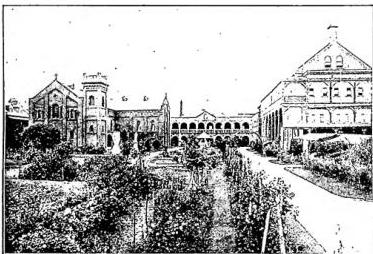
(from Golden Jubilee, 1867-1917, of the Dominican Nuns of N. S. W., Sydney s. a., p. 51)
DOMENICANE - Convent of S. Maria delle D. of West-Maitland.
for Naples; Christ receives s. Gennaro into heaven; Christ commands s. Gennaro to protect Naples; ss. Gennaro, Agrippino, and Agnello intercede for Naples, and other stories in the lunettes.
Among the sacred works of D., particular mention should also be made of the Liberation of s. Pietro in the sacristy of S. Pietro in Vincoli in Rome; among the secular works, the Hunt of Diana and the Cumaean Sibyl (Rome, Borghese Gallery) deserve particular remembrance. - Vedi tav. CVII.