
ANDREA, APOSTOLO, saint. —
I. LIFE
Son of Jonah and brother of Simon Peter, born at Bethsaida. He practiced the trade of fisherman at Capernaum (Io. 1:44; Mc. 1:29). We do not know whether he was married. Together with John the Apostle he was a disciple of the Baptist. When the latter pointed out Jesus as the “Lamb of God,” A. followed Jesus to his dwelling and remained there for a day; having believed in his messiahship, he brought Peter to him (Io. 1:35–42). The Byzantine liturgy calls A. πρωτόκλητος, “the first called.”After the miraculous catch, called to the apostolate, he followed the fortunes of the apostolic college (Mt. 4:18–20; Mc. 1:16; Lc. 9:1–11). In the lists of the apostles he is always named in the first quaternity: in second place by Mt. and Lc., and in fourth place by Mc. and Act. In the Gospel narrative, A. appears explicitly three times. At the first multiplication of the loaves, he points out to Jesus a boy whose five barley loaves and two fish were insufficient to feed the multitude (Io. 6:8 ff.). Before the eschatological discourse he questions Jesus concerning the end of the world (Mc. 13:3). When some gentiles ask Philip to introduce them to Jesus, Philip turns to A., and together they present the request to Jesus (Io. 12:22). Since he appears twice in association with Philip of Bethsaida, it may be supposed that he was his preferred companion. After the mention of Act. 1:13, among the apostles in the cenacle after the Ascension, A. no longer appears in the writings of the New Testament.
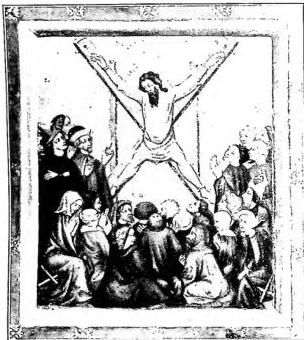
The field of his apostolate would have been broad and varied; traditions dating from the second and third centuries assign to him Scythia, the regions of the Pontus Euxinus, Cappadocia, Galatia, Bithynia, Thrace, Macedonia, Epirus, and Greece (Thessaly, Achaea). Cf. Eusebius, Hist. Eccl., III, 1: PL 20, 216; St. Jerome, Epist. 59 ad Marcellam: PL 22, 589; Theodoret, In Ps. 116: PG 80, 1805; Nicephorus, Hist. Eccl., II, 39: PG 145, 860 ff. The Acts and the Martyrium of St. A. (PG 2, 1189–1248) recount his crucifixion at Patras on a decussate cross, under the proconsul Aegeas. His relics were transferred to Constantinople under Constantius (356), and in the thirteenth century to Amalfi; his head was placed in the basilica of St. Peter in the Vatican (1462). In the fragment of the
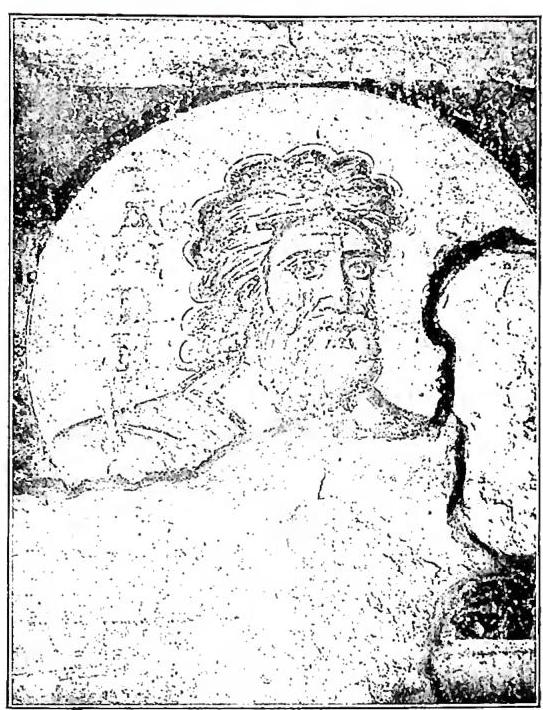
(Int. Anderson)
The title πρωτόκλητος served as a pretext for the Byzantines to deny the primacy of Rome: they claimed that St. A. had appointed one of his disciples, Stachos, bishop of the territory of Byzantium.
2. ICONOGRAPHY
A. bears as a generic attribute a book, symbol of the apostolate, and, from the end of the twelfth century, a cross, recalling his martyrdom. While the Italian artists of the fifteenth century still assign A. a portable Latin cross, beyond the Alps it was replaced by another in the shape of an X, which in the wooden statue by Veit Stoss (Nuremberg, S. Sebaldo) and in the bronze one by Pietro Vischer (there) reaches the dimensions of the figures. Among the scenes from A.’s life, the multiplication of the loaves appears for the first time on early Christian sarcophagi; the calling to the apostolate in Byzantine-style mosaics and miniatures; and the fastening to the oblique cross in a tenth-century troparion. Monumental cycles of the legend are due to Roman Baroque painting, namely to the frescoes by G. Reni and Domenichino in S. Gregorio al Celio and to those by Domenichino and M. Preti in S. Andrea della Valle.3. ARCHAEOLOGY
With the translation of the relics of the apostle A. from Patras to Constantinople in the year 356, his veneration spread. Paulinus of Nola, recounting the episode, attributes it to Constantine rather than Constantius (Carm. 19, V. 321); he then obtains relics of the saint for the churches of Fondi and Nola (Epist. 32, 17; Carm. 27, V. 403–29).At Milan, in the time of St. Ambrose, relics of St. A. were placed in the basilica ad portam Romanum, consecrated on 9 May; the Martyr. Hieronymianum records this date de ingressu reliquiarum, together with another feast on 27 November, for relics of St. A. and other martyrs in an unidentified basilica.
At Brescia, Bishop Gaudentius (d. in 410) founded a basilica in honor of the saints whose relics he had collected and, immediately after the Baptist, lists A. quem priorem Christus apostolorum scribitur eligisse (PL 20, 961).
At Concordia, an unknown bishop built a basilica in which he placed emerita sanctorum apostolorum, and among these was A. (P. Paschini, Note sull'origine della Chiesa di Concordia in Memorie Storiche Forogiuliesi, 7 [1911] pp. 9–24).
At Aquileia, the Martyr. Hieronymianum records on 3 September the dedicatio et ingressio reliquiarum sanctorum A. apostoli, Lucae, Johannis, Euphemiae (P. Paschini, A proposito dei martiri Aquileiesi, in Aquileia nostra, 4 [1933], p. 9).
At the same time St. Victricius, bishop of Rouen, also placed relics of St. A. in his cathedral (De laude sanctorum: PL 20, 448). Later, a church in honor of St. A. at Arvernis or Civitas Arverna (Clermont-Ferrand) would be mentioned by Gregory of Tours (Hist. Franc., 4, 31).
The mutilated Gothic calendar of Thrace, dated to the fifth century, indicates on 29 November, a date that subsequently became traditional, the feast of St. A. (H. Achelis, Der Älteste deutsche Kalender, in Zeitschrift für neutestamentliche Wissenschaft, 1 [1900], pp. 308–35).
In Rome, the first church in honor of St. A. was erected in the palace formerly belonging to Junius Bassus on the Esquiline, through the agency of the Goth Flavius Valila, and dedicated by Pope Simplicius (468–83); it is designated iuxta sanctam Mariam or iuxta Praesepe or cata Barbara Patricia (R. Krautheimer, Corpus basilicarum christianarum Romae, Vatican City 1937, pp. 64–65). A second church was adapted by Pope Symmachus (498–514) in the more easterly of the two rotundas built south of the Vatican basilica for imperial burials (Liber Pontificalis, I, ed. Duchesne, Paris 1886, p. 261).
But among the other cities Ravenna predominates in the veneration of the apostle A., especially during the period of Theodoric, who erected the church of S. A. dei Goti; its surviving capitals preserve Theodoric’s monogram (C. Ricci, Monumenti veneziani nella Piazza di Ravenna, in Rivista d'Arte, 3 [1905], p. 27). At the same time Bishop Peter II (494–519) erected the monastery or oratory of S. A., which acquired its name when Bishop Maximian placed there relics of the apostle brought from Constantinople and intended for the new church of S. A. Maggiore (G. Gerola, Il ripristino della cappella di
S. A. nel palazzo vescovile di Ravenna, in Felix Ravenna, nuova serie, 41 [1932], p. 745).
The ancient iconography of St. A. is a consequence of the spread of his relics and of his veneration. It became established above all at Ravenna. Of all the Apostles, with the exception of the two princes Peter and Paul, St. A. is the only one to have, in ancient Christian iconography, a clearly defined type, namely a beard and “disheveled gray” hair. At Ravenna, more than in the dome of the Orthodox baptistery, his individual personality stands out in the mosaic medallion in the oratory of S. A., slightly earlier than the other medallion, also in mosaic, found in S. Vitale.
The same type reappears in Rome in the medallion painted on the left wall of the presbytery of S. Maria Antiqua, from the time of John VII and attributed by Wilpert to the year 705 (Wilpert, Mosaiken, pl. 157).
The apostle’s image in the now-destroyed mosaic of his church on the Esquiline was older in Rome, however; a copy of it is found in a manuscript at Windsor.
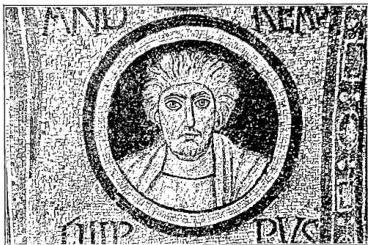
ANDREA, santo - Clipeo in musaico (sec. VI). Ravenna, cappella dell'arcivescovado.
Un'altra scena nella quale figura l'apostolo A. è quella della sua vocazione insieme con s. Pietro. L'esempio più antico finora conosciuto è quello di uno dei riquadri musivi in S. Martino in caelo aureo, oggi S. Apollinare nuovo in Ravenna, composto proprio secondo la narrazione evangelica (Mt. 4, 18-20). La stessa rappresentazione figura in una delle miniature del codice contenente le omelie di s. Gregorio Nazianzeno della Biblioteca Nazionale di Parigi (H. Omont, Fac-similés des miniatures des plus anciens manuscrits gracs de la Bibl. Nat., Parigi 1902, tav. 30). Più tardi si riscontra pure in una delle tavolette eburnee del paliotto di Salerno (Wilpert, Mosaiken, p. 786, fig. 353). Enrico Josi
4. ATTI di A
Apocrifo narrativo della fine sec. II o inizio del III, il cui testo primitivo, a tendenze ereticali, è quasi totalmente perduto, ma fu sostituito da vari rimaneggiamenti. Eusebio (Hist. eccl., III, 25, 16) parla di Atti di A. in uso esclusivamente presso gli eretici. Secondo Epifanio (Haer., 47, 1), encratiti e apostolici (61, 1) li leggevano. Il marcionita Patricio, combattuto da s. Agostino nel trattato Contra adversarium legis et prophetarum (PL 42, 603 sgg.), li citava per combattere i sacrifici giudaici (col.626). Agapio (cf. Fozio, Biblioth., 179), s. Agostino (De fide contra Manichaeos, 38), Filastro (De haeres., 88) ed altri ne attestano la diffusione fra i manichei, confermata dal Salterio manicheo in lingua copta (C. R. C. Allberry, A Manichaean Psalmbook, § II [Manichaean Manuscripts in the Chester Beatty Collection, II], Stoccarda 1938, p. 142, 20; cf. pp. 192, 6; 194, 8). È verosimile che i primitivi Atti di A. siano stati composti da encratiti e che i manichei (per tramite di una setta marcionita?) se ne servissero - come di altri Atti apostolici apocrifi - in una loro collezione.
(propr. B. Degenhart)
ANDREA, santo - Martirio di S. A., del Maestro di S. Lambrecht (1415) - Graz, Galleria.
in: R. A. Lipsius-M. Bonnet, Acta apostolorum apocrypha, II, 1, p. 38 sgg. (cf. la cosiddetta Laudatio, edita dal medesimo, in Analecta Bollandiana, 13 [1894], pp. 309 sgg.). La tendenza encratita è evidente. A chiede a Massimilla di cessare dai rapporti carnali col marito, «le opere di Caino» (p. 41, 26) o dello «straniero» (espressione di sapore marcionita). L'ascesi della donna simboleggia la penitenza di Eva, mentre l'apostolo che predica la continenza rappresenta Adamo convertito (p. 40, 12 sgg.). Scopo ultimo di questa ascesi è che lo spirito umano si elevi alla sua vera natura, santa, immateriale, celeste (p. 41, 31 sgg.), per sfuggire tempo, mondo, mutamento, moto (p. 38, 8 sgg.) ed arrivare all'Uno e Immobile (p. 38, 16 sgg.; cf. p. 44, 10 sgg.). Un frammento in Evodio, Contra Manichaeos, cap. 38 (CSEL, 25, 2, p. 968 sgg.) faceva parte degli Atti di A. nella recensione manichea.
Quanto materiale il Liber de Miraculis Andreae di Gregorio di Tours (pubblicato da Bonnet, in MGH, Script. rerum Meroving., I, II, p. 827 sgg.) fornisca per la ricostruzione degli Atti di A. sarebbe da riesaminare. La storia della casa incendiata di A. (Gregorio di Tours, op. cit., p. 832, 41 sgg.) si trova già nel Salterio manicheo
(Allberry, op. cit., p. 142, 20) e nel testo etiopico di Malan (cf. R. A. Lipsius, Apokryph. Apostelgeschichten, I, p. 622). Comunque, Gregorio eliminò quanto poteva dare fastidio (quae fastidium generabant), in primo luogo i discorsi, mentre nei primitivi Atti apocrifi degli apostoli è caratteristico l'intreccio di miracoli e discorsi.
I famosi Atti di Andrea e Mattia (così il nome originale, sostituito più tardi da Matteo) nella città degli Antropologi non dovevano appartenere agli Atti originali: sono un romanzo favoloso, probabilmente influenzato dal romanzo ellenistico. La popolarità di queste favole nell'Oriente cristiano (l'Occidente appare più riservato) risulta dal fatto che, accanto al testo greco (pubblicato da M. Bonnet in Lipsius-Bonnet, op. cit., p. 65 sgg., e prefaz., p. XIX sgg.), si trovano molte traduzioni (e recensioni) in lingue orientali (cf. BHO, 733-41: testi siriaci, copti, armeni e etiopici), ma esistono anche alcune traduzioni (recensioni) in lingua latina (cf. Franz Blatt, Die lateinischen Bearbeitungen der Acta Andreae et Mathiae apud anthropophogos [Beihefte zur Zeitschrift für die neutestamentl. Wissenschaft, 12, Giessen 1930]) e un testo anglosassone (R. Morris, Blickling Homilies Early English Text Society, 70, 1880; cf. Blatt, loc. cit.).
È difficile stabilire in quale misura ci siano pervenuti residui dei primitivi Atti di A. nei molteplici testi che parlano del suo martirio. La Passio sancti Andreae apostoli (= Epistola presbyterorum et diaconorum Achaiæ de martirio s. Andreae apostoli, edita criticamente in greco e latino da K. C. Woog, Lipsia 1747, e da C. Tischendorf, ivi 1851) è rimasta in 3 recensioni, 2 greche e 1 latina: Acta Andreae cum laudatione contexta (greco), Martyrum Andreae (greco), Passio Andreae (latino), altri due diversi Martyrum Andreae (greco), testi tutti editi da Bonnet tra il 1894 e 1898. - Vedi Tav. C.