
DUCHESNE, LOUIS-MARIE-OLIVIER. — French prelate, archaeologist, eminent critical historian and writer, born at St-Servan (Ille-et-Vilaine) on 13 September 1843, died in Rome on 21 April 1922. He completed his studies brilliantly at the college of St-Servan, the minor seminary of St-Méen, the St-Charles school of St-Brieuc, and the major seminary of the same city. Mons. David, his bishop, sent him to Rome to earn a doctorate in theology at the Collegio Romano (1864–66); there he met Giovanni B. De Rossi and formed a friendship with the future Mons. M. d'Hulst. Ordained a priest at Christmas 1867, Mons. David assigned him to teaching and then allowed him to continue his classical studies in Paris at the « Ecole des Carmes » (1870–71); in 1872 he enrolled at the « Ecole des Hautes-Etudes », where he attended courses in archaeology, epigraphy, and Greek and Latin philology (1872). When the « Ecole archéologique » française was established in Rome on 5 March 1873, D. was one of its first candidates. In February of the following year, D. and his colleague Carlo Bayet were entrusted with a scientific mission in Epirus and Thessaly, which enabled them, among other things, to visit the libraries
of the monasteries of Mount Athos and Patmos; the outcome was exceedingly gratifying. In 1876 D., together with Massimo Collignon, undertook another archaeological expedition in the southwest of Asia Minor, interrupted by the political events of that year. On 10 March 1877 he defended in Paris his two doctoral theses, the Latin and the French. The French thesis on the Liber Pontificalis was so successful that the minister W.-H. Waddington immediately offered the newly qualified doctor a university chair; D., however, declined the flattering invitation in order instead to accept the chair of ancient Church history established for him at the newly founded « Institut catholique » of Paris. He felt called to « serve the Church through its history, conscientiously studied and frankly expounded » (P. Peeters, L'oeuvre des Bollandistes, Bruxelles 1942, p. 116), and in fact served it admirably through his studies, which made a first-rate contribution to the renewal of ecclesiastical historiography promoted by Leo XIII through the letter Saepnumero of 18 August 1883.
The rigorous method introduced by D. into his teaching and studies alarmed the foundations of prevailing historical dogmatism, and the young professor, excessively biting in speech and writing and ruthless in exposing the presumptuous ignorance of his opponents, endured endless troubles and insults. Fortunately, in Paris he was protected by Mons. d'Hulst and in Rome by Giovanni B. De Rossi. In 1887, after leaving the « Institut Catholique », he became a professor at the « Ecole des Hautes-Etudes » and the following year a member of the « Académie des inscriptions ». From 1895 until his death he resided in Rome as director of the French School of the Palazzo Farnese. In 1896 he took an active part in the campaign for the union of the Anglican Church with the Roman Church; in 1900 he organized and directed the Second Congress of Christian Archaeology. From December 1899 until 1922 he was president of the Society of Students of Christian Archaeology. On 18 May of that same year he was enrolled among the apostolic protonotaries; on 18 December 1901 among the consultors of the S. Congregation of Indulgences and Relics; and on 28 November 1902 among the members of the historical-liturgical commission established on that day at the S. Congregation of Rites. Finally, on 26 May 1910 he was elected to the Académie française. In that same year, D. became the object of an unseemly campaign of accusations and insults, against which he reacted with the utmost firmness, strengthened by the fact that his Histoire ancienne de l'Eglise, against which the fury of the pamphleteers was directed, bore the regular imprimatur of the Master of the S. Palace and that he had personally presented each of the three published volumes to the Holy Father. The condemnation of his Histoire (22 January 1912: AAS, 6 [1912], pp. 56–57) was a grave wound for D.; he knew how to accept it and submitted to it without delay: « Faithful son of the Church — he declared to Cardinal Della Volpe on 5 February — I must submit to its decisions. I therefore come to declare to Your Eminence that I respectfully bow before the decree of the S. C. of the Index concerning my book » (L'Observatoire Romano, 6 February; « laudabiliter se subiecit »: AAS, cited above, p. 103). This sorrow and the changing fortunes of the 1914–18 war, to which D. was extremely sensitive, soon overcame his strong constitution. With the accession of Pius XI, D. hoped to obtain the rehabilitation of his work, suitably revised, but death frustrated him in this hope; during his brief illness he was assisted by Fr. Genocchi, from whom he requested the last Sacraments, and Pius XI, who had kept him in prolonged conversation a few days earlier, on 10 April, sent him his Blessing. His remains rest in the cemetery of St-Servan. Despite all the accusations levelled against him, D. was a kind-hearted man and a priest of irreproachable life, sustained by a sincere and active Faith; he was nevertheless harmed by his natural causticity.
Of exceptionally fine intuition and extraordinarily penetrating intelligence, D. possessed a capacity for work that was truly extraordinary: proof of this is the 429 items in his bibliography, which is in any case incomplete, collected and arranged chronologically from 1875 by H. Leclercq (DACL, IV, II, cols. 2711–35). D. confined himself to the ancient history of the Church and to that of the early Middle Ages; he was an archaeologist and historian, but above all a critic and philologist.
The Liber Pontificalis, the Martyrologium Hieronymianum, and the Liber censuum were the pillars around which he organized the finest part of his scholarly production. Of the first and third he produced the critical edition; of the second he collaborated on the diplomatic edition and left in manuscript a commentary on the first eight months, from which Fr. H. Delehaye benefited, as he acknowledged. For the most part, his articles are nothing more than investigations into particular points that had to be studied in order to proceed with the edition of the sources mentioned above, or that were only briefly touched upon in his major works.
I. IL « LIBER PONTIFICALIS » E GLI STUDI AD ESSO ISPIRATI
Il D. ne stabilì le varie recensioni e ne classificò 110 manoscritti per la sua tesi di dottorato (Etude sur le Liber Pontificalis, Parigi 1877), quindi ne pubblicò l'edizione critica (Le Liber Pontificalis, texte, introduction et commentaire, 2 voll., ivi 1886 e 1892, in base a 150 manoscritti), rimasta sinora insuperata sia per il testo da lui stabilito, come per il commento archeologico, agiografico e storico che l'accompagna. Lo stesso Th. Mommsen, pur avendone, nella edizione del 1898 (MGH: Gestorum Pontificum Romanorum, I), migliorato l'apparato critico e pur dissentendo dal D. per questioni secondarie, faceva questa aperta constatazione per la classificazione dei manoscritti: « Hace mea editio Duchesnianam non reformat, sed comprobat et confirmat » (p. cx). Polemizzò con G. Waitz e con R. A. Lipsius circa la classificazione dei manoscritti e la data del Lib. Pont. (La date et les recensions du Lib. Pont., in Revue des questions hist., 26 [1879], pp. 493-530; Le premier Lib. Pont., ibid., 29 [1881], pp. 246-83; Un mot sur le Lib. Pont., in Mélanges d'arch. et d'hist., 6 [1886], pp. 275-83). Gli articoli che seguono sono studi preliminari per il commento al Lib. Pont. o sviluppi dati a questioni toccate nell'introduzione o nel commento: Le Lib. Pont. en Gaule au VIe siècle (in Mélanges d'arch. et d'hist., 2 [1882], pp. 3-15); La succession de Félix IV (ibid., 3 [1883], pp. 239-66); L'historiographie pontificale au VIIIe siècle (ibid., 4 [1884], pp. 232-73); Vigile et Pélage. Etude sur l'histoire de l'Eglise romaine au milieu du VIe siècle (in Revue des questions hist., 36 [1884], pp. 369-440); Serge III et Jean XI (in Mélanges d'arch. et d'hist., 33 [1913], pp. 25-64); Le Lib. Pont. aux mains des guibertistes et des pierléonistes (ibid., 38 [1920], pp. 165-93).Con Les circonscriptions de Rome pendant le moyen âge (in Revue des questions hist., 24 [1878], pp. 217-25), il D. iniziò un'interessante e vasta indagine sulla topografia romana, che riprese poi qualche anno dopo con il titolo: Notes sur la topographie de Rome au moyen âge, pubblicate in 14 puntate nei citati Mélanges dal 1886 al 1915. A queste Notes si aggiunga: Les légendes de l'Alta Samita (ibid., 36 [1916-17], pp. 27-56) e Le sanctuaire de St-Laurent (ibid., 39 [1921], pp. 3-24).
Altra opera che sta in stretto rapporto con lo studio del Lib. Pont., è quella intitolata: Les premiers temps de l'Etat pontifical (Parigi 1898, 3ª ed., ivi 1911, vers. it., Torino 1947), che descriva con stringata sobrietà il sorgere e l'affermarsi del potere temporale dal 754 al 1073.
II. IL « MARTYROLOGIUM HIERONYMIANUM »
Nel suo primo anno d'insegnamento all'« Institut catholique » (1877), il D. prese questa importante fonte agiografica come tema di studio e di esercitazioni pratiche. Le conclusioni raggiunte furono tali che il De Rossi lo volle suo collaboratore per l'edizione che aveva in mente di pubblicare (cf. Roma sotterranea, III, Roma 1877, p. xxii). L'edizione diplomatica riproducente su quattro colonne il testo integrale dei principali manoscritti comparve infatti negli Acta SS. Novembris (II, I, Bruxelles 1894: Martyrologium Hieronymianum ad fidem codicum adiectis prolegomenis). La parte maggiore dell'introduzione è del D.; vi tratta delle origini, delle fonti e della restituzione del testo proponendo con discrezione una classificazionedi manoscritti che era in contrasto con quella del maestro, classificazione adottata poi dal Quentin. Già aveva trattato quest'argomento nell'articolo: Les sources du martyrologe hiéronymieu (in Mélanges d'arch. et d'hist., 5 [1885], pp. 120-60), cui il De Rossi premise una breve introduzione (ibid., pp. 115-19). Il D. precisò la sua parte nell'edizione e insistette nelle sue conclusioni nella dignitosa risposta alla stroncatura e alle quisquille di Br. Krusch: A propos du martyr. hiér. (in Analecta Bollandiana, 17 [1894], pp. 421-47); Un dernier mot sur le martyr. hiér. (ibid., 20 [1901], pp. 241-45). Nel 1920 indicava tra l'altro come regolarsi per restituirne il testo: Sur le martyrologe dit de st Jérôme, in Miscellanea geronimiana (Roma 1920, pp. 221-26).
III. IL « LIBER CENSUUM »
L'edizione di quest'importante fonte per la storia della Chiesa romana era stata iniziata da P. Fabre, che ne pubblicò un solo fascicolo nel 1889. In ricordo dell'amico e traendo profitto del materiale da lui raccolto, il D. la portò a termine nel 1910 (Le Liber censuum de l'Eglise romaine, I, Parigi 1889-1910; II, Le Liber censuum remanié sous Grégoire IX et Innocent IV avec ses suppléments, ivi 1905). L'articolo: L'auteur des « Mirabilia » (in Mélanges d'arch. et d'hist., 24 [1904], pp. 479-89), in cui il D. ne ravvisa l'autore in Benedetto Canonico, sta in stretto rapporto con questa edizione.IV. I « FASTES EPISCOPAUX » E STUDI AFFINI
Dal 1883 al 1915, il D. studiò le origini del cristianesimo nelle Galilee e gli antichi cataloghi episcopali delle sedi vescovili della stessa regione. Dopo una serie di articoli preliminari di cui i principali sono: Les origines du christianisme en Gaule (in Annales de philosophie chrétienne, 8 [1883], pp. 1-15); Mémoire sur l'origine des diocèses épiscopaux de l'ancienne Gaule (in Mémoires de la Soc. des antiquaires de France, 50 [1890], pp. 337-416); St Martial de Limoges (in Annales du Midi, 4 [1892], pp. 289-330); La légende de ste Marie-Madeleine (ibid., 5 [1893], pp. 1-33), il D. consegnò il risultato delle sue vaste indagini agiografiche e storiche nei tre volumi dei Fastes épiscopaux de l'ancienne Gaule (I, Parigi 1894; 2ª ed. ivi 1907; II, ivi 1900; 2ª ed. ivi 1910; III, ivi 1915). Opera coraggiosa condotta con impeccabile rigore scientifico, in cui i datistorici vengono liberati da tutte le scorie leggendarie. L'aver dimostrato l'assoluta inconsistenza delle origini apostoliche di varie sedi episcopali franche fruttò all'autore vivacissime polemiche. Intimamente uniti alle ricerche per i suoi Fastes sono gli articoli: St Barnabé (in Mélanges J. - B. De Rossi, Roma 1892); Les anciens recueils de légendes apostoliques (in Compte-rendu du 3e Congrès scientifique international catholique tenu à Bruxelles du 3 au 8 sept. 1894, Bruxelles 1895, pp. 67-79); St Jacques en Galice (in Annales du Midi, 12 [1900], pp. 145-80).
V. I VESCOVATI D'ITALIA
From 1885 to 1906 he published various articles on the bishoprics of Italy, among which the following are noteworthy: Le sedi episcopali dell'antico ducato di Roma (in Archivio della Soc. rom. di st. patria, 15 [1892], pp. 475-503); Les évêchés de la Calubre (in Mélanges Paul Fabre, Paris 1902, pp. 1-16); Les évêchés d'Italie et l'invasion lombarde (in Mélanges d'arch. et d'hist., 23 [1903], pp. 83-116; 25 [1905], pp. 365-99).VI. CHRISTIAN AFRICA
Of the studies on Christian Africa published from 1884 to 1896, the most important is the Dossier du donatisme (in Mélanges d'arch. et d'hist. 10 [1890], pp. 589–650), through which D. fully clarified the origin of the African schism.VII. VARIA
He prepared the French version of De Rossi’s Bullettino from 1880 to 1883 (Bulletin d’archéologie chrétienne de M. le Comm. J.-B. De Rossi, Paris). From its inception, 15 May 1880, he collaborated with the Bulletin critique de littérature, d'histoire et de théologie (a continuation of the Echo), which he subsequently directed from 1881 with a group of other scholars for twenty years: a « absolument orthodoxe et inexorablement scientifique » journal intended chiefly for the clergy, in order to acquaint them with works of value and to arm them « contre les innombrables publications mauvaises ou médincres qu'on lui sert quotidiennement » (cf. ibid., 2 [1881-82], p. 2). D. remained faithful to his program; nevertheless, his inexorable pen, with which he exposed the scant scientific preparation of many ecclesiastical writers, and his severe critical scrutiny of works by authors then celebrated, such as Renan, Krusch, Schultze, and others, earned him many enemies. Another highly esteemed book is Autonomies ecclésiastiques. Eglises séparées (Paris 1896, 2nd ed. ibid. 1905), written while efforts were being made toward union with the Anglican Church. After an initial chapter on the Anglican Church, he refutes the letter written by Patriarch Antimos against Leo XIII’s letter Praeclara of 20 June 1894 and sets out the causes of the Oriental schism. His Origines du culte chrétien. Etude sur la liturgie latine avant Charlemagne (ibid. 1889; 5th ed. ibid. 1909, with reprints, ibid. 1920, 1925) is very well known. With this work D. made a notable contribution to the renewal of liturgical studies; some conclusions have since been superseded, but the book remains a model of erudition. He engaged in controversy with dom Cagin concerning the origin of the Gallican liturgy in the article: Sur l'origine de la liturgie gallicane (in Revue d'hist. et de littérature religieuse, 5 [1900], pp. 31-47). His address to the Académie Française was lively (Discours de réception à l'Acad. Française, prononcé le 26 janv. 1911, suivi de la réponse de M. E. Lamy, Paris 1911). For Roman Christian epigraphy, his penetrating study of the Cambridge sylloge deserves mention: Le recueil épigraphique de Cambridge (in Mélanges d'arch. et d'hist., 30 [1910], pp. 279-311). Special mention should be made of L'iconographie byzantine dans un document grec du IXe siècle (Grottaferrata 1913), containing the text of a letter from the Council of Jerusalem of 836, which concerns the mosaic of the Church of the Nativity in Bethlehem; and of L'Ecole française de Rome, in Nouvelle revue d'Italie, 16 [1919], pp. 106-12. Of particular archaeological and liturgical interest is the study published after his death by H. Quentin, entitled: La « Memoria Apostolorum » de la via Appia (in Memorie della Pont. acc. rom. di arch., 1 [1923], pp. 1-22).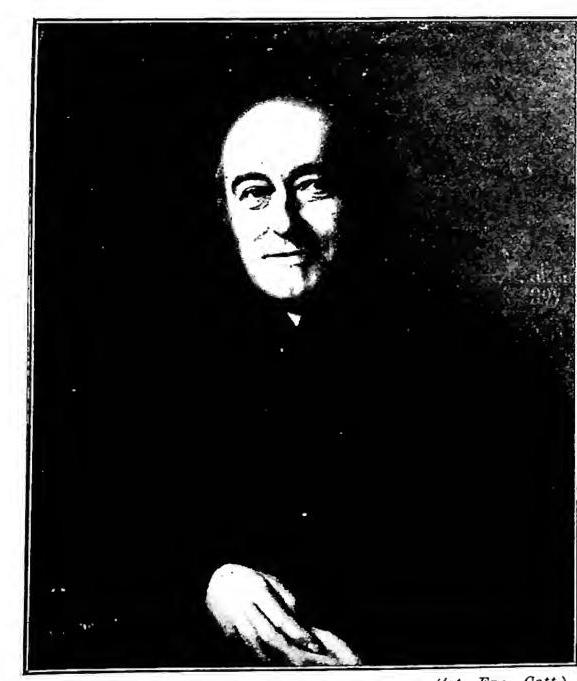
VIII. THE « HISTOIRE ANCIENNE DE L'ÉGLISE »
This work has its distant origin in the lectures delivered during the first years of his teaching at the « Institut catholique », entitled: Les origines chrétiennes, which were lithographed several times beginning in 1880. The work aroused bitter controversy from the moment of its appearance; Mons. d'Hulst, who had read and corrected it, came to its defense. D.’s purpose was to set forth(phot. Enc. Catt.)
DUCHESNE, LOUIS-MARIE-OLIVIER - Portrait, Painting by Mahaut (1899) - Rome, French School of the Palazzo Farnese.
« to highlight the great fact of the appearance of Christianity within the ancient world and to follow its early developments » (introduction). Once completed and reworked, these lectures became the Histoire ancienne de l'Eglise (I, Paris 1906; II, ibid. 1907; III, ibid. 1910; English version, London 1907, 1912; Spanish version, Barcelona 1910; Italian version, Rome 1911), a work of great literary and historical merit. In it the author demonstrates an absolute mastery of the sources and is up to date with the most recent studies. But, wishing to produce a work of pure history, he deliberately passed over the supernatural factor, the cornerstone of the life of the Church; even the person of its Founder remained in the shadows. Apart from the author's formal declaration that « l'action du Saint-Esprit dans l'Eglise, l'intervention de la Divine Providence dans les faits humains en général, et spécialement dans les affaires religieuses, ne sont pas des réalités contestables » (Protesta, p. 6), this constitutes a serious lacuna, capable of misleading beginners and ordinary readers; the reason for the condemnation of the work is thus clear. That D. did not intend to follow the path beaten by the modernists is attested by his submission to the decree of condemnation (he wrote immediately afterward: « L'Eglise est toujours l'Eglise. Une mère peut gronder avec exhubérance, c'est toujours une mère. Il faut la respecter, l'aimer quand même. Dieu aidant je ne faillirai pas à ce devoir », C. D'Habloville, p. 153) and by his desire, mingled with considerable fear (cf. P. Monceaux), to publish volume IV, which was subsequently brought to press by the abbot dom H. Quentin (L'Eglise au VIe siècle, Paris 1925, not on the Index). In presenting the volume, Quentin wrote: « Tous ceux qui ont approché plus intimement mgr Duchesne, dans les dernières années de sa vie, savent combien il était désireux de voir paraître ce volume avec l'approbation de ses supérieurs ecclésiastiques; il avait saisi avec bonheur cette occasion de montrer l'esprit qui l'animait » (preface, p. vii). Through his imposing scientific work, recalled here only in passing, D. secured for himself a first-rate position in the fields of philology and ecclesiastical historiography.