
TORINO, ARCIDIOCESI. — At the time of its foundation, the diocese of Torino comprised the entire territory between the dioceses of Ivrea, Asti, Acqui, Alba, Albenga, and Embrun, extending from the Dora Riparia to the Po, as far as the Stura di Cuneo and the Tanaro valley.
Toward the end of the sixth century, the Franks detached part of the Val di Susa and Moriana, and the new diocese of S. Giovanni di Moriana was founded. Subsequently, Saluzzo (1511), Fossano (1592), Pinerolo (1749), Susa (1772), Cuneo (1817), and Asti (1817) were detached from T. Erected as a metropolitan church on 17 May 1515, with Ivrea and Mondovi as suffragans, it now has as suffragans Acqui, Asti, Alba, Mondovi, Cuneo, Saluzzo, Fossano, Pinerolo, Ivrea, and Aosta.
It comprises 34 rural deaneries, 332 parishes, and 1,200 non-parish churches; 150 municipalities, of which 14 are in the province of Cuneo, 5 in that of Asti, and 130 in that of T. Population: 1,100,000; diocesan priests: 1,085; priests from outside the diocese: 50; male religious orders and congregations: 26; female: 61. Major seminary of philosophy and theology at Rivoli, near T.; secondary seminary at Giaveno; archiepiscopal boarding school at Bra. Secondary schools, vocational schools, and agricultural schools are run by the Jesuits, the Brothers of the Christian Schools, the Salesians, the Rosminians, and the Giuseppini del Murialdo; for girls, by the Dominican Sisters, the Religious of the Sacred Heart, the Salesian Sisters, the Madri Pie, the Fedeli compagne, the Sisters of S. Anna, of S. Giuseppe, etc.
I. HISTORY
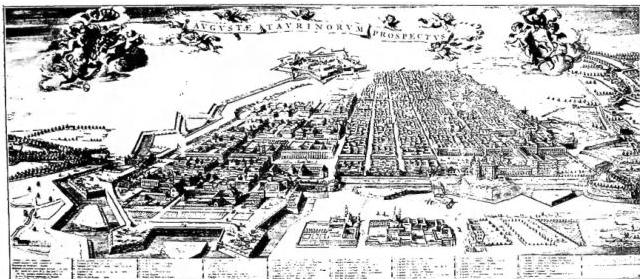
“Augusta Taurinorum,” perhaps founded in the same locality as pre-Roman Taurasia, the capital of the Taurini, was in the Roman age the most important city of the western Subalpine region. In A.D. 69 it was partly burned during the civil war between Otho and Vitellius. Near T., in 312, Constantine engaged in a victorious clash with Maxentius.Christianity entered it relatively late. Systematic evangelization began only after the middle of the 3rd century. The best modern criticism regards SS. Solutor, Adventor, and Octavius as martyrs of Turin, and considers the attribution of these Saints to the Theban Legion, which later became prevalent, to be late (v. TEBE, SANTI, MARTIRI). At the end of the 4th century, St. Maximus (v.) must be considered the first bishop. His great figure reveals in T. the existence of a flourishing Christian community, though still amid numerous pagans. In those terrible years, when the barbarian invasions of Italy began, St. Maximus presided over the painful situation. Under St. Maximus, between 397 and 401, a Council was held at T., convened at
the request of the bishops of the Roman province of Gaul, who disagreed regarding the rights of their metropolitan see.
The list of the bishops of the 5th–6th centuries is incomplete. In 494 Victor went to Gaul with St. Epiphanius of Pavia to liberate the prisoners carried off by Gondebald, king of Burgundy, in one of his raids into Upper Italy. Ursicinus (562–600) suffered captivity at the hands of the Lombards and saw the Maurienne and part of the Susa Valley taken away by the Franks, who made them autonomous dioceses, despite his protests and those of Gregory the Great. Under the Lombards, T. formed a vast Duchy corresponding for the most part to the ecclesiastical diocese and acquired importance as a bulwark of the Kingdom against the Franks. The Carolingian government that followed was constituted by Frankish counts. In 817–18 CLAUDIUS, MATTHIAS (v.), a man of broad, though not profound, learning and of iconoclastic views. Once Carolingian imperial unity had vanished and the Kingdom of Italy had been reconstituted, the struggles between Guido of Spoleto and Berengar of Friuli gave rise to the Arduinici dynasty, which ruled the March of T. for a century and a half.
The period of the margraves, especially that of Olderico Manfredi and his daughter Adelaide, was a period of recovery after the desolation of the 10th century. In this imposing work, alongside Olderico and Adelaide, the bishops Gezo and Landolfo, and to some extent also Cunibert, occupy places of great honor. In the 11th century, through the efforts of the aforementioned margraves and bishops, the abbeys of Caramagna, S. Giusto di Susa, S. Pietro di Savigliano, Pinerolo, S. Solutore, and Cavour arose, as did the provostship of Oulx, the cathedral of Chieri, and the collegiate church of Testona. At the end of the margravial period, the power of the bishop was asserted, and alongside it the city’s autonomy. In 1159, a diploma of Frederick Barbarossa granted Bishop Carlo full comital rights over the city and its contado. This did not prevent the consolidation of communal autonomy. At the beginning of the 13th century, the Commune and the bishop were still found allied against the counts of Savoy. Then the bishop’s power declined, while the Commune and the Savoyards fought with alternating fortunes, until, after the brief lordships over T. of the Angevins and William VII of Montferrat, the Savoyards prevailed.
The economic situation of the bishopric also deteriorated toward the end of the 13th century. The pastoral activity of Bishop Goffredo of Montanaro (1254–1300), however, was remarkable, despite his lengthy controversies with the Savoyards and the abbots of S. Michele della Chiusa, as well as his legation to Constantinople. Equally worthy of note was the activity of Bishop Guido II (1319–48) and of his successors Giovanni of Rivalta (1364–1411), Aimone (1411–38), and Ludovico of Romagnano (1438–68). The reports of pastoral visitations
and synodal acts reveal excellent prelates. Giovanni of Rivalta and Lodovico of Romagnano devoted particular attention, with some success, to the conversion of the Waldensians (v.), with whom Bishop Giacomo I had already been obliged to concern himself from 1209 onward. Under Lodovico of Romagnano, on June 6, 1453, the famous Eucharistic miracle of T. took place. Two soldiers of the troops of Ludovico, Duke of Savoy, garrisoned at Exilles, entered the church while their companions were pillaging the town and, having opened the tabernacle, stole the silver monstrance containing the consecrated Host. They went down to Susa and sold the stolen goods to some merchants, who loaded them into a sack on the back of a mule and reached T. There, opposite the church of S. Silvester, the mule dug in its heels, and there was no way to make it move forward. The blows failed to move it, but merely caused the sack to fall to the ground; it opened and scattered the booty around. The monstrance, however, rose into the air; it opened of itself and left the Host suspended above, radiating light in every direction. The bishop, Ludovico da Romagnano, having been informed, hastened there in procession, raised a chalice toward the Host, and prayed Jesus to descend and remain with his people. The Host did indeed descend and was carried triumphantly into the Cathedral. On the site of the triumph, first a small shrine was erected, and then, in 1598, the splendid basilica of Corpus Domini (cf. G.M. Sanna Solaro, Il miracolo di T., Torino 1894). Lodovico, the last of the Savoy-Achaia line, founded the University at T. (1405; bull of the antipope Benedict XIII dated October 24), confirmed by imperial privilege in 1412 and by Pope Eugene IV in 1448; in 1505, Erasmus of Rotterdam received his doctorate in theology there. Among the preachers active in the region in the 15th century, St. Vincent Ferrer (1402) and St. Bernardino of Siena (1436) should be remembered.
At the end of the century (1498), Cardinal Bishop Domenico Della Rovere built the present Cathedral (v. MEO DI FRANCESCO DEL CAPRINO). On May 17, 1515, Leo X raised the church of T. to metropolitan status, separating it from Milan. Meanwhile, the situation of T. and Piedmont had become terrible, ravaged by the war between Francis I and Charles V. In 1536, the French entered T., pillaged it, and destroyed four suburbs and twelve churches. Duke Carlo III of Savoy died far away in 1553.
Protestant infiltration was considerable, especially in the valleys from Pinerolo to the Po Valley, the Varaita Valley, the Maira Valley, and the Stura Valley. In T., the city’s decurions, even under French domination, intervened with firm resolve to block the advance of heresy. As early as 1522, the city assigned a stipend to a teacher who would lecture on St. Paul; in 1542, this instruction was extended to four parishes and the Cathedral; and in 1563, the Company of S. Paolo was established, with members from every social class, for the defense of the faith and charity. The pastoral situation of the diocese was difficult. This is reported by Msgr. Filippo De Mari, vicar of Cardinal Cibo, archbishop, in the account of his visitation (1545–46). He found parish priests ignorant and incapable of preaching, negligent, idle, and lacking books. He considered it unnecessary to formulate new synodal constitutions, but necessary to make known the old ones, which had fallen into complete oblivion “also through the negligence of some of our predecessors.”
With Cardinal Archbishop Gerolamo Della Revere (1564–92) and Emanuele Filiberto came the revival of the Church and the State in T. and Piedmont. Famous was Cardinal Gerolamo’s disputation with the heretics at Caraglio, in the presence of Emanuele Filiberto. Of enormous importance was his visitation of the valleys and the fruits it produced. Fundamental were the Constitutions of his Synod (19 Apr. 1575), in which he reminded the priests that he had founded the Seminary (1567) according to the prescriptions of the Council of Trent (introduced into the State in 1562). Under Emanuele Filiberto, T. definitively became the capital of the Savoyard State. The duke brought the relic of the Holy Shroud there (1578). Carlo Emanuele I and Archbishop Carlo Broglia (1592–1617) worthily continued the work of reconstruction. The pastoral visitations, the six diocesan synods, and the Jesuit and Capuchin missionaries regularly sent into the valleys by this great archbishop, together with Carlo Emanuele’s assistance and energy, restored to the diocese and Piedmont the unity of the faith and the priests’ zeal for the care of souls. Following these examples, the archbishops of T. continued their pastoral activity throughout the seventeenth century, which saw the establishment in the city of the Oratory of S. Filippo (1649) and the Missionaries of S. Vincenzo (1654). From the Oratory of S. Filippo came the blessed Sebastiano Valfrè, counsellor to the dukes and comforter of the people during the terrible siege of T. in 1706.
After the suppression of the metropolitan Seminary, through a long series of measures directed against ecclesiastical institutions, the general suppression (17 July 1802) of monastic Orders and religious Congregations was reached. Piedmont had become a French province (11 Sept. 1802); the Piedmontese dioceses were reduced to T., Saluzzo, Acqui, Asti, Alessandria, Vercelli, Ivrea, and Mondovì. Ecclesiastical life nevertheless temporarily improved after Napoleon’s imperial coronation and with the arrival in T. of the new Archbishop Giacinto Della Torre (1804–14). Although his statements were at times excessively laudatory toward Napoleon, it is certain that during the ten years of his episcopate he knew how, with dignity, to obtain in every circumstance the maximum possible for his clergy and his people. He reopened and put the Seminary of T. in order, including spiritually; opened the Gymnasium Seminary of Giaveno; restored the monthly conferences on moral theology; promoted spiritual exercises among the clergy; and obtained exemption from military service for clerics. He died on 8 Apr. 1814, and on 25 Apr. the annexation to France ended. Vittorio Emanuele I was in T. on 20 May. The legislation returned to its 1770 form, with the modifications introduced by the royal government up to 23 June 1800. Despite the goodwill of the Holy See and the King, not all religious Orders could be restored.
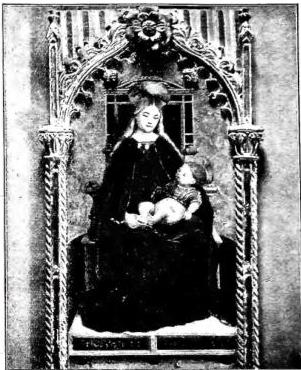
TORINO, ARCIDIOCESI di — Madonna and Child. Painting by G. M. Spanzotti (15th century) — Turin, Pinacoteca.
This period of harsh relations between State and Church, far from signifying stagnation, represents one of the most dynamic ages in the life of the diocese of T. The names of Cottolengo (d. 1842), Giuseppe Cafasso (d. 1860), d. Bosco, then fully active in his oratories and founder in 1869 of the Salesian Congregation, Murialdo and the Collegio Artigianelli, begun in 1850, Margotti, first editor of l’Armonia and later founder (1863) of l’Unità Cattolica; and, among the laity, Solaro della Margarita, Cesare Balbo, Federico Sclopis, Silvio Pellico, Giuseppe Manno, Pier Alessandro Paravia, Tommaso Vallauri, Carlo Promis, and the Marchioness Giulia di Barolo,
(from M. A. Garrino, S. Giuseppe Benedetto Cottolengo, Pinerolo 1591, pp. 128–50)
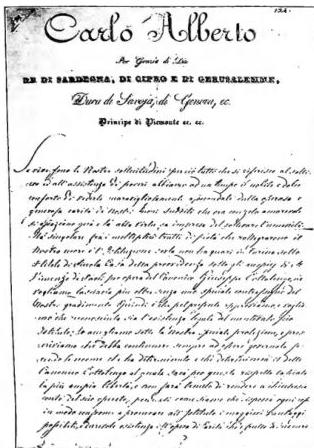
TORINO, ARCIDIOCESI di — Copy of the decree of 27 Aug. 1833 by which Carlo Alberto established as a juridical entity the Piccola Casa della Provvidenza, founded by s. Giuseppe Cottolengo.
are well known. But in the field of the Catholic press, the education of youth, assistance, and charity, there was a splendid flowering of other men and associated works. The twelve years of Monsignor Castaldi’s episcopate (1871–83) were of the greatest importance for disciplining and fostering all this fervour of activity. He preserved catechism in the schools; when the theological faculties at our Universities were dissolved (1873), he obtained the establishment of a theological faculty (1874) and a faculty of law (1883) in the Seminary. With the Società Piemontese degli interessi cattolici and the Unione cattolica operaia, he anticipated modern Catholic and social action.
In the nineteenth and twentieth centuries, the construction of new churches and parishes kept pace with the city’s demographic and building growth. T. grew from 90,000 inhabitants in 1800 to 700,000 in 1939. From 1850 to 1880, eleven large new churches were built. Since then, about thirty new parishes and suburban churches have been completed; several others are under construction. In 1949–50, the new monumental Major Seminary at Rivoli also began operating, the result of the long and arduous work of Card. Maurilio Fossati, the current archbishop of T. Over the past fifty years, the legacy of Msgr. Castaldi has been preserved and developed in every direction, even through the two great wars, during which the prudence and charity of the cardinal archbishops Richelmi and M. Fossati had ample opportunity to manifest themselves.
II. ANCIENT ABBEYS OF THE DIOCESE OF T
1) Abbey of S. Michele della Chiusa (Sagra di S. Michele, [v.]), founded in the tenth century. 2) Abbey of S. Pietro della Novalesa, founded in 726. At the beginning of the tenth century the monks fled before the Saracens, Breme (v.) and to the priory of S. Andrea di T. 3) Abbey of S. Dalmazzo di Pedona. A Lombard foundation dating from between 600 and 625, on the site of the martyrdom of s. Dalmazzo, it was of great religious and agricultural importance for the region. It too was destroyed by the Saracens in the tenth century and abandoned by the monks; it was rebuilt around 1160 and reached its greatest splendor in the mid-thirteenth century. After the mid-fourteenth century it languished, and in the mid-fifteenth century it was united to the mensa of the diocese of Mondovì (now the diocese of Cuneo). 4) Abbey of Pagno, founded by Astolfo and placed under the authority of Novalesa in 825 by the emperor Lothar, so that those monks might use the revenues of Pagno to provide for the Opizio of Moncenisio. It followed the fortunes of Novalesa and came under Breme. In the mid-eighteenth century it was incorporated into the episcopal mensa of Saluzzo. 5) Abbey of S. Costanzo del Villar; it arose near Droncro through the work of the Lombard kings at the beginning of the eighth century. Laid waste at the time of the Saracens, it recovered in the eleventh century, especially through the efforts of the marquises of Saluzzo and Busca, and attained considerable religious and patrimonial importance. Given in commendam in the eleventh century, it survived until the French Revolution. The ancient church of S. Costanzo on the mountain and the present parish of Villar S. Costanzo, with the crypt beneath it, are of great architectural interest from the eighth to the thirteenth century (today in the diocese of Saluzzo). 5) Abbey of S. Giusto di Susa; founded in 1029 by Olderico Manfredi and his wife Berta, and richly endowed by them, after a period of prosperity it declined religiously and economically as early as the thirteenth century. In 1581 the Canons Regular of the Lateran succeeded the Benedictines. In 1772 the church of S. Giusto became a cathedral and the abbey mensa an episcopal one. 6) The Provostship of Oulx arose in the middle of the eleventh century and, as the head of a congregation of Canons Regular, presided over many churches in Italy and France. It became a commendam from the fifteenth century; it was suppressed in 1748 by Benedict XIV and united with the newly established diocese of Pinerolo (today the diocese of Susa). 7) Abbey of S. Mauro and Pulcherada; predating the incursions of the Saracens, by whom it was destroyed, it was restored in the eleventh century and remained a regular abbey until 1503; afterward it was given in commendam. Suppressed by Pius VII in 1803 (diocese of T., from which it is only a few kilometers distant). 8) Abbey of S. Pietro di Savigliano, founded in 1028, it engaged in lengthy disputes with the abbot of Chiusa, who claimed jurisdiction over II. In the thirteenth century it came under the abbots of Fruttuaria; in 1450 it was aggregated to S. Giustina of Padua. The eight Benedictines who were still there in 1855 were affected by the suppression law (diocese of T.). 9) Abbey of S. Solutore in T.: founded by Bishop Gezone around 1006, it was endowed with many properties by the bishops of T., by Olderico Manfredi, and by Adelaide. In 1210 Bishop Giacomo I imposed a new statute for its monastic life. In 1536 it was destroyed by the French. 10) Abbey of S. Giacomo di Stura, founded a few kilometers from T. in 1146 and given to the Vallombrosans to maintain a hospice for pilgrims and a hospital for lepers. Having fallen into ruin in the fourteenth century because of the continual wars between Monferrato and the Savoys, its rich properties were incorporated into the episcopal mensa of T. in 1420. 11) The regular Provostship, later the abbey of Rivalta, founded in 1096 by the abbot of S. Maria di Pinerolo, came under the provostship of Oulx and then under the protection of the Holy See in 1207; in 1265, having declined, it passed under the authority of the Cistercian abbey of Staffarda. Suppressed in 1770, its properties were united to the archiepiscopal mensa of T. 12) Abbey of Cavour; the document by which Landolfo, bishop of T., founded the abbey of Cavour in 1037 is of the greatest interest for understanding the grievous situation from which the Church of Turin was recovering. Cavour too flourished with the help and protection of the bishops of T. and of Countess Adelaide. It declined in the fourteenth century. From the commendam, through various vicissitudes, it continued until its suppression in the last century. 13) Abbey of S. Maria di Pinerolo, founded in 1064 by Countess Adelaide and generously endowed. Directly subject to the Holy See. Its monks, however, depended on the abbey of Chiusa. A commendam in 1433, it passed to the Reformed Cistercians in 1590. The General Chapter of 1622 was presided over by s. Francesco di Sales. Suppressed in 1748 by Benedict XVI, who established Pinerolo as a bishopric.The women’s abbeys of Caramagna and Rifreddo, the latter now in the territory of the diocese of Saluzzo. The Benedictine women’s abbey of Caramagna was founded by Olderico Manfredi and his wife Berta in 1028. It possessed many properties, but its administration and religious life were constantly beset by difficulties, at least from the end of the twelfth century. With the thirteenth century, it also experienced economic decline. The other Benedictine women’s abbey, at Rifreddo, was founded by the marquises of Saluzzo in 1220. It adopted the Cistercian rule very soon. For Rifreddo too, the end of the thirteenth century marked the end of expansion and the beginning of efforts to preserve a large part of its properties, which it nevertheless succeeded in doing for centuries.
The Cistercian abbeys of Staffarda and Casanova, founded respectively in 1131 and 1142, represent two model abbeys, dynamic elements in the religious and agricultural life of Piedmont in the twelfth and thirteenth centuries. In the fifteenth century both were given in commendam (Staffarda, where the beautiful abbey church, now a parish church, still stands, is currently subject to the diocese of Saluzzo; Casanova is in the diocese of T.).
III. MONUMENTS
T., at the forefront of Italian cities in terms of town planning and construction, is less rich artistically. From the Roman period there remain only the Palatine Gate, an imposing brick construction dating from the age of Augustus, and traces of the Roman theatre. From the marquisate of T., the magnificent Romanesque bell tower of the Consolata (10th–11th centuries) and the east side of Palazzo Madama. Gothic art is represented by the church of S. Domenico; the Renaissance by the beautiful cathedral of S. Giovanni, commissioned by Cardinal Domenico Della Rovere of the noble Vinovo family near T., from which some of the city’s greatest bishops came. Contractor: Meo del Caprino (Amedeo De Francisco da Setignano); architect: Baccio de' Pintelli. Begun in 1491, it was completed in 1498. Among the painters who worked in T. were Gian Martino Spanzotti (frescoes in S. Domenico) and Defendente Ferrari (altarpieces of SS. Crispino and Crispiniano in the Cathedral).The Orvieto architect Ascanio Vitozzi, under Carlo Emanuele I, began the systematic expansion of the city towards the south, designing Piazza Castello and Via Nuova (now Via Roma). The architects Carlo and Amedeo di Castellamonte continued the work (Amedeo was responsible for Palazzo Reale). Guarini exercised his virtuosity in S. Lorenzo, in the excessively fanciful chapel of the Holy Shroud, and in the Palazzi Carignano and della Accademia delle Scienze. Under Vittorio Amedeo II, Juvarra did not separate his architectural activity from his town-planning work. The military quarters (1728), the splendid church of the Carmine, the Seminary, the western façades of Palazzo Madama, the great church of S. Filippo, the basilica of Superga, etc., are his works. Juvarra’s art found a wide following, especially through the work of Vittone and Benedetto Alfieri (Teatro Regio and Teatro Carignano). With the French Revolution, the finest architectural period may be considered to have come to an end.
In the diocese: particularly noteworthy from the Romanesque period are the Sagra di S. AMARI, MICHELE (v.) and the church of S. Pietro in Avigliana. A few kilometres from Avigliana stands the Gothic church of S. Antonio di Ranverso (1188), one of the principal medieval monuments of Piedmont, also distinguished by the frescoes of Giacomo Iacquerio (15th century), while in Avigliana itself (S. Giovanni) there are works by Defendente Ferrari (altarpiece of 1511). In Pecetto, the church of S. Sebastiano contains 15th-century frescoes by the Piedmontese Jacobino Longo, an example of 15th-century art in the Piedmontese countryside. In Chieri there are the important 14th-century church of S. Domenico, the imposing Gothic cathedral of 1405, and a 13th-century baptistery.
Piedmont (v.) are: the Academy of Fine Arts, with its attached art collection; the Pinacoteca of T., particularly noteworthy for its extensive collection of Flemish-school paintings; the Museum of Antiquities, which, alongside works documenting the diffusion of Roman art in the Piedmontese valleys, houses one of the world’s richest collections of Egyptian antiquities; the Civic Museum, fundamental for the study of Piedmontese art in its various historical periods, containing extensive collections of carved wood from the 14th–15th centuries, glass, ceramics, and fabrics from the 17th–18th centuries, as well as several important works of Piedmontese painting from the 15th–16th centuries; the Royal Armoury, founded by Carlo Alberto, is one of the most important in Europe.
IV. ARCHIVI E BIBLIOTECHE
Deposito prezioso l'Archivio di Stato, già archivio sabaudo, poi archivio diStato dal 1850, con annessa biblioteca pregevole per manoscritti e incunaboli. Ricchissimo anche l'Archivio arcivescovile, riordinato e meglio sistemato nel 1934. Tra le biblioteche: Biblioteca nazionale universitaria (560.000 voll., 2500 mss., 1600 incunaboli; 10.000 stampe, 500 riv. ital., 250 straniere). Biblioteca civica: con 180.000 volumi, trasportata provvisoriamente a Palazzo Carignano. Biblioteca reale: 150.000 volumi, 4000 mss. fra cui preziosi codici miniati, rari incunaboli, disegni e manoscritti di Leonardo da Vinci tra cui il celebre suo autoritratto. Biblioteca del Seminario, fondata nel 1752, preziosa per materie teologiche-giuridiche e opere di interesse piemontese.
Francesco Gosso
V. PONTIFICIO ATENEO SALESIANO
Founded in T. through the efforts of the fourth successor of S. Giovanni Bosco, d. Pietro Ricaldone, the Salesian Athenaeum was approved by the Holy See on 3 May 1940. Alongside the three traditional ecclesiastical faculties of philosophy, theology, and canon law, it possesses a Higher Institute of Pedagogy whose purpose is the study of pedagogical problems in the light of Christian doctrine and the specific Salesian educational tradition.Attached to the Faculty of Philosophy are the Institutes of Social Sciences, Physics and Mathematics, Biology, Anthropology and Ethnology, and Experimental Psychology. While complementing the study of philosophy, the latter institutes also serve the Institute of Pedagogy, which, alongside theoretical studies, pursues experimental research, especially in the field of vocational guidance. For this purpose, the psychology laboratory has been extensively developed.
Among the publications of the Athenaeum, in addition to those of individual professors, mention should be made of the Collana pedagogica d. Bosco, published in three series: theoretical and historical works, and specialized treatises.
The Athenaeum’s journal is Salesianum (since 1939), to which a library is attached that reached volume XX in 1952. The journal is also the organ of the International Center for Shroud Studies.
The students of the Athenaeum, coming from more than thirty nations in which Salesian work has developed, were awarded approximately one hundred degrees and five hundred licenses in the various faculties between 1940 and 1952, in addition to the specialized diplomas of the various institutes. – Vedi tavv. XXXI-XXXII.