IVREA, DIOCESE of. — City and diocese of Piedmont, in the province of Turin; population 168,000, of whom 16,000 in the city; 143 parishes, divided into 25 vicariates forane; 317 priests; 102 religious, of whom 12 are non-priests; 945 women religious belonging to 21 communities. Major and Minor Seminaries. Patroness Maria Most Holy Assunta; patron saint of the city s. Savino martyr, bishop of Spoleto.
I. CIVIL HISTORY
Eporedia (a Celtic place-name of uncertain origin, interpreted by C. Nigra as “station of equestrian chariots”) was called the last colony of Civium Romanorum, founded in 100 B.C. on the dioritic eminence overlooking the road to the Graian and Pennine Alps. The Eporedian territory was assigned to the Pollia tribe and formed part of the eleventh Augustan region. Toward the end of Lombard rule, I. became the seat of a duchy; under Charlemagne, who passed through it on 24 June 801, it became the seat of a county, and thereafter, from 888, the capital of the March of Ivrea, which reached its apogee under Arduino (v.). With the defeat of the king of Italy, the March of I. was united with that of Turin in the person of Olderico Manfredi, but Arduino’s sons retained the county there. The government of I., episcopal and communal from 1094 to 1238, became a lordship under Frederick II, Carlo d’Angiò, Guglielmo VII, and Giovanni I di Monferrato. On 13 November 1313 it passed to the House of Savoy, and Amedeo VI built there in 1358, to demonstrate his authority, the historic castle, now converted into a prison. Canavese (ager. Canapicianus) was often the scene of fratricidal struggles: noteworthy were the conflicts between the commune of I. and that of Vercelli (thirteenth century), the raids and sackings of the fourteenth century during the disputes between the Savoyards and the Monferrato, and the uprising of the Tuchini (1386), which then brought misfortune upon the fifteenth century. In the following centuries, Canavese followed the changing fortunes of the Savoyard State and was the scene of the uprisings of Brandalucioni and the Christian mass (1799), and of the Zoccoli (1801). Napoleon occupied I. on 22 May 1800.II. RELIGIOUS HISTORY
The Christian origins of the Eporedian territory date back to the 4th century. As for the martyrs Besso and Tegolo, numbered among the Theban martyrs, nothing is known; it is not unlikely that they were local saints. The diocese of I. was separated from that of Vercelli at the beginning of the 5th century, and the first known bishop is St. Eulogius, present at the Synod of Milan in 451 (Mansi, VI, 143). To the 5th century and the beginning of the 6th belong several Christian funerary inscriptions, six of them bearing consular dates: the oldest, from 440, recalls a Basil, a merchant of Syrian origin; another recalls Bishop Innocent, who died at the age of 72 on 29 March 486. The funerary poem of the priest Silvius, preserved in the Palatine collection, probably dates from the 6th century; it is impossible to determine to which saints the «sanctorum pignora» mentioned there belonged. I. formed part of the metropolitan province of Milan until 1515, when Leo X raised Turin to metropolitan status. Given the strategic and political importance of its territory, the Eporedian see had a very rich and eventful history, and its bishops were numbered among the great feudal lords of the subalpine region. From the middle of the 10th century to the beginning of the 12th, the emperors of the Saxon and Franconian houses took care to have trusted men of theirs elected to II.The episcopal catalogue is fragmentary up to the 10th century. Among the great bishops of I., only the following may be mentioned: Giuseppe (844–56), archchaplain to the Emperor; Varmondo (v.), elected by Otto I in 969, opponent of Arduino and restorer of art and culture in the subalpine lands (d. ca. 1015); Enrico (1029–59), present at the Council
(phot. Laura Sandri)
IVREA, diocesi di — Octagonal church of S. Lorenzo in Castello, probably erected in the 7th century, recently restored — Settimo Vittone.
1. Illustrious figures
Among the numerous figures born in the diocese of I. are: St. Gaudentius (v.), first bishop of Novara; Arduino (v.), St. Guglielmo di Volpiano (v.), Bl. Angelo da Chivasso (v.), Bl. Bartolomea Carletti, Poor Clare, co-founder of the monastery of S. Chiara in Chivasso (d. in 1412); FERRARIENSIS (v.); G. Bosio da Chivasso (1545–1627), historiographer of the Order of St. John of Jerusalem, BOSONE (v.); Ven. Rubino da Strambino (1578–1643), Jesuit missionary, martyr in Japan; C. Botta (v.); G. B. De Rossi (v.); G. Flechia di Piverone (1811–92), Sanskritist and linguist; C. Nigra di Castelnuovo (1828–1907), diplomat and philologist; G. Giacosa (v.); P. A. Yon di Settimo Vittone (1886–1943), composer and organist of the cathedral of Nuova York.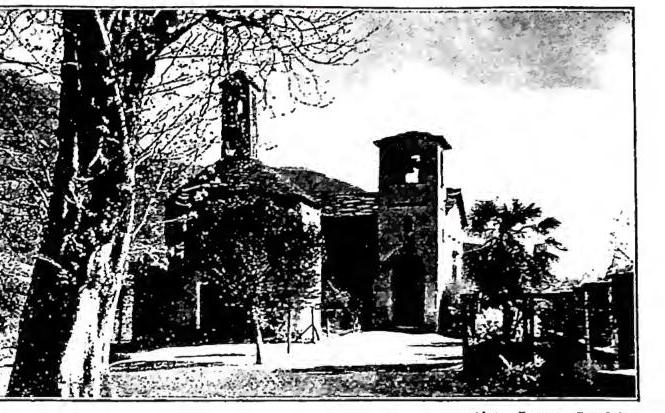
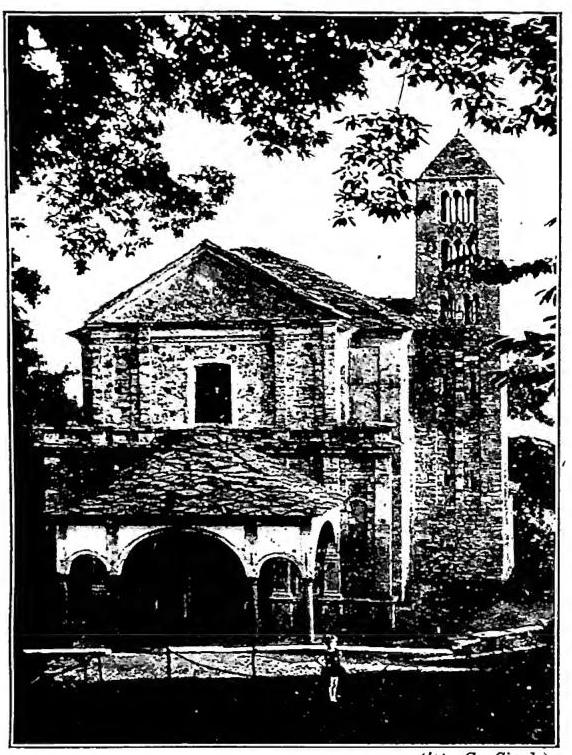
Among the monuments, the first to be mentioned is the Cathedral, built toward the end of the 10th century by Bishop Varmondo and restored several times according to questionable principles; it has preserved from antiquity the crypt and the external dome flanked by two bell towers. In the sacristy there is a precious carved ivory casket (9th–10th centuries) and two magnificent paintings by Defendente Ferrari (1521). The ancient S. Lorenzo in Castello of Settimo Vittone may date from the 7th century. Evocative are the Romanesque churches of S. Stefano di Candia and S. Pietro in Pessano (11th–12th centuries), as well as various Romanesque bell towers, such as those of S. Stefano d'I. and Fruttuaria (11th century). The parish church of Chivasso—a noteworthy medieval center of religious and political life, seat of the government of Monferrato until 1435 and of one of the oldest printing presses in Piedmont [1486], directed by G. Svigo—has preserved its Gothic façade with terracotta ornamentation. Noteworthy is the Baroque parish church of Strambino (1781 onward). Of historical importance are the castles of Montalto (14th century), the Castello del Conte Verde at I. (1358), and Masino (rebuilt in the 17th–18th centuries), where Arduino’s ashes are preserved.
3. I monasteri
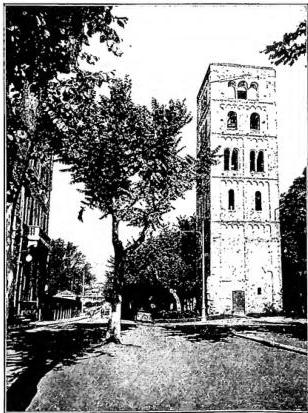
In I. fiori per molti secoli l'abbazia di S. Stefano, fondata dal vescovo Enrico nel 1044; decaduta a causa della commenda (sec. XV), fu soppressa nel 1800 e i suoi beni venduti all'asta; degli edifici abbaziali rimane il solo campanile. Lo stesso vescovo fondò il monastero di S. Michele per monache, dal 1940 proprietà delle Suore dell'Immacolata d'I. Notevoli pure i conventi dei Francescani, dei Domenicani (sec. XIII) e dei Minori Osservanti (1456). La più celebre abbazia dell'agro eporediese è S. Benigno di Fruttuaria, centro di riforma cluniacense, affiliata all'abbazia di St-Bénigne di Digione, fondata da s. Guglielmo di Volpiano (v.) nel 1003, col favore di Arduino, suo parente. La chiesa abbaziale, di cui rimane superstite il solo campanile (la chiesa fu rifatta in stile neoclassico dal card. Vittorio Amedeo delle Lanze tra il 1770 e il 1776) fu consacrata nel 1006 da 4 vescovi delegati da Giovanni XVIII. I papi da Giovanni XVIII e gli imperatori da Enrico II (31 ag. 1006) la presero sotto la loro protezione e ne confermarono più volte l'immenso patrimonio. I vescovi Varmondo (prima del 3 genn. 1015) e Enrico (12 marzo 1029) concessero all'abbazia la esenzione della giurisdizione episcopale. Infatti Cencio Camerario annovera l'abbazia « Sancti Benigni de Fructeriis » (cf. Liber Censuum, ed. G. Fabre-L. Duchesne, I, Parigi 1889-1910, p. 245) fra le abbazie S. Petri, nullius dioecescos. L'abbazia esercitò un grande influsso religioso, culturale e politico non solo nelle regioni subalpine, ma anche in Italia, e diversi monasteri seguivano la sua Regola; la commenda, incominciata nel 1450 con l'ex antipapa Felice V, la portò alla rovina; nel 1617, il card. Maurizio(fot. G. Ravero)