
SPOLETO, ARCIDIOCESI di. – The archdiocese of S. comprises a vast territory situated in the provinces of Perugia, Terni, and Rieti; it borders the dioceses of Todi, Terni, Rieti, Norcia, and Foligno. It has 110,000 inhabitants, of whom 108,000 are Catholics, 173 parishes with 144 diocesan priests and 75 religious priests. There are 13 houses of male religious Orders and congregations and 43 of female ones; in the capital is the generalate of the Congregation of the Sisters of the Holy Family. It has a minor seminary (the major seminary is in Assisi); its patron is St Ponziano the martyr, whose feast is celebrated on 14 January. It was immediately subject to the Holy See and was the first Umbrian diocese to be raised to an archdiocese, in 1820. The archbishop of S. is perpetual commendatory abbot of S. Croce di Sassovivo and, as such, has the right to appoint certain holders of parishes existing in other dioceses.
(courtesy of Dr C. Pietrangeli)
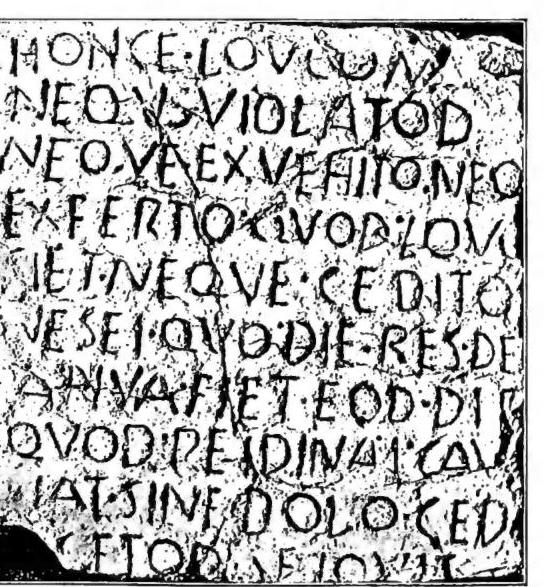
I. HISTORY
The history of S. in the period preceding the Roman conquest is shrouded in the greatest uncertainty because of the scarcity of information: it is known only that it was an Umbrian centre, traces of which are found in the acropolis, while any subjection to the Etruscans seems able to be ruled out.In 241 B.C. the Romans established a colony there, which subsequently proved among the most loyal, since only a few years later, in 217 B.C., Hannibal was halted here on his march toward Rome: despite the silence of certain sources, this famous episode is now accepted by the leading modern historians. In 90 B.C. the colony became a municipium and enjoyed a flourishing existence throughout the Empire, as demonstrated by the numerous remains of buildings from this period. Its importance increased in the Constantinian age and especially during the Gothic War, when, owing to its natural position, the city constituted a strong and much-contested strategic stronghold; the culmination of this rise was the choice made by the Lombards in 570 of S. as the seat of a duchy.
Information concerning the origins of the episcopal see of Spoleto is scarce, and the examination of the sources requires great caution because of frequent corruptions and interpolations. None of the martyrs whom tradition and the sources attribute to the city (Gregory, Ponziano, Sabino, and Concordio are the principal ones) was a bishop, and the first prelate of whom there is certain knowledge was Cacilianus (353). There are, however, good grounds for favouring a Laurentius called «Illuminator», who is supposed to have lived at the end of the 3rd century; if so, this may have been the period in which the episcopal see of Spoleto was founded, whereas the propagation and spread of the faith in Umbria is supposed to date back even to the apostolic or subapostolic period. Tradition, though without foundation, would make a certain s. Brizio, consecrated by the Apostles, the first bishop of Spoleto. Among the earliest known are the bishops s. Spes (late 4th century), called the Damasus of Umbria, and Achilles (5th century), who built the church of S. Pietro extra moenia. As a result of S.’s growing political influence, the jurisdiction of the diocese also expanded, and various neighbouring episcopal sees ceased to exist and were incorporated into that of Spoleto, which thus became exceedingly large: Bevagna, Norcia, Trevi, Spello, and, for a time, Terni and Rieti.
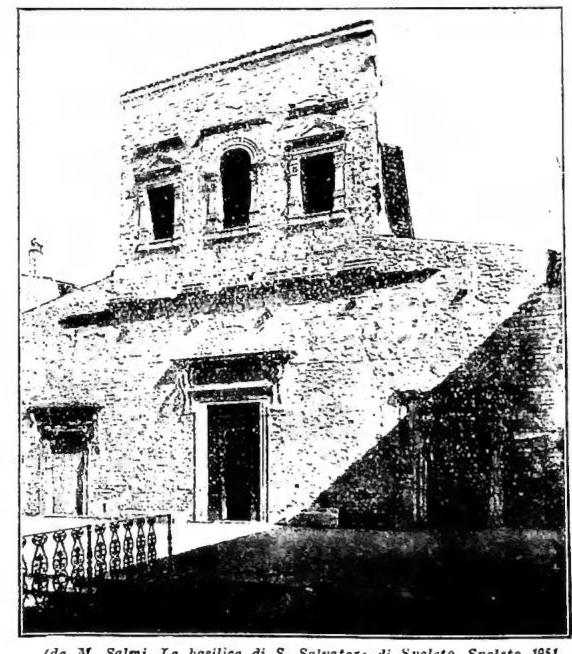
(from M. Salmi, La basilica di S. Salvatore di Spoleto, Spoleto 1931, fasc. II)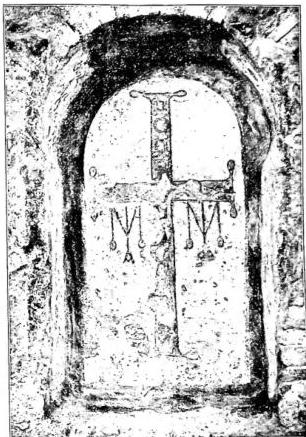
But the jurisdiction of the Lombard duke was much more extensive when the boundaries of the Duchy reached the Musone toward the Pentapolis, the Tiber toward Tuscia, and the Aterno, Lake Fucino, and the Aniene toward Benevento and the Roman Duchy. Because of the strategic importance of the territory under its control, its distance from Pavia, which favoured the autonomy of its duke, and above all its proximity to Rome, in whose affairs the faction of Spoleto often intervened, this was the city’s most glorious period. It passed from the Lombards to the Franks and then saw its dukes Guido and Lamberto wear the crown of king of Italy and emperor from 889 to 898.
After the 10th century, the fluctuating fortunes of the struggles between the Papacy and the Empire had repercussions in S., which now leaned toward one side and now toward the other, but predominantly toward the Papacy, especially in the time of Countess Matilda, until 1155. That was the fateful year for the city: having rebelled against Frederick Barbarossa, it was destroyed by him and, in addition to losing its splendid monuments, never recovered its former greatness. The predominance of the Ghibelline party brought a schismatic bishop, Witeclino, to the episcopal see of Spoleto in those years, and placed men loyal to the Empire at the head of the Duchy.
After the accession of Innocent III, the Duchy, by then reduced to modest boundaries comprising lower Umbria and the Sabina, definitively passed to the Church, which sent its Rectors there, while the free Commune was developing vigorously. For the seat of the Rectors, around the middle of the 14th century, Cardinal Albornoz erected the formidable Rocca, which became an impregnable bulwark defending the Papal States. In the 15th and 16th centuries the Rectors were often relatives of the popes (Lucrezia Borgia, 1499–1501); subsequently they were apostolic protonotaries and referendaries of the Signatura. In 1798 S. became the capital of the Department of Clitunno and suc-
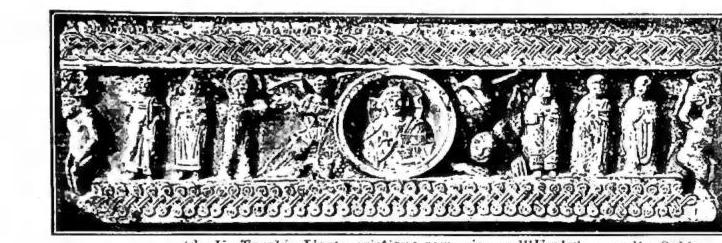
cessively, after the brief restoration, in 1809, the capital of the vast Department of Trasimeno. It remained the capital of a Papal Delegation until 1860.
Cardinals were also frequently called upon to govern the important diocese in the 17th and 18th centuries (1608–17 Maffeo Barberini, later Urban VIII). In 1586 Pieve Torina was detached from it and united with Camerino; in 1772 Spello was united with Foligno, and in 1820 Norcia was once again made an episcopal see. In compensation, S. was elevated to an archiepiscopal see, and its archbishop received the title of perpetual commendatory abbot of S. Croce di Sassovivo. From 1827 to 1832 the archdiocese was governed by Giovanni Mastai Ferretti, later Pius IX. Annibale della Genga, Leo XII (1823–29), belonged to an ancient Spoleto family.
II. MONUMENTS
A history so rich and varied explains why S. and its territory today possess a notable group of monuments. Among the most important from the Roman period are, besides substantial remains of walls from various periods and a rich harvest of inscriptions, for the most part collected in the Museo civico, the arch of Drusus and Germanicus (A.D. 23), the theatre (beginning of the 1st century A.D.), the Ponte Sanguinario (1st century A.D.), the amphitheatre (2nd century A.D.), and the house known as that of Vespasia Polla (beginning of the 1st century A.D.).The basilica of S. Salvatore and the little temple of Clitumnus, in the vicinity of the city, date from the early Christian period: according to the most authoritative art historians, the dating of these two monuments is to be assigned to the end of the 4th–beginning of the 5th century for the Basilica, and to the advanced 5th century for the little temple.
The group of Romanesque monuments is noteworthy. First and foremost is the Cathedral, in which Gregory IX canonized (1232) s. Antonio da Padova: built on the site of an older church, the present structure dates from the 12th century (the bell tower is from the 10th century), but the portico is Renaissance (15th century), and the interior was completely rebuilt in the 17th century; it still preserves, in the semidome of the apse, the last fresco by Filippo Lippi, who died and was buried here. Also important are S. Pietro, for its façade adorned with 12th-century sculptures; S. Gregorio (11th century), recently restored; S. Domenico (12th century); SS. Giovanni e Paolo (11th century), which preserves a fresco attributed to Cavallini and one of the earliest to depict s. Francesco; S. Giuliano (11th century), near Monteluco, which was at all times a centre of ascetics and preserves numerous hermitages; and S. Eufemia (12th century).
Among the civic monuments, the Ponte delle Torri, the most characteristic feature of S., and the Rocca, built at the behest of Cardinal Albornoz by Gattapone da Gubbio around the middle of the 14th century, are of the greatest interest. The monuments of later periods are of lesser importance, when S. had lost much of its significance. The city is still a lively centre of learning, and its Accademia degli Ottusi is well known; according to tradition, it was founded by Pontano, and a Centro Italiano di studi sull'Alto medioevo has been established there.
To the south-east the city is dominated by the green mass of Monteluco (814 m.), an ancient forest of centuries-old holm oaks which was a «lucus sacer» in the Roman period and subsequently a refuge for ascetics from as early as the 4th century: among the best known were s. Giovanni d'Antiochia and s. Isacco (v.) Syrian, who testify to interesting relations with the East. On the summit, s. Francesco built a small convent in 1218, later enlarged by s. Bernardino
da Siena and at subsequent periods; this convent and the numerous hermitages along the mountain slopes, now converted into villas, have hosted over the centuries a great number of visitors who found rest and serenity there, including, besides the saints already mentioned, s. Bonaventura, s. Antonio da Padova, il b. Leopoldo da Gaiche, Paolo III, Pio IX, Clarice Orsini, and Michelangelo.
Among the most important centres of the archdiocese are: Trevi (v.), Bevagna (v.), Montefalco, whose church of S. Francesco preserves a pictorial cycle of the saint’s life by Benozzo Gozzoli, a Nativity by Perugino, and numerous other works by Umbrian Renaissance painters; the shrine of the Madonna
della Stella, erected in the second half of the 19th century; and the abbey of S. Pietro in Valle at Ferentillo, founded by the dukes of S. in the 8th century. - Vedi tavv. LXXV-LXXVI.