
SIENA, ARCHDIOCESE of. – City and archdiocese, provincial capital in Tuscany. It has an area of 800 sq km and a population of 85,000 inhabitants, of whom 84,000 are Catholics, distributed among 110 parishes and 13 vicariates, served by 140 secular and 70 regular priests; it has a major and minor seminary, 11 male and 33 female religious communities (Ann. Pont. 1952, p. 379). The diocese, which suffered considerable reductions in the fifteenth and sixteenth centuries, extends in the form of an irregular rectangle from north to south, chiefly along the right bank of the Ombrone and its tributaries Arbia, Merse, Lanzo, and Gretano; it is traversed by the Via Cassia and Via Grossetana. Its suffragan dioceses are Grosseto, Chiusi, Massa Marittima, Sovana, and Pitigliano.
I. ORIGIN AND HISTORY
S. (Saena, Sena, Senae) has obscure origins. Probably an Etruscan center, it became an important Roman colony around 30 B.C., but few ruins remain.According to tradition, Christianity was introduced there at the beginning of the 4th century through the efforts of the young Roman Ansano Anicio, martyred for the faith on the Arbia in 303 and later made the principal patron of the diocese. A monastery and a church dedicated to the martyr are documented in the 7th century (Lanzoni, p. 564). It seems almost certain that the Floriano who took part in the Council of Rome in 313 was bishop of S.; but the history of the diocese during the first centuries is shrouded in darkness. After Floriano, Eusebio is mentioned, who participated in the Roman Synod of 465; Mauro, at that of 649, and who around that time reached a compromise with the bishop of Arezzo concerning the disputed possession of eighteen pieves located in the territory of Siena (cf. C. Lanzeri, La donazione del tribuno Zenobio, etc., Arezzo 1938, p. 12 ff.); and Vitaliano, who at the Roman Council of 680 signed the well-known Letter to the Emperor of the East. The compromise concerning the disputed pieves was not maintained, and long conflicts, with alternating fortunes, recurred and even led to violence, as in the transfer to S. of the body of S. Ansano (1107), continuing until the 12th century, without benefit to S. and leaving a trail of animosity between the two dioceses. Meanwhile, a few kilometers from the city arose the famous Benedictine monastery of S. Eugenio (730), and a few years later, at the extreme limit of the contado, the even more famous abbey of S. ROSA, SALVATORE (v.) was built. Religious life was taking firm root. The authority of the bishop,
already eminent alongside the Lombard gastaldi, was strengthened under the Frankish counts.
With the disintegration of the Carolingian Empire, the bishop remained the sole undisputed authority. The imperial count returned to S. only under Otto I, and did not remain there long. Power had passed to the bishop, who exercised it with a council of noble consuls, summoning the population before the church to approve proposals. Ecclesiastical life developed alongside political evolution. From the beginning of the 10th century, the Cathedral Chapter was already bound to communal life with its Schola, the names of some of whose teachers, priores scholae, have been handed down. The Sienese Chapter still takes pride in the brief membership of the learned s. Bruno of Segni in that school. The Sienese canons founded the hospital of S. Maria della Scala for sick and abandoned pilgrims, entrusting its care to an association of laymen, the Frati dello Spedale, while reserving to themselves approval of the rector and supervision of the administration. Until the end of the 14th century, the Chapter elected the bishop. In S., Pope Nicolò II was elected against the intruder Benedetto X (1058), a sign that it supported the new reform movement. Even before the investiture conflict, the Sienese Church had obtained (around 1055) quasi-sovereign prerogatives over a broad territory between the Arbia and the Merse, which would form the fief of the bishopric and endure, amid conflicts and agreements, until Pietro Leopoldo (1786).
The great feudal lords took advantage of the political and religious disorder produced by the struggle between the Papacy and the Empire (when Gregory VII confronted Henry IV, the Sienese Church was governed by the bishop s. Ridolfo [1072–84]) to enlarge their domains. But by then the movement toward the unification of communal life could no longer be halted; and under the leadership of the bishop and the consuls, the power of the great lords was gradually limited. Donations to the bishop and the Virgin Mary, to the bishop and the people, and to the Virgin and the Commune followed one another. The feudal lords were compelled to reside in the city. The new struggle between the Sienese pope Alexander III and Frederick I found Ranieri (1129–67), active and zealous, as bishop of S.; to him is owed the precious calendar-obituary of the Sienese Church (around 1140). When the consuls, pressured by the imperial vicar, imprisoned some ecclesiastics, the bishop excommunicated the consuls and placed the city and contado under interdict. The clergy remained faithful to the Pope, but the bishop, forced to flee, could never return (he died in 1170).
(phot. Grassi, Siena)
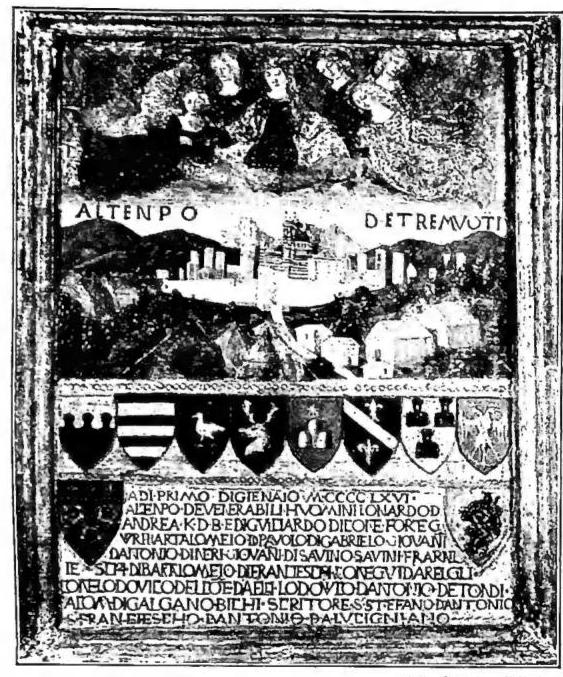
SIENA, ARCIDIOCESI di — The Virgin protects S. during the earthquake of 1466, bicherna of 1467 attributed to Francesco di Giorgio Martini — Siena, State Archives.
nate Tuscany for a decade, after adopting a wise civil constitution (1262). The wealthy Guelph merchants and bankers succeeded in taking control of the government, which they, the « Nove », maintained with wisdom and energy and without significant upheavals for a long period (1292–1355).
The legacy of the b. Andrea Gallerani (c. 1200–51), founder of the Casa di Misericordia (c. 1240), expanded with the Compagnia dei Disciplinati under the vaults of the Spedale (1295), which still continues something of the ancient charitable work under the name of Società di Esecutori di pie disposizioni; the b. Bernardo Tolomei (1272–1348) founded the Congregation of the Olivetans in 1319; the Charterhouses of Maggiano and Pontignano arose; and the Commune, not content with possessing a great cathedral, planned an even larger one. The bishop Donusdeo (1313–51), deserving well of the faith for the charity and firmness he showed toward the Fraticelli, just as his predecessor Buonfiglio (1216–52) had deserved well of it with regard to the Albigensians, blessed (1339) the foundation stone of the great Cathedral, which, though unfinished, remains a testimony to faith, daring, and genius.
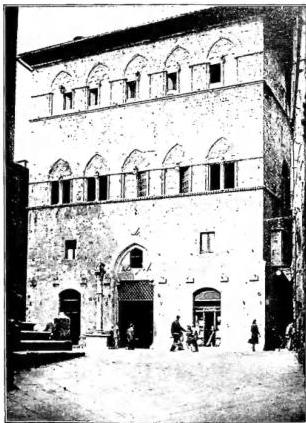
the episcopate of Enea Silvio Piccolomini (1450–58), later Pius II, who raised the see of S. to a metropolitan see on 23 April 1459; then that of Fr. Piccolomini (1460–1501), later Pius III; and that of Fr. Bandini Piccolomini, an energetic defender of the faith against the innovators (1529–88). And the faith remained firm in the Sienese Church, despite sporadic cases of defection culminating in the apostasy of B. Ochino.
With the fall of the republic, S. became part of the Duchy of Tuscany. In the new political climate, the Tridentine norms inspired fruitful initiatives, directed especially by the Capuchins and the Jesuits, who came to S. in 1536 and 1555, respectively. The episcopates of the learned Archbishop A. Piccolomini (1588–97); of the most zealous Cardinal Fr. Tarugi (1597–1607), who held a provincial synod (1599); of Cardinal M. Bichi (1612–14), founder of the Seminary; and of A. Piccolomini (1628–71), who adapted prudent educational norms to the changed circumstances but also encountered fierce resistance to the implementation of canonical prescriptions from two prominent lay congregations jealous of supposed rights, brought honour to the Church of Siena. The Seminary, strengthened by the munificence of Alessandro VII (1660), attracted young men from every part of Tuscany, competing with the Tolomei College directed by the Jesuits; after their suppression (1774), the Piarists succeeded them.
Jansenist controversies barely touched the diocese. But when Pietro Leopoldo sought to implement ill-considered religious reforms along with well-considered economic reforms, the Archbishop P. Borghesi, a meritorious prelate, following the grand-ducal suppression of the lay confraternities and the reorganization of the city parishes (1783–86), firmly defended the rights of ecclesiastical doctrine and discipline. The exiled Pius VI was a guest of S. from February to May 1798. The religious orders suppressed by the French (1808–1809) returned after the Restoration. The Risorgimento period did not find the diocese unprepared for the new times, as worthy prelates such as the learned and generous Archbishop G. Mancini (1824–55) governed II. The Seminary—
(phot. Bait)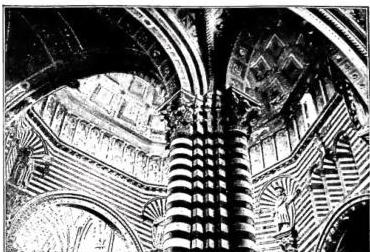
II. ILLUSTRIOUS PERSONAGES
They brought honor to their Church and their Sienese homeland: Rolando Bandinelli, eminent jurist, later Alexander III (1159–81); Cardinal Riccardo Petroni (ca. 1250–1313), profound jurist and patron of the arts; the two popes Piccolomini; Camillo Borghese, of Sienese origin, later Paul V (1605–21); Fabio Chigi, man of letters and diplomat, Pope Alexander VII (1655–67); Ambrogio Caterino (Lancellotto Politi: 1487–1553), poet and theologian; Claudio Tolomei (1480?–1555), poet, philologist, politician, Bishop of Corcira (1549–1555); Sisto da S. (1520–69), converted from Judaism, a most learned biblical exegete; Sallustio Bandini (1677–1760), archdeacon of the Cathedral, an acute economist; the abbot Giovanni Caselli (1815–91), physicist and inventor of the pantelegraph; Monsignor Nazareno Orlandi (1872–1945), pioneer of Catholic Action, founder of the Federation of Associations of the Clergy in Italy (F.A.C.I.). The saints already mentioned are worthily crowned by b. Ambrogio Sansedoni (1220–82); b. Andrea Gallerani (ca. 1200–51); b. Francesco (d. in 1328) and b. Antonio Patrizi (d. in 1311); b. Giovacchino Piccolomini (1258–1305), and the bb. Caterina Lenzi, Nera Tolomei, Caterina Colombini, together with the others of whom every Sienese family takes pride in boasting.III. NOTABLE MONUMENTS
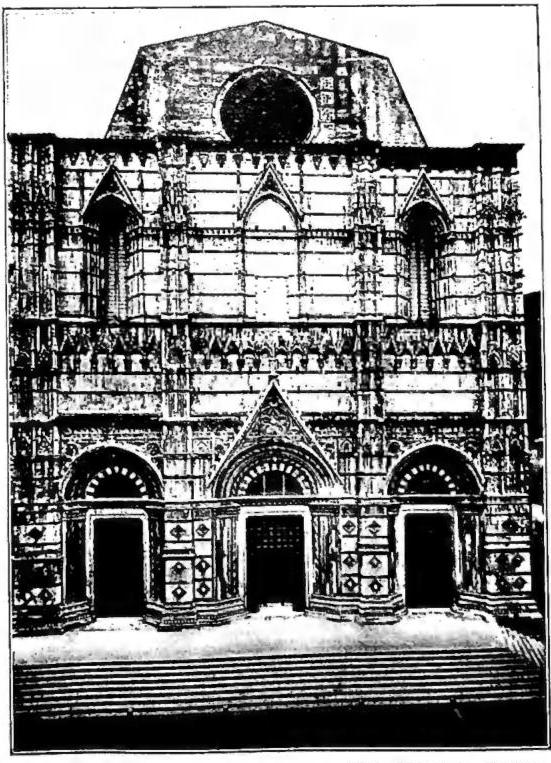
S. abounds in monuments.(phot. Facostere, Turin)
SIENA, ARCIDIOCESI di — Apse of the Duomo and façade of the church of S. Giovanni (baptistery), probably designed in 1382 — Siena.
(phot. Exil)
SIENA, ARCIDIOCESI di — The dome of the Cathedral (1266). At the corners, above columns, statues of saints; in the gallery with small columns, figures of patriarchs, painted by Guidoccio Cozzarelli and others (15th cent.) — Siena.
The Museo dell’Opera, adjoining the Duomo, contains priceless treasures: sculptures, statues (formerly in the Duomo), the Three Graces, drawings, illuminated codices, goldwork, ivories, embroideries, reliquaries, vestments, including Duccio’s panel, the Maestà (1309–11) made for the high altar of the Duomo.
The Spedale di S. Maria della Scala, opposite the Duomo, a gigantic two- and six-storey building (10th–14th centuries), encloses, through the masterpieces of art in the church, the oratories below and its interior, especially in the Pellegrinaio (1440–43) by Domenico di Bartolo and Vecchietta, the history of ten centuries of Christian charity. The parish church of S. Giovanni, built (14th cent.) beneath the presbytery of the Duomo, has the baptismal font fashioned by Jacopo della Quercia, Donatello and Ghiberti.
The basilica of S. Domenico (1223 ff.), now the Basilica Cateriniana, boasts the chapel of the Vaults with the portrait of S. Caterina by Andrea di Vanni and the chapel of S. Caterina with the Saint’s head and frescoes by Sodoma, as well as a majestic crypt. The basilica of S. Francesco (1246 ff.), spacious and austere, with masterpieces by Ambrogio and Pietro Lorenzetti, damaged at various times and during the Second World War, is a destination for pilgrimages because of the prodigy of the Sacred Particles, which have remained intact since 1730. Adjacent to S. Francesco is the oratory of S. Bernardino, with paintings by Beccafumi, Sodoma and Del Pacchia; it contains the Saint’s heart and the small panel of the Name of Jesus designed by the Saint himself. The basilica of S. Maria dei Servi (ca. 1260), with its unfinished façade renovated (1534) and dedicated to the Immaculate Conception, was restored at the beginning of this
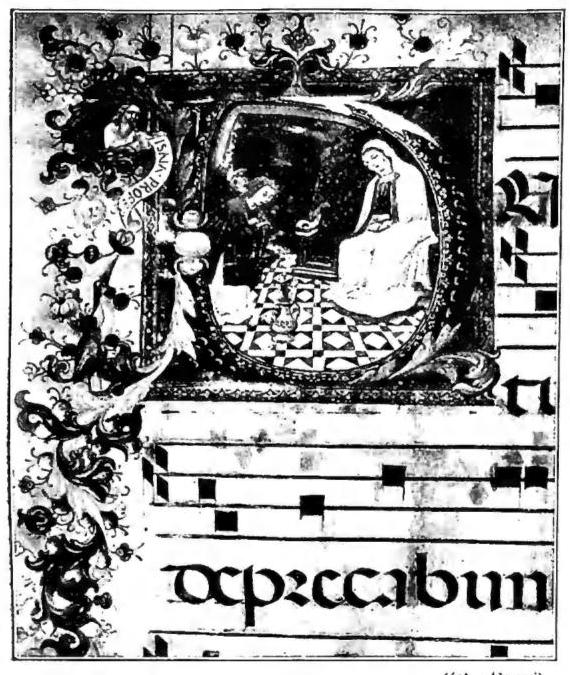
SIENA, ARCIDIOCESI di — Illuminated letter with the Annunciation and the prophet Isaiah (in the manner of Sano di Pietro, first half of the 15th cent.). Choir book in the Piccolomini Library — Siena.
century, with paintings by Matteo di Giovanni, Taddeo di Bartolo, P. Lorenzetti and Fungai.
The innumerable pictorial and sculptural treasures scattered throughout the churches of the diocesan territory have for the most part ended up in the city Picture Gallery.
IV. SENESE ART
The period of greatest splendour in the artistic traditions of S. falls between the middle of the 13th century and the first decades of the 16th, and corresponds approximately to that which saw the establishment of the free Commune. Architecture attained its fullest development and features of genuine autonomy during the Gothic age: indeed, the few Romanesque buildings still preserved in the city, such as the apse of S. Cristoforo, the church of S. Pietro alla Magione, and that of S. Maria in Betlem, in which motifs of Lombard origin are reworked with a certain grace, reveal no marked originality. It is rather the countryside that offers us a notable series of Romanesque churches, among which stand out the collegiate church of S. Gimignano, the collegiate church of Asciano, the parish church of S. Quirico in Osenna in the Val d'Orcia, and above all the famous abbey of S. Antimo at Castelnuovo dell'Abate, built in the 12th century by probably monastic craftsmen trained in Burgundian forms.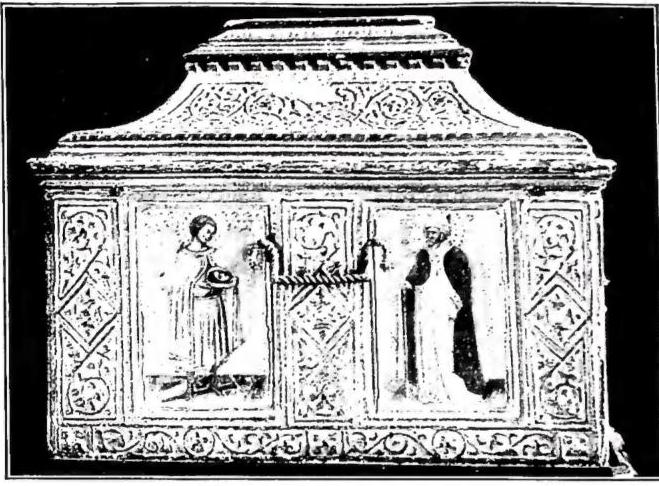
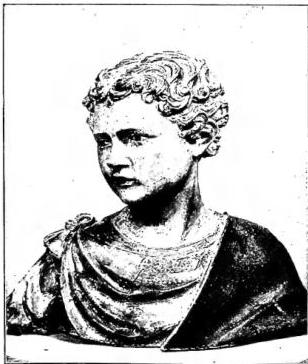
(from E. Carli, Scultura lignea senese, Milano-Firenze 1951, pl. 17) SIENA, ARCIDIOCESI di - S. Crescenzo, wooden bust by Francesco di Valdambrino (1409) - Siena, Museo dell'Opera del Duomo.
Gothic and Renaissance blend harmoniously in the Loggia della Mercanzia (by Sano di Matteo; 1417-1429) and in the Cappella di Piazza (1376), completed by Antonio Federighi, to whom are also due the airy Logge del Papa and the original Palazzo dei Diavoli. Meanwhile, noted Florentine architects of the 15th century erected superb testimonies to the new style in the heart of this stronghold of Gothic: Bernardo Rossellino, who for Pio II transformed the rustic village of Corsignano into a perfect model of a Renaissance town, creating present-day Pienza, raised in S. the most noble mass of the Palazzo Piccolomini, imitated in the one known as « delle Papesse »; and Giuliano da Maiano began the Palazzo Spannocchi, which was also to serve as a model for the so-called Palazzo di S. Galgano. Although direct traces of the activity in his native land of the greatest Sienese architect of the 15th century, Francesco di Giorgio Martini, are scant, his style is nevertheless reflected in the work of Giacomo Cozzarelli (Chiesa dell'Osservanza, Cupola di S. Spirito, Palazzo del Magnifico): nor are there many reminders of Baldassarre Peruzzi in S. (Palazzo Pollini, Castello di Belcaro), while other good Sienese architects of the 16th century were A. M. Lari, G. B. Pelori, and Bartolomeo Neroni called « il Riccio ». In the 17th century Sienese building activity, though not very intense, remained within the bounds of a dignified and sober balance, as is shown by the harmonious mass of S. Maria di Provenzano, designed by the Carthusian fra D. Schifardini and executed by Flaminio del Turco. Particularly characteristic of the 18th century are the most elegant interiors of certain contrada oratories and the façades of the churches of S. Giorgio and S. Vigilio.
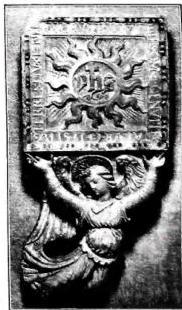
SIENA, ARCIDIOCESI di - Voting casket (14th century) - Siena, Palazzo comunale.
With the end of the fifteenth century, however, there spread a taste for decorative sculpture of fine and minute carving, rich in classicizing motifs, which was to culminate in the most elegant virtuoso works of Lorenzo di Mariano, known as “il Marrina” (1476–1534). In the sixteenth century there are no other noteworthy sculptors, with the exception of Beccafumi, who, in addition to painting, successfully practiced bronze casting; and during the Baroque period intense activity was carried out, disseminating the Berninesque style, by the numerous members of the Mazzuoli family, from the elder Dionisio to his sons Giuseppe and Giov. Antonio and finally to his grandson Bartolomeo. Finally, Giovanni Duprè, the very well-known sculptor, was born in S. (1817) and left several works there. But S.’s greatest glory is that it was the seat of a school of painting which, especially during the fourteenth century, was one of the most important in Europe. The fanciful and fairy-tale character of Sienese painting, which seems almost to oppose the lucid rationalism of Florentine painting, is seen above all in the constant predilection that Sienese masters showed for color and for line understood as the pure and free expression of an exquisitely musical and decorative sensibility. Thus, the robust and concise language of Giotto is seen to contrast with the slender and florid linear elegance of a Simone Martini, and the chiaroscuro and constructive volumetric treatment of the Florentines with the tranquil chromatic surfaces of an Ambrogio Lorenzetti.
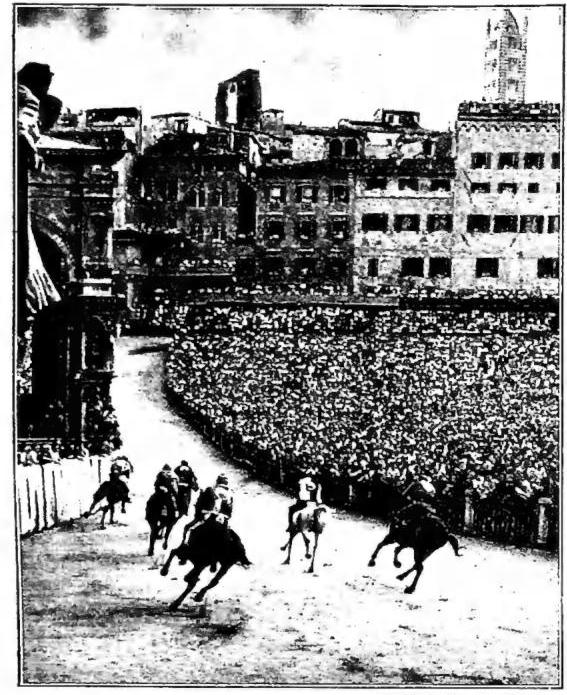
SIENA, ARCIDIOCESI di - The Palio (16 Aug.) - Siena.
Since full accounts of the activity of each individual master are given in the entries devoted to them, it will suffice to cite their names according to the chronological and stylistic sequence to which they belong. Thus, if the Sienese pictorial tradition began around the middle of the thirteenth century (according to some, however, in the first decades) with Guido da Siena, it achieved its highest and most splendid results between the end of the thirteenth century and the first half of the fourteenth with Duccio di Buoninsegna, Simone Martini, and the two brothers Pietro and Ambrogio Lorenzetti. Numerous minor personalities, nevertheless worthy of note, developed within the orbit of each of these masters: Duccio’s followers were Segna di Bonaventura, his son Niccolò, and Ugolino di Nerio; Simone Martini’s were Lippo Memmi, Jacopo di Mino del Pellicciaio, Naddo Ceccarelli, the delicate illuminator Niccolò Tegliacci, and Andrea Vanni. The legendary Barna occupies a position of his own; in his frescoes in the collegiate church of S. Gimignano, echoes of both Duccio and Martini can be discerned, originally reworked. But most of the painters of the late fourteenth century drew upon the Lorenzetti brothers’ experiences, although in them such influences were generally combined in such varying degrees with other motifs of different origin as to make a rigorous classification difficult. Thus, for example, the so-called “Master of Ovile” is designated by some with the exegetical appellation of Ugolino Lorenzetti, because elements derived both from Ugolino di Nerio and from Pietro Lorenzetti are fused in his manner. Likewise, Lippo Vanni, Niccolò di Buonaccorso, and Luca di Tommè drew, albeit with very different results, upon the same Martinian and Lorenzettian sources, while in Bartolo di Fredi and Paolo di Giovanni Fei even very late recollections of Ducciesque modes can be discerned.
While the language of the first great masters of the century survived without substantial innovations until the first decades of the fifteenth century through the eclectic manner of the immensely prolific Taddeo di Bartolo and Martino di Bartolommeo and their followers, Stefano di Giovanni, known as il Sassetta, showed himself informed not only by the contemporary currents of international Gothic taste but also by the first revolutionary innovations of the Florentine Renaissance. Yet these had little effect on Sassetta himself, otherwise an exceedingly refined artist; Sano di Pietro and Giovanni di Paolo, who after him were the leading Sienese painters of the fifteenth century, continued to develop the precious Gothic heritage with an autonomous language. Nor did the new Renaissance taste make inroads into Sienese artistic culture with Domenico di Bartolo and Pietro di Giovanni d’Ambrogio; it was to assimilate it much later through the mediation of Lorenzo di Pietro, known as il Vecchietta, Francesco di Giorgio Martini, and Matteo di Giovanni. But even on the threshold of the sixteenth century, a Neroccio di Bartolomeo could evoke the immaterial linearism of Simone Martini, at a time when Sienese painting, by then lacking figures of real distinction, had assumed a character of gracious eclecticism, opening itself to the most varied contributions, among which the Umbrian was particularly important. In the first half of the sixteenth century, the personalities of Sodoma and Beccafumi dominated: the former, of Piedmontese origin, a follower of Leonardo and Raphael; the latter, to be considered one of the creators and foremost exponents of the early Tuscan Mannerism.
At the end of the sixteenth century, a multitude of painters of modest merit worked in S. (one of the best was Francesco Vanni, delicately Baroccesque), until, in the following century, Rutilio Manetti emerged, one of the strongest interpreters of Italian Caravaggism. With him, essentially, the series of great Sienese painters comes to an end, because neither the eighteenth century, with its superficial Nasini family, nor the nineteenth century—which, with Maccari, Aldi, Cassioli, and Franchi, nevertheless possessed a flourishing school of fresco painters—was able to equal the glory of the earlier centuries. Alongside the major arts, the so-called minor arts also underwent extensive development in S. and attained a level of perfection difficult to surpass. Moreover, certain techniques established themselves in S. before doing so elsewhere, both in the field of goldsmithing, which owes to S. the invention of translucent enamels, and in the art of stained glass, since the oldest and most precious example of an Italian-made narrative stained-glass window is Sienese (the great “eye” of the cathedral choir, dated 1288), as well as in wood inlay and in marble inlay, which has left in the cathedral pavement a monument unique in its kind for the vastness of its dimensions and its imaginative genius; while the stylistic developments of painting were reflected in miniature, on a lesser scale but with exquisite refinement. Sienese art, with the exception of architecture, is almost exclusively religious in subject, even when it was not intended to furnish and adorn churches; and the favorite theme of Sienese artists in every period was the Madonna, solemnly proclaimed patron and advocate of the city on the eve of the Battle of Montaperti (1260), and always the object of the most fervent veneration on the part of the people and the rulers of the Republic. - Vedi tavv. XXXIV-XXXVI.