
CERTOSINI. - Religious order founded by s. Bruno in 1084 at Chartreuse (Certosa), a deserted place in the diocese of Grenoble, where an oratory dedicated to the Blessed Virgin was built, along with several huts around the chapel, near a fountain.
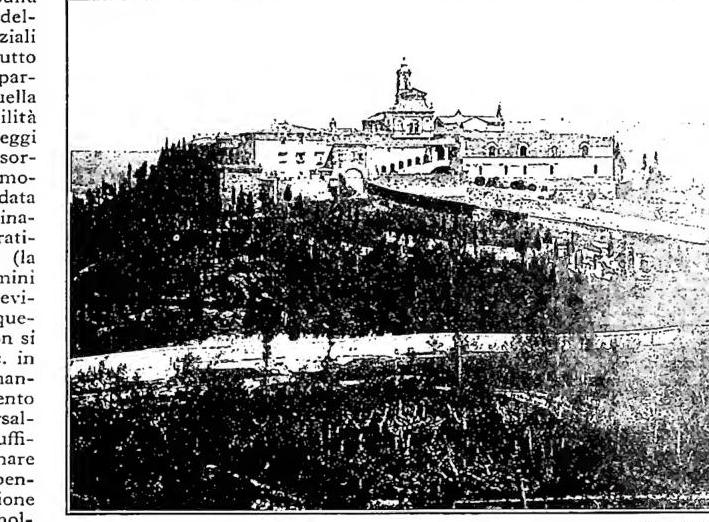
St. Bruno did not write a rule for his disciples; and they conformed unhesitatingly to the examples he had left behind. It was the fourth prior of the Certosa, Guigo, who in 1127 collected all the customs practiced up to that time, urged to do so by the religious who yearned to follow the primitive observances faithfully. Pope Innocent II approved them toward the end of 1133. The General Chapters of the Carthusians, to explain and complete Guigo's customs, issued, over the course of the centuries, ordinances which are nothing other than usages, because, according to the fundamental principle of Carthusian legislation, a prescription has no force of law unless it has first been put into practice. Thus there were the Additiones of Basil in 1259, the Nova statuta of Raynald in 1368, and the Nova collectio of Carasso in 1581. Innocent XI on March 29, 1688 and Pius XI on July 8, 1924 approved the statutes of the Carthusian Order in forma specifica.
The primitive observance has not grown languid after eight centuries, and the Order has never had need of reform, fully justifying the saying: Cartusia numquam reformata, quia numquam deformata. The Carthusian leads a cenobitic and solitary life, spending the time free from the divine office in his cell, where he lives alone, in a dwelling distinct and completely separated from that of his other confreres and where he takes his meals, except on days when there is a common refectory. It is composed of a corridor, a small room called Ave Maria (because upon entering the religious must greet the "Queen of the Desert"), a room where he prays, studies, and rests, a workshop with a lathe, a woodshed, and a small vegetable or flower garden. A schedule indicates and prescribes the various occupations for the Carthusian: reading, writing, psalmody, praying, contemplating, working. The Carthusian does not remain entirely in his cell, however. Every weekday he leaves it three times (six times on Sundays and other feast days) to fulfill the divine office in choir; he also leaves it for recreations and walks, and for some other exercise of the rule. He goes to church to sing (at 23:00) Matins and Lauds with simple, solemn notes, then in the morning Conventual Mass and in the evening Vespers. On certain feast days all the Canonical Hours are sung in Choir, except Compline. Moreover, to cultivate the spirit of community and foster the opening of souls in fraternal charity, meals are taken in the refectory in the charterhouse every Sunday and on other feast days, though always in silence. On these days, a cordial recreation is permitted in common after None. Once a week, moreover, the Carthusians take a walk of about three hours outside the enclosure.
Every monastery is autonomous, but depends on the General Chapter, which maintains the observance of the rule firm and constant within the Order. It meets every two years at the Grande Chartreuse and is composed of the father general and eight members chosen among the priors and rectors of the charterhouses and
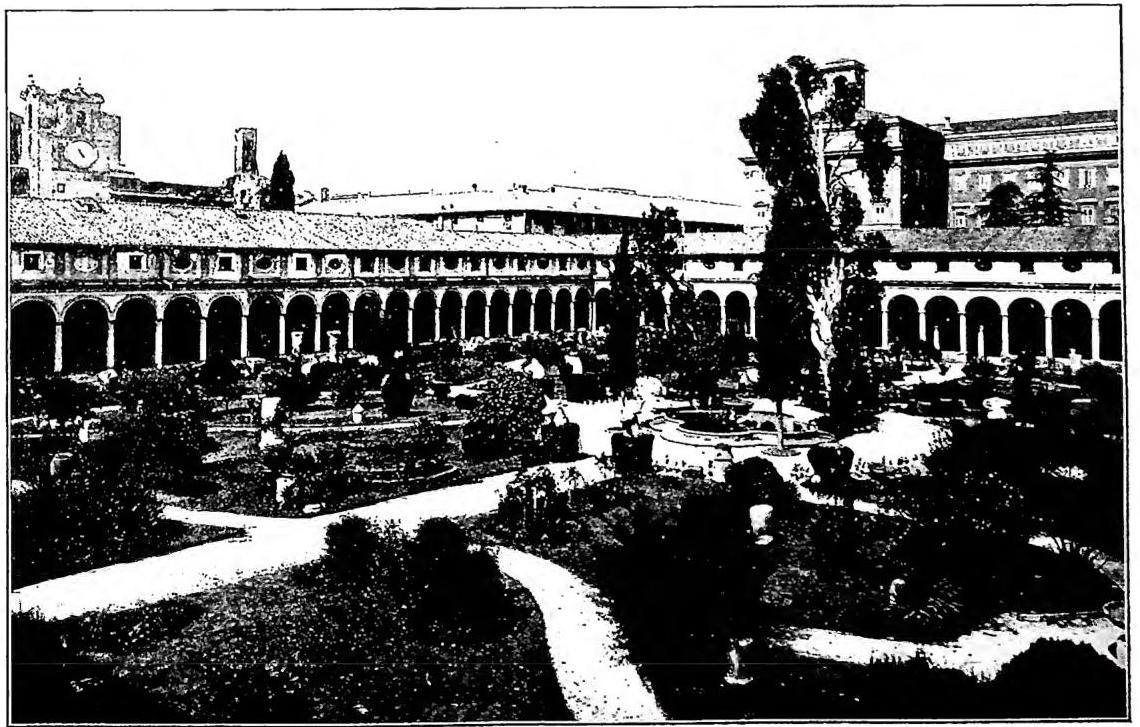
The C. always sought to keep silent about the lives of the members of the Order; nevertheless, many have been raised to the honors of the altars, and some suffered martyrdom in various European countries. A certain number of cardinals, bishops, and pontifical legates have brought it renown. In their study the C. found nourishment for their piety and contemplation, and not a few were writers of theology, liturgy, and history. Some distinguished themselves in agriculture, mechanics, painting, and printing. Currently the Order counts approximately 600 members.
The C. never had much expansion, and even today they count only 4 monasteries. They are consecrated by the diocesan bishop; governed by a prioress and a sub-prioress, assisted by a vicar and a coadjutor, who are Carthusians; they dress like the monks, with the addition of a veil, wimple, and white mantle; they read the Epistle, and, adorned with a stole, the Gospel. Among those who reached the honor of the altar, one may recall b. Beatrice di Orancieu, b. Margherita di Oingt (d. ca. 1310), s. Rosellina di Villanova (d. 1329), and Francesca M. Briois, martyr of the French Revolution (1794).