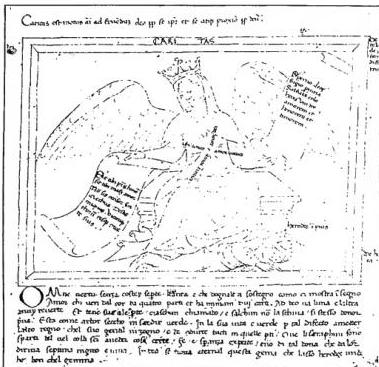
CARITÀ

CHARITY. – The third of the three theological virtues.

SUMMARY:

I. Theology of charity

II. History of charity

III. Iconography of charity.

I. THEOLOGY OF CHARITY

SUMMARY:

I. Nature of charity

II. Object of charity

III. Charity and the supreme precept

IV. Charity and Christian perfection

V. The increase of charity and progressive purification

VI. Charity and disinterestedness

VII. Charity and the other supernatural and natural virtues

VIII. The exercise of charity

IX. Selfishness, the perversion of charity.

I. NATURE OF CHARITY

In Christian thought charity is the highest of the three theological virtues, from which proceeds the love of God and of neighbor. According to

Revelation and the Church’s definitions: it is an infused virtue, specifically distinct from natural love of God, given at the moment of justification, never separated from sanctifying or habitual grace, which makes us adopted children of God. St Paul says: “The charity of God is poured forth in our hearts by the Holy Ghost, who was given to us” (Rom 5:5) and he extols it greatly in 1 Cor 13:1–13: “If I speak with the tongues of men and of angels, and have not charity, I am become as sounding brass or a tinkling cymbal… If I have not charity, I am nothing… and if I should deliver my body to be burned, and have not charity, it profiteth me nothing.” Indeed, without charity, which is inseparable from sanctifying grace, man is in a state of mortal sin; instead of loving God above all things, he loves himself most of all, and his heart is turned in the opposite direction to the heart of God. But when he receives sanctifying grace and charity, his sin is remitted, he becomes a son of God and a friend of God, and in himself he acquires the germ of eternal life.

St Paul goes on to show that charity inspires all the virtues in the just man and renders them meritorious of eternal life: “Charity is patient, is kind; charity envieth not, dealeth not perversely; is not puffed up; is not ambitious, seeketh not her own, is not provoked to anger, thinketh no evil; rejoiceth not in iniquity, but rejoiceth with the truth; beareth all things, believeth all things, hopeth all things, endureth all things. Charity never falleth away… now there remain faith, hope, charity, these three; but the greatest of these is charity.” Together with sanctifying grace it will endure eternally, while faith will give way to the immediate vision of the divine essence, and hope to the imperishable possession of God.

Various theologians, and especially St Thomas, have studied deeply the nature of charity. As the latter explains (1a 2ae, q. 26, aa. 1, 2, 3, 4), love is the inclination or propensity of the appetite towards a good in which it takes delight. When this love selects a good by preferring it to another, it is called dilection. With love of concupiscence or of desire we yearn for a good whether inferior or superior to ourselves. With love of benevolence we will the good of another person as our own, and when it is mutual and shown by communion of thought, will and action, it deserves the name of friendship. When the good sought is of the highest worth and the person for whom it is desired is most dear, the love of benevolence is called charity.

Theologians have therefore raised the question whether infused charity, of which Holy Scripture speaks, is ultimately the supernatural friendship between God and the just man, as also between the adopted children of God. The affirmative answer is already contained in the Old Testament: Judg 8:22; Wis 7:27; Ps 138:17 (according to the Septuagint and Vulgate); and above all in the declaration of Jesus: “You are my friends, if you do the things that I command you. Henceforth I call you not servants; for the servant knoweth not what his lord doth. But I have called you friends; because all things whatsoever I have heard of my Father, I have made known to you… This is my commandment, that you love one another” (Jn 15:14). Indeed only through charity are we friends of God.

St Thomas proves (2a 2ae, q. 23, a. 1) that in charity there come together the three conditions of true friendship. This is in fact an act of benevolence, a mutual act of benevolence, and it is founded on a sharing of life, a life in common, at least spiritually, through the exchange of thoughts and intimate feelings.

It is precisely these three characteristics of true friendship that we find in charity, which unites us with God and with souls in him.

Already natural inclination, which persists deep within our will despite original sin, leads us to love more than ourselves, and above all things, _God, author of our nature_ (1a, q. 60, a. 5). But this natural inclination, weakened by original sin, cannot without healing Grace impel us to an _effective_ love of God above all things (1a-2a, q. 109, a. 3).

Far above this natural inclination, we have received in Baptism sanctifying Grace and charity, together with faith and hope. Now charity is precisely this mutual love of benevolence, which makes us will for _God, author of Grace,_ the good that befits Him, namely His deep reign in souls, just as He wills our good for time and eternity. This is truly a friendship founded on a sharing of life, since God has communicated to us a participation in His intimate life by giving us His Grace, the seed of eternal life. Through sanctifying Grace, root of infused charity, we are “born of God” (Jn. 1:13), made like to God as children to a father. Now this twofold life entails permanent union, which is sometimes only _habitual,_ e.g., during sleep, at other times _actual,_ that is, when we perform an act of love of God. Then there is truly a twofold life (convivere), that is, a true friendship with God, which begins here on earth; there is the meeting of the fatherly love of God for His child with the love of the child for the father, which enlivens II. This spiritual communion is the prelude to that of eternity.

Charity, even in its lowest degree, makes us love God more than ourselves and more than His gifts, with an _effective love of esteem,_ because God is infinitely better than we and any created gift; yet this effective love of esteem is not always _felt,_ e.g., in moments of aridity; then at the outset it does not yet have the intensity or impulse that it possesses in perfect men and above all in the blessed in heaven. Every Christian mother _feels_ more her own love for her child than that which she has for God, whom she does not see; yet, if she is truly a Christian, she loves with an effective love of esteem the Lord more than her own child. Therefore theologians usually distinguish between _appreciative_ love and _intensive_ love, the latter being generally greater toward loved persons whom we see than toward those who are distant. The effective love of esteem, which persists even in great aridities of sensibility, is therefore altogether the opposite of sentimentalism, which is merely an affectation of love that one does not have.

Charity is therefore the supernatural friendship with God, and likewise with the children of God, not excluding sinners who are called to conversion and to the blessedness of the just: although they do not possess charity, it is necessary to have it for them. Charity makes us ever more ardently desire the deep reign of God in souls. No science is required for this love of God; it suffices to know by faith the Father in heaven.

Whoever ceases to love Him, through any mortal sin, moves toward perdition. God says: “I love those who love me, and those who seek me diligently find me” (Prov 8:17). And Jesus: “Whoever holds to and observes my commandments, that one loves me. And whoever loves me will be loved by my Father, and I will love him and manifest myself to him” (Jn 14:21).

In defining charity as supernatural friendship, theology does not deduce a new truth, but rather explains a revealed truth and enables its deeper understanding.
II. OBJECT OF CHARITY – God is the primary and principal object of charity, in accordance with the precept: “Thou shalt love the Lord thy God with thy whole heart, and with thy whole soul, and with thy whole mind. This is the greatest and the first commandment” (Mt 22:37). One’s neighbour is the secondary object of charity: “And the second is like to this: Thou shalt love thy neighbour as thyself” (ibid.).

Theologians have asked: for what formal reason do we love with charity God known in a supernatural manner? The reason is that God is infinitely good in Himself, and therefore infinitely lovable. To love God for His benefits is not yet to love Him for Himself, yet this disposes us to do so and leads us to think that the benefactor is good in Himself, indeed infinitely better than His benefits.

Moreover, the love of God and that of one’s neighbour both derive from the same infused virtue, since the formal reason for which we love our neighbour with charity is likewise God, inasmuch as He loves the neighbour and calls him to the same beatitude to which we are called. It is for this reason that we desire the neighbour to belong to God, to adhere to Him, and to glorify Him together with us, both in time and in eternity. Indeed, we cannot love God without willing that He be loved and glorified.

Just as in the natural order he who loves his friend also loves, with the same love, the friend’s children—if not for their own sake, at least for the sake of their father, and bears with them for his sake—so too in the supernatural order, while loving God, our common Father, we must love for His sake all His adopted children, as well as all those who are called to become such. It follows that we do not love our neighbour with supernatural charity when we love him for his natural qualities (Sum. Theol., 2a-2ae, q. 25, aa. 1, 4, 5, 8).

Charity is therefore nothing other than the extension and irradiation of the love we owe to God. Hence it is the surest sign of the progress of the love of God within us. “By this shall all men know that you are my disciples, if you have love one for another” (Jn 13:35). In Acts 4:32 there is described the wondrous spectacle presented by the first Christians through mutual love: “the multitude of believers were of one heart and one soul; neither did any one say that aught of the things which he possessed was his own, but all things were common unto them.” Indeed, the practice of fraternal charity is the thermometer of the interior life, that is, of the love of God, because it is visible precisely as it proceeds from the same theological virtue of the love of God. Through charity, therefore, we have for our neighbour not merely a supernatural love, but a theological one, since in him we love the Son of God.

III. THE CHRISTIAN LIFE AND THE GREATEST COMMANDMENT

According to the greatest commandment we must love God above all things and more than ourselves, with the love of esteem, which must be not only affective but also effective. From this point of view the love of God is the opposite of spiritual sloth, called by the name of acedia, which is a bad sadness arising from the thought of God and from the work of sanctification; from it proceed the mocking of sacred things, lukewarmness, negligence regarding the means of salvation, and finally despair.

Theologians have asked themselves about the greatest commandment whether it obliges all Christians to strive for the perfection of the Christian life.

Some, like Suárez (De statu perfectionis cap. 11, nn. 15-16), have thought that in order to observe even perfectly the greatest commandment of the love of God and of neighbor, there is no need for great Christian perfection. For these the perfection would not be the purpose of this commandment, but would go beyond it, while consisting in the fulfillment of certain counsels of the Christian life, which would be superior to the very first commandment. In this way the commandment would have a limit, which may seem true if we consider things superficially.

However, after St. Augustine, St. Thomas (Sum. Theol., 2a-2ae, q. 184, a. 3, in corp. and ad 2), as well as St. Francis de Sales (Traité de l'Amour de Dieu, 1. III, cap. 1), Pius XI (enc. Studiorum ducem, 29 June 1923 for the 6th centenary of St. Thomas; enc. Rerum omnium perturbationem, 26 Jan. 1923 for the 3rd centenary of St. Francis de Sales), teach that all in general are obliged, of course not to be perfect, but to strive for the perfection of the Christian life, each according to his own condition. “It would be wrong to imagine that the love of God and of neighbor is only up to a certain point the object of a precept, beyond which this love would become the object of a mere counsel. Not at all. The statement of the commandment is clear while showing what perfection is: ‘You shall love the Lord your God with all your heart, with all your soul, with all your strength, with all your mind’ (St. Thomas, ibid.). There is therefore no limit, because, according to the teaching of St. Paul (1 Tim. 1:5), the Christian life is the purpose of the commandment and of all the commandments. Now the purpose is not willed halfway, up to a certain point, and it is in this that it differs from the means, as Aristotle has observed. The physician does not will the healing of the patient halfway; what is measured is the medicine, and never the health, which is willed without measure. It is therefore clear that perfection consists substantially in the precepts. Thus it is said in the De perfectione iustitiae (attributed to St. Augustine), cap. 8: “Why then would this

though we cannot possess it fully in this life?”
According to the commandment, all of us must strive toward it, whereas the three evangelical counsels are only instruments or means to reach it more surely and more quickly; therefore the counsels are subordinate to the supreme precept and not superior to II.
The best commentators on St Thomas Aquinas, together with Cajetan and Passerini, teach that the perfection of charity is subordinate to the supreme precept, not as its matter, not as something to be realized immediately, but as its end, as the goal toward which all must strive, each according to his own condition. This is a general obligation. Religious and priests, moreover, have in this case a special obligation, the former by virtue of their vows, the latter by virtue of their ordination and priestly functions.

From this elevated doctrine two important consequences follow from a spiritual point of view. 1. He who does not advance on the way of God necessarily falls back, since all have the duty to advance. 2. In view of the loftiness of the first precept, fresh actual graces are continually offered us to attain this end, because God does not command what is impossible. He loves us more than we think. We must therefore correspond to His love.

In countless ways Jesus in the Gospel constantly recalls the supreme precept, which dominates all other commandments as well as the counsels, namely the precept of the love of God and of neighbor: “Thou shalt love the Lord thy God with thy whole heart, and with thy whole soul, and with thy whole strength, and with thy whole mind: and thy neighbor as thyself” (Lk 10:27). This precept, which governs the Decalogue, is far superior to the ideal of dominating strength of barbarian heroes, as well as to the ideal of speculative wisdom of Greek philosophers, who did not sufficiently consider the rectification of the will, which can be effected only through the love of God and of neighbor. Jesus taught this by His whole life and in all His teaching.

IV. THE CHURCH AND CHRISTIAN PERFECTION

St. Paul says: “Above all, have charity, which is the bond of perfection. Let the peace of Christ reign in your hearts, to which you were called in one body, and be thankful” (Col. 3:12).

Charity is the bond of perfection because it is the highest of the virtues and unites our soul with God; it will endure eternally, and already vivifies all other virtues by rendering their acts meritorious and directing them to their ultimate end, namely, their proper object: God loved above all things. Therefore St. Paul says, 1 Cor. 13:1: “If I speak with the tongues of men and of angels... if I have prophecy... and if I have all faith, so as to remove mountains, but do not have charity, I am nothing.” Indeed, without charity the will of man turns away from God and is already in a state of mortal sin; if he dies in this state, he is lost for eternity, even if he possessed the knowledge of angels. On the contrary, charity, which presupposes faith and hope, unites us with God and is accompanied by all the infused moral virtues and the seven gifts of the Holy Spirit (Rom. 5:5).

In accordance with revealed principles, Christian perfection coincides in the main with charity: “Each being is perfect insofar as it attains its proper end, that is, its ultimate perfection. Now the ultimate end of human life is God, and it is charity that unites us to Him, according to the words of St. John: ‘He who abides in charity abides in God and God abides in him’ (1 Jn. 4:16). Therefore it is especially in charity that the perfection of the Christian life consists” (Sum. Theol., 2a-2ae, q. 184, a. 1). Infused faith and hope can subsist in the state of mortal sin.

The infused moral virtues, which rectify us with regard to the means to be employed in pursuing the ultimate end, presuppose charity, which confers rectitude with regard to that end. “Therefore perfection resides principally in the love of God and of neighbor, both objects of the two great precepts of the divine law; in an accidental manner it also resides in the counsels, insofar as these are means, that is, instruments of perfection” (Sum. Theol., 2a-2ae, q. 184, a. 3).

The Angelic Doctor observes, to explain this doctrine more fully, that on earth the love of God is more perfect than the knowledge of God, since through love our will tends toward the object loved as it is in itself, whereas we cannot know God here below otherwise than by imposing on Him in some way the limits of our imperfect concepts (1a, q. 82, a. 3). Our love of God, however, does not draw God down to us, but rather draws us up to Him, so that we love in Him even what remains hidden from us (v. PARADISE).

V. THE GROWTH OF CHARITY AND ITS PROGRESSIVE PURIFICATION

St. Paul exhorts: “Growing in charity” (Eph. 4:15); “I pray that your charity may abound more and more” (Phil. 1:9); “may the Lord make you increase and abound in charity towards one another and towards all, even as we also towards you” (1 Thess. 3:12). Charity must grow in us until death, for the Christian is here below a wayfarer (viator) who journeys toward God with the “steps of love” (gressibus amoris, St. Gregory the Great), growing in love.

St. Thomas likewise teaches (Epistle to the Hebrews, X, 23) that the Christian must hasten more swiftly toward God the nearer he draws to Him. Just as a stone falls ever faster as it approaches the earth that draws it, so souls in the state of grace must tend more swiftly toward God the closer they come to Him and the more strongly they are drawn by Him. This law of gravitation and acceleration applies also to spirits. The final years of the saints’ lives indeed show a far swifter advance than their earlier years. From the spiritual standpoint, there is for them no twilight, but an ever more rapid ascent until their entry into heaven.

Charity does not increase in us by addition, as a heap of grain, but grows in intensity like a quality, for example heat or light. It takes ever deeper root in our will, while by diminishing and eliminating self-love it inclines our will more and more to tend toward God and to flee sin through ever more generous acts. (Summa Theologiae, II-II, q. 24). The growth of charity is obtained through our merits, through prayer, and through the Sacraments.

It is not the meritorious acts, which proceed from charity, that increase it, since charity is not an acquired but an infused virtue, given at Baptism and restored through absolution to those who have lost II. Yet meritorious acts dispose us and render us worthy of the increase of charity granted by God: “God gives the growth” (1 Cor. 3:7). Prayer can likewise obtain this increase, and the Sacraments produce it ex opere operato, that is, by their own power, by applying the fruits of the passion of the divine Saviour. Chiefly, the Eucharistic Communion increases charity within us and, with it, the infused virtues and the seven gifts.

Finally, there are the passive purifications of which St. John of the Cross speaks in The Dark Night, whose purpose is to free the infused virtues from any admixture of human alloy; more especially, the passive purifications of the spirit aim strongly to elevate above every secondary motive the proper object and formal motive of the three theological virtues. Thus the passive purification of faith and hope brings into relief the First Truth as revealer and the Almighty as helper. The passive purification of charity disposes the soul to love God alone for His own sake, above all His gifts, and to love the neighbour despite his lack of consideration and ingratitude. During this passive purification the soul is often

privatà di qualsiasi consolazione spirituale, per meci e per anni, benché Dio diventi più intimamente presente in essa ed eserciti in essa un'azione più profonda. Dio sembra abbandonarla, come Dio Padre sembrò abbandonare l'anima di Gesù sulla Croce. Ma proprio allora essa fa un grande atto di amore per il solo ed unico motivo: Dio è infinitamente migliore di ogni qualsiasi dono creato, mentre lui ci ha amati per primo, lui che non può comandare cose impossibili e che non ci abbandona mai per primo. Seguendo l'esempio del suo Figliolo crocefisso, debbo corrispondere al suo amore... S. Teresa d'Avila dice: «L'anima è come un sospeso per aria, il quale non può mettere il piede in terra, né alzarsi verso il cielo; essa arde di sete, e questa sete è di tale natura, che non v'è quaggiù acqua che possa dissetarla» (Castello interiore, 6a dimora, cap. 1);
Al termine di questa prova la c. verso Dio ed il prossimo è purificata da qualsiasi lega, come l'oro nel crogiolo viene sbarazzato dalla sua ganga. L'amore di c. viene in tal modo non solo purificato, ma notevolmente accresciuto. L'amor di Dio e delle anime diventa allora sempre più disinteressato, pur, forte ed irresistibile: esso spiega gli atti eroici dei martiri, le opere più grandi dei santi, le quali durano per secoli dopo la loro scomparsa ed in mezzo alle quali essi vennero configurati sempre più a Cristo nella sua nascosta, nella sua vita apostolica, e nella sua vita di sofferenze, prima di venir configurati a Lui nell'eterna vita gloriosa.

BIBL.: S. Agostino, De doctrina christiana, I, cap. 22; III, cap. 10; PL 34, 27, 72; Sermo XXI, n. 2; PL 38, 143; s. 8; nardo, Liber de diligendo Deo, cap. 1 sq.; PL 182, 957 sq.; S. Tommaso, Sum. Theol., 2a-2a, qq. 23-45; id., Quaest. divinit. De caritate; id., Opusc. De duobus praeceptis caritatis; s. Boaventura, In IV Sent., II, d. 41, a. 1; III, d. 27-32; Duns Scot, In IV Sent., II, d. 41; III, d. 27-32; Dionisio il Cer. tosino, In III Sent., d. 27-32. I commentatori di S. Tommaso; T. Gaetano, D. Báñez, Giovanni di S. Tommaso, Salmanticense; G. B. Gonet, V. GOTI, C. R. Billuart, F. Suárez; s. Alfonso S. de' Liguori, Theol. Moralis, II; De caritate; L. Billot, De virtutibus infusis, Roma 1906, p. 375 sq.; M. Th. Coconnier, La charité d'après s. Thomas d'Aquin, In Revue thomiste, 12 (1904), pp. 641-660; 14 (1906), pp. 5-30; 15 (1907), pp. 1-17; C. Pesch, Praefatio: nes dogmaticae, VIII, 4-5 ed., Friburgo in Br. 1922, n. 533 sqq.; J. E. van Roey, De virtute charitatis quaestiones selectae, Malines 1920 (de charitate forma ceterarum virtutum, pp. 12-17; de relationibus charitatis ad meritum, pp. 118-270; de obiecto formali charitatis fraternae, de ordine in charitate servando, pp. 271-370). Opere mistiche: s. Teresa, Castello dell'animae, V, VI, VII; dimora; s. Giov. della Croce, Note sulla cura e Fiamma viva; s. Francesco di Salces, Trattato dell'amore di Dio; R. Garrigou-Lagrange, L'amour de Dieu et la croix de Jésus, I, Parigi 1929, pp. 163-206, 285-446; II, ivi, pp. 549-532 (trad. it., 2 voll., Torino 1949); id., De virtutibus theologici, Torino 1949, pp. 270-340.
V. C. AND DISINTERESTEDNESS. — Jesus Christ, inculcating love for one's neighbor, had particularly emphasized its disinterested nature. "If you love only those who love you...; if you benefit only those who benefit you...; if you lend only to those from whom you hope to receive, what credit is that to you? You must instead love even those who do not love you; you must benefit and lend even without hope of any return; thus you will be sons of the Most High, who benefits even the wicked and the ungrateful" (Lk 6:32-35). The concrete model of the love that Jesus demands from his disciples is the good Samaritan, who gives without self-interested motive; it is the love that distinguishes the good shepherd, who lays down his life for his sheep, from the hireling, who seeks his own advantage. While Jesus Christ had merely highlighted the disinterested character of neighborly love, the Fathers also insist on the disinterestedness of love for God. They commonly distinguish men into three categories according to their attitude toward God: the category of slaves, who fear God as a master who punishes; that of hirelings, who see God as a rich man who rewards; and finally that of sons, who see God as a Father whom they love. The Christian belongs to this third category.

Medieval theology explained and reinforced the traditional doctrine with its analysis of the formal motive of Christian charity and with the well-known distinction between love of benevolence and love of concupiscence. Even common sense conceives true love as a free gift of the lover to the beloved, as forgetfulness and sacrifice of self for the sake of the beloved person; love ignores the "do ut des," it makes the beloved not a means but an end. Hence arises the question: if the supreme law of Christian morality is disinterested love, what moral value does Christianity assign to those feelings and actions of man that are motivated by fear of punishment or by the desire for personal advantage, whether eternal or temporal? The teaching of Jesus Christ and the Fathers already contained a solution to the problem, favoring the liceity and compatibility of self-interested feelings with charity. Those who love their neighbor are promised the "reward" of the heavenly Father (Mt 5:46; 6:1, 4, 6, 18); Christ promises a hundredfold in this life and possession of eternal life to those who, to follow him, abandon all (Mt 10:29; Lk 18:29); explicitly he inculcates in them the fear of Gehenna (Mt 5:29-30; 10:28); he urges them to reconcile with their adversary to avoid the trouble of a lawsuit with the danger of imprisonment and severe restitution (Mt 5:25). The only self-interested aim condemned by Jesus Christ is that which makes earthly goods the sole and ultimate purpose of human action (Mt 6:1-6); or that which regards physical evil as the supreme evil to be feared (Mt 10:28; Lk 9:26).The Church’s thought followed in the footsteps of the thought of Jesus Christ. To the eyes of the Fathers, the aforementioned categories of slaves and hired servants are indeed imperfect, but not illicit, since fear of punishment and desire for reward dispose and lead man to love; once this love is attained, however, it does not suppress or exclude fear and self-interest, but infuses them with a new spirit.

The Church’s traditional doctrine has always recognized as licit and salutary the repentance of sins motivated solely by fear of eternal punishment (v. ATTRIZIONE) and has counted among the theological virtues, obligatory for every Christian, hope, that is, the desire for eternal happiness. The main deviations from this traditional doctrine of the Church were embodied in Baianism, Jansenism, and the semi-Quietism of Fénelon. Baius and Jansenius made charity the unique and exclusive motive of every good action; they therefore considered any motive for human action other than that of pure charity to be illicit and sinful. Hence, it was sinful and illicit to do good with the sole aim of eternal reward, and likewise sinful and illicit was attrition alone for sins. Those who did not possess perfect charity were therefore deemed unworthy to receive Communion. The Church expressly condemned these doctrines (Denz-U, nn. 1300, 1303, 1305, 1313).

Fénelon did not consider fear of punishment and desire for reward to be immoral, but merely incompatible with the state of perfect charity, which, in his view, is the exclusive and unique principle of the entire interior life and of every meritorious act. These theses too were condemned by the Church (Denz-U, nn. 1327, 1328, 1345, 1349).

The problem of the relationship between charity and self-interest fits into the broader problem of the relationship between charity and all other virtues, both supernatural and natural.

VII. CHARITY AND THE OTHER SUPERNATURAL AND NATURAL VIRTUES

In the teaching of Jesus Christ and the Fathers it is clearly stated that charity is the supreme virtue, indispensably required for salvation; it is not, however, always indicated with

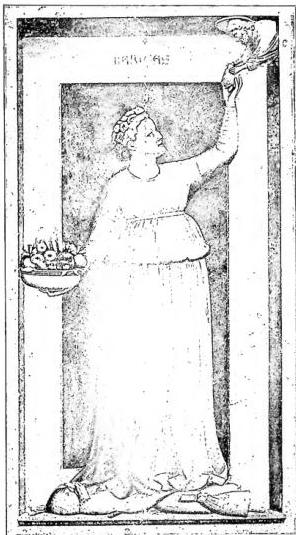
Article illustration
(fol. Alinari)

**CARITAS** — The particular detail of Giotto’s fresco (1303–1305). Padua, Scrovegni Chapel.

The question arises of the precise relationship between charity and all the other virtues. Is charity not only the highest virtue but perhaps the only true virtue demanded by Christian morality? Is it possible to have a morally good act or virtue where charity does not reign? Or is there no middle ground between sin and charity? Does charity perhaps replace and render other virtues superfluous, or does it require them? The teaching of Jesus Christ, the Apostles, and the Fathers certainly contained answers to all these questions, but these were not always clear and explicit; the unsystematic, occasional, and fragmentary character of their teaching could give rise to ambiguous and false interpretations. Many centuries would pass before Christian thought would attain full clarity on these problems, dispelling doubts, ambiguities, and errors.

A clear and precise exposition of the traditional Christian doctrine on the relationship between charity and the other virtues is provided by St. Thomas Aquinas, and it can be summarized in the following points. Charity is the highest ethical value because it enables man to possess the ultimate supernatural end (*Sum. Theol.*, 1^{2}-2^{ae}, q. 66, a. 6; 2^{2}-2^{ae}, q. 23, a. 6). It is, however, not the only ethical value, for man can perform honest acts even without charity (*ibid.*, 1^{2}-2^{ae}, q. 65, a. 2; q. 109, aa. 2, 4). Even the theological virtues of faith and hope can exist in a man separately from charity (*ibid.*, 1^{2}-2^{ae}, q. 65, a. 4). Nevertheless, these ethical values, distinct from and separable from charity, are in themselves imperfect and relative; they are not sufficient by themselves to enable man to attain his ultimate end. Only through charity do they receive the value of means proportionate to the attainment of that end. In this sense, it can truly be said that there is no true virtue except where charity is present—not in the sense that where charity is lacking there is always, in law and in fact, only sin. For example, one who lacks faith and consequently charity does not sin in every action (*ibid.*, 2^{2}-2^{ae}, q. 10, a. 4).

All ethical values distinct from charity stand to it as the instrument to the hand that wields it, as the body to the soul that vivifies it, as matter to form (*ibid.*, 2^{2}-2^{ae}, q. 23, a. 8). The function of these ethical values in relation to charity is twofold: one is to prepare the ground favorable to charity, the other is to serve as a means, more or less necessary, for its exercise (*ibid.*, 1^{2}-2^{ae}, q. 65, aa. 3, 5; q. 108, a. 1; q. 108, a. 1).

Can man, without charity, love God naturally above all things? St. Thomas’s thought on this point has been variously interpreted, and contemporary theology is divided. From St. Thomas onward, extremist doctrines emerged that provoked the intervention of the ecclesiastical magisterium to defend the aforementioned traditional positions.Some, such as the Beghards, drawing from the character of virtue as perfect in charity, concluded that a man endowed with charity is not bound to practice other virtues nor to observe human, civil, and ecclesiastical laws (Denz-U, nn. 473, 476). Those who made charity the supreme and exclusive virtue, condemning as intrinsically sinful every human action not inspired by charity, were Baius, Jansenius, and Quesnel, echoed in Italy by the Synod of Pistoia. According to them, a man either loves God and neighbor supernaturally or sins; there is no middle way. Hence, natural love of God is impossible (Denz-U, nn. 1034-38, 1297, 1394-1400, 1523-24); it is impossible to perform any good action without charity (Denz-U, nn. 1390-96); it is impossible to separate faith and hope from charity (Denz-U, nn. 1302, 1407); it is impossible to observe any law without the influence of charity (Denz-U, nn. 1016).

All these theses were condemned by the Church as heretical, erroneous, and subversive of Christian morality.

The ethical values distinct from charity do not all stand in the same relation to it; as St. Thomas rightly observes, some are necessary and indispensable means, by divine or natural law, for the acquisition or exercise of charity, such as, for example, the obligation to receive the Sacraments, to believe, to practice justice, etc.; others, however, are more or less free and optional means, and are therefore left to the free determination of individuals or human authorities according to times and circumstances, such as, for example, ecclesiastical laws regarding festive rest, abstinence, clerical celibacy, etc. (Sum.Theol., 1^{2}-2^{20}, q. 108, aa. 1-2). Of all moral problems concerning charity, the most pressing today is that regarding the relationship between charity and justice. From the above principles concerning the relationship between charity and other virtues, it follows that charity neither replaces nor absorbs justice but presupposes and demands it; which means that one cannot give to another, as an act of charity, what is owed to him by right; it also means that there can be no true charity where right is trampled underfoot, and that charity first awakens a sense of strict justice and inspires its observance. On the other hand, charity cannot be entirely absorbed by justice: beyond ethical relationships circumscribed within the limits of true and proper right, where violation gives rise to a claim for restitution, there exist and are in fact possible among men ethical relationships irreducible to the category of justice; for example, the offender has no right to forgiveness, the nuisance has no right to be tolerated, yet Christian morality obliges the offended to forgive.

and the one molested by patience: obligations of charity, but not of justice. In conclusion: charity is not the sum of all the virtues, but is an autonomous virtue, distinct in its specific motive from all the other virtues; these, in their turn, are not so many aspects and effects of charity, but are autonomous ethical values, specifically distinct from charity by their formal motive; charity and the other virtues are, however, not altogether independent of one another, but are intrinsically harmonized with each other in a hierarchical whole, in which charity figures as the supreme and absolutely autonomous element, while the other virtues figure as subordinate elements, moved and directed by charity.

Christian morality, having in charity its inspiring principle, draws from it as its peculiar characteristics spontaneity, interiority, freedom, and heroism. It belongs to the very essence of love not to be constrained, but to be spontaneous: for the one who acts from the motive of Christian charity, the coercive force of the law becomes in a certain way superfluous, and even the obliging force of duty is transformed into a spontaneous impulse of the heart; the much-vaunted autonomy of Kant’s categorical imperative cannot stand comparison with the autonomy of Christian love. Spontaneity is inseparable from interiority: not the external action in itself, but the good or bad disposition of the heart is the principal criterion that distinguishes men as good or bad in Christian morality. Spontaneity and interiority, thus conjoined, confer upon Christian morality a twofold freedom: the moral freedom from every imposition that has no relation to the love of God and of neighbour or is even contrary to it; and the psychological freedom from every impulse or motive that would coerce the will of the acting subject (cf. Sum. Theol., 1a-2ae, q. 108, a. 1, ad 2). Finally, love knows no measure, since it is not a means to perfection, but perfection itself (ibid., 2a-2ae, q. 27, a. 6); hence derives the heroic aspect of Christian morality, which, alongside duty, proposes counsel, and whose inspiring principle, love, impels man to total self-giving, both in the fulfilment of duty and in the practice of counsel.
VIII. THE PRACTICE OF CHARITY — I. Charity toward God. It is exercised positively by acts of love of God, negatively by combating contrary sentiments. Once man has reached the use of reason, he is not only bound to maintain a habitual state of friendship with God, but must also translate this into explicit or implicit acts. When, toward the end of the 17th century, the moral question was expressly raised concerning the necessity of the actual love of God, some moralists of a very broad tendency believed they could affirm that man is never bound in his life to perform acts of charity or is bound to do so at most only once in a lifetime; others, less broad in their outlook, narrowed the obligation to a restricted chronological period of five years. Popes Innocent XI in 1679 and Alexander VIII in 1690 condemned such assertions as scandalous and practically harmful (Denz.-U., nn. 1101, 1155-57, 1289).

Modern moralists declare the explicit or implicit act of charity obligatory at the threshold of moral life, in the face of death, in grave temptations directly threatening the love of God in itself, and with a certain frequency throughout life. Every precise chronological specification on this point — some hold the act of charity to be obligatory every year, others every month, others every Sunday and feast day — is judged by eminent moralists, and rightly so, as superfluous and harmful: love is not measured by the dropper; and when it exists, the love of God is spontaneously translated, even if indirectly, into an act of every good work performed by man with a right intention.

Among the sentiments directly contrary to the love of God, moralists especially point to hatred and sloth. Unfortunately, man is capable not only of indirectly hating God by committing any mortal sin, but also of hating Him directly, detesting either His existence or His attributes. Proudhon’s phrase, “God, that is evil!” objectively considered, is an expression of direct hatred of God. Sloth is the nausea, felt and accepted, of God and all that pertains to Him; it is an antipathy that disposes the heart to hatred of God or arises from it, just as sympathy for God disposes the heart to love of Him or follows from II. One would be a victim of sloth, in the sense now defined, for example, if, though convinced of the truth of the Christian faith, he regretted having received this gift and envied the lot of the unbelievers.

2. Charity toward one’s neighbor

a) Motive and scope. The love of neighbor is the necessary consequence of the love of God and may be defined as the love of God in the neighbor. Indeed, according to Christian doctrine, all men are destined to participate in a supernatural manner in the being and happiness of God; they are living images of Him. This supernatural communion of perfection constitutes the specific foundation of Christian love of neighbor. It does not exclude but rather presupposes and ennobles all other possible honest relations of love among men, such as family love, patriotism, friendship, etc. Since every living man, in act or in potency, belongs to the family of the children of God, Christian love extends to all men, indeed to all intelligent beings; only those who are definitively and irreparably separated from the supernatural society are excluded, namely the damned. Even sinners, therefore, as long as they live on this earth, are the object of Christian love—not, of course, insofar as they are sinners, but insofar as they are men who may still recover the lost grace. Christian love therefore knows no racial or national barriers.

b) The order of charity. The universality of Christian love does not exclude inequalities and preferences. These may be derived from different points of view: first, from the importance of the good that must be willed and procured for the neighbor; second, from the more or less close degree of proximity; third, from the more or less grave need in which the neighbor may find himself. From the first point of view, the hierarchy of loves follows the hierarchy of goods: eternal and spiritual goods take precedence over material and temporal ones; therefore, one must will and procure for the neighbor first those, then these, in the sense that material beneficence must never be an end in itself, nor much less hinder spiritual beneficence, but must implicitly or explicitly aim at the eternal good of the neighbor. From the same point of view, Christian love prefers those more endowed with spiritual goods to those less so. From the second point of view, the hierarchy of preferences in Christian love runs parallel to that of natural love, founded especially on ties of blood: spouses, children, parents, blood relatives and in-laws; or founded on ties of common education, beneficence, or friendship. From the third point of view, precedence is given to those most in need, and among these to those who are in grave danger of losing themselves eternally. All things being equal, the most grave and urgent needs are attended to first.

c) Love of enemies. The extension of love even to enemies is expressly commanded by Jesus Christ to His disciples both by word and example: “You have heard that it was said, ‘You shall love your neighbor and hate your enemy.’ But I say to you, love your enemies and do good to those who hate you; and pray for those who persecute and calumniate you” (Mt. 5:43–45). The supreme example of love toward enemies was given by Jesus Christ on the cross with His forgiveness of His crucifiers. The motive for the love due to enemies is indicated by Jesus Christ in the following words: “

"Be ye children of your Father who is in heaven, who maketh his sun to rise upon the good and the bad, and raineth upon the just and the unjust" (ibid.). The precept of Jesus Christ has always been considered obligatory for all Christians.

An enemy is understood to be one who cherishes hatred in his heart toward his neighbor, or who has violated his rights, or who otherwise maliciously opposes him. In virtue of the precept to love one's enemy, hatred toward him and unlawful vengeance are forbidden; rather, forgiveness of offenses and prompt reconciliation are commanded.

Hatred of an enemy consists in the deliberate aversion to his very person and to his goods; it is characteristic of hatred to wish to destroy and to cause suffering. Thus, not every spontaneous and deep-seated antipathy toward him constitutes hatred of an enemy; still less does the aversion of the soul toward his evil qualities, his defects, and his faults—all of which, subject to certain other norms of canon law, may and ought to be detested in him. Rather, it is the fruit and sign of hatred, for example, to wish eternal damnation, death, illness, poverty, or disgrace upon one's neighbor, or to take pleasure when he is struck by these evils. As for bodily evils, it must be observed that they may be desired or rejoiced in insofar as a greater good may result or has resulted from them.

Not every form of vengeance is forbidden by the law of charity toward one's neighbor, but only that which seeks the harm of the offender rather than his correction and the reparation of the justice that has been violated, with possible compensation for the damages suffered.

Christ enjoined the forgiveness of offenses against one's neighbor as an indispensable condition for obtaining God's forgiveness of our sins: "Forgive us our debts, as we also forgive our debtors"; the parable of the servant, forgiven by his master for ten thousand talents yet so exacting toward his fellow servant who owed him the paltry sum of a hundred denarii, concludes with this warning: "So also my heavenly Father will do to you, if you do not forgive your brothers from your heart" (Mt 18:21-35). A refusal to offer the offender the common signs by which people, according to the times, circumstances, places, and persons, express their feelings of friendship, affection, and goodwill—such as a greeting—would be an indication of withheld forgiveness. A reserved and distant attitude toward the offender may, however, be licit in certain cases as a means inspired by charity itself for the purpose of correcting the offender.

Reconciliation with one's neighbor is enjoined by Jesus Christ as a duty more stringent than even that of external religious worship: "If thou art offering thy gift at the altar, and there rememberest that thy brother hath aught against thee, leave thy gift before the altar, and go first to be reconciled to thy brother" (Mt 5:23).The duty to begin reconciliation falls first of all upon the offender; if the offense was mutual, the initiative falls to the first or more serious offender.

d) The works of charity. Those duties that do not fall within the sphere of strict justice, and whose fulfillment cannot be demanded in virtue of a corresponding true right, are called duties of charity. Christian tradition has grouped the duties and works of charity into two sets of seven each: the seven corporal works of mercy and the seven spiritual works of mercy (v. MERCY). The traditional list is partly inspired by the very words of Jesus Christ (Mt. 25:35-45), partly by the Old Testament and the writings of the Apostles. All the corporal works of mercy can be comprehended within the duty of almsgiving. Among the spiritual works of mercy, fraternal correction is especially noteworthy.

e) The vices opposed to charity. Although every sin and vice is incompatible with charity, there are nonetheless feelings and sinful deeds that are directly contrary to II. The first is hatred of neighbor, which has already been discussed above. Following the order established by St. Thomas (Sum. Theol., 2a-2ae, qq. 36-43), these are envy, discord, contention, schism, war, strife, sedition, scandal, and cooperation in evil.

3. Love of self

The man who loves his neighbor because he is a living, natural, and supernatural image of God cannot forget that he himself is also a creature and a child of God; with this affectionate esteem for himself begins Christian self-love. In Christian love, one’s own being is not the final and absolute end toward which love tends, but a means for the love of God. The first effect of this love is to induce man to attain in himself the most perfect likeness to God by acquiring and increasing sanctifying grace, fleeing from sin, and exercising the virtues.

Since repression of the lower aspects of human nature, corrupted by original sin, is necessary for this purpose, a certain self-renunciation and hatred of self are part of Christian self-love, expressed above all in the mortification of the flesh. Within this framework, the following paradoxical sayings of Jesus Christ reveal their profound meaning: “He who would save his life (therefore, he who loves himself) will lose it; but he who loses his life (therefore, he who hates himself) for my sake will find it” (Mt. 10:39; 16:24-25). More clearly still in Lk. 14:26: “If anyone comes to me and does not hate... even his own life, he cannot be my disciple.”

IX. SELFISHNESS, THE PERVERSON OF CHARITY

The true and proper enemy of Christian charity is not hatred, but selfishness, that is, love that has been torn from its proper order. The fundamental disorder of selfishness consists in this: that man loves himself as the supreme and absolute good, subordinating everything else to this love as a means. Disordered self-love is the radical sin, of which all individual vices and sins are partial and diverse manifestations. St. Augustine discerned in charity and selfishness the two antithetical forces that ultimately determine the tangled fabric of human history, which he summarizes in these words: «Two loves have given birth to two races of men: love of self, carried even to the contempt of God, has begotten the earthly race; love of God, carried even to the contempt of self, has begotten the heavenly race» (De civitate Dei, XIV, 28).

BIBL.: A. Rosmini, Storia dell'amore, cavata dalle divine Scritture, Cremona 1834; A. Michel, La question sociale et les principes théologiques. Justice légale et Charité, Paris 1922; G. de Broglie, Charité, in DSP, II (1940), pp. 507-691; Various authors, La loi de charité, principe de vie sociale (Séminaires sociales de France, XXe session), Ligne 1928; Various authors, La Carità (Séminaire sociali d'Italia, XVIIe session), Milan 1934; E. Janvier, La Charité (Conferences of N.-Dame 1914-16), Italian trans. 3 vols., Turin 1935-1937; I. Giordani, Il messaggio sociale di Gesù, Milan 1935; id., Il messaggio sociale degli Apostoli, ibid. 1938. Gaetano Corti.

II. HISTORY OF CHARITY.

OUTLINE:

I. In Christian antiquity

II. In the Middle Ages

III. In the modern era.

I. IN CHRISTIAN ANTIQUITY

I. Apostolic Age

The Christian concept of love of neighbor is based exclusively on the teaching of Jesus Christ, whose doctrine presents a new character in comparison with other conceptions of the ancient world. The Old Testament insisted on love of neighbor; yet on the lips of Jesus it sounded like a new commandment (Jn 13:34). For the Jews,

The next was a privileged category, opposed to another, that of enemies, whom every Israelite believed it legitimate to hate, since they were at the same time enemies of God (Mt. 5, 13). It is true that after the decline of the Greek cities, the conquests of Alexander the Great, and the influence of Stoic philosophy, a broader concept of human solidarity had taken root, and the world was viewed as a city of men. In reality, however, this doctrine had been set aside by wars and slavery. Jesus was the first to illustrate in this sense the Law and the Prophets and to bring it to perfection. Above all, He was the first to give life to a speculative principle that had remained a dead letter until He linked—this is the principal originality of His teaching—the love of neighbor to the love of God, the true hearth and supreme motive of charity.

The law of Christian love has broken down the barriers of religious or national particularism; for all are one in Christ, and there is no longer Greek or barbarian, slave or free man (Gal. 3, 28).

From the very beginning, the two precepts of love of God and of neighbor became the fundamental charter of Christianity. St. John delights in merging them into a single commandment (1 Jn. 4, 20–21), while St. Paul summarizes the entire substance of the Christian law in the second precept (Gal. 5, 14; 6, 2; Rom. 13, 8).

This conception of human brotherhood inaugurated by Christ could not fail to resonate widely in the thought and actions of the Apostles. St. Paul returns to it often in his catechesis: he insists on the equality of slave and master (Philem. 16); the abundance of those who possess must supply the indigence of the poor (2 Cor. 8, 12). Yet charity must be done in the spirit of Christ, who, though rich, became poor for man’s sake, and therefore not by compulsion but freely, since God loves a cheerful giver (2 Cor. 9, 7). On this practical side of active charity, St. James also insists, for whom the religion that is pure before God consists not only in keeping oneself unstained by the world but in visiting orphans and widows in their affliction (Jas. 1, 27). The principles of the Redeemer, faithfully guarded by the Apostles, soon passed into the daily practice of the early Christian community, whether in Jerusalem, Corinth, Rome, or Asia Minor.

In Jerusalem, from the outset there was established the voluntary community of goods, intended to aid the Apostles in their preaching of the Good News and the poor of the nascent Church (Acts 2, 44; 4, 32, 34–35).

As soon as the work of material assistance began to hinder their spiritual mission, the Apostles appointed seven deacons to serve at table and provide for the needs of the widows (Acts 6, 1–6).Thus the Church’s charitable function became specialized, even though it always remained under the direct oversight of the community’s pastors. The very fact of the election of deacons proves the great importance assumed in the life of the Church by the minister of the poor. This concern was not confined to the needy of one’s own community but extended also to distant communities. Thus, during a famine, the Church of Jerusalem was assisted by the Christians of Antioch and by other churches of the Gentiles (Acts 2, 29; Gal. 2, 10). The form of relief then particularly in vogue was that of gifts in kind. Yet the distribution of such gifts was not made by dividing them into equal portions among the poor; a good part was reserved for the common tables, for which a public assistance order was soon established in the creation of the deacons. Hence the origin of the so-called agapai, concerning which discussions are still not closed. Public assistance through the deacons was naturally supplemented by the exercise of private charity, since the precept of love of neighbor is individual. St. Paul forbade the admission of widows to public assistance who were neglectful of their duties toward their dependents and of hospitality toward the poor and wayfarers (1 Tim. 5, 4; 5, 4; 5, 5). The individual is bound to succor indigent members of his own family (1 Tim. 5, 8), indigent members of his own or other communities, and finally non-Christians (Gal. 6, 10). A moving picture of private charity in the early Christian community is offered by the account in the Acts concerning Tabitha (Acts 9, 36).

4. Period of persecutions

How vivid this teaching remained in the spirit of Christian generations after the apostolic age is revealed by the writings of the Apostolic Fathers, in which the theme of charity is treated in various forms.

“Do not be surprised if a man can become an imitator of God,” writes the author of the Letter to Diognetus; “he who takes upon himself the burden of his neighbor and seeks to benefit the inferior in those things in which he is superior, who by providing the needy with the things he has received from God is as a god in his benefactions, such a one is an imitator of God. Then, though you are on earth, you shall be granted to see that God reigns in heaven” (ch. 10). And St.Justinus, in his Apologia to Emperor Hadrian, writes: “We who once prized above all else the means to acquire wealth and fortune now hold our possessions in common and distribute them to every need. We who hated and killed one another and would not share even our food with those of another tribe, now, since the coming of Christ, live in common and pray for our enemies. We try to persuade those who unjustly hate us to live according to the fair commandments of God, so that they may share with us in the hope of receiving the same good things from God, the Lord of all things” (Apol. 1, 14).

The best picture of the practice of Christian charity is furnished by the Didachē or Teaching of the Twelve Apostles and by the Apostolic Constitutions. The former offers precious guidance and prescriptions for bishops regarded as fathers of the poor (cf. chaps. 1, 3 and 4); the latter stresses the same motives, amplifying them in part and extending them (cf. chaps. 1, 2, 4, and especially 8, where the most ancient liturgical documents, prayers for the sick and for the needy, are contained).

From the whole we deduce the duty incumbent on individual believers to care for their neighbours, especially the poor, for whom the following rules apply:
1) Bishops and their dependent deacons have charge of the poor. It is the deacons’ duty to inquire diligently into those who suffer in body; they must bring such cases to the notice of the people, and if these are unaware of their distress, the deacons must visit them and supply their needs, informing the bishop of what they have given.
2) Such aid to the poor has the character of a sacrifice upon the altar of Christ, because it is connected with divine service. Thus honest poverty is freed from every sense of shame.
3) Bishops, as dispensers of the Lord’s goods, must distribute them wisely, each according to his need; first to widows and orphans, then to the abandoned and to all who are in want.
4) Abuses of charity must be prevented by careful inquiry and by requiring newcomers to present letters of recommendation; in doubtful cases the bishop decides.
5) Those who can work should be given steady employment. Orphans should be entrusted to Christian families that will care for their upbringing; poor children, instead, should be placed under a craftsman who will teach them a trade.
6) Charity is a sacred thing, and therefore sinners must be excluded from II.
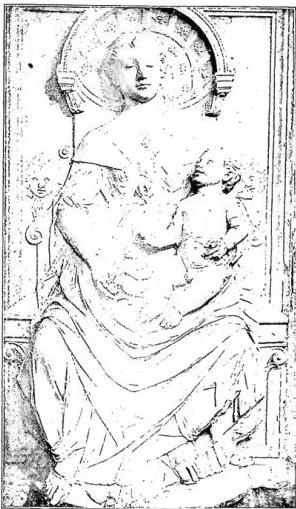
Charity — The particular aspect of the monument to Paul II, a work by Mino da Fiesole (1473) — Vatican Grottoes.

Let no one think to substitute penance for his sins by the payment of money. 7) Those assisted must pray for their benefactors.

The position of the bishop, whom St Paul wishes to be liberal and disinterested towards orphans, widows and the afflicted (1 Tim 3:2 ff.), is prominent in charitable provisions, especially in the writings of St Ignatius of Antioch, who calls him the providence of widows (Ad Polycarp 4). As such, offerings for the poor are entrusted to him, and he disposes of them, rendering account to God alone (Constit. Apost. I, 1; II, 25, 26, 57). Deacons ordained solely for the ministry of charity are assistants, the echo of the bishop’s voice, acting under his authority (Constit. Apost. II, 29–33). Widows who have contracted only one marriage, or virgins of prudent conduct, though advanced in years, may occupy themselves, under the direction of the deacons, with persons of their own sex; these are the deaconesses (v. Constit. Apost. II, 17). What took place in Jerusalem was also practised, more or less, in the other churches of Christendom.

The Church came to the aid of the needy: 1) by means of offerings in kind (oblata), presented by the faithful during the Offertory of the Mass on Sunday. Every communicant, writes St Justin, shares in “the distribution of the consecrated gifts and even sends them through the deacons to those absent. Indeed, the rich and those who wish, each according to his means, give what he wills, and what is collected is deposited with the head [of the Church]; and he succours orphans and widows, and those in need through sickness or other cause, those in prison and strangers, and without exception cares for all” (Apol. I, 67); 2) by means of free periodic offerings to which the faithful bound themselves: Modìcann unusquisque stipem menstrua die vel cum velit... apponit wrote Tertullian (Apologeticum 39). The measure of such offerings was in no way fixed, and all went to the common chest, whose administration was the bishop’s responsibility. 3) There were also extraordinary revenues from large donations of money or property made by the faithful on the occasion of their baptism or as death approached. Tertullian reports (De praescript. haer. ch. 30 and Adv. Marcionem IV, 4) that Marcion, on the occasion of his baptism in Rome, gave to the Church two hundred thousand sesterces, which were later returned to him when he separated from its communion. 4) Moreover, there was the produce of tithes, first-fruits for the support of the clergy (Const. Apost. V, 20), and extraordinary collections made in times of great need (cf. Cyprian, Epist. 60: PL 4, 359 ff.). 5) Fasting also provided the Church with notable resources for the exercise of charity.Indeed, it was a common doctrine among the Fathers that fasting had no value for salvation unless accompanied by almsgiving equal to the amount of food one abstained from while fasting (cf. *Pastor Hermae*, 5,3; Origen, *Hom. X in Lev.*; St. John Chrysostom, *Sermo de Ieiunio*; St. Augustine, *Sermo 208 in quadrag.* etc.).

If offerings were not immediately distributed to the poor—as often happened during persecution to avoid confiscation by the fisc—they were collected in a common fund to meet urgent daily needs. First, care was taken of confessors of the faith languishing in prisons or condemned to the mines; then of widows and orphans, especially those who were children of martyrs; and finally of the elderly and the sick in general. To maintain good order and prevent abuses, a system of matriculation was employed, which the deacons kept updated. Thus, in Rome at the time of Pope Cornelius, the poor registered and supported by the Church numbered 1,500 (cf. Eusebius, *Hist. eccl.*, VI, 34).

Naturally, public charity did not exclude private charity. How extensive and heartfelt this was is shown by the passage of Aristides (ch. 15) in his *Apology* to Emperor Hadrian, which reveals the vast scope of this activity. From hints in Tertullian (cf. *De cultu feminarum*, II, 11 and especially *Ad Uxorem*, II, 4), one can also see the importance attached to hospitality toward brothers in the faith. During persecution, this had to be practiced even at personal risk (Const. Apost., V, 3; VIII, 45), and one of the duties of the deacons was to inform the bishop of the arrival of foreign brothers so as not to leave them isolated among idolatrous crowds, often hostile.

But the spirit of self-sacrifice found its fullest expression in exceptional circumstances, such as during epidemics. Carthage was struck in 252, and Bishop Cyprian depicted the situation vividly in his *De mortalitate* (ch. 14: PL 4, 591–93). While others fled, Cyprian gathered his flock and reminded them of their duty at that hour. His appeal was answered admirably, and he himself set the example of what a father could do (cf. *Vita Cypriani*: PL 3, 1489 ff.). The same occurred a few years later in Alexandria during a typhus epidemic that broke out in 268. Priests, deacons, and laypeople alike worked tirelessly, and many of them perished in the exercise of this charity (cf. Eusebius, *Hist. eccl.*, VII, 22).

The duty of visiting confessors imprisoned in jails, so insistently inculcated by the *Constitutions of the Apostles*

(VII, 1-3) and thus lived in the pastoral concerns of St. Cyprian (cf. Epist., 37: PL 4, 326 sg.), he especially obliged the deacons to use every means to evade police surveillance and to make contact with prisoners, to whom they brought necessary aid after having placated the prison guards with money. Well-known are the examples of the deacons Tertius and Pomponius in Africa and the charity exercised toward the martyrs Perpetua and Felicity (cf. Passio, in O. Gebhardt, Acta martyrum selecta, Berlin 1902, p. 66). The deacons and acolytes were also entrusted with this mission among those condemned to the mines (St. Cyprian, Epist., 78: PL 4, 433-34), and the Roman Church distinguished itself in these merits with its subsidies to the martyrs of Egypt and Asia (cf. Eusebius, Hist. eccl., IV, 23) even from the time of Pope Soter.

The crisis in which the empire was already struggling allowed barbarian tribes to break into the frontier region; often Christians fell captive to pirates, who dragged them away after devastating their territory. This was the case in Numidia in 253. St. Cyprian collected a sum of 100,000 sesterces, the fruit of a collection in the Church of Carthage, and sent it to the bishops of Numidia, accompanying the offering with an incomparable letter that is the exaltation of active charity (cf. Epist., 60: PL 4, 359).

To this, which might be called charity in exceptional circumstances, must be added that sum of daily services in favor of all forms of indigence, in which not only authorized representatives but simple faithful visited the sick at home, and then women went from one quarter to another in search of the filthiest hovels, where there was room only for charity (cf. Tertullian, Ad uxorem, II, 4).

5. Charity in the Free Church

The edict of toleration, by granting the Church freedom, gave it the possibility of organizing charity in a manner more consonant with its development. The freedom of worship was chosen by the juridical capacity of the Church to possess; it in fact recovered all the goods confiscated by Diocletian (cf. Lactantius, De morte persecutorum, 48).

The position of the bishops was now strengthened; the Christian emperors, recognizing their obligation to assist the poor, entrusted this duty to the shepherds of the Church and their representatives (cf. Corpus Iuris Civilis, Codex Justinian., I, 2-3). Already Constantine himself had entrusted to the bishops the administration of an annona in favor of orphans and widows, reinstated, after Julian’s interruption, partially in force by Jovian (Theodoret, Hist. eccl., I, 10; IV, 4). Later, bishops were also entrusted with the visitation of prisoners.

The councils, which from this moment could assemble freely, often reminded the bishops of their duties toward the poor, a task admirably fulfilled by all the great bishops of the post-Constantinian period. What St.Cyprian had acted during a period of persecution; in a time of freedom he did so, for example, St Basil, who in his homilies took upon himself the anguish of the miseries of others and called the rich to the duties of the Gospel (cf. PG 31, 277 ff.). During a famine he saved his people from hunger for an entire year and erected at the gates of Caesarea the Basiliad, the oldest hospital known, of which people still spoke with wonder seventy years later (cf. Sozomen, Hist. eccl., VI, 34).

His rival was St John Chrysostom, who did not content himself with words to urge the wealthy to do good, but organised aid for the poor by mobilising the aristocracy of the Byzantine capital, where he found noble souls who followed him generously, such as Olympia, wife of the former prefect Nebridius, Petadia, Procula, Nicarete, etc. (cf. on this point Ch. Baur, Johannes Chrysostomus und seine Zeit, I, Munich 1929, pp. 130 ff., 303 ff.; II, ibid. 1930, pp. 55, 73).

Numerous other testimonies prove that the average of bishops was always absorbed by this concern. Among others, suffice it to recall the examples given by Epiphanius of Pavia, Acacius of Amida, Atticus of Constantinople, St Martin of Tours, St Aignan of Orléans, St Caesarius of Arles, Maximus of Turin, Nicerius of Lyons. The bishops did not merely concern themselves with distributing food and clothing, but also with mitigating the rigour of the laws, the harshness of state officials; they acted with tax collectors and travelled in favour of the poor, always seeking to defend them from the rapacity of usurers. Several mitigations in civil legislation, such as, for example, the abolition of torture for insolvent debtors, were due at least indirectly to the intervention of the Church. For the defence of the rights of the poor, the procurators pauperum were established, and, more importantly, the bishops were appointed official defenders, whose protests judges were bound to take into account (cf. S. Mochi Onory, Vescovi e città, Bologna 1933, pp. 25 ff., 55 ff.).

Of great value too was the right of asylum, recognised by the State from Constantine onwards and extended to church buildings.

Open proof of the enormous influence exercised by charity in the social life of the time is found in a declaration of the Emperor Julian the Apostate of 362 to the high priest Arsacius: ‘Why do we not turn our gaze to the institutions to which the impious religion of the Christians owes its growth, to their care for strangers?’ He therefore ordered the construction in every city of many xenodochia. I have given orders to distribute throughout Galatia 300 modii of grain and 60,000 sextarii of wine. A fifth will belong to the priests... and the rest will be for strangers and beggars. It is a disgrace for us that among the Jews no one begs, and that the impious Galileans nourish not only their own poor, but also ours...’ (Sozomen, Hist. eccl., V, 16). Thus by the middle of the 4th century xenodochia must have had particular importance in social life, if Julian drew the attention of a pagan high priest to them.

But they developed even further in the following decades, and even today one recalls the already mentioned Basiliad, a hospital and hospice at the same time, founded by St Basil with enormous difficulty at Caesarea (cf. Epist., 94: PG 32, 485; cf. also the funeral oration of St Basil pronounced by Gregory Nazianzen: PG 36, 578-79); the hospice for the poor at Ostia by Pamachius, and the hospital of Rome founded by Fabiola, extolled by St Jerome (Epist., 77, ad Oceanum, 6: PL 22, 694); that of Autun, founded by Childebert; the hospice for the elderly of Rome, founded by Pelagius II (577), and that of Sinai, erected by Isaurus (St Gregory, Registrum epist., XI, 6, in MGH, Epistolae, II, p. 261). All these hospices were considered as Church property, with their own legal existence recognised by law, whose administration and foundation were also in the hands of the bishops (Cod. Iustin., I, tit. II, 19; tit. III, 35, 49; tit. VIII and XLIV, 36, 3), a characteristic of the charitable movement from the 4th to the 8th century. Their importance must have been decisive especially in the Middle Ages.

These great manifestations of public charity did not exhaust the exercise of private charity, of which

Charity

Eloquent evidence of charity is found in the inscriptions of the catacombs. Charity was practiced among the representatives of the ancient high nobility, and Ammianus Marcellinus emphasizes that of the consul Lampadius, who in 367 celebrated his entry into office with lavish distributions in favor of the poor (Ammianus Marcellinus, XXVII, 3,5). Similarly, Nebridius, Prefect of Constantinople, distributed his annual income to the poor, and was praised for this by St. Jerome (cf. Ep., 85). After his death, his wife Olympia devoted her life exclusively to charity. St. John Chrysostom received from her a considerable sum for his apostolate among the poor.

Hospitality to strangers, care for abandoned sick and destitute poor was a ministry willingly practiced by noble families, and even by the imperial family itself (cf. Eusebius, Vita Constantini, I, 43; II, 13; III, 44; IV, 2). Placilla, wife of Theodosius the Great, personally cared for the maimed and the weak, visited the huts of the poor, founded monasteries and xenodochia, and at her death left her possessions to the poor (cf. Theodoret, Hist. eccl., V, 18). St. Jerome noted the spirit of sacrifice of the noble Roman women, brought up in an atmosphere of great wealth, and in particular the example of the senator Pammachius and his wife Paulina, who died in 396. “The precious stones that once adorned her neck now served to feed the poor” (Ep., 66: PL 22, 6,41). “If your senators [or Rome]—wrote Paulinus of Nola (Ep., 13, ad Pamm., 15: PL 61, 216)—give no other spectacles than those of charity and charity, then you may be glad to go unharmed [from the blows with which you are threatened].” Moreover, Paulinus himself, already bishop from 409, had built, attached to his episcopal residence, a series of cellae hospitales (Ep., 29, ad Severum: PL 61, 329) and distributed his goods little by little, ut facilius pauperes aleret, to support the poor (cf. Vita: PL 61, 31 sgg.).

Of the merits of Paulina, daughter of Paula, St. Jerome says that no poor person died without having been clothed in her garments, no sick person without having been cared for at her expense (cf. Ep., 108). Particularly warm is the tone with which he himself recalls a scion of the Fabii: Fabiola (d. 400; Ep., 77: PL 22, 690), who, after founding a hospital, wished to serve the poor herself. Even more eloquent is the example given by relatives of Paulinus of Nola, Melania, and her husband Pinian, who renounced their immense fortune, valued in pre-war currency at over 100 million francs, to meet the needs of the poor. Paulinus of Nola called the former a manly Christian (Ep., 29: CSEL, XXIX, 251; cf. M. Rampolla, S. Melania Giunione, Rome 1905).

6. The ancient Popes and charity

In Rome the exercise of charityIt always maintained primacy thanks to the vigilant activity of the Popes, who, as the "patrimonium Petri" grew, extended their care more and more to persecuted churches, reaching an apex under Gregory the Great that left an unforgettable mark on history. How the overall charitable assistance functioned is described by Eusebius, who, referring to the time of Pope Cornelius (c. 250), mentions 150 members of the clergy and 1,500 poor who were the object of the Church of Rome’s care (Hist. eccl., VI, 43, 11). Also noteworthy is what Dionysius of Corinth wrote around 170 to the Roman community (Hist. eccl., IV, 23).

The Romans remained faithful to these traditions in later times, especially after the attainment of freedom, which allowed the Church to take into its own hands, along with the entire system of state distributions for the indigent, the official care of the poor. Thus the squares and porticoes of the ancient *frumentatio* became designated places for the distribution of the Pope’s alms (cf. H. Grisar, *Roma alla fine del mondo antico*, I, 2nd ed., Rome 1930, pp. 344 ff.). The Pope, as father of the poor, comes before us in the persons of Leo the Great and Pope Gelasius. The *Liber Pontificalis* records for Symmachus (Lib. Pont., I, p. 263) the founding of three houses for the poor; Pelagius I took care that the Church’s patrimony was always in a condition to aid the needy (cf. Jaffé-Wattenbach, 684, 685), while his successor transformed his own house into an almshouse (Lib. Pont., I, p. 306).

At this time the Church’s patrimony had reached great extent. An orderly administration was undertaken by Gregory the Great, whose letters provide important details in this regard. In them, the habitual theme is that the patrimony must serve the poor (*utilitates pauperum*). The word *pauperes* recurs continually in Gregory’s register, and he not only exhorted others but was himself the first to set an example of a virtue rarely practiced to the degree in which he lived II.

II. IN THE MIDDLE AGES

After the pontificate of St. Gregory I the first great important event for the history of charity was the crisis encountered under the last Merovingians in France. The situation became particularly grave under Charles Martel, who, in order to secure vassals, forced churches to cede their goods, which were then constituted as lay fiefs and thus squandered.

Following the sovereign’s example, vassals trafficked in ecclesiastical goods, no longer caring for the bishop who was their trustee. With the impoverishment of churches and the general demoralization of the clergy that followed, the poor were forgotten and the charitable institutions of the preceding age partly disappeared, partly were put to other uses. The monasteries, which in the early period of Merovingian rule had fulfilled their task well, in the end suffered from the general disorder provoked by secularization.

One of the tasks of the apostle of Germany, St. Boniface, was precisely to bring improvements in this field; he succeeded indeed in obtaining recognition of the Church’s ultimate ownership and in reserving for it an annual census from those who held those goods (Synod of Lestinnes, 745). However, after the retirement of Carloman, the work of the mid-8th-century councils was rendered vain; Pepin, left alone, changed his line of conduct and ecclesiastical goods were again secularized. Such a policy was also followed by Carloman his successor, who believed he could dispose of the goods of the Church with complete freedom. He, however, knew how to curb abuses, and with wise legislation, far from injuring it, allowed the work of the Church in favor of the weak and destitute to expand ever more, setting an example of social activity hitherto unseen. In practice he showed that he did not take lightly what he had promised in a capitulary, namely to be the protector and refuge of the weak (cf. MGH, Capitularia Regum Franc., I, 93).

Although economic vicissitudes had greatly restricted the possibilities of the Church’s intervention in favor of the poor, nevertheless it knew how to continue and often in an admirable manner this work encouraged by Carloman.

It was exercised not only in the ancient xenodochia and hospices that had remained intact in the old Italian cities and in the episcopal sees of western France, but above all by taking into account the customs of the countryside. Churches and monasteries distributed aid to the poor according to their material possibilities; thus the monastery of St. Riquier gave alms daily to 300 poor and 150 widows. The great abbeys generally had a refuge for strangers and often also a hospital. Here

There leper hospitals were also found in secluded places: the abbey of S. Gallo, for instance, had one. Nor were refuges lacking in hard-to-reach spots, such as the one at the church of Coira on the Septimar. Charlemagne followed such social works closely, and his ordinances aimed at promoting them, suggesting prudent measures or correcting abuses, are numerous.

The capitulary of Nijmegen (806) contains important decisions against begging and sets out the duties of lords toward the poor on their estates. It also orders those who, through earlier secularizations, had inherited xenodochia to maintain and administer them according to the intentions of their founders (cf. Capit. 46, 9 in MGH, Capit. Reg. Franc., I, 132). The many synods of the time express themselves similarly: the Synod of Reisbach (800) insists on almsgiving to the poor four times a year, public almsgiving from which any thought of vainglory must be excluded (can. 4); tithes must be divided into four parts, one of which is to be given to the poor (can. 13); widows, the blind, orphans, and the paralyzed must be aided, in accordance with the expressed will of the king (MGH, Concilia Karolini Aevi, can. 14). The same prescriptions appear in that of Aachen (801–802: capp. 7 and 27). The Council of Mainz in June 813 obliges the Church (cap. 6) to support orphans deprived of their inheritance in reclaiming it, while that of Châlons in the same year forbids ecclesiastics from capitalizing the surplus of agricultural produce to destine it to the poor in times of famine (cap. 8). To defend the poor against usury, the Church renews the prescriptions of the Gallic councils of the 6th century, which forbid ecclesiastics from making interest-bearing loans (for the texts of the canons of these councils cf. MGH, Concilia Karolini Aevi, voll. I and II).

The list could be extended for the period following Charlemagne’s death. It suffices to mention only the great synodal diets of Aachen (817) under Louis the Pious, which gave strong impetus to ecclesiastical care for the poor. Every bishop was to erect a hospital for the poor and strangers and, at his own expense, provide it with necessities. A worthy regular canon was to be placed in charge of the hospital. ecclesiastics were then obliged to give the tithe of their income for the upkeep of the hospital and to wash the feet of the poor during Lent in the hospitals (op. cit., I, 1, p. 416).

A great impetus to charitable activity was given by penitential doctrine.The Church did no harm with the sins of the faithful, but allowed the canonical penalties due for certain grave offenses to be commuted through prayer, almsgiving, and the total or partial surrender, in favor of the poor, of the goods of the guilty.

Article illustration
Such public examples were highly moralized and in harmony with the doctrine of primitive Christianity (1 Pt 4:8).

The teaching of the Church during this period was essentially connected with that of the Fathers of the Church, often quoted verbatim. Among others, it suffices to mention Aimo of Halberstadt, Rabanus Maurus, and Ratherius of Verona. The doctrine that all superfluous wealth should be used for the benefit of the poor was taught by representative men of the time, such as St. Bede and Alcuin. Bishops and Christian doctors of the period often insisted and reminded princes and magnates of the world that all power comes from God and that their subjects are brothers in Christ.

After Charlemagne, charitable organizations declined; feudalism, oppression, almost continuous warfare, lack of scruples, and the prevalence of force over law demoralized both civil order and the Church. The general situation in Europe during the 9th and 10th centuries worsened: oppressed in the north by the invasions of the Normans, who laid waste the regions they invaded, in the south by the Saracens, and in the east by the Magyars, who pushed into the Danube valley. Other conflicts increased the devastation in England (Danish invasion), in Germany (rivalries among the successors of Charlemagne), and in Spain (Moorish invasion and rivalries among the Iberian kingdoms). The lack of a strong central power led to disorder and a habit of cruelty. Especially harsh was the small feudal lords’ treatment of the common people. Although the spiritual leaders of the people in this chaos had become worldly, ignorant, and avaricious, and although ecclesiastics as well as nobles often exploited their dependents while neglecting the poor, the Church was not insensitive, and its desire to end the suffering of the humble found expression in the repeated lamentations of the councils up to the 11th century.

Continuous efforts were made in favor of peace, often accompanied by threats of severe penalties against oppressors. From the end of the 10th century, councils sought to protect clerics, artisans, their tools of work, women, merchants, travelers, sacred buildings, and livestock from violence. The compulsory truces imposed by the Church were not ineffective measures for the society of the time, which later received a further contribution from Franciscan preaching aimed at changing the existing social order to the advantage of the poor.

To the social disorder must be added, in order to grasp the difficulties faced by the Christian Church in the Middle Ages, the famines and epidemics. Primitive agriculture, frequent devastations, lack of security, and the difficulty of transportation explain the terrible famines to which that era was often subject.With famine, epidemics—favored in their spread by swamps, narrow streets, unhealthy dwellings, and ancient inhumations within cities—the diseases that medieval chronicles designated under the generic name of "plague" reigned unchallenged from the 10th century onward, especially in maritime cities that maintained regular trade with the East. From time to time, the scourge stood out for the clarity of its symptoms and its violence, such as ignis sacer or St. Anthony’s fire, the black plague or densa pestis, swift in its attacks and deadly in its effects, and the English sweating sickness.

Under these conditions, institutions of charity, especially hospitals, developed and flourished.

Decline does not mean absolute collapse; therefore it is not surprising that even at the end of the 9th century, around the bishop’s house, the poor, the sick, lepers, and travelers gathered. The xenodochium was the usual form in which the multiple functions of charity were exercised. Bishops presided over these organizations, and many were equal to their task despite the shadows of that period. Cathedrals continued to have, along with the principal parish churches, their own hospitals, and such beneficent foundations continued to spread across Europe as peoples entered into the Christian family. This was the case in Poland at the end of the 10th century.

Nevertheless, beneficent assistance tended to assert itself more in monasteries than in the diocesan clergy. The transfer to monasteries of tithes previously due to the parish clergy, the more humane treatment accorded by monks to their dependents, the practice of bequeathing legacies to monasteries, and above all the fact that Christian life increasingly centered around religious houses were factors contributing to this transformation. The Middle Ages were marked by this concentration of healthy energies around monasteries. They arose in every district, organized the religious life of the neighborhood, founded schools, set standards in agriculture, supported artisans’ work, relieved the poor, aided the sick, and provided for every form of corporal and spiritual infirmity. The charitable concerns already alive in ancient cenobitic houses of contemplative life (cf. in this regard the prescriptions of St. Anthony the Abbot: PL 103, 423 ff.) are evident in the Benedictine Rule, one of whose most characteristic aspects is hospitality, which led to the creation of hospices attached to monasteries. The statutes, customs, and cartularies of the great abbeys often speak of infirmaries.

Carità — Charity. Painting by Piero del Pollaiolo (1469–70). Florence, Uffizi Gallery.
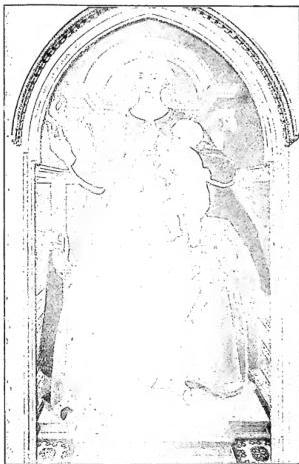
The office of hospitality, masters of the sick, as directors of the infirmary wards in monasteries and hospitals, and almoners through whose hands all alms passed that the abbey distributed to the poor. This office was often entrusted to the porter; in many monasteries he disposed of funds and bequests from which he drew what was necessary to succor the indigent. The Cistercians later acquired great merit, for in their teaching and practice of charity they revived the spirit of the ancient Benedictine Rule (cf. in this regard the testimony of the Cistercian abbot Gunther: PL 212,98 ff.).

For St. Bernard, the wealth of his abbey was the patrimony of the poor, the elderly, the sick, and wayfarers. Almsgiving was practiced in every form, and besides regular distributions, extraordinary ones were added when circumstances demanded. During a year of famine in Burgundy (1125), St. Bernard fed up to two thousand poor at his own expense. All Cistercian abbeys also had their guesthouse where pilgrims, travelers, and the sick received lodging and, if necessary, medical care. The traveler was greeted by the porter with the customary salutation “Deo gratias,” and the abbot would welcome him as a guest after kneeling at his feet. Hospitality was thus elevated to the level of an act of religion (cf. E. Vacandard, Vie de s. Bernard, 4th ed., I, Paris 1910, pp. 454 ff.). In the same spirit, other foundations acted likewise, such as, for example, the monastery of Heisterbach, which daily in 1197 distributed 1,500 portions of food to the needy; the abbey of Comp in the Lower Rhine, which had attached a hospital for the poor founded in the 13th century. Fine pages for the history of charity were also written by the Premonstratensians, among whom, besides the founder St. Norbert, St. Godfrey, abbot of Kappenberg, and the holy bishop Adalgott distinguished themselves.

The influence exerted by the Franciscan movement on the spirit of the 13th century is well known; it is also of great importance for the history of charity. The teaching and example of St. Francis and his companions regarding poverty had the power to turn many souls from selfishness and avarice to the simple and wholesome ideals of Christian life, thereby spurring the charitable activity of the people and contributing even to the abolition of serfdom.

What the monasteries had accomplished during the feudal period, the Franciscans and, in general, the mendicant orders accomplished in the renewed communal climate. Through their preaching they tirelessly exhorted and demonstrated by their works their faith, and it must be said that such exhortations did not fall on deaf ears. Indeed, from the crises that led to urban autonomies, religious sentiment did not suffer greatly. One may even affirm that in few historical periods was charityFor the poor, the sick, in a word for all forms of need, it was as great in this period of the Communes as it had ever been. The poor were called “the friends of God,” and the number of donations made for this purpose in the 13th century was enormous. Rarely were the humble forgotten in testaments. Popes, princes and kings, prelates, burghers and cities vied with one another in founding charitable institutions of various kinds, all the more admirable in that the state was still too weakly organized, especially in economic matters, to intervene in the complex field of social assistance. Religion had deep roots, and it must not be forgotten that the new society was largely founded on those corporations of arts and crafts which had a religious stamp, ensuring the true spirit of Christianity, the foundation and basis of its greatest strength: solidarity and mutual aid.

At the beginning of the Middle Ages, as has been seen, this work of social assistance was carried out by bishops and monasteries, who in their xenodochia exercised both hospitality and the care of the sick along with other temporal works of charity. Soon, however, similar civic institutions began to emerge, especially in Italy, from the 8th century onwards, in which assistance was provided with a wider range of services. We find many of these in Lucca, in Milan (787) for foundlings, in Siena (898), in Verona, and especially in Rome, where there were also xenodochia, hospices and national foundations called scholae. But in the general decline of the Church, works of beneficence were deeply undermined. It should be noted, however, that all these institutions were founded by private individuals, even if among the founders we find bishops or other churchmen. Nevertheless, the Church intervened to ensure the execution of the founders’ will, making the institution an ecclesiastical one or at least a locus religiosus. In any case, the hospital institution, by virtue of its very purpose, was placed under the high protection and supervision of the bishop, to whom fell the right to appoint its representatives or at least to confirm them in the event that the founder had reserved for himself the patronage of the institution with the related rights of appointment. In general, during the period before the 12th century, charitable institutions often appear to have been supported by other, more important ecclesiastical bodies, such as cathedrals or monasteries (cf. on this point L. Prosdocimi, Il diritto ecclesiastico nello Stato di Milano, Milano 1941, p. 205).

A prodigious numerical and organizational development of hospital institutions occurred with the dawn of the 12th century, due in part to causes common to those that gave rise to communal life, and in part linked to the religious renewal that also gave rise to the Crusades and the emergence of new monastic orders. An important evolution is marked by the appearance of numerous religious communities dedicated to the care of the sick and to hospital service, some of which were organized as true religious orders, others

Instead, they had an independent character, though all lived according to the Rule of St. Augustine.

Among the first to be mentioned are: 1) the Hospitallers of St. John of Jerusalem, to whom Raymond du Puy gave a rule in which the sick were considered the lord and master of the house, “quasi dominus” (cf. L. Le Grand, *Les Maisons-Dieu*, in *Revue des questions historiques*, new series, 16 [1896], pp. 95–134). Their hospitals differed and became models for other medieval hospitals. 2) The Teutonic Knights, following their example, added to their military service the obligation to care for the sick and pilgrims. 3) The Antonines originated in the already Benedictine hospital of Montmajour in the city of Mota, diocese of Vienne, and became the most widespread hospital order in Europe. Boniface VIII transformed them into Augustinian Canons with vows. Of a different kind was the institution of the Four Orders, among which an Italian group with its motherhouse in Bologna stood out; they were later suppressed by Alexander VII in 1656. More important than the preceding ones in its development was 5) the Order of the Holy Spirit, which had its cradle in Montpellier, where a certain Guy, a descendant of a noble family, founded between 1170 and 1180 a hospital and a congregation whose rules he himself prescribed, drawing inspiration from the Rule of St. John of Jerusalem. The house of Rome, which disputed Montpellier’s prerogatives as its motherhouse, honored as its reformer Innocent III, who in 1204 built near Ponte Sant’Angelo, on the site of the ruined Schola Saxonum, a hospital that he entrusted to the direction of Guy of Montpellier and which took the name of Santo Spirito in Sassia.

Alongside these hospitals run by the hospitallers, municipal hospitals arose that differed from the former both in origin and organization. These were prepared by the hospitals run by the Augustinian Canons, for in the 12th century, when the common life was abandoned, the hospitals separated from the chapters to which they belonged and remained entrusted, though still under the bishop’s supervision, to independent associations of laypeople and conversi sisters. Slowly, however, the cities sought to take the place of the bishops and assume their administration. This development and transformation corresponded, moreover, to the general trend of civilization and religious life, whereby what in the early Middle Ages had been done by bishoprics and monasteries was now accomplished by the cities, themselves centers of religious life fostered by the presence of the mendicant orders. The means for the construction and founding of the new hospitals were found in the increasingly prosperous cities themselves. Most were founded by the bourgeoisie itself, and the foundation charters reveal the names of bankers, merchants, and jurists, always guided by a religious idea. Often, however, the funds collected were the product of public subscriptions, for which the bishops granted indulgences.In Italy the most widely used means is the establishment of confraternities, in which the charitable character is generally more accepted than in other types of associations that arose in various regions of Europe. They experienced an unforeseen development, not only in number but also in quality. Almost every village had one, and alongside their specific purpose they usually had the obligation to exercise charity in various forms, even when this was not perhaps the very reason for their existence. One of the oldest was that of St. Leonard in Viterbo, which in 1144 founded the French hospital. A hundred years later the famous Compagnia della Misericordia was established in Florence, founded in 1244, according to an ancient tradition, by Piero Luca Borsi, head of the porters of the wool guild, with the fines imposed on his colleagues for every blasphemy uttered. It distinguished itself particularly during the terrible epidemic that struck Florence in 1320 (cf. P. Landini, *Storia della ven. Arcidonna fraternita della Misericordia*, Livorno 1871). The Company, still flourishing today, is engaged in the transport of the sick, the dead, and their burial. Guided by 8 captains and 72 heads of guard, the service of charity is carried out by more than 200 *giornali*; but the confraternity numbers 3000 members or more. Other *Misericordie* arose in other cities of Tuscany.

The Compagnia del Bigullo also developed from 1256 into a powerful institute of charity. The list could be considerably extended by mentioning the 42 confraternities of Rome, among which the principal one is that of Santo Spirito attached to the hospital already mentioned (cf. C.L. Morichini, *Degli istituti di carità... in Roma*, Roma 1870). Institutions of charity also arose through the work of the guilds, but intended for the members of the guilds themselves. Thus in Florence there arose the hospitals of St. Onuphrius of the dyers, St. Eligius of the blacksmiths; that of the bakers in Rome, where in addition various national hospitals were founded to assist foreigners who came there on pilgrimage. The tasks which charity fulfilled through these multiple initiatives during the Middle Ages can be summarized as follows:

a) Night shelters for travelers and pilgrims. In the Middle Ages people traveled a great deal. When commercial necessities were not the main purpose, the chief aim was to visit famous shrines, either in penance for sins committed or to fulfill a vow. In the course of time an ever-increasing number of pilgrims passed through the Alpine passes and the Pyrenees. Hence the establishment of refuges located at the gates of cities, which at that time used to close their gates or raise the access bridges at nightfall (cf. L. A. Muratori, *Antiquitates Ital.*, dissert. XXXVII, p. 576). The pilgrims were then helped during their journey and provided with food, whence the origin and purpose of the small refuges, especially in difficult passes and access points, such as that of the Great St. Bernard, founded ca.In the mid-11th century, there were refuges founded by St. Aosta (v.), that of Hengelhartszell on the Danube near Passau, etc. The purpose of such shelters was to welcome all who sought hospitality, without distinction of origin.

Associations soon arose to assist pilgrims and travelers, with the task of guiding and aiding them on their journeys. In Spain, for example, a congregation was founded in Burgos in 1122 for pilgrims traveling to Santiago de Compostela, which maintained several hospices along the routes through the Pyrenees and France. A similar association in Italy was that of St. James of Altopascio, tasked with guiding pilgrims through the marshes of Lucca. This association also maintained roads and bridges, which became increasingly important as traffic grew. For these essential, often costly works, associations of bridge-building brothers (Fraticelli Pontifici) were formed, not bound to a single center but arising according to local needs. They enjoyed the protection of kings and barons, as well as indulgences granted by bishops, for such activities were then elevated to the dignity of works of mercy, alongside the care of the sick.

b) Poorhouses, known in France as Hôtel-Dieu or Maisons-Dieu, were numerous in the Middle Ages and welcomed all the poor of Christ indiscriminately: the sick, the injured, the elderly, foundlings, and even fallen women. Only those afflicted with contagious diseases were excluded. In general, these asylums practiced the seven corporal works of mercy, as understood in the medieval context.

c) Leper hospitals. Perhaps the most arduous task for Christian charity was the care of lepers. This incurable disease struck terror into the hearts of the people, and those afflicted were quickly cast out from civil society. Leprosy, already known before the Crusades but spreading much further afterward, did not leave the Church indifferent. Through exhortations and indulgences, it encouraged the faithful to care for the afflicted. Christian spirit soon came to call them martyrs of Christ, the sick of God. The necessary isolation, to protect the healthy, led to the founding of refuges located outside or at the gates of towns, where lepers were conducted in procession and clothed in special garments. From the 13th century onward, almost every city had its leper hospitals. Their founding and maintenance were provided by private individuals of all social classes through donations and bequests. The organization of leper hospitals varied, as did that of hospitals in general. Often they were entrusted to lay brothers and conversae nuns living in community under special institutes inspired by the Rule of St. Augustine. Later, the Franciscans willingly took on this work.

This difficult apostolate also included the Knights of St Lazarus, who dedicated themselves to it in a special way by establishing a large number of leper hospitals across Europe (it is said there were 3,000). Sometimes there was a complete lack of nursing staff; the sick then lived in community under monastic-style regulations. Yet even this way of life was a genuine benefit to them, for it offered these outcasts, embittered by their illness, a new society in which they need not feel useless.

d) Other categories of the unfortunate whom Christian society took under its care were the blind. From the time of Louis IX onwards, more than a mere hospital was provided for them in Paris: a woman hospitaller, known as the Quinze-Vingts. Similar institutions later arose elsewhere: at Hanover (1256), Tournai (1351), and Padua (14th century). The insane, by contrast, were cared for much later, and all the asylums set aside for them date from the 15th century. The earliest known in Italy was that of Mirandola, founded in 1400 (cf. M. Molinari, Gli Istituti più della città e antico ducato della Mirandola, Mirandola 1882, pp. 461–70).

e) Orphans and foundlings, to whom the Order of the Holy Spirit and the Hospitallers of St John had devoted part of their efforts, likewise had establishments intended for their upbringing. These were particularly widespread in Italy, where one is already recorded as having been founded by the archpriest Datus in the 8th century, and two others in the 11th–12th centuries. In the 13th century they multiplied at Siena, Cremona, and Pisa; at Mirandola there was also a confraternity for their assistance. Children were customarily left at church doors and abandoned to the c., or else taken directly to the hospital that received them. They were then given to wet-nurses for a period of fifteen or eighteen months and afterwards reclaimed until an age suitable for learning a trade. Girls, if they showed no inclination for the religious life, were provided with a small dowry and set on the path to married life; the same was done for orphans. This custom, which took root in Italy, was not, however, followed uniformly elsewhere.

f) No less meritorious was the care bestowed from the 13th century onwards on prostitutes. In 1198 Innocent III drew attention to this scourge, whose growth had been accelerated by the Crusades, student life, and the rise of the communes. In Paris, where the trade was widely practised, according to the testimony of James of Vitry (Hist. occidentalis, IV, 7), a priest named Fulk of Neuilly founded a house of redemption from which there emerged in 1204 a religious congregation under the Cistercian Rule. The example was imitated at Marseilles, Rome, Bologna, Messina, and S. Giovanni d’Aci. In Germany there arose the Congregation of the Sisters Penitent of the Blessed Mary Magdalene, whose first impulse came from the Council of Mainz in 1225, which sought to launch a kind of general mission for the primacy of morality.After good results obtained from the preaching of Canon Rodolfo at Hildesheim, Worms, and Strasbourg, Pope Gregory IX founded this Order for women converts who wished to seek refuge in a convent. By the 13th century, the institution already numbered 50 houses.

Article illustration

g) Another work inspired by love of neighbor was that of the redemption of captives, motivated by the struggles waged by Spain against the Moors on the western coast of the Mediterranean. The first to dedicate himself to this was St. John of Matha. The Trinitarians, founded by him and approved in 1198 by Innocent III, did not limit themselves to ransoming captives but extended their work also to those still held in slavery, seeking to improve their lot. A similar aim was pursued by the Order of Mercy, whose organization, at least initially, differed little from the former. Founded by St. Peter Nolasco as a military Order, it later admitted priests alongside laymen into its communities.

For the development of charitable works in the Middle Ages, another institution of the Church proved providential: indulgences, which became especially prominent after the Crusades. This institution is closely related to the ancient practice of penance. The Church imposed various kinds of reparative works for grave sins, generally rigorous fasting. Over time, this rigor was softened, and corporal penalties were commuted to the performance of good works in favor of one’s neighbor. It must be added, however, that underlying these works, done in a spirit of reparation, there always remained the ancient Christian conception of satisfaction for sins committed (cf. N. Paulus, *Geschichte des Ablasses im Mittelalter*, 3 vols., Paderborn 1922–23). Moreover, during these centuries the Church remained faithful to the spirit of the Gospel, not only in practice but also in doctrinal principles. The teaching on indulgences by Catholic doctors of the medieval period is essentially that of the Fathers, reduced to greater systematic coherence and precision by Scholasticism, and in particular by St. Thomas Aquinas.

At no time in history has the conception of property as a social good been put into practice on so broad a scale as in this period. A proof of this is the multitude of charitable institutions, foundations, etc., established to the glory of God and the good of one’s neighbor.

III. IN THE MODERN ERA

The properly medieval periods of the history of the Church can be considered closed with the 14th century. This does not mean, however, that the Church from this point onward restricted its activity to convents and religious associations; the entire structure of municipal churches was inspired by its directives and received its encouragement. The Church’s influence on social institutions continued unabated.

Thus, the ban on usury (at a time when money was more a means of satisfying daily necessities than an instrument of production) was, before becoming a civil law, an ecclesiastical precept. And when the growing needs of civil life exposed large segments of the less affluent population to the extortions of Jewish moneylenders, the Church, to avert their ruin, established and encouraged the creation of the Monti di Pietà, especially promoted by the Franciscans. These institutions developed particularly in Italy during the 15th century through the efforts of Barnaba da Terni, St. James of the Marches, Ludovico da Verona, St. John of Capistrano, and above all the Blessed Bernardino da Feltre, who alone founded or renewed about thirty of them. The break with the Church in this area came later and was solely the work of the Protestant Reformation. But long before that, the separation began of secular social assistance aimed at charity, whose object, it must be noted, was no longer the poor considered as a brother in Christ, but rather the citizen as such. It was not the poor, but the citizens who were the basis of the communes’ interest. Therefore, this was not a reform of the Church—because everyone was satisfied with the Church’s role up to that point—but rather new aspects of a problem arising from recent economic and social developments. These new trends were strong in the Flemish cities, the Rhenish region, and other free cities of the Empire, as well as in Italy, where new charitable foundations were increasingly entrusted to municipalities rather than to the Church. Thus, during the 14th and 15th centuries, a portion of public assistance institutions passed into the hands of secular authorities, which, concerned with civic interests, organized their administration in line with new reform currents dictated by the social needs of the moment. That this movement was not in conflict with the spirit of the Church is shown by the fact that the Church did not oppose such intervention at all. Liese cites in this regard cases from several German cities such as Strasbourg, Cologne, Dortmund, Frankfurt, Freiburg, Munich, etc. (cf. *Geschichte der Charitas*, I, pp. 232-34). In Italy, we have similar cases, e.g., in Milan. Up to the end of the 14th century, hospital institutions were still under the exclusive control of ecclesiastical authority, even if civil authority did not entirely disregard them. But toward the end of that same century, the actual intervention of the state in their regulation began, an intervention that, while marking a step toward the secularization of the administration of many public assistance institutions in the Milanese territory, also inaugurated an era of coordination and unified direction of these institutions, later sanctioned by a bull of Pius II in 1458.

This can be said to be the case of Italy, where the more or less spontaneous collaboration between civil and religious authority persisted until the 18th century and did not fail to yield good results. But where secular power violently broke in and unilaterally violated the rights of the Church, the consequences were grave. This is the case of the northern countries where Protestant reform imposed itself. The great increase in pauperism, if partly to be explained by the rapid decline of the feudal system and the vicissitudes of agriculture, was also due in part to the confiscation of monasteries and other sources from which Catholics drew alms, by an arbitrary secular power.

The decline of charity brought about by Protestantism is an immediate consequence of the fundamental principle of Lutheran doctrine, enshrined in Article 4 of the Augsburg Confession, by which works are declared in substance devoid of salvific value. It weakened the spirit of generosity that, in the last centuries of the Middle Ages, had nobly manifested itself in the founding of hospitals and other charitable institutions. Men wanted the poor box, sustained by the community, to take their place. But the poor results achieved by this method discouraged them to the point of confessing that “under the papacy one rushed with every impulse to give alms to the poor; now all have grown cold and insensitive” (cf. other similar passages in H. Grisar, Lutero, Italian ed., Turin 1933). As Liese rightly observes (op. cit., p. 251), ancient Catholic charitable maxims and practices continued to assert themselves even among Protestants, whereas among the latter, and especially in their beginnings, one can scarcely speak of a revival of assistance to the poor.

Today historians agree on these two points: 1) Protestantism did not promote charity; on the contrary, it strongly damaged it; 2) it placed a strong obstacle in the way of public assistance to the poor, as is shown by the numerous civic ordinances concerning the poor that appeared between 1520 and 1530.

About this time, the increase of poverty, the slackening of certain charitable works directed by the clergy, and even the contagion of certain ideas put forward by the reformers, drove many minds to study questions concerning vagrancy, begging, and charitable works under the direction of public authorities. Numerous works on the subject were published by various scholars, and their influence is evident in the ordinances of Charles V, Francis I, and Henry IV.
Noteworthy above all is the work of the Spanish humanist Juan Luis Vives, De subventione pauperum; sive de humanis necessitatibus, libri II (Bruges 1522; Italian trans., Venice 1545). Some have wished to see an influence of Vives’s work in the ordinances of Ypres, but proof is lacking.Less well known than that of Vives is the one by the Benedictine Juan de Medina, published in Salamanca in 1545, *De la orden que en algunos pueblos de España se ha puesto en la limosina para remedio de los verdaderos pobres*. The thesis of these writers, in substance, is that mendicancy must be suppressed by authority, and the true poor gathered into large public institutions; an idea which was given a tentative organization in the communes of Flanders and in Spanish lands in the 16th century. These proposals did not fail to arouse heated controversy and protests, the most authoritative voice being that of the Dominican Domingo de Soto in his *Deliberación en la causa de los pobres* (Salamanca 1545; cf. A. Muller, *La querelle des fondations charitables en Belgique*, Brussels 1909).

Apart from the state of siege which these questions created in matters of practical application, subject to circumstances and immediate needs, in Italy for some decades new forces had been at work, arising from within the Church itself, which, continuing an enterprise of Catholic renewal, later received their sanction in the assemblies of the Catholic Reformation: the Council of Trent. The consequences for the renewal of the spirit of charity were incalculable.

Not content with solemnly reaffirming the validity of a doctrinal principle that faith is not enough without works to be justified, the Church, in its practice above all, with the numerous works of mercy—despised by the innovators—proclaimed indirectly the primacy of charity. “With works and not with faith alone are the saints justified,” as seen in the Universal Judgment of Michelangelo, in which the spirit of the Catholic Renaissance is already evident. The faith in the efficacy of works so deeply impressed the 16th and 17th centuries as to influence profoundly even artistic activity. One need only think of the paintings of Murillo and Valdés Leal in the chapel of Charity in Seville (cf. E. Mâle, *L'Art religieux après le Concile de Trente*, Paris 1932, pp. 87-96).

The origins of this renewal must be sought in the *Compagnie del Divino Amore*, which arose between the end of the 15th century and the beginning of the 16th.

To exercise a deeper action, Gaetano Thiene and Gian Pietro Carafa founded the Theatines, who became the prototype of numerous religious families of Clerks Regular, which, by their mobility and freedom of action, were admirably suited to the tasks of charity. In fact, these new societies were deeply concerned with the care of the poor; they visited the sick in hospitals, cared for the expectant, assisted the dying, protected orphans and widows. After the Theatines came the Jesuits, who, although they did not have works of charity as the principal aim of their activity, distinguished themselves in this ministry, widely practiced by St. Ignatius and his first companions (cf. A. Bélanger, *Les Jésuites et les humbles*, Paris 1901).

The principal aim of charitable activity was the foundation of the Somascan Congregation of St. Jerome Emiliani, of the Order of the Fatebenefratelli of St.GIOVANNI DI DIO, for whom the care of the sick is sanctioned by a solemn vow. This Order was soon to spread through Spain, Germany, Italy, Hungary, and Portugal with hundreds of hospitals. In the very year in which Giovanni di Dio died (1550), Camillo de Lellis was born, the popular founder of the Ministers of the Sick, who, established to assist the poor in their homes, were soon led to serve also in hospitals, and their work became heroic in times of epidemics. On neighboring fields there developed also the Scolopi, founded by St. Giuseppe Calasanzio, and the Barbati of St. Anthony M. Zaccaria. The Pastor speaks at length and often about the charitable activity of the Capuchins (IV, 11, 596-600). They were second to none. For the diocese of Verona the aforementioned Giberti founded a Society of Charity (1539); he appointed visitors for the parishes with the task of registering and assisting the poor with funds from a common treasury; he founded (1528) a large Xenodochium Misericordiae for orphans and the sick; he revived numerous Monti di Pietà, provided for the rehabilitation of fallen women, and at his death left 600 gold florins for charitable purposes. In his enterprises he was assisted by the Veronese Ludovico di Canossa, already bishop of Bayeux.

Many of Giberti’s prescriptions to his clergy entered into the provisions of the Council of Trent, which gave precise rules to residential bishops regarding the care of the poor, the visitation and administration of hospitals and charitable institutions in general, such as places of mercy and Monti di Pietà (cf. in this regard sess. XXII, De Reformatione, chaps. 8-9). After the Council, among the bishops who knew how to embody the work and spirit of Tridentine legislation was St. Charles Borromeo, who in the 11 diocesan synods and 6 provincial synods presided over by him regulated the care of the poor with a sense of the highest responsibility for the office of shepherd, recalling the best times of the Church. His wise and energetic legislation was followed by his works, because, mindful of the saying that the goods of the Church are the goods of the poor, he destined all the revenues of his episcopal table to them. He supported the new society of the Ursulines of Brescia, established for the teaching of the children of the poor, and in every way promoted the development of the numerous houses existing in Milan for the rehabilitation of fallen girls. The Oblates of St. Ambrose, founded by him (1578), had as

The purpose was the care of souls and charitable institutions. Unforgettable above all was his work carried out on behalf of the poor afflicted during the famine of 1370 and the plague of 1576. In addition to setting a personal example, he demanded of the clergy even the sacrifice of their lives to assist those struck by the disease (cf. *Delle cure della peste. Istruttione di s. Carlo card. di Santa Prassede ed arciv. di Milano*, Vicenza 1630). The terrible epidemics to which the populations of Europe were subjected during the 16th and 17th centuries are well known, especially in those regions that commerce kept in continuous contact with North Africa, Constantinople, and Asia Minor. At more or less regular intervals, they paid a heavy tribute to the disease, which, with its rapid spread, contagious and violent character, inspired deep terror in the populations who, often victims of hallucinations, saw malefactors everywhere disseminating the contagion at will. The case of those accused of causing the plague in Milan in 1630 is well known. During these exceptional periods, religious often paid dearly with their lives for their spirit of charity, which led them to assist the afflicted. Such were the Fatebenefratelli, the Ministri degli Infermi, the Capuchins, the Jesuits, etc.

Another phenomenon no less troubling for European society at the time was pauperism, arising from complex economic and political causes, which it is not the case to investigate here. Numerous laws, edicts, and government declarations, beginning in the 16th century, form an uninterrupted chain of testimonies revealing the scourge of begging and the ever-growing multitude of vagrants, against whom action was first taken through general prohibitions, then through the threat of corporal punishment, and even the death penalty itself (England, the Netherlands, Flanders).

Similar interventions by secular authority, however, did not yield the expected results; on the other hand, the need to provide shelter for the homeless, the sick, and the unemployed prompted new attempts at solutions, namely the concentration of beggars in establishments designed for this purpose, where it was also possible to find work suitable for the inmates. Such hospices are found scattered everywhere: Sixtus V founded one near Ponte Sisto, but it lasted only briefly due to lack of funds; the idea was later taken up more successfully by Innocent XII and Clement XI. In Spain, the *albergues* advocated by Christoval Perez de Herrera in 1598 arose (cf. *Discursos del amparo de los legitimos pobres, y reducción de los fingidos...*, Madrid 1598), but they did not produce tangible results; in England, workhouses developed, but only at the end of the 17th century. Unsuccessful attempts were also made for a time in France, where begging was as widespread a scourge as elsewhere.In Paris alone there were 40,000 beggars, some of whom had come from other regions. The results were, however, quite different when the great figure of St. Vincent de' Paoli took charge of the works of charity. He is the purest and most characteristic representative of modern Catholic charity, justly called "le ministre de la charité nationale, le grand aumônier de la France." Thanks to his work, the 17th century became the golden age of public assistance in France. The principal merit of St. Vincent was to have introduced women into the service of charity in a more complete and independent manner than had been practiced until then. He gave them the full strength of the interior life of the ancient religious communities, yet at the same time so free that they felt themselves first as servants of the poor and then as religious. With this, he provided charity with unexpected forces of dedication and sacrifice. The Daughters of Charity, which he founded in collaboration with St. Louise de Marillac, now number more than 50,000—a remarkable army dispersed throughout the Catholic world: in schools, orphanages, hospices for the elderly poor, hospitals, prisons, and even on battlefields among soldiers, everywhere inspiring common admiration.

The saint also indirectly influenced numerous other charitable foundations established around this time, such as the Daughters of St. Cencocefio by Francesca de Blosset, the Daughters of the Holy Family by Marie Miramion, and the Daughters of Divine Providence, among others.

But directly, he was the great initiator of the *Compagnies des dames de la Charité*, through which the lay apostolate of women in the world was revived in the service of charity. Before St. Vincent, France had so-called *Charités* or charitable institutions run by local administrations, and the *Confrères de charité*, true mutual aid societies for their members. Many had disappeared during the Wars of Religion, and it was St. Vincent who rebuilt and restored them to honor.

Many ladies of the aristocracy joined these societies, and they soon spread to all the provincial cities of France (cf. P. Coste, *S. Vincent de Paul et les dames de la Charité*, Paris 1917). Thanks to the indefatigable and ingenious activity of this man, the provisions for public assistance in the repression of begging yielded better results than elsewhere. In 1653, he founded in Paris the *Hospice du Saint Nom de Jésus* (now *Hospice des Incurables*) for the elderly; three years later, the *Hôpital Général* was established to receive Parisian beggars and put them to work. For this purpose, Louis XIV allocated an immense complex of buildings, the largest known at the time, which housed up to 10,000 poor and foundlings. The example of the capital was imitated in the provincial cities, where, by order of the king, general hospitals were to be established. For these foundations, Louis XIV called upon the clergy, who did not fail him, especially among the Jesuits. Father Chaurand, in 30 years

They founded no fewer than 123 hospitals for apostolic work; Fr. Guevarre, who succeeded him after his death, worked successfully in Gascony, Languedoc, and Piedmont until his death, which occurred in Turin in 1724 (cf. Ch. Joret, *Le p. Guevarre et la fondation des bureaux de charité du XVII° siècle*, Toulouse 1899).

General hospitals, intended to suppress begging at the outset, initially aroused great enthusiasm; gradually, however, they merely displaced begging without destroying II. Over time, they reverted to their natural function as simple shelters for the genuinely poor, the sick, the orphaned, and women. Shelters conceived in this way multiplied everywhere during the 18th century. In France, the type of assistance practiced in the Hôtel-Dieu spread further, where a more generous than prudent form of aid was provided, open to all kinds of misfortunes and types of unfortunate individuals (the poor, the sick, orphans, etc.). In Paris alone, as many as 25,000 people passed through in a single year. The same principle prevailed, for example, in the Hospital of St. James in Augusta in Rome or in St. Eligius in Naples. In other cases, however, certain categories of the needy were excluded and sent to special institutions. Thus, to cite the example of what occurred in Italy, foreigners in Rome were housed in national hospitals. The Piazza (*Opere pie di Roma*, Rome 1679) lists 22 such hospitals, 7 of which were established after the 15th century. For pilgrims, St. Philip Neri founded the Hospital of the Trinity in Rome and a confraternity to care for it; a similar institution existed in Naples, where the statutes urged members to show the greatest humanity in welcoming travelers.

From their foundation, the Somschi worked for orphans, and institutions aimed at the moral preservation of children were numerous in Rome (17), Naples (22), Pavia, Milan, Bologna, Florence, etc. No less importance was attached to the rehabilitation of prostitutes, who were gathered in re-education shelters in Florence, Naples, Palermo, Rome, etc. The discussion could be extended to other classes of minors, such as the insane, the mentally deficient, epileptics, the deaf and mute, the blind, prisoners, etc. For some types of unfortunate individuals, the Church’s efforts also aimed to modernize treatment systems, drawing on the most advanced techniques and experience.

In general, it can be said that all these works flourished until the French Revolution; many even survived the harsh trials of the late 18th century. They had been strengthened by numerous bequests, legacies, and donations (in addition to sporadic subsidies from daily contributions), which resulted in the growth of mortmain property, against which there was a strong reaction in many European states during the 18th century.From this came the tendency to liquidate the real estate holdings of pious foundations, especially hospitals, in order to convert them into state-guaranteed securities.

The states, now strong in their absolute power proclaimed by Enlightenment theories, believed themselves authorized to dispose of such property for other purposes or to suppress it entirely. In France this operation was carried out on a grand scale by the Revolution of 1789, but the consequences were disastrous: with the decline of all great works of charity, the poor were once again cast into the streets. The revolutionary government, which had even banned private charity itself, judging it humiliating to humanity, was forced to backtrack and appeal to the sweet and active charity of the nuns, while awaiting Napoleon, who, by restoring teaching congregations to life, implicitly repudiated the destructive work of ten years and resorted to the Church to prevent the poor from dying. However, the setback suffered by charitable works was very severe, all the more so since laws for the secularization of public assistance spread throughout the European states. And since in practical application the secular laws proved inadequate to the need, a new vast field reopened for Catholic charity in the 19th century. Many religious congregations revived and associations of laypeople multiplied, some of which still flourish today. Among many, let us recall that founded in Paris in 1801 by some medical and law students under the direction of the former Jesuit Delpuits, the Congregation of Our Lady under the title Auxilium Christi, to which is today claimed the paternity of modern achievements of French charity (cf. G. de Grandmaison, *La Congrégation*, Paris 1902). Having disappeared in the Revolution of 1830, Providence raised up a second one, whose developments no one could then have foreseen: the Charity Conference, destined to become the worldwide work of the Conferences of St. Vincent de Paul, especially through the efforts of Frédéric Ozanam. Founded in 1833 in the offices of the *Tribune Catholique* in Paris, it now numbers more than 15,000 conferences scattered in 80 nations with more than 210,000 active members, engaged in alleviating all social miseries without distinction of creed and without humiliating inquiries of those assisted (cf. the commemorative volume: Ozanam, *Le Livre du Centenaire*, Paris 1913). In Italy there arose shortly afterward, with the same purpose, the female society of St.VINCENZO DE' PAOLI, founded in 1856 by Celestina Scarabelli in Bologna.

The initiatives of Catholic laity gradually multiplied and improved in the following decades, and thus there arose, in an endless series, works of assistance for infants, mothers of families, orphans, abandoned children, homeless women, and for various categories of employees, such as domestic workers, railway workers, etc., on which statistics and information are available in the *Annuaires de l'Office central des œuvres charitables*, founded in Paris in 1890 by Léon Lefebvre, and especially in the *Manuel des Œuvres, Institutions religieuses et charitables de Paris et des départements* (Paris 1912). Alongside lay initiatives, properly religious ones also developed, and these too were numerous. It suffices to mention here the principal ones: the Sisters of St. Joseph of Cluny (1807), founded by Anne Marie Javouhey, for the care of children and the sick; the Sisters of the Good Shepherd, founded by St. Mary Euphrasia Pelletier (1835), for the rehabilitation of fallen women, at-risk girls, and prisoners. Unique in their kind were the Little Sisters of the Poor, for the assistance of abandoned elderly people of both sexes, founded in 1840 by Jeanne Jugan at St-Servan in Brittany. Their daily heroism was immortalized in Maxime du Camp’s book *La charité privée à Paris*, just as L. Arnould in *Âmes en prison* extolled the work of the Sisters of Wisdom for the deaf-mute. The Sisters of Mary Help of Christians (1854) devoted themselves to the blind, the Dames du Calvaire to the incurables, and the Blind Sisters of St. Paul (1852) to the blind, etc. At the end of the last century in France, including the colonies, there were 214,037 members of religious communities, of whom 183,901 were women: two-thirds, i.e., about 120,000, were dedicated to charitable activity.

Italy did not lag behind in this rebirth of charity, thanks above all to the tireless work of two saints whose influence resonated worldwide: Cottolengo and Don Bosco. The former, in 1828, began that marvelous institution, the Little House of Divine Providence in Turin, which today shelters about 8,000 minors of every kind, and founded 14 religious associations for charitable purposes (cf. P. Gastaldi, *I prodigi della carità cristiana... Torino 1910*); and Don Bosco ensured the perpetuity of his many institutions and provisions for the benefit of poor youth through the foundation of the Salesian Society (1859) and the Daughters of Mary Help of Christians (1874). Charity had also inspired Bl. Maddalena of Canossa, who in 1808 founded in Verona the Daughters of Charity, commonly called the Canossians, and Bl. Bartolomea Capitano, who in 1833 founded the Sisters of Charity. At the same time, other works of this kind arose: in Domodossola in 1828, the Institute of Charity by Antonio Rosmini; in Chiavari in 1829, the Daughters of Mary by Bishop Gianelli of Bobbio; in Verona in 1830, the Society of Mary by Don Antonio Provolo; and in 1840 in Brescia, the Handmaids of Charity by Paolina di Rosa. Particular mention should be made of the Marchioness Giulia Falletti di Barolo, mother of the poor, the sick, and abandoned children, for whose education she founded the Daughters of St. Anne of Providence in Turin in 1834, and the Association of the Daughters of St. Anne founded in Piacenza in 1866 by Rosa Gattorno. Still popular today are the names of Fr. Ludovico da Casoria, the friend of

The lazzaroni of Naples, founder of the Frati Bigi and the Elisabetine; the bishop of Piacenza GIOVANNI B. SCALABRINI, a benefactor of assistance to Italian emigrants; and among the more recent figures, DON LUIGI GUANELLA, the lawyer BARTOLO LONGO, and DON LUIGI ORIONE.

In the United States of America, Catholic charitable activity has developed notably in the last fifty years; but promising beginnings date back a century ago, especially in the cities of Philadelphia, Baltimore, Boston, and later Chicago, New York, St. Louis, Detroit, etc., when various local religious congregations were also founded for charitable purposes. Today, charity there has reached an excellent degree of organization thanks to the National Conference of Catholic Charities, which since 1910 has become a permanent institution based in Washington. In 1922, the first Directory of Catholic Charities in the United States was published. However, it was in Germany, before the advent of Nazism suppressed it, that charitable works reached an unforeseen level of development, thanks to this technical organization.

Founded in 1897, especially through the efforts of Prelate LORENZO WERTHMANN, who directed it until his death (1921), the Deutsche Caritasverband, recognized by the German episcopate as the organ of Catholic charitable activity, aimed to study all trends in public welfare in order to foster, through various initiatives, the love of Catholics for the good of their neighbor. By 1931, it had over 600,000 members, a central office in Freiburg with a rich specialized library of 40,000 volumes and numerous journals. Among its tasks were the study of all trends aimed at the good of one's neighbor, the publication of works and periodicals, the drafting of common work programs; issues concerning charity and public assistance in Germany were discussed, funds were collected to aid the needy, and forces were trained for service in charity, which in 1921 numbered over 60,000 workers operating in more than 2,000 institutions.

It would be too long to list the other forces and means operating in the world where the Church can work unhindered by adverse laws. Suffice it to say that in 1930, global Catholic charity could provide these figures: for private assistance, 29,100 care facilities with 1,420,000 beds and 260,000 units of assisting and managerial staff; for semi-public assistance, 96,300 various organizations with 2,400,000 daily visits; for public assistance, 140,000 institutions. In total, 350,000 nuns, 32,000 lay religious, 120,000 managers, and 6,650,000 volunteers are dedicated to serving the needy (see also BENEDETTO XV and Pontificia Commissione di Assistenza).

BIBL.: It is impossible to provide a bibliography here on the subject; literature on charity is vast and complex, especially in the monographic field.For the period prior to 1900, it is well to refer in the meantime to the volume by C. Granier, *Essai de bibliographie charitables*, Paris 1891, and to that by E. Münstenberg, *Bibliographie des Armenuessen*, Berlin 1900. The reader will find numerous references in works of a general nature, among which we cite: A. Monnier, *Histoire de l'assistance publique dans les temps anciens et modernes*, Paris 1866; G. Ratzinger, *Geschichte der kirchlichen Armenpflege*, 2nd ed., Freiburg im Br. 1884; L. Lallemand, *Histoire de la charité*, 5 vols., Paris 1902-12; U. Benigni, *Storia sociale della Chiesa*, 5 vols., Milan 1907-1933; W. Liese, *Geschichte der Caritas*, 2 vols., Freiburg im Br. 1922 (systematic and rich bibliography at the end of vol. II); C. Neyron, *Histoire de la Charité*, Paris 1928. In particular, for the ancient period: E. Chastel, *Etudes historiques sur l'influence de la charité pendant les premiers siècles chrétiens*, Paris 1853; A. Toller, *Les origines de la charité catholique*, 1818; G. Uhlhorn, *Die christliche Liebestätigkeit in der alten Kirche*, 3 vols., 2nd ed., Stuttgart 1882; A. Crivellucci, *Storia delle relazioni tra Stato e Chiesa*, 2 vols., Bologna 1885; U. Benigni, *L'economia sociale cristiana avanti Costantino*, Genoa 1897; A. Baudrillard, *La charité aux premiers siècles du christianisme*, Paris 1903; W. Schönfeld, *Die Xenodochien in Italien und Frankreich im Frühmittelalter*, in *Zeitschrift der Savigny Stiftung für Rechtsgeschichte*, Kan. Abt., 12 (1922), p. 1 sgg.; S. Mochi Onory, *Vescovi e Città*, Bologna 1933. Also to be consulted are the articles by E. Leclercq, *Charité*, *Hôpitaux*, in *DACL*, III, 1, cols. 598-653; VI, 11, cols. 2748-70, and especially that by W. Schwer, *Armenpflege*, in *Reallex. für Antike und Christentum*, fasc. V, Leipzig 1943, cols. 689-98.

For the medieval period, one must always refer, with regard to ecclesiastical legislation on the matter of charity, to *Histoire des Conciles* by Hefele-Leclercq, Paris 1907 sgg. On the activity of monasteries and military orders: M. Heimbucher, *Die Orden und Kongregationen der katholische Kirche*, 2 vols., 3rd ed., Paderborn 1933; A. Wernher, *Armen-und Krankenpflege der geistlichen Ritterorden*, Berlin 1874; V. AVILA, *Histoire de l'ordre hospitalier de St. Antoine du Viennois*, Paris 1883; P. Brune, *Histoire de l'Ordre hospitalier du St-Esprit*, 1878. Regarding certain particular aspects of charitable activity in lazzaretti, hospitals, educational houses, etc.: L.-A. Labourt, *Recherches sur l'origine des maladies, maladres et leproseries*, Paris 1854; H. Haeser, *Geschichte der christlichen Krankenpflege und Pilgerschaften*, Berlin 1887; E. Vignat, *Les lepreux et les chevaliers de St-Lazare de Jerusalem*, Orléans 1884; L. Lallemand, *Histoire des enfants abandonnés et délaissés*, Paris 1885; L. Le Grand, *Les Mal-sons-Dieu. Leurs statuts au XIIIe siècle. Leur régime intérieur*, in *Revue des questions historiques*, 60 (1896), 63 (1898); L.Tollet, *Les édifices hospitaliers*, Paris 1892; E. von Möller, *Die Elendsbruderschaften*, Leipzig 1906; G. Kurt, *La lèpre en Occident avant les Croisades* (in *Science et Religion*, no. 457), Paris 1908; A. Simon, *L'Ordre des Pénitentes de Ste-Marie-Madeleine en Allemagne au XIIIe siècle*, Freiburg 1918; G. Schreiber, *Mutter und Kind in der Kultur der Kirche*, 1918; J. Maffert, *Caritas universalis*, 1918; G. Monti, *Le confraternite medievali dell’alta e media Italia*, 2 vols., Venice 1927; V. Fainelli, *L’assistenza nell’Alto medioevo. Gli Xenodochi di origine romana*, in *Atti Istit. Veneto, Scienze e Lettere*, 92, 2a parte (1932–33), pp. 916–93; E. Nasalli Rocca, *Gli Ospedali italiani di S. Lazzaro o dei lebbrosi*, in *Zeitschrift der Savigny-Stiftung für Rechtsgeschichte, Kan. Abt.*, 27 (1938), pp. 262–98; G. C. Bascapè, *Le vie dei pellegrinaggi medievali attraverso le Alpi centrali e la pianura lombarda*, in *Arch. stor. della Svizzera ital.*, 11 (1936, III e IV).

As regards the speculative currents of Scholasticism on the subject of charity, see J. Walter, *Das Eigentum nach der Lehre des hl. Thomas von Aquin*, Freiburg im Br. 1895; V. Brants, *L’Économie politique au Moyen Age*, Louvain 1895; Fr. Schaub, *Der Kampf gegen den Zinswucher...*, in *Mittelalter*, Freiburg im Br. 1905; E. Schreiber, *Die volkswirtschaftlichen Anschauungen der Scholastik*, Jena 1913.

For the modern period, abundant notices and references are scattered throughout Pastor’s *Storia dei Papi*. Among the numerous contributions that might be cited as further elucidation of the subject treated here, we note: E. Ehrle, *Beiträge zur Geschichte und Reform der Armenpflege*, Freiburg im Br. 1881; H. Holzhapfel, *Anfänge der Montes Pietatis*, Munich 1903; Schlagler, *Die soziale Wirksamkeit der Franziskaner*, Regensburg 1907; A. Bianconi, *L’opera delle Compagnie del Divino Amore nella Riforma Cattolica*, Città di Castello 1914.

General works on charitable activity in Italy during the modern period are lacking; by contrast, numerous are the monographs devoted to the history of individual cities, such as those by G. Capsoni, *Ricerche sugli antichi spedali di Bergamo*, Bologna 1840; T. Ravaschieri Fieschi, *Storia della carità napoletana*, 3 vols., Naples 1875–76; C. L. Morichini, *Degli istituti di carità in Roma*, Rome 1870; L. Vitali, *La beneficenza in Milano*, Milan 1880; L. Bargiacchi, *Storia degli Istituti di beneficenza in Pistoia*, 4 vols., Florence 1883.

For France, in addition to the work by Lallemand cited above, see the article by L. Prunel, *Pauvres*, in *DFC*, 111, cols. 1663–1773, with bibliography at the end. In particular, cf. for the period of St Vincent de Paul: P. Coste, *Monsieur Vincent*, 3 vols., Paris 1934 (Italian trans. T. Casini, Florence 1914); E. Keller, *Les Congrégations religieuses en France*, Paris 1880; L. Cahen, *Les idées charitables à Paris au XVIIe siècle*, in *Revue d’histoire moderne et contemporaine*, 1900 (May–June); and especially, for the recent period, L. Baunard, *Un siècle de l’église de France*, Paris 1901; id., *Œuvres saintes*, 1919.

On Germany, in addition to the work by Liese cited above, cf. the well-documented article by F. Keller, *Caritas*, in *Staatslexikon*, I, cols. 1171–92; id., in *LThK*, II, cols. 731–61.

For English-speaking countries, still useful are: Brother Philemon, *Charity*, and W. Hötier, *Poor*, in *Cath. Enc.*, III, pp. 593–604; XII, pp. 236–48; XVII (Supplement), pp. 177–83. In particular, cf. E. Chevallier, *La loi des pauvres et la société anglaise*, Paris 1892; A. G. Warner, *American Charities*, New York 1894; Ch. R. Henderson, *Modern methods of charity*, 1914; K. Waninger, *Der soziale Katholizismus in England*, München-Gladbach 1913; *Statistica degli Ordini e Congregazioni di Diritto Pontificio*, published by the Sacred Congregation of Religious, Rome 1941.

III. ICONOGRAPHY OF CHARITY

Prudentius in the *Psychomachia* imagined Charity as fighting against Avarice. Miniaturists of the 10th century represented her as a warrior, clad in helmet and breastplate, and so too did painters and sculptors beyond the Alps between the 11th and 13th centuries (façades of churches at Amiens, Paris, Aulnay, Reims).

France was also depicted as an angel. Her representations are scarce in Germanic territory (she holds a crown in the *Hortus deliciarum* of Herrad of Landsberg from the 10th century; and appears as a young woman in a relief of Strasbourg Cathedral from the 13th century). In England, her representation is also infrequent (illustrations of the *Psychomachia* and ivory binding from the 12th century in the British Museum, London).

While in France during the 13th century the representation of Charity in a peaceful attitude is still rare, in Italy it became common from the 13th century onward and often featured attributes such as a heart, a cornucopia, wings, and a crown (holy water stoup of S. Giovanni Fuoricivitas in Pistoia, tabernacle of Orsanmichele by Orcagna, miniatures).

Particularly noteworthy is the image of Charity painted by Giotto (Scrovegni Chapel, Padua): she is dressed in red and symbolizes human love in distributing coins and earthly goods and divine love in offering a heart to God.

Her representation is very frequent in tombs and funerary monuments of the 14th century (S. Peter Martyr in S. Eustorgio in Milan, S. Augustine in S. Pietro in Pavia, Angevin tombs in Naples, Scaliger tombs in Verona) and of the 15th century (Monuments of John XXIII, Sixtus IV, and Innocent VIII), as well as in cassoni and frescoes (Viterbo, Padua).

Beyond the Alps, images of Charity also appeared in the guise of a man giving alms (Dürer) or pouring a drink for a beggar (Holbein, Basel Museum).

Charity, as defined by Raphael in the predella of the *Deposition* (Vatican Pinacoteca), as a young woman who lovingly welcomes some children, is the depiction most commonly followed by painters and sculptors throughout the ages.

In the 17th century, representations of Charity became increasingly widespread and were especially frequent in funerary monuments (of Urban VIII, Alexander VII, Rome, St. Peter’s), works by G. L. Bernini). Subsequent epochs added nothing new to traditional iconography (Lamoricière monument in Nantes and Demidoff monument by Bartolini in Florence). — See Plate XLIX.

Bibl.: E. Mâle, *L'art religieux de la fin du moyen âge en France*, 2nd ed., Paris 1922, pp. 315–975 and passim; id., *L'art religieux du XIIIe siècle en France*, 5th ed., 1912, pp. 99–103 (with bibliography); E. Wind, *Charity*, in *Journal of the Warburg Institute*, 1 (1938), pp. 322–30.

« CARITATE CHRISTI COMPULSI ». — Encyclical of Pius XI, dated 3 May 1932, on the painful calamities that continued to afflict suffering humanity (AAS, 24 [1932], pp. 177–94). Shortly before (encyclical *Nova impendet*, 2 Oct. 1931), he had urged all men of good will to rally in a crusade of love to alleviate the harsh consequences of the raging economic crisis. The appeal had been heeded, but proved insufficient to prevent the crisis from worsening.

Pius XI traced its causes to: 1) insatiable hunger for gold, source of selfishness, mistrust, imbalances, and hatred; 2) the activity of militant atheism, which, taking advantage of circumstances, organized itself socially and sought to ensnare all in a vise of steel. Against this infernal campaign, which threatened to bring even more disastrous consequences for the economy itself, he urged the use of supernatural—and therefore more effective—means provided by Christianity: 1) a crusade of prayer to unite hearts; 2) expiation and reparation, means suited to restore the balance overturned by the substitution of violence for law and morality.

Celestino Testor

CARLETTI, ANGELO: V. ANGELO DA CHIVASSO, BEATO.
CARLETTI, TERENZIO. - Prelate and magistrate, b. at Pesaro on 24 Sept. 1807, d. at Rome on 19 Dec. 1896. He held the offices of ponens of the S. Congregation of the Good Government, of apostolic delegate at Orvieto, Camerino and Rieti, and of ponens at the Tribunal of the S. Consulta.

The not inconsiderable part he played in complex trials for lese-majesty against innovators, often accused of atrocious crimes of blood for partisan motives, placed CARLETTI in a bad light among contemporary and later liberal historians. Yet the many accusations and various recriminations fall away in the light of modern research, when due account is taken of the usages, customs, state of mind of the environment, and notable examples from every age and place. Even the extreme penalty inflicted on the unfortunate Giuseppe Monti and Gaetano Tognetti appeared to the not unsuspect Ruggero Bonghi fully justified by the very gravity of the useless and barbarous attempt committed, which, among other things, cut short the lives of several unarmed soldiers and some innocent civilians.

Bibl.: Besides the not altogether reliable R. De Cesare, Roma e lo Stato del Papa dal ritorno di Pio IX al 20 sett., I, Rome 1907, pp. 17-32, cf.: E. Camerina, Mons. T. C. presidente del Tribunale della S. Consulta dal 18-19 al 19-20, in Miscell. del Risorg. ital., 1 (1911), 11 (1911), pp. 50, 85; E. Michel, s. V. in Diz. del Risorg. naz., II, p. 560; P. Dalla Torre, L'anno di Mentana, Turin 1938, pp. 282-302. On the S. Consulta and the trials mentioned, see also the introduction by E. Re to vol. I of Stato degli inquisiti dalla S. Consulta per la rivoluzione del 1849, Rome 1937.

CARLI, DIONIGI: V. DIONIGI da PIACENZA.
CARLI, GIAN RINALDO. - Born at Capodistria on 11 April 1720, died at Milan on 22 February 1795, he is one of the most outstanding figures in the Milanese cultural milieu which flourished around the Verri, Beccaria, and Parini. At the age of 24 he became professor of astronomy and nautical science at the University of Padua (1744–49), and gave expression to the results of his scientific studies in the work *Sulla declinazione dell'ago magnetico* (1747). After an unsuccessful attempt to establish an industry, he moved to Milan (1764), where he joined that learned society which gathered around the *Caffè*.

In 1765 he published the *Discorso della Patria agli italiani*; and in the field of economic science he demonstrated his competence with a work *Delle monete e dell'istituzione delle zecche in Italia*, still appreciated today by economists.

He devoted particular attention to educational problems, “as those which could contribute to the improvement of society both in relation to morals and to the condition of the mind.” To this end he wrote the *Nuovo metodo per le scuole pubbliche d'Italia* (Works, XVIII, Milan 1787).

Noting the defects of the schools of his time, in which pedantic teachers exercised memory rather than forming the mind, he outlined a plan of educational reform, affirming above all that education is the responsibility of the State, which must provide common schools for children from 4 to 9–10 years of age, where they will learn to read, write, and do arithmetic. To these schools follow those which he calls elementary, but which in reality correspond to the present-day *ginnasio-liceo*: their purpose is to impart an intellectual culture by first stimulating the memory (through the study of languages, moral maxims, geography—which must begin with the topography of one’s own country—and history), then reflection (geometry, logic); finally the young people will study Italian and Latin poetry and rhetoric. In keeping with some principles of humanistic education, Carli wished that glory and honour should be placed in the education of youth as the most effective incentives to instil vigour and energy for great and useful deeds and enterprises.

To complete their studies, students could then attend either the Academy of Sciences and Arts, with purely scientific aims, or the university, with professional aims.

Though not entirely free from the influence of Rousseau, Carli in his work *L'uomo libero* refuted the *Contrat social* of the Genevan, while in the *Ragionamento sulla ineguaglianza fisica, morale e civile tra gli uomini* (1792) he criticised Rousseau’s *Discours sur l'origine et les fondements de l'inégalité parmi les hommes*. In the first essay he aimed to arouse “subordination and respect for the laws.”

In the other essay he affirmed against Rousseau the spiritual and ethical inequality of Christianity, in whose conception physical, moral, and civil inequalities constitute

They recognize a law of harmony necessary for the conservation and progress of society, which is like a mountain composed of layers of different natures, one superimposed upon the other, so that they mutually support each other; on the contrary, a mountain entirely made of uniform sand could not withstand any alternation of rain, wind, or air.

BIBL.: Opere, 18 voll., Milano 1787. Studies: D. Venturini, Di G. R. C. pedagogista, Capodistria 1903; G. Marchioro, Teorie e riforme economiche, finanziarie ed amministrative nella Lombardia del sec. XVII, Città di Castello 1904; B. Ziliotto, Trecentoseesantasei lettere di G. R. C., in Archeografo triestino, nuova serie, 1909; F. De Stefano, G. R. C., P. Verri e C. Beccaria, in Nuova Antologia, 1923, II, pp. 237-48; T. F. Perini, G. R. C. pedagogista, Roma 1924; C. Morandi, Idee e formazione politiche in Lombardia, Torino 1927; G. Vidari, L'educazione in Italia, Dall'Umanesimo al Risorgimento, Roma 1930, pp. 174-76, 178-79; E. Funaioli, s. V. ENOCH. bio-bibl. ital. Tosi, a cura di E. Codignola, Milano 1918; F. De Stefano, G. R. C. (17-20-93), Modena 1942.
CARLINI, ALBERICO. — Franciscan, painter, b. at Pescia in 1705, d. in 1775. A pupil in his native town of Ottaviano Dandini; in Rome he attended the studio of Sebastiano Conca. Having taken the Franciscan habit and destined for the convent of Pietrasanta, he decorated its church.

He left works in various other churches of his Order, among them that of S. Bartolomeo all'Isola in Rome, where in the chapel of S. Francesco he depicted some scenes from the life of the Saint.

BIBL.: A. Corna, Dizionario della storia dell'arte in Italia, Piacenza 1930.

CARLO I C II d'Angiò: V. Angiò, dinastia di Napoli.

CARLO dell'Assunzione. — Carmelite theologian, whose secular name was C. de Bryas, son of Giovanni, governor of Marienburg, b. at St-Ghislain (Hainaut) in 1625, d. at Lille on 23 Feb. 1686. Destined for a military career, he served as an officer in the battle against the French near Lens (1648), in which he was taken prisoner and led to Paris. Upon his release, he returned home and, perhaps moved by the almost sudden death of his uncle, the Marquis Molenghen, entered the Order of the Discalced Carmelites at Douai (1653), where he made his profession the following year. Ordained priest (1659), he devoted himself to a most rigorous observance of the rule. He also taught theology in the convent of Douai, of which he was several times prior and definitor. He was also twice superior of the Gallo-Belgian province.

His first works, in which he upheld the "scientia media" against the "predeterminatio physica," namely "horticultura contra praedeterminationem physica" pro scientia media (Douai 1669), Scientia media ad examen revocata (ibid. 1670), were published under the pseudonym "Germanus Philalethus Eupistinus." To this doctrine Fr. Henneguier opposed his treatise Vanitas triumphorum (Douai 1670). After this, Fr. C. changed his opinion, adhering to that of the Thomists, and wrote Thomistarum triumphus, i.e. s. Augustini et Thomae summa concordia circa scientiam mediam, naturam puram, aut duplicem Dei amorem, libertatem, contritionem et probabilitatem (I, Douai 1670, 2nd ed. ibid. 1672; II, ibid. 1673). In this work, which contains the four treatises De natura pura seu de duplici Dei amore, de libertate, de contritione, de probabilitate, he refuted the objections of the Molinists. To him the Jesuit Franc. Fourmestraux replied again, in response to which Fr. C. added to the two volumes of the aforementioned work a third volume, entitled Thomistarum triumphus in perpetuum firmatus (Douai 1674), and subsequently Funiculus triplex, quo necessitas angelici luminis D. Thomae ad veram s. Augustini intelligentiam insolubiliter stringitur, adversus Baium, Molinam et Jansenium (Cambrai 1675).

During his provincialate Fr. C. published, without his name and without the approval of his superiors, the work Pentalogus duphoricus, sive quinque differentiarum rationes, ex quibus verum judicatur de dilatione absolutioris (s. l.1678), in which he taught that a penitent who confesses the same grave sins every week must be absolved. This work was, by the General of the Order, condemned by decree of 3 Jan. 1679 to be publicly burned, and by decree of 5 Sept. 1684 condemned and placed on the Index, “donec corrigatur.” With the General’s permission the book was corrected by him and published, in French, under the title *Eclaircissement touchant l’usage de l’absolution des consuetudinaries et récidives, selon s. Thomae ex voce trois règles pour la fréquence communion* (Lille 1682). When the Bishop of Tournai published a second pastoral letter against this new edition, Fr C. defended his opinion with the treatise *Vindicarum postulati in Jesium Christum* (Liège 1683).

BIBL.: Martialis a s. Io. Bapt., *Biblioth. Scriptorum Carn.* exc. Bordeaux 1730, 66–71; Hurter, IV, 325–27; C. de Villiers, *Biblioth. carm.*, I, Rome 1927, 311–12; 556–58; E. Mangenot, Charles de l’Assomption, in *D’ThC.* II (1905), 2272–74.

Ambrogio di Santa Teresa

CARLO III di Borbone, re delle Due Sicilie e poi di Spagna: V. CARLO III di Borbone, re di Spagna.

CARLO V, re di Francia. – Son of John II the Good, he was the greatest figure of the French royal house in the Valois line in the 14th century. Born at Vincennes on 21 Jan. 1337, while still young he received the government of the Dauphiné, ceded by the last Dauphin of the house of La Tour du Pin to the King of France on condition that it always remain in the hands of the king’s eldest son. He was therefore the first Dauphin of the royal house. In 1355 his father granted him the government of the Duchy of Normandy. After the Battle of Poitiers, in which John II was taken prisoner by the English (1356), Charles, as Dauphin, assumed the office of regent and lieutenant of the king. The political crisis that the kingdom was undergoing made him, at his own cost, acquainted with men and taught him to distinguish friends from enemies; thus, though still young, he attained a perfect grasp of the duties of a sovereign and the conviction that the monarch must possess complete and absolute power. To secure support for the reorganization of the state, he convened the Estates General, but had to contend against the opposition of the King of Navarre, Charles the Bad, and the Parisian bourgeoisie led by the eloquent advocate Étienne Marcel. Forced to leave Paris, he found support in the provincial nobility, which meanwhile crushed the rural insurrection of the Jacquerie; with an army of nobles he re-entered Paris and restored his authority. In 1360 he negotiated with the English the Peace of Brétigny-Calais and, upon his father’s return from captivity, restored the kingdom to him. John II died on 8 Apr. 1364, and Charles then ascended the throne. He reigned only sixteen years, but his reign was of great importance in French history.

A cultivated man, he preferred a quiet life of study and meditation to the hunting and chivalric pursuits favored by his father. He conceived of his government as necessarily absolute, tempered only by a sense of royal duty and the honest and intelligent collaboration of learned men. His programme was to restore peace and order to the state by liquidating all past conflicts and wars. The period of fruitful peace lasted, however, only until 1369. The execution of the Treaty of Calais in fact gave rise to serious difficulties with the King of England, both over the still outstanding ransom of John II and over the claims of high sovereignty that the King of France advanced over the feudal lords of the territories occupied by the English. In 1369, therefore, war resumed. In the king’s council the plan was discussed to invade England; then, under the command of the new Constable Du Guesclin, French armies conquered Poitou, Saintonge, and Brittany. The death of the Black Prince, the English military leader, and of the King of England weakened the war effort.

Article illustration
(per courtesy of Dr. B. Drgenkert)

CHARLES V, King of France — Gift offered by C. V to Emperor CHARLES IV and to WENCESLAUS IV of Luxembourg, King of the Romans. *Les Grandes Chroniques de France*, parchment codex with miniatures (14th c.) — Paris, Bibliothèque Nationale, ms. français 2813, f. 473.

As regards the king’s political activity in other spheres, it should be noted that C. sought to persuade URBAN V not to return to Rome but to keep the papal see at Avignon. When the schism broke out in 1378, the king first recognized URBAN VI, then abandoned him and acknowledged the new Avignon pope, CLEMENT VII. He died on 16 Sept. 1380 at Beauté-sur-Marne and was buried at Saint-Denis.

Bibl.: The most recent and fundamental work on C. V is R. Delachenal, *Histoire de Charles V*, 5 vols., Paris 1909–31. See also E. Lavisse, *Histoire de France*, IV, ibid. 1905, pp. 171–263; A. Coville, *L’Europe occidentale*, in G. Glotz, *Histoire générale. Histoire du moyen-âge*, VI, ibid. 1941, pp. 592 ff. Francesco Cognasso

CHARLES VI, King of France, called “the Mad.” — Son of the foregoing and of JEANNE of Bourbon, b. at Paris on 3 Dec. 1368, d. 21 Oct. 1422. His uncles, the dukes of Burgundy, Berry and Anjou, governed for him until he reached the age of 21. It was a period of violence and anarchy during which the regents extracted funds wherever they could and by every means. In 1385 C. assumed personal rule, and in 1388 he married ISABELLA of Bavaria. Unable to quell the disorders fomented by the regency, he recalled his father’s wise counsellors, derisively dubbed the “Marmousets,” but their good government lasted only briefly, for in 1392 the king went mad and the royal authority was contested between his uncles, the dukes of Burgundy and Orléans. In 1407 the latter was assassinated, and the crime gave rise to the war between the two factions into which the court and nobility had split, the Armagnacs and the Burgundians.

HENRY V of England exploited the anarchy to invade France with the connivance of JOHN the Fearless, the new duke of Burgundy; he won at Agincourt in 1415 and seized Normandy. JOHN the Fearless, having entered Paris, took control in C.’s name. During a meeting with the Armagnacs, who had the dauphin on their side, JOHN the Fearless was assassinated in 1419, and the new duke of Burgundy, PHILIP the Bold, openly allied himself with HENRY, king of England, plotting even with ISABELLA of Bavaria, C.’s wife. By the Treaty of Troyes (1420), HENRY V was to marry CATHERINE, C.’s daughter, and thus become king of France on the death of his father-in-law. Yet two years later both C. and HENRY died within a few weeks of each other.

C. tried to exploit the schism to strengthen royal authority, but the University of Paris, speaking for public opinion, compelled him instead to work for the union of the obediences.

Bibl.:CARLO VII, king of France, called the Victorious. Son of the preceding and of Isabella of Bavaria, b. in Paris on 2 Feb. 1403, d. at Melun-sur-Yèvre on 22 July 1461.

In 1417 he assumed the regency of the kingdom for his father and in 1422 succeeded him, while the English occupied almost all of France north of the Loire and to the south held the western part of Guyenne. The duke of Burgundy was allied with the duke of Bedford, who ruled France for King Henry VI of England, and C. found himself in extremely difficult circumstances. But the Estates General and provincial assemblies provided him with the most urgent financial means, while the city of Orléans stubbornly resisted the invader. JEANNE D’ARC, overcoming the hostility and incomprehension of the court and even of the king himself, succeeded in having him crowned at Reims; but when the Maid fell into English hands, C. did nothing to save her. A series of fortunate events came to his aid: the duke of Burgundy reconciled himself with him through the Treaty of Arras in 1435, Paris surrendered to the constable de Richemont, and the English, weary and themselves on the verge of civil war, signed the truce of 1444.

Relations with the Church at the close of the Council of Constance were regulated in 1418 by a concordat that granted special privileges to France. When the Council opened at Basel in 1431, the French clergy gathered at Bourges in Feb. 1432 sided with the Council, despite its dissolution by Eugenius IV; and at a second assembly it issued a “Pragmatic Sanction,” signed by the king on 7 July 1438, which reaffirmed the superiority of the Council over the Pope, regulated relations with the Pope, and safeguarded the “laudable customs of the Church of France.” At a third assembly at Bourges in June 1447, before the sad schism provoked by Felix V had been concluded, King C., in agreement with envoys of the German princes, the king of England, Savoy, and the Fathers of Basel, demanded that a new council be convened in a city of France. But these and other negotiations came to nothing; instead, the spirit of opposition persisted in much of the French clergy against the prerogatives of the Holy See.

Between 1445 and 1448 C. reorganized the State, laid the foundations of a regular army, and permanently reformed the finances. In 1449 war with England resumed. Normandy was reconquered within a year, and after three years the struggle that had lasted more than a century ended victoriously for France. Only Calais remained in English hands.

The triumph over every aristocratic opposition, the swift repression of the rebellion known as the “Fraguerie,” the campaigns

of Switzerland and of Lorraine, the alliances with the German princes, the rebirth of the country’s economic prosperity, reaffirmed with C. the royal authority and the prestige of France.

BIBL.: L. Vallet de Viriville, Histoire de Charles VII et de son époque, 6 voll., Paris 1862-63; G. Dufresne de Beaucourt, Histoire de Charles VII, ibid. 1881-91; R. Wittram, Die französische Politik auf dem Basler Konzil, Riga 1927; T. Catta, Charles VII et Jeanne d’Arc, in Rev. des quest. hist., 3e série, 14 (1929, IV), pp. 237-330; J. Calmette, L’élaboration du monde moderne, Paris 1934, V. index; J. Calmette-E. Déprez, L’Europe occidentale de la fin du XIVe siècle aux guerres d’Italie, 2 voll., ibid. 1937-39, V. index; J. Calmette, Chute et relèvement de la France sous Charles VI et Charles VII, ibid. 1945; R. Meunier, Les rapports entre Charles VII et Jeanne d’Arc de 1429 à 1431, Poitiers 1946. Luigi Michelini Tocci

CARLO VIII, king of France. – Son of Louis XI and Charlotte of Savoy, b. at Amboise on 30 June 1470, d. there on 7 Apr. 1498. Frail and in poor health, at thirteen he succeeded his father under the regency of his sister Anne, wife of Peter de Beaujeu; the regency lasted seven years and succeeded in overcoming and defeating the revolt of the feudal lords. The marriage of C. to Anne, heiress of the duchy of Brittany, in 1491, reunited that duchy to the French crown. In the same year C. took personal control of the kingdom, and after the prudent wisdom of the regent there followed the reckless enterprises of the king.

Under the pretext of his rights to the crown of Naples, after having ceded Artois and Franche-Comté to Germany and Roussillon and Cerdagne to Spain, he descended into Italy. He passed through Florence and Rome, where at the end of 1494 he forced Alexander VI to come to terms. At the beginning of 1495 he was in Naples and thought he had conquered the kingdom. Meanwhile, however, a league of Italian princes formed against him behind his back. C. quickly returned. At Fornovo he barely managed to force a passage through the troops of the confederates (6 July). Back in France, he lost his only son Charles. He was planning another expedition to Italy when death overtook him.

BIBL.: H. F. Delaborde, L’expédition de Charles VIII en Italie, Paris 1888; Lettres de Charles VIII, publ. by Pélicier and Mandrot, ibid. 1898-1904; J. Brigde, History of France, II, London 1921-24; P. Paschini, Roma nel Rinascimento, Bologna 1940, p. 330 sgg. Luigi Michelini Tocci

CARLO IX, king of France. – Third son of Henry II and Catherine de’ Medici, b. at Saint-Germain-en-Laye on 27 June 1550, d. at Vincennes on 30 May 1574. He first bore the title of Duke of Orléans. He ascended the throne in 1560, upon the death of his elder brother Francis II, and reigned under his mother’s tutelage until 1563, when he was declared of age, but his mother’s tutelage continued in fact even after that.Towards 1570, under the influence of Coligny, who held out to him the prospect of glory and power in an intervention on behalf of the Netherlands, which had risen against Spain, he followed a personal policy for the first time. Catherine, sensing her hold over her son slipping away, tried to regain it by removing her rival. But the attempt failed and provoked a chain of dire consequences that began with the St Bartholomew’s Night and the two terrible civil wars that were the aftermath of that massacre. C., who had fully assumed responsibility for those events, died during the second war, after a rapid moral and physical decline.

Bibl.: De la Perrière, Le XVIe siècle et les Valois, Paris 1879; H. Mariéjol, Catherine de Médicis, 2nd ed., ibid. 1947.

CARLO X, king of France. — Son of Louis, Dauphin of France, and of Maria Giuseppina of Saxony, b. 9 Oct 1757 at Versailles, d. 6 Nov 1836 at Gorizia. He bore the title of Count of Artois and in 1773 married Maria Teresa of Savoy. Opposed to any reform, he left France on the morrow of the taking of the Bastille and settled in Turin. He later moved to Coblenz and finally to England, becoming one of the leaders of the emigration. After Napoleon’s downfall, on 12 Apr 1814 he made a triumphal entry into Paris as lieutenant-general of his brother, King Louis XVIII. Upon the latter’s death in 1824, he succeeded him on the throne.

He promised to be and was the king of the émigrés. He had a law passed to indemnify those whose property had been confiscated during the Revolution and sought to reintroduce the right of primogeniture, encountering opposition in the Chamber. In 1829 he proceeded to form a ministry of pure royalists, of which the leading figure was the Prince of Polignac. On 26 July 1830 the four “Ordinances” were issued, suppressing press freedom, dissolving the Chamber, altering the electoral body and setting a new date for elections. This was the signal for the so-called July Revolution, and on 2 Aug the king was forced to abdicate. C. X, though not free from the traditional Gallican prejudices of French monarchs, maintained during his reign a cordial attitude towards the Catholic Church and the Holy See.

Bibl.: E. Lavisse-A. Rambaud, Histoire générale du IVe siècle à nos jours, X, Paris 1898, pp. 124 and 267 ff.; J. Locas-Dubrcton, Charles X (le prince, l’émigré, le roi), ibid. 1927; P. de la Gorce, La Restauration: Charles X, ibid. 1928. On the Count of Artois during the emigration cf. E. Daudet, Histoire de l’émigration pendant la Révolution Française, 3 vols., ibid. 1903-1907, passim.

Silvio Furlani

CARLO II, emperor, called the Bald. — Son of Louis the Pious and of his second wife Judith, b. in 823 at Frankfurt on the Main. In 829, at the assembly of Worms, Germany was decreed as his inheritance, arousing strong resentment among the other sons of Louis the Pious, who waged war on their father.

Article illustration
(fol. Giovanni
Carlo II, emperor, called the Bald — Homage of the Bible by Viviano, monk of S. Martino di Tours — Paris, Bibliothèque Nationale, ms. lat. 1, Bible of Charles the Bald, f. 423.

In 833 they managed to capture C., who was soon freed. At the assembly of Aachen (836) a very large kingdom was established for him, and was in fact entrusted to his administration, comprising Austrasia and Neustria, which he then attempted to expand toward Provence, Aquitaine, and Burgundy, annexing also, upon the death of Lothar II, part of Lotharingia. His reign was troubled by Norman incursions (from 853 onward) and by the invasions of his brother Louis the German. After the death of Emperor Louis II in 875, Pope John VIII invited him to Italy and crowned him emperor in Rome. In 877 he returned to Italy to aid the Pope against the Saracens, but he did not find the Frankish lords favorable. And while he was preparing to cross the Alps again, he died on 6 August of that year at Avrieux, near Modane.

BIBL.: F. Lot-L. Halphen, Le règne de Charles le Chauve, V. I, 1909; K. Lehmgrübner, Karl d. Kahle, Leipzig 1909; H. Leclercq, Charles le Chauve, in DACL, III (1913), 825-66; Fliche-Martin-Frutaz, VI (1948), V. indice. Alberto Ghinato

CARLO III, EMPEROR, king of Germany, called the Fat. — Third son of Louis the German, b. in 830. As a prince, he contested Lotharingia with Charles the Bald (872), and at the death of Emperor Louis II he tried in vain to occupy Italy (875). The following year, after his father’s death, he became king of Germany. After long entreaties from Pope John VIII, who saw in him the restorer of peace in the peninsula, then prey to grave disorders, he descended into Italy in 880, where he was recognized as king, and the following year, on his second descent, was proclaimed emperor. After the death of his brother Louis of Saxony, he inherited his possessions, which he increased in 885 through the succession to the kingdom of France, thus gathering into his hands almost all the territories of his great-great-grandfather Charlemagne, though he lacked both his mind and his energy. He fought weakly against the Normans, who grew ever bolder, especially on the Scheldt; but, feeble and irresolute, at the placitum of Tribur he was deposed and Arnulf, his nephew, was recognized in his place. On 13 January 888 he died at Neidingen, on the Danube, and with him the last of the Carolingian emperors expired.

BIBL.: Fliche-Martin-Frutaz, VI (1948), V. indice. Alberto Ghinato

CARLO IV, Emperor. — B. at Prague on 13 May 1316 and d. there on 18 November 1378. Son of John, king of Bohemia, he succeeded his father in 1346. He was supported by the Guelph party against Louis the Bavarian, and after the death of his rival, which occurred in 1347, he was elected king of Germany and crowned at Aachen on 25 July 1349. He descended into Italy through the Friuli, was crowned king of Italy at Milan on 6 January 1355, and then, by a cardinal deputed by Innocent VI, emperor at Rome on 5 April of the same year.Returned to Germany, he proceeded to organize definitively the imperial election with the famous constitution of the Golden Bull of 1356, by which he established that the election of the emperor was reserved to a college of seven electors, namely the archbishops of Trier, Cologne, Mainz, and the princes of Bavaria, the Palatinate, Saxony, and Brandenburg. In 1365 he went to Avignon to meet Urban VI, from whom, on 4 June of the same year, he had himself crowned king of Burgundy at Arles. He returned again to Italy in April 1368; at Udine he met Petrarch, and in October with Pope Urban in Rome. He obtained from the electors that the empire pass to his firstborn son Wenceslas, who was to succeed him also as king of Bohemia, and he managed to wrest the Margraviate of Brandenburg from the Wittelsbachs of Bavaria, which he gave to his second son Sigismund, who later, through his marriage to Mary of Anjou, also became king of Hungary. He was a great patron: he honored Petrarch, contributed to the spread of humanism in Bohemia and Germany, and founded the University of Prague. He also gave great impetus to industry, commerce, and agriculture.

BIBL.: F. Pelzel, Geschichte Kurls II', Königs in Böhmen, Dresda 1783; H. Friedjung, Kaiser Karl IV', und sein Antheil am geistigen Leben seiner Zeit, Vienna 1876; T. Mendel, Italienische Politik Kaiser Karls IV', Blankenburg 1885; G. Walsh, The emperor Charles IV, London 1924; J. Plimmer, Kaiser Karl IV', Potsdam 1948. Emma Santovis

CARLO V, emperor. - B. at Ghent on 24 Feb. 1500, d. at San Giusto on 21 Sept. 1558. Son of Philip the Fair, archduke of Austria, and Joanna the Mad, he inherited the Habsburg possessions from his paternal grandfather Maximilian of Austria (d. 1519), the Burgundian lands from his paternal grandmother Mary of Burgundy (d. 1482), the kingdom of Aragon with its Italian territories from his maternal grandfather Ferdinand the Catholic (d. 1516), and the kingdom of Castile with its American possessions from his maternal grandmother Isabella of Castile (d. 1504). His father Philip had predeceased his own father in 1506, and Joanna had gone mad in the same year.

His early education took place in the brilliant Burgundian court (among his principal advisers was William of Croy, lord of Chièvres). His first stay in Spain found him disoriented by the formality and severity of the court and by the opposition of the nobility, which was strongly attached to its own national concerns. His political preparation continued under Chièvres and then under Mercurino de Gattinara: the latter had a decisive influence on the spiritual and political-moral formation of C.

Article illustration
(Int. Bundesarchiv d. 0. Nationalbibliothek)

Article illustration
CARRO V. imperator - Epistalin della battaglie di Pavia (1525) Arazo da cartone di B. Van Orley - Napoli, musco Navionale.

The decisive battle, precisely because it directed the lofty sense of pride and the desire for honour and reputation of CHARLES V toward the grandiose myth of empire; and Mercurino [Gattinara], who, against the interests and sentiments of the Spanish court, urged the sovereign to resolve European politics by making the “garden of the empire” the center of his efforts—in that Italy which had given Mercurino his birth. The most concrete result of Mercurino’s policy was the imperial election of CHARLES (28 June 1519), an election obtained by CHARLES through the corruption of the electors and not without threats: by now, the myth of universal monarchy had penetrated the soul of CHARLES, a myth to be revived and ventilated in theory and to be realized in practice by any means. The outcome of the election now definitively and bloodily set the two great rivals face to face: CHARLES, intent on sustaining that imperial dream, and FRANCIS I, intent more realistically on defending a policy of balance that would at least preserve the kingdom of France. The struggle between the two protagonists, as was logical, was not merely a clash of personalities but resolved itself in the broader history of Europe: the Battle of Pavia (1525), in which FRANCIS I was taken prisoner; the Treaty of Madrid (1526), by which the king of France was released but only on condition of ceding his rights over Italy and delivering Burgundy to CHARLES; FRANCIS’s repudiation of the treaty, his alliance with Venice and the Pope; the Sack of Rome (1527) by the imperial mercenary lansquenets; the shift of Andrea Doria from the French to the imperial camp and the failure of the French expedition to Naples; FRANCIS’s alliance with the Turks and the anxieties of CHARLES that drove him to sign the Peace of Cambrai (1529); the coronation of CHARLES by Clement VII and the restoration of the Medici in Florence (1530); the resumption of war and the weakness of CHARLES, pressed by FRANCIS, the Barbary corsairs, the Turks, and the spread of the Protestant Reformation; the blocking of the Turks by CHARLES, followed by peace with the Turks themselves and then peace with FRANCIS at Crépy (1544).

CHARLES’s stance toward the Protestant Reformation wavered between Christendom and political Europe, between the defense of Catholic tradition and the pursuit of that raison d’état which in the sixteenth century began to have its definers and advocates. On the one hand, his sincere will as a Catholic to destroy heresy; on the other, his concessions as a politician seeking a balance of power and the weakening of the German princes (and to weaken them, he was cautious about preventing a powerful counteroffensive that would have placed him in a desperate situation).He dreams of being the definitive exterminator of Luther, but meanwhile he does not put his proud resolve into practice; thus he proclaims himself guardian of orthodoxy, yet he does not oppose Henry VIII for fear of seeing him leave his politico-military neutrality; he declares himself and is devoted to the papacy, but (his anti-curial policy, though the actual fault lay with undisciplined troops) at a certain point indirectly brings about the devastation of Rome in the frightful sack of 1527. At the Diet of Speyer in 1526 he pledges to allow the Lutherans to exercise their reformed confession until the calling of a council; in 1529 he seeks to withdraw this freedom from them, but then reaffirms it out of fear of war; he shows great indecision about the opening of the council as envisaged by Rome, and even after the collapse of the Smalkaldic League he desires the restoration of religious unity, yet wishes to retain for himself a “civil” supremacy over Christendom.

A genuinely religious spirit and a man of honour: so Marino Cavalli, the Venetian ambassador to his court, describes him in a splendid passage: “His Majesty is very religious: he hears two Masses every day; vespers and sermons only on feast days; he says many prayers; he confesses and communicates four times a year; and as far as one can see, he lives as a Christian and a private gentleman. He has no imperfection, in that he abstains from all vice; and in all his actions, even the smallest, he is so composed and well-ordered, so careful and judicious, that no one could wish for more, with certain movements and words so prudent that they deserve to be admired by everyone. He always speaks courteously, never grows angry, never loses his temper; but always with justice on his lips, with hope in God and with his affairs founded on reason. He is strict about points of honour and every minor detail contained in the peace treaties and leagues that he has with others. He overlooks or defers injuries done to himself or by his own men when it suits his convenience. He is firm in his opinions; he never does anything apparently under compulsion, and would rather let the world collapse than do anything by force.” (E. Alberi, Le Relazioni degli ambasciatori veneti al Senato durante
CARLO V IMPERATORE - CARLO DA SEZZE
il secolo XVI, 1a serie, II, Firenze 1841, pp. 213-15). Il passo dell'ambasciatore è del 1551, quando cioè ha preso il sopravvento sull'animo dell'imperatore un complesso momento mistico, una intima e penetrante coscienza della fragilità umana; quel senso triste della morte, che aveva respirato nella giovanile inquietudine dell'ambiente borgognone, è aumentata con gli anni e le delusioni; quel senso era stato velato dal suo ardente spirito di cavalier, da quella sua costante voluttà di «ganar honra v fama perpetua» che inculca pure al figlio (K. Brandi, Berichte und Studien zur Geschichte Karls V., XII, in Nachrichten der Gesellschaft der Wissenschaften zu Göttingen, 1935, p. 58); certo molto dovette anche prenderne dai vasti e talora sotterranei movimenti mistici spagnoli, ma la questione dovrebbe essere riesaminata a fondo (ad es., risulta che sotto di lui il movimento degli album-brados fosse fieramente avversato: cf. Alonso de S. Cruz, Crónica del Emperador Carlos V, III, Madrid 1922, p. 19 sgg. Certo è che l'ambiente era saturo anche di reviviscenze mistiche non eterodose: Francesco de Ossuna, Bernardino da Laredo ecc.). Soprattutto quando tramonta la speranza del sogno di monarchia universale, un senso affranto della caducità delle umane cose prende il sopravvento nel cuore dello stanco imperatore, il quale abbia nel 1556 e si ritira in convento; anche se il guizzio dell'antico valor non erano pur morti, se seguitava a profilare consigli politici al figlio Filippo II, metodo che continuava d'altronde la minuziosità di istruzione che aveva dato sull'educazione del figlio quand'era giovane, netto (cf. J. M. March, Niñes y juventud de Felipe II, Madrid 1941, pp. 81-212, 271-335; II, 1942, pp. 5-39). - Vedi Tav. L.

BIBL.: P. Kalkoff, Die Kaiserwahl Friedrichs IV. und Karls V., Weimar 1925; P. Rassow, Die Kaiser-Idee Karls V., Berlin 1932; K. Brandi, Kaiser Karl V., I, Monaco 1937; II, 1941 (opera di estrema importanza, risultato di una perfetta conoscenza delle fonti edite e di una vastissima esplorazione archivistica nei principali fondi europei; si rimanda al II vol. dell'opera del Brandi per orientarsi nella vastissima bibli. su C. V); R. Mendez Pidal, Idea imperial de Carlos V, Madrid 1941, pp. 7-35 (tesi eccessiva che risolve l'esame della figura dell'imperatore su un piano «nazionalistico»). Sui rapporti col papato: Pastor, IV, I e II, V, VI (con ricchissima bibl.); C. Capasso, Paolo III, 2 voll., Messina 1923-24. Su C. V e l'Italia, la vecchia mola opera di G. De Leva, Storia documentata di C. V in correlazione all'Italia, 5 voll., Venezia 1863-94; F. Chabod, Lo Stato di Milano nell'Impero di C. V, Roma 1934; id., C. V nell'opera del Brandi, in Studi germanici, 4 (1940), pp. 1-34; E. Ponsieri, Nei tempi grigi della storia d'Italia, Napoli 1949, p. 1 sgg.

CARLO VI, EMPEROR. - Born in Vienna on 1 Oct. 1685, died there on 20 Oct. 1740. His name is linked to the War of the Spanish Succession, to the war against the Turks concluded with the Peace of Belgrade in 1739, to the struggle for the Pragmatic Sanction and the diplomatic complications that followed: C. regulated the succession to his States with the Pragmatic Sanction of April 1713; with the death of his eldest son Leopold, the problem became more acute because the succession had to pass to his daughter Maria Theresa; the Pragmatic Sanction was proclaimed only in 1724 after approval by the diets of the imperial lands, but it received practical recognition only in 1748 with the Peace of Aix-la-Chapelle. Within his domains, C.’s rule signified the flourishing of Austrian culture in the broadest sense—religion, art, commerce: the great residences of Vienna and Prague were renewed in this period with the splendour of Baroque, which remained their characteristic feature.

BIBL.: M. Mayer-R. F. Kaindl-H. Pircherger, Geschichte und Kulturleben Deutschösterreichs, II, Vienna 1931, pp. 231-81; G. Mecenseffy, Karls VI. spanische Bündnispolitik, 1725-29, Innsbruck 1934; A. de Saint-Léger, Ph. Sagnac, La prépondérance française, Lois XIV (1661-1715), Paris 1935; P. Muret, La prépondérance anglaise (1715-63), 2a ed., ivi 1949. Giuseppe Löw

CARLO I, KING OF ENGLAND AND SCOTLAND. - Born on 19 Nov. 1600 at Dunfermline, died on 30 Jan. 1649 in London, son of James I and Anne of Denmark. In 1625, upon becoming king, he married Henrietta Maria, sister of Louis XIII of France. In a secret article appended to the marriage treaty, C. undertook to guarantee Catholics freedom of worship, at least in private; but the fear of the strong opposing party, which sought enforcement of existing laws against the persecution of papists, and the desire to avoid any rapprochement with Rome and the Pope, led him to make adaptations and concessions that also produced martyrs. The true importance of the marriage was, above all, political in nature. Through it, Richelieu removed the threat of a Spanish-English alliance that might have opposed France’s reconquest of the Valtellina, while on the English side there was hope for the restoration of the Elector Palatine, who was related to C. After the wedding, deep divergences arose between C. and his wife, the king refusing to grant any protection to Catholics. On the pretext that the queen’s entourage was engaged in proselytism on behalf of the Catholic Church, C. expelled the members of that entourage from the kingdom. The result was war with France: C. attempted to aid the Huguenots besieged at La Rochelle, but all his efforts failed. Meanwhile, the needs of war required substantial financial resources (C. was also at war with Spain and, subsidiarily, with Christian IV of Denmark, his maternal uncle), which the king procured through measures taken by royal prerogative, since they had been denied him by Parliament. After concluding peace with France and Spain (1629 and 1630),Carlo continued along this unconstitutional path. In 1637 he alienated the Soccorsi with anti-Presbyterian measures, who finally openly rebelled against him. After the death of the Duke of Buckingham (1628), C. reconciled with the queen and repeatedly showed understanding for the Catholics of the kingdom, though he always refused to convert. The king’s violation of parliamentary immunities led in 1642 to civil war, in which Oliver Cromwell’s strong personality came to the fore. C. was defeated and condemned to death.

BIBL.: S. R. Gardiner, s. V. in Dictionary of National Biography, IV, pp. 67-84. On Catholicism in England under C.’s reign see A. J. Destombes, La persécution religieuse en Angleterre sous Élisabeth et les premiers Stuarts, III, I, III, 1883. On relations with the Holy See, besides vols. XII, XIII, XIV of Pastor cf. especially G. Albion, Charles I and the Court of Rome, London 1950.

CARLO II, king of ENGLAND. – B. in London on 29 May 1630, d. there on 6 Feb. 1685. Son of Charles I and Henrietta Maria, C. succeeded his father on the throne after the Stuart restoration in 1661. In foreign policy C. inherited from Cromwell the anti-Spanish stance that redounded to the advantage of Louis XIV. More successful was his colonial policy, which enlarged English possessions especially in North America. The condition of Catholics during C.’s reign, though the king personally favored them, did not improve because of parliamentary opposition. C. himself was secretly Catholic and several times initiated negotiations with Rome to reconcile England with the Holy See; yet he also showed weakness by signing decrees against Catholic priests and death sentences for the victims of the fabricated Titus Oates plot. On his deathbed C. converted to the Catholic faith.

BIBL.: A. W. Ward, s. V. in Dictionary of National Biography, IV, p. 84 ff. and the bibliography cited there. On Catholicism in England under C.’s reign, cf. bibliography under the entry Carlo I. Add: G. Boero, Conversion alla fede cattolica di C. II, re d’Inghilterra... da docum. autentici e originali, Modena 1874, pp. 103-201; Pastor, XIV, V. indice. Silvio Furlani

CARLO da Sezzè, blessed. – Franciscan tertiary, in secular life Giovanni Carlo Melchior; b. at Sezzè Romano on 19 Oct. 1613, d. in Rome on 6 Jan. 1670. Having made solemn profession on 19 May 1636, after a brief stay in several convents of the Roman province, he entered

Article illustration
(da P. D'Onofri, Elogio c'tenguranco per la gloriosa memoria di Carlo III., e d.)
CARLO III of Bourbon, king of Spain. - Portrait, copper engraving from the 18th century.

He lived in Rome at the church of S. Francesco a Ripa, where he remained almost uninterruptedly until his death. Through ecstatic prayer he attained the passive purification of the soul and thus to mystical graces such as visions, prophecies, etc., by which he was venerated by many even during his lifetime. At the end of 1648, while praying in the church of S. Giuseppe a Capo le Case, his heart was pierced by a dart of light from the consecrated Host, and he remained wounded by II. The beatification process was opened immediately after his death, and on 1 Oct. 1881 Leo XIII enrolled him in the catalogue of the blessed.

Though almost illiterate, he wrote several works, some of which have been published: *Trattato delle tre vie della meditazione, e stati della santa contemplazione* (Rome 1654, 2nd ed. ibid. 1664; 3rd ed. ibid. 1742); *Conti spirituali* (in appendix to the 2nd ed. of the preceding work); *Cammino interno dell'anima* (ibid. 1664); *Settenari sacri* (ibid. 1666), with an appendix *Esercizio dicuto per la novena di Nostro Signore*, republished in 1865. Many others are preserved in manuscript in the library of the Postulation of the Friars Minor in Rome, the most important of which is: *Le grandezze della misericordia di Dio*, which contains his autobiography.

Bibl.: Antonio Maria da Vicenza, *Vita del b. C. da S.*, Venezia 1881; J. Heerinckx, *Les écrits du bienheureux C. da S.*, in *Archiv. francisc. histor.*, 28 (1935), pp. 324-34; 29 (1936), pp. 33-78; I. Bussli, *Itinerario mistico del b. C. da S.*, Roma 1943, with bibliography. Renata Orazi Ausenda

CARLO III of Bourbon, king of Spain. - B. in Madrid on 20 Jan. 1716, d. there on 14 Dec. 1788. Third son of Philip V of Spain and firstborn of Elizabeth Farnese, destined for an Italian throne, he consequently received a predominantly Italian education. According to the Treaty of The Hague (1720), Parma, Piacenza, and the Grand Duchy of Tuscany were to fall to him. In fact, he succeeded to his father’s inheritance upon the death of his uncle Antonio Farnese (1731), but before Gian Gastone de’ Medici’s death in 1737 could make room for him in Tuscany, he was able to wrest the Kingdom of the Two Sicilies from Austria in the name of Spain (1734), which was then devolved upon him by his father, and to have himself crowned in Palermo in 1735. Having renounced Parma and Piacenza (1738), he attempted to reclaim them in 1742 by sending an army into Lombardy on behalf of his brother, as his mother Elizabeth wished; but the threat of an English bombardment of Naples on 17 Aug. forced him to recall the army. In 1744, despite the neutrality of Benedict XIV, Austria sent an army against him, which he defeated at Velletri; from then until 1759He was able to lay down his arms and attend to works of peace.

His government was judged in various ways; however, apart from the almost total subjection to Spain, at least until the death of Philip V (1746), and his partial neglect of the cares of the state, left to ministers steeped in Enlightenment principles, not always prudent and not always Neapolitan, he was able to steer the country, finally independent, onto the path of reform, toward a better future, and to link his name to works worthy of great praise, such as the grand constructions (the Reggia of Caserta), the excavations of Herculaneum, the National Library, the National Museum, etc.

In 1759, upon the death of his brother Ferdinand, he was called to succeed him in Spain, and, having declared his son Philip, born an idiot, unfit to reign, he left the Neapolitan throne to his third son Ferdinand, practically in the hands of his friend and advisor Bernardo Tanucci. His foreign policy was anti-English and pro-Austrian. Charles III saw the Spanish prestige in the American colonies diminish due to poor administration, and for a long time had Portugal as an enemy. Domestically, untimely reforms, foreign ministers, and financial disorder undermined the country and provoked dangerous uprisings (1766). Liberal historians are wont to praise his ecclesiastical policy (interference in Church affairs, suppression and expulsion of the Jesuits) and the "family pact"; in reality, however, he reaped no benefits from them.

Bibl.: A. Ferrer del Río, *Historia del reinado de C. III*, Madrid 1856; M. Dauvill y Collado, *Documentos históricos del reinado de C. III*, ibid. 1903; J. Moñino y Redondo de Floridablanca, *Gobierno del ser. rey don C. III*, ibid. 1904; M. Schipa, *Il regno di Napoli al tempo di C. di B.*, 2 voll., Napoli 1923; G. Reparaz, *Reinado de C. III*, Barcellona 1926; R. Sánchez Alonso, *Fuentes de la Historia española e hispano-americana*, I, Madrid 1927, pp. 604-16 (periodo 1739-88); G. Nuzzo, *Stato e Chiesa nel triononto del riformismo napoletano*, in *Arch. stor. napol.*, 2° serie, 20 (1934), pp. 283-323; G. M. Monti, *Per la storia dei Borboni di Napoli e dei patrioti napoletani*, Trani 1939 (specie per la guerra di Velletri); T. Battaglini, *L'organizzazione del regno delle due Sicilie da Carlo VII all'impresa garibaldina*, Modena 1940; G. Falzone, *C. III e la Sicilia*, Palermo 1951.

Luigi Berra

CARLO XII, king of Sweden. - Son of Charles XI and of Ulrika Eleonora of Denmark, b. 17 June 1682, killed during the siege of Fredrikshald (Norway), 30 Nov.

1952. Having assumed power directly at the age of fifteen, after a regency of 7 months (Apr

Nov. 1697), shortened by the will of the regents and the Riksdag, he governed according to the strictest absolutism. Attacked (1699) in his overseas Baltic possessions by Denmark, Russia, and Poland-Saxony, allied to partition them, he defeated them separately, with bold and brilliant tactics, first the Danes, then the Poles, and finally the Russians (Narva, 30 Nov. 1700), but, through a fatal strategic error, he sought to complete the conquest of Poland, leaving Peter of Russia seven precious years to recover. Pursuing Augustus II as far as Saxony, he forced

At the Peace of Altranstädt (14 Sept. 1706) and the recognition of Stanislaus Leszczyński, but turning against Russia with only 34,000 men, he lost most of them in futile advances and the rest in the defeat suffered at Poltava (8 Aug. 1709). Having crossed, wounded, into Turkish territory, he was detained there, a semi-voluntary prisoner, for five years, deluded in the hope of drawing the Turks against the Russians. Returning to Sweden (Nov. 1714), he resumed feverish preparations for war and administrative reforms. A rigid Protestant, he had published (1703) a translation of the Bible, undertaken under his father; and resuming Sweden’s traditional role of protecting Lutheranism, he wrested from the emperor concessions in favor of the Lutherans of Austrian Silesia.

Bibl.: R. N. Bain, Charles XII and the collapse of the Swedish Empire, London 1893; G. Godley, Charles of Sweden, ibid. 1928; H. Hjärne, Karl XII. omstörtningen i Östeuropa 1700-1703, Stockholm 1932; F. G. Bengtsson, Karl XII., 2 voll., Stockholm and Helsinki 1932-38; G. Haintz, König Karl XII. von Schweden. I: Der Kampf der schwedischen Militärmonarchie um die Vormacht in Nord- und Osteuropa, Berlin 1936; id., Karl XII. von Schweden im Urteil der Geschichte, ibid. 1936; S. Jägerskiöld, Sverige och Europa 1716-18. Studier i Karl XII:s och Görtz utrikesolitik, Uppsala 1953. Ernesto Sestan

CARLO IL TEMERARIO. — Duke of Burgundy, b. at Dijon on 10 Nov. 1433, d. in combat against the Duke of Lorraine beneath the walls of Nancy on 5 Jan. 1477. He succeeded his father Philip the Good in 1467. He opposed Louis XI in every way, supporting the Yorkists in the Wars of the Roses against the Lancastrians, who were backed by the King of France; he allied himself with John II of Aragon and successfully resisted French influence in Italy. At the Diet of Trier (1473) he declared to Emperor Frederick III his intention of assuming the title of King of Burgundy and Friesland. In 1476 he found himself at war with the Swiss, but was defeated at Grandson and at Morat; on 6 May of the same year he celebrated the betrothal of his daughter Mary to Archduke Maximilian of Habsburg, son of the Emperor. A contemporary (Olivier de la Marche) recounts that Charles confided to him that the ultimate aim of his policy was war against the infidels; in fact, however, Charles paid no heed to the appeal for a Crusade launched by Sixtus IV in 1472.

Bibl.: J. F. Kirk, History of Charles the Bold Duke of Burgundy, London 1864 (French trans., Paris 1866); J. Huizinga, Herfsttij der Middeleeuwen, Haarlem 1919 (Italian trans., Florence 1949); id., Burgund. Eine Krise des romanisch-germanischen Verhältnisses, in Historische Zeitschrift, 148 (1933), pp. 2-29; M. Brion, Charles le Téméraire, Paris 1954. Silvio Furlani

CARLO ALBERTO, King of Sardinia. — B. on 2 Oct. 1798 at Turin, d. on 28 July 1849 at Oporto. Son of Charles Emmanuel, Prince of Carignano, of the cadet branch of the House of Savoy, he lost his father at the age of two.He was educated in colleges in Paris and Geneva, and after the Restoration he returned to Piedmont as the presumptive heir to the throne, since neither King Vittorio Emanuele I nor his brother Carlo Felice had any sons. Born and raised in the revolutionary and Napoleonic climate, C. A. was naturally inclined toward the new ideas and principles, but alongside this sympathy for the revolutionary achievements, he had a very strong sense of duty and the interests of the State: sacred to him was the majesty of the king, genuine was the religious sentiment that beat in his heart, and necessary appeared to him the reforms, including constitutions, only insofar as they truly served to strengthen the fabric of the State.

When the revolution broke out in Piedmont in 1821, C. A., assuming the regency after the abdication of Vittorio Emanuele I and in the absence of the new sovereign Carlo Felice, was unable to contain the movement as he would have wished. Inclined to grant a Charter in the French style, he was forced to grant a constitution modeled on the Spanish one, and, reluctant in his innermost self to the movement itself, he lacked the moral courage and the feeble energy necessary to take a firm stand. Disavowed by Carlo Felice and despised by the revolutionaries, he had to leave Turin, by order of the king, after the suppression of the movement. Wanting therefore to demonstrate to the sovereign his aversion to revolutionary ideas, he did not hesitate to go to Spain, and in the train of the army of the Duke of Angoulême he took part in the capture of the Trocadero. This gesture served to dispel the doubts that Carlo Felice harbored about the ideological and political orthodoxy of his nephew, who was readmitted to the Sardinian states with his former rank of presumptive heir to the throne. C. A. became king in 1831, at a time when a severe crisis was disturbing all of Europe.

The king, from the very beginning, demonstrated his aversion to these upheavals, and warmly supported the cause of the legitimists, both French (the Duchess of Berry), and Spanish and Portuguese (Don Carlos and Don Miguel). In domestic policy, a cautious reform program was undertaken. The Council of State was established; new codes were promulgated, based on the Napoleonic ones but stripped, however, of any anti-Catholic intent; the economic and financial policy of the kingdom was inspired by new criteria. In this area, C. A. particularly aimed to defend the Catholic religion, which was declared in article 1 of the Civil Code to be “the only religion of the State.” In 1839 he began negotiations with the Holy See for the restoration of the nunciature in Turin, suppressed in 1753 by Carlo Emanuele III; these negotiations were successfully concluded the following year. Likewise, he obtained from the Holy See a concordat on the question of parish registers and on the personal immunity of the clergy (A. Mercati, *Concordati tra la S. Sede e le autorità civili*, Rome 1919, pp. 825-38).

The awakening of Italian public opinion, in a national and anti-Austrian sense after 1840, also made an impression on C. A. With sincerity he then embraced the

Article illustration
(from M. Costa de Beauregard, *La jeunesse du roi Charles-Albert*)

Article illustration
(from M. Cnata de Beauregard, *La jeunesse du roi Charles-Albert*, Paris 1913)

He considered the Italian cause, though viewing it from certain particularistic standpoints. In the second half of 1847, he granted further reforms and bestowed on 4 March 1848 the Statute, which would subsequently become the fundamental law of the Kingdom of Italy until the proclamation of the republic nearly a hundred years later. Declaring war on Austria in March 1848, C. A., after the defeat at Novara in February of the following year, abdicated in favor of his son Vittorio Emanuele II and retired to Portugal, where he died a few months later.

BIBL.: There is a vast Carlo-Albertine bibliography. Up to 1899 it is listed in D. Carum, *Bibliografia carlo-albertina*, Turin 1899. Fundamental now is the work by N. Rodolico, *C. A.*, 3 vols., Florence 1931-43. On the relations between State and Church under C. A. cf. T. Chiuso, *La Chiesa in Piemonte dal 1707 ai giorni nostri*, III, Turin 1888, pp. 168-280; P. Pirri, *La politica ecclesiastica di C. A.*, in *Civ. Coll.*, 1931, ill. pp. 385 ff., 495 ff.

Carlo Albario, de di Sarcéna - autograph letter of 20 Apr. 1836 from Nice to Count Gerbaix de Sonnaz.

He considered the Italian cause, though viewing it from certain particularistic standpoints. In the second half of 1847, he granted further reforms and bestowed on 4 March 1848 the Statute, which would subsequently become the fundamental law of the Kingdom of Italy until the proclamation of the republic nearly a hundred years later. Declaring war on Austria in March 1848, C. A., after the defeat at Novara in February of the following year, abdicated in favor of his son Vittorio Emanuele II and retired to Portugal, where he died a few months later.

BIBL.: There is a vast Carlo-Albertine bibliography. Up to 1899 it is listed in D. Carum, *Bibliografia carlo-albertina*, Turin 1899. Fundamental now is the work by N. Rodolico, *C. A.*, 3 vols., Florence 1931-43. On the relations between State and Church under C. A. cf. T. Chiuso, *La Chiesa in Piemonte dal 1707 ai giorni nostri*, III, Turin 1888, pp. 168-280; P. Pirri, *La politica ecclesiastica di C. A.*, in *Civ. Coll.*, 1931, ill. pp. 385 ff., 495 ff.

CARLO BORROMEO, Saint. — Cardinal, Archbishop of Milan, born in the Borromeo fortress at Arona on 2 Oct. 1538, second son of Count Gilberto Borromeo and Margherita de’ Medici, sister of Pope Pius IV; at the age of twelve he received the clerical habit and tonsure together with the abbacy of S. Gratiniano in Rome, which was a family patronage. Enrolled at the University of Pavia at a very young age, on 6 Dec. 1559 he obtained a degree in canon and civil law, with Francesco Alciato present at the disputation. At twenty-two he began his extraordinary activity, being summoned to Rome by his uncle, Pope Pius IV, who had recognized the active qualities with which the young man was endowed, and he arrived in that city in January 1560. Created cardinal on 31 January, on 8 Februaryhe held the archbishopric of Milan, but with the obligation to remain in Rome and to govern the diocese through secretaries and representatives resident in Milan. These were first Girolamo Ferragatta and then Niccolò Ormaneto. During his Roman period C. devoted himself to noble pursuits of study and to devoted service to his uncle the pope, who lavished upon him impulses, honors, and offices. As cardinal he had already governed the papal legations of Bologna, Romagna, and the Marches of Ancona, and held the office of protector of religious orders, such as those of the Franciscans and Carmelites. To these early dignities were later added the post of protector of the Crown of Portugal, the Netherlands, the Catholic cantons of Switzerland, and the Knights of Malta: offices which were surpassed in importance by his appointment to the presidency of the Consulta, instituted by Pius IV, for which the B. may be considered, in chronological order, the first Secretary of State of the Papal Government.

Promoted to such honorable offices, C. from his early years was able to handle the most important affairs of the Roman Curia: in which he seemed perfectly prepared, above all for his prompt and precise understanding of the needs of the age in relation to the Church and Christendom, and for his energetic character in carrying out decisions once they had been made. In reality the times were difficult. The first seed of rebellion sown by Luther in Germany had already split the Catholic unity of Europe into two hostile camps, religiously and politically. In France and the Netherlands religious wars were already raging; sharp controversies were also taking place in Poland; in England Queen Elizabeth had forced her people into definitive separation from the Church of Rome. Conditions seemed less painful in Italy, Spain, and Portugal, although even these regions felt the repercussions of the northern agitation. The B. was among the first and most ardent in wishing to stem the movement that threatened the Latin countries from the north; therefore, alongside his uncle, he worked first with indomitable energy for the immediate reopening of the Council of Trent, and then from Rome he actively participated in its labors, bearing the burden of a close and difficult correspondence, until its closure (3 Dec. 1563). When Pius IV wished that the execution of the Council’s decrees be entrusted to a

CARDINALITIAL ZION, C. was elected among those members and was among the promoters of the Catechismus romanus ad Parochos, whose compilation the Council had proposed and decided upon to establish a unified text for the religious education of the people.

In the meantime, he had received the orders of subdiaconate and diaconate in December 1560; but when on 19 November 1562 his brother Federico died, some thought that he, with the necessary dispensation, should secularize himself to perpetuate the family succession; he, however, reduced his life to greater austerity and on 17 July 1563 was ordained a priest: on 2 December, having just reached the appropriate age, he was made bishop. It now remained for him to fulfill the duty of residing in the archdiocese of Milan, which, due to the absence of its own shepherd—despite the good governance of wise and valiant vicars—gave cause for grave concern to the archbishop in Rome, particularly regarding the danger of heretical infiltrations. Therefore, the Blessed (B.) decided to assume personal governance and entered Milan on 23 September 1565, after a journey through the central and northern regions of Italy, as a legate a latere of the pope. He had, however, to immediately return to Rome to assist his dying uncle the pope, and in the subsequent conclave he cooperated in the election of Cardinal Ghislieri, who took the name of Pius V. Returning again to Milan on 15 April 1566, he remained there until his death, except for some further Roman interludes, such as during the conclave that elected Gregory XIII and during the jurisdictional dispute with the Marquis of Ayamonte.

In the 24 intense years of his Milanese period, the pastoral activity of the B. was such as to deserve to be remembered as one of the most laborious and fruitful ever exercised by a shepherd of souls. The Milanese diocese was in itself vast, comprising lands subject to Venice, Genoa, and Novara, as well as entire valleys and Swiss cantons. Moreover, the ecclesiastical province over which he presided included 15 suffragan dioceses. The B. is credited with the preservation of Catholicism in a large part of German-speaking Switzerland: for this purpose, he visited the three Swiss valleys in 1567, and again in 1570 he undertook a journey through the German cantons, passing through Altdorf, Unterwalden, Zug, St. Gallen, Schwyz, and Einsiedeln, always with the intention of personally ascertaining the religious conditions of those lands. He then established relations and connections that served him well in preserving the spiritual life in that part of Switzerland affected by Protestant influence. It was on this occasion that the Saint journeyed as far as Hohenems in the Vorarlberg to visit his stepsister Ortensia, wife of Count Annibale Altemps. He traveled to Switzerland a third time in 1581 as visitor of the Rhaetian regions by commission of Gregory XIII, and then again in 1583 among the Grisons. To a tenacious and courageous activity, entirely devoted to the cause of the Church and to the moral elevation of the people, the B.He united an austere existence of harsh penances and bodily mortifications, which served as an effective example of reform aimed at reaffirming the decadent ecclesiastical discipline, strengthening the liturgical sense of the celebration of divine things, and preserving Catholic morality among the people. In the exercise of his high ministry, C. employed every just means at his disposal in that era, even those that sometimes seemed harsh and summary (cf. the proceedings against witches), and maintained amicable contacts with political and civil authorities, without ever yielding when it came to safeguarding the rights of the Church, as he demonstrated in the controversies surrounding the Inquisition in his disputes with the Spanish representatives of Ayamonte and Requesens.

To a man, however, who struck with such rigor the relaxed discipline of morals, even among the clergy and religious, opposition did not fail to arise from the clergy itself and the convents: of these, the resistance of the canons of the Scala is scarcely more than an episode, when on 24 Aug. 1569 the archbishop sought to enter their basilica and they repelled him. A far graver act was perpetrated on 26 Oct. of that same year by Fr. Girolamo Donato called Farina, who attempted to strike him with an arquebus while he was praying. The Humiliati were to blame, who, because of the wealth amassed through the wool industry, were in profound decline and were indeed suppressed on 7 Feb. 1571 by a papal bull.

But C. also received comfort and profound consensus from the entire people; he maintained good relations with the sovereigns of the time and even with the Spanish conquerors and rulers of Milan; princes and dukes of Italy, among them Emanuele Filiberto and Carlo Emanuele I of Savoy, considered themselves honored by the friendship of the Blessed. Thus he was able to extend his beneficial zeal beyond the borders of his vast diocese, exercising a pastoral action in various parts of Italy not subject to him and even in Switzerland, where he established the first nunciature with the Cremonese G. F. Bonhomini in 1579, and, through the good offices of the noble knight Melchior Lussy, obtained the establishment of the Jesuits in Lucerne in 1574 and the Capuchins in Altdorf in 1581.

Particularly admirable were the efforts of the Blessed for his own diocese. He began to reform his clergy and the regular clergy through the work of the new religious Institutes of the Barnabites, Jesuits, and Theatines, founding himself a Congregation of Oblates, which had

It had its first origin in the church of the Holy Sepulchre in Milan in 1578, with rules definitively established on 13 Sept. 1581. He reorganized worship by building new churches and shrines that became famous, such as those of Rho, Cannobio, the Sacred Mount of Varallo, and S. Fedele in Milan. Above all, he devoted himself—and this was one of Borromeo’s greatest merits in view of the Tridentine reform, which he consistently championed—to the establishment and founding of seminaries for the training of candidates for the priesthood, providing the model and setting the principles for the education and formation of students.

Thus arose the major seminary in Milan, built by the architect Meda, the Collegio Elvetico, also in Milan, and in the countryside the minor seminaries of Inverigo and Celana. He also established schools and colleges for lay education: the famous Brera College entrusted to the Jesuits; the Almo Collegio Borromeo in Pavia, the College of Nobles in Milan, and the Pontifical College of Ascona on the upper Lake Maggiore. In Milan he founded the refuge of S. Maria Maddalena for fallen women, as well as other hospices and charitable shelters, which he established to sustain and spiritually form various categories of citizens. He promoted the creation of pawnshops (Monti di Pietà) and advocated the institution of free legal aid for the poor. He reformed the Pio Istituto di S. Corona for poor patients, founded the consortium of the Disciplini to comfort those condemned by public justice, and at his death left his own resources to the Ospedale Maggiore of Milan. Then, too, throughout Christendom there became celebrated the institution of the schools of Christian doctrine, with which the elementary or popular schools also began, placed under the care of the parish priests. Even the confraternities of the Blessed Sacrament and of the Holy Rosary in the Milanese area are institutions founded by C. B.

The Blessed One personally visited the then more than a thousand parishes of the diocese, reaching even the most remote churches and chapels in the mountains, such as those of the Three Ambrosian Valleys in Switzerland. Not to be forgotten, in particular, is the care he took to preserve for the Milanese church its most ancient liturgical rite, reducing it to its genuine traditions: for this purpose he established a special congregation and produced a printed edition of the Ritual, the Missal, and the Breviary (1582), though he did not succeed everywhere, as in Monza, in establishing the Ambrosian rite. During his 24 years as bishop he convened no fewer than 11 diocesan synods, the first of which was presided over by his vicar, Ormaneto; the last was celebrated in his presence in 1584, a few months before his death. He held six provincial councils in the years 1565, 1569, 1573, 1576, 1579, and 1582, while at the same time visiting the suffragan dioceses.Popular as he became, the Saint was especially revered when in 1576–1577 the scourge of the plague invaded and tormented, aggravated by a preceding famine, the cities and countryside of Lombardy. His charity was inexhaustible in that crisis: he sold his considerable principality of Oria for the benefit of the plague-stricken, opened the church of St Gregory at the Lazzaretto for them, and dedicated a votive temple to St Sebastian in Milan after the plague had ceased.

Though our Saint was distinguished by an admirable life of action and labor, he did not neglect good literature and culture. Indeed, he was precisely the restorer of the Studium of Bologna and personally acquainted with ancient philosophers such as Seneca, Epictetus, and Cicero, as evidenced by his rich library, whose manuscript catalogue is preserved in the Ambrosian Library. During his Roman period he cultivated the friendship of Sirleto and Alciato; moreover, he used to gather learned men and cultured persons, even laymen, in the Vatican palace to discuss scientific and literary matters. As a learned diversion from his diplomatic duties, he organized those “Vatican Nights,” which served as a domestic academy and an exercise in oratory for his future. Later too he sought the acquaintance and friendship of scholars and men of letters, entrusting Silvio Antoniano with a treatise on pedagogy and Cardinal Valerio with a work on rhetoric. He displayed his learning in the Instructiones fabricae et suppellectilia ecclesiasticae, his pastoral theology in the Sermones, in numerous conciliar and synodal sermons, in discourses or recollections to the people, in the Instructiones ad confessiones, in the Regulae for Congregations, and his administrative activity in his extensive and dense correspondence. He cultivated religious art with zeal, employing able architects for churches and shrines, among them the celebrated Tebaldo Pellegrini. He inscribed on his coat of arms the motto Humilitas, as if to symbolize a program of interior life.

C. B. died in Milan on the evening of Saturday, 3 November 1584, at the age of only forty-six, having returned the previous day with a fever after the pious days at Varallo and the opening of the college at Ascona, from the sanctuary of the Pietà at Cannobio on Lake Maggiore, his gaze fixed on a praying Christ by Campi, now preserved in the Ambrosiana. He was canonized on 1 November 1610, when his cousin, Cardinal Federico Borromeo, was archbishop of Milan; in 1624 the latter began the erection of the famous colossus of St C. on the Piedmontese shore of the lower Lake Maggiore. The ecclesiastical calendar fixes the feast of the Saint on 4 November.

The Saint’s fame spread so widely throughout Europe that associations and institutions arose in his name over the centuries: noteworthy are the Borromeans or Fate-bona-sisters of St C. B., founded in Nancy as early as 1652 for the care of the sick and poor, with later foundations in Trier, Prague, Trebnitz in Lower Silesia, and Maastricht in Holland (W. Hohn, Histoire des Soeurs de S. Charles, 3 vols., Nancy 1898); the extensive and culturally active Borromäusverein in Germany (1844), based in Bonn, for the diffusion of good reading and the education especially of youth through courses and lectures on culture; the Oblates of St C. B. in Vercelli, the modern college of St C. B. in Milan, and the Ursuline sisters of St C. B. in Lombardy; the Pontifical Seminary of SS Ambrose and C. B. in Rome, opened in the second half of the 19th century; and the Congregation, under the patronage of B., of missionaries for Italian emigrants to the Americas, erected in 1887 by G. B. Scalabrini, bishop of Piacenza—quite apart from

Oblates of St Charles Borromeo, long since widely diffused even in the Americas; the archiepiscopal seminary of Colocsa in Hungary dedicated to St Charles Borromeo; the Societas seu congregatio Josepho-Carolina, a kind of chivalric order likewise instituted in Hungary by Kopik for the propagation and defence of the Catholic religion in Hungarian public life. Villages and hamlets in the Milanese area bear the name of St Charles Borromeo. The principal theatre of Naples also takes its name from St Charles Borromeo. The Blessed Charles is likewise patron of the diocese of Lugano and of the University of Salzburg, protector of Savoy and of the cities of Milan, Faenza, Guastalla, Arona and Rocca di Papa.

Churches were erected in his honour everywhere, among the most famous in Rome being those of the 17th century, S. Carlo al Corso and S. Carlo ai Catinari. Pope Pius X issued the encyclical Editae saepe on 29 May 1910 for the celebration of the third centenary of the saint’s canonisation (AAS, 2 [1910], pp. 357–80).
ICONOGRAPHY. — The iconography of St. CHARLES is numerous and varied in sculpture and in medal work, but particularly in painting; it began immediately after the Saint’s death and was a contest among minor and precarious artists to reproduce his characteristics and features, though for the most part he is represented as absorbed in prayer, or in meditation, or in the act of blessing, and often also in the act of aiding the plague-stricken. At first the tendency was to portray the Saint’s features in an expression of profound mortification and exhausting emaciation, as though he were to appear worn out by apostolic labors and daily corporal mortifications: a tendency which, however, ceased after his canonization, when the Saint began to be represented in fuller and more human forms, albeit with those angular and marked facial characteristics. Toward the end of the 16th century and the beginning of the 18th, a whole school arose in Milan, rich in famous names in painting, who interpreted the figure of our Saint on canvas and also in bronze and marble; these names include, for painting, G. B. Crespi, called il Cerano, Giulio Cesare Procaccini, il Morazzone, Guido Reni, il Borgianni, Daniele Crespi, and il Maratta, whose works on a Carolingian subject, often expressed in grand compositions on canvas, are scattered throughout Milan, Rome, Bologna, Florence, Pavia, Arona, to name only the principal cities: the Duomo of Milan annually displayed, on the occasion of the Saint’s feast on 4 November, no fewer than 40 grand compositions by il Cerano, il Morazzone, and Procaccini (who worked in Milan), all of whom were mature artists and were able to express themselves in forms that often constitute the best of the art of the Cerano (L. Ferretti, *S. C. Borromeo nell’arte*, Rome 1923). Yet the representations of St. CHARLES are the patrimony of the universal Church, for they are found not only in the diocese and province of Milan but in every corner of the world where Catholicism is professed. In the words of Cardinal Federigo Borromeo, cousin of St. CHARLES and a connoisseur of art, the best portrait of the Saint would be the painting by Ambrogio Figini preserved in the Ambrosiana Gallery in Milan. Also noteworthy is the colossus in copper, called the S. CARLONE of Arona, which stands, thirty-five meters high, on a hill overlooking Lake Maggiore: designed and conceived by il Cerano, its execution was commissioned by Cardinal Federigo Borromeo himself. A rare portrait of the young Saint at the age of twenty-six, already cardinal archbishop of Milan, is in the Palazzo Borromeo in Senago (Milan), a work by Giorgio Solerio for the entry of CHARLES as archbishop into Milan: a replica is preserved in the Ambrosiana. For observations of a mystical-psychological nature on the mask of the Saint, cf. W. Schamoni, *Das wahre Gesicht der Heiligen* (Leipzig 1938, pp. 134–39).

BIBL.: Complete works of St. CHARLES BORROMEO, published by G. B. Sassi, 5 vols., Milan 1747; 2nd ed., 2 vols., Augsburg 1758.

For the works of St. CHARLESva particolarmente citato, oltre le pubblicazioni sulla storia e gli atti del Concilio Tridentino: A. Ratti (Pio XI), Acta Ecclesiae Mediolanensis, Milano 1860-1921; F. Steffens e H. Reinhardt, Die Nuntiatur von G. F. Bonhomini (1579-81), I, Soletta 1906 e i volumi susseguenti; P. Herrer, Papsttum und Papsttuch im Zeitalter Philipps II., Lipsia 1907; G. Susta, Die Römische Kurie und das Konzil von Trient unter Pius IV., Vienna 1909, passim; I. von Pastor, C. B., Die Münster eines tridentinischen Bischofs, in Katholische Reformations, Früburg 1924, pp. 105-37; id., Storia dei Papi, VII, VIII, IX, passim; A. G. Roncalli, Gli atti della visita apostolica di s. C. B. a Bergamo (1575), in Fontes Ambrosiani, voll. 13-18 (1936-49).
Fra le biografie più note del B. notiamo quella fondamentale di C. Bascapé (Basilicaepert), De vita et rebus gestis C. B., In-golstadt 1591 e Brescia 1602; e l'altra De vita et rebus gestis C. B. lib. VII quos ex G. P. Glussiano B. Rubens latine reddidit B. Ottorchi notis uberrimis illustravit, Milano 1751; A. Caillet, Vie de s. C. B., archevêque de Milan, trad. et abrécée du latin du p. Basilicapetri, Parigi 1825; A. Sala, Documenti circa la vita di s. C. B., Milano 1857-61; C. Sylvain, Histoire de s. C. B., 3 voll., Parigi 1884; L. Celler, S. C. B., 11 voll. 12, trad. ital.; C. Orsenigo, Vita di s. C. B., 3a ed., 2 voll., Milano 1929 (ed. tedesca per G. Brunner, Früburg 1929, pp. 1838); A. Rivolta, S. C. B. Note biografiche, Milano 1938; D. Franceschi, S. C. B., Torino 1938; P. Gorla, S. C. B., 2 voll., Milano 1939. Un largo riassunto biografico di s. C.: F. Weiner, s. V. in DTHC, II, coll. 2267-72, con cenni bibliografici. Per ulteriori notizie biografiche, cf. Echi di s. C. B., pubblicazione milanese di contri-buiti per la storia della religione e della cultura, diretta da Gian-vanni Galbiati, fasc. 19-20 (1938), p. 727 seg. Per particolari aspetti della vita e dell'opera di s. C. G. A. Sassi, Archiepiscopum Mediolanensium series historiae-chronicarum, III, pp. 111-116, Milano 1755; K. A. Martaux, Karl B. Kardinal der Re-mischen Kirche und Erzbischof von Mailand, Augusta 1796; G. Borco, Risposta a Vincenzo Gioberti sopra le lettere di s. C. B., Milano 1850; F. Bertani, La Bulla Cena, la giurisdizione ecclesiastica in Lombardia, ecc., 11 voll. 1888; C. Camenisch, C. B. und die Gegenreformation im Veltlin, Coria 1901 (si confronti F. Segmüller, S. C. B. vindicatus, Einsiedeln 1924); Atti di s. C. B. riguardanti la Svizzera e i suoi territori, per cura di P. D'Alessandri, Locarno 1909; L. Berra, L'accademia della Notti Vaticane fondata da s. C. B., Roma 1915; U. Mannucci, S. C. B. e s. Francesco di Sales nella storia della Controriforma, 11 voll. 1910; G. Cahannes, Die Pilgerreise C. B.'s nach Dienst im August 1581, in Zeitschrift für schweizerische Kirchen-ge-chichte, 18 (1924), pp. 136-65; L. Gramatica, Diploma di laurea in diritto canonico e civile di s. C. B., Milano 1917; id., S. C. B. e la Terra Santa, Monza 1919; A. Castellucci, Un episodio della vita di s. C. B., Roma 1927; P. Paschini, Il primo soggiorno di s. C. B. a Roma (1560-65), Torino 1935; A. Saba, La Biblioteca di s. C. B., in Fontes Ambrosiani, 12 (1936), G. Galbiati, I, Duchi di Savoia Emmanuele Filiberto e Carlo Emanuele I nel loro carteggio con s. C. B. secondo gli originali della biblioteca Ambrosiana, Milano 1941; L. Prosdocimi, Il diritto ecclesiastico dello Stato di Milano dall'inizio della signoria risortata al periodo tridentino, 11 voll. 1941. Di aspetti ascetici: A. Ratti (Pio XI), S. Charles et les Exercices de s. J. Ignace, 2a ed., Parigi 1922; K. Morawski, St. Karol B. na tle odrodzenia religijnego w XVI wieku, Varsavia 1922; C. Gorla, Le più belle pagine delle Omeie di s. C. (Biblioteca dei santi, diretta da G. Galbiati, 10, Milano 1928).

Riccizza d'informazioni e di notizie sul Santo, sull'opera e l'epoca sua recano le due pubblicazioni periodiche S. C. B. nel III centenario della canonizzazione, Milano 1908-10 e gli Echi di s. C. B., Milano 1937-38. Pure il periodico La Scuola Cattolica, di Milano, pubblicò una larga miscellanea nel 1910; G. Galbiati, Albero genealogico della principesca famiglia Borromeo, Milano 1938. Utilissimo per l'informazione sono alcuni fra i Nuntiaturberichte della Germania e della Svizzera, variamente pubblicati. Citiamo anche K. Fry, Guc. Ant. Volpe, Nuntius in der Schweiz 1565-58, I, Freiburg 1936; II, Stans in Svizzera 1946; Fontes Ambrosiani, voll. 9-10; opera che completa a questo riguardo J. G. Mayer, Das Konzil von Trient und die Gegenreformation in der Schweiz, 2 voll., Stans 1901-1903, e Ed. Wymann, Karl B. und die Schweizerische Eidgenossenschaft, 11 voll. 1903. A tutt'oggi la più recente biografia generale del B. è quella di G. Soranzo, S. C. B., Milano 1944, con opportuni richiami alle fonti nell'introduzione. Contributi vari su S. C. e i Francescani, da documenti inediti ha pubblicato P. Sevesi, in Studi francescani, 22 (1925), pp. 156-86; 24 (1927), pp. 400-405; id., in Archiv. franc. hist., 31 (1938), pp. 73-126; 387-439; 37 (1944), pp. 104-64; 38 (1945), pp. 231-33.

Fonti per la conoscenza del Santo e dell'opera di lui sono da ricercarsi nell'archivio della curia arcivescovile di Milano e nella biblioteca Ambrosiana, la quale, oltre a conservare dal 1947 quell'archivio di eccezionale importanza per l'epoca, conserva anche l'amplissimo epistolario carolino con minute del Santo stesso, oltre altra documentazione manoscritta, anno per anno, circa gli affari religiosi e politici trattati dal Santo, per non citare schemi di prediche e di omelie, abbozzi ascetici e disegni di trattati teologici. Presso la Congregazione dei Riti in Roma stanno gli atti del processo di canonizzazione; alla biblioteca Vaticana, all'archivio Vaticano, a quello dei Barnabiti di S. C. ai Catinari in Roma, a quello Borromeo in Milano vi sono altri

documents, as well as those preserved in Brussels with the Bollandist Fathers in preparation for the life of the Saint to be published in the Acta SS. Nascadola.

Giovanni Galbisti

CARLO EMANUELE I, Duke of Savoy. — Son of Emanuele Filiberto, the restorer of the Savoyard state, and of Margherita of Valois, he was born at Rivoli on 12 January 1562 and ascended to power upon his father’s death on 30 August 1580. His reign thus began at a time when France was afflicted by the struggles between Catholics and Huguenots, which Spain sought to exploit in order to assert its continental hegemony. Taking advantage of the European situation, the young duke aimed to resolve the major problems left unresolved by Emanuele Filiberto: namely, those of the marquises of Saluzzo and Montferrat. To this end, he married Caterina, daughter of Philip II of Spain, hoping thereby to secure Spanish support against France for the annexation of the marquisate of Saluzzo, which had been proclaimed in 1587. Carlo Emanuele therefore entered into a bitter war with King Henry IV of France; in 1590 he attempted to occupy Provence, but when Spanish support failed to materialize, he was compelled, in order to retain Saluzzo, to accept the Treaty of Lyon (1601), mediated by Pope Clement VIII, by which he ceded to France the far richer provinces of Bresse, Gex, and Valromey. In this way, he managed to close the gates of the peninsula to France. Undeterred, in 1602 the duke attempted to occupy Geneva but failed. He then turned to organizing a league of Italian princes under his hegemony, giving in marriage two of his daughters to the dukes of Mantua and Modena. For the time being, this yielded no results, nor did he succeed in carrying through his plan to conquer Albania and Macedonia (1608–10).

Meanwhile, he reconciled with King Henry IV of France and concluded the alliance of Brozolo (April 1610) to fight against Spain and free Lombardy. After the French king’s assassination, Carlo Emanuele found himself alone against Spanish hostility. Nevertheless, he persisted, and from 1614 to 1618 he waged war against Spain to assert his rights over the marquisate of Montferrat. This war drew the attention of all Europe to the Duke of Savoy; indeed, it may be regarded as the starting point of the new Italian history, understood as a struggle for independence against foreign hegemony. In 1628, with the extinction of the Gonzaga dynasty, he renewed his designs on Montferrat, but this time encountered resistance from France, which sought to establish the Gonzaga-Nevers in Mantua and Montferrat as partisans of French influence. Carlo Emanuele fought bitterly against the invading French armies from 1629 to 1630 and died on 26 July 1630 at Savigliano, leaving the state in the hands of the enemy. His program of expansion and independence was later taken up by his successors. In his relations with the Holy See, Carlo Emanuele was most jealous of his sovereignty.Sede, claiming the right of appointment to episcopal sees.

BIBL.: I. Raulich, *Storia di C. E. I di Savoia*, 2 vols., Milano 1896-1902; G. Rua, *Poeti della corte di C. E. I di Savoia*, Torino 1899; A. Luzio-G. Sella, *Sisto V e C. E. I* in *Atti della Reale Accademia delle Scienze di Torino*, 62 (1927), n. 481 ff.; R. Bergadani, *C. E. I di Savona*, Torino 1933. Francesco Cognasso

Article illustration

CARLO EMANUELE II, Duke of Savoy. Born on 20 June 1634 to Vittorio Amedeo I of Savoy and Cristina of Bourbon. He became Duke on 14 Oct. 1638, but only nominally, since he effectively ruled from 1663, when his mother, who had held the regency of the duchy, died. Carlo Emanuele II’s political position was sadly subservient to French policy (among other things, he was forced to support France militarily in the war against Holland, and when he went to war with Genoa, he had to accept the arbitration of Louis XIV). In relation to the Curia, he was jealous of his sovereign prerogatives (he opposed the tribunal of the Nunciature judging outside his State). Of brilliant life, he was not averse to devotion: he began the construction of the Chapel of the Holy Shroud. Died on 12 June 1673.

BIBL.: G. Claretta, *Storia del regno di C. E. II*, 3 vols., Genova 1877; C. Salvi, *C. E. II e la guerra contro Genova dell'anno 1677*, Roma 1933. Massimo Petroechi

CARLO EMANUELE III of Savoy, King of Sardinia. Born on 27 Apr. 1701 in Turin, died there on 20 Feb. 1773. Second son of Vittorio Amedeo II, initially little cared for by his father, when he became heir apparent upon the death of his brother Vittorio Amedeo (1715), he received a strict and predominantly military education. He later repaid his father’s lack of affection by having him watched in the castles of Rivoli and Moncalieri, while he made use of his military training to pursue a policy of advantageous interventions in the Wars of the Polish and Austrian Succession. In the War of the Polish Succession, he sided with France, occupied Lombardy and Milan, and at the Peace of Vienna (1738) obtained the fief of the Langhe with the provinces of Tortona and Novara. In the War of the Austrian Succession, however, displeased with France for not supporting him at the Treaty of Vienna regarding Lombardy, he sided with Austria and, by the Treaty of Worms (1743), obtained the province of Vigevano, the county of Anghiera, the Oltrepò Pavese, part of the Piacentino with Bobbio, and the regions around the marquisate of Finale. The war then lasted another four years with alternating fortunes: it included the revolt of Genoa (1747) against the Austro-Piedmontese and the Battle of Assietta (1747). The Peace of Aix-la-Chapelle (1748) confirmed the cessions of the Treaty of Worms, except for Finale.

Article illustration
(da La venturino illumination: delle rillè di Torino per l'augusto spessitivo della Bruti Mortita di C. E. re di Sardegnu... Torino (CE) Carlo Emanuele III di Savoia, re di Sardegna - L'arme di C. E. e di Elisabetta Teresa di Lorena.

After the Treaty of Aix-la-Chapelle, he devoted himself entirely to works of peace, reorganizing the finances, abolishing feudal lordships, and concluding a advantageous concordat with Benedict XIV. He took little interest in letters and the sciences. He greatly favored the army, especially the artillery, and fortified the Alps, of which it was later said that the King of Sardinia held the keys. He founded the free port of Nice, opened roads, built churches, etc. He had a high conception of sovereign dignity and duty, was assiduous in his work, of excellent morals, and of sincere religious spirit. He died in 1773, mourned by the people.

Bibl.: Fundamental work, D. Carutti, Storia del regno di C. E. III, 2 voll., Torino 1829; bibliogr. in Bibliografia ligurespienoatene di G. Borghezia, 2° serie, p. 428 dell'indice, Chieri s. d.; aggiungi G. Martinengo, La mediazione del card. Bentivoglio e la politica ecclesiastica di C. E. III, in Bullett. st. bibl. 1984, 39 (1938), pp. 284-89; M. Valente, Un programma di re C. E. III nel Pinerolese, in Rass. st. del Risorgimento, 26 (1939), p. 611 sge.
Luigi Berra

CARLO EMANUELE IV of Savoy, King of SARDINIA. - Born on 24 May 1751 in Turin, died on 5 Oct. 1819 in Rome. He was the son of Victor Amadeus III and Maria Antonia Ferdinanda of Spain and reigned from Oct. 1796 to June 1802. The young prince’s education was entrusted to the Barnabite Father Giacinto Sigismondo Gerdil, later a cardinal, from whose teaching he received a lively sense of piety that accompanied him throughout his life, sustained him in the harsh years of exile, and prepared him to don the religious habit a few years before his death. In 1775 he married, with ecclesiastical dispensation, Maria Clotilde of Bourbon, sister of Louis XVI, a woman of outstanding virtue, declared Venerable by Pius VII in 1808.
When he ascended the throne in Oct. 1796, following his father’s death, C. E. IV found the state in a particularly difficult diplomatic and political situation. The French were in fact masters of Savoy and Piedmont and hoped to secure Sardinia through negotiations. In this state of affairs, the only possibility remaining to the new king was to ally with France. This alliance was all the more pressing as republican circles within the kingdom increasingly sought to undermine the monarchy. Thus, after the defeats of Wurmser and Alvinzi and the Peace of Tolentino, in the spring of 1797 the king agreed to cede Sardinia to France, pending the conclusion of a general peace, in exchange for a vague promise of territorial compensation elsewhere in Italy; he likewise undertook to contribute to France’s war effort with a contingent of troops.But the neighboring neo-republics, the Ligurian and the Cisalpine, could ill tolerate the persistence of the monarchical order in Piedmont, and their envoys in Turin, backed also by the French representative, openly encouraged the innovators to rebellion. Indeed, conspiracies and uprisings flared up in various parts of the kingdom, but all were promptly repressed. The émigrés did not give Carlo Emanuele IV any respite, and an invasion by them from the direction of Carosio led to war with the Ligurian Republic. France, intervening on the pretext of ending the struggle, as a guarantee of the king’s goodwill demanded the surrender of the citadel of Turin. At this juncture, Paris and Vienna viewed with interest the project of making Carlo Emanuele king of Rome to protect the Pope and the Catholic religion, thus leaving France as arbiter of Piedmont. The king, however, would have none of this transfer. Toward the end of 1798, fearing an attack from the rear by the Piedmontese army, France decided to cast off all disguise. On the night of 7–8 December, the king was forced to sign the act of abdication. He then departed for Parma, whence he reached Florence and finally Cagliari. During his journey he stopped at the Certosa of Florence and had offered asylum in Sardinia to the exiled Pius VI. As soon as he arrived in his overseas dominion, he protested against the French violence and declared null the act of abdication extorted from him by force and threats. After the death of his consort at Naples on 7 March 1802, he settled permanently in Rome and abdicated the throne in favor of his brother Vittorio Emanuele I on 4 June 1802. On 1 February 1815 he entered the Society of Jesus, residing in the novitiate house at Sant’Andrea al Quirinale, in whose church he was also buried.

Bibl.: N. Bianchi, Storia della monarchia piemontese dal 1755 sino al 1861, Torino 1877–82, particularly vols. II and III, passim; D. Carutti, Storia delle corte di Savoia durante la rivoluzione e l'impero francese, I, Torino–Roma 1892, pp. 370 ff.; T. Mansutti, Memorie storiche intorno a C. E. IV re di Sardegna, morto religioso nella Compagnia di Gesù (edite, con aggiunto, da P. Galletri), Roma 1912; Gerbois di Sonnaz, Roma e C. E. IV di Savoia nei negoziati austro-francesi del 1796, in Nuova Antologia, 164 (1913), pp. 465–82, and 165 (1913), p. 8483; P. Valle, C. E. IV re di Sardegna cent'anni dalla sua morte (1819–1919), in Civ. Catt., 1919, iv, pp. 398–1955. Silvio Furlani

CARLO FELICE, king of Sardinia. – Born at Turin on 6 April 1765, died there on 27 April 1831. Fourth son of Vittorio Amedeo, who was the third king of this name, and of Maria Antonietta Ferdinanda, daughter of Philip V of Spain. In 1798 he left Turin in the suite of his brother King Carlo Emanuele IV, from whom the French had extorted renunciation of the throne. The sovereign, having withdrawn to Sardinia, remained there no more than six months and then returned to the mainland. In the island Carlo Felice took up the office of viceroy (19 September 1799) and retained it even after the abdication of Carlo Emanuele

nuele IV (5 giugno 1802) fino all'arrivo del nuovo sovrano, il fratello Vittorio Emanuele I ( 18 febbr. 1806).
Rigido tutore dell'ordine costituito, C. F. si adoprò a ristabilire la calma e la tranquillità nell'isola, che non era stata immune dall'influenza delle idee rivoluzionarie. Alla venuta del nuovo sovrano, C. F. si ritirò dalla vita pubblica, ma riassunse l'ufficio di viceré nell'ag. del 1815 , dopo il ritorno dei sovrani a Torino e tale rimase nominalmente fino al 1821. All'abdicazione di Vittorio Emanuele I (marzo 1821), in seguito ai moti che esigevano la costituzione e la guerra all'Austria, C. F. si trovava a Modena; iniziò il suo regno ordinando al nipote Carlo Alberto, nominato reggente, di rompere ogni rapporto con i rivoluzionari e di recarsi a Novara presso l'esercito governativo. Da parte sua C. F., esauriti e repressi i moti, inaugurò una ferrea azione politica contro tutti coloro che si fossero compromessi nei recenti avvenimenti, dimostrando in tale occasione una severità talora anche eccessiva. Durante il suo regno si preoccupò di regolare la questione dei beni ecclesiastici, rimasta insoluta dalla Rivoluzione Francese in poi, ed inviò a tale scopo a Roma un plenipotenziario. Le trattative ebbero un felice esito, e Leone XII approvò nel maggio del 1828 il risarcimento delle proprietà ecclesiastiche incamerate dallo Stato e la nuova distribuzione dei capitali e fondi nelle diocesi del regno.

Bibl.: F. Lemmi, C. F., Torino 1031. Su C. F. viceré di Sardegna cf. E. Pontieri, C. F. al governo dello Sardeguo (17291806), in Archivio storico italiano, 93 (1032, I), pp. 49-82; 94 (1933. 10), pp. 187-231; 97 (1037, 1), pp. 146-87; 98 (1939, II), pp. 137 180. Sulla politica ecclesiastica cf. T. Chiuso, La Chiesa in Piemonte dal 1797 ai giorni nostri, III, Torino 1888, pp. 57-121. Silvio Furiani
Article illustration
Carlo Felice - Ritratto disegnato dal Boucheron e inciso da Isac e Toschi a Parma - Roma, museo del Risorgimento.

CARLO FRANCESCO da Breno. - N. a Breno (Brescia) il 7 sett. 1672 dalla nobile famiglia Camozzi, m. a Roma nel convento di S. Francesco a Ripa il 28 genn. 1745. Entrato nell'Ordine francescano nel 1689, fu chiamato a reggere la cattedra di Controversie nel collegio missionario di S. Pietro in Montorio a Roma, ma dovette rinunziarvi per infermità.
Pubblicò un'opera poderosa: Manuale missionariorum orientalium, 2 voll. in-fol., Venezia 1727. Nel I tratta degli errori più diffusi nel vicino Oriente, includendovi quelli dei copti e degli Abissini, nel II espone la fede cattolica sotto il punto di vista pastorale missionario. Importante per la missionologia è anche una appendice al vol. II, pp. 413-74: De instructione missionariorum apostolivorum. Pubblicò poi un riassunto dell'opera principale : Epitome manualis miss. orient., Roma 1736.

Bibl.: B. Spila, Memorie storiche della provincia riformata romana, I, Roma 1890, p. 531 sg.; Streit, Bibl., I, p. 379 sg.; A.

1956. Birth and early years

A man of energetic and lively personality, rich and complex, fascinating both as a man and as a leader, CHARLES, whom contemporary chroniclers—an unusual fact in history—already called "the Great," brings the barbarian age to a close, hastening the natural maturation of the times, and opens the feudal era. Between the decline and fall of the Western Empire and the rise of the Holy Roman Empire in its most singular representatives—Otto I and perhaps Barbarossa or even Frederick II—he stands as the greatest figure, looming powerfully against the backdrop of the Frankish people, Christianized but still primitive, and he drives them to dominate the European stage, shaping its face for the long Middle Ages after the first emergence of autonomies following Rome’s disintegration.

His work is linked to that of his father and grandfather (and viewed in this light, it is their careful and sagacious perfection), and his place is in the great current of Christ’s and the Roman Church’s neophytes, though he adapts to it with the freedom of an exuberant temperament. His actions are by no means an uninterrupted sequence of miracles or successes. Yet where compromise still prevailed, he substitutes a straight and sure line, clear and coherent action that halts only when its goal is reached. By expanding the borders of Pipin’s not insignificant kingdom, he clearly pursues the realization of a Christian empire that would become the grand legacy of the Middle Ages and its highest achievement—until the formula, harmonized in the Lateran mosaic—"Beate Petre donas vitam Leoni papae et victoriam Carolo regi donas," where the Apostle gives to the two figures kneeling at his feet, with one hand the pallium and with the other the standard—of perfect balance and unity between supreme powers—was undermined by the rise of individual consciousness. And perhaps Charles’ greatness lies more in his defeats, which he accepts as warnings and uses as lessons, in his tenacity and patience that initially combine in him with swift moves and immediate perception of reality. Though he is an heir to tradition,

Enemies and friends alike, like a force of nature: not only for his physical qualities, but also for his moral ones and personal worth, yet also for the scant attention given to biographical data and information about his personal life, such that the silence, even from the closest sources, regarding his life before his accession to the throne can even appear as a device to exalt his personality beyond customary limits. From nature he has the gift of passing from violence and unrestrained fervor to serenity and great calm, from recollection and expectation to a superior equilibrium, which is the quality that most astonishes and elevates a man, even one steeped in passions; while there is nothing he does not understand or escape his grasp—and even in theological matters he wishes to leave his mark—just as he, unlearned and nearly illiterate, becomes the driving force behind a cultural movement that will remain linked to his name.

He was perhaps born in 742 (if it is true, as Eginardo writes, that C. died at the age of seventy-two according to a late obituary from the monastery of Lorsch), on April 2, from the stock of the ancient mayors of the palace who had, first in fact and then in name, supplanted the Merovingian dynasty, continuing their work of unifying France with renewed energy. As uncertain as the date is the place of his birth: so much so that one might infer, to explain the absence of any detail about his youth and the careful silence of the sources, that he was born before his parents’ marriage, and his illegitimacy might perhaps explain the deep hostility of his brother toward him.

He was born at the end of the first year of his father’s rule, Pipino the Short, since Carlo Martello, victor of Poitiers and founder of the power of the dynasty, had died in 741. At nine years old, he witnessed the fulfillment of his father’s design with the deposition of the last of the *rois fainéants*, Childeric III; while, with the Lombard invasion of the Exarchate and the Duchy of Rome and the pope Stephen II’s journey beyond the Alps in search of Frankish aid against Astolfo, the drama of Italy, the Church, and Rome unfolded, a drama that the unaware child would one day be called to resolve. Certainly, among the rare memories of the future emperor’s youth is the meeting, to which his father brought him, between Pipino and Stephen II at Ponthion and Quierzy. There the foundations were laid for agreements whose distant origin was to be the *Respublica Romana Francorum* and the renewal of the Empire in the West, and in the meantime the *Promissio Carisiaca* (based on the claim, expressed in the forged *Constitutum Constantini*, of ecclesiastical circles to vast ex-imperial possessions) and the conferral upon the king of the Franks of the Roman patriciate. On August 28 of that year, 754, C.He was present at the ceremony in St-Denis in which Pope Stephen II crowned PIPIN and BERTHA (or BERTRADA) and he was consecrated king by Stephen II, together with his brother Carloman. In return, PIPIN marched against the restless ASTOLFUS, first in one war and then in a second, since the agreements made with the Lombard had not been kept.

Between 760 and 763 CHARLES appears in some monastic donations, accompanies his father on the expedition to Aquitaine, and receives certain counties from him.

The death of PIPIN in the prime of life on 24 Sept. 768 brought the two brothers to power. The Frankish kingdom was divided by testament: to CHARLES went Austrasia and Neustria north of the Oise, while to Carloman went Neustria south of the Oise, Burgundy, Gothia, Alemannia, and Thuringia. The disputed Aquitaine was also divided. The future capital, Paris, lay within Carloman’s domains. The Lombards of Italy bordered on him; Bavaria, semi-independent under Tassilo, cousin of the Frankish kings and son-in-law (like Arichis of Benevento) of the Lombard DESIDERIUS, bordered on CHARLES’ possessions. On the same day, 9 Oct., the two brothers, each in his own kingdom (CHARLES at Noyon), were consecrated kings. There was no harmony or goodwill between them, as shown by the revolt that soon broke out in Aquitaine and which CHARLES had to suppress himself, while appeals to his brother proved vain.

In an attempt perhaps to bring about a change that would restore peace, a policy now emerged above the activities of the two kings: the policy of their mother-queen BERTRADA. Reversing the cautious, far-sighted policy of Charles Martel and PIPIN—an alliance with the Church against the Lombards and intervention in Italy—she became the instigator of marriages between CHARLES and a daughter of DESIDERIUS, DESIDERATA, and between the sister of the Frankish kings, Gisela, and a son of DESIDERIUS, perhaps Adelchis, the eldest. For this, an unheard-of step for a woman of her time, Bertrada went to Pavia and then to Rome to persuade the Pope of her plan, and returned to Francia by way of Pavia, bringing back the bride for her CHARLES. A policy of peace and détente was thus set in motion, going far beyond a mere family arrangement: in reality, the antagonistic thrust of the Franks gave way to a three-way Franco-Lombard-Bavarian agreement, of which DESIDERIUS was the beneficiary, assuming a central position and freedom of movement in Italy, while the Pope found himself squeezed in an inescapable vise, in worse conditions—owing to the manifest weakness of Byzantium and the progressive decline of Greek influence in Rome—than in the time of Gregory the Great. It may also have been Bertrada’s way (what mattered most to her) of strengthening CHARLES’ relations with Carloman, who was pro-Lombard and pro-Bavarian and inclined toward a policy of peace.Before the danger, even before meeting Bertrada, the new Pope Stephen III writes the least dignified letter of the not inconsiderable collection, using every means to prevent the young king from taking his wife away from the "most nefarious" Lombard people. They even resort to the canonical pretext of a previous marriage of the king (though this was not a legal bond, even if it had not been without consequences: certainly not the last, despite the four wives of C.): but Bertrada’s will still prevails, and Desiderata becomes queen of the Franks around Christmas of 770.

Article illustration

II. Conquests in Italy

A few months pass: and by the end of 771 the young daughter of Desiderius is sent back to her father, and the understanding pursued by Bertrada is broken. The fact is that on 4 December Carloman had died, and C., disregarding the sons of his brother, had himself acclaimed king also on the other side of the realm, while the widow of the deceased, Gerberga, with the orphans, took the road to Pavia’s court at the same time as Desiderata, abruptly severing relations. These events are closely connected, but in turn they are explained by something that may have had the strength to bring C. back to the path marked out by Pepin. Having secured his rear with the new matrimonial policy, Desiderius had resumed his push toward the lands regarded as the patrimony of St Peter, perhaps pursuing the vain dream of a Lombard Italy, whose foundations had been laid with the duchies of Spoleto and Benevento. To detach from the Pope’s side the leaders of the anti-Lombard faction, Christopher, primicerius of the notaries, and his son Sergius, secundicerius, and under the pretext of settling the long-standing dispute over the rights of St Peter, Desiderius had gone to Rome: disturbances had broken out between his band of *fideles* and the two notables,

Supported by only slender Frankish contingents (of whose presence there, perhaps dating from the beginning of the reign of Carloman, little is known) the Lombards had gained the upper hand. The Pope, making the best of a bad situation, had abandoned his friends to Desiderius and his intermediary or representative, the cubicularius Paul Afiarta, and had even written to the Frankish court, reviling the memory of the former and praising the conduct of the latter. But, virtually a prisoner, what he affirmed about the restitutions carried little weight. These restitutions had not taken place, nor were they likely to: the Roman Church was well aware of this. Similar and other news reaching France must have aroused there resentment and reaction against Bertrada’s policy. The death then of Carloman, and the reunification of the two parts of the kingdom, gave Charlemagne a free hand

Article illustration
(courtesy of Prof. F. Valiart.)

Charlemagne = Equestrian bronze statue of Charlemagne, Paris, Carnavalet Museum.

to change his game: and a clear sign of this is the repudiation of his Lombard wife. From peace at any price, one now moved rapidly toward war, also under the influence of the wound opened in the heart of Desiderius.

To Stephen III, a pope of quite different stature, Adrian I had succeeded: a Roman nobleman above factional strife. There was an exchange of embassies between Rome and Pavia, but to no avail: on the one hand, Adrian no longer trusted the promises of the Lombard king; on the other, the latter was now drawn by a program of vengeance against the offender of his daughter and demanded from the Pope recognition of Carloman’s orphaned sons, his wards, who could have renewed the situation to the advantage of the Lombards. There may have been a prudent refusal by Adrian I. Certainly, Desiderius invaded the lands of the Exarchate, holding them as a pledge to secure the Pope’s solidarity. The treacherous killing of the envoy, Afiarta, pushed relations between the Lombards and Rome to the breaking point: the Pentapolis was also accused and the Roman Tuscia invaded. At this juncture, Adrian repeated the move of Gregory III and Stephen II, invoking the aid of the Franks. But this aid would not arrive in time (Desiderius, with renewed fury, had resumed the march on Rome, with an army and bringing with him the widow and two sons of Carloman), had not the threat of anathema once again (as between Gregory II and Liutprand) stayed the king and forced him to retreat as far as Pavia. For the rest, relations did not improve: each of the contenders was now committed and could not withdraw. Whoever yielded could only lose. Even over the estates of St. Peter. In vain did Charlemagne attempt the move of a monetary payment almost as ransom for the contested and conquered territories. To the negative response, the Frankish intervention took shape, rendered inevitable by reasons of prestige for the sovereign and his dynasty.Dividing his army and entrusting a part to his uncle Bernard, CHARLES, after an assembly of the nobles at Geneva, descends through the Mont Cenis: the encircling movement closes in the Dora Riparia valley behind the defensive line arranged at the Chiuse by Desiderius and his son. The rout was complete: the surviving Lombards shut themselves up with Desiderius in Pavia, in Verona with Adelchis and Gerberga. It was September 773. Soon after, Verona surrenders. The siege of the capital, however, lasts until the following June, though this does not limit Charles’s activity in the peninsula. Following the surrender come the submissions of the dukes. King Desiderius, Queen Ansa, and their daughters are confined to monasteries: nothing more is heard of them. Of the royal family, only Adelchis, who escaped the surrenders at Verona and Pavia, remains a proud adversary of the Franks, and, exiled on the Bosporus, stirs up hatreds against them at the Byzantine court. Charles assumes the double dignity of king of the Franks and of the Lombards: the personal union of the two crowns leaves the Lombard order intact; outwardly, everything seems to continue on the same track, as though no revolution had taken place. In reality, drawn into the Frankish orbit so thoroughly as to leave no room for hope or illusion (only in Friuli, immediately suppressed, does a revolt flare up), the Lombards in 774 have nothing left but their name.

Charles had not waited for the fall of Pavia before going to Rome: in the spring, while the Lombard kingdom was already crumbling, accompanied by his nobles, he set out, and at thirty miles from the city he was met by representatives of the clergy and militia who then lined up outside the walls in his honour. Hadrian I awaited him before St Peter’s, embraced him, and led him by the hand into the basilica, while the clergy sang “Benedictus qui venit in nomine Domini.” It was the Byzantine ceremonial applied to the Frankish monarch. The festivities lasted several days: on the fourth, Pope Hadrian demanded of Charles confirmation of the agreements made between Pepin and Stephen II, and of the donations envisaged in the *Pramatio Caritatica* (there is dispute over their extent, since it is impossible to credit the biographer of Hadrian in the *Liber Pontificalis*). In any case, this marked the beginning of those relations of collaboration which the conferral and acceptance of the patriciate rendered natural: with the limitation, however, that now he was also king of the Lombards and thus bound to reconcile the temporal and Italian interests of the papacy and the crown.

Article illustration

Perhaps Charles had not come down into Italy with a precise intention or plan regarding further action. Victory at the Chiuse revealed to him the inner weakness of the Lombard monarchy: its dissolution, even as the siege of Pavia continued, gave him, in concrete terms, the opportunity for personal union and the merging of vanquished and victors; the journey to Rome must have awakened his deepest sentiments, in contact with the ancient ideal of universal dominion. The Italian campaign, after the test case of the Aquitanian revolt, revealed to him immense possibilities of action, the decisive act by which he emerged from the careful and sagacious preparations of the mayors of the palace to pursue a policy of Frankish predominance. That this policy should later expand and rise to become an expression of empire already universal in itself is due to the fascination and influence of Rome.

From 774 to 800, when the name of Empire rises again, are the most intense years of Charles’s activity, those in which, with a now clear orientation but never abandoning prudence and balance, he gives unitary form—like the ancient Empire—to Western Europe; the years also of continuous relations with the popes, Hadrian I and Leo III; of religious expansion, for the Christian idea (and war as its instrument) becomes the

III. Conquests outside Italy

These are the years in which the triple thrust takes shape: towards Saxony, towards Bavaria, and along the middle Danube. The struggles against the Saxons, the warlike tribes still pagan and inhabiting Westphalia, last, one might say, throughout the reign of CHARLES: it is a series of revolts, with the emergence of a veritable national hero, Widukind, who forces the Frankish king to continuous campaigns, sudden returns, and who leaves him no security in his rear; and Charles reacts violently with massacres (4,500 dead at Verden), the destruction of idols, and mass forced baptisms. Yet there is gradualness, there is, amidst undoubted ferocity, prudence; and there is, as in the Italian enterprise, a pursuit of the goal to its achievement, with the tenacity that scatters the ranks of others. The Bavarian question is simpler: it is all about reducing Bavaria from a semi-independent state to a region of the Empire; and it is a family matter, which brings us back to relations with his brother-colleague, Carloman. The Duke of Bavaria, Tassilo III, who had not moved to prevent the fate of the Lombard people, realized his mistake too late: the sources ascribe to his wife, the Lombard Liutberga, daughter of Desiderius, the weaving of plots with the Byzantine court (where Adelchis was) and Beneventan court (where the other sister, Adelberga, was). Even at Ratisbon, as at Benevento, the weakening of the central Lombard state and the supposed acquiescence of the Franks enlarged appetites: from duchy it passed to principality, and for Bavaria dreams of independence arose, while Carinthia was annexed. With the sharp decisiveness that is his characteristic and strength, CHARLES, in 782, as soon as the Italian kingdom was consolidated, cut short Tassilo’s ambitions. At the assembly of Worms, Tassilo swore fealty, left hostages. But he resumed his plotting: discovered again in 787, fearing Charles’s vengeance, he sought the support of the Church, before which Bavaria, a Catholic kingdom and always faithful, could not fail to find favor. But the king did not stop at the prayers of his “brother” Adrian; he forced him rather to take a stand against the rebel, that is, against one who withholds loyalty due to his lord, and in 787, after a new expedition, Tassilo yielded and renewed his oath. To begin again, perhaps his heart could not bear to see his state reduced to the rank of one of the many duchies of the Frankish kingdom. This time, CHARLES no longer pardoned: condemned to death, Tassilo ended his days in a monastery, and Bavaria, as such, ceased to be an individuality in history. Bavaria was a necessary bridgehead for the third enterprise: that against the Avars, whose movements in the middle Danube zone presaged a new leap towards the West.Ferming them in time was, amid the ongoing Saxon campaigns, a concern of the Frankish court: at first peaceful means were attempted, so that ambassadors of the Khan are seen at the assembly of Worms and it can be imagined that Franks were with him. But when some collusion with the court of Ratisbon becomes clear and every agreement proves impossible, in 791 campaigns are opened against the Avars, long and sanguinary, and which, after varying fortunes, end with the forcing of the barbarian Ring, with immense booty and the slaughter of the vanquished, in 799. To lead the armies on this occasion were valiant lieutenants of C.: the Bavarian duke Gerold and the duke of Friuli, Henry, both of whom fell in battle. Saxons, Bavarians, Avars: these were three points resumed from the program of Pepin the Short, with the strengthened relations with the Church and the settlement of the Lombard question. But what had been anticipatory hints are now realizations that seemed prodigious to contemporaries, and the breadth of horizons now permits the outlining of the immune construction of the Carolingian Empire.

Elsewhere, for Benevento and Spain, which were the points of junction and friction with the only two terrestrial powers that C. felt equal to or in any case formidable, the Byzantine Empire and Islam, he would show quite different prudence. Only on his fourth descent into Italy does C. show that he has become aware of the pretensions of independence of the Beneventan prince and of the danger that he represents, allied to his enemies, Adelchis and Tassilo, and certainly not hostile to the Byzantine court itself: but then, in 786, and subsequently, he takes good care not to push matters very far and is content with the reconfirmation of the Beneventan duchy in the same state of dependence in which it had been toward the Lombard crown. Even when the sudden death of Arechis and of his firstborn Romuald gives him in his hands, with the second son Grimoald as hostage, the new duke, he does not refrain from sending him back, at the entreaties of his mother and his people: and yet he is aware that Grimoald, even if he should at first give proof of loyalty by opposing the Byzantine invasion led by the logothete John and by Adelchis, will not be able to follow any path but his instinct, and will be among the natural enemies of Frankish power in Italy. In Spain, in the clash with the Muslims (and here too one must recall Pepin: the capture of Narbonne), he acts, especially after the ambush at Roncevaux, with extreme caution, animated less by the mirage of conquering the peninsula than by the will to place a bulwark between Muslims and Christians of southern France: and this was the Hispanic March. One may ask why C. did not pursue his Beneventan or Spanish attempts further and was not the unifier of the peninsula, indeed of the two peninsulas, the Italian and the Iberian, thus anticipating by centuries the course of history. Behind Benevento was the Byzantine Empire, which extended its thousand tentacles into southern Italy; behind the Muslims of Córdoba was, even though he considered them rebels, the power of the caliphate of Baghdad, ruled by those Abbasids whose splendor always aroused C.’s admiration. By way of marriage (of a daughter to the young Constantine or of himself to the basilissa Irene, the blinding one) or, as would later be granted him, by a clear delimitation of zones of influence, C. would seek for years an understanding with the Empire of the East; just as, by an innate taste for knowing and drawing near, he would exchange embassies and gifts with the Caliph, that unattainable Hārūn al-Rashīd.

Voloso sovereign over a world whose limits were scarcely conceived. But when relations with both courts grew closer, a decisive event had already taken place in the West, bringing with it new experiences and new needs: experiences and needs of the resurrected Empire.

IV. Schools and Culture

What had been outlined, through conquests and vassalages, during the intense work of CHARLES, and which extended from Britannia, which acknowledged itself as tributary, to the Hispanic March, from Aquitaine to Langobardia with its dependent duchies, to Westphalia, Bavaria, and Slavia, was the largest aggregate of nations the world had known since the Roman Empire. Not a unitary State: CHARLES left each people its customs and institutions, contenting himself with a religious-military formula from which feudalism would draw great strength, thus favoring that autonomy of the great which, however, he was inclined to level. But the reward of loyalty had become for him a principle of government. Yet from the Carolingian creation—creation, let it not be forgotten, barbaric—it was not possible to develop a harmonizing civilization, such as that of the ancient Empire. The unifying element that had drawn its greatest expansion precisely from the Frankish countryside remained the Church. And CHARLES drew close to it, recognized its value, and developed its civilizing possibilities to the utmost: but without sacrificing any of his authority as regulator of temporal affairs, of his powers as a sovereign whose sense of authority derived from God and for which the Pope could only be a conduit. As long as the Chair of Peter was occupied by a man like Hadrian, who, though perhaps more concerned with creating a temporal foundation for the papacy, was nonetheless an upright and enlightened shepherd, there was no discord or problem that could not be peacefully resolved. But when Hadrian, at the end of December 795, was succeeded by a little-known Roman priest, Leo III, lacking unanimity around him and of a more pliable temperament, then the king’s hand became more heavy-handed.

A new problem then arose concerning the relationship between the king of the Franks and Lombards and patrician of the Romans and the Pope, just as the relationship between the Empire of the East and the resurrected Western Empire had been newly resolved after Christmas 800. The other problems, instead, could be said to have been resolved or set on the path to solution. With admirable clarity, to preserve the greater autonomies without fearing them, CHARLES had placed his sons at the head of certain territories, with royal titles but in reality with viceregal powers: Pepin in ex-Lombard Italy, Louis in Aquitaine.Sensitive to the currents of culture, the arts, and the sciences, so much so that he desired a careful and complete education for his children, he gathered around himself men of letters, artists, philosophers, and scientists from every background. He entrusted them with the establishment of a palace school and an academy in what, definitively departing from Frankish tradition, was now the fixed seat of the court and the resplendent capital of new constructions and artistic treasures: Aachen. There converged the Anglo-Saxon Alcuin, the Lombard Paul the Deacon, and the Frank Einhard: the first, the greatest scholar of the age and an expert advisor to the king, met by chance in Parma in 781 and never forgotten thereafter; the second, who had come to France to plead the cause of Lombard prisoners, among them a brother, and who remained there almost as a pledge of higher collaboration in the ideal and interest of culture, the great historian of his people; the third, the most faithful, his biographer, attentive and acute. With them also appeared Peter of Pisa and Paulinus of Aquileia, a grammarian and a poet, the king’s chivalrous cousin Adalard (the only one to lament the fate of Desiderata, the most unfortunate), Rabanus Maurus, Gottschalk, Jonas, Agobard, Walahfrid Strabo, Ermoldus Nigellus—another Carolingian—and then Ethelwulf, Angilbert, Fredegisus, Theodulf.

Article illustration

His conquests extended the realm of faith, but also, in equal measure, of culture: churches arose, and within them, schools. Episcopal schools for higher studies also emerged; the intervention of the state is evident when one considers, for example, that capitulary of 825 by Lothar, which stands as the living legacy of the great emperor’s intentions.

V. Relations with the Church

Personal inspiration and state interest likewise led him (and here a negative aspect of his centralizing personality was reflected) to direct interventions in the most jealously guarded sphere of the Church: in matters of ecclesiastical discipline and theological controversies. As the driving force behind the missionary activity that, from St. Boniface to St. Willibrord, had reached its greatest impetus, C. did not hesitate to give instructions to the clergy himself, to act as their judge, and to regulate the liturgy (see below). But at the summit of his concerns were theological problems, the distance of which from the passions of politics he either did not perceive or, if he did, sought to overcome with his authority, guiding them toward what he considered the right path. Indignant that the Council of Nicaea had been defined as ecumenical without his participation (though with that of the papal legates),

From the year 787, which definitively condemned iconoclasm, he did not refrain from himself convening a council at Frankfurt, where the question was reopened and where it was established (and, with the support of secular authority, took on the force of law) the obligation of the ecclesiastical tithe. Pope Adrian’s embarrassment was considerable when, with the Libri Carolini, the entire question of images was reopened in opposition to the decisions of Nicaea, even if it did return to the felicitous expression of Gregory the Great, that images could be objects of veneration only insofar as they served to stimulate devotion in the masses. Thus, in the matter of Spanish Adoptionism (the heresy that made Christ, as man, the adopted son of God, recently upheld by Bishop Felix of Urgel) and in that of the Filioque (the Holy Spirit proceeds from the Father and the Son: *a Patre Filioque procedit*), he intervened, having one condemned and the other upheld in synods that he himself presided over. And nothing availed the Pope’s sincere warnings. But the times were not yet ripe for a clash, in this arena, between the two powers. Only death, moreover, probably halted Charlemagne in his design for a general ecclesiastical reform, traces of which remain in the sources and in the work of continuators of the Carolingian movement, such as Hincmar of Reims and Gerbert of Aurillac.

A zealous guardian of the rights of the state, the gains conceded to Adrian himself were meager: the confirmation of the Promissio Carisiaca amounted to a mere formality, the aspirations of the papacy over the former Lombard territories were largely frustrated, except for the retrocession of southern Tuscany, where, around Viterbo and Orvieto, the Patrimonium Sancti Petri would be concentrated, forming, together with the Donation of Sutri, the foundation of the temporal state. Yet even in what he ceded or acknowledged, the authority of the king did not leave that of the Pope unrestricted: unlike Pepin, Charlemagne never for a moment neglected to attach to his title of patrician a meaning that was no longer merely honorific. Before the papacy, Charlemagne was indeed the devoted believer, but as a defender of the faith, he considered himself responsible for the order willed by God and thus assumed an attitude—one not always easy to sustain—that of protector. As patrician, he also gave substance to those special powers over the people of the Eternal City that the pontiffs had never envisaged except in a defensive function for themselves and their dignity.

The situation worsened, and in a certain sense was resolved, with the succession of Leo III to Adrian I. Whatever the pontificate of the latter had obtained in terms of Roman consensus, the pontificate of his successor was from the outset undermined by strife and turbulence.LEO, barely elected, adopted toward the Frankish king an attitude almost of subjection: he wrote to him, announcing his election and promising him fidelity and obedience, and sent him the keys of the confession of St. Peter and the banner of the city, asking him to send a messenger to receive from the Romans the oath of fidelity. CHARLES sent Angilberto and admonished, in his reply letter, the Pope regarding the duties of his office. Such manifest weakness was perhaps at the origin of the Roman conspiracy of 799: on April 5, as the Pope was proceeding in procession to St. Lawrence, when he reached the monastery of SS. Stephen and Sylvester, he was attacked by a mob of armed men, thrown from his horse, beaten, and left half dead in the monastery of St. Erasmus (the legend, collected by the papal biographer, says that the Pontiff’s eyes were gouged out and his tongue cut off, from which he would miraculously recover). Some faithful men took him from the improvised prison at night and brought him back to St. Peter’s; from there the duke of Spoleto Guinigisus, who had hastened to the scene, led him away to safety. But, whether to excuse himself or to accuse others, the Pope wished to set out for Francia, while CHARLES was preparing a new expedition against the Saxons. In July, at Paderborn, the king and the Pope met, and Leo received the greatest marks of deference. The Pope remained in Francia for two or three months, but the sources tell us nothing of the conversations with the king. Toward the end of September, accompanied by a large escort, Leo returned to Rome, arriving on November 30. With him came Frankish envoys charged with an inquiry; having found Paschal the primicerius and Campulus the sacellarius guilty of the conspiracy and the attack, they sent them as prisoners to Francia. The facts, however, were so grave as to make CHARLES’s presence necessary in Rome, as he had promised the Pope when taking leave of him. He announced the task that awaited him, to restore peace in Rome, at the assembly of Mainz in August 800. He descended with an army (which, entrusted to his son Pepin, was to proceed from Ancona toward the Duchy of Benevento, but did not reach it, or was stopped by the plague that was raging) and at Nomentum was welcomed by the Pope in person and by the Roman nobility. On November 24 he made his solemn entry into the city; a week later, in St. Peter’s, before a large assembly of ecclesiastical and lay notables, both Frankish and Roman, he summoned the parties. A Frankish chronicler says that the Pope’s adversaries failed to prove their accusations. On December 23, in the same basilica, Leo III was induced to protest his innocence with an oath. Only then, but a few days later, did CHARLES bring Paschal, Campulus, and their followers before his tribunal and pronounce against them a sentence of capital punishment, later commuted to exile in Francia.

Yet between the last two acts of the Roman drama, on Christmas Day a more grandiose ceremony had taken place. The flower of Roman and Frankish nobility was present at the Mass celebrated by the Pope. The king, kneeling before the altar, was crowned with a golden crown by Pope Leo, while those present raised the acclamation three times: “To Charles Augustus, crowned by God, great and pacific emperor, life and victory!” Then, kneeling, the Pope paid homage to the new emperor.

It was, and so it was understood by contemporaries, the revival of the Empire in the West; and that it should occur in Rome, between