Machine translation of the 1948–1954 Italian original. The original text is authoritative.
GEHENNA. - Valley of Ennom, and of the sons of Ennom (Heb. gē hēnē-Hinnōm and gē Hinnōm; Aram. gē hinnōm, whence γέενα with the suppression of the final mem), located to the southwest outside the gates of Jerusalem (Jer. 7:32; 19:2): today Wádi er-Rabábi. Ennom
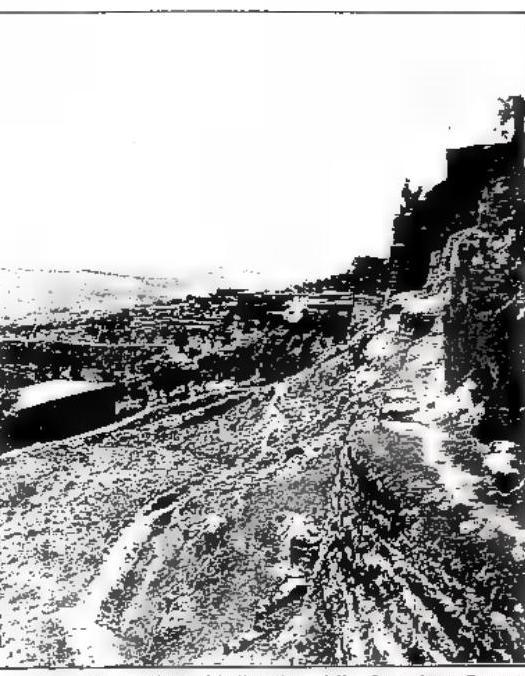
(courtesy of the Superior of the House of the Erecchi of the S. C. S. I. - Rome) GEHENNA - Valley of Hinnōm - Jerusalem.was the ancient Canaanite owner (H. Vincent, p. 126 sq.). It served as the boundary between Judah and Benjamin (Josh. 15:8; 18:15 sq.). Shortly before the exile, Gehenna is identified with Töpheth (Hebrew vocalization from bōšeth = filth), at the mouth of the Tyropaeon, in the spacious estuary where the three arteries of Jerusalem's hydrographic network converge (H. Vincent, p. 133). It was infamous from the time of Hezekiah for the worship of Molech.
Töpheth means "hearth," "grill," on the edge of the burning pit, where children were placed to burn after having their throats cut (Ez. 16:21). Josiah covered it with human bones, rendering it unclean (II Kings 23:10 and 16); the idea of the dunghill and of the fire to consume refuse and carcasses (David Qimbi), although widespread, has no basis whatsoever.
Because of its dreadful cult, Gehenna became a symbol and synonym of all desolations and, preeminently, of the place of punishment for sinners (v. šē'ōl): Jer. 7:31 sq.; 19:3 ff. 10; cf. Is. 66:24; in the apocrypha (J. Chaine, coll. 573 ff.). In the Synoptics (Mt. 5:22, 29, 30; 10:28; 18:9; 23:15, 33; Mk. 9:43, 45, 47; Lk. 12:5; cf. 16:19-31), Gehenna with its elements of fire and worms (decomposition of corpses) hell (v.) and its torments.
BIBL.: J. Chaine, s. V. in DBs. III, coll. 563-79; H. Vincent, Jerusalem, I, Paris 1912, pp. 124-34; A. Lemonnier, Molok, in Revue des sciences philos. et théol., 7 (1913), pp. 432-66; H. L. Strack - P. Billerbeck, Kommentar zum Neuen Testament aus Talmud und Midrasch, IV, Munich 1928, pp. 1029-1118; F. M. Abel, Géographie de la Palestine, I, Paris 1933, p. 401 sq.; J. Bonsirven, Le Judaïsme palestinien, I, 2nd ed., ibid. 1935, pp. 529-38; F. Spadafora, Ezechiele, Turin 1948, pp. 129 sq., 164 sq., 166 sq.
Francesco Spadafora
Cite this article
“GEHENNA.” Enciclopedia Cattolica, vol. V (1950), p. 1173. Azione Romana digital edition, https://azioneromana.com/article/gehenna.