
CINEMATOGRAFO. —
I. MORALITY AND PEDAGOGY
Having appeared only in 1895, the c. quickly succeeded in rising to a true artistic stature, moving from silent films to talking and sound films, to color and three-dimensional films; and from very simple visions and actions to the most complex dramatic representations, to scenes and visions of splendid panoramas, of historical and scientific events, and of fairy tales known since childhood. Thus it has become the pasture of millions of people, the most popular form of entertainment; a true “lesson in things,” more effective for most people than abstract reasoning, because it is received without difficulty or effort, but with lively enjoyment and interest, accompanied as it is by the succession of concrete images that attract and enchant. Speech, moreover, dramatic action, music, color, and three-dimensionality merely reinforce its value, power, and fascination.It is easy to ascertain how broad and profound the influence exerted by the c. is, because one sees it operating everywhere
It goes without saying that, in the face of such grave dangers and harms, the Church should feel obliged to intervene in defense of the sound principles of civil and religious life, indicating the means useful for protection from evil and, at the same time, for placing so fine an achievement of human ingenuity at the service of good. The magna carta of this intervention may be considered the encyclical of Pius XI, Vigilanti cura, of 29 June 1936 (AAS, 28 [1936], pp. 249–63), supported and continually brought up to date in response to current needs by Pius XI himself and by Pius XII for the universal Church, and by individual bishops for their dioceses.
1. Negative means
a) The first and principal means is the formation of a sound moral conscience with regard to spectacles in general and the c. in particular, which, while showing understanding, prevents the formation and spread of that diminished moral sensitivity which does not see, or seeks not to see, the danger, or brushes it aside with unfounded pretexts. The word of the Gospel must serve as the foundation for this formation: “If thy eye scandalize thee, pluck it out, and cast it from thee” (Mt. 5:29); “Whosoever shall look on a woman to lust after her, hath already committed adultery with her” (ibid. 5:28); which, moreover, confirms the principles of natural ethics and pedagogy. - b) The cinematographic pledge, renewed each year, to abstain from films that offend Christian truth and morality. Already promoted as early as 1939 by the bishops of Veneto, in 1942 it was extended to all members of Catholic Action. A common front in this respect, not only of all Catholics but also of all those who feel responsible for the education of their children, such as the Legion of Decency (v.) in America, would represent a warning and a signal to film producers as well (cf. M. Barbera, L'autocensura dei produttori di cinematografia in America, in Civ. Catt., 1931, III, p. 215 ff.). - c) The establishment of film classifications in order to inform the public which films are permissible for everyone, which instead require some reservation, and which finally are harmful or positively bad. These classifications must be made accessible to all through special bulletins and, in general, through the Catholic press, especially the daily press, because it is more timely and widespread. And since a single classification list for all the nations of the world is impossible, because the circumstances, customs, and temperaments of each country differ, permanent national offices will be established (in Italy there is the Centro Cattolico Cinematografico [C.C.C.] with its periodic publications).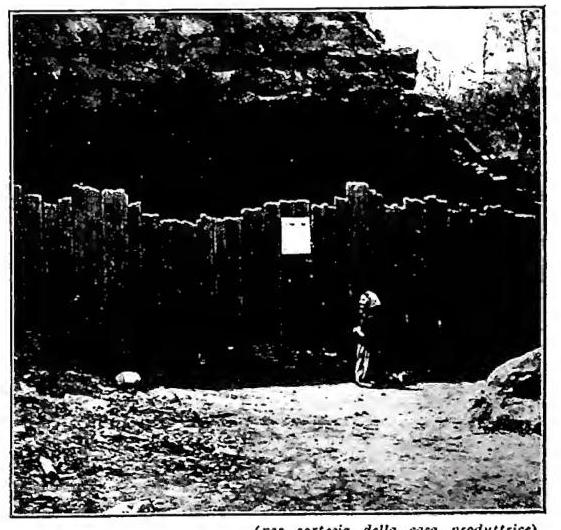
2. Positive means
Since it is not enough to keep bad c. at a distance, but it is necessary to promote good c., the national centers in particular must act with constancy and fervor according to these guidelines: a) to take the initiative, within their possibilities, in producing serious and artistic films; b) to influence artists and all those who participate in film production, so that they create masterpieces that elevate the c. to an educational mission and make it conform to the demands of the Christian conscience, applying themselves to this with the competence of technicians and not of amateurs; c) to show industrial film producers how their capital(courtesy of the producing company)
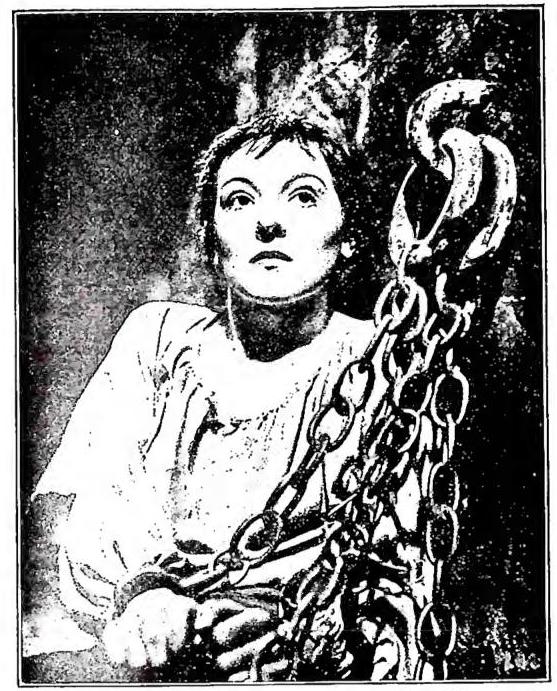
CINEMATOGRAFO - Bernadette at the Grotto. - Still from the film Bernadette, based on the novel by F. Werfel. Prod. Twentieth Century Fox.
may very well and without harm be employed in accordance with these principles; d) the Catholic press, moreover, will support this work of moral improvement with its reviews, conducted calmly, but also accurately, condemning what deserves condemnation and recognizing and praising the efforts of all those (governments, producers, artists) who cooperate in this work of true apostolate.
Cinematography in school instruction. — As a rapid and far-reaching means of instruction, cinematography has also entered the school environment, especially through films in reduced format. These are not limited solely to documentaries, but also extend into the scientific, pedagogical, and religious fields (catechism, sacred history, Church history, liturgy, missions, lives of the saints). The importance of this fact and its consequences are evident; the effects already obtained through the use of projections not only continue, but increase because of the greater attraction exerted by cinematography. Here too, however, the same vigilance and caution already mentioned for other films are necessary, and all the more assiduously, the more pupils are affected by the pull of life.
II. HISTORY
The history of cinema begins on 28 December 1895, when Luigi and Augusto Lumière, amid the astonished interest of everyone, presented at the Grand Café on the Boulevard des Capucins in Paris a series of films, each consisting of a single shot of approximately 17 m., among them the famous L’Arroseur arrosé; the history of Catholic cinema begins when, at the beginning of January 1896, frère Basile, a professor at the St-Nicolas Institute in Paris, presented, on the rue Jean-Coujon, several tableaux vivants taken from the life of Christ and performed by his pupils. In September 1897 an operator was sent by the Lumière brothers to Horitz, in Bohemia, to film the 13 Oberammergau (v.); the film reached 250 m. and constituted an exceptional event, attracting the attention both of Europe and of America, where, in the same year, R. Hollaman projected an identical one of 900 m.G. Méliès subsequently gave cinema expressive means by equipping it with devices such as the cross-fade (the replacement of one image by another within the same shot, achieved by progressively blurring the former as the latter comes into focus); accelerated and reverse-motion action. With F. Zecca, the dramatic element entered cinema.
Among the pioneers of Italian cinema, mons. C. Respighi should be remembered here, as an honor to Catholic cinema; together with R. Kanzler, he produced several interesting short films on the catacombs. In 1902 C. Pathé made the first Quo vadis? in France; then Ecce Homo, The Martyrdom of St Sebastian, and the excellent Christus; and, two years later, Zecca produced a Vie du Christ, in tableaux. F. Nihlo adapted H. Wallace’s Ben-Hur (1907) in America, where the first feature-length film also appeared: Mose’s life (1910), followed a year later by Jésus, produced in France. Meanwhile, in Italy, S. Paolo (1910) and La Divina Commedia (1911) were filmed; U. Del Colle and E. Pasquali produced I Promessi Sposi (1913); and E. Guazzoni presented a Quo vadis? that marked the triumph of Italian cinema. America also produced From the Manger to the Cross (1912), filmed in Palestine; in Belgium, D. Buchowitzki’s Jesus of Nazareth (1923); in France, a major documentary by G.-M. Coissac, La petite sainte de Lisieux (1923), and L’agonie de Jérusalem (1924) by J. Duvivier.
D. W. Griffith then appeared: with him, cinema achieved a new spontaneity and rhythmic vivacity, only hinted at in E. S. Porter’s The Great Train Robbery (1903); he succeeded in creating an appropriate cinematic expression of the more human and truthful aspects of reality, endowing, among other things, the technique of the fade with a powerful poetic significance and giving cinema the great expressive device of the close-up. Of his works, one should recall Intolerance, convincing and humane, composed of four episodes, including The Fall of Babylon, The Struggle of the Pharisees against Christ, and The Night of St Bartholomew. In 1917 E. Guazzoni filmed Fabiola by Cardinal Wiseman, with an exceptionally faithful depiction of the catacombs, based on Kanzler’s reconstruction, as well as Jerusalem Delivered. With G. Antamoro, Christus, St Francis, and St Anthony of Padua were produced; the last was highly successful for the psychological solidity of its characters, despite the excessive rhetoric of its setting.
In Germany, the so-called Kammer-spiel was developing; it realized a troubled inspiration through daring camera angles, violent applications of light, and especially through staging in enclosed and centralized settings.
In Hollywood (U.S.A.), Cecil de Mille made The King of Kings (1925), in which the figure of Christ was effective in a certain sense, but enveloped in an excessively violent and tragic atmosphere; likewise The Sign of the Cross, which was far from representing the sacrifice of the Christian martyrs. In Poland, by contrast, The Mystery of the Black Madonna, very simple and filled with religious emotion, achieved considerable success; as did The Virgin of the Rock in France. In 1928 C. T. Dreyer succeeded in creating a splendid The Passion of Joan of Arc which, closely following the Saint’s trial records, found its full language in an almost uninterrupted succession of close-ups, of highly tense rhythm and sharply cut by light. Another Joan of Arc had been made in 1917 with G. Farrar; two other works on the same subject were produced in France by De Gaatyne and in Germany by Ucicky; the latter’s film, rather than bringing a page of history to life, aimed “to import a drama of characters: that of Joan, a candid angel...”. At that time France could boast J. Duvivier’s La vie miraculeuse de Thérèse Martin (1929), entirely suffused with Christian inspiration; and Germany, R. Wiene’s I.N.R.I. (1929). For some time already, cinema had been looking with interest to S. M. Eisenstein and V. I. Pudovchin, who enriched their art with an exceptionally original syntax, achieving a stark dramatic quality through montage, which came to constitute an essential aesthetic characteristic.
Through successive experiments and systems, cinema acquired a new expressive category: sound. Perceived as a necessity, it had previously found expression in the improvised accompaniment—usually the piano—during screenings; after an initial period in which its possibilities were tested, producing above all intrusive virtuosity, it assumed the character of an integral element when it was fused from the outset into the director’s conception. An example of a perfect sound commentary, in which even the pauses of silence possess a profound poetic justification, is Ombre rosse by J. Ford. At the transition from silent to sound film came Allelujah! (1929) by K. Vidor, performed by Blacks, in which a people’s mystical aspiration toward Christian redemption merged and became confused with warm atavistic sensuality, culminating in an expression that was at once orgiastic and mystical dance.
The first clear manifestations of moral and educational concern regarding cinema belong to this period, with two international Catholic congresses (The Hague, 1928, and Munich, 1929), which subsequently established the Comité international pour la Cinématographie in Paris. It should nevertheless be noted that the Church had already been interested in cinema for a long time.
A festival of moral film was in fact organized in Milan (1910) by Cardinal Ferrari, who crowned it with a screening of S. Paolo. In the same year, at the First International Congress of Cinema in Brussels, G.-M. Coissac called for vigorous measures to guarantee the morality of films. In 1912 mons. Couillié, Archbishop of Lyon, warned against licentious films and founded a league intended to protect Catholics from them. Again, in 1927, canon J. Reymond founded the Comité catholique du cinéma in Paris.
On 29 June 1936 Pope Pius XI devoted the encyclical Vigilanti cura to cinema, which he had already mentioned in 1929 in a passage of Divini illini magistri; this represented a major event in the moralization of cinema. Censorship offices were in fact established in Europe within the national directorates of Catholic Action, and, among other things, they were entrusted with encouraging morally sound production. In Austria there arose the Katholische Jugendzentrale, the Stella Maris Lichtspielgesellschaft, and the Neurund Kinematographie; in Holland, the Voor Er en Deugh office; in Switzerland, the Vereinigung der Freunde der Kinoreforme. In America there developed a very vigorous movement aimed at the moralization of cinema, whose most characteristic expressions were the so-called “Heys Code” (which limited and excluded, in a somewhat mechanical manner, the representation of certain circumstances, scenes, and displays) and the League of Decence, which achieved truly substantial results.
In 1934 J. Duvivier made Marie Chapdeleine and the following year Golgota, with a very personal and perhaps debatable vision of the relationship between the multitudes and Jesus. It was in this year (with La maschera di cera) that the color film made its official appearance, so to speak: an expressive category which, unlike sound, has even today not advanced beyond the initial stage of experimentation and virtuosity. Attempts to “attune” colors are still rare and embryonic: the director continues to conceive the film in black and white, while the color technician limits himself to enriching the chromatic intensity of the costumes and sets, so that color remains purely juxtaposed to the original conception.
In 1936 L. Poirier brought to the screen, with Appel du silence, the life of the apostle of the Sahara, Fr. C. de Foucauld. In 1939 France produced several documentaries, among them India sacra by the missionary Fr. Lhande and Monastero by R. Alexandre; the life of St Vincent de Paul was also adapted for the cinema under the title Monsieur Vincent. In Italy there were Abuna Messias; Don Bosco by G. Alessandrini, drawn from episodes of the Saint’s youth and intended to illuminate his unfailing faith in Providence, which led him to provide shelter for abandoned children; and then the simple and beautiful La porta del cielo.
In 1939 A. Blasetti’s Assisi appeared, representing an effort to sublimate nature and things
in the Franciscan spirit; by the same director there was also Tavola dei poveri. Mention should also be made of the Salesians’ Jubilæum and the missionary documentary Conquistatori d'anime by R. Chiosso.
In recent years the American movement for the moralization of cinema, and specifically its Catholic branch, has moved from a critical and defensive attitude to a more properly active one, giving rise to a series of films inspired by Catholic religious figures and their work: from the film about Fr. Flanagan (La città dei ragazzi, 1944), to La mia via (1944), unfortunately not always free from an overly facile pathos; to Le campane di Santa Maria, Le chiavi del Paradiso, Bernadette, and La croce di fuoco by J. Ford. The latter, a very successful film, has a brief final sequence—simple and intense—that reaffirms the continuity of faith beyond persecution. In ’49 America saw another Giovanna d'Arco, directed by V. Fleming with the advice of Fr. Donceeur; and in Italy: S. Antonio di Padova, directed by P. Francisci, who effectively emphasized the Saint’s combative temperament; and Cielo sulla palude, A. Genina’s film, which achieved notable recognition at the 10th International Exhibition of cinema in Venice for its deeply felt evocation, in an atmosphere of lyrical emotion, of the human story of the b. Maria Goretti. - Vedi T'avv. CIX-X.