
PIO XII, POPE. — Eugenio Pacelli, born in Rome on 2 March 1876 to the lawyer Filippo (v. PACELLI, famiglia) and Virginia Graziosi, received his education in Rome itself: after classical studies at the R. Visconti Gymnasium-Lyceum (completed with the licenza ad honorem), he entered the Capranica College and studied philosophy at the Pontifical Gregorian University; he continued his priestly formation at the Pontifical Athenaeum of the Roman Seminary at the Apollinare, where he obtained, with the highest marks, a degree in theology and in utroque iure. Ordained priest on 2 Apr. 1899, he immediately entered the service of the Holy See in the Secretariat of State, in the Congregation for Extraordinary Affairs, in which Pius X appointed him under-secretary (1911) and then secretary (1914). Meanwhile, he developed his predilection for Canon Law, teaching at the Athenaeum of the Roman Seminary and at the Academy of Noble Ecclesiastics, collaborating with Card. Gasparri in the preparation of the Code and publishing, among other works, the historical-juridical study: La personalità e la territorialità delle leggi, specialmente nel Diritto canonico. To his official duties and study he added priestly ministry, distinguishing himself especially in preaching.
Mons. Pacelli was continuing his work in the Secretariat of State (he prepared the Concordat with Serbia in 1914), when the death of the nuncio in Bavaria, at the most difficult moment of the war, induced Benedict XV to appoint him apostolic nuncio to that government, which alone in wartime Germany maintained diplomatic relations with the Holy See. Raised on 20 Apr. 1917 to the titular archiepiscopal see of Sardi and consecrated by the Pontiff himself (13 May), he immediately reached his post in Munich, to carry out delicate action with the government of the Reich in support of the Pope’s efforts for peace. During the war he visited prisoner-of-war camps and, after the German defeat, assisted the populations and behaved with exemplary firmness in the face of the Bolshevik revolution in Munich (1919). Appointed in 1920 the first nuncio to the Reich
in Berlin, while retaining the see of Munich until 1925, his principal aim was to establish the relations between Church and State in Germany upon new concordatory foundations; since it was not possible to reach a Concordat for the Reich, he worked to conclude agreements with the individual German States. The fruit of his labours was the Concordat with Bavaria (1925), that with Prussia (1929), to which was added in 1932 that with Baden: they guaranteed the Church many positive rights. At the same time, in those years following the German war, the nuncio Mons. Pacelli devoted himself to raising the prestige of the Holy See in Germany and to fostering the revival of the German Church, participating in Catholic gatherings and delivering speeches.
Created cardinal by Pius XI (16 Dec. 1929) and called to succeed Card. Gasparri as Secretary of State, for nine years he faithfully collaborated in the work of the great Pontiff in that most exalted office, made more burdensome during the final period when the Pope was gravely ill; he was especially occupied with the defence of the Church against National Socialism in Germany after the Concordat with the Reich (1933), the conclusion of other concordats, and the application of the Italian one. Pius XI sent him as his legate to the important Eucharistic Congresses of Buenos Aires (1934) and Budapest (1938), as well as to the celebrations at Lourdes (1935) and Lisieux (1937), and in these missions (to which should be added his journey to the United States in 1936) he distinguished himself by his eloquence and uncommon knowledge of languages, likewise admired at congresses and commemorations held in Rome.
When Pius XI died and the Conclave opened on 1 March 1939, Card. Pacelli was elected pope the following day, taking the name P. XII. His chief concern was immediately the imminent danger of the Second World War, and from his first allocution to the world (3 March) he called upon peoples and rulers to seek peace. These efforts continued unceasingly from March to Sept. 1939, publicly through appeals and special prayers and through diplomatic channels. At the beginning of May the Pope, through his diplomatic representatives, made an approach to the heads of State of the major European powers; on 24 Aug., after the German-Russian Agreement that determined the partition of Poland and the outbreak of war, he issued a supreme appeal, warning that “conquests and empires not founded upon justice are not blessed by God,” and that “nothing is lost by peace and everything may be lost by war.” Again, on 31 Aug., a diplomatic note to the governments of Germany, Poland, England, France, and Italy implored them “in the name of God” to do everything possible to avert the beginning of hostilities.
When the conflict began on 1 Sept. 1939, the action of P. XII was directed toward three principal aims: the prompt restoration of a just and honourable peace for all, the limitation of the conflict, and assistance to the victims of war. In his first encyclical, Summi pontificatus (20 Oct. 1939), P. XII indicated the means and ends of peaceful coexistence among peoples, pointing out the causes and remedies of evils, and making a significant reference to invaded Poland; in his Christmas allocution he recalled the principles of natural law which the belligerents were required to observe, condemning aggression against small peoples, atrocities and the use of unlawful means of destruction, and contempt for human dignity, freedom, and life. Throughout the entire period of the war there followed uninterrupted calls to prayer for peace, support for every initiative that might lead to peace (for this reason he gladly welcomed, at the beginning of 1940, the sending to the Holy See of a personal representative of the President of the United States, Myron C. Taylor), and the exposition of the juridical and moral principles for a true and stable order among nations in Europe and in the world (v. especially the Christmas messages).
Likewise, P. XII made every effort to prevent the conflict from spreading to other countries, in particular to save Italy from war, after it had declared “non-belligerence” on 1 Sept. 1939. He first urged mediation by the Italian government between Germany and Poland, and subsequently made every attempt to prevent Italian participation in the war: he spoke of Italy’s peace in the encyclical Summi pontificatus, insisted upon it in public speeches, and at the end of Dec. 1939 addressed himself directly to the Sovereign (visit to the Quirinale, 28 Dec. 1939); he continued his efforts during the first months of 1940, pressing through the nuncio in Italy upon the Foreign Minister, and on 24 Apr., when war had by then been decided upon, he addressed an autograph letter to Mussolini, appealing to his sense of responsibility that “so great a calamity might be spared his country.” The Pope’s interventions and public appeals for peace multiplied during the month of May, and to the protests of Mussolini, irritated by the repercussions they had among the Italian people, he had it replied that he “did not fear even going to a concentration camp.”
At the time of the invasion of Holland, Belgium, and Luxembourg (10 May), P. XII sent telegrams of solidarity (published in the Osservatore Romano) to the sovereigns of those nations, denouncing German aggression. When France was invaded and partly occupied, he addressed a letter to the French episcopate (29 June), giving directives for the work to be carried out at that difficult moment.
Meanwhile, from as early as Sept. 1939, the Pope’s aid to peoples affected by the war had begun. Through the pontifical representations, assistance was given to Polish refugees who had taken refuge in various countries, and then to those from Bessarabia and Bukovina. Requests for information about prisoners, which immediately came to the Holy See from all over the world, and the experience of what it had done during the First World War, led P. XII to organize an Information Office within the Secretariat of State, which developed enormously during the war. As soon as hostilities began, the Pope had the German government asked for lists of Polish prisoners, but received a negative reply, and the requests that were repeatedly renewed proved equally fruitless. He then sought to gather information, with the assistance of the bishops, concerning missing persons and families, encountering difficulties in this work as well. By June 1940, the searches had been extended to Belgian, Dutch, and French refugees, to interned Italians, and, increasingly as the conflict continued and spread, to prisoners of war. From June 1940 to Sept. 1941, approximately 400,000 requests arrived; the Central Office was established in the Palace of S. Carlo in the Vatican and reached a staff of 885 employees, while other auxiliary offices were located in Rome. The work was carried out in sections for the various languages and nations or regions of the world; one section was specifically for Jews persecuted by the Germans, for whom 100,000 applications were received. In order to obtain the desired information, difficult negotiations had to be conducted with governments: that
(Jos. Felici)
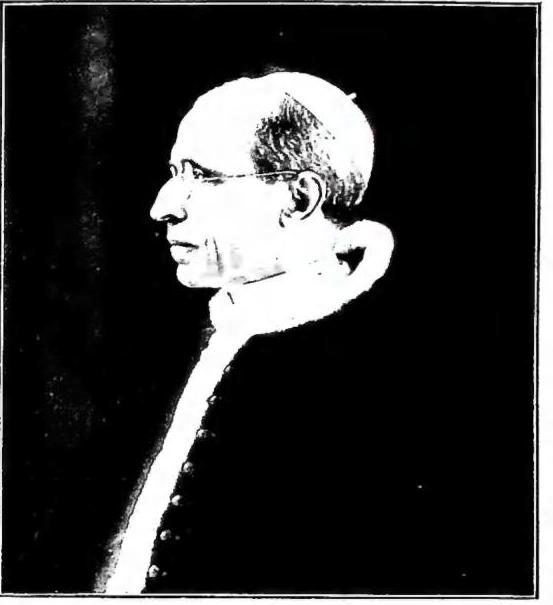
Pio XII, Pope — Portrait.
of Germany and the German military commands did not accept the requests of the Holy See; Greece also did not agree to provide information. Most vigorous insistence and innumerable attempts were made by the Pope (especially through President Roosevelt) to obtain from Russia information concerning its German, Italian, and other prisoners, but every effort proved useless; in 1940 the Pope also attempted to bring about an exchange of prisoners between the belligerents, but the attempts were unsuccessful. In Aug. 1940 broadcasts by Vatican Radio began, soon multiplied and extended throughout the world. The transmission of information by radio, telegraph, couriers, and postal service was carried out through the nunciatures or apostolic delegations, which established special offices; the representatives of the Holy See in the various countries also assisted, insofar as they were permitted, prisoners, internees, and their families, bringing them the generous aid which the Pope was able to provide, especially on the occasions of Christmas and Easter. In 1942 the information services were extended to South America, where there were many civilian internees; in 1943 Vatican Radio was able to establish communications with Japan; after the Allied landing in North Africa, a special Information Office was established in Algiers and entrusted to the White Fathers; when Sicily and southern Italy were occupied, requests for information multiplied, and after laborious negotiations the Holy See was able to organize centres for the collection and distribution of Vatican messages at the diocesan curias, assisted by parish priests and Catholic Action. Fruitless, however, were the searches for information concerning Italian servicemen interned in Germany, and the Pope succeeded only in sending them some aid through the Swiss Catholic mission and the nunciature in Berne. The Information Office continued, even after the war had ended, to assist German prisoners and those of other nations, to help political internees of the fallen regimes, and to promote the repatriation of prisoners and internees, especially from Germany. At the end of its activity (1946), the Information Office of the Holy See had received nearly 10 million requests and transmitted an even greater number of messages.
During the war, the Pope’s solicitude was especially concerned with saving Rome, the centre of Christendom and the seat of his episcopate. On the very day Italy entered the war, the Holy See asked the French and English governments that the city should not be bombed by air raids. While the French reply was immediately favourable, the London government adopted a reserved attitude and set conditions without making any concrete commitment. The Holy See continued to request Rome’s immunity, allowing no opportunity to pass without presenting the reasons in its favour and enlisting governments and prominent persons. After America entered the war, it also pressed the government of the United States. As danger drew nearer (1942), the representatives of the Holy See and, through them, the bishops and Catholics were more actively involved, prayers and publications were encouraged, and efforts were made with the Italian government (Dec. 1942) to have it declare and make Rome an «open city»,
removing the military commands from II. The attempts, intensified in the spring of 1943, did not succeed, and on 19 July of that year the first Allied bombing of the city took place: P. immediately hastened among the ruins and victims, bringing comfort and aid, and strongly deplored the bombing in a public letter to the cardinal vicar. Despite the protest and further interventions, Rome was bombed a second time on 13 Aug., and once again the Pope immediately went among the stricken population and had a note of condemnation sent to the English and American governments. When the war drew near Rome, P.’s efforts multiplied to prevent the city from becoming a battlefield between the two armies, supporting initiatives by neutrals (Ireland with the United States and Spain with Germany). To the proposal of the German ambassador that he withdraw from the endangered city under German protection, he replied that he refused to leave Rome, whatever might happen (5 Feb. 1944).
Rome and its surroundings had filled with displaced persons and refugees, driven there by the events of the war, and the Pope’s charity came to their aid. In the spring of 1944 he established the Assistance Commission, had dining halls, public kitchens, and food transports organized; during the most difficult moments, when communications with Rome were paralyzed by the bombings, the Vatican’s means supplied the city, especially its hospitals. P.’s protection likewise extended to political persecutees of every ideology and to the Jews, who were received and protected in religious institutions, as well as to works of art, archives, and libraries, which, especially from Latium, were transported to Vatican City; it is estimated that more than one third of Italy’s movable artistic heritage was housed there.
P. XII’s work for Rome became more intense in the final months of the German occupation, through public manifestations (his address to the refugees in St. Peter’s Square, 12 March) and multiplied interventions both with the Germans and with the Allies to avert the danger threatening the city: he firmly opposed the German command’s proposal to evacuate the population. Rome was saved, and on the day after the liberation (5 June 1944) an immense crowd in St. Peter’s Square acclaimed the Pope defensor civitatis.
For many other Italian and foreign cities as well, P. XII requested that they be spared the bombings and ravages of war, either because they were hospitable cities or because of their religious and artistic importance (Chieti, Siena, Assisi, Florence, Pisa, Bologna, Venice, L’Aquila, Farfa, Pavia, Verona, Chioggia, Macerata, Fermo, Milan, Padua, Ferrara, Vercelli, Ascoli-Piceno, Orvieto, Ravenna, Loreto, Ferentino, Sonnino, Valviscio Abbey, the monastery of St. Dominic at Sora, the Camaldolese hermitage at Frascati, Chiaravalle Abbey; the Republic of S. Marino, Vienna, Spalato). During the negotiations concerning Rome, he intervened with the Italian government so that Athens and Cairo would not be bombed. Vigorous diplomatic action was undertaken to prevent the bombing of Montecassino Abbey, which was unfortunately destroyed on 15 February 1944. P. XII also issued an appeal in September of that year
to save the city of Warsaw from destruction.
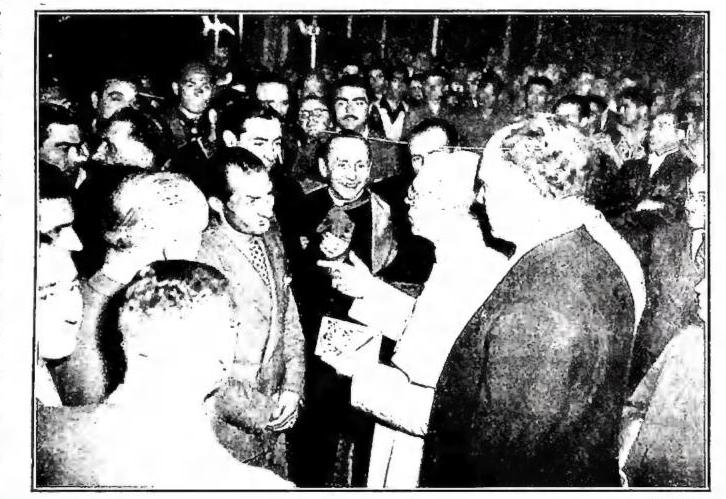
PIO XII, pope - Audience with the participants in the 35th Tour of Italy cycle race. At the center, listening to the Pontiff, are G. Bartali and F. Coppi (22 May 1952).
While the Pope’s charity sought to alleviate the sufferings of the postwar period, his concern grew more acute regarding the baleful influence of atheistic communism in Europe and throughout the world. During the war, with noble impartiality, he had done nothing that could signify approval or encouragement of the war undertaken in 1941 against the Russian people (v. address of 25 February 1946); he had, however, openly condemned the ideological content of communism (v. Christmas radio message of 1942), and he was clear and cautious in the face of the suggestions of President Roosevelt, who displayed benevolence and optimism, warning against the dangers of Soviet communism (v. correspondence between Roosevelt and P. XII). The Pope’s forecasts proved correct, and Russia’s expansion after the war brought communist predominance to the nations of central-eastern Europe and to China, while in the other countries, particularly Italy and France, strong communist parties were being organized or developing. To avert so grave a danger to religion, P. XII devoted all his energies to the task, stimulating the understanding of the more prosperous nations on behalf of those most exposed to the threat of communism because of their social conditions, and above all explaining and advocating Catholic social doctrine, denouncing the errors of Marxist ideology, and issuing practical norms concerning the conduct of the clergy and the Christian people (v. COMMUNISM; decree of the S. Office, 1 July 1949).
Connected with these measures was the subsequent admonition of the S. Office of 28 July 1950 against communist associations for boys and girls. The directives given to the bishops by the Congregation of the Council in 1945 concerning the duty to vote and the necessity of voting only for candidates who were reliable from the religious standpoint were also of great importance; the Pontiff himself addressed this subject with precise and forceful teachings (v. Rome, 10 March 1948).
The necessity of these interventions becomes more evident when one considers the struggle launched by communism against the Church in the countries where it had come to power. The first extremely grave event of the postwar period was the violent destruction of the Catholic Church in Ruthenia incorporated into Russia (v. encykl. Orientales omnes, 23 December 1945). In the following September and October, the trial of Msgr. Stepinac, Archbishop of Zagreb, took place in Yugoslavia; it was added to massacres, deportations of priests, and other extremely grave acts of violence (v. address to the Rota, 6 October 1946). This was followed (1948) in Hungary by the profoundly distressing trial of Cardinal Mindszenty (v. letter to the Hungarian episcopate of 2 January 1949, the addresses to the Secret Consistory, the diplomatic corps, and the Roman people in the following February). As the struggle against the Catholic religion intensified in the countries that had fallen under Soviet influence, P. XII’s interventions were repeated, both by imposing ecclesiastical penalties on those responsible for the struggle (v. S. Office and of the Congregation of the Council against pseudo-Catholic movements or apostate priests in Czechoslovakia, Romania, Hungary, and Yugoslavia, including after the Cominform’s rupture), and by appointing bishops in place of those violently removed by the government from the governance of the churches, as well as by assisting, whenever possible, and above all encouraging the hierarchy, clergy, and people in the defense of their faith. Here one must recall the letters addressed to the Polish episcopate (September 1949 and September 1951), that addressed to the hierarchy and people of Czechoslovakia (28 October 1951), to the Chinese Catholics (18 January 1952), and to the episcopate of Romania (27 March 1952).
The dogmatic teaching of P. XII addressed the most vital problems of modern theology, at times providing definitive solutions and, on many occasions, directing Catholic theological research along sure paths. Biblical studies, which form the basis of dogma, were given norms corresponding to new requirements and scientific advances in the encyclical Divino afflante Spiritu (v.); the precise meaning of Revelation and the Magisterium is determined in the encyclical Mumani generis (v.), which points to the dangerous effects, in the current theological and philosophical deviations of certain cultural circles, of a science emancipated from the authority of the Church; the encyclical Mystici corporis (v.) offers an extensive exposition of the revealed doctrine concerning the Church, while Mediator Dei contains a systematic treatment of «liturgical theology» and is particularly rich in dogmatic clarifications on questions of sacramental theology. In the apostolic constitution Sacramentum ordinis (v.), P. XII resolved the centuries-old question concerning the essence of the Sacrament of Orders, while in other encyclicals or documents he pronounced on controversies that are still current today, as in the encyclical Munificentissimus Deus (v.), which defines ex cathedra the dogma of the Assumption of Mary, outlines the progressive affirmation of the truth implicitly contained in Revelation, and in the encyclical Sempiternus Rex, on the occasion of the fifteenth centenary of the Council of Chalcedon, kenosis (v.) and recent interpretations of the mystery of the Incarnation.
In the field of science and culture, P. XII promoted the activity of the Pontifical Academy of Sciences (v. speeches); he encouraged the translation of the Psalter from the original texts, carried out by the Pontifical Biblical Institute, proposing it for the recitation of the Breviary in the letter In quotidianis precibus (24 March 1943); he had excavations carried out beneath the confession of St Peter, which led to the discovery of the Apostle’s tomb.
In the moral and juridical field, P. XII showed particular concern for the protection of the Sacrament of Matrimony and the sanctity of the domestic hearth: in catechetical form, the subject is chiefly illustrated in the speeches to newlyweds, which develop an organic plan of instruction on Matrimony, conjugal duties, and the education of children; in juridical form, many problems are set forth in the annual speeches to the Rota. The question of the primary purpose of Matrimony, besides being treated in several speeches, was the subject of a decree of the Holy Office (9 March 1944); certain aspects of conjugal morality were clarified in the speech to midwives of 29 October 1951; others, concerning women in their moral, religious, and apostolic problems, are touched upon in numerous speeches to women’s groups or organizations, with original reflections on the demands of modern times. Finally, one must recall the very numerous speeches addressed to specific categories, which take the occasion of audiences or congresses to explain the particular tasks of each profession or service; of special importance are the radio messages to the sick.
Under P. XII, the first modification was made to the CIC through the abolition, in § 4, second paragraph, of can. 1099, concerning the purpose of Matrimony, which had raised so many problems of detailed casuistry (motu proprio of 1 August 1948); three parts of the Code for the Oriental Church were also published: De Matrimonio (motu proprio of 22 February 1949), De iudicibus (6 January 1950), and De bonis, De religiosis, De verborum significatione (9 February 1952).
If, finally, one turns to the social teaching of P. XII, one finds the doctrine of his predecessors restated in its broad outlines. Yet the fundamental feature characterizing P. XII is the emphasis he places on man and on the enhancement of his person; this is explained by the fact that in recent decades the State’s influence in every sphere of human relations has become increasingly broad and profound, threatening to become all-absorbing even in countries with democratic regimes. P. XII affirms that the economic world is not by its nature a state institution, but a living creation of the free initiative of individuals and of their freely constituted groups (speech to UNIAPAC, 7 May 1949); the duty and right to work do not derive from society, but spring from human nature, and work is always noble, even when the forms in which it is carried out may seem humble; therefore, the establishment and consolidation of a social order is required that will enable workers to escape from a condition of destitution, allow their children to share in the goods of culture, and enable them themselves to enter into the various human communities as active and responsible members (Christmas radio message, 1942); workers and employers must strive to humanize their mutual relations, to the point of transforming the enterprise into a working community (speech of 31 January 1952), without going so far as to affirm a natural right of workers to co-management (speech of 3 June 1950). On the other hand, P. XII affirms that private property must be regarded as the cornerstone of a well-ordered and rightly functioning social economic order (radio message of 1 September 1944), intimately connected with the dignity and development of the human person, and that nature itself demands that men be owners «and when they are not, that they become so» (Christmas radio message, 1942). For this reason, the Pope condemned the present capitalist social and economic order, which is not in conformity with justice, teaching that it must be reorganized according to a criterion of equity, through suitable state interventions when necessary (radio message of 1 September 1944); yet the humanization of the economic world is to be achieved not through revolution, but through a gradual and well-directed evolution (speech of 13 June 1943).
The problems concerning the internal life of the Church, as well as those of the faithful’s religious life, are all treated or mentioned in the acts, allocutions, and speeches of P. XII. Even the speeches in which political problems are touched upon, in the highest sense of the word (the great problems of contemporary human coexistence, world peace, and social justice), always refer back to the higher principles of the Gospel and Christian Revelation (v. especially the Christmas radio messages).
Following the path traced by b. Pius X and Pius XI, P. XII was solicitous for the proper formation and good spirit of the clergy; the most important document on the subject is the exhortation Menti Nostrae (23 September 1950), noteworthy also because for the first time in a ponti-
ficial document the subject is treated in such a systematic manner.
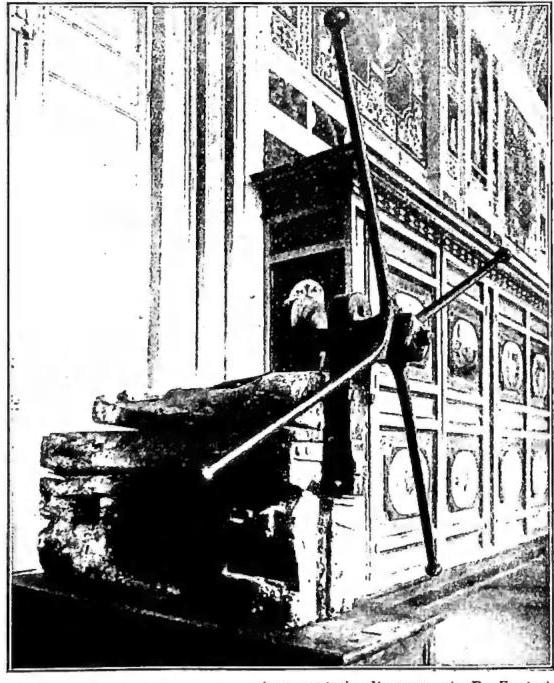
PIO XII - PIOMBATORE DELLA CANCELLERIA APOSTOLICA
...ficial document, current aspects of priestly pedagogy are addressed for the first time. Particular solicitude is evident in documents or exhortations addressed to the episcopate of various nations where the problem of priestly vocations is more acute, as in many countries of Latin America (v. specialmente la lettera all'episcopato brasiliano del 23 apr. 1947, cui si aggiunse il 7 marzo 1950 una lettera della Congregazione dei Seminari).
No less concern was shown for the formation of religious men and women. Worthy of mention are the apostolic constitution Provida Mater (2 Feb. 1947), in favor of secular institutes, and Sponsa Christi (21 Nov. 1950), on the discipline of women’s monasteries. Also important are several addresses delivered on the occasion of general Chapters, containing valuable recommendations (to the Society of Jesus and the Dominicans on 17 and 29 Sept. 1946; to the Friars Minor and the Discalced Carmelites on 23 May and 23 Sept. 1951).
P. XII provided Action (v.), encouraging the establishment of international organizations (intellectuals, men, male and female youth, and the Permanent Committee of the International Congresses for the Apostolate of the Laity), and promoting its various branches through addresses dealing with the specific problems of each (notable, because of the circumstances in which it was delivered, was the address to workers on Pentecost 1943). The particular needs and religious and moral problems of individual peoples were recalled by P. XII on the occasion of the numerous radio messages for international Eucharistic or Marian congresses and similar religious events, addressed to all Catholic nations; P. XII’s words as universal Pastor were facilitated and made more effective by his sure command of the principal languages.
Two periods of intense pastoral activity were the year of the Pope’s episcopal jubilee (13 May 1942–1943) and, above all, the Holy Year of 1950, which saw millions of pilgrims come to Rome from every part of the world, all welcomed by the Pope’s tireless words. The most solemn act of the Holy Year (and of the pontificate of P. XII) was the proclamation of the dogma of the bodily Assumption of Mary in St. Peter’s Square on 1 Nov. 1950, in the presence of approximately 600 bishops and an immense crowd of the faithful.
Numerous canonizations and beatifications were decreed by P. XII, especially during the Holy Year: particular prominence was given to the beatification of Pius X on 3 June 1951; one should also mention the equivalent canonization of St. Margaret of Hungary and the conferral of the title of Doctor on St. Anthony of Padua. From the liturgical standpoint, mention should be made of the directives given in the encyclical Mediator Dei (v.), admirably balanced between contemporary spiritual needs and a firm restraint against every abuse, as well as the restoration ad experimentum of the Easter Vigil. Marian devotion was greatly developed by P. XII, who on 31 Oct. 1942 consecrated the human race to the Immaculate Heart of Mary, subsequently instituting this feast (22 Aug.); every year he invited people to prayer during the month of May, sent messages to various Marian Congresses (several times to Fatima), and finally defined the dogma of the Assumption. The cult of the Saints was promoted through documents for jubilee solemnities (St. Benedict, St. Rose of Viterbo, St. Leonard of Porto Maurizio), and through the proclamation of new patrons of cities and nations; of particular importance was the proclamation (1939) of St. Francis of Assisi and St. Catherine of Siena as primary patrons of Italy.
by the Communist countries (in Yugoslavia a chargé d’affaires remained), were extended under the pontificate of P. XII to other nations, and the internunciatures of Egypt, India, Lebanon, the Philippines, Japan, and Pakistan, and the apostolic delegations of Dakar and Korea, were established. - Vedi tav. CV.