
PACELLI, FRANCESCO. — Jurist, born in Rome on 27 February 1874, to Filippo and Virginia Graziosi, died in Rome on 22 April 1935. Having graduated in civil and canon law, he devoted himself to the study of public water law; in 1898 he published the treatise Le acque pubbliche, which became a fundamental work on the subject, expanded and updated in the subsequent editions of 1918 and 1934. His publications earned him, in 1922, the qualification to teach «Water Law» at the University of Rome. At the same time, P. engaged in intense professional activity: he served in the Legal Office of the Municipality of Rome (to him the city owed the preservation of the Greek statue of the Niobid), was an advocate of the S. Consistory, and legal adviser to the S. See and to many sacred congregations of the Roman Curia.
His study and profession prepared P. for his greatest undertaking: the negotiations for the Conciliation. From their beginning (6 August 1926) until the ratification of the Lateran Pacts (7 June 1929), he conducted them under the guidance and according to Pius XI (v.), at times making a decisive personal contribution and demonstrating the qualities of a jurist and the tact of a negotiator. The first conversations with the representative of the Italian government, Domenico Barone, immediately addressed the Roman Question, and P.’s merit was to find preliminary formulas and prepare notes and memoranda that served as the basis for the subsequent texts. The most delicate point was that of the sovereignty of the new State, Mussolini proposing an overlapping of the sovere-
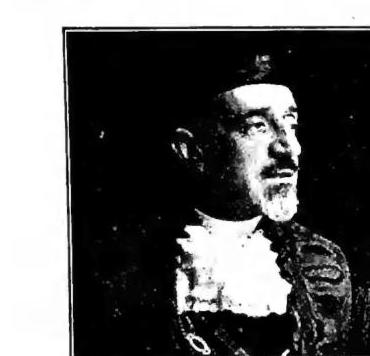
After the signing of the Lateran Pacts (11 February 1929), P. was charged by the Pope with preparing the fundamental laws of the State of Vatican City and took part in drafting the Italian laws for the implementation of the Pacts. The strong tension provoked by Mussolini’s speeches in the Chambers (13 and 25 May), to which Pius XI responded with his letter to Cardinal Gasparri (5 June), was overcome by the declaration read at the time of the ratifications in the Vatican (7 June 1929), which P. had formulated the previous day. Even afterward, until his death, he continued to work for the implementation of the Pacts. In order to continue his activity in Italy on behalf of the Holy See, he did not wish to hold government offices in the State of Vatican City; he accepted only that of General Counsellor.