GASPARRI, PIETRO

GASPARRI, PIETRO. — Cardinal, Secretary of State to two popes, and the principal architect of the codification of the Code of Canon Law and the Lateran Pacts.

Born at Capovallazza (commune of Usina [Macerata]) on 5 May 1852; died in Rome on 18 November 1934. He began his studies (1861) in the Seminary of Nepi, from which he transferred (1870) to the Roman Seminary, being ordained priest on 31 March 1877. He began his teaching on the Sacraments and legal subjects in the same Seminary.

Article illustration
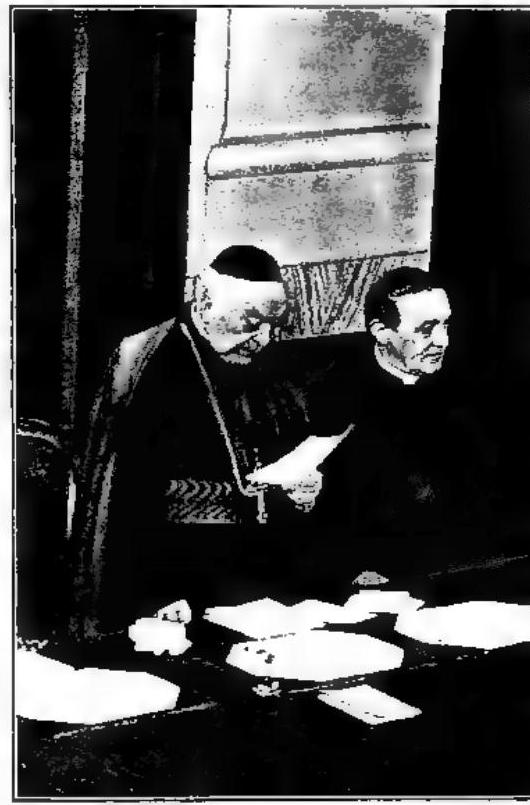
GASPARRI, Pietro — Portrait on the occasion of his address to the International Juridical Congress of 1934 (Rome).

Born at Capovallazza (commune of Usina [Macerata]) on 5 May 1852; died in Rome on 18 November 1934. He began his studies (1861) in the Seminary of Nepi, from which he transferred (1870) to the Roman Seminary, being ordained priest on 31 March 1877. He began his teaching on the Sacraments and legal subjects in the same Seminary.

GASPARRE, Pietro — Portrait on the occasion of his address to the International Juridical Congress of 1934 (Rome).

N. a Capovallazza (comune di Usina [Macerata]) il 5 maggio 1852; m. a Roma il 18 nov. 1934. Iniziò i suoi studi (1861) nel Seminario di Nepi, da cui passò (1870) al Seminario Romano, venendo ordinato sacerdote il 31 marzo 1877. Iniziò il suo insegnamento sui Sacramenti e di materie giuridiche e Roma nello stesso Seminario. Pietro - Ritratto in occasione del discorso al Congresso giuridico internazionale del 1934 (Roma).

GASPARRE, Pietro - Ritratto in occasione del discorso al Congresso giuridico internazionale del 1934 (Roma).

N. a Capovallazza (comune di Usina [Macerata]) il 5 maggio 1852; m. a Roma il 18 nov. 1934. Iniziò i suoi studi (1861) nel Seminario di Nepi, da cui passò (1870) al Seminario Romano, venendo ordinato sacerdote il 31 marzo 1877. Iniziò il suo insegnamento sui Sacramenti e di materie giuridiche e Roma nello stesso Seminario. Pietro - Ritratto in occasione del discorso al Congresso giuridico internazionale del 1934 (Roma).

GASPARRE, Pietro - Ritratto in occasione del discorso al Congresso giuridico internazionale del 1934 (Roma).

N. a Capovallazza (comune di Usina [Macerata]) il 5 maggio 1852; m. a Roma il 18 nov. 1934. Iniziò i suoi studi (1861) nel Seminario di Nepi, da cui passò (1870) al Seminario Romano, venendo ordinato sacerdote il 31 marzo 1877. Iniziò il suo insegnamento sui Sacramenti e di materie giuridiche e Roma nello stesso Seminario. Pietro - Ritratto in occasione del discorso al Congresso giuridico internazionale del 1934 (Roma).

GASPARRE, Pietro - Ritratto in occasione del discorso al Congresso giuridico internazionale del 1934 (Roma).

N. a Capovallazza (comune di Usina [Macerata]) il 5 maggio 1852; m. a Roma il 18 nov. 1934. Iniziò i suoi studi (1861) nel Seminario di Nepi, da cui passò (1870) al Seminario Romano, venendo ordinato sacerdote il 31 marzo 1877. Iniziò il suo insegnamento sui Sacramenti e di materie giuridiche e Roma nello stesso Seminario. Pietro - Ritratto in occasione del discorso al Congresso giuridico internazionale del 1934 (Roma).

GASPARRE, Pietro - Ritratto in occasione del discorso al Congresso giuridico internazionale del 1934 (Roma).

N. a Capovallazza (comune di Usina [Macerata]) il 5 maggio 1852; m. a Roma il 18 nov. 1934. Iniziò i suoi studi (1861) nel Seminario di Nepi, da cui passò (1870) al Seminario Romano, venendo ordinato sacerdote il 31 marzo 1877. Iniziò il suo insegnamento sui Sacramenti e di materie giuridiche e Roma nello stesso Seminario. Pietro - Ritratto in occasione del discorso al Congresso giuridico internazionale del 1934 (Roma).

GASPARRE, Pietro - Ritratto in occasione del discorso al Congresso giuridico internazionale del 1934 (Roma).

N. a Capovallazza (comune di Usina [Macerata]) il 5 maggio 1852; m. a Roma il 18 nov. 1934. Iniziò i suoi studi (1861) nel Seminario di Nepi, da cui passò (1870) al Seminario Romano, venendo ordinato sacerdote il 31 marzo 1877. Iniziò il suo insegnamento sui Sacramenti e di materie giuridiche e Roma nello stesso Seminario. Pietro - Ritratto in occasione del discorso al Congresso giuridico internazionale del 1934 (Roma).

GASPARRE, Pietro - Ritratto in occasione del discorso al Congresso giuridico internazionale del 1934 (Roma).

N. a Capovallazza (comune di Usina [Macerata]) il 5 maggio 1852; m. a Roma il 18 nov. 1934. Iniziò i suoi studi (1861) nel Seminario di Nepi, da cui passò (1870) al Seminario Romano, venendo ordinato sacerdote il 31 marzo 1877. Iniziò il suo insegnamento sui Sacramenti e di materie giuridiche e Roma nello stesso Seminario. Pietro - Ritratto in occasione del discorso al Congresso giuridico internazionale del 1934 (Roma).

GASPARRE, Pietro - Ritratto in occasione del discorso al Congresso giuridico internazionale del 1934 (Roma).

N. a Capovallazza (comune di Usina [Macerata]) il 5 maggio 1852; m. a Roma il 18 nov. 1934. Iniziò i suoi studi (1861) nel Seminario di Nepi, da cui passò (1870) al Seminario Romano, venendo ordinato sacerdote il 31 marzo 1877. Iniziò il suo insegnamento sui Sacramenti e di materie giuridiche e Roma nello stesso Seminario. Pietro - Ritratto in occasione del discorso al Congresso giuridico internazionale del 1934 (Roma).

GASPARRE, Pietro - Ritratto in occasione del discorso al Congresso giuridico internazionale del 1934 (Roma).

N. a Capovallazza (comune di Usina [Macerata]) il 5 maggio 1852; m. a Roma il 18 nov. 1934. Iniziò i suoi studi (1861) nel Seminario di Nepi, da cui passò (1870) al Seminario Romano, venendo ordinato sacerdote il 31 marzo 1877. Iniziò il suo insegnamento sui Sacramenti e di materie giuridiche e Roma nello stesso Seminario. Pietro - Ritratto in occasione del discorso al Congresso giuridico internazionale del 1934 (Roma).

GASPARRE, Pietro - Ritratto in occasione del discorso al Congresso giuridico internazionale del 1934 (Roma).

N. a Capovallazza (comune di Usina [Macerata]) il 5 maggio 1852; m. a Roma il 18 nov. 1934. Iniziò i suoi studi (1861) nel Seminario di Nepi, da cui passò (1870) al Seminario Romano, venendo ordinato sacerdote il 31 marzo 1877. Iniziò il suo insegnamento sui Sacramenti e di materie giuridiche e Roma nello stesso Seminario. Pietro - Ritratto in occasione del discorso al Congresso giuridico internazionale del 1934 (Roma).

GASPARRE, Pietro - Ritratto

1955

GASPARRI PIETRO - GASQUET FRANCIS AIDAN

He died on 19 May 1918. To the CIC the Cardinal G. added a preface, which briefly recounts the history of ecclesiastical legislation, an analytical index, and in some editions, the notes of the sources; work which he would expand by editing the edition of the CIC Fontes, the first six volumes of which saw the light of day from 1923 to 1932; the seventh, already ready at the author’s death, appeared in 1935 under the care of Cardinal Giustino Serédi, who also saw to the publication of volumes VIII–IX, thus completing the collection, which, however, has no critical value but is merely a compilation, and, like the preface and the index, has no character of authenticity.

At the conclusion of the codification, Cardinal P. G. was also appointed first president of the Commission for the authentic interpretation of the canons of the CIC, established by a motu proprio of 17 October 1917.

Meanwhile, with the election of Benedict XV, who had already been his colleague in the Secretariat of State, after the brief interim of Cardinal Ferrata, which lasted 36 days, Cardinal G. was elected Secretary of State. At the death of Benedict XV (q.v.), with whom he had shared the responsibilities of government and the inspiration behind the greatest acts of that pontificate—especially fruitful for the resumption of diplomatic relations with many nations—in the subsequent conclave the strong personality of Cardinal G. concentrated a good number of votes, which he then used to support the candidacy of Cardinal Ratti, who, elected pope, reconfirmed him as his Secretary of State until 10 February 1930.

The greatest event after the codification, in which Cardinal G. played a part, was the Conciliation, for which he worked from the days of Versailles, through Monsignor Cerretti, inspiring the gesture of pacification by Pius XI, who blessed the crowd from the external loggia on the day of his election, and by promoting approaches as early as 6 August 1926; these approaches, after a notable interruption over the question of education, were resumed in the form of negotiations on 3 September 1928 and concluded on 11 February 1929.

In the final phase, on 22 November 1928, the Pope delegated the same Cardinal G. for the official negotiations and for the signing of the acts, which G. signed as plenipotentiary. A year later, owing to personal disagreements, he ceased from his office of Secretary of State, in which he had earned a well-deserved reputation as a great diplomat, and spent his last years in retirement, surrounded by the veneration and admiration of the ecclesiastical world and of many secular circles, even those outside the Church. It was in these years that he composed his Catechismus Caliothicus (Rome 1930).

Already decorated with the collar of the Most Holy Annunciation, on 20 April 1933 he was appointed a member of the Accademia d’Italia for juridical disciplines. His remains rest in his native Usita.

It is premature today to give a definitive judgment on his activity as theologian and canonist, diplomat and codifier, but it is certain that G. was in the ecclesiastical world one of the greatest figures of the first thirty years of the century. To know his inner life, of great value will be his Diary, which is still preserved unpublished.

BIBL.: The following account has autobiographical value: P. G., *Storia della codificazione del diritto canonico per la Chiesa latina*, in *Acta Congressus iuridici internationalis*, IV, Rome 1937, pp. 1-10; also V. G. Forchielli, *Il card. P. G.*, Macerata 1934; A. Mittiga, *Il cardinale giurista P. G.* (*I Rostri*, 9-12), Rome 1934; F. M. Taliani, *Vita del card. G.*, segretario di Stato e provveditore, Milan 1938; F. P. Gabrieli, s. V. in *Nuovo dig. italiano*, VI, p. 211; A. Van Hove, *Prolegomena*, 2nd ed., Malines-Rome 1945, pp. 394, 398, 616, 622, 632.