BOLIVIA. – Republic of South America.
I. GEOGRAPHY
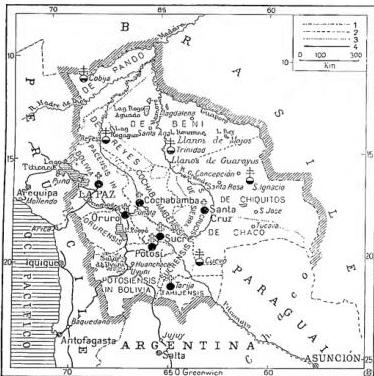
Bordering on Peru, Brazil, Paraguay, Argentina and Chile; among the ancient states, the only one without its own outlet to the nearby ocean. The territory (1.1 million sq. km.) comprises (for about a quarter of its extent) a highland zone, with closed basins and high mountain ranges; for the rest, the broad, gentle slope by which these descend to the basins of the Amazon and the Paraguay. The former contains in its depressions lake basins without outlets to the sea; the latter is traversed by mighty rivers that flow into the Madeira and the Pilcomayo; here the steppe of grasses or bare rocky terrain prevails; there, in part (to the northeast) the equatorial forest, and in part, as humidity decreases (to the southeast), scrubland and prairie (Chaco). The soil is cultivated over a very limited area (2% of the total). The principal resource consists in mining production (tin, bismuth, silver, zinc, gold, etc.). The entire country suffers from scant and difficult communications; the international routes lead, by means of daring railways, to the ports of Arica, Antofagasta (Chile) and Mollendo (Peru), and to the Argentine network (Tucumán), and rely for a large part (passengers and mail) on air transport. Bolivia is a cattle-herding republic, independent since 1825; its constitution is democratic with a bicameral representation. The population (3.7 million inhabitants in 1945) is made up of more than half Amerindians (among whom the civilized Quechua and Aymara), about a third mestizos, a seventh Creoles and whites, and the rest blacks. Italians number around 1,500. On the highland, where above 3,000 metres lives 90% of the country’s population, are gathered the principal inhabited centres. The seat of government is at La Paz (280,000 inhabitants; 3,630 metres above sea level); the legal capital at Sucre (35,000 inhabitants; 2,790 metres); other noteworthy cities are Cochabamba (60,000 inhabitants; 2,557 metres), Oruro (50,000 inhabitants; 3,760 metres) and Potosí (40,000 inhabitants; 3,970 metres). The Catholic faith is the state religion; according to official data, 84% of the population belongs to II. The soil is cultivated over a very limited area (2% of the total). The entire country suffers from scant and difficult communications; the international routes lead, by means of daring railways, to the ports of Arica, Antofagasta (Chile) and Mollendo (Peru), and to the Argentine network (Tucumán), and rely for a large part (passengers and mail) on air transport.Giuseppe Caraci
II. CIVIL AND ECCLESIASTICAL HISTORY
Until its separation from Spain, this region was called Upper Peru, but it was much more extensive, reaching as far as three million sq. km., so that the indigenous population in the 16th century was far more numerous than today, having subsequently been decimated by wars, plague and the vices introduced by Europeans, who flocked there in large numbers, attracted by the exceedingly rich silver mines of Potosí. The country exhibits a great diversity of races and civilizations; the Europeans, mainly Spaniards, founded colonies of white settlers alongside the rich mines and endeavoured to bring the untamed Indians to civilized life, who still display the characteristics of their different zones, since the nation may be considered geographically divided into three parts: the inter-Andean, the Amazonian, and the Plata. All three are very mountainous regions, which in the past made the penetration of European and Christian culture especially difficult in the Andean region. To this was added the multiplicity of ancient languages, among which Quechua and Aymara, not to mention forty dialects. The civilization of the country seems to have begun in the area near Peru and Colombia.The civil and ecclesiastical history of Bolivia after its discovery is largely identical with that of Peru, because the colonizing activity of the Spaniards was limited to the highland, which, as a province (Audiencia) of Upper Peru or Charcas, formed an integral part of the Viceroyalty of Peru. The plains of the north and east remained with the Indians, who were included only in part in missionary activity. The western part of present-day Bolivia, the high plateau of Charcas, at the time of the Spanish conquest in 1539, belonged to the Inca kingdom. In 1776 the territory was annexed to the recently formed Viceroyalty of Buenos Aires.
The conquest of Bolivia was begun by the brothers Fernando and Gonzalo Pizarro and completed through harsh battles with the Indians. Once the country had been largely pacified, the conquerors proceeded to the foundation of several important cities, the principal of which was La Plata, first called Chuguisaca or Las Charcas, so named on account of the exceedingly rich silver mines of the area. Its founder, in 1538, was Captain Pedro Anzúrez; that of the city of La Paz in 1548 was Viceroy Pedro La Gasca, who gave it that name on account of the peace obtained after the victory over the rebels led by Gonzalo Pizarro. The construction of Cochabamba was begun in 1575 by Girolamo d’Ossorio; a year earlier the city of Tarija had been founded; in 1592 that of Santa Cruz de la Sierra, and in 1604 Oruro. Simultaneously with the conquest, the evangelization of the country began, carried out by the Dominicans and even more by the Franciscans. In 1551 Charcas or La Plata, now Sucre, was erected as a diocese. The Franciscans in 1565 founded the province of St Anthony.
The history of B. was begun by the brothers Ferdinand and Gonzalo Pizarro and completed through hard-fought battles with the Indians. Once the country had been largely pacified, the victors proceeded to establish several important cities, the principal of which was La Plata, originally called Chugnisca or Las Charcas, so named because of the exceedingly rich silver mines in that region. Its founder, in 1538, was Captain Pedro Anzures; the founder of the city of La Paz in 1548 was the Viceroy Pietro La Gasca, who gave it that name on account of the peace achieved after his victory over the rebels led by Gonzalo Pizarro. Construction of Cochabamba was begun in 1575 by Girolamo d’Ossorio; a year earlier the city of Tarija had been founded, in 1592 that of Santa Cruz de la Sierra, and in 1604 Oruro. Alongside the conquest, the evangelization of the country was begun, carried out by the Dominicans and even more so by the Franciscans. In 1551, Charcas or La Plata—now Sucre—was erected as a diocese. In 1565, the Franciscans founded the province of St. Anthony.
The history of B. was begun by the brothers Ferdinand and Gonzalo Pizarro and completed through hard-fought battles with the Indians. Once the country had been largely pacified, the victors proceeded to establish several important cities, the principal of which was La Plata, originally called Chugnisca or Las Charcas, so named because of the exceedingly rich silver mines in that region. Its founder, in 1538, was Captain Pedro Anzures; the founder of the city of La Paz in 1548 was the Viceroy Pietro La Gasca, who gave it that name on account of the peace achieved after his victory over the rebels led by Gonzalo Pizarro. Construction of Cochabamba was begun in 1575 by Girolamo d’Ossorio; a year earlier the city of Tarija had been founded, in 1592 that of Santa Cruz de la Sierra, and in 1604 Oruro. Alongside the conquest, the evangelization of the country was begun, carried out by the Dominicans and even more so by the Franciscans. In 1551, Charcas or La Plata—now Sucre—was erected as a diocese. In 1565, the Franciscans founded the province of St. Anthony.The history of Bolivia was begun by the brothers Fernando and Gonzalo Pizarro and completed through hard-fought battles with the Indians. Once the country had been largely pacified, the victors proceeded to establish several important cities, the principal of which was La Plata, first called Chugnisca or Las Charcas, so named because of the exceedingly rich silver mines in that region. Its founder, in 1538, was Captain Pedro Anzures; the founder of the city of La Paz in 1548 was the Viceroy Pedro La Gasca, who gave it that name on account of the peace achieved after his victory over the rebels led by Gonzalo Pizarro. The construction of Cochabamba was begun in 1575 by Girolamo d’Ossorio; a year earlier the city of Tarija had been founded; in 1592 that of Santa Cruz de la Sierra, and in 1604 Oruro. At the same time as the conquest, the evangelization of the country began, carried out by the Dominicans and even more so by the Franciscans. In 1551 Charcas or La Plata, now Sucre, was raised to the status of a diocese. The Franciscans founded the province of San Antonio in 1565.The history of B. was begun by the brothers Fernando and Gonzalo Pizarro and completed through hard-fought battles with the Indians. Once the country had been largely pacified, the victors proceeded to establish several important cities, the principal of which was La Plata, originally called Chugnisca or Las Charcas, so named because of the exceedingly rich silver mines in that region. Its founder, in 1538, was Captain Pedro Anzures; the founder of the city of La Paz in 1548 was the Viceroy Pedro La Gasca, who gave it that name because of the peace achieved after his victory over the rebels led by Gonzalo Pizarro. Construction of Cochabamba was begun in 1575 by Girolamo d'Ossorio; one year earlier the city of Tarija had been founded, in 1592 that of Santa Cruz de la Sierra, and in 1604 Oruro. Alongside the conquest, the evangelization of the country was begun, carried out by the Dominicans and even more by the Franciscans. In 1551, Charcas or La Plata—now Sucre—was raised to the status of a diocese. The Franciscans founded the province of St. Anthony in 1565.
The history of B. was begun by the brothers Fernando and Gonzalo Pizarro and completed through hard-fought battles with the Indians. Once the country had been largely pacified, the victors proceeded to establish several important cities, the principal of which was La Plata, originally called Chugnisca or Las Charcas, so named because of the exceedingly rich silver mines in that region. Its founder, in 1538, was Captain Pedro Anzures; the founder of the city of La Paz in 1548 was the Viceroy Pedro La Gasca, who gave it that name because of the peace achieved after his victory over the rebels led by Gonzalo Pizarro. Construction of Cochabamba was begun in 1575 by Girolamo d'Ossorio; one year earlier the city of Tarija had been founded, in 1592 that of Santa Cruz de la Sierra, and in 1604 Oruro. Alongside the conquest, the evangelization of the country was begun, carried out by the Dominicans and even more by the Franciscans. In 1551, Charcas or La Plata—now Sucre—was raised to the status of a diocese. The Franciscans founded the province of St. Anthony in 1565.
The history of Bolivia was begun by the brothers Fernando and Gonzalo Pizarro and completed through hard-fought battles with the Indians. Once the country had been largely pacified, the victors proceeded to establish several important cities, the principal of which was La Plata, first called Chugnisca or Las Charcas, so named because of the exceedingly rich silver mines in that region. Its founder, in 1538, was Captain Pedro Anzures; the founder of the city of La Paz in 1548 was the Viceroy Pedro La Gasca, who gave it that name because of the peace achieved after his victory over the rebels led by Gonzalo Pizarro. Construction of Cochabamba was begun in 1575 by Girolamo d'Ossorio; a year earlier the city of Tarija had been founded; in 1592 that of Santa Cruz de la Sierra, and in 1604 Oruro. Alongside the conquest, the evangelization of the country began, carried out by the Dominicans and even more so by the Franciscans. In 1551, Charcas or La Plata—now Sucre—was raised to the status of a diocese. In 1565, the Franciscans founded the province of Saint Anthony.
The history of Bolivia was begun by the brothers Fernando and Gonzalo Pizarro and completed through hard-fought battles with the Indians. Once the country had been largely pacified, the victors proceeded to establish several important cities, the principal of which was La Plata, first called Chugnisca or Las Charcas, so named because of the exceedingly rich silver mines in that region. Its founder, in 1538, was Captain Pedro Anzures; the founder of the city of La Paz in 1548 was the Viceroy Pedro La Gasca, who gave it that name because of the peace achieved after his victory over the rebels led by Gonzalo Pizarro. Construction of Cochabamba was begun in 1575 by Girolamo d'Ossorio; a year earlier the city of Tarija had been founded; in 1592 that of Santa Cruz de la Sierra, and in 1604 Oruro. Alongside the conquest, the evangelization of the country began, carried out by the Dominicans and even more so by the Franciscans. In 1551, Charcas or La Plata—now Sucre—was raised to the status of a diocese. In 1565, the Franciscans founded the province of Saint Anthony.The history of B. was begun by the brothers Fernando and Gonzalo Pizarro and completed through hard-fought battles with the Indians. Once the country had been largely pacified, the victors proceeded to establish several important cities, the principal of which was La Plata, originally called Chugnisca or Las Charcas, so named because of the exceedingly rich silver mines in that region. Its founder, in 1538, was Captain Pedro Anzures; the founder of the city of La Paz in 1548 was the Viceroy Pedro La Gasca, who gave it that name because of the peace achieved after his victory over the rebels led by Gonzalo Pizarro. Construction of Cochabamba was begun in 1575 by Girolamo d'Ossorio; a year earlier the city of Tarija had been founded, in 1592 that of Santa Cruz de la Sierra, and in 1604 Oruro. Alongside the conquest, the evangelization of the country was begun, carried out by the Dominicans and even more by the Franciscans. In 1551, Charcas or La Plata—now Sucre—was raised to the status of a diocese. In 1565, the Franciscans founded the province of Saint Anthony.
The history of B. was begun by the brothers Fernando and Gonzalo Pizarro and completed through hard-fought battles with the Indians. Once the country had been largely pacified, the victors proceeded to establish several important cities, the principal of which was La Plata, originally called Chugnisca or Las Charcas, so named because of the exceedingly rich silver mines in that region. Its founder, in 1538, was Captain Pedro Anzures; the founder of the city of La Paz in 1548 was the Viceroy Pedro La Gasca, who gave it that name because of the peace achieved after his victory over the rebels led by Gonzalo Pizarro. Construction of Cochabamba was begun in 1575 by Girolamo d'Ossorio; a year earlier the city of Tarija had been founded, in 1592 that of Santa Cruz de la Sierra, and in 1604 Oruro. Alongside the conquest, the evangelization of the country was begun, carried out by the Dominicans and even more by the Franciscans. In 1551, Charcas or La Plata—now Sucre—was raised to the status of a diocese. In 1565, the Franciscans founded the province of Saint Anthony.
The history of Bolivia was begun by the brothers Fernando and Gonzalo Pizarro and completed through hard-fought battles with the Indians. Once the country had been largely pacified, the victors proceeded to establish several important cities, the principal of which was La Plata, originally called Chugnisca or Las Charcas, so named because of the exceedingly rich silver mines in that region. Its founder, in 1538, was Captain Pedro Anzúrez; the founder of the city of La Paz in 1548 was the Viceroy Pedro La Gasca, who gave it that name because of the peace achieved after his victory over the rebels led by Gonzalo Pizarro. Construction of Cochabamba was begun in 1575 by Girolamo d’Ossorio; a year earlier the city of Tarija had been founded; in 1592 that of Santa Cruz de la Sierra, and in 1604 Oruro. At the same time as the conquest, the evangelization of the country began, carried out by the Dominicans and even more so by the Franciscans. In 1551, Charcas or La Plata—now Sucre—was raised to the status of a diocese. In 1565 the Franciscans founded the province of Saint Anthony.
The history of Bolivia was begun by the brothers Fernando and Gonzalo Pizarro and completed through hard-fought battles with the Indians. Once the country had been largely pacified, the viceroys proceeded to establish several important cities, the principal of which was La Plata, originally called Chugnisca or Las Charcas, so named because of the exceedingly rich silver mines in that region. Its founder, in 1538, was Captain Pedro Anzúrez; the founder of the city of La Paz in 1548 was the Viceroy Pedro La Gasca, who gave it that name because of the peace achieved after his victory over the rebels led by Gonzalo Pizarro.
Meanwhile, the Franciscans had resumed (1692) their work among the Chiriguano of the Chaco. The missionary college of Tarija, founded in 1754, continued this work. Up to 1810, twenty-two missions had been established, with a Christian population of 16,000. The work of the Tarata college, founded in 1796 among the Yucaré, was soon disrupted by the wars of independence, which unfortunately also destroyed the mission among the Chiriguano of the Tarija college. Brother Andrea Herrera, OFM, who had been a missionary in northeastern Bolivia since 1813, continued his work undeterred despite the wars. He recruited missionaries in Europe for the colleges of Tarija and Tarata and established two new colleges: that of La Paz in 1835 and that of Sucre in 1837, followed by the college of Potosí in 1844. These five Franciscan colleges were the centers of missionary activity among the Indian tribes of southern, eastern, and northern Bolivia until a reorganization of the ecclesiastical and missionary situation took place.
Already in 1847 the diocese of Cochabamba had been created. This was followed in 1924 by the dioceses of Oruro, Potosí and Tarija. In 1943 La Paz was elevated to an archdiocese with the suffragan sees of Cochabamba and Oruro; Sucre retained the suffragan sees of Santa Cruz de la Sierra, Potosí and Tarija. With the erection of the Apostolic Vicariate of El Beni in 1917, the reorganization of the missions, until then dependent on the colleges, also began. The missions were entrusted to the European Provinces of the Franciscan Order: El Beni to the Province of Andalusia, incorporating the colleges of Sucre and La Paz; Chaco, erected as an Apostolic Vicariate in 1919, to the Tuscan Province together with the colleges of Tarija and Potosí. In 1925 the Apostolic Prefecture of Pilcomayo was erected with territory from the Apostolic Vicariate of Chaco and entrusted to the Oblates of Mary Immaculate; in 1934, after the war between Bolivia and Paraguay, the territory of Pilcomayo passed from Bolivia to Paraguay. The college of Tarata with its missions passed in 1930 to the old Bolivian Province of San Antonio de las Charcas. In 1930 the Apostolic Vicariate of Chiquitos was erected and entrusted to the Tyrolean Province of the Franciscans. In 1942 the western regions of the Vicariate of El Beni were detached, erecting the vicariates of Pando for the Maryknoll Missionaries and of Reyes for the Redemptorists.
In summary, Bolivia is today ecclesiastically divided into two metropolitan sees: La Paz with the suffragan sees of Cochabamba and Oruro, and Sucre with the suffragan sees of Potosí, Santa Cruz de la Sierra and Tarija; and five Apostolic Vicariates: Chaco, Chiquitos, El Beni, Pando and Reyes. The government has diplomatic representation with the Holy See, and vice versa.
III. SCHOOL SYSTEM
The school system is based on that established on 22 November 1872 and expanded on 15 January 1874. First-level education is provided in primary, elementary and secondary schools, which together form the popular school. Second-level education is called collegiate and is divided into lyceal and proper collegiate. Third-level education is called professional and is divided into scientific, artistic and that applied to work.
Lyceums or colleges last five years. Bolivian professional schools are to be regarded as detached university faculties and are divided into schools of medicine which confer the degree of doctor, schools of ecclesiastical sciences which confer the degree of licentiate, colleges for teachers which confer the degree of bachelor of arts or “in the sciences,” and schools of law which confer the degree of abogado.
In Bolivia the professional schools are designated as the “Facultad de derecho y ciencias sociales de la República,” the School of Dentistry, the “Instituto nacional de comercio,” the National Conservatory of Music, the National Academy of Fine Arts, the Agronomic and Veterinary Institute, the Military College and the College of Aeronautics.
The universities are as follows: the “Real y pontificia universidad de San Francisco Javier” in Sucre, founded in 1623; the “Universidad de Gabriel René Moreno” in Santa Cruz; the “Universidad de Tomás Frías” in Potosí; the “Universidad de Juan Misael Saracho” in Tarija; the “Universidad de Mariscal Andrés” in Santa Cruz; and the State University in La Paz.

BULLA — B. of Paschal II (1099-1118).