I. SEAL
The use of the lead seal originated in Byzantium and was already widespread in the 4th century. It was adopted by the Popes at least from the 6th century and continues to be used today for bulls issued by the Apostolic Chancery; it was also used by the Doges of Venice until the fall of the republic (1797), by archbishops and bishops in the Romano-Byzantine territories (Benevento, Ravenna, Naples, Canosa), by notaries of Ravenna, judges of Sardinia, counts and dukes of southern Italy (e.g., Gaeta, Capua, Apulia, Calabria); perhaps by imitation of the papal chancery, emperors and kings of Italy (9th century), kings of Castile (14th century), and some communes, such as Pisa, Genoa, and Florence, which obtained it by concession of the Pope.It was produced by pressing a small lead plate (or a ball, whence *bulla*) between two engraved dies, so as to obtain a flattened disc with raised impressions on both sides.
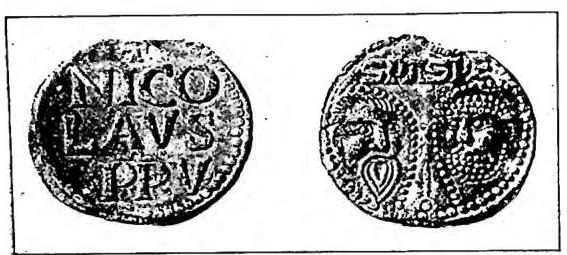
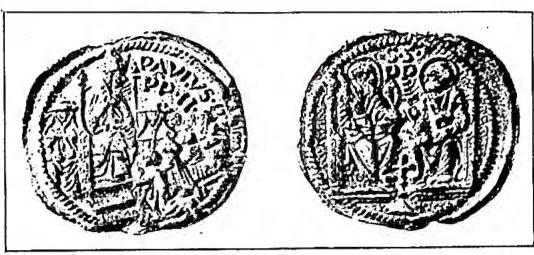
In sovereign documents of particular importance, gold was used in place of lead, rarely gilded silver, and only exceptionally silver. Naturally, given the hardness of these metals, the impression was made using a different technique, with engraving on two round plates, which were then soldered together. The richest collection of gold bulls in terms of variety of types (78 specimens in 40 types) is preserved in the documents of the Vatican Archives, with seals ranging from Frederick Barbarossa to Napoleon, and among them a specimen of Philip II, King of Spain (1555), of exceptional size (weight 820 grams). The use of gold bulls in papal documents is extremely rare. The oldest known papal lead seal is that of Pope Agatho (535), preserved only as a drawing; the oldest original is that of Pope Adeodatus I (615–618) in the Vatican medal collection and depicts on the obverse the Good Shepherd, while on the reverse it bears the Pope’s name. In all other bulls up to the mid-9th century, the type is uniform and simple, namely on the obverse only the Pope’s name in the genitive case and on the reverse the legend *PAPAE*, with two small crosses. Leo IV (847–855) and Benedict III (855–858) have the Pope’s name in the form of a monogram, then until the mid-11th century the name is written in a circular legend around a star. Leo IX (1048) added the ordinal number to the name, and in the lead seals of his immediate successors there are various representations, mostly the bust of St. Peter with a verse from Holy Scripture referring to the primacy. With Paschal II (1099), the type that has remained constant to this day—with only stylistic variations—was introduced: on the obverse it depicts the heads of St. Peter and St. Paul, while on the reverse the Pope’s name appears in the nominative case. The only exception is Paul II (1464–1471), who adopted a different type inspired by the lead seals of the Venetian Doges. The affixing of the seal was the office of the *bullatores* (q.v.).

Bolla — Bull of Paul II (1464–1471).
II. DOCUMENT
This term is applied to any document bearing a seal in the form of a bull (q.V. above) and, in particular, to papal documents.The name *bulla* applied to them is not anterior to the 13th century and was never official (the official name is *Apostolicae sub plumbo litterae*). It is rather a generic term used to designate documents that differ in form and content, united by the common element of the lead seal, in contrast to those bearing a wax seal (the *brevia*) or those entirely without one (petitions, chirographs, *motu proprio*).
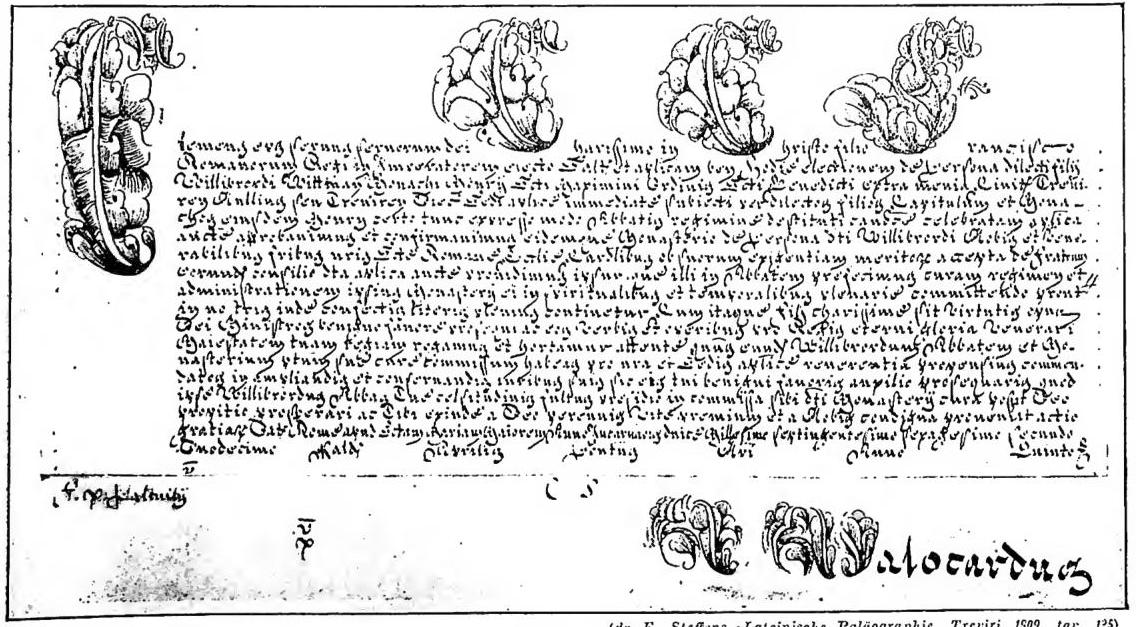
All bulls begin with the Pope’s name followed by the title *episcopus, servus servorum Dei*, which the Pontiffs have regularly used since St. Gregory the Great: until the end of the 10th century they were written on papyrus, in the first half of the 11th century they were also written on parchment, and from then on all were on parchment until the present day. They are always in Latin; as for the script, the so-called Roman cursive was used until the 12th century, in the 12th–14th centuries the diplomatic minuscule, in the 15th century Gothic cursive, and from the 16th to the 19th century the *bollatica* script.

Bolla — Bull of Clement XIII (1763) in *bollatica* script.
BIBLIOGRAFIA
— *Medagliere Vaticano*, Milano 1910, especially pp. LXXXI–LCI and plates A–N; H. Breslau, *Handbuch der Urkundenlehre für Deutschland und Italien*, II, 2nd ed., ed. H. W. Klewitz, Berlin 1931, pp. 548 ff.; P. Sella, *Le b. d’oro dell’Archivio Vaticano*, Città del Vaticano 1934.
II. DOCUMENT
This name is given to any document sealed with a b. (q.V. above), and in particular to papal documents.
The term b. applied to them is not earlier than the 13th century and was never official (the official name is *Apostolicae sub plumbo litterae*). It is rather a generic term used to designate documents that differ in form and content, with the common element being the lead seal, as opposed to those sealed with wax (the *brevia*) or those without any seal (petitions, chirographs, the *motu proprio*).
All b. begin with the name of the Pope followed by the title *episcopus, servus servorum Dei*, which the Pontiffs have regularly used since St Gregory the Great: until the end of the 10th century they were written on papyrus, in the first half of the 11th century they were also written on parchment, and from then on they were all on parchment until the present day. They are always in Latin; as for the script, the so-called Roman cursive was used until the 12th century, the diplomatic minuscule in the 12th–14th centuries, Gothic cursive in the 15th, and the bullatic script from the 16th to the 19th centuries.
---
**
---
**
- *Medaglievre Vaticano*, Milano 1910, especially pp. LXXXI–LXXXI and tavv. A–N; H. Breslau, *Handbuch der Urkundenlehre für Deutschland und Italien*, II, 2nd ed., ed. H. W. Klewitz, Berlin 1931, p. 548 ff.; P. Sella, *Le b. d’oro dell’Arch. Vaticano*, Città del Vaticano 1934.
---
II. DOCUMENT
This name is given to any document sealed in the form of a b. (q.V. above) and in particular to papal documents.The term b. applied to them is not earlier than the thirteenth century and was never official (the official name is *Apostolicae sub plumbo litterae*). It is rather a generic term used to designate documents that differ in form and content, the common element being the lead seal, in contrast to those sealed with wax (the *brevia*) or lacking any seal at all (petitions, chirographs, *motu proprio*).
All b. begin with the Pope’s name followed by the title *episcopus, servus servorum Dei*, which the Pontiffs have regularly used since St Gregory the Great: until the end of the tenth century they are written on papyrus, in the first half of the eleventh century they are also written on parchment, and from then on all are on parchment until the present day. They are always in Latin; as for the script, the so-called Roman cursive was used until the twelfth century, in the twelfth to fourteenth centuries the diplomatic minuscule, in the fifteenth century Gothic cursive, and from the sixteenth to the nineteenth century the bullatic script.
---
**
- *Medaglievre Vaticano*, Milano 1910, especially pp. LXXXI–LXXXI and tavv. A–N; H. Breslau, *Handbuch der Urkundenlehre für Deutschland und Italien*, II, 2nd ed., ed. H. W. Klewitz, Berlin 1931, p. 548 ff.; P. Sella, *Le b. d’oro dell’Arch. Vaticano*, Città del Vaticano 1934.
All b. begin with the name of the Pope followed by the title *episcopus, servus servorum Dei*, which the Pontiffs have regularly used since St Gregory the Great: until the end of the 10th century they are written on papyrus, in the first half of the 11th century they are also written on parchment, and from then on they are all on parchment up to the present day. They are always in Latin; as for the script, the so-called Roman cursive was used until the 12th century, the diplomatic minuscule in the 12th–14th centuries, Gothic cursive in the 15th, and the bullatic script from the 16th to the 19th centuries.
---
**BIBLIOGRAPHY**
- *Medaglievre Vaticano*, Milano 1910, especially pp. LXXXI–LCI and tavv. A–N; H. Breslau, *Handbuch der Urkundenlehre für Deutschland und Italien*, II, 2nd ed., ed. H. W. Klewitz, Berlin 1931, pp. 548 ff.; P. Sella, *Le b. d’oro dell’Arch. Vaticano*, Città del Vaticano 1934.
---
II. DOCUMENT
This name is given to any document sealed with a bulla (q.v.), and in particular to papal documents.The term bulla applied to them is not earlier than the 13th century and was never official (the official name is *Apostolicae sub plumbo litterae*). It is rather a generic term used to designate documents that differ in form and content, the common element being the lead seal, as opposed to those sealed with a wax seal (the *brevia*) or those lacking any seal at all (petitions, chirographs, *motu proprio*).
All b. begin with the name of the Pope followed by the title *episcopus, servus servorum Dei*, which the Pontiffs have regularly used since St Gregory the Great: until the end of the 10th century they are written on papyrus, in the first half of the 11th century they are also written on parchment, and from then on they are all on parchment up to the present day. They are always in Latin; as for the script, the so-called Roman cursive was used until the 12th century, the diplomatic minuscule in the 12th–14th centuries, Gothic cursive in the 15th, and the bullatic script from the 16th to the 19th centuries.
---
**BIBLIOGRAPHY**
- *Medaglievre Vaticano*, Milano 1910, especially pp. LXXXI–LCI and tavv. A–N; H. Breslau, *Handbuch der Urkundenlehre für Deutschland und Italien*, II, 2nd ed., ed. H. W. Klewitz, Berlin 1931, pp. 548 ff.; P. Sella, *Le b. d’oro dell’Arch. Vaticano*, Città del Vaticano 1934.The name *b.* applied to them does not date back earlier than the 13th century and was never in official use (the official name is *Apostolicae sub plumbo litterae*). It is rather a generic term used to designate documents that differ in form and content, the common element being the lead seal, as opposed to those bearing a wax seal (the *brevia*) or lacking any seal at all (petitions, chirographs, the *motu proprio*).
All *b.* begin with the Pope’s name followed by the title *episcopus, servus servorum Dei*, a formula regularly used by the Pontiffs since St Gregory the Great: until the end of the 10th century they were written on papyrus; in the first half of the 11th century they were also written on parchment, and from then on all were on parchment up to the present day. They are always in Latin; as for the script, the so-called Roman cursive was used until the 12th century, between the 12th and 14th centuries the diplomatic minuscule, in the 15th century Gothic cursive, and from the 16th to the 19th century the bullatic script.
---
**
- *Medaglievre Vaticano*, Milano 1910, especially pp. LXXXI–LCI and tavv. A–N; H. Breslau, *Handbuch der Urkundenlehre für Deutschland und Italien*, II, 2nd ed., ed. H. W. Klewitz, Berlin 1931, p. 548 ff.; P. Sella, *Le b. d’oro dell’Arch. Vaticano*, Città del Vaticano 1934.
---
II. DOCUMENT
This name is given to any document sealed with a *b.* (see above) and in particular to papal documents.The name *b.* applied to them does not date back earlier than the 13th century and was never in official use (the official name is *Apostolicae sub plumbo litterae*). It is rather a generic term used to designate documents that differ in form and content, the common element being the lead seal, as opposed to those bearing a wax seal (the *brevia*) or lacking any seal at all (petitions, chirographs, the *motu proprio*).
All *b.* begin with the Pope’s name followed by the title *episcopus, servus servorum Dei*, a formula regularly used by the Pontiffs since St Gregory the Great: until the end of the 10th century they were written on papyrus; in the first half of the 11th century they were also written on parchment, and from then on all were on parchment up to the present day. They are always in Latin; as for the script, the so-called Roman cursive was used until the 12th century, between the 12th and 14th centuries the diplomatic minuscule, in the 15th century Gothic cursive, and from the 16th to the 19th century the bullatic script.
---
**
- *Medaglievre Vaticano*, Milano 1910, especially pp. LXXXI–LCI and tavv. A–N; H. Breslau, *Handbuch der Urkundenlehre für Deutschland und Italien*, II, 2nd ed., ed. H. W. Klewitz, Berlin 1931, p. 548 ff.; P. Sella, *Le b. d’oro dell’Arch. Vaticano*, Città del Vaticano 1934.
---
**BIBLIOGRAPHY**
- *Medaglievre Vaticano*, Milano 1910, especially pp. LXXXI–LCI and plates A–N; H. Breslau, *Handbuch der Urkundenlehre für Deutschland und Italien*, II, 2nd ed., ed. H. W. Klewitz, Berlin 1931, pp. 548 ff.; P. Sella, *Le b. d'oro dell'Arch. Vaticano*, Città del Vaticano 1934.
---
II. DOCUMENT
This term is applied to any document bearing a seal in the shape of a *b.* (q.V. above), and in particular to papal documents.
The name *b.* given to them is not earlier than the 13th century and was never official usage (the official name is *Apostolicae sub plumbo litterae*). It is rather a generic term used to designate documents that differ in form and content, united only by the common element of the lead seal, in contrast to those bearing a wax seal (*i brevi*) or lacking any seal altogether (*le suppliche*, the *chirografo*, the *motu-proprio*).
All *b.* begin with the name of the Pope followed by the title *episcopus, servus servorum Dei*, which the Pontiffs have regularly used since St Gregory the Great: until the end of the 10th century they were written on papyrus; in the first half of the 11th century they were also written on parchment, and from then on all were on parchment until the present day. They are always in Latin; as for the script, the so-called Roman cursive was used until the 12th century, in the 12th–14th centuries the diplomatic minuscule, in the 15th century Gothic cursive, and from the 16th to the 19th century the bullatic script.

Bulla – *B.* of Nicholas V (1447–55).
Depending on their subject matter and juridical nature, *b.* receive different designations, which vary over the centuries so that no general nomenclature can be established; according to their diplomatic forms they are distinguished as privileges and letters (in the usage of less recent authors: *bullae maiores* and *bullae minores*).
Privileges constitute the most important class of *b.*; referring to grants or recognitions of a perpetual nature, they are drawn up with observance of solemn formalities and characterized by the personal participation of the Pope, either through the ancient formula *Bene Valete* (q.v.) or through the *rota* (q.v.) and the signature. Privileges were in use until the 14th century; in a certain sense they were succeeded by the so-called consistorial letters, which also bear the Pope’s signature.
Letters, in the earliest centuries, bore an autograph subscription of the Pope in the form of a greeting, similar to Roman epistolary usage (e.g.: *Deus te incolumem custodiat, carissime fili*), but no original survives from before the 11th century, by which time they had lost this ancient usage and taken on simpler forms. From the 12th century they are distinguished according to content: those conveying a grant (*litterae gratiosae*) have the lead attached with silk threads like privileges, while those conveying an order (*mandata* or *litterae executoriae*) have hemp thread. In the 12th century the first examples appear of closed letters (*litterae clausae*), in which the closure was achieved with the same thread that bore the *b.*, always of hemp; in the 13th century a new class of letters arises (*solenni*) which in the initial protocol have the formula *Ad perpetuam rei memoriam* or similar.
The terms *litterae communes*, *legendæ*, *curiales*, and *secretae* refer to various procedural modalities observed by the chancery or other offices in their dispatch. — See Plate CIV.
**