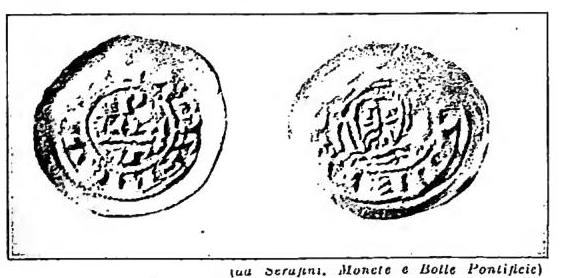
AGAPITO I, POPE, saint. – Pontiff from 535 to 536. He descended from a noble Roman family. His father, Gordianus, was a priest of the titular church of SS. Giovanni e Paolo on the Caelian (d. in 501 or 502). He had his residence nearby, where A. established a library whose inscription is known to us (G. B. De Rossi, Inscriptiones christianae urbis Romae, II, Rome 1888, pp. 16, 28). We know very little about A.’s life before his pontificate. He was archdeacon and succeeded Giovanni II (d. 8 May 535), five days after his death, most probably having been put forward by the party of Dioscorus. Five years earlier, the latter had been elected by the Roman clergy in opposition to Bonifacius II (530–32), designated by Felix IV (526–32), with the aim of removing the papal election from Byzantine and Gothic interference (C. Mirbt, Quellen zur Geschichte des Papsttums und des römischen Katholizismus, Tübingen 1934, no. 201). Dioscorus died soon afterward, and Bonifacius condemned his memory and bound a large part of his electors to himself by threatening them with excommunication. But A. immediately satisfied them by gathering the clergy of Rome in assembly from the very first days of his pontificate. Before it, he cast into the flames the document in which 60 Roman priests had signed the condemnation of Dioscorus. This was a reaction to the recent attempts to introduce the practice whereby the Pope designated his successor, contrary to the ancient tradition that entrusted his election to the Roman clergy.
Several documents of A. remain to us regulating ecclesiastical affairs in various parts of Christendom: he accepted the appeal of Contumeliosus, deposed at the Council of Marseille presided over by Caesarius of Arles (533), and decreed that the trial should be held again before new judges (15 July 535). He refused Caesarius permission to alienate the property of his church for the benefit of the fund for the poor. He received the delegation of the African bishops assembled in council at Carthage after the liberation from the Vandals (535), and in response to their questions declared that a converted Arian could not receive ecclesiastical offices; he also recognized as justified the council’s request that no African cleric be admitted into the Roman Church if he lacked the necessary documents. He supported his decisions with a collection of relevant canons (9 September 535). On the same subject of the Arians, he gave a similar response to the emperor Justinian (15 October 535).